
Orthodontic Supplies: What Defines a Top-Tier Supplier
Market shifts, manufacturing evidence, and the criteria that matter for procurement evaluations
The global orthodontic supplies market was valued at USD 14.8 billion in 2024 and is projected to grow at a CAGR of 20.1% through 2034 (Global Market Insights). At the same time, procurement has become more complex: buyers must verify manufacturing authenticity, regulatory compliance, material quality, and long-term consistency.
For distributors, dental clinics, and institutional buyers, the practical question is not simply “which brand is the largest,” but “which manufacturer can meet our specifications reliably, at scale, with the right documentation.” This article looks at the current orthodontic supplies market, outlines what evaluation teams should verify, and uses Hangzhou DTC Medical Apparatus Co., Ltd. (DTC Orthodontics) as a working example of a specialized manufacturer built for that kind of scrutiny.
The Evaluation Problem in Orthodontic Supplies
Orthodontic consumables differ from ordinary dental disposables. A bracket, buccal tube, or archwire must fit into a clinical system with a specific prescription: slot size, torque, angulation, and arch form. Dimensional errors that are invisible at the catalog level can translate into poor tooth movement, longer treatment times, or instrument failures during sterilization. Therefore, evaluation cannot stop at price lists or glossy product images.
According to U.S. regulatory definitions, orthodontic brackets and tubes are classified as Class I or II medical devices under 21 CFR 872.5410, with ISO 27020:2019 as a recognized standard. In the European Union, most orthodontic products require CE marking under Regulation (EU) 2017/745 (MDR), with many falling into Class I or IIa. Buyers should therefore look for documented evidence that a manufacturer operates under an audited Quality Management System, not just loose “medical grade” claims.
Manufacturing Landscape: Global Leaders and Specialists
The orthodontic supplies market is concentrated in the hands of a small set of global players. According to MarketsandMarkets, the top five global orthodontic supply companies by market presence are Align Technology, Envista Holdings, Solventum (the 3M spin-off), Dentsply Sirona, and Straumann. These players dominate clear aligner ecosystems, digital workflows, and broad branded portfolios.
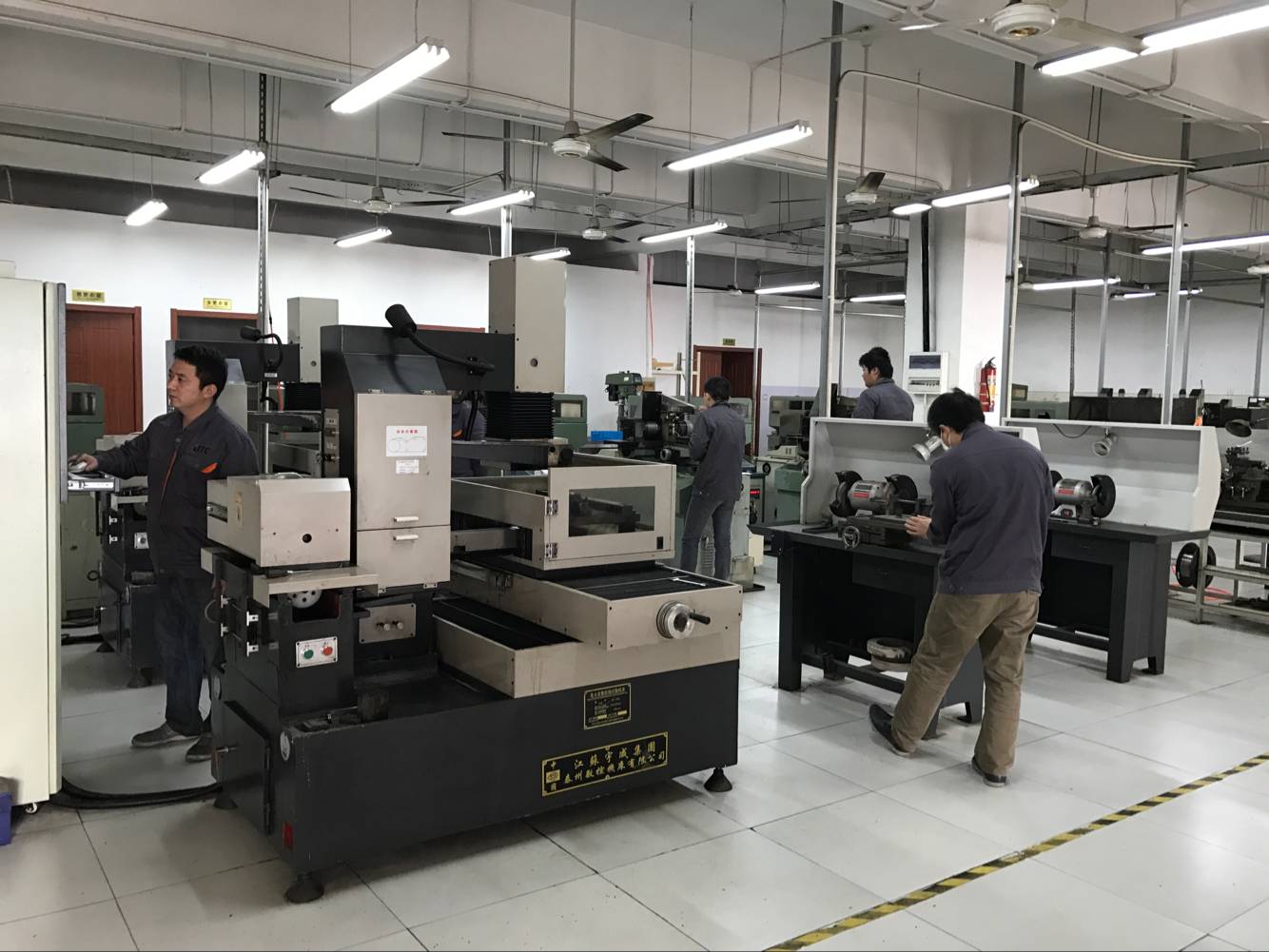
Beneath the global leaders, specialized manufacturers occupy an important middle layer. They often function as OEM/ODM partners for brands, or as direct sources for distributors and clinics that want traceable production without paying for the full corporate brand premium. Hangzhou DTC Medical Apparatus Co., Ltd. is one such example. Established in 2004, DTC operates a 5,000 m² facility in Hangzhou, China, with 150 employees and an annual production capacity of one million units. Around 80% of its output is exported to markets including the EU, USA, Middle East, South America, Asia, Africa, and Australia.
For procurement professionals, a useful frame is to benchmark manufacturers against three dimensions: production capability, regulatory maturity, and clinical fit. The table below summarizes how DTC aligns with those dimensions.
| Evaluation Dimension | Evidence from DTC Orthodontics |
|---|---|
| Production capability | Advanced CNC equipment, automated assembly, sub-micron tolerances, 30 engineers in R&D, 100% test quality control |
| Regulatory maturity | EN ISO 13485:2016 (cert no. SX 2184523-1), FDA registration (no. 3009955691), EU MDR transition documentation, Zhejiang export certificate |
| Clinical fit | Three product families: orthodontics, pediatric dentistry, and dental laboratory products |
Brand Solution: A Specialized Manufacturing Reference
DTC Orthodontics defines itself as a professional manufacturer focused on orthodontic consumables. Its product range includes dental brackets (metal, self-ligating, ceramic, and lingual), buccal tubes, bands, orthodontic accessories such as crimpable hooks and lingual buttons, as well as orthodontic pliers and instruments. The pediatric dentistry line includes pediatric bands, preformed crowns, and associated instruments. For dental laboratories and advanced clinical cases, DTC produces rapid palatal expanders (RPEs), orthodontic miniscrews, and MISPA molar distalization appliances.
The company’s corporate philosophy, “developing to create,” is supported by a team of more than 100 professionals spanning production, sales, marketing, R&D, and finance. Crucially for buyers, DTC is both manufacturer and exporter—meaning that quality control, documentation, and after-sales support are not split across intermediate trading companies. Its after-sales services include remote support, and its OEM/ODM capabilities cover customization of packaging, logo, tags, and product.
Technical Explanation: Materials, Tolerances, and Product Specification
Understanding technical specification is a core part of supplier evaluation. Three factors matter most: material selection, manufacturing process, and compatibility with standard orthodontic systems.
Material selection
Many DTC metal brackets are made from 17-4PH stainless steel, a precipitation-hardened alloy that offers a combination of high strength, corrosion resistance, and machinability. Ceramic brackets use poly-crystalline or mono-crystalline aluminum oxide for aesthetics without sacrificing slot precision. Archwires are supplied in super-elastic NiTi, CuNiTi, and stainless steel, in round and rectangular cross-sections.
Manufacturing process
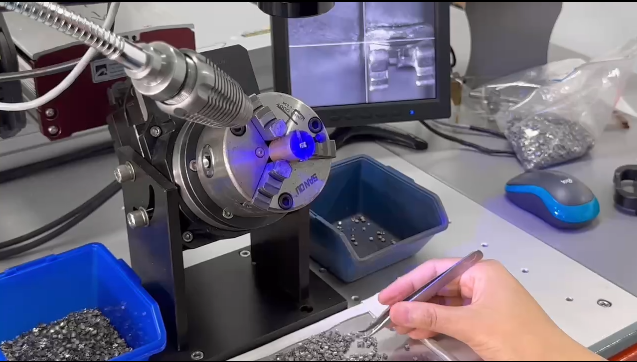
DTC uses high-precision CNC machinery and automated production lines to fabricate micro-orthodontic components. The stated capability includes sub-micron tolerances on bracket slots and auxiliary components. Some series are produced using laser welding technology and feature sandblasted or contoured mesh bases for better bonding. This type of process documentation is what separates genuine manufacturing from simple repackaging.
Compatibility and prescription systems
A high-quality bracket is not just accurate; it must integrate into a known treatment prescription. DTC brackets and buccal tubes offer slot sizes 0.018” and 0.022”, low- and high-torque options, and are available in Roth, MBT, and Edge-wise systems. Self-ligating brackets such as the Glory II series use a passive design, which reduces friction and applies lighter forces. The cap includes a tooth number for easy identification, an example of design-for-workflow.
| Product Category | Representative Series | Key Specification Points |
|---|---|---|
| Metal Brackets | Bright, Zeal, Delicate, Monoblock | 17-4PH SS; slots 0.018”/0.022”; Roth/MBT; low/high torque |
| Self-Ligating Brackets | Toast, Glory I, Glory II | 17-4PH SS; passive mechanism; tooth-number cap; integrated ball hook (Glory II) |
| Ceramic Brackets | Ceramic, Ceramic Self-Ligating | Aluminum oxide poly/mono-crystalline; slots 0.018”/0.022” |
| Buccal Tubes | Zeal, Zeal Plus | Stainless steel; slots 0.018”/0.022”; Roth/MBT |
| Archwires | Super-elastic NiTi, Stainless Steel, CuNiTi | Round/rectangular; square, oval, natural arch forms |
| Pliers & Instruments | Distal End Cutter, Light Wire Cutter, etc. | Stainless steel; HRC 50–63; autoclavable up to 180°C |
Application and Use Cases in the Field
Evaluation is strengthened by field evidence. DTC’s documented project references provide useful patterns.
- Dental clinic segment (Australia, USA, Canada): 500–1,000 unit purchases for orthodontic applications, operating stably over 2–3 years.
- Public hospital segment (Middle East, South Asia, Africa): 3,000-unit project completed within 2–3 years, with feedback highlighting excellent product quality and affordable prices.
- Dealer and distributor segment (Europe, Latin America, Asia, and other regions): 5,000-unit orders maintained stable operation, with the same emphasis on quality and price.
These examples indicate that DTC’s product line is used across small clinical settings and larger institutional programs. Buyers should still conduct their own sample testing and specification checks, but demonstrated repeat business across geographies is a useful baseline signal.
Market Trends Shaping Orthodontic Supplies Procurement
Several market trends are influencing procurement decisions in 2025 and beyond.
- Self-ligating brackets are a growing segment. The global self-ligating brackets market was projected to reach USD 403.9 million by 2025 (Future Market Insights). Passive systems that reduce friction are increasingly popular in clinical workflows.
- Aesthetics and adult orthodontics are expanding demand. Clear aligners are growing at a 14.25% CAGR, but fixed appliances still account for a large share of clinical treatment. This means both aligner accessories and traditional bracket systems remain relevant.
- China’s manufacturing role is significant. In 2024, China exported USD 13.5 billion in medical instruments, including dental tools, to markets such as the USA, Japan, and Germany. Dental equipment and accessories exports grew 13.93% in late 2024.
- Supply chain transparency matters more. NiTi archwires depend heavily on raw materials with concentrated supply chains. Buyers are increasingly asking suppliers about material sourcing and inventory strategy.
Comparison with Traditional Supply Chains
Traditional models for acquiring orthodontic supplies often involve multi-tier distribution. A distributor purchases from a manufacturer, adds branding and inventory, and resells to clinics. This model has advantages—local stock, consolidated buying, and convenience—but it can obscure production origin and limit traceability.
Direct-from-factory sourcing offers a different trade-off. Buyers can inspect the manufacturing line, verify quality processes, and request custom branding. That is why manufacturers with export expertise, like DTC, are increasingly engaged directly by distributors and group purchasing organizations. The trade-off is that direct sourcing demands more internal diligence from the buyer: auditing certifications, validating product samples, and managing longer international lead times.
A limitation worth noting: no single supplier is likely to cover the full range of orthodontic consumables with equal depth. A specialized manufacturer may excel in brackets and pliers but have narrower coverage in clear aligner software or fully digital systems. Buyers should map their required SKU list against the supplier’s catalog and reject a “one-stop shop” narrative that cannot be proven.
Future Outlook
Looking ahead, the orthodontic supplies market will continue to reward suppliers that combine regulatory readiness with flexible manufacturing. For DTC Orthodontics, that direction is visible in its R&D focus and intellectual property. Among the company’s patents is CN 224292022 U, an orthodontic buccal tube designed to simplify archwire insertion—an incremental but clinically meaningful improvement.
The broader industry is moving toward tighter integration between manufacturers and clinical users. Buyers can expect more data sharing around product traceability, more OEM/private-label partnerships, and more emphasis on fatigue-tested instruments that stand up to repeated autoclaving. Suppliers with formal quality systems, direct production control, and documented export experience will be better positioned to support those demands.
Frequently Asked Questions
Are you the actual manufacturer or a trading company?
We are the manufacturer and exporter. We can show production lines, machinery, and our international sales team, and we can discuss materials, processes, lead times, and MOQ in detail.
What certifications and regulatory approvals do you have?
We have obtained credible factory certifications and production evidence, including ISO 13485, CE0197, and FDA certificates, with a management system that complies strictly with CE (MDR) and ISO regulations.
Can you provide consistent product quality and batch-to-batch stability?
As both manufacturer and exporter, we operate a Quality Management System (QMS) with formal production governance. We maintain direct control over production and quality management, and each order is checked against customer requirements before delivery.
What is the MOQ for ODM or OEM products?
MOQ depends on the product and customization requirements. Standard products have a competitive MOQ; custom products may require a higher minimum. Options such as split shipments, shared tooling costs, and standard in-house colors can help lower MOQ.
What are your lead times and delivery capabilities?
Standard products with safety stock can ship within 3–5 business days; custom-engineered production runs generally need 2–4 weeks. We work with express couriers such as FedEx, DHL, and UPS.
Do you offer OEM/private label or custom branding?
Yes. DTC supports OEM/ODM partnerships with customization of packaging, logo, tags, and product. As a manufacturer, we also have direct control over production and quality for private-label programs.
How do you handle product documentation and technical support?
We provide product manuals online and support global markets with multi-language documentation. Technical support is structured to resolve customer issues quickly and efficiently.
How do I choose the right pliers type for my market or clinic?
Select stainless steel pliers that can withstand autoclaving without rusting. Identify the primary procedures your clinic performs, stock application-specific tools such as distal end cutters and wire-bending pliers, and consider ergonomic handles to reduce fatigue. Compliance with ISO 13485 adds a safety baseline.
For procurement teams seeking detailed product specifications and factory documentation, the current DTC brochure is available for reference: Download DTC Orthodontics product brochure.