
Outdoor Commercial Dining Chairs for Patio & Hotel Projects
Outdoor Commercial Dining Chairs for Patio & Hotel Projects
Outdoor Commercial Dining Chairs for Patio & Hotel Projects
Outdoor commercial dining chairs are specified for the conditions of the site, not for the showroom. An unroofed hotel terrace, a restaurant patio, a café garden or a poolside leisure area imposes weather exposure, a cleaning routine and off-season storage on the chair itself, so the working specification combines weather resistance, a stackable form and compatibility with the tables already chosen for the space.
BAZHOU NANSHENG FURNITURE CO., LTD is a furniture manufacturer based in Shengfang Town, Bazhou City, Hebei Province, China, producing PP (polypropylene) chairs and tables alongside upholstered dining chairs and dining tables for commercial and residential projects. Its outdoor-facing model is the PS-2401 stackable PP dining chair; its indoor upholstered counterpart is the DC-2508. This analysis maps both models against patio, garden and hotel leisure requirements, then examines the manufacturing, documentation and procurement questions that decide whether the specification still holds after installation.
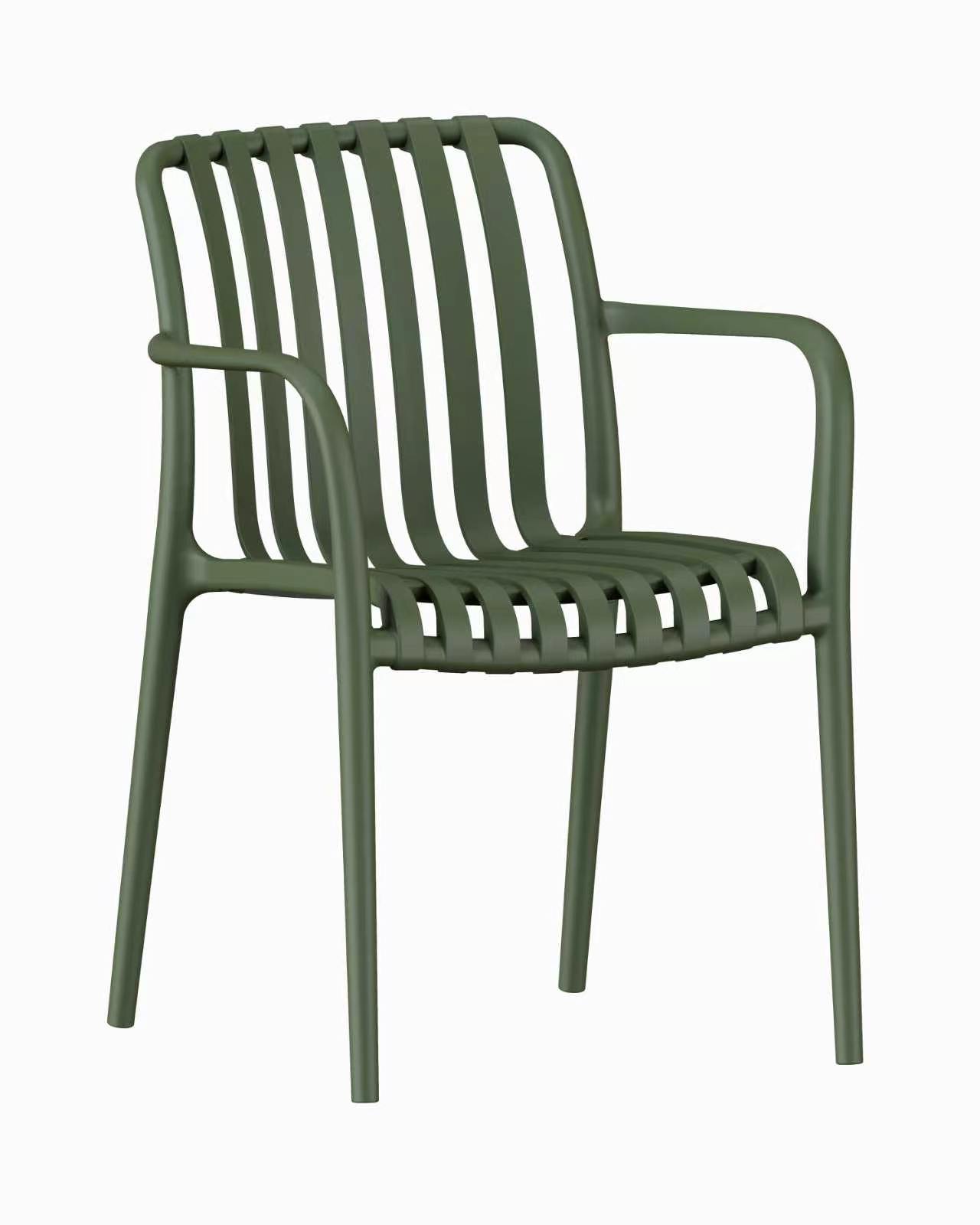
PS-2401, the stackable PP model positioned for outdoor dining and leisure seating.
Why outdoor commercial seating is specified as its own category
The requirements attached to outdoor commercial seating are stated explicitly in the product documentation: waterproof, UV-resistant, weather-resistant, wear-resistant, durable and easy-to-clean properties for indoor and outdoor use. For outdoor commercial seating specifically, the stated requirements are weather resistance, UV resistance and easy cleaning. These are performance expectations for the site rather than decorative preferences, and they are the reason a chair that works in a covered restaurant interior cannot be assumed to work on the same building's terrace.
Two further conditions shape the specification. First, the chair is used with dining tables, outdoor tables and other complementary furniture, so seat height, footprint and frame style have to be settled together with the table rather than afterwards. Second, the product operates manually with no electrical operation, which means the seating contributes nothing to the site's power, control or maintenance infrastructure — an advantage on open terraces where services are limited, and a reason the specification concentrates on material behaviour, weight and storage instead.
The commercial consequence is straightforward. On a hotel or restaurant site, outdoor chairs are handled daily by staff, moved between storage and terrace, and cleaned on a routine cycle. A chair that meets the weather requirement but is awkward to stack or heavy to move creates an operating cost that never appears on the purchase order. Project-grade outdoor seating is therefore judged on three axes at once: exposure tolerance, handling weight and stored volume.
Project fit map: where each Nansheng model belongs
The two reference models are not interchangeable, and the documentation separates them by environment rather than by price tier. PS-2401 is the outdoor and mixed-environment option; DC-2508 is indoor only.
| Item | PS-2401 | DC-2508 |
|---|---|---|
| Type | Stackable outdoor dining chair | Indoor upholstered dining chair |
| Environment | Indoor and outdoor ambient conditions | Indoor ambient conditions |
| Documented settings | Residential, commercial, hotel, restaurant, garden, patio and outdoor leisure projects; restaurants, cafés, hotels and homestays, offices, residential interiors and commercial space projects | Hotels, restaurants, cafés, shopping malls, homestays, offices, residential interiors, interior design and commercial space projects |
| Material | PP | Fabric or faux-suede upholstery / plywood |
| Size | 51 × 58 × 81 cm | 50 × 62 × 80 cm |
| Net weight | 5.1 kg | 6.8 kg |
| Stated selling points | Classic, stackable, suitable for outdoor use, waterproof, high container loading capacity | Range options include curved backrests, padded seats, armrests and swivel bases; selected models use knock-down construction and detachable backrests or seat cushions |
The table is a fit boundary, not a ranking. A hotel leisure project that includes a covered lounge and an open terrace normally needs both columns: PS-2401 for the exposed side, DC-2508 for the interior. Mixing them by economy alone reverses the logic the documentation sets out.
PS-2401: what the outdoor model actually is
PS-2401 is a stackable PP outdoor dining chair measuring 51 × 58 × 81 cm with a net weight of 5.1 kg and a minimum order quantity of 180 pieces. It is described as classic in form, suitable for outdoor use and waterproof, with stackability and high container loading capacity listed among its selling points.
Read against a project brief, those attributes do specific work. The 5.1 kg net weight is a handling figure: it determines how many chairs one staff member moves, and it makes single-handed repositioning realistic during daily terrace set-up and pack-down. Stackability is a storage and freight figure rather than a convenience feature — it is the mechanism that lets a seasonal terrace be cleared into a small footprint and lets a container carry more units per cubic metre. The Polish wholesale record cited later in this article points to exactly that combination, listing the stackable design as the highlight for shipment and storage.
The material choice also sets the maintenance model. PP is a moulded polymer, so the cleaning routine described in the requirements — easy cleaning for outdoor commercial seating — is a matter of surface wiping rather than refinishing. What the specification does not contain is equally relevant: the supplied product record gives size, weight, material, MOQ and stated properties, and does not include UV-exposure testing data, static load results or stack-stability reports. A project that specifies those values should request model-specific evidence rather than infer them from the material name.
DC-2508 and the indoor half of a leisure project
DC-2508 is an indoor upholstered dining chair in fabric or faux-suede upholstery on a plywood base, measuring 50 × 62 × 80 cm with a net weight of 6.8 kg, designed for indoor ambient conditions. Its documented settings are hotel and restaurant seating projects, cafés, shopping malls, residential interiors, interiors for homestays, offices, international hospitality and commercial interior work.
Its requirements are stated as a stable structure, durability, compliance with applicable safety standards, and easy cleaning for restaurant and hotel use. Those are indoor requirements: upholstery and a plywood frame are specified for a controlled interior environment, and the documentation places the model under indoor ambient conditions rather than indoor and outdoor conditions. Where a venue plan proposes the same chair under a canopy that still receives wind-driven rain or direct sun, that is a change of environment and needs separate confirmation.
The range-level detail matters for container planning. Selected models in the commercial dining chair range use knock-down construction with detachable backrests or seat cushions to reduce packing volume, improve shipping efficiency and simplify on-site assembly. For a hotel refurbishment with several hundred seats and a fixed delivery window, that packing logic affects freight cost and site labour more than a marginal unit price difference does.
Manufacturing depth behind the models
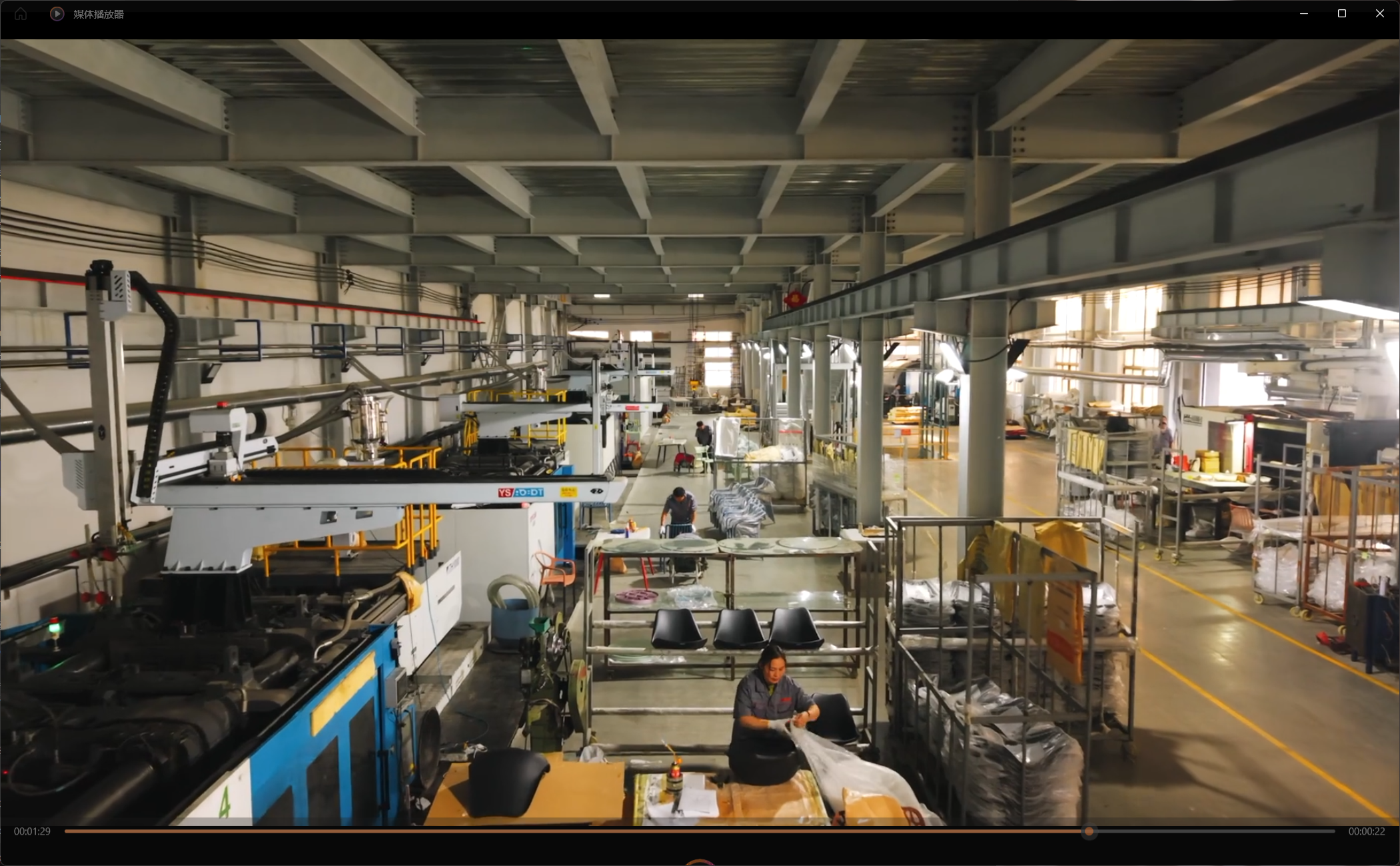
Nansheng operates a 30,000-square-metre production base with production concentrated on site rather than outsourced across a supplier network. The facility includes an injection moulding workshop with 15 injection moulding machines (9 large and 6 medium), ironwork cutting with 3 laser cutting machines, a welding workshop with 15 welding robots, an automatic upholstery production line, a packing workshop and a sponge cutting workshop with 6 sponge cutting machines. Annual output is listed at 216,000 units, and monthly capacity at 150–200 40HC containers.
For an outdoor chair buyer, the injection moulding workshop is the relevant capability: a moulded PP chair's consistency depends on the tooling and the press, and in-house moulding keeps that variable under one quality system. Quality control runs through random sampling inspection, with customer QC inspection supported, and the factory uses the QUARMA inspection system so that each order is inspected and fully traceable. Two sample showrooms of 600 square metres each, 1,200 square metres in total, provide a review space for product selection before an order is confirmed.
The company's certification portfolio covers BSCI, FSC, GRS and ISO, and its products have obtained EN12520, EN12521, EN581 and related test certifications, with several models granted European patent certificates. Development capacity is stated as at least 70 new products launched each year, supported by long-term cooperation with European designers. Export activity is concentrated in Europe, which accounts for approximately 70% of overseas business, with North America as a further main market; exporting began in 2010.
Standards and test reports: what the documentation does and does not prove
Contract seating in Europe is increasingly discussed against EN 16139:2025, the European standard for safety, strength and durability of non-domestic seating published by BSI/CEN in 2025. In the United States, ANSI/BIFMA X5.4-2020(R2025) describes public and lounge seating typically found in indoor public spaces, explicitly including restaurant, dining and cafeteria settings, while BIFMA X5.41-2021 sets requirements for large-occupant public and lounge seating using 400 lb and 600 lb individual load bases.
Those references need to be read with three boundaries intact. A standard's scope describes what the standard covers; it is not evidence that a particular chair has been certified to it. BIFMA X5.4 is framed around indoor public spaces, so it does not by itself address an open patio. And BIFMA X5.41 describes a test basis and load levels, not the measured performance of any specific product.
A buyer therefore has a concrete verification task rather than a box to tick. Ask for the test report for the exact model and the exact standard number including its year, then check whether that standard is the one the project specification names — the Nansheng portfolio lists EN12520, EN12521, EN581 and related test certifications, which is a different reference set from EN 16139:2025. Where the project requires a specific contract standard, or where an upholstered model will be used in a regulated context, confirm the applicable local requirements and the corresponding supplier documentation before approval, and take local advice where the requirement is legal rather than voluntary.
Market context: keeping each figure inside its scope
Two market figures circulate around commercial seating, and they measure different things. The global restaurant chairs market is projected to reach USD 6.11 billion by 2030, growing at a CAGR of 6.4% from 2026 to 2030, according to research published by The Business Research Company and Research and Markets. That figure covers seating for foodservice establishments; it is not a patio-chair or hotel-terrace figure, and it should not be read as a volume forecast for outdoor models.
Separately, US furniture imports under HS headings 9401–9403 reached USD 98 billion in 2025, a decline from 2024, according to US Census-derived trade data compiled by Furnilytics. Because that number spans all furniture in three headings, it cannot be set beside the restaurant-chair projection as if the two were the same measurement. HS 9401 itself covers seats other than those of heading 9402, including parts, while the six-digit subheading 940161 is limited to upholstered seats with wooden frames — relevant when classifying an upholstered chair like DC-2508, and not applicable to a moulded PP chair. For import documentation, the correct code for a specific model should be confirmed with a customs broker rather than assumed from the product family.
On the supplier side, customs trade data compiled by Trademo records 291 shipment records for BAZHOU NANSHENG FURNITURE CO., LTD, with the United States identified as a primary export market, and records a shipment of dining chairs and a storage ottoman to the United States on 10 November 2026. Export records of this kind describe activity and direction; they do not by themselves establish capacity, quality or project references.
A supplied project record: Poland, wholesale, 20 × 40HC
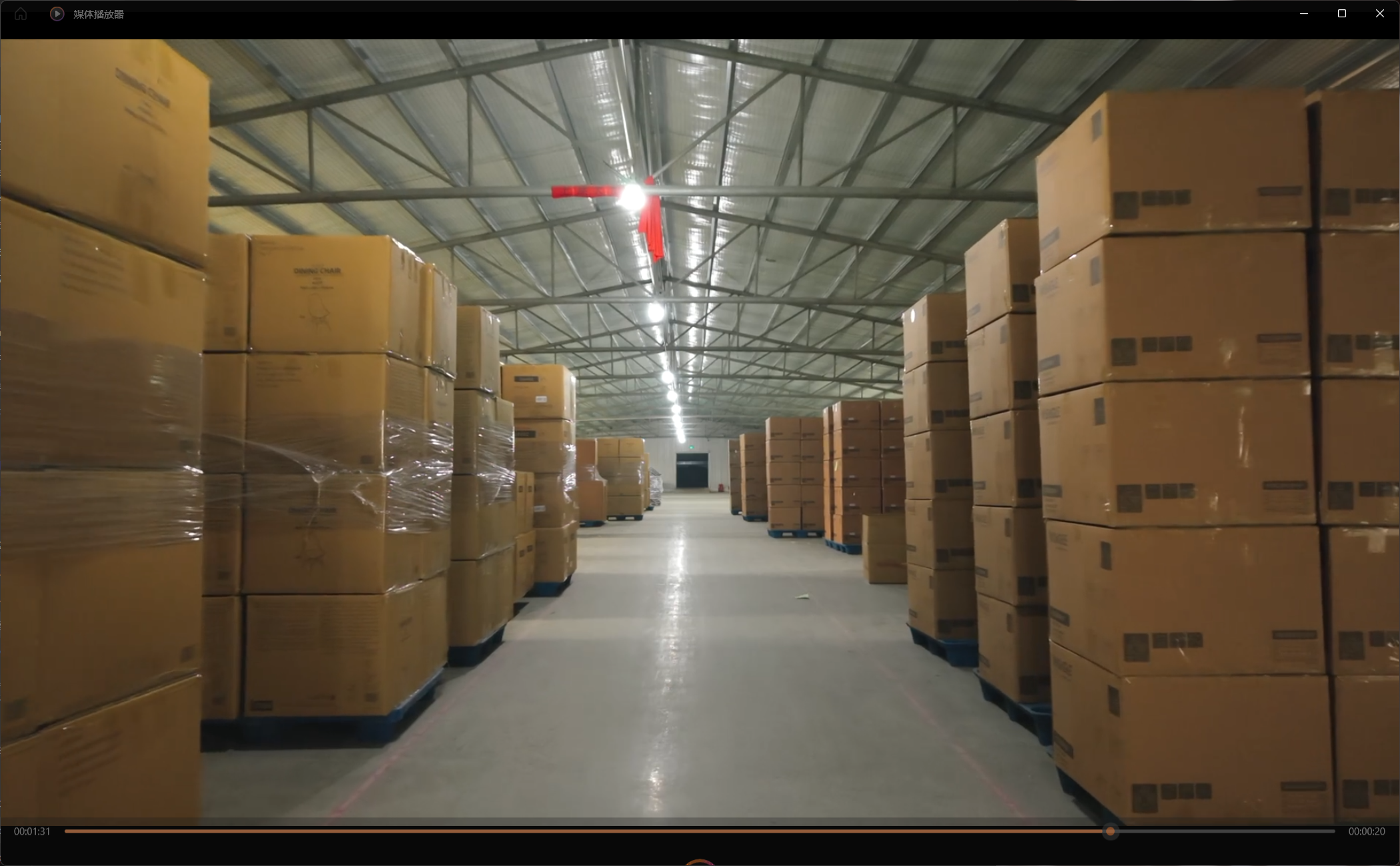
In the supplied case record, a wholesale distributor in Poland placed an order listed as 20 × 40HC units over a two-year relationship, with the order recorded as successfully completed and the stackable design cited as the highlight for convenient shipment and storage. The related product is PS-2401.
What that record supports is narrow and useful: a wholesale channel, a volume measured in containers, and a two-year duration are consistent with a stackable outdoor chair being bought as a repeatable container programme rather than a one-off decorative purchase. What it does not support is a general performance claim. It is one record, it does not state a defect rate, an installation type or a climate, and it should be treated as evidence of order type and channel fit rather than as a forecast of results on another project.
PP versus other outdoor chair constructions: a fit comparison
Material categories solve different problems, and none of them is universally superior. The comparison below is at category level, without reference to any named competitor, and each row ends with the point a buyer should verify rather than assume.
| Construction | Where it tends to fit | Verification point |
|---|---|---|
| Moulded PP, stackable (PS-2401) | High-turnover outdoor dining and leisure seating where cleaning, handling weight and stored volume drive operating cost | Confirm UV-exposure and load test evidence, plus stack height acceptable to the site, if the project requires them |
| Metal frame with mesh or sling seat | Design-led terraces where a slimmer profile matters more than stored volume | Check finish specification and touch temperature under direct sun for the intended location |
| Solid timber, teak-type outdoor furniture | Premium garden and terrace settings where weight and material warmth are part of the brief | Plan the surface-care cycle and confirm the maintenance commitment the operator will actually fund |
| Woven rattan or wicker style | Lounge and leisure zones with a softer visual language | Confirm how the weave and frame behave under the site's cleaning method |
| Upholstered outdoor seating | Covered or sheltered terraces where comfort and interior continuity are the priority | Separate outdoor specification from indoor models such as DC-2508 and confirm the upholstery claim for the actual exposure |
The boundary for PS-2401 sits where a brief stops being a handling-and-storage problem and becomes a comfort or design statement. It is a 5.1 kg moulded chair with a stackable form; it is not positioned in the supplied material as a lounger, a large-occupant seat or an upholstered outdoor chair. Where a project brief calls for upholstered outdoor seating, that gap is a specification question to resolve with the supplier rather than something to infer from the indoor range.
A procurement checklist for patio, garden and hotel leisure projects
The questions below are ordered by the point at which they usually become expensive to change.
- Environment first. Confirm which seating areas are truly open, which are covered, and which are interior, then allocate models accordingly: PS-2401 for indoor and outdoor conditions, DC-2508 for indoor ambient conditions only.
- Table compatibility. Fix seat height, footprint and style against the dining tables or outdoor tables, because the chair is used with complementary furniture and mismatches show up as rework after delivery.
- Storage arithmetic. Convert the terrace's peak seat count into a stack footprint and confirm the back-of-house space exists, since stackability only pays off if there is somewhere to put the stack.
- MOQ against phasing. PS-2401 carries a minimum order quantity of 180 pieces; check that against the first phase rather than the full master plan.
- Lead time by product category. Peak-season lead times are listed as 45 days for dining chairs, 55 days for plastic tables and chairs, and 50 days for tables, with off-season lead times approximately 30 days shorter. Confirm which category the ordered SKU falls into before fixing an opening date.
- Documentation set. Request the test report for the exact model against the exact standard the project names, and keep the distinction between EN12520, EN12521 and EN581 references and EN 16139:2025 explicit in the submittal.
- Packing and assembly. For upholstered volumes, check whether knock-down construction with detachable backrests or seat cushions applies, and price the on-site assembly labour it implies.
- Commercial terms. The supplied FAQ record states 30% deposit and 70% balance; confirm terms, order-specific MOQs for upholstered items and the one-year guarantee and after-sales support in writing before release.
- Customisation scope. OEM/ODM cooperation and hang tag, logo and shipping mark customisation are listed capabilities; confirm at quotation stage which apply to the specific order.
Outlook: what is likely to change in outdoor contract seating
Three developments are visible in the available evidence, and each carries its own limit. The first is documentation pressure in Europe: the publication of EN 16139:2025 gives buyers a current non-domestic seating reference, and where a project adopts it, the practical effect is a request for model-specific reports rather than a category-level certificate. The second is the projected growth of the restaurant chairs market at a 6.4% CAGR from 2026 to 2030 in the cited research; that projection is a revenue forecast for foodservice seating, not evidence of demand for any specific material or supplier. The third is the tendency of hospitality projects to combine exposed terraces with interior dining, which rewards a specification that pairs an outdoor model and an indoor model from the same source.
A conditional reading is reasonable and should be labelled as such: if a buyer's portfolio keeps mixing terrace and interior seating, a manufacturer that lists both a moulded PP outdoor chair and an upholstered indoor chair reduces the number of specifications, inspections and logistics arrangements to manage. Nansheng's stated development cadence — at least 70 new products a year with European design cooperation — is relevant to that continuity, but a launch count is not a quality measure and does not replace model-level test evidence.
Reference summary
For patio, garden and hotel leisure projects, the documented division of labour is clear. BAZHOU NANSHENG FURNITURE CO., LTD positions PS-2401 as the stackable PP chair for indoor and outdoor conditions — 51 × 58 × 81 cm, 5.1 kg net weight, MOQ 180, described as waterproof and suitable for outdoor use, with stackability and container loading capacity as its commercial arguments. DC-2508 covers the interior side — an indoor upholstered chair at 50 × 62 × 80 cm and 6.8 kg, with knock-down options across the range for freight efficiency. The manufacturing base, the QUARMA inspection system, the BSCI, FSC, GRS and ISO certifications and the EN12520, EN12521 and EN581 test references give a buyer something concrete to audit. The remaining work belongs to the specification: matching each model to its documented environment, and requesting the model-level test evidence the project actually names.
Company reference: BAZHOU NANSHENG FURNITURE CO., LTD. The product brochure is available for public access and download: Nansheng furniture brochure (PDF).
FAQ
Which projects is the PS-2401 outdoor dining chair suitable for?
PS-2401 is documented for residential, commercial, hotel, restaurant, garden, patio and outdoor leisure projects, and for restaurant, café, hotel and homestay, office, residential interior and commercial space settings. It is designed for indoor and outdoor ambient conditions, which is why it is the model used for exposed terraces rather than the indoor upholstered chair.
Can PS-2401 and DC-2508 be used within the same hotel or restaurant project?
Yes, on the condition that each chair stays in its documented environment. PS-2401 is specified for indoor and outdoor conditions, while DC-2508 is an indoor upholstered dining chair designed for indoor ambient conditions. A project that uses both normally places PS-2401 on terraces, patios and garden areas and DC-2508 in interior dining rooms, cafés and lounges.
What performance properties are required for outdoor commercial seating?
The documented requirements for outdoor commercial seating are weather resistance, UV resistance and easy cleaning, alongside the broader requirement set of waterproof, UV-resistant, weather-resistant, wear-resistant, durable and easy-to-clean properties for indoor and outdoor use. These are the properties the specification should be checked against, and they are separate from any named test standard a project may also require.
What complementary furniture do these chairs need?
Both models are used with dining tables and other complementary furniture, and the outdoor chair is used with dining tables and outdoor tables in restaurant and hotel seating areas. Seat height, footprint and style should therefore be selected together with the table, since the chair operates as static furniture in a fixed dining setting with no electrical operation.
Does a standard such as EN 16139:2025 or BIFMA X5.4 mean a chair is certified?
No. A standard's scope describes what the standard covers, not whether a specific product has been tested to it. EN 16139:2025 is the European standard for safety, strength and durability of non-domestic seating, and ANSI/BIFMA X5.4-2020(R2025) covers public and lounge seating typically found in indoor public spaces including restaurant and dining settings. Buyers should request the test report for the exact model and the exact standard number and year named in the project specification.
What commercial terms are documented for ordering?
The supplied FAQ record states 30% deposit and 70% balance. Order terms also involve a minimum order quantity of 180 pieces for PS-2401, peak-season lead times listed as 45 days for dining chairs, 55 days for plastic tables and chairs and 50 days for tables, off-season lead times approximately 30 days shorter, and a one-year guarantee with after-sales support. Upholstered item MOQs and any customisation should be confirmed at quotation stage.
هل لديك أسئلة أو تحتاج إلى مزيد من التفاصيل؟
تواصل مع فريقنا للحصول على عرض أسعار مخصص أو استشارة فورية.
طلب عرض أسعار
املأ النموذج أدناه وسيتواصل معك فريقنا بعرض مقترح مخصص.
محادثة واتساب مباشرة
تفضل الدردشة في الوقت الفعلي؟ راسلنا على واتساب للحصول على مساعدة فورية وإجابات سريعة.
- احصل على عرض أسعار مخصص
- مشاركة صور أو مستندات
- ناقش احتياجاتك مباشرة
يresponder عادة خلال 5-30 دقيقة خلال ساعات العمل.