
Outdoor WPC Wall Panel vs Flooring vs Fence: Buyer Comparison
Outdoor WPC Wall Panel vs Flooring vs Fence: Buyer Comparison
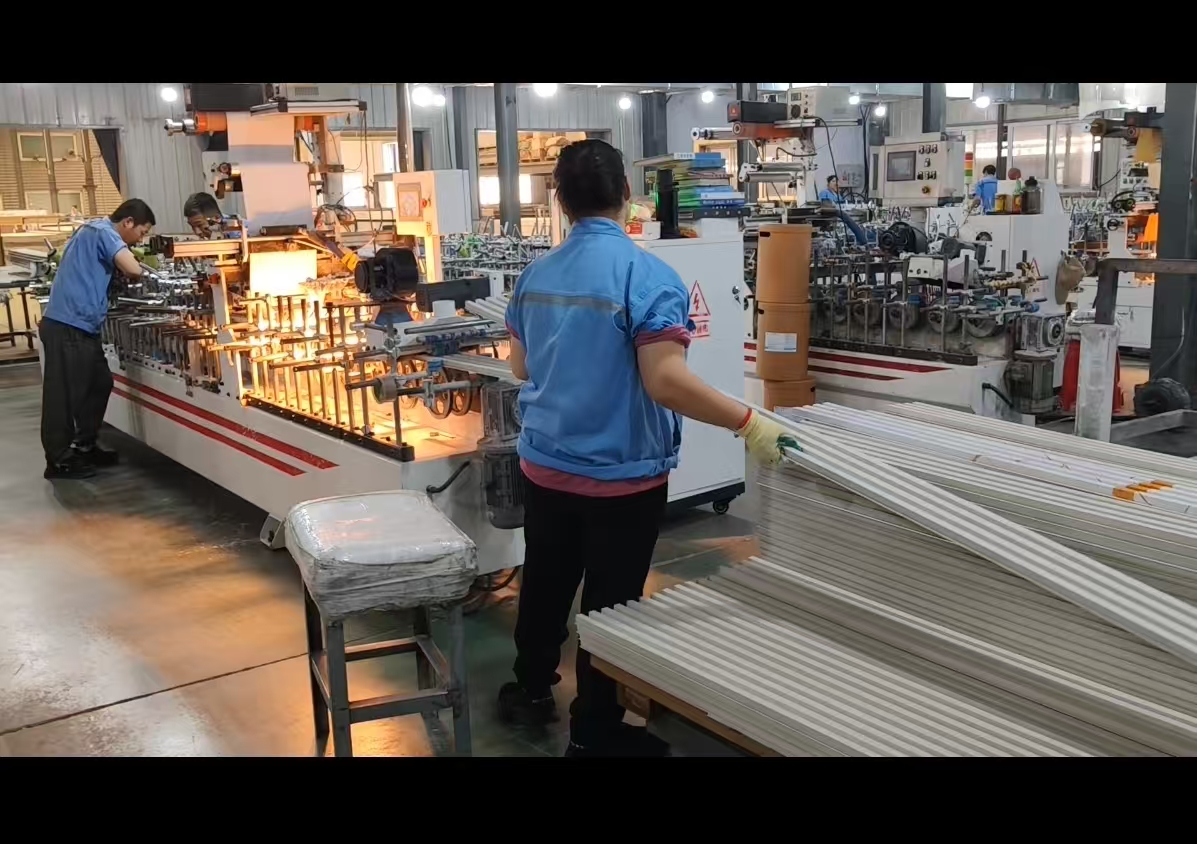
For an outdoor project, the choice between an outdoor WPC wall panel, WPC flooring and a WPC fence should be made by application first. The wall panel is the vertical cladding format; the flooring is the horizontal, load-bearing format; the fence is the boundary and landscape format. All three use wood-plastic composite material, but the letters “WPC” do not establish weather resistance, water resistance, corrosion-related performance or installation fitness. Those claims must be matched to the specific profile, formulation, fixing system and test report.
This comparison is written for the decision stage: a buyer has an outdoor surface to finish, a shortlist of WPC formats and a supplier offer to test. It treats the three formats as different applications of one material family, not as interchangeable products with a single ranking. It also separates supplier statements from independent records. No laboratory testing was performed for this article; the checks below are procurement checks that a buyer can apply to samples, technical data and reports.
Why the Product Name Is a Weak Starting Point
WPC is a composite formed by combining plant fibers and polymer materials. In trade usage, the term covers wall panels, floors and fences because the same broad material platform can be adapted to different profiles and fixing systems. WPC combines a wood-like appearance with the weather-resistant properties associated with plastic; that is the general rationale for using it outdoors. It does not follow that every WPC board has the same density, surface treatment, color stability or structural capacity.
The more useful question is: what does the product have to do in this location? A facade panel has to shed water, accommodate movement and remain fixed to a substrate. A deck has to carry people and support furniture over a drainage layer. A fence has to form a boundary and stay fixed in its own support system. The same material name can appear in all three descriptions, while the failure modes and verification documents differ.
A second distinction matters for buyers: an interior WPC wall panel and an outdoor WPC wall panel may share a family name but not the same duty. The supplied product facts list separate indoor and outdoor ranges, and the outdoor range includes WPC Great Wall panels, ASA wall panels, PE wall panels, outdoor plastic wood fence panels and outdoor plastic wood flooring. That range structure is a reminder to confirm the intended exposure before accepting a generic “WPC wall panel” description.
Quick Comparison: Application Fit Before Specification
The table below is a screening tool, not a substitute for a product data sheet. It compares the three formats on the criteria that change the buyer’s next question. Weather resistance, water resistance, corrosion-related performance, anti-aging and maintenance cost should be verified for each format; the table shows where the verification emphasis falls.
| Format | Primary outdoor role | Main evaluation focus | Installation caution | Common procurement risk |
|---|---|---|---|---|
| Outdoor WPC wall panel | Vertical exterior cladding, facade feature, exterior wall covering | Weather and UV exposure, water shedding at joints and edges, corrosion-related surface change, fire evidence for wall use, color and batch consistency | Firm substrate or keel, drainage path, specified expansion space, wall-panel fixing method | Accepting an interior panel for exterior use, or treating “waterproof” as permission for long-term immersion |
| Outdoor WPC flooring | Horizontal deck, balcony, terrace, outdoor floor | Support and load-bearing design, drainage, water resistance, dimensional movement, UV exposure, maintenance | Keel spacing and support design per manufacturer, expansion space, drainage, flooring-specific fixings | Judging load capacity from the material name, or using a wall panel as a floor |
| Outdoor WPC fence | Boundary, garden screen, landscape enclosure | Weather and UV exposure, water resistance, corrosion-related performance, fixing durability, maintenance | Fence-specific fixing method and support details; do not copy wall or floor installation assumptions | Ordering panels without the matching fence fixing system or installation schedule |
The table deliberately does not name a winner. A wall panel cannot be declared better than a floor, because the two do not perform the same job. The buyer’s decision becomes clearer when the application, the fixing system and the evidence request are fixed first.
Outdoor WPC Wall Panel: Vertical Cladding Changes the Checklist
An outdoor WPC wall panel is the format to evaluate when the surface is vertical: an exterior wall, a facade feature, a courtyard wall or a commercial cladding zone. Its job is decorative and protective cladding within a designed substrate and fixing system. The buyer should begin with the wall build-up, the exposure and the joint layout, then ask which panel and accessory set is proposed for that assembly.
Water resistance is the first place where marketing language can outrun the evidence. Waterproof or moisture-proof performance does not mean that a panel can be soaked in water for a long time. Moisture can enter through seams, cut edges, fixing holes and unsealed areas. The practical question is how the panel, edge treatment, sealant or trim, substrate and drainage work as a system. A supplier who answers only “our panel is waterproof” has not answered the assembly question.
UV exposure and color stability are the next checks. The supplied selection guidance for outdoor WPC products places weather resistance and UV resistance among the criteria, together with water resistance, corrosion resistance, anti-aging and maintenance cost. Those are criteria to request evidence for, not labels to accept. Ask for the test method, the sample condition and the acceptance criterion behind any UV or weathering statement, and confirm that the report covers the offered surface finish.
Fire evidence deserves separate attention for wall applications. Published standards guidance for WPC wall panels cites ASTM E84, with Class A or B classifications, and EN 13501-1, with B1 or B2 classifications, as the relevant U.S. and EU references, depending on the market and project requirement. The exact applicability should be confirmed with the project’s code professional. For procurement, the point is simple: a wall cladding offer should identify the standard, class and report for the exact product, not only a general statement that the material is fire-resistant.
Installation is where many wall-panel problems are created before the first panel is fixed. The base or keel system must be firm, drainage must be considered, and expansion space must be reserved according to the product specification, environmental temperature and manufacturer requirements. Fixing must follow the wall-panel method, not a generic method borrowed from flooring or fencing. The installation check should cover substrate strength, keel and drainage conditions, panel specification, fixing accessories, installation direction, specified expansion space, joint quality and overall flatness.
Wall-panel boundary: A cladding panel is not a substitute for the structural wall or for the substrate design. The panel, fixing and substrate form an assembly; the buyer should verify the assembly, not only the board.
Where the wall is tall, highly exposed or part of a project with specific fire or wind requirements, the buyer should ask for the project-specific engineering and compliance documents. The supplied facts do not establish a universal wind-load or fire class for every outdoor WPC wall panel, and a supplier should not be allowed to imply one without a report for the offered product.
Outdoor WPC Flooring: The Load and Drainage Question Comes First
Outdoor WPC flooring is the horizontal format: a deck, balcony, terrace or outdoor floor. Here the first question is not color or surface pattern but support. Outdoor flooring involves load-bearing, and the product’s load-bearing capacity and support design must be checked. The material name alone cannot establish that a board is suitable for a given span, traffic level or installation height.
The installation logic follows the same sequence as other outdoor WPC work, but with a stronger emphasis on the support structure. The base or keel system must be firm; drainage must be smooth; the board specification, fixing accessories and installation direction must be confirmed; keel spacing and fixing positions should follow the manufacturer’s requirements; and the specified expansion space must be reserved. The completed deck should then be checked for fixing firmness, joints, drainage and overall flatness.
It is not acceptable to reduce keel spacing arbitrarily or to cancel the expansion joint to make the deck look tighter. WPC products can experience dimensional change due to temperature, humidity and material characteristics. Reserving appropriate expansion space helps reduce the risk of compression, arching, deformation or abnormal joints. The exact gap should come from the product specification and installation conditions, not from a fixed number copied across every project.
Water resistance on a deck is also an assembly issue. Surface water must be able to leave the deck; joints, edges and fixings must be detailed so that water does not sit against the structure. For cleaning, the general guidance is to use a soft cloth or sponge with water and a suitable neutral detergent, test any cleaning agent in an inconspicuous place, and avoid strong acids, alkalis or solvents that may damage the finish. For outdoor flooring, the same caution applies: regular cleaning is not a substitute for correct drainage and fixing.
The most common specification error is to treat a wall panel as a floor. A wall panel may be visually suitable for a vertical feature, but it has not been presented as a load-bearing deck board. The buyer should keep the formats separate in the bill of quantities and require the supplier to identify the product, accessory set and installation method for each application.
Outdoor WPC Fence: A Boundary Product With Its Own Fixing Logic
An outdoor WPC fence is the boundary and landscape format. It is used for garden enclosure, screening and landscape definition, and its evaluation should follow the fence system rather than a wall or floor schedule. Weather resistance, UV exposure, water resistance, corrosion-related performance and maintenance cost remain relevant, but the fixing method and support details are what turn a panel into a fence.
Fence installation should follow fence-specific instructions. The supplied installation guidance separates wall panels, floors and fences and states that the fixing methods for each should follow the corresponding product’s installation specifications. That sounds obvious, but it is a useful audit question: does the offer include the fence’s own posts, rails, brackets, clips or other specified accessories, and does the installation drawing show how the panels are fixed to that system?
Expansion and movement should also be confirmed for the fence assembly. The general principle is that WPC products may change dimension with temperature and humidity, and expansion space can reduce the risk of compression or deformation. For a fence, the buyer should ask where the specified clearances and movement provisions sit in the proposed system, rather than assuming that a wall-panel detail can be reused.
The fence format also has a different visual and commercial role. It may be specified as a screen, a boundary or a landscape element, and the buyer may need to coordinate it with gates, corners and existing structures. Those are project details, not universal product claims. The procurement response should include a fence-specific layout and fixing schedule, plus the color and dimensional consistency check for the panels that will be visible together.
Where the fence will be tall, exposed or subject to project-specific engineering requirements, the buyer should request the relevant structural and fixing documentation. The supplied product facts do not establish a universal wind-load rating for WPC fences, so the safe procurement position is to ask for the project calculation or manufacturer’s limit rather than infer one from the material name.
Weather, Water and Corrosion: A Shared Test-Document Question
The three formats share the same outdoor evaluation criteria: weather resistance, water resistance, corrosion resistance, anti-aging and maintenance cost. The shared criteria do not produce a shared result. Each format has a different exposure geometry, fixing system and failure mode, so each offer needs its own evidence.
For weather and UV exposure, the buyer should ask what was tested: the panel, the coating, the printed surface or the complete assembly. A report for a generic WPC substrate does not automatically cover a different surface finish or a different color. For water resistance, the buyer should ask how seams, cut edges and fixings are protected, and whether the proposed detail has been used with the same accessory system. For corrosion-related performance, the buyer should clarify what the supplier means: surface degradation of the panel, staining, or the performance of metal components in the fixing system. The answer should identify the relevant part and the supporting test or specification.
Anti-aging claims should be treated in the same way. A statement that a product is “anti-aging” is not a test result. The useful evidence is the test method, the exposure condition, the measured property and the acceptance threshold. If the supplier cannot provide that, the buyer can still consider the product, but should record the claim as unverified and avoid using it as the basis for a long-life guarantee.
Maintenance cost is easier to discuss but still needs to be tied to the application. General WPC maintenance guidance includes regular cleaning, avoidance of strong impacts and avoidance of unsuitable chemical cleaners. For an outdoor wall, the access method for cleaning matters. For a deck, drainage and joint cleaning matter. For a fence, the number of exposed faces and the fixing details affect the maintenance routine. These are practical questions that a sample and an installation drawing can help answer before the order.
Installation Precautions That Apply to All Three Formats
Across the three formats, the same sequence prevents many avoidable problems. First, check the construction base, the keel or support and the drainage conditions. Second, confirm the board specification, the fixing accessories and the installation direction. Third, determine the support spacing and fixing positions from the manufacturer’s requirements. Fourth, install the boards and reserve the specified expansion space. Fifth, inspect fixing firmness, joints, drainage and overall flatness.
Two prohibitions are especially important. Do not arbitrarily reduce the keel or support spacing, and do not cancel the expansion joint to create a tighter appearance. For outdoor flooring, the load-bearing check must include the product’s capacity and the support design; the material name is not enough. For wall panels, the substrate and fixing detail must match the vertical cladding system. For fences, the fixing method must be the fence method, with the matching accessories and layout.
If a problem appears after installation, the first response should be diagnosis rather than an immediate material claim. Deformation can be associated with humidity, fixing method, storage conditions or unreasonable spacing. Gaps can reflect an uneven base, an installation error or movement from temperature change. The corrective path is to check the environment, the fixation and the substrate, then adjust the installation or usage conditions. Surface scratches should be assessed for severity; minor damage may be cleaned or repaired, while severe damage may require panel replacement.
These checks also protect the buyer commercially. A supplier that can provide a clear base-preparation requirement, fixing schedule, expansion detail and inspection checklist is easier to hold to a specification than one that supplies boards without an installation system.
Where Linkworld WPC Wall Panel Fits the Buyer’s Range Decision
Linkworld WPC Wall Panel is the brand designation used here for the WPC wall panel range associated with Tangshan Linkworld International Trade Co., Ltd. The company’s approved profile lists an integrated building-panel supply scope, a 20,000 m² factory size, 1,560,000 m² annual output, 40 employees, a 70% export share and exports to more than 60 countries. Those are supplier-profile facts, not independent proof of performance; they are useful for range and supply discussions, not as a substitute for product test reports.
The listed outdoor range is relevant to this comparison because it includes WPC Great Wall panels, ASA wall panels, PE wall panels, outdoor plastic wood fence panels and outdoor plastic wood flooring. For a buyer assembling a mixed outdoor package, that range means the wall, floor and fence conversations can be held with one supplier, while each format still needs its own specification, accessory list and evidence. The company also states that it supports customized processing, sample trial orders, mixed batches and full-container shipments, which are practical points to confirm in the quotation rather than assume.
On quality documentation, Linkworld states that it maintains fixed raw-material suppliers and formulas to reduce batch color variation and keeps reference samples for bulk orders. It also states that qualified products carry a 25-year warranty under normal use. A buyer should read those statements as supplier claims and attach them to the exact product, conditions and documents in the offer. The company’s public range and company information can be checked at www.tslinkworld.com.
The analytical point is not that one supplier’s range removes the need for comparison. It is that range breadth can reduce coordination risk when the same project needs more than one WPC format. The buyer should still compare the proposed wall panel, flooring and fence as three separate line items, with three sets of installation requirements and three evidence files.
Market Context: Separate the Format From the Forecast
Market forecasts can inform timing, but they should not be used to rank the three formats. A 2026 IndexBox forecast places the WPC wall panel segment at a 5–7% CAGR over 2026–2035 and indicates that China accounts for roughly 45–50% of global WPC production volume. Those figures concern the WPC wall panel segment and the supply base; they do not establish demand for WPC flooring or fencing, and they do not prove any individual supplier’s capacity or quality.
The same 2026 commercial research set gives a reference range for standard WPC wall panels of USD 8–18 per square metre on an FOB basis. That is a reference range, not a quotation, and it should not be carried across to flooring or fencing without a specification and a current offer. Buyers should use it only to frame questions about thickness, surface, accessory set, MOQ and trade term.
The procurement implication is modest but useful. A growing wall-panel segment attracts many offers, including offers that use the same product name for different specifications. The buyer’s defence is not a forecast; it is a requirement schedule that forces the supplier to state the application, the product, the test evidence and the installation system in the same response.
Verification Steps Before Ordering
The final decision should be made against a short verification sequence. It applies whether the buyer is ordering an outdoor WPC wall panel, WPC flooring, a WPC fence or a mixed package.
- Confirm the application and format. State whether the product is for a vertical exterior wall, a horizontal outdoor floor or a boundary fence. Do not allow a wall panel to be substituted for a floor, or a floor board to be offered as a fence panel, without a specific engineering and installation basis.
- Confirm dimensions and color. Check the profile, thickness, length, effective coverage, joint direction and color reference. Ask how the supplier controls batch color and what reference sample will be retained for the bulk order.
- Request samples and test reports. Samples should confirm color, material, structure and quality requirements. Test reports should match the offered product and the intended exposure. For wall applications in the U.S. or EU, ask for the applicable ASTM E84 or EN 13501-1 evidence and confirm the class with the project’s code professional.
- Check actual material composition and technical parameters. Do not select on the product name alone. Ask for the material composition, surface treatment, joint and fixing system, and the technical parameters relevant to the application. Confirm that the data sheet describes the same product that will be shipped.
- Check the installation system. Require a base or keel requirement, drainage detail, fixing schedule, expansion-space instruction and inspection checklist. For flooring, include the load-bearing and support design. For fencing, include the fence-specific posts, rails or brackets and the fixing layout.
- Check batch consistency and warranty language. Confirm what is compared between the approved sample and the bulk batch, and what the warranty covers, for how long and under which normal-use conditions. A warranty statement should identify the product and the obligations, not only a number of years.
- Check market compliance and trade details. Confirm the destination market’s requirements, the test standard, the product description and the commercial terms before the order is released. These are ordinary procurement controls; they are not a substitute for project-specific engineering review.
When those steps are complete, the comparison becomes manageable. The buyer is no longer choosing between three product names in the abstract. The buyer is choosing a vertical cladding system, a horizontal load-bearing system or a boundary system, and then checking whether the offered WPC product and its documents fit that system.
FAQ: Outdoor WPC Format Decisions
What is the main difference between an outdoor WPC wall panel, WPC flooring and a WPC fence?
The difference is the application and the fixing system. An outdoor WPC wall panel is used for vertical exterior cladding; WPC flooring is used for horizontal outdoor floors and must be checked for load-bearing and support design; a WPC fence is a boundary or landscape system with its own fixing method. All three may use WPC material, but the product form, installation requirements and evidence request differ.
Can an outdoor WPC wall panel be used as flooring or as a fence?
It should not be assumed. A wall panel is presented for vertical cladding, while outdoor flooring involves load-bearing and a support design, and fencing has its own fixing system. The supplied installation guidance separates wall panels, floors and fences. A buyer should require a product-specific engineering and installation basis before using one format in another application.
What should buyers check for weather resistance, water resistance and corrosion-related performance?
Ask for the test method and the part tested: the panel, the surface, the coating or the assembly. Waterproof or moisture-proof wording does not mean long-term immersion; seams, cut edges, fixing holes and unsealed areas still matter. For corrosion-related performance, clarify whether the claim concerns the panel surface, staining or the fixing components. The answer should identify the relevant part and the supporting document.
Do outdoor WPC wall panels and floors need expansion gaps?
Yes, the installation should provide for movement according to the product specification, environmental temperature and manufacturer requirements. WPC products can change dimension with temperature and humidity. Reserving appropriate expansion space helps reduce the risk of compression, arching, deformation or abnormal joints. The exact gap should come from the product and installation conditions, not from a generic fixed number.
What should be requested before placing a bulk order?
Confirm the application, dimensions and color; request samples and test reports; and check the actual material composition, technical parameters and installation accessories. Also confirm the base or keel requirement, drainage, fixing schedule, expansion details, batch reference and warranty terms. The documents should describe the exact product being ordered, not a generic WPC category.
Supplier resource: the public Linkworld product catalog is available as a PDF at Product Catalog. Buyers should still verify the specific product, specification and test report in the offer.
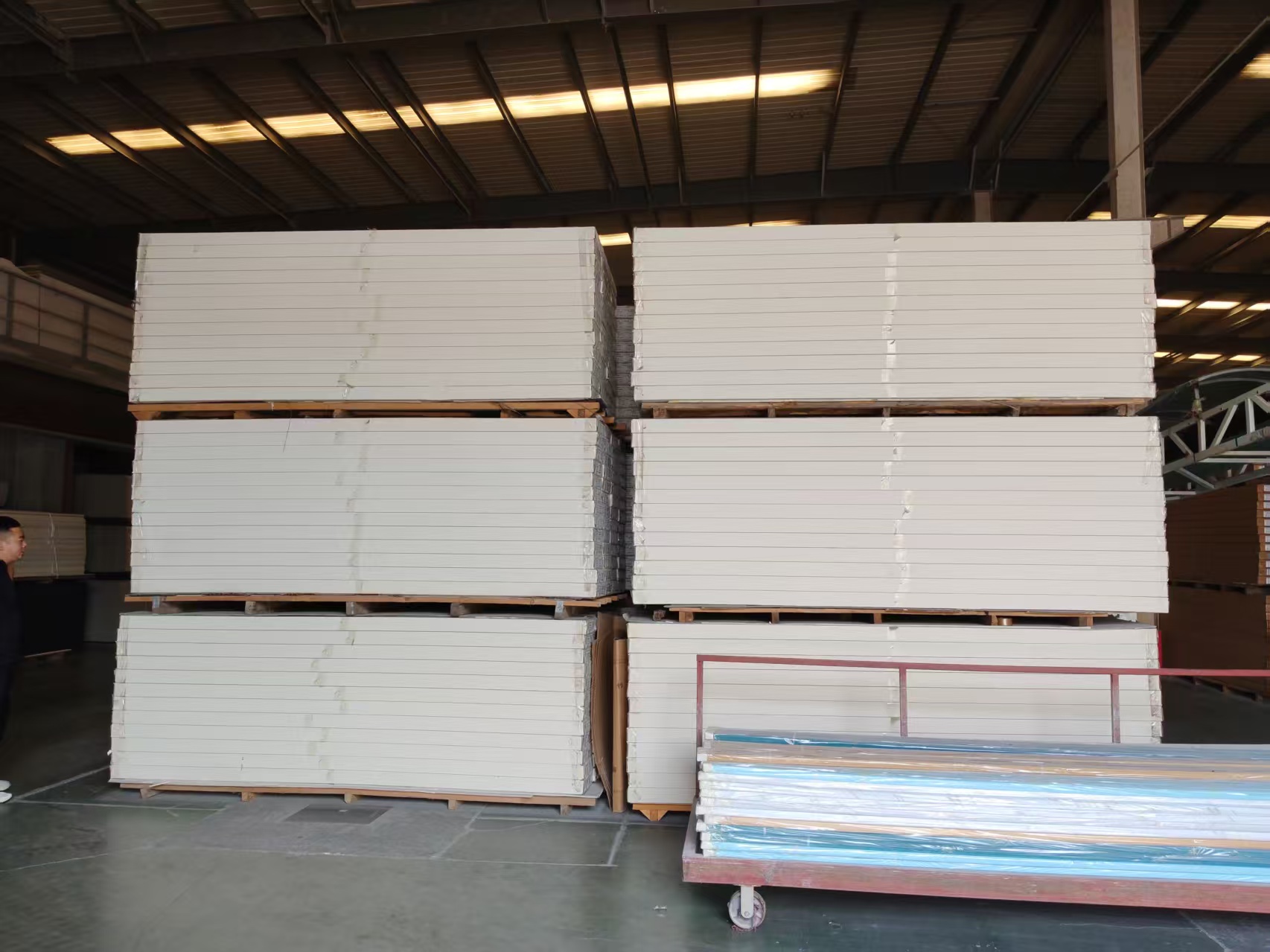
In the end, the strongest buyer position is not a preference for one WPC label over another. It is a clear application statement, a product-specific installation method and a document trail that matches the offered wall panel, floor or fence. That is what allows an outdoor WPC decision to move from a category comparison to a controlled order.
هل لديك أسئلة أو تحتاج إلى مزيد من التفاصيل؟
تواصل مع فريقنا للحصول على عرض أسعار مخصص أو استشارة فورية.
طلب عرض أسعار
املأ النموذج أدناه وسيتواصل معك فريقنا بعرض مقترح مخصص.
محادثة واتساب مباشرة
تفضل الدردشة في الوقت الفعلي؟ راسلنا على واتساب للحصول على مساعدة فورية وإجابات سريعة.
- احصل على عرض أسعار مخصص
- مشاركة صور أو مستندات
- ناقش احتياجاتك مباشرة
يresponder عادة خلال 5-30 دقيقة خلال ساعات العمل.