
Outdoor Waterproof Ethernet Cable: What Buyers Must Verify
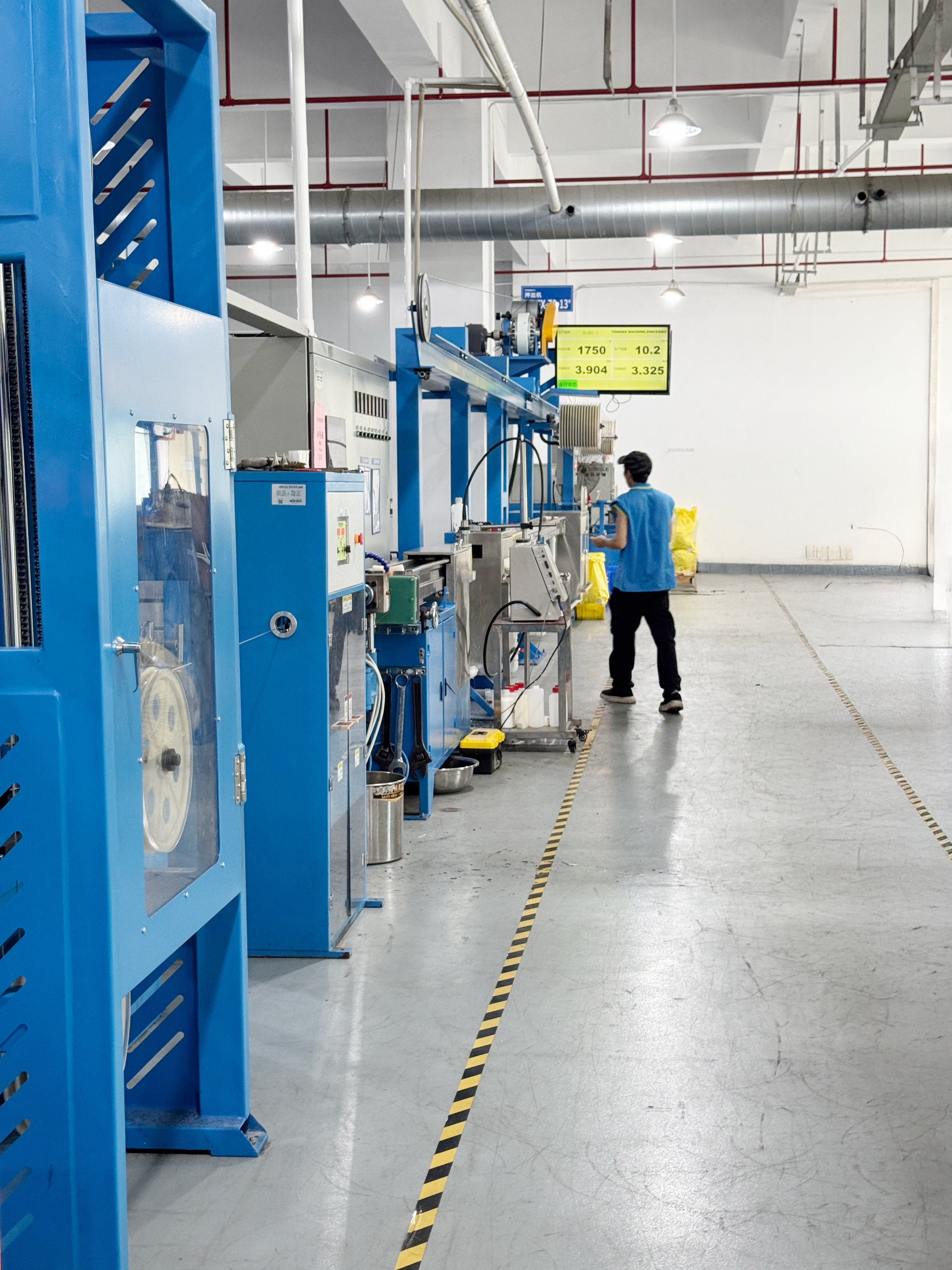
Jacket extrusion at a cable manufacturing facility — the process step that largely determines how an Ethernet cable behaves outdoors. Image: Linoya Electronic Technology Co., Ltd.
An outdoor waterproof Ethernet cable is a twisted-pair network cable built to preserve both its electrical performance and its physical integrity while installed outside the weather envelope of a building — on a pole, a façade, a rooftop, a mast, or inside a buried duct. Water resistance is only one of the properties it must hold. UV stability, temperature tolerance, mechanical strength and surge behaviour on long exposed runs decide whether the same link is still carrying traffic years after commissioning.
Buyers entering the category at the awareness and research stage usually start from a phrase: outdoor waterproof Ethernet cable. That phrase is used loosely across catalogs, marketplaces and quotation sheets, and it hides the decisions that actually determine performance. The more useful question is not whether a cable is waterproof, but which failure vector its construction addresses — and how that construction can be verified before the cable is pulled through a duct.
Why “Waterproof” Is Not the Same as “Outdoor-Ready”
Water resistance describes a single property: whether moisture can reach the conductor. Outdoor readiness describes the cable’s ability to hold that property, and its electrical performance, through years of exposure. Documented troubleshooting experience with Ethernet links points to several recurring failure vectors, and water is only one of them:
- Moisture ingress at the jacket or at the connector interface, frequently through a nick created during installation.
- UV degradation of jacket compounds formulated for indoor use, where direct sunlight is not part of the design assumption.
- Thermal cycling, which expands and contracts the jacket and can loosen the joint between cable and connector.
- Surge energy coupled onto long conductors during nearby lightning activity — an electrical event, not a material one.
- Electromagnetic interference from power distribution, machinery or adjacent cables, which raises crosstalk and error rates.
- Mechanical stress: pulling tension, abrasion, repeated flexing and rodent damage.
A cable sold as an outdoor waterproof Ethernet cable typically addresses the first two items. It may or may not address the rest. That gap is where procurement problems begin: the buyer purchases one component while the site requires a complete connection path.
The Construction Layers That Decide Outdoor Performance
Four construction decisions determine how a twisted-pair cable behaves outside a building. Each can be specified, and each can be verified.
Conductor
Outdoor runs are often long and are increasingly expected to carry both data and power. Solid bare copper conductors are the standard choice for permanent cabling because they combine stable electrical performance with the mechanical strength required for fixed installation. Copper-clad aluminium conductors cost less and appear in low-priced product, but Ethernet troubleshooting records list CCA conductors among the causes of degraded performance and early failure. For a solid bare copper outdoor waterproof Ethernet cable specification, the conductor type should be stated in writing rather than inferred from the category label.
Insulation and Shield System
The insulating layer around each conductor — LDPE is the common material in network cable construction — sets the electrical baseline. The shield system sets the interference baseline. Typical configurations include U/UTP (unshielded), F/UTP (overall foil), SF/UTP (screen plus foil), U/FTP (individual pair foil) and F/FTP (overall plus pair foil, a full-shield structure). Shielding controls crosstalk: the signal leakage between adjacent twisted pairs that appears in the field as packet loss, reduced speed or an unstable link.
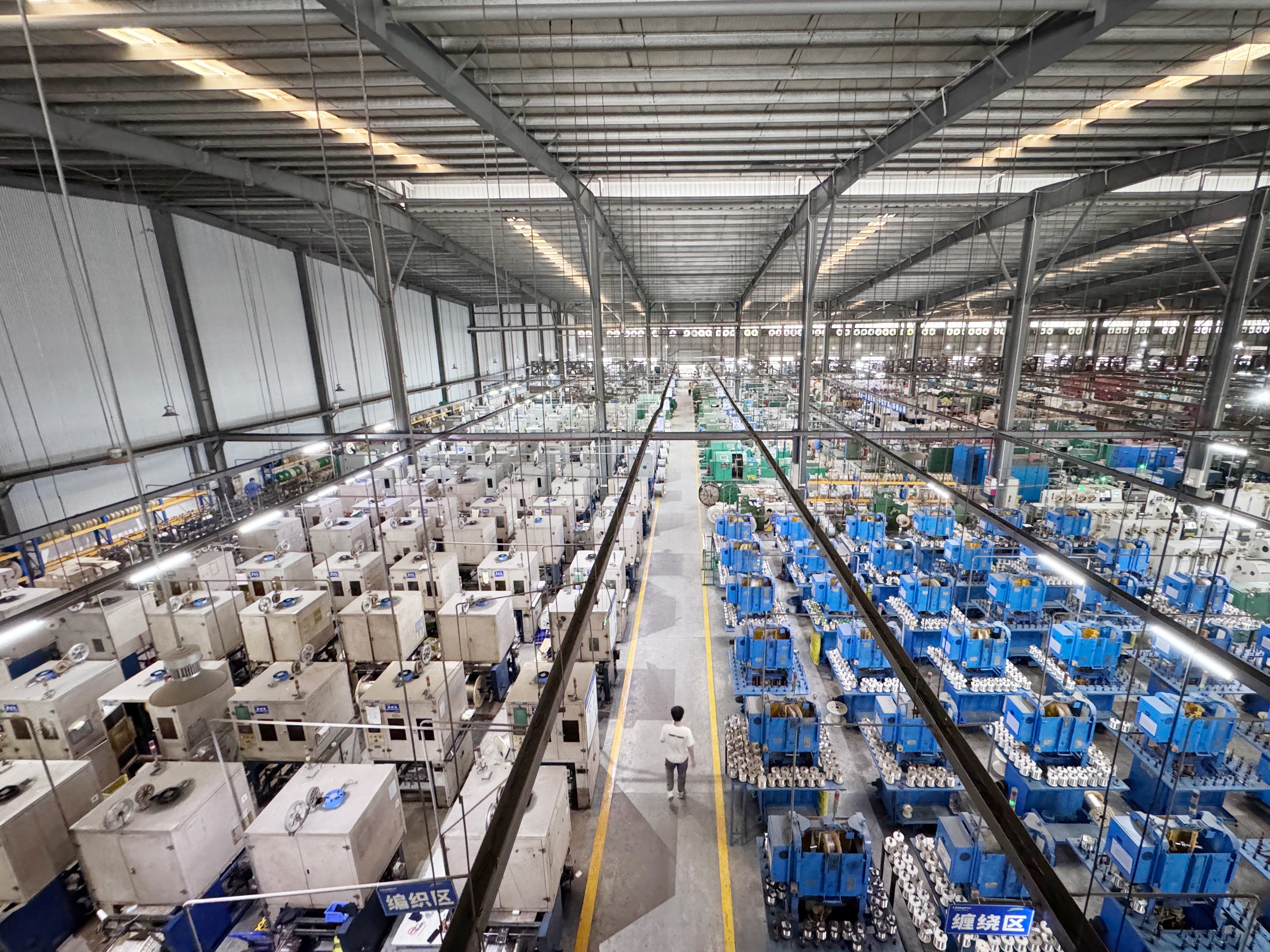
Braiding and shield application on a high-speed data cable line. Shield architecture, not jacket colour, is what separates cable grades in electrically noisy environments. Image: Linoya Electronic Technology Co., Ltd.
Jacket Compound
The outer jacket meets weather first. For permanent outdoor exposure, buyers should confirm the actual compound rather than rely on the word “outdoor”. A PE jacket outdoor waterproof Ethernet cable is a common specification because polyethylene compounds are widely used where moisture and sunlight are the primary design drivers. Weather resistance and flame performance, however, are separate properties: a project standard may require both, and a compound that satisfies one will not necessarily satisfy the other without a specific formulation. This is a point where the manufacturer’s compounding capability becomes a procurement variable rather than a marketing detail.
Connector Interface
This is the least discussed and most exposed part of the link. A sealed jacket does not seal a plug. Outdoor deployments need a defined sealing method at the connector — a weatherproof connector body, a gel-filled enclosure, an IP-rated coupler housing, or a correctly dressed drip loop. Cable and termination should be specified as one item, because water that enters at the plug will reach the conductor regardless of the jacket rating.
Where Outdoor Waterproof Ethernet Cable Is Deployed
Deployment contexts differ in what they stress. The table below maps common outdoor scenarios to their dominant requirements and to the corresponding product fields in Linoya’s range.
| Deployment context | Dominant stress on the link | Related Linoya product field |
|---|---|---|
| Outdoor surveillance — pole-, wall- or façade-mounted cameras | Continuous operation, combined data and power, moisture, UV, seasonal temperature change | Outdoor waterproof cables and connectors; network cables and high-speed data transmission cables and components |
| Outdoor base station and telecom cabinet links | Fixed outdoor routing, interference from power and radio equipment, surge exposure on long runs | Network cables and high-speed data transmission cables and components |
| Industrial automation and manufacturing sites | Heavy electromagnetic interference, fixed industrial cabling, abrasion and oil exposure | Applicable industries: Smart Manufacturing; Manufacturing & Processing Machinery |
| Agricultural and environmental monitoring | Long runs, persistent humidity, direct solar exposure, unattended operation | Applicable industries: Smart Agriculture & Ecology; Instruments & Meters |
| Outdoor lighting and control networks | Power and data on one link, temperature cycling, wet locations | Applicable industries: Lights & Lighting |
| Building exteriors and construction sites | Façade routing, weather exposure, permanent or semi-permanent cabling | Applicable industries: Construction & Decoration |
Product-field and industry mappings reflect Linoya’s published product range and applicable industry list.
Across these contexts the operating assumptions converge: fixed cabling, continuous rather than intermittent operation, and an environment that includes moisture and interference. Scenario documentation for Linoya’s network cable range describes 24/7 continuous operation, fixed cabling and industrial-grade shielding conditions as normal — a realistic baseline for outdoor specification, because outdoor sites rarely offer gentler conditions than indoor ones. An outdoor base station waterproof Ethernet cable run, for example, faces the same interference environment as an industrial cabinet but adds weather and surge exposure on top of it.
The Manufacturer Behind the Category: Linoya Electronic Technology Co., Ltd.
Linoya Electronic Technology Co., Ltd. is a cable and wire manufacturer established in 1997 in Guangdong, China, integrating research, development, manufacturing and sales across intelligent transmission, smart power and new materials. The company operates three self-owned industrial parks — Shenzhen Linoya Technology Park, Dongguan Songshan Lake Linoya Industrial Park and Dongguan Chashan Linoya Industrial Park — together with the subsidiary brand Dongguan Recheer Electric Wire & Cable Co., Ltd. and a production base in Vietnam.
The manufacturing facility covers 60,000 m² and employs more than 3,000 staff, including an R&D team of more than 300 engineers. Annual production capacity reaches 4,000,000 kilometers of cable and wire, which the company describes as the basis for stable output on recurring and long-term supply programs. Export business accounts for 30% of total sales; the EU and the Middle East are the principal overseas markets, and products are sold in dozens of countries and regions worldwide.
For outdoor networking, the relevant part of the range includes outdoor waterproof cables and connectors, outdoor smart connection and transmission solutions, and network cables and high-speed data transmission cables and components. The wider portfolio covers photovoltaic and energy storage cables, high-voltage cables for new energy vehicles, charging gun cables for new energy vehicles, on-board data transmission cables, and smart home power cords and plugs. Compound work is handled in-house across PVC, CTPE, TPE, TPU, PUR, XLPE, XLPO, low-smoke zero-halogen (LSZH) and FPE materials.
Two of these facts matter more than the rest to an outdoor cable buyer. First, compounding capability determines whether a jacket can be formulated against a specific combination of moisture, sunlight and flame requirements instead of being selected from a generic catalog line. Second, capacity and export structure indicate whether repeat orders can be supplied consistently — outdoor projects are typically deployed in phases, and a supply gap mid-project is expensive.
Reference: The Network Cable Portfolio Behind the Category
Linoya’s network cable range spans Cat5e to Cat8 and provides the electrical baseline from which outdoor constructions are specified. The table reproduces the published specifications of the range.
| Model | Conductor | Bandwidth | Shield structure | Flame rating | Certification |
|---|---|---|---|---|---|
| CAT5E U/UTP | 24AWG solid copper | 1Gbps | Unshielded | CM/CMG | UL/ETL |
| CAT5E F/UTP | 24AWG solid copper | 1Gbps | Overall foil | CM/CMG | UL/ETL |
| CAT5E SF/UTP | 24AWG solid copper | 1Gbps | Screen + foil | CM/CMG | UL/ETL |
| CAT6 U/UTP | 24AWG/23AWG solid copper | 10Gbps @55m | Unshielded | CMR | UL/ETL |
| CAT6 F/UTP | 24AWG/23AWG solid copper | 10Gbps @55m | Overall foil | CMR | UL/ETL |
| CAT6 SF/UTP | 24AWG/23AWG solid copper | 10Gbps @55m | Screen + foil | CMR | UL/ETL |
| CAT6A U/UTP | 23AWG solid copper | 10Gbps @100m | Unshielded | CMP | UL/ETL/CPR |
| CAT6A U/FTP | 23AWG solid copper | 10Gbps @100m | Individual pair foil | CMP | UL/ETL/CPR |
| CAT6A SF/UTP | 23AWG solid copper | 10Gbps @100m | Screen + foil | CMP | UL/ETL/CPR |
| CAT6A F/FTP | 23AWG solid copper | 10Gbps @100m | Overall + pair full foil | CMP | UL/ETL/CPR |
| CAT7 F/FTP | 23AWG solid copper | 40Gbps @50m | Overall + pair full foil | CMP | UL/ETL/CPR |
| CAT7A F/FTP | 22AWG solid copper | 100Gbps @15m | Overall + pair full foil | CMP | UL/ETL/CPR |
| CAT8 F/FTP | 22AWG solid copper | 40Gbps @30m | Overall + pair full foil | CMP | UL/ETL/CPR |
All models are specified to TIA/EIA-568-C.2, with stated compliance to TIA/EIA, EN and GB standards. Material construction across the standard range: solid bare copper conductor, LDPE insulation, PVC or LSZH jacket.
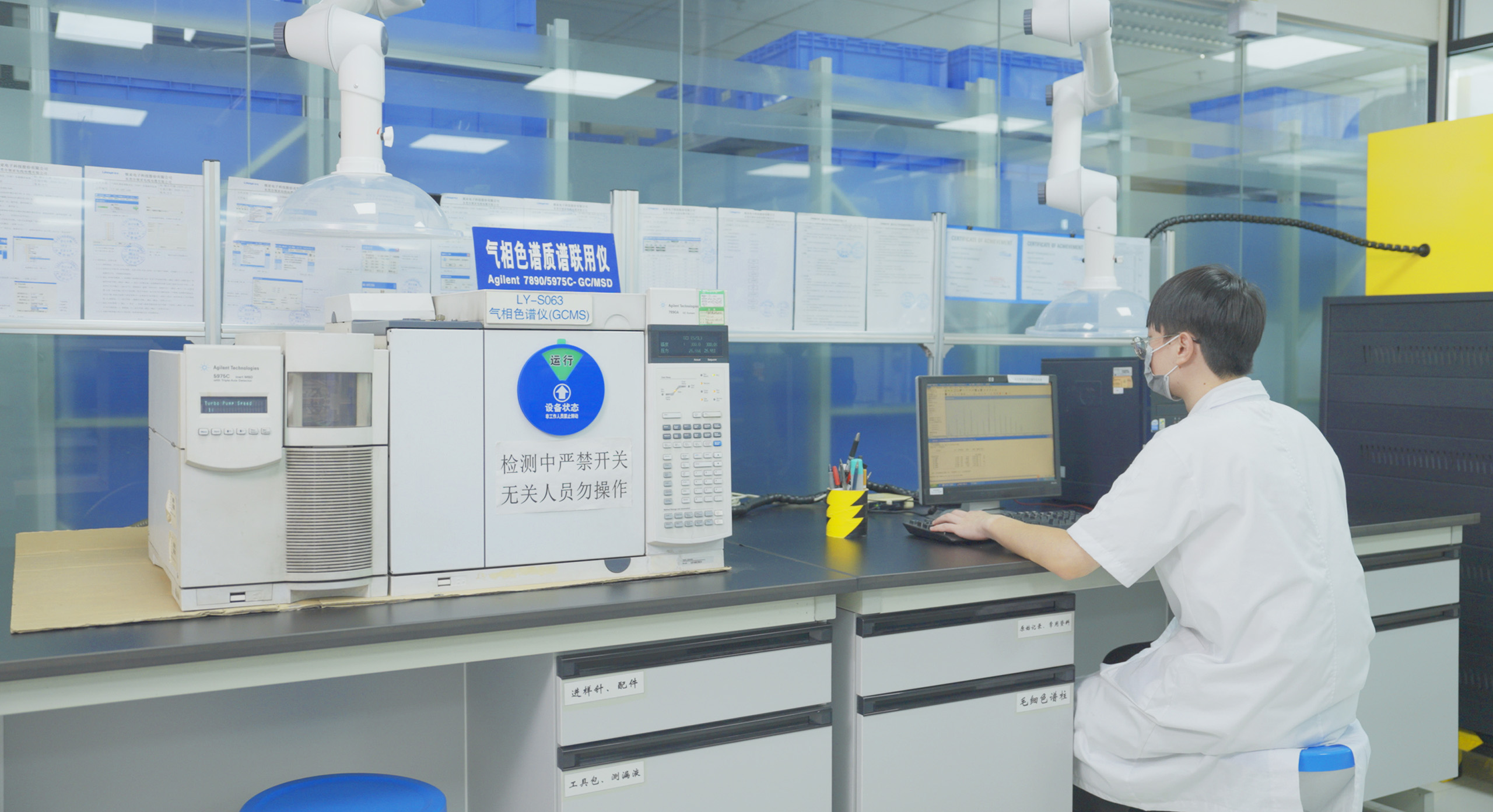
Electrical performance testing in the laboratory. Finished cables are tested at factory level before delivery; site acceptance testing remains the buyer’s responsibility. Image: Linoya Electronic Technology Co., Ltd.
In practice, an outdoor construction is derived from this baseline by changing the outer jacket compound and the termination method while keeping the conductor and shield logic. Buyers should confirm that the derived construction is documented as its own item with its own test data, rather than inheriting the certification of the indoor family by name.
Outdoor Cable Compared with Traditional Approaches
Several approaches are used for outdoor network links. They are not equally durable, and none of them removes the need for surge and grounding design.
| Approach | What it protects against | Where it breaks down |
|---|---|---|
| Indoor Ethernet cable routed outdoors inside conduit | Mechanical damage and direct abrasion; conduit entries can be sealed | UV exposure at exposed ends and terminations; water trapped inside the conduit; an indoor compound that was never formulated for permanent solar load. Ethernet troubleshooting guidance lists indoor cable used in an outdoor environment among the causes of early failure. |
| Generic “outdoor” cable with unsealed plugs | Rain on the cable body | The connector interface remains the entry point. A jacket rating does not extend to the plug. |
| Full-shielded high-category cable (Cat7, Cat7A, Cat8) | Crosstalk and EMI in dense or electrically noisy environments | Larger diameter, greater stiffness, higher termination cost and shorter rated distances: Cat8 F/FTP is specified at 40Gbps over 30 m and Cat7A F/FTP at 100Gbps over 15 m. |
| Fibre to the outdoor device | Distance limits and electrical isolation | Requires media conversion, a separate power feed for the remote device and different termination tooling. Copper remains simpler where PoE power delivery is required. |
- No cable provides lightning protection. A waterproof jacket does not divert surge energy. Outdoor deployments still depend on surge protective devices, bonding and grounding, and routing that reduces exposure.
- Shielding only works when it is grounded correctly. Ethernet troubleshooting records list wrong STP grounding among the causes of link instability. A mis-grounded shield can perform worse than no shield at all.
- Higher categories trade distance for speed. For long outdoor runs, the realistic operating choice is Cat6a at 10Gbps over 100 m rather than a short-reach 40Gbps construction rated for 30 m.
- Factory testing does not replace site acceptance. Linoya states that all finished cables pass factory-level electrical performance testing before delivery, and its own guidance notes that factory-tested cables still require on-site re-checking after construction.
- Certification scope is specific. A CE certified outdoor waterproof Ethernet cable or a CPR certified outdoor waterproof Ethernet cable designation applies to a particular construction and market. The document should be checked against the exact SKU and the destination market, not against a product family name.
Procurement Checklist for Outdoor Waterproof Ethernet Cable
The following criteria translate the technical discussion above into questions a buyer can put to any supplier, including Linoya.
- Conductor material and gauge. Confirm solid bare copper and the AWG value (the published range uses 22AWG, 23AWG and 24AWG depending on category).
- Category and distance budget. Match the category to the actual run length, not to the device port speed.
- Jacket compound. Ask for the compound designation in writing and for its behaviour under moisture and sunlight.
- Shield type and grounding plan. Specify the shield architecture and decide how the shield will be bonded at each end.
- Connector sealing method. Treat the termination as part of the cable specification.
- Flame rating and certification documents. Request UL, ETL or CPR records matching the project’s regulatory market, alongside TIA/EIA-568-C.2 compliance.
- Surge and grounding hardware. Budget for protective devices separately from the cable.
- Installation constraints. Minimum bend radius, maximum pulling tension, UV-rated supports and drip loops.
- Acceptance testing method. Define continuity, link training and real throughput tests before installation begins.
- Supply continuity. Confirm capacity and lead time for repeat orders across project phases.
Market Trend Analysis: Where Outdoor Copper Links Are Growing
Three shifts are visible in how outdoor network links are specified, and all three push buyers toward more explicit documentation rather than a single catalog descriptor.
The performance floor is rising. Devices at the outdoor edge increasingly expect Gigabit and 10Gbps connectivity and higher power delivery over the same cable. Reference material for category selection notes that Cat6a is chosen where PoE++ loads and dense cable bundling are present, with PoE++ figures cited up to 90W. Power and data convergence is what makes conductor gauge and shield architecture procurement decisions rather than installation details.
Outdoor endpoints are multiplying. Surveillance, base stations, industrial automation, agricultural monitoring and lighting control all place network devices outside the building envelope. Linoya’s own applicable-industry list — Smart Manufacturing, Smart Agriculture & Ecology, Lights & Lighting, Manufacturing & Processing Machinery, Instruments & Meters and Construction & Decoration — reflects the same spread, and the company lists outdoor waterproof cables and connectors and outdoor smart connection and transmission solutions as a dedicated product field.
Certification is becoming a gate rather than a bonus. Flame-rating and certification credentials are increasingly requested at tender stage for construction and infrastructure work, particularly in the EU and the Middle East — the two regions that form Linoya’s principal overseas sales markets, representing 30% of total sales. Suppliers that cannot produce SKU-level documentation create schedule risk regardless of their price position.
Future Outlook
The direction of the category is fairly clear even without forecasting specific volumes. As more network endpoints move outdoors, the cable itself becomes a smaller part of the specification and the connection system becomes a larger one: sealed connectors, documented jacket compounds, defined grounding schemes and acceptance testing. Buyers who specify at the system level — cable, termination, protection and testing as one package — tend to resolve outdoor link problems at the design stage rather than at the maintenance stage.
For manufacturers, the competitive variable shifts from category label to documentation. A supplier that can state conductor material, shield structure, flame rating, certification scope and factory test practice for a given SKU is easier to qualify than one that offers a broad “outdoor” family with no per-item evidence. In the awareness and research phase, that distinction is the most useful filter a buyer can apply.
FAQ
What is an outdoor waterproof Ethernet cable, and how does it differ from an indoor Ethernet cable?
An outdoor waterproof Ethernet cable is a twisted-pair data cable built to maintain electrical performance and physical integrity when installed outside a building. The difference from an indoor cable is not the data standard but the construction and the deployment assumptions. Indoor network cables in Linoya’s range are specified with PVC or LSZH jackets and flame ratings such as CM, CMR or CMP, and they assume a protected environment. Outdoor deployment adds moisture, sunlight, temperature cycling and mechanical exposure. Ethernet troubleshooting guidance lists indoor cable used in an outdoor environment among the causes of early cable failure, which is why the jacket compound, the shield system and the connector sealing method should be specified for the outdoor construction rather than inherited from an indoor catalog entry.
Which category should an outdoor link use — Cat5e, Cat6 or Cat6a?
The choice follows speed, distance and power requirements. Cat5e supports 1Gbps and suits projects that need only stable Gigabit performance with modest PoE loads; it has a lower procurement cost and more forgiving installation requirements, but it does not support 10Gbps or high-power PoE++. Cat6 supports 10Gbps at distances up to 55 m with 250 MHz bandwidth and improved crosstalk performance, which fits cost-controlled projects needing short-range 10Gbps or Gigabit with upgrade headroom. Cat6a supports 10Gbps over the full 100 m channel, handles PoE++ loads, and is specified for dense cable bundles and long-term permanent cabling; the trade-offs are a larger cable diameter and a higher overall project cost. On long outdoor runs, these distance limits matter more than they do indoors, because they cannot be corrected after installation.
Does shielding matter on an outdoor Ethernet cable?
Shielding matters wherever electromagnetic interference or dense cable bundling is present, which describes most outdoor industrial and utility sites. Crosstalk is signal leakage between adjacent twisted pairs inside the cable, and excessive crosstalk causes packet loss, slow speeds or unstable links. Linoya’s range uses several shield structures — unshielded (U/UTP), overall foil (F/UTP), screen plus foil (SF/UTP), individual pair foil (U/FTP) and full overall-plus-pair foil (F/FTP) — so the shielding level can be matched to the noise environment instead of specifying full shielding everywhere. One condition applies: shielding delivers its benefit only when the grounding scheme is correct. Wrong STP grounding appears in Ethernet troubleshooting records as a cause of link instability, and a mis-grounded shield can perform worse than no shield.
Does a waterproof Ethernet cable provide lightning protection?
No. Water resistance and surge protection are different functions, and no twisted-pair cable provides lightning protection by itself. A waterproof jacket keeps moisture away from the conductor, but it does nothing to divert the surge energy that couples onto a long conductor during nearby lightning activity. Outdoor installations therefore treat lightning protection outdoor Ethernet cable routing as a system design question: surge protective devices at the equipment end, correct bonding and grounding, and routing that reduces exposure. Buyers who select a cable on the assumption that its jacket rating covers surge events will still need to budget separately for protection hardware.
How can a buyer verify cable quality before and after installation?
Verification has three stages. Before installation, confirm the material declaration, category, conductor type and certification records for the exact SKU — solid bare copper conductors, the stated shield structure, and UL, ETL or CPR documentation where the project market requires it. During installation, control the mechanical variables: minimum bend radius, pulling tension, and the sealing of every connector interface. After installation, test rather than assume. A cable tester checks continuity, open circuits, short circuits and mis-wiring through its LED sequence; a link status indicator on the network device confirms that the port trains; and a real throughput test confirms actual performance against the expected speed. Linoya states that all finished cables pass factory-level electrical performance testing before delivery, and its troubleshooting guidance notes that factory-tested cables still require on-site re-checking after construction.
Why does an outdoor Ethernet cable lose speed or drop packets?
Troubleshooting records for Ethernet links group the causes into five families: physical damage such as broken inner conductors, crushed cable or over-tight bends; termination defects such as an incorrect wiring sequence, over-long untwisted pairs, poor crimping or oxidised RJ45 pins; cable quality issues such as CCA conductors, off-specification grades or counterfeit product; environmental interference such as heavy EMI, incorrect STP grounding or the use of indoor cable outdoors; and connector mismatch, where low-grade RJ45 connectors cannot support the high-frequency performance of Cat6 or Cat6a. On an outdoor link the symptoms usually appear as no link light, intermittent disconnection, a link trained at 10/100Mbps instead of the expected Gigabit speed, packet loss or an unstable PoE supply. Substituting a known-good cable is the fastest first diagnostic step.
Reference material: the Linoya Electronic Technology Co., Ltd. product brochure is available as a downloadable PDF, and the company publishes its product information at linoya.com.
Category coverage: Outdoor Waterproof Ethernet Cable · Outdoor Surveillance · Outdoor Base Station · UV Resistant · Lightning Protection · CE / CPR Certification · PE Jacket · Solid Bare Copper · Cat6 · PoE++
هل لديك أسئلة أو تحتاج إلى مزيد من التفاصيل؟
تواصل مع فريقنا للحصول على عرض أسعار مخصص أو استشارة فورية.
طلب عرض أسعار
املأ النموذج أدناه وسيتواصل معك فريقنا بعرض مقترح مخصص.
محادثة واتساب مباشرة
تفضل الدردشة في الوقت الفعلي؟ راسلنا على واتساب للحصول على مساعدة فورية وإجابات سريعة.
- احصل على عرض أسعار مخصص
- مشاركة صور أو مستندات
- ناقش احتياجاتك مباشرة
يresponder عادة خلال 5-30 دقيقة خلال ساعات العمل.