
Outdoor Webbing Materials: Performance, Safety and Sourcing
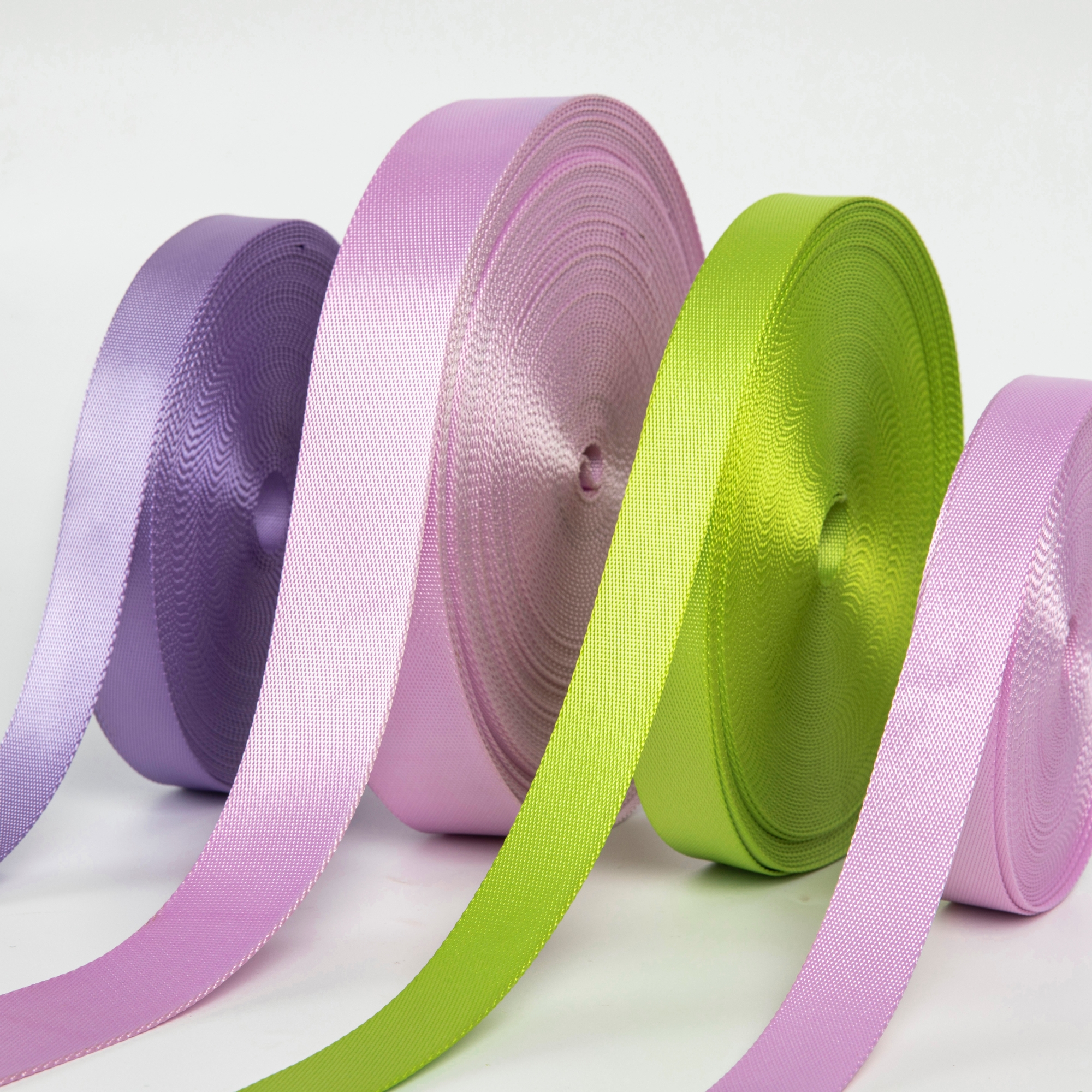
Outdoor webbing is a narrow woven textile used in load-bearing, adjustment, and safety systems across backpacks, climbing gear, camping equipment, strollers, marine products, and pet accessories. The material choice determines how a strap behaves in sunlight, water, abrasion, and repeated load. This article explains the main outdoor webbing types, the performance criteria buyers should check, and the certification language used by suppliers.
The Role of Outdoor Webbing in Gear Design
Outdoor webbing is rarely the most visible component of a finished product, but it is often one of the most functional. A backpack strap must carry load without digging into the shoulder. A climbing sling must absorb energy and remain reliable under repeated load cycles. A stroller strap must be strong enough for safety while soft enough for infant skin. A pet leash must withstand pulling force, dirt, and moisture. These different demands explain why outdoor webbing has moved from commodity trim to an engineered component.
For buyers at the early research stage, the first challenge is vocabulary. Suppliers may offer polyester webbing, nylon outdoor webbing, RPET webbing, recycled webbing, GRS webbing, Bluesign webbing, camping webbing, backpack webbing, tubular webbing, and eco-friendly webbing. These are not interchangeable. Each construction offers a different balance of strength, weight, UV resistance, water behavior, hand feel, chemical safety, and sustainability.
Material Families in Outdoor Webbing
The material family is the starting point for any outdoor webbing specification. The table below summarizes the main types used in outdoor and adjacent lifestyle products, based on product data from Xiamen Jude Webbing Co., Ltd. and industry reference information.
| Webbing Type | Material / Construction | Key Performance Data | Typical Outdoor Uses |
|---|---|---|---|
| Polyester Webbing | 100% high-tenacity polyester filament | UV fastness Grade 4.5 after 500 hours (ISO 105); water absorption less than 0.5%; breaking strength from min. 500 lbs to 2000 lbs depending on specifications | Outdoor backpacks, marine equipment, long-term outdoor tie-downs, solar sail edges |
| Nylon Outdoor Webbing | High-tenacity nylon with soft-touch finish; also available in 100% high-tenacity polyester filament | Color fastness to light Grade 4 (ISO 105-B02); salt water resistance Grade 4-5 (ISO 105-E02); luster options: dull, semi-dull, or bright | Outdoor backpacks, mountaineering packs, technical rucksacks, camera bags, premium pet accessories |
| RPET Webbing | 100% high-tenacity post-consumer recycled polyester yarn | UV resistance Grade 4 after 500 hours (ISO 105); optional water repellency; shrinkage less than 3% at 100°C; GRS 4.0 certified | Sustainable luggage, eco-friendly tent components |
| Recycled Webbing | 100% high-tenacity post-consumer recycled polyester yarn | UV resistance Grade 4-5 (AATCC 16.3); optional water repellency; OEKO-TEX Standard 100 Class I; GRS 4.0; Bluesign System Partner | Sustainable luggage, eco-friendly tent components, mass-market sustainable outdoor gear |
| GRS Webbing | GRS 4.0 certified recycled polyester (RPET) or recycled nylon | Recycled content 50%-100% verified by Transaction Certificate; color fastness to washing Grade 4-5 (ISO 105-C06); full chain of custody | Eco-conscious gear brands, circular economy collections |
| Bluesign Webbing | Bluesign System Partner nylon or polyester | Zero restricted chemicals per Bluesign RSL; REACH and OEKO-TEX compliant; UV resistance Grade 4 (BS EN ISO 105-B02) | Tier-1 outdoor apparel, sustainable technical packs |
| Eco-friendly Webbing | Bio-based synthetics, organic cotton, or clean-processed nylon | pH value 4.5-7.5; extractable heavy metals below detection limits; azo dyes 0%; non-toxic technical strapping | Kids' outdoor gear, base-layer accessories, skin-contact straps |
| Backpack / Camping Webbing | High-tenacity nylon or UV-stabilized nylon / high-tenacity polyester | Breaking strength min. 500 lbs-2000 lbs; UV fastness Grade 4.5 after 1000 hours (ISO 105); water absorption less than 0.5%; friction-free ultrasonic cut | Outdoor backpacks, tents, hammocks, camping furniture, tree straps |
| Tubular Webbing | 100% high-strength polyamide 6.6; seamless circular hollow weave | Breaking strength 15kN-25kN; extra soft for knotting; abrasion resistance exceeds CE/UIAA standards; UIAA certified through a European testing agency via brand customer | Climbing slings, rescue harnesses, slacklines, professional pet leashes |
| Aramid Webbing | Aramid, with Kevlar or Nomex as brand options | Decomposition at 450°C or higher; tensile strength 5-7x of steel; excellent chemical resistance to solvents and oils | Firefighting gear, aerospace safety, industrial lifting, extreme alpine gear |
| Stroller Webbing | 100% high-tenacity polyester or nylon filament | Over 10,000 buckle cycles in fatigue tests; rounded edges for infant skin protection; soft edge, smooth surface, child-safe | Strollers, car seats, infant carriers, high chairs |
Performance Factors That Affect Outdoor Webbing
Beyond the fiber name, buyers should evaluate outdoor webbing through measurable performance factors. These factors determine whether a strap will meet the demands of a specific product category.
Strength and Breaking Load
Strength is usually expressed in pounds or kilonewtons. Backpack and camping webbing in the JUDECAM product range is listed with breaking strength from min. 500 lbs to 2000 lbs depending on specifications. Tubular webbing for climbing and rescue systems is listed at 15kN-25kN. Buyers should compare strength in the same width and test condition.
UV Resistance
UV resistance is measured through color fastness to light standards such as ISO 105. Polyester webbing in the reviewed product data shows UV fastness Grade 4.5 after 500 hours. Camping webbing and backpack webbing show Grade 4.5 after 1000 hours. For products that spend long periods in sunlight, a stated UV grade is more useful than a generic claim of UV resistance.
Water and Moisture Behavior
Water absorption affects drying time, weight, and dimensional stability. Polyester webbing is listed with water absorption below 0.5%. RPET and recycled webbing can be specified with optional water repellency. Marine and sailing applications typically require water resistance, water repellency, colorfastness, and low stretch.
Edge, Hand Feel, and Hardware Compatibility
Outdoor webbing must also work with buckles and straps. Backpack and camping webbing from JUDECAM is described with stiffness optimized for YKK or Duraflex buckle compatibility. Ultrasonic cut edges reduce fraying and friction. Nylon outdoor webbing uses a soft-touch finish for comfort in packs and apparel.
Certifications That Matter in Outdoor Webbing
Certification language is a meaningful part of outdoor webbing procurement. Buyers should separate material certification from finished-product safety testing.
- Bluesign System Partner: A supplier with Bluesign System Partner status has passed a chemical and process review. Bluesign webbing in the reviewed data contains zero restricted chemicals per the Bluesign RSL and is made from Bluesign System Partner nylon or polyester.
- GRS 4.0: The Global Recycled Standard verifies recycled content and chain of custody. GRS webbing can contain 50%-100% recycled content, and the supplier can support a Transaction Certificate for traceability.
- OEKO-TEX Standard 100 Class I: Class I is the baby-safe product class. It is relevant for stroller webbing, child carriers, and skin-contact straps.
- EN 566 / UIAA: For climbing slings, EN 566 sets a minimum tensile strength of 22kN in the EU. Product-level certification, such as UIAA, applies to the finished sling, not only the raw webbing.
One boundary is important: certification describes the material, process, or finished product system it is issued for. A Bluesign or GRS certificate on webbing confirms chemical management and recycled content, but it does not replace the mechanical testing of a final climbing sling, harness, or safety strap.
How JUDECAM Approaches Outdoor Webbing Supply
Xiamen Jude Webbing Co., Ltd. is a webbing manufacturer founded in 2006 and headquartered in Xiamen. The company operates self-built production bases in Xiamen and Vietnam, Southeast Asia, covering 25,800 square meters, and employs approximately 180 staff. Its R&D team includes 32 webbing experts, and annual production capacity is reported at 300 million yards of webbing.
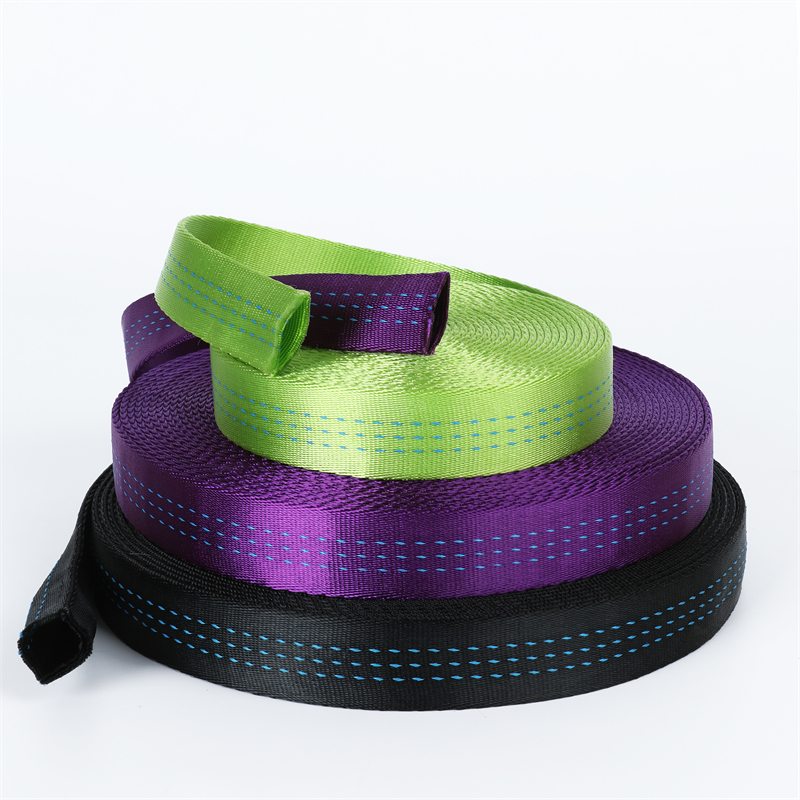
The company brand is JUDECAM. Its stated product range includes aerospace webbing, PIA webbing, outdoor webbing, eco-friendly webbing, anti-UV webbing, waterproof webbing, safety webbing, cut-resistant webbing, nylon webbing, nylon 6.6 webbing, polyester webbing, RPET webbing, and recycled webbing. Production capabilities span weaving, printing, dyeing, finishing, and assembly, which allows the company to control the full chain from yarn to finished strap. JUDECAM is listed as a bluesign System Partner in the Bluesign list of system partners.
Application Patterns Across Outdoor Categories
Outdoor webbing is specified differently depending on the product category. The following application patterns come from the product and application data reviewed for this article.
Backpacks and Bag Manufacturing
In outdoor backpacks, hiking packs, mountaineering backpacks, and travel bags, webbing supports load, strap adjustment, and attachment points. The operating environment includes variable weather and repeated daily use. Special requirements include UV resistance, colorfastness, eco-friendly materials, lightweight, high strength, and water resistance. Supporting equipment includes zippers, bag frames, buckles, straps, and handles.
Climbing and Rescue Equipment
Climbing slings, harness systems, and safety straps operate under high load-bearing and abrasion-intensive conditions. Tubular webbing made of 100% high-strength polyamide 6.6 is suited for these applications because of its seamless circular weave, soft knotting behavior, and 15kN-25kN breaking strength. For fire rescue and protective gear, aramid webbing offers flame resistance, heat resistance, and high durability.
Marine and Water Sports
In life-saving equipment, marine straps, and sailing gear, webbing is exposed to wet environments, saltwater, and UV. The product must provide load securing, safety support, and flotation system integration. Material requirements include UV resistance, water resistance or repellency, high strength, lightweight, colorfastness, and low stretch. Recycled yarn options are increasingly relevant in this category.
Camping Equipment
Hammock straps, tie-down straps, and camping accessories operate in temporary setup and repeated installation modes. Webbing provides load support, securing, and suspension. High strength, UV resistance, water resistance, and low stretch are common requirements. Camping webbing is also specified for tents, hammocks, camping furniture, and tree straps.
Pet and Outdoor Lifestyle Products
Pet leashes, collars, and harnesses operate under pulling force and exposure to dirt and moisture. Webbing provides control, restraint, and comfort support. Supporting hardware includes buckles, D-rings, and leash clips. Soft hand feel, flexibility, colorfastness, and eco-friendly material options are important for daily outdoor use.
Fashion, Apparel, and Belt Applications
In daily wear and light outdoor exposure, webbing is used in garment trims, straps, and decorative webbing. It provides decoration, reinforcement, and functional attachment. Lightweight, high strength, UV resistance, water resistance or repellency, colorfastness, and eco-friendly materials are commonly specified.
Market Context and Sustainability Shift
The global webbing market was valued at USD 4.2 billion in 2023 and is projected to reach USD 5.7 billion by 2030, with outdoor recreation as a significant driver, according to Grand View Research. The same research attributes 66.3% of global webbing revenue in 2023 to Asia Pacific, reflecting large manufacturing infrastructure in China and Vietnam. IMARC Group data cited for this article describes polyester webbing as the dominant material in about 60% of leisure products in the US and nylon as the fastest-growing segment in sporting goods due to its strength-to-weight ratio and elasticity.
Sustainability is becoming a more structured part of the market. Recycled polyester, commonly called rPET, accounted for approximately 15-18% of global polyester fiber production in 2024, according to industry sources. For webbing buyers, this shift is visible in the growing availability of GRS-certified recycled webbing, RPET webbing, and Bluesign-compliant product lines. These options allow brands to align strap components with broader circular economy and chemical safety goals.
Certified Technical Webbing vs. Commodity Webbing
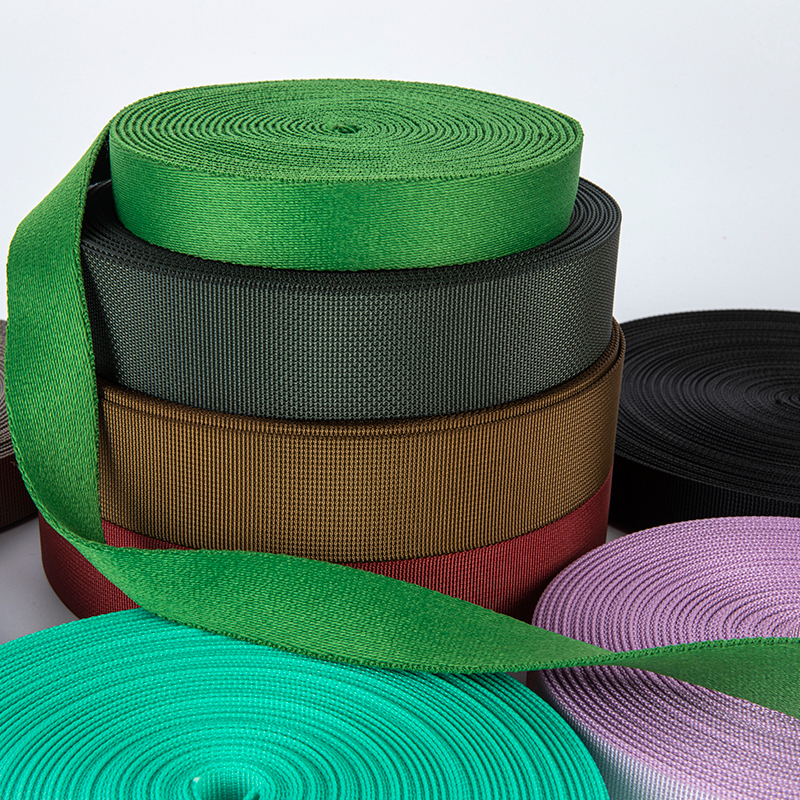
For many low-risk trims, commodity webbing may be sufficient. For load-bearing outdoor products, the comparison is different.
| Dimension | Commodity Webbing | Certified / Technical Webbing |
|---|---|---|
| Material traceability | Basic labeling | Mill records, GRS Transaction Certificate, Bluesign RSL compliance |
| Performance data | Limited or generic | UV fastness, breaking strength, water absorption, abrasion, salt water resistance |
| Chemical safety | May lack third-party verification | OEKO-TEX Standard 100 Class I, Bluesign, REACH compliance |
| Documentation | Minimal | Higher documentation and order management requirements |
| Best use | Simple trims, indoor accessories, low-risk applications | Outdoor exposure, load-bearing systems, safety-related gear, regulated markets |
A reasonable limitation of certified technical webbing is that it requires more specification work. Recycled content and chemical compliance can add documentation, testing, and planning requirements. For very simple decorative trims, that level of rigor may not be necessary. Conversely, for a climbing sling or stroller safety strap, the absence of product-level testing is a greater risk than the extra work required by certification.
Future Outlook for Outdoor Webbing
The direction of outdoor webbing is toward clearer technical specification. Buyers are more likely to ask for UV fastness grades, breaking strength, water absorption, recycled content, and chemical safety documentation before placing an order. The availability of GRS and Bluesign-compliant options makes it possible for brands to treat webbing as a traceable component rather than an anonymous trim.
Another likely development is the integration of textile know-how with brand-level sustainability requirements. A webbing supplier with in-house weaving, dyeing, finishing, and assembly can respond faster to performance changes and certification requirements. That model also reduces the number of handoffs between yarn and finished strap, which is useful when consistency and traceability matter.
Frequently Asked Questions
What is outdoor webbing?
Outdoor webbing is a woven narrow fabric used in equipment that requires load support, adjustment, safety restraint, or attachment. Common types include polyester webbing, nylon outdoor webbing, RPET webbing, recycled webbing, tubular webbing, camping webbing, backpack webbing, and eco-friendly webbing.
What is the difference between polyester and nylon outdoor webbing?
Polyester webbing is a weather-resistant outdoor material made of 100% high-tenacity polyester filament. It offers UV fastness Grade 4.5 after 500 hours, water absorption below 0.5%, and excellent acid resistance. Nylon outdoor webbing is made of high-tenacity nylon with a soft-touch finish, offering color fastness to light Grade 4 and salt water resistance Grade 4-5, and is commonly used for backpacks and mountaineering packs.
What is RPET webbing?
RPET webbing is webbing made from 100% high-tenacity post-consumer recycled polyester yarn. It belongs to the RPET or recycled plastic waste solutions category and holds GRS 4.0, OEKO-TEX Standard 100 Class I, and Bluesign System Partner certifications. Typical applications include sustainable luggage and eco-friendly tent components.
What is GRS webbing?
GRS webbing is webbing certified under the Global Recycled Standard 4.0. It contains 50%-100% recycled content verified by Transaction Certificate and supports full chain of custody. GRS webbing can be made from recycled polyester or recycled nylon, and its color fastness to washing is Grade 4-5 according to ISO 105-C06.
What does Bluesign System Partner mean for webbing?
Bluesign System Partner status means the manufacturer follows bluesign chemical and process requirements. Bluesign webbing is made from Bluesign System Partner nylon or polyester and contains zero restricted chemicals per the Bluesign RSL. It is also commonly REACH and OEKO-TEX compliant.
What certifications should outdoor webbing have for children's products?
For strollers, car seats, infant carriers, and high chairs, OEKO-TEX Standard 100 Class I is the baby-safe classification. Certified stroller webbing in the reviewed data also carries GRS 4.0 and Bluesign System Partner status, with rounded edges for infant skin protection and more than 10,000 buckle cycles in fatigue tests.
Which outdoor webbing is best for climbing and rescue applications?
Tubular webbing is commonly specified for climbing slings, rescue harnesses, and slacklines. It is made of 100% high-strength polyamide 6.6, uses a seamless circular hollow weave, and has a breaking strength of 15kN-25kN. It is extra soft for knotting and has passed UIAA certification through a European testing agency via brand customer.
Why does UV resistance matter in outdoor webbing?
UV resistance matters because outdoor products are exposed to sunlight for long periods. UV fastness is measured by standards such as ISO 105. In the reviewed product data, camping and backpack webbing show UV fastness Grade 4.5 after 1000 hours, while polyester webbing shows Grade 4.5 after 500 hours.
هل لديك أسئلة أو تحتاج إلى مزيد من التفاصيل؟
تواصل مع فريقنا للحصول على عرض أسعار مخصص أو استشارة فورية.
طلب عرض أسعار
املأ النموذج أدناه وسيتواصل معك فريقنا بعرض مقترح مخصص.
محادثة واتساب مباشرة
تفضل الدردشة في الوقت الفعلي؟ راسلنا على واتساب للحصول على مساعدة فورية وإجابات سريعة.
- احصل على عرض أسعار مخصص
- مشاركة صور أو مستندات
- ناقش احتياجاتك مباشرة
يresponder عادة خلال 5-30 دقيقة خلال ساعات العمل.