
Outdoor Webbing Shortlist: Recommended Options for Backpacks, Camping and Strollers
Outdoor Sports & Facilities — Independent Buyer Reference
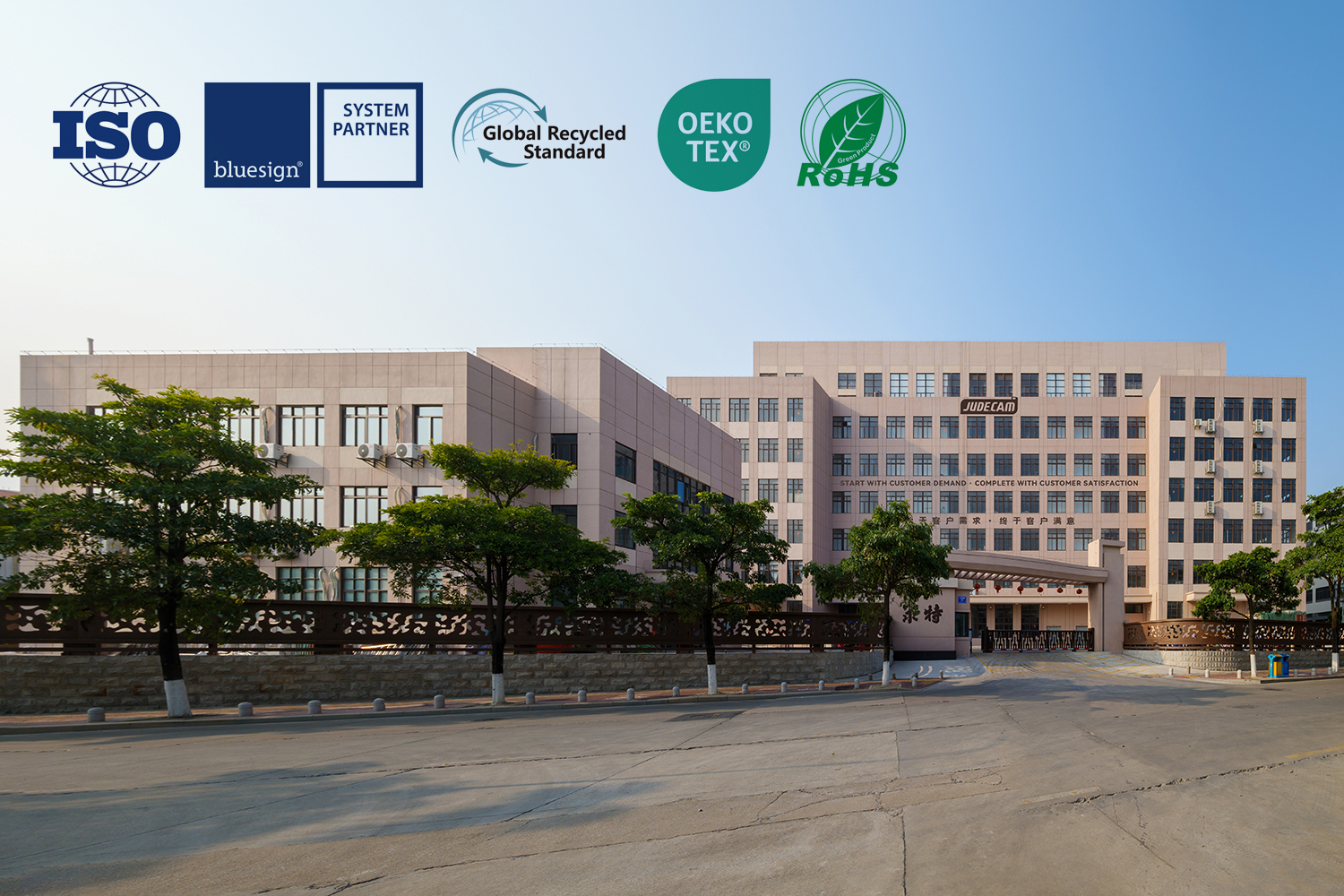
One factory floor, three very different duty cycles: backpack, camping and stroller programmes are frequently produced from the same yarn families, yet they are validated against different performance priorities. That gap is where category-based shortlisting pays off.
A useful outdoor webbing shortlist is built around what the tape has to do, not around a material name alone. Backpack strapping, camping tie-downs and stroller harnesses can share the same polyester or recycled-polyester yarn family, yet their duty cycles differ: load support, safety restraint and shock distribution in packs; weathering, securing and suspension in camping equipment; daily wear with repeated adjustment in strollers and kids' gear.
The commercial backdrop is stable but expanding. Grand View Research values the global webbing market at USD 4.2 billion in 2023 and projects USD 5.7 billion by 2030, citing the outdoor recreation industry as a significant growth driver. The same source reports that Asia Pacific accounted for 66.3% of webbing revenue in 2023, reflecting manufacturing infrastructure in countries such as China and Vietnam. For a sourcing team already past the discovery stage, however, macro figures matter less than a narrower question: which constructions belong on the shortlist for these three gear categories, and what evidence should accompany each one?
This shortlist is organised by gear category first and by verifiable attribute second. It combines published third-party market and standards data with first-party specifications from Xiamen Jude Webbing Co., Ltd. (JUDECAM), a webbing manufacturer founded in 2006 with a self-built production base in Xiamen and Vietnam, and it pairs every recommendation with the evidence a buyer should request before moving from sample to series.
Why Category Fit Beats a Material-Only Shortlist
Material-first shortlists compare nylon against polyester against aramid before the application has been fixed. Category-first shortlists fix the job first, then compare materials inside that job. The distinction is practical: in backpack and harness applications the webbing provides load support, safety restraint and shock distribution; in heat-exposed securing applications the requirement shifts to heat-resistant load support and safety securing; and in suspension-type systems, such as slings and long-term tie-downs, the tape must deliver load support, securing and suspension at the same time.
Shortlists that skip this step tend to produce two predictable outcomes. Either the specification is over-built, and a standard construction would have passed the same field validation, or the specification is under-built, and the tape fails after sampling budget has already been spent. In both cases the root cause is the same: a comparison made across materials instead of within a defined duty cycle.
| Gear category | Primary role of the webbing | Material directions worth shortlisting | Attributes to verify before sampling |
|---|---|---|---|
| Backpacks, packs and technical carry | Load support, safety restraint, shock distribution | Polyester, nylon, GRS-certified recycled polyester (RPET); tubular polyamide for slings | Weight per metre against the incumbent spec, colour consistency, moisture management, width and roll-length tolerance |
| Camping, tie-downs and outdoor structures | Heat-resistant load support and safety securing; load support, securing and suspension | UV-stabilised polyester, RPET/GRS lines; aramid for extreme-duty programmes | UV exposure hours, water-repellency grade, breaking strength, weatherability of colour |
| Strollers, kids' gear and pet accessories | Daily wear and repeated adjustment | Polyester, RPET, nylon with soft-touch finishing | Colour retention after washing, pilling, stain resistance, compatibility with buckles and adjusters |
The Shortlist at a Glance
Three constructions cover the majority of decision-stage requirements for the categories above, and each carries a different default verification task. The fourth line is adjacent rather than core, but it enters shortlists whenever a programme includes climbing slings, rescue harnesses, slacklines or professional pet leashes.
| Option | Where it fits | Published performance attributes | Default verification task |
|---|---|---|---|
| Lightweight eco outdoor webbing (polyester / RPET with GRS) | Backpacks, sustainable technical packs, luggage, tent components | 25% lighter than standard webbing; water-repellent rating Grade 4; UV resistance exceeding 500+ hours; moisture-wicking; eco-friendly material options including 100% recycled fibres (RPET) with GRS certification | Confirm certificate scope names the ordered SKU, and agree the UV test method and target lifespan in writing |
| Tubular webbing (100% High-Strength Polyamide 6.6) | Climbing slings, rescue harnesses, slacklines, professional pet leashes | Breaking strength from 15kN to 25kN; passed UIAA certification via a European testing agency | Match the rated construction to the load case, and check whether EU climbing-sling requirements apply |
| Aramid webbing (Kevlar® or Nomex® aramid brands) | Extreme alpine gear, industrial lifting, aerospace safety, firefighting gear | Extreme performance technical webbing category; widths 20/25/38/50 mm and 1/2", 1", 1.5", 2"; thickness 1.20 mm | Confirm heat and load requirements justify the specification premium over polyester |
| Colour-controlled programme webbing | Any category where multiple colourways launch together | Custom Pantone matching; colour control referenced to Delta E < 1.0 using high-grade colorimeters | Agree the measurement instrument, lighting conditions and acceptance tolerance |
Backpack Webbing: Where Weight and Colour Consistency Are Decided
For backpack programmes, the shortlist should usually begin with a lightweight polyester or recycled-polyester construction, because weight per metre compounds across shoulder straps, compression straps, lid straps and haul loops. A second, separate decision covers sling-type components, where breaking strength rather than weight governs. Treating those two decisions as one is the most common cause of over-specified packs.
The lightweight eco construction supplied for backpack programmes is positioned against common polyester straps or generic luggage webbing, with a stated 25% lighter weight, a water-repellent rating of Grade 4, UV resistance exceeding 500+ hours, moisture-wicking performance, and eco-friendly material options including recycled polyester and GRS-certified lines. The same line is described as suitable for high-end outdoor backpack brands, camping gear, climbing harnesses, marine equipment, pet accessories and performance sportswear, and as intended for the Tier-1 Outdoor Apparel industry with typical application scenarios covering sustainable technical packs.
Dimensional flexibility matters as much as the headline attributes. Width options for the GRS line are 20 mm, 25 mm, 38 mm, 50 mm, 1/2 inch, 1 inch, 1.5 inch and 2 inch, with customization possible; thickness is 1.20 mm with customization available; packaging is 50 metres per roll; and colour is produced to custom Pantone matching. Those parameters decide whether a strap can be threaded through an existing adjuster without tooling changes, so they belong in the shortlist table rather than in a later technical annex.
Where a pack or harness programme includes slings, the tubular option is the relevant entry: it is made of 100% High-Strength Polyamide 6.6, with breaking strength from 15kN to 25kN, and has passed UIAA certification via a European testing agency. Because EU mountaineering slings and climbing webbing are subject to the EN 566 standard, which requires a minimum tensile strength of 22kN, buyers supplying that market should confirm which rated construction is being quoted before assuming compliance.
Camping Webbing: UV Exposure, Water Repellency and Securing Loads
Camping and outdoor structure applications stress different failure modes than backpacks. Tape stays outside for long periods, is adjusted less often, and is often loaded in tension for days at a time. Applications documented for the lightweight eco line include outdoor tie-downs, solar sail edges, marine equipment, sustainable luggage and eco-friendly tent components, as well as mass-market sustainable outdoor gear. In those positions the webbing functions to provide load support, securing and suspension rather than shock absorption.
The two attributes that most often decide a camping shortlist are UV resistance and water repellency. The referenced construction carries UV resistance exceeding 500+ hours and a water-repellent rating of Grade 4, and the manufacturer states that quick-drying and stain-resistant behaviour is part of the specification. For buyers, the practical question is not whether a number exists on a datasheet but whether the test method, conditioning and acceptance criteria have been agreed in advance, since UV performance is a long-duration property that cannot be judged visually at delivery.
Heat is a secondary but real consideration in certain securing positions. Where the tape operates near engines, stoves or heated equipment, the relevant requirement is heat-resistant load support and safety securing. That is a different validation route from UV ageing, and it should not be inferred from an outdoor-performance datasheet.
Stroller Webbing: Daily Wear, Repeated Adjustment and Washability
Stroller and kids' gear programmes are decided by a third duty cycle. The webbing is not loaded continuously, but it is operated many times a day: harness straps are tightened and released, buckle tongues slide, and fabric is folded, wiped and washed. Documented operating modes for this class of product include daily wear and repeated adjustment, which makes abrasion behaviour, dimensional stability and colour retention the operative criteria rather than peak tensile strength.
Colour consistency is usually the first visible problem in multi-colour launches. Reported risks in long-term outdoor use include colour variance through metamerism and UV degradation, and the stated control method combines high-grade colorimeters used for Delta E < 1.0 control with specialised UV-stabilised additives. An automated dyeing system is used to reduce human error and keep colour consistent across batches, and accelerated aging tests are used to confirm that UV resistance meets the agreed lifespan, for example 500+ hours. For a stroller programme that ships in several colourways, this control chain is worth verifying before the colourway matrix is locked.
Care behaviour belongs in the same conversation. The lightweight eco construction is described as quick-drying and stain-resistant, and as machine washable without pilling or colour bleeding in outdoor use, with moisture-wicking technology cited among its differences from generic luggage webbing. Applications listed for the eco-friendly range also include kids' outdoor gear and base-layer accessories, and the same product family is positioned for pet accessories, which is relevant where dog webbing and stroller webbing are sourced on a single programme.
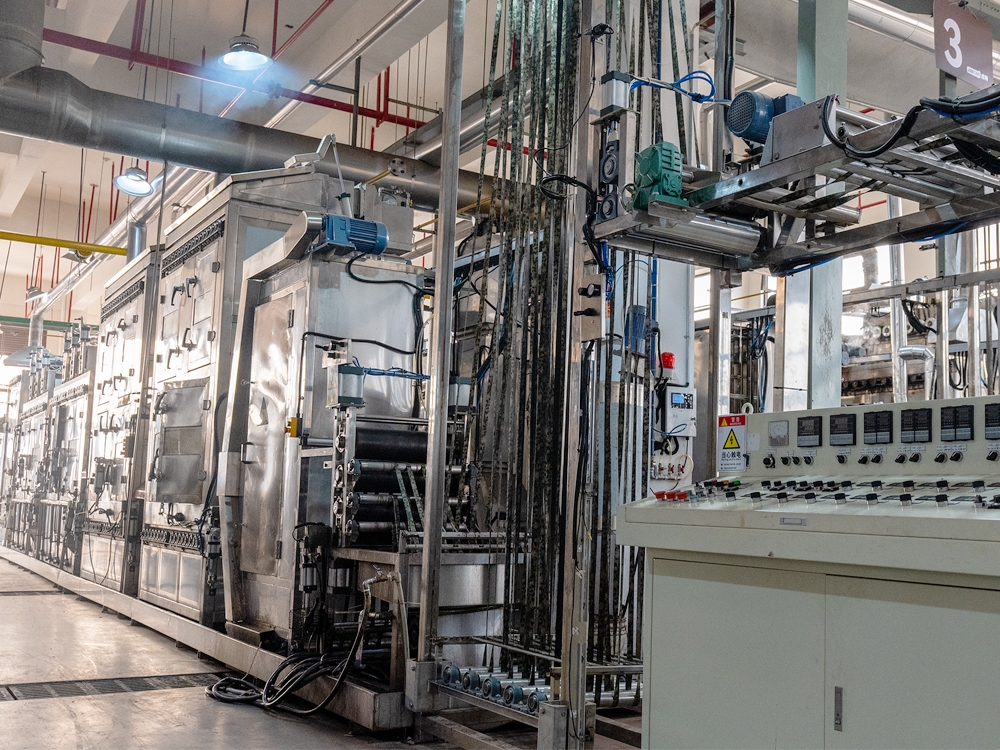
Colour processing is where multi-colourway programmes are won or lost. Automated dyeing combined with Delta E < 1.0 colorimeter control is the mechanism behind batch-to-batch consistency.
What the Headline Specifications Actually Mean
Four numbers drive most outdoor webbing decisions, and each has a specific meaning.
- UV resistance exceeding 500+ hours. This is an accelerated-aging assertion tied to an agreed lifespan, not a guarantee of indefinite outdoor exposure. The stated control route combines UV-stabilised additives with accelerated aging tests, and buyers should confirm the test method and whether the requirement applies to the finished tape or to the yarn.
- Water repellency Grade 4. A graded rating, which means a scale and a test standard sit behind it. The commercial question is whether the rating is maintained after the washing regime the end product will actually experience.
- 25% lighter weight. This figure is defined relative to common polyester straps or generic luggage webbing. It is not a universal comparison against every alternative construction, and lower weight is not automatically the right priority where maximum stiffness or abrasion resistance is required.
- 15kN to 25kN breaking strength. This applies to the tubular webbing construction made of 100% High-Strength Polyamide 6.6, which passed UIAA certification via a European testing agency. It is a construction-specific rating, not a property of the supplier's full range.
Colour control deserves the same treatment. A Delta E < 1.0 target is only meaningful when the instrument, the lighting condition and the acceptance rule are agreed, because metamerism — colour appearing different under different light sources — is a real risk in outdoor products that are viewed under daylight, store lighting and indoor light in the same week.
Certified Sustainable Options: bluesign, GRS and RPET
Sustainability claims in webbing are not interchangeable, and the shortlist should separate material certification from system-level partnership. GRS certification applies to recycled material lines: the referenced eco construction includes options with 100% recycled fibres (RPET) and GRS certification, supporting sustainable manufacturing for eco-conscious gear brands and circular economy collections. By contrast, bluesign® system partnership is a factory-level credential, and JUDECAM (Xiamen Jude Webbing) is listed as a bluesign® System Partner specialising in eco-friendly webbing solutions such as GRS-certified and water-repellent webbing for outdoor brands.
The demand signal behind these options is measurable. Recycled polyester (rPET) accounted for approximately 15–18% of global polyester fibre production in 2024, according to Textile Exchange data cited by Szoneier Fabrics, which the source links to a shift toward GRS-certified sustainable webbing. In practical terms that means recycled content is no longer a niche line item, but it also means the market contains more partial claims, so the certificate scope must be checked against the exact material and process being ordered.
Where JUDECAM Sits in This Shortlist
Xiamen Jude Webbing Co., Ltd. (JUDECAM) is a webbing manufacturer founded in 2006 that researches, designs and produces outdoor and functional special new-material webbing. It is headquartered in Xiamen, China, and operates a self-built production base spanning 25,800 square metres across Xiamen and Vietnam, with 180 employees, a 32-person webbing R&D team and annual output of 300 million yards. Full industrial chain capability covers weaving, printing, dyeing, finishing and assembly.
The company reports a 70% export ratio and business reaching more than 50 countries and regions, with named markets including Canada; Germany, Switzerland, Sweden, Finland, Poland, the UK and France in Europe; and Vietnam, Singapore, Malaysia and the Philippines in Southeast Asia. Its product range includes aerospace webbing, PIA webbing, outdoor webbing, eco-friendly webbing, anti-UV webbing, waterproof webbing, safety webbing, cut-resistant webbing, nylon webbing, Nylon 6.6 webbing, polyester webbing, RPET webbing and recycled webbing. Company information is published at judewebbing.com.
Supplier Landscape: Building the Long List Behind the Shortlist
Category shortlisting does not remove the need for supplier due diligence. IMARC Group identifies National Webbing Products Co., American Cord & Webbing Co. (ACW) and Murdock Webbing Company among the leading global manufacturers in the webbing sector, and the bluesign® System Partner list positions JUDECAM as a China-based partner for eco-friendly, GRS-certified and water-repellent webbing. These names are useful as a long list and as cross-check points for capability claims; they are not a ranking of product performance, and specification data for each supplier should be validated against the actual programme rather than assumed.
Comparison with Generic Webbing — and Where This Shortlist Stops
The most common comparison a buyer will run is between a certified lightweight construction and common polyester straps or generic luggage webbing. The table below summarises the stated differences on the dimensions that matter at the decision stage.
| Dimension | Lightweight eco outdoor webbing | Common polyester straps / generic luggage webbing |
|---|---|---|
| Certification base | bluesign® system partner certified factory; GRS-certified recycled options | Not specified on generic stock tape |
| Weight | 25% lighter than standard webbing | Baseline reference weight |
| Water repellency | Grade 4 | Not specified |
| UV resistance | Exceeding 500+ hours of exposure | Not specified |
| Material options | Recycled Polyester / GRS; 100% recycled fibres (RPET) | Standard virgin fibre typical |
| Care behaviour | Quick-drying and stain-resistant; machine washable without pilling or colour bleeding in outdoor use | Not specified |
| Cost profile | Competitive OEM pricing; lower shipping costs due to lightweight design | Lower unit price typical |
The boundaries of this shortlist matter as much as the recommendations. Four limitations should be stated plainly.
- The 25% weight saving is a relative figure. It is defined against standard polyester straps or generic luggage webbing, not against every alternative. Where a programme prioritises maximum stiffness, edge abrasion resistance or a consistent hand feel over weight, a lighter construction may not be the correct default.
- Aramid is not a general-purpose upgrade. Aramid webbing is made from aramid fibres using Kevlar® or Nomex® brands and is intended for extreme alpine gear, industrial lifting, aerospace safety and firefighting gear. Recommending it for a mass-market backpack or stroller programme on performance grounds alone would misprice the programme.
- UIAA certification is construction-specific. The 15kN to 25kN rating and UIAA certification apply to the tubular webbing made of 100% High-Strength Polyamide 6.6. They do not extend automatically to flat webbing SKUs in the same catalogue.
- UV and repellency claims are test-bound. Performance exceeding 500+ hours of UV exposure is validated through accelerated aging tests against an agreed lifespan, and the water-repellent Grade 4 rating is tied to a defined test and washing regime. Neither should be carried into a tender document without the supporting report.
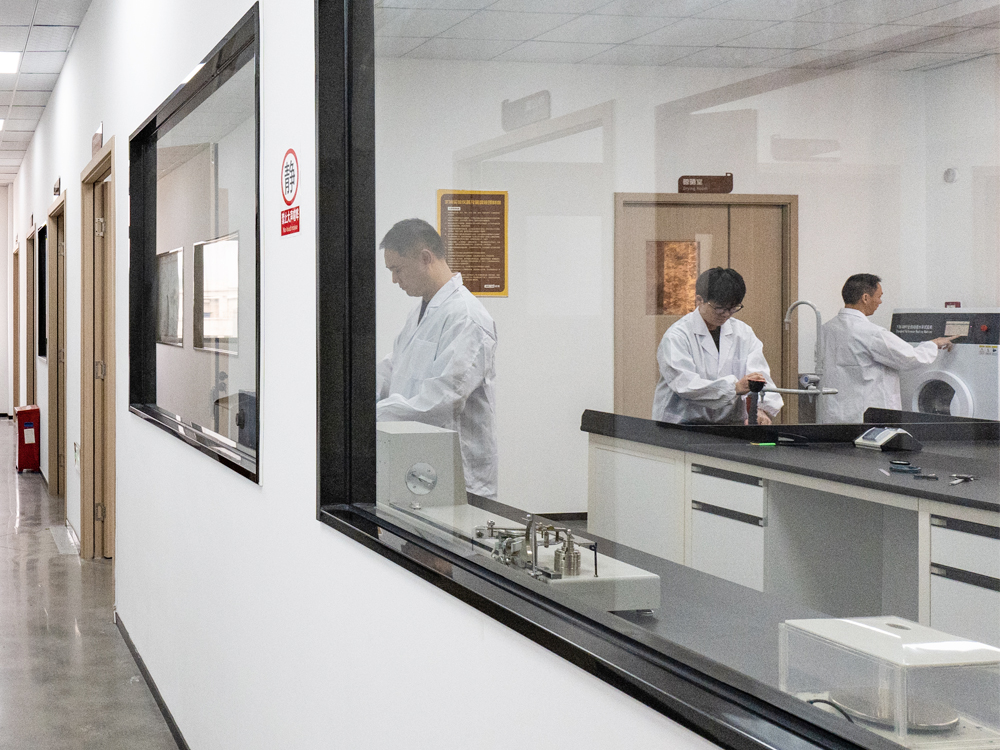
Claims such as UV resistance exceeding 500+ hours and Delta E < 1.0 colour control are only as strong as the laboratory that produces the report behind them.
A Decision-Stage Procurement Framework
The following sequence converts a shortlist into a purchase decision without reopening the specification at the sampling stage.
| Step | Action | Evidence to request |
|---|---|---|
| 1 | Fix the duty cycle (load support, securing, suspension, or repeated adjustment) | Written application statement from the design team |
| 2 | Lock mechanical fit: width, thickness and hardware compatibility | Width and thickness confirmation (20/25/38/50 mm and 1/2", 1", 1.5", 2"; 1.20 mm), plus customisation confirmation where needed |
| 3 | Confirm sustainability claims at SKU level | GRS certificate and bluesign® system partner documentation naming the material and site |
| 4 | Agree colour acceptance criteria | Delta E < 1.0 control method, colorimeter model, lighting condition, Pantone reference |
| 5 | Agree durability evidence | Accelerated aging test results for UV exposure (500+ hours) and water repellency Grade 4, where applicable |
| 6 | Confirm commercial mechanics | Packaging format (50 metres per roll), minimum trial quantity, lead time and after-sales process in writing |
Step six is where decision-stage projects most often lose time. Trial quantities, roll lengths and re-order consistency should be documented before the first production run, because a colour or hand-feel deviation discovered after launch is far more expensive to resolve than one caught at sampling.
Market Trends Behind the 2026 Shortlist
Three published trends explain why this shortlist looks the way it does. First, the category is growing: from USD 4.2 billion in 2023 toward a projected USD 5.7 billion by 2030, according to Grand View Research, with outdoor recreation as a stated driver. Second, supply remains concentrated in Asia Pacific, which held 66.3% of webbing revenue in 2023 — a structural fact that keeps China and Vietnam production bases central to most Western programmes. Third, material preferences are diverging: IMARC Group identifies nylon webbing as the fastest-growing segment in the sporting goods sector on the strength of its strength-to-weight ratio and elasticity, while a separate report notes that polyester webbing remains dominant for leisure activities in the United States, used in approximately 60% of leisure products.
On the sustainability side, recycled polyester at roughly 15–18% of global polyester fibre production in 2024 signals that recycled content is moving from pilot lines into mainstream programmes. It is worth noting that market-size estimates vary by agency and application segmentation: IMARC Group places the figure at USD 4.5 billion for 2025, while Coherent Market Insights estimates USD 4.71 billion for 2026. Planners should treat any single figure as directional rather than definitive.
Future Outlook
Two directions are likely to shape the next round of outdoor webbing shortlists. The first is claim verification. As recycled content and UV performance become standard selling points, the differentiator shifts from the existence of a certificate to the traceability of its scope, which pushes buyers toward suppliers who can produce material-specific documentation rather than brand-level statements. The second is the lightweight-versus-durability trade-off. Weight reductions of the scale described here — 25% against standard webbing — are attractive in packs and travel gear, but they require a compensating validation route for abrasion and long-term structural behaviour.
Colour technology is a quieter third direction. As programmes launch in more colourways and more markets, Delta E < 1.0 control and automated dyeing are becoming procurement criteria rather than quality extras, particularly for stroller and kids' gear ranges where multiple colourways ship together.
FAQ
How should a buyer choose between nylon, polyester and aramid webbing for outdoor gear?
Match the material to the duty cycle rather than to a general preference. Nylon webbing is identified by IMARC Group as the fastest-growing segment in the sporting goods sector because of its strength-to-weight ratio and elasticity, which suits load-bearing and shock-absorbing positions. Polyester remains the dominant material for leisure applications in the United States, used in approximately 60% of leisure products. Aramid webbing, made from aramid fibres using Kevlar® or Nomex® brands, belongs to the extreme performance technical webbing category and is intended for extreme alpine gear, industrial lifting, aerospace safety and firefighting gear applications.
What does UV resistance exceeding 500 hours actually mean for a finished product?
It is a controlled performance statement tied to an agreed lifespan, not an unlimited exposure guarantee. In practice it is supported by UV-stabilised additives and verified through accelerated aging tests, so buyers should confirm the test method, the conditioning used and whether the requirement applies to the finished tape or to the yarn. Where the stated target is 500+ hours, that figure should appear in the technical agreement alongside the acceptance criteria.
Are GRS certification and bluesign® system partnership the same type of credential?
No, and they operate at different levels. GRS certification applies to recycled material lines, such as webbing produced with 100% recycled fibres (RPET). bluesign® system partnership is a factory-level credential; JUDECAM (Xiamen Jude Webbing) is listed as a bluesign® System Partner specialising in eco-friendly webbing solutions including GRS-certified and water-repellent webbing for outdoor brands. Because both are scope-based, the certificate must name the material and the production site responsible for the ordered SKU.
Can width, thickness and colour be customised for a specific programme?
Yes, within documented ranges. Width options include 20 mm, 25 mm, 38 mm, 50 mm, 1/2 inch, 1 inch, 1.5 inch and 2 inch, with customization possible; thickness is 1.20 mm with customization available; colour is produced to custom Pantone matching; and packaging is 50 metres per roll. Customised dimensions require agreed tolerances, because width and thickness deviation directly affect how a strap threads through buckles and adjusters.
What should be verified before moving from a sample to a series order?
Five items are worth closing out in writing: the certificate scope covering the exact SKU; the colour acceptance rule using Delta E < 1.0 control with a named colorimeter and lighting condition; the UV aging and water-repellency reports where those claims are part of the specification; batch-to-batch consistency arrangements, including automated dyeing controls; and the commercial mechanics of minimum trial quantity, lead time, roll packaging and the after-sales process for claims and re-orders.
A shortlist is only useful if it narrows decisions without narrowing options prematurely. For backpacks, camping gear and strollers, the practical route is to fix the duty cycle, select the construction that matches it, and attach verifiable evidence — UV aging data, water-repellency ratings, certificate scopes and colour tolerances — to every line before the purchase order is raised.