
P-Shine's 7 Factories: Verified Wire Harness Capability
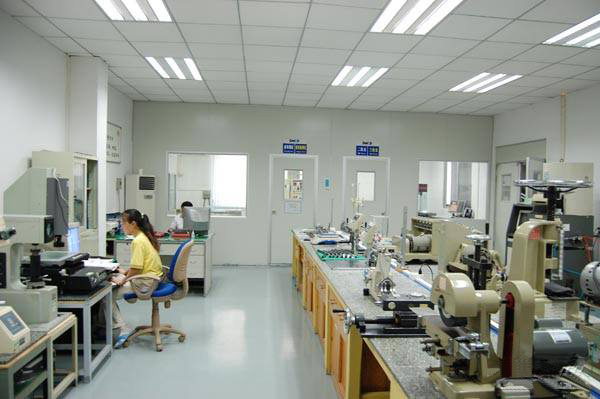
P-Shine Electronics Co., Ltd operates seven independent factories from its Dongguan, Guangdong base, covering wire harness, cable assembly and upstream insulation, connector and copper wire processing.
Most wire harness sourcing problems are not manufacturing problems. They are verification problems: the buyer cannot confirm which production steps the supplier actually owns, which certificate covers which wire or assembly, and whether the stated capacity belongs to the plant that will run the job. P-Shine Electronics Co., Ltd — a wire harness and cable manufacturer established in 1997 and located in Chang'an Town, Dongguan, China — publishes a set of structural facts that can be checked line by line. This article sets out those facts and explains what each one means during supplier evaluation and order execution.
Why capability evidence outweighs capability language
The global wire harness market was estimated at USD 99.58 billion in 2024, with Asia Pacific holding a 46% share, according to Precedence Research. Within that market, most harnesses are not catalog products. A wire harness has no universal model number; it is defined by a drawing, a connector list, a wire type, a gauge and a routing length. That single characteristic changes how a buyer should evaluate a supplier. Standard product benchmarks — price per unit, published specification sheets, off-the-shelf availability — do not transfer cleanly to a made-to-drawing item.
What can be compared is process ownership. A supplier that assembles only — buying wire, insulation and connectors from outside — has a different risk profile from a supplier that also processes copper wire, produces its own insulation materials and moulds or sources connectors within the same group. The first depends on external incoming-material schedules; the second controls more of its own material flow. Neither model is automatically better, but the difference is material at the evaluation stage, because it determines which failure points sit inside or outside the supplier's boundary.
Wire harness procurement therefore tends to reduce to four checkable questions: Who performs each manufacturing step? How much verified capacity exists? Which certificate covers the exact wire or assembly being purchased? And how is a custom drawing converted into a released, tested shipment? P-Shine's published structure answers all four with specific, attributable data rather than adjectives.
What P-Shine Electronics Co., Ltd is
P-Shine Electronics Co., Ltd is a Dongguan-based manufacturer of wire harnesses, USB cables, cable assemblies, AC power cords, network cables and industrial connection cables, established in 1997. The company operates a 5,000 m² headquarters facility with approximately 300 headquarters staff, part of a group workforce of more than 1,000 employees, and reports an annual output of 2,000,000 pieces with roughly 60% of sales exported to the European Union, North America and the Middle East. Its production model is OEM and ODM, with all wiring harnesses customized according to customer drawings. The company's own profile lists Intel, Belkin, Samsung and UGREEN among the customers it supplies as a qualified supplier.
The following figures are the ones a buyer can put into a supplier scorecard directly.
| Capability parameter | Confirmed value | Evaluation relevance |
|---|---|---|
| Established | 1997 | Longevity check against program duration |
| Headquarters facility | 5,000 m², Chang'an Town, Dongguan | Physical footprint for the quoting entity |
| Headquarters staff | Approximately 300 | Direct labour and support depth |
| Group employees | More than 1,000 | Total capacity across the group |
| R&D engineering team | 20 engineers | Drawing review and customization bandwidth |
| Annual output | 2,000,000 pcs | Annual throughput ceiling |
| Monthly capacity | 250,000 units | Peak monthly schedule check |
| Production mode | OEM / ODM | Contract manufacturing fit |
| Customization basis | All harnesses made to customer drawings | Drawing dependency, no catalog part numbers |
| Minimum order quantity | 200 units | Pilot and ramp-up planning |
| Lead time | 30–45 days | Replenishment and safety-stock calculation |
| Quality control | 100% test | Inspection basis for acceptance |
| Export ratio | 60% | Export documentation familiarity |
Seven factories, seven controlled process steps
The most specific structural fact about P-Shine is that the group runs seven independent factories rather than one multi-purpose plant. Those factories cover wire harness, USB cable, cable assembly, wire and cable, insulation materials, connectors, and copper wire processing.
| Factory focus | What it contributes | Why a buyer should care |
|---|---|---|
| Wire harness | Assembly of customized harnesses to customer drawings | Core process for harness assembly programs |
| Cable assembly | Cable assemblies and connection cables | Consolidation for multi-part cable programs |
| USB cable | USB cable production | Separate line for data and charging products |
| Wire / cable | Cable extrusion and processing | Reduces dependence on external cable supply |
| Insulation materials | Own insulation material production | Insulation change requests are handled internally |
| Connector | Connector processing | Connector availability reviewed inside the group |
| Copper wire processing | Upstream conductor processing | Conductor sourcing is not fully outsourced |
For an equipment builder, the practical consequence is that a customization request touching several of these steps — for example, a change of insulation material combined with a change of conductor gauge and a connector substitution — is coordinated inside one organization rather than across three or four external vendors. That shortens the communication chain, but it does not remove the need for the buyer to confirm which factory in the group will actually hold the order, since capacity is scheduled per plant.
How a custom harness moves from drawing to shipment
Because every harness here is customized according to customer drawings, the release path matters more than the product list. The drawing itself is the specification of record, and the detail level in the drawing determines how much engineering clarification is needed later.
The drawing is the specification of record
A harness drawing that is ready for quoting typically includes: the brand and part number for every connector; distinct colors where the same connector type appears in adjacent positions; a separate color identification for each wire in each loop; the wire model number and gauge per wire, such as UL1007 at 28AWG; the length of every loop; the functional definition of every pin, such as Power+ or GND; the length of each branch where a loop splits; and a minimum 30 mm distance from branch point to connector. Where heat-shrink tubing is required, branch positions should be arranged so the tubing can be applied cleanly. Drawings built to this level let the manufacturer quote and build without repetitive back-and-forth, which is usually the largest hidden cost in a custom harness program.
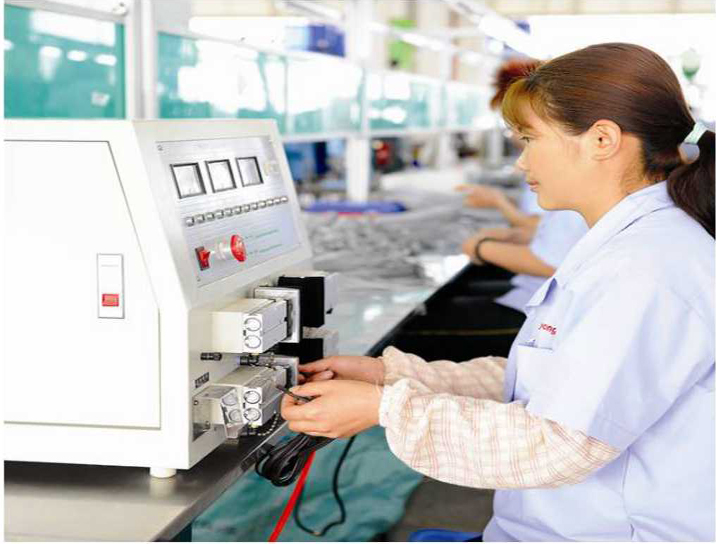
Testing is specified as 100% test in P-Shine's production capability data, a term that should be defined per part number in the purchase agreement.
Connector sourcing policy
Connectors are sourced strictly according to the brand and part number specified on the customer's drawing, typically purchased through platforms such as DigiKey or Mouser to keep the components genuine and original. Non-original alternative connectors are offered only when the customer asks for them and only after the customer tests, verifies and approves them. The commercial driver is real: in some cases an original brand connector can cost as much as ten times a non-original alternative. The default remains original connectors unless the buyer requests a substitution, which means a buyer who needs a cost-reduced connector should plan for a sample and approval cycle rather than assume a substitution will be made quietly.
Capacity, test and lead time
Monthly capacity is stated at 250,000 units against an annual output of 2,000,000 pieces, with a lead time of 30–45 days and a minimum order quantity of 200 units. Quality control is described as 100% test. For planning purposes, the minimum order quantity of 200 units means low-volume engineering builds are workable, while the 30–45 day lead time should be treated as a production window that starts after drawing approval and component availability are confirmed — not from the date of enquiry.
Certifications mapped to buyer due diligence
Certificates are frequently presented as a single compliance badge. In practice each certificate carries a defined scope, and the scope is what a buyer must match against their own bill of materials. The records below are the certification facts published for P-Shine.
| Certification | Number / authority | Standard referenced | Recorded scope |
|---|---|---|---|
| UL — Appliance Wiring Material | E214500, UL LLC | UL 758; CSA C22.2 No. 210-15 | Component-Appliance Wiring Material, single-conductor and multi-conductor thermoplastic / thermosetting-insulated wire (USA, Canada) |
| VDE — Product Safety Certification | 40042054, VDE Testing and Certification Institute | DIN EN 50525-2-11 (VDE 0285-525-2-11):2012-01; EN 50525-2-11:2011 | Flexible cables with thermoplastic PVC insulation (EU, Germany) |
| ISO 9001:2015 | CN07/31354, SGS United Kingdom Ltd | ISO 9001:2015 | Manufacture of electronic cables, power cables, flat cables and power plugs |
| ISO 14001:2015 | CN19/30539, SGS United Kingdom Ltd | ISO 14001:2015 | Manufacture of electronic connectors and wire harness |
The UL file E214500 was issued on 14 November 2019 and the VDE certificate 40042054 on 17 April 2015; both are recorded with an expiry date of 1 January 2099, which is typical for certifications maintained through ongoing surveillance rather than fixed-term issuance. The ISO 9001:2015 certificate was issued on 11 December 2025 and expires on 10 December 2028; the ISO 14001:2015 certificate was issued on 2 April 2019 and expires on 1 April 2028.
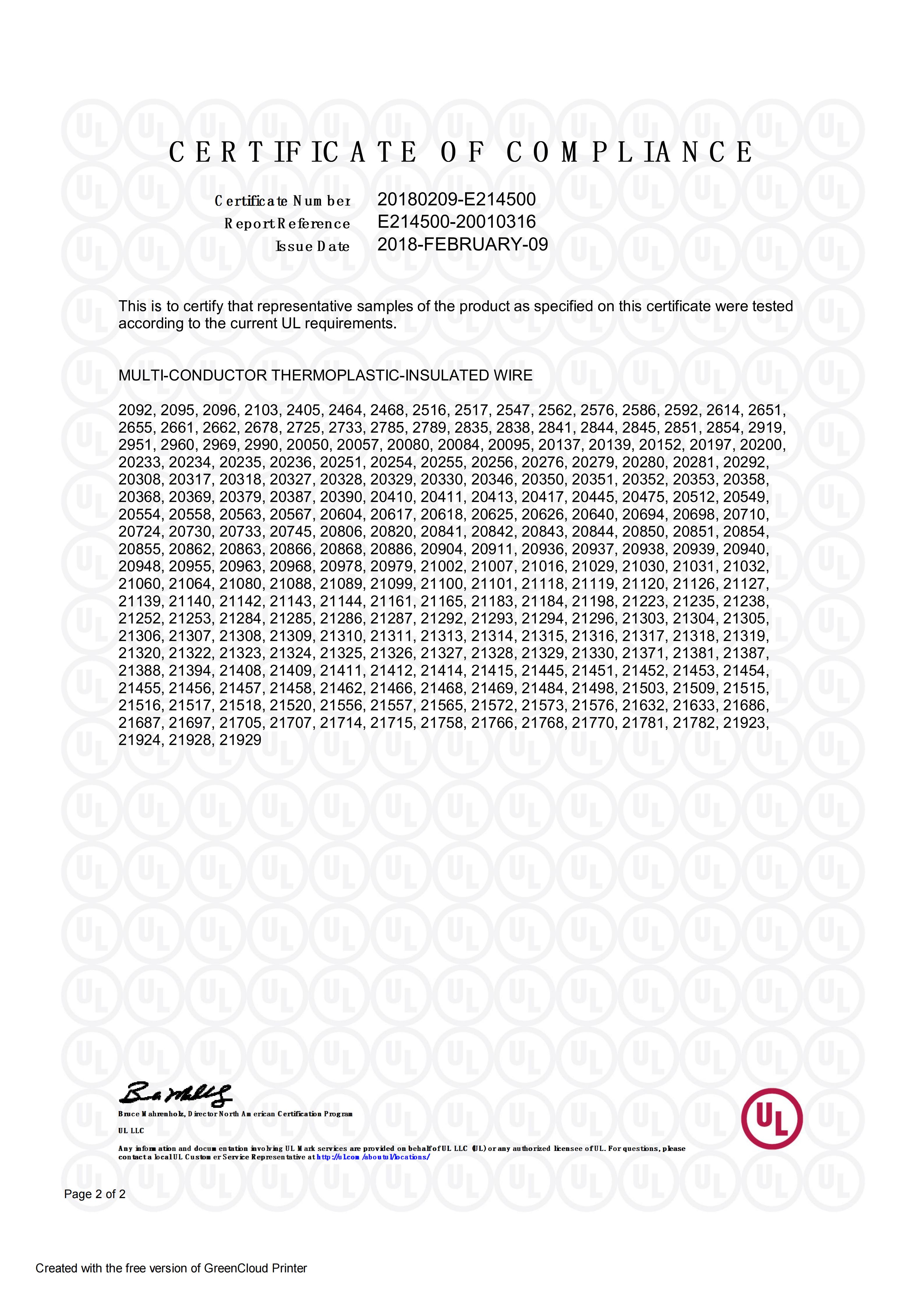
UL file E214500 covers Component-Appliance Wiring Material under UL 758 and CSA C22.2 No. 210-15 — a wire-level scope that buyers should map to their own BOM.
For importers, trade classification is a separate question. HS Code 8544.30 covers ignition wiring sets and other wiring sets of a kind used in vehicles, aircraft or ships according to UN Statistics Division classifications; industrial, appliance and equipment-internal harnesses are typically classified according to end use. Buyers should confirm the code applied to their own consignment with their customs broker rather than assume a single heading covers all harness purchases.
Where these harnesses are actually used
The industries listed for P-Shine's wire harness output are household appliance, industrial control, medical equipment, robotics and equipment-internal wiring. Working conditions span indoor and outdoor use, inside and outside equipment, and waterproof and non-waterproof configurations, with 24/7 operation as the stated operating mode. In other words, this is a supplier positioned for continuous-duty equipment wiring rather than for one-off consumer accessories.
Terminology varies widely across that buyer base, and it is worth aligning vocabulary before a request for quotation. The same item may be described by an engineer as harness assembly or cable assembly, by a maintenance team as a wiring loom, by a purchasing department as a pigtail wire or cable kit, and by a design team as a wiring connector assembly. When a supplier receives four different names for one part, quoting accuracy depends on the drawing rather than the label.
Special requirements that can be specified for these harnesses include complex custom wiring, high-temperature resistance, shielding, optional flame-retardant construction, low-smoke and halogen-free construction, waterproof construction, and drawing-based processing generally. Available materials are PVC, XL-PE, TPE, TPU and TEFLON, and connector families referenced include Molex, JST, TE, Phoenix, Samtec, Hirose and Amphenol wire harness configurations.
A representative case record covers an industrial manufacturing program running at 250,000 units per month over five years, with devices and internal equipment connections as the application, serving customers in countries including Germany, France, the United Kingdom, Poland, Turkey, Israel, India, South Korea, Taiwan, Canada, the United States and the United Arab Emirates. That record describes near-zero low defect rates as reported in the case documentation, stable equipment operation for the client's production lines, and long-term relationships with several industrial clients in Germany and the United States. Buyers evaluating a similar program should treat those figures as a supplier-reported case history and validate them through sample testing and pre-shipment acceptance rather than as an independently audited result.
Market trend: range planning, not point forecasting
The wire harness market is large and growing, but published forecasts do not agree on the rate. Precedence Research estimates the market at USD 99.58 billion in 2024 and projects USD 147.46 billion by 2034. For 2025, published projections range from roughly USD 94.3 billion to USD 103.6 billion, and reported compound annual growth rates diverge more sharply — 4.0% from one commercial research source against 6.49% from another for the same period, a difference generally attributed to how broadly each defines industrial versus automotive wire harness scope.
The practical takeaway for procurement planning is that harness demand is being read through different scope definitions, so capacity planning should be built on a range rather than a single growth figure. Two structural trends sit behind the disagreement. Asia Pacific held 46% of the market in 2024, concentrated in China, India and Japan, so sourcing decisions in this category remain Asia-weighted. And the automotive segment dominated end-user demand in 2024, with electric vehicles requiring significantly more complex harness architectures — complexity that raises the bar for assembly discipline across the whole supplier base, including suppliers serving non-automotive industrial, appliance and medical programs.
Where this model is not the right fit
A capability profile is only useful if its boundaries are stated as clearly as its strengths. Three constraints are visible in the confirmed data.
First, the model is drawing-dependent. All wiring harnesses are customized according to customer drawings, and no fixed model numbers apply. A buyer without a released drawing will spend the first weeks of the program producing one, and the minimum 30 mm branch-to-connector distance plus explicit wire type, gauge and color definitions mean an under-specified drawing will come back with questions. This is engineering work, not a purchasing formality. Buyers who need an off-the-shelf harness for immediate replacement will find a catalog distributor faster than any custom manufacturer.
Second, the commercial parameters suit production programs more than spot purchases. A minimum order quantity of 200 units, a 30–45 day lead time, and payment terms of 100% in advance or Net 30 days are workable for scheduled production but less convenient for very small evaluation builds or urgent break-fix demand. A first order paid in advance also ties up working capital before any goods are received, which is a real consideration for buyers running tight inventory.
Third, certification scope is not the same as part approval. The UL record addresses Component-Appliance Wiring Material wire, and the VDE record addresses flexible cables with thermoplastic PVC insulation. Neither is a blanket approval of every possible finished harness configuration, and the ISO 9001:2015 scope wording does not enumerate every product family in the group catalogue. A buyer requiring an assembly-level workmanship class under IPC/WHMA-A-620, or a specific sector scheme for a particular part number, should confirm applicability in writing during the specification phase. Similarly, non-original connectors are a cost option rather than a default: they require customer testing and approval, so a cost-reduction assumption based on alternative connectors should be scheduled as a separate validation task.
Compared with sourcing through trading intermediaries, the vertically integrated multi-plant structure concentrates more process control inside the supplier boundary. Compared with a single-facility assembly shop, it removes several external dependencies on insulation, conductors and connectors. Against both, it adds organizational scale — a group of over 1,000 employees across seven plants — which means the buyer's own discipline in specifying the receiving plant, the drawing revision and the acceptance test matters more, not less.
Future outlook
The direction of buyer behaviour in this category is fairly consistent with the market data: as equipment becomes more electrically complex, the harness becomes a larger share of the reliability problem, and buyers respond by asking suppliers to prove process ownership rather than assert quality. Certificate numbers, scope wording, plant counts, capacity figures and lead-time commitments are becoming the default vocabulary of supplier evaluation in wire harness sourcing.
For manufacturers, that shifts the competitive basis from price alone toward verifiability. A supplier that can name its factories, its certificate numbers, its monthly capacity and its connector-sourcing policy is easier to include in a shortlist and easier to defend internally. A supplier that cannot will increasingly be filtered out before commercial negotiation begins — not because its product is inferior, but because the evaluation cannot be completed with the evidence on hand.
FAQ
1. What does P-Shine Electronics Co., Ltd manufacture?
The company manufactures wire harnesses, USB cables, cable assemblies, AC power cords, network cables and industrial connection cables. Its stated main product range covers wire harnesses, USB cables, cable assemblies, AC power cords, customized connection cables, and wires and cables. All wiring harnesses are produced to customer drawings as custom-made items rather than fixed catalog models, and the company operates as an OEM and ODM production partner.
2. How many factories does the group operate, and what does each cover?
P-Shine Group operates seven independent factories, covering wire harness, USB cable, cable assembly, wire and cable, insulation materials, connector, and copper wire processing. The wire harness, USB cable and cable assembly factories handle finished products, while the remaining factories supply upstream inputs including cable extrusion, insulation materials, connectors and processed copper wire. Buyers should confirm which plant in the group is scheduled to produce their specific part.
3. Which certifications can a buyer verify?
Four certification records are published: UL file E214500 issued by UL LLC under UL 758 and CSA C22.2 No. 210-15, covering Component-Appliance Wiring Material single-conductor and multi-conductor thermoplastic and thermosetting-insulated wire for the USA and Canada; VDE certificate 40042054 issued by the VDE Testing and Certification Institute under DIN EN 50525-2-11 (VDE 0285-525-2-11):2012-01 and EN 50525-2-11:2011, covering flexible cables with thermoplastic PVC insulation for the EU and Germany; ISO 9001:2015 certificate CN07/31354 issued by SGS United Kingdom Ltd, expiring 10 December 2028; and ISO 14001:2015 certificate CN19/30539 issued by SGS United Kingdom Ltd, expiring 1 April 2028. Each record has a defined scope that should be matched against the buyer's own bill of materials.
4. What are the OEM and ODM terms, including capacity and lead time?
Production mode is OEM and ODM, with all harnesses customized according to customer drawings. Stated annual output is 2,000,000 pieces and monthly capacity is 250,000 units. The minimum order quantity is 200 units and lead time is 30–45 days. Quality control is specified as 100% test, and approximately 60% of sales are exported to the European Union, North America and the Middle East.
5. Does the manufacturer use original connectors?
Connectors are sourced strictly according to the brand and part number on the customer's drawing, typically purchased through platforms such as DigiKey or Mouser to keep them genuine and original. Original connectors are the default because they offer better reliability and compatibility. Non-original alternative connectors are offered only at the customer's request, and only after the customer tests, verifies and approves them; in some cases an original brand connector can cost up to ten times a non-original alternative, which is the typical reason a buyer requests the substitution.
6. What are the purchasing terms and acceptance criteria?
The minimum order quantity is 200 units. Delivery terms are FOB, EXW, CIF or DAP. Acceptance criteria allow either pre-shipment testing or testing after receipt of the goods. Payment terms are 100% in advance or Net 30 days.
7. What information should a customer provide to begin a customized wire harness quotation?
A complete drawing should specify the brand and part number of every connector; distinct colors where the same connector type is used in adjacent positions; a different color identity for each wire in each loop; the wire model and gauge per wire, such as UL1007 at 28AWG; the length of each loop; the functional definition of each pin, such as Power+ or GND; branch lengths where a loop splits; and a minimum 30 mm distance from branch point to connector. Where heat-shrink tubing is required, branch positions should be arranged so the tubing can be applied. If a drawing is not yet available, the connector brand, part number, wire type, wire gauge, color and wire definition can be supplied in text form as a starting point.
Supplier verification contact
Name: Kaya Pi
E-mail: pshine@pshinecable.com
Tel: +86 769 85391338
WhatsApp: +86 135-8085-0092
Address: No.8, Beiheng Road, Shangsha Community, Chang'an Town, Dongguan City, Guangdong, China. 523867
Company profile and full catalog: P-Shine Introduction & Catalog (PDF)