
PAF for Corrosion-Free Aluminum Brazing: Oxide Removal Fit
PAF for Corrosion-Free Aluminum Brazing: Oxide Removal Fit
Potassium aluminium fluoride (PAF) enters aluminum brazing for one specific job: it removes the oxide film that keeps filler metal from wetting an aluminum surface. The application record behind this article states that function plainly — in corrosion-free brazing of aluminum alloys, potassium fluoroaluminate removes oxide films and improves weld quality. Everything a buyer has to decide sits downstream of that sentence. The open questions are grade, form, particle size and documentation, and each one is answered by the brazing line rather than by the chemistry.
This article treats corrosion-free aluminum brazing as an application scenario and works through the fit: which product forms are documented, how the three listed size ranges — mesh 200, 0.3–1.0 mm and 0.5–1.5 mm — should be evaluated, where the evidence stops, and which checks a project team can reasonably ask a supplier to support.
Oxide removal is the entry condition, not an added feature
Aluminum does not wait to be prepared. A coherent oxide film forms on exposed surfaces and stays stable through heating, and while it is present the filler metal cannot spread across the joint faces. Flux chemistry exists to deal with that film under brazing conditions, and the potassium fluoroaluminate route is documented in the source material as the mechanism that removes it and improves weld quality.
That framing matters for procurement because it rules out a common misreading. PAF is not a performance additive that improves a brazing operation from the outside; it is the material that performs the oxide-removal step. The practical consequence is that specification quality is decided before the first joint is made — by how closely the delivered grade matches the process, and by whether the batch documentation supports the claim.
What the source material does not provide: a temperature window, dissolution rate, residue chemistry or joint test data specific to brazing. Those belong to the qualification work of the brazing line. A supplier should be able to state which of them are supported by data and which are not.
Where the scenario appears: battery cooling plates and radiators
The application record names two component families for this scenario in new energy vehicles: battery water-cooling plates and air-conditioning radiators. Both put the flux decision in the same position. The material has to be delivered evenly across a joint that is long and often thin-walled, and any inconsistency in coverage appears as a defect rather than as a nuisance.
For a project team, that shifts attention from "which product" to "which delivery of the product". A powder at mesh 200 behaves differently in a dispenser or a slurry from a 0.5–1.5 mm granular cut, and a supplier's ability to hold a narrow particle-size distribution from batch to batch becomes a quality variable in its own right. This is where customization capability is likely to matter more than the chemistry headline: particle size distribution from coarse granules to sub-micron powders, plus morphology and purity grades, is the part of the offer that decides whether a brazing line runs consistently.
The same application record notes that this scenario is common in South Korea, Japan, Turkey, the UAE, Brazil, Bahrain, Russia, Canada, Norway, the United States, Thailand, Vietnam, Malaysia, Indonesia, Germany, France, Italy, Spain and Australia. That list describes where the application is typical. It is not a statement about any single supplier's installed capacity, and it should not be read as one.
White PAF, grey PAF and the grade decision
Two colour designations appear in the product data — grey and white — and the difference is not cosmetic. Comparison data on PAF grades maps industrial grade at 98% minimum to foundry and abrasive duty, typically in grey form, while brazing and specialty glass are mapped to high purity above 99%, or white PAF. For a brazing project, the grade question therefore comes before the form question.
Grey PAF keeps a legitimate place in the same supply chain. The product image record documents it as a powder and in a 0.3–1.0 mm cut, and the material's documented roles include degassing and slag removal in non-ferrous metal recycling and casting. None of that makes it interchangeable with the white, high-purity grade where the task is oxide removal on a brazed aluminum assembly. Treating the two as one commodity line is the most common way a purchasing decision quietly drifts away from the technical requirement.
Grade claims are only as good as the batch evidence behind them. Sumetech's capability record states 100% testing in quality control, which is the relevant procedural fact. What a buyer should request is the certificate of analysis for the delivered lot showing grade and tested parameters, rather than a grade name typed onto a quotation.
Powder, granular or lump — and what the three size ranges settle
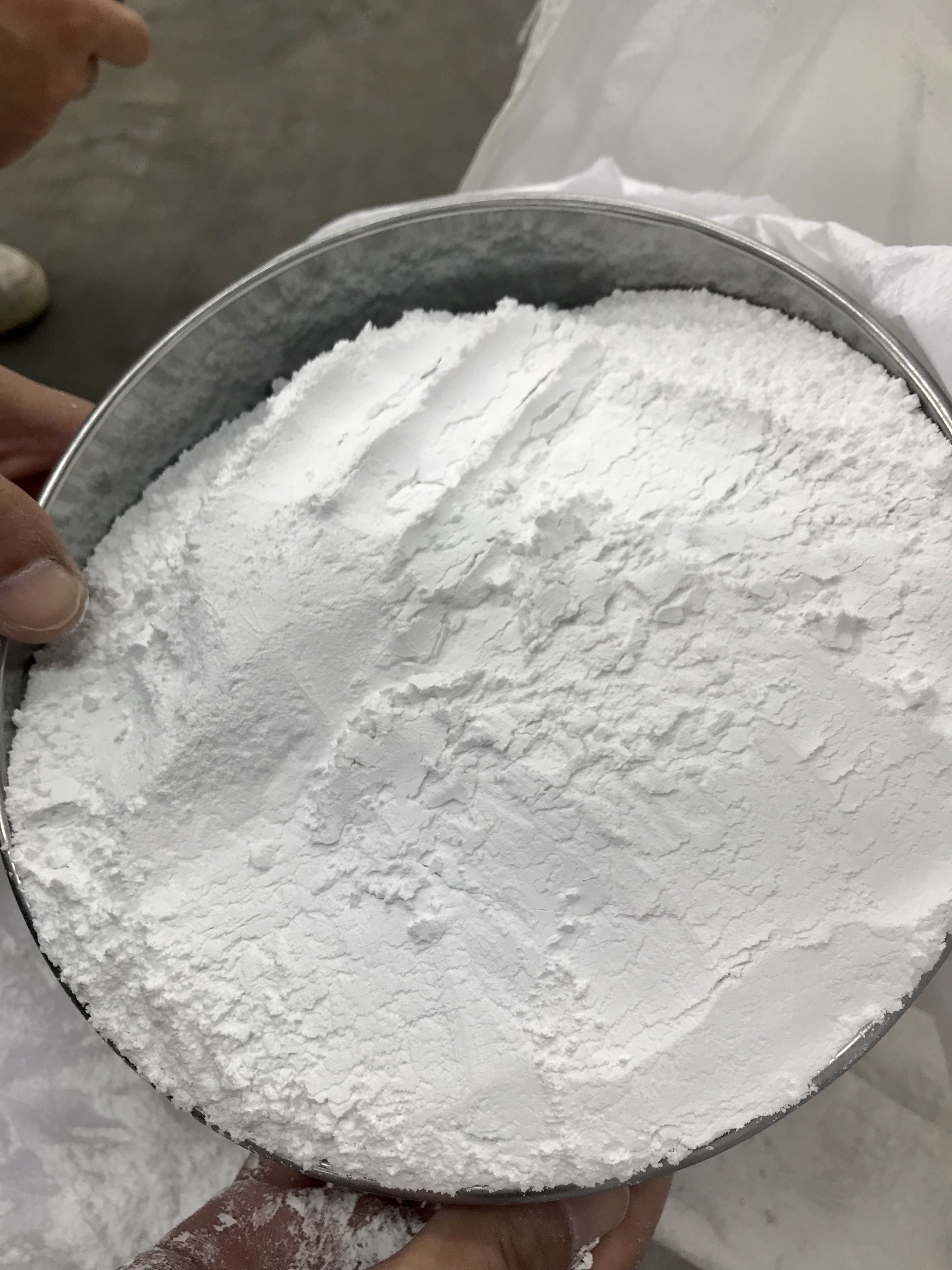
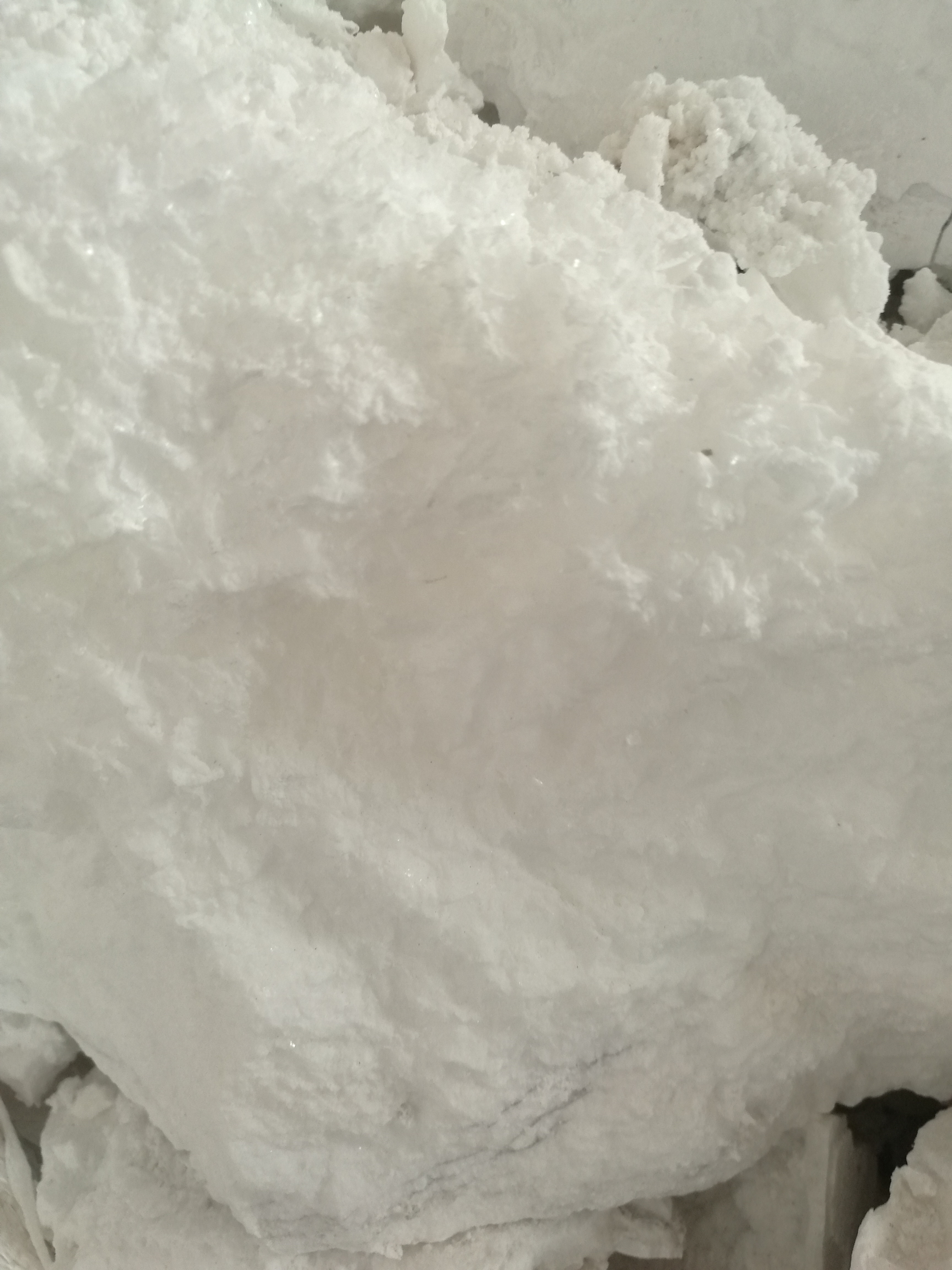
The product record lists three forms (powder, granular, lump) and three size ranges (mesh 200, 0.3–1.0 mm, 0.5–1.5 mm). It also documents specific combinations in its image record: white PAF at mesh 200, white PAF at 0.5–1.5 mm, white PAF in lump form, and grey PAF as powder and at 0.3–1.0 mm. Combinations outside that set are not ruled out, but they are not documented either, so they should be confirmed explicitly rather than assumed.
What the data does not do is prescribe which form suits which application method. That gap is worth naming, because supplier literature often implies a ranking the underlying evidence does not support. A brazing engineer evaluating a form is really testing three things: whether the material can be metered accurately in the chosen delivery system, whether it stays uniform through storage and handling, and whether the resulting coverage repeats joint after joint.
| Form and grade as documented | Size range in the product data | What the buyer still has to settle |
|---|---|---|
| White PAF, powder | Mesh 200 | Whether the line meters dry powder or prepares a slurry; dust control and ventilation under the safety classification. |
| Grey PAF, powder and granular | 0.3–1.0 mm | Whether this industrial grade is intended for the same joint as the brazing duty, given its mapping to foundry and abrasive use. |
| White PAF, granular | 0.5–1.5 mm | Whether flow behaviour and segregation in storage and conveying suit the dispensing equipment. |
| White PAF, lump | No size range listed | Whether lump is a direct brazing input or an intermediate for in-house milling; confirm intended use before ordering. |
The lump question deserves a sentence of its own. Lump is listed as a form and white PAF lump is documented in the image record, but no particle size is attached to it. A project that intends to use lump directly should confirm intended use with the supplier first; lump may equally serve as an input for in-house milling rather than as a finished brazing flux. That is a question to ask before a purchase order, not after the first batch arrives.
Handling, storage and the compliance paperwork
Storage is stated without ambiguity in the application record: a dry, well-ventilated place. For a fluoride salt that is the operative instruction, because moisture uptake and caking change how a powder or granule behaves in a dispenser long before they change the chemistry.
Safety classification is equally specific where an external source is used. A safety data sheet for potassium aluminum fluoride 99% classifies the substance as GHS Acute Toxicity Category 4 by the oral, dermal and inhalation routes and Skin Irritation Category 2, under OSHA Hazard Communication Standard 29 CFR 1910. Two consequences follow for a project. First, dust control and ventilation belong in the line design, not only in the warehouse. Second, the SDS a buyer works from should be the one issued for the exact grade and supplier, because a 99% reference document and a delivered industrial lot are not automatically the same article.
For cross-border movement, the trade record places potassium aluminium fluoride under HS code 38101090, the heading covering pickling preparations for metal surfaces and fluxes. Classification practice varies by destination and by how goods are declared, so the code is a starting point for the customs conversation rather than a substitute for it.
Comparing routes: what a grade comparison can and cannot establish
Comparing a high-purity white grade with an industrial grey grade on documented characteristics is useful. The white grade is mapped to brazing and specialty glass; the grey grade is mapped to foundry, abrasives and casting duty; both are sold as the same chemical family at different purity positions. For a brazing project that comparison supports a sourcing decision: buy into the grade the application requires.
What it does not support is a claim that any one supplier's material will outperform another's in a specific brazing line. No comparative joint tests, corrosion results or residue analyses appear in the supplied material, and the application record is explicit that the operating mode is subject to actual working conditions. A buyer who needs an efficacy statement has to generate it internally, through a controlled trial on their own joints using the delivered lot.
The same discipline applies to the phrase "corrosion-free". In the source material it names the brazing route for aluminum alloys and is paired with a documented function: oxide-film removal and improved weld quality. It is not a test result. Whether a finished joint is free of harmful residue depends on flux quantity, the cleaning step and the end user's corrosion acceptance criteria, none of which the supplied data fixes. Projects with corrosion-sensitive duty should treat residue verification as their own qualification item, owned by their process engineer rather than the purchasing file.
Supplier evidence: what Sumetech documents
Sumetech Industry Co., Ltd is a Chinese producer of potassium aluminium fluoride and boron nitride, founded in 2019, operating a 6,000 m² facility with 20 employees, an annual output of 5,000 MT and a five-technician R&D and quality team. Its stated export ratio is 90%, with Turkey, Japan, Korea and Europe named as main markets — a mix that overlaps the countries where this brazing scenario is recorded as common.
The production description is specific about how particle size is controlled: ultra-fine mechanical mills for fine grinding, crusher and shaping machines for granular product, and sieving and classification systems intended to hold narrow particle-size distributions with minimal impurities. Those are the unit operations that decide whether a mesh 200 powder or a 0.5–1.5 mm granule arrives as specified, which makes them a fair subject for a supplier audit question.
Customization is stated across four dimensions: particle size distribution from coarse granules to sub-micron powders, morphology (angular, spherical or crushed), purity grades and packaging specifications. The capability record adds OEM/ODM production, size and colour customization, monthly capacity of 1,000 MT, a 30-day lead time and a 10 kg minimum order, with remote and on-site after-sales support. For a project that wants to qualify a sample before committing to volume, the 10 kg minimum is the practically useful figure.
On continuity, a Korean manufacturer has purchased 60 MT per month for two years with stable results, citing high purity. That record concerns metal additive and flux applications rather than brazing, so it should be read as supply-consistency evidence and not as a brazing case study.
Market signals and their limits
Published research values the global potassium aluminum fluoride market at USD 1.76 billion in 2024, with a projected USD 2.62 billion by 2033 and a 4.8% CAGR over 2025–2033, according to DataHorizzon Research. The figures indicate category scale and direction. They say nothing about the brazing segment on its own and nothing about grade premiums.
Definitions differ between publishers, which is worth knowing before any figure is quoted internally. The same dataset records a much smaller valuation for the pure potassium fluoride market than for potassium aluminum fluoride, a gap attributed to PAF including complex metallurgical flux volumes. Two reports can therefore both be accurate and still not be comparable.
On price direction the available benchmark is indirect: northeast Asian pricing for the related fluoride AlF3 reached USD 1.80 per kg in March 2026, up 6.5% from the fourth quarter of 2025, per IMARC Group. AlF3 is a benchmark for the fluoride complex, not a PAF quotation, and it should not be substituted for one in a budget.
Two data points a brazing buyer might expect are absent. There is no published demand split by form — lump against powder against granular — and no published price spread between white and grey grades. Any statement about which form dominates the market, or about a precise white-grade premium, currently rests on assumption rather than evidence, and should be treated accordingly in planning.
A practical evaluation sequence
- Fix the grade to the application, not the colour name. White or high-purity PAF for brazing, backed by a certificate of analysis for the delivered lot rather than the grade label on a quotation.
- Match form and size to the delivery method. Mesh 200 powder, 0.3–1.0 mm or 0.5–1.5 mm granular; confirm documented combinations and ask directly about the ones that are not documented.
- Qualify before committing. A 10 kg minimum order is the natural scale for a first controlled trial on production joints.
- Check the physical chain. Dry, well-ventilated storage on arrival, dust control consistent with the GHS classification, and packaging that survives the route from China to the plant.
- Write acceptance criteria into the order. Particle-size distribution, grade, certificate of analysis and the residue or corrosion test the end user requires — since that test is not implied by the product name.
Outlook
If the cited projection holds, the category moves toward more PAF volume rather than less, and the two component families named in this scenario sit inside the same end-market area — although the published research does not break out brazing demand separately. What that means for a brazing project is narrower than the headline: once the chemistry is commoditised, grade discipline and particle-size control become the differentiators. Buyers who specify those two attributes and verify them per lot are better placed than buyers who negotiate only on price per tonne. The projection remains a forecast with stated assumptions, not an observed outcome, and belongs in planning context rather than in a specification.
Frequently asked questions
What does potassium aluminium fluoride do in corrosion-free aluminum brazing?
It removes the oxide film on the aluminum surface, which is what allows filler metal to wet and bond, and the documented result is improved weld quality. The material is supplied to the joint as a flux; it is not a post-brazing treatment or a coating additive. Flux quantity and application method remain process variables to confirm with the supplier.
Which PAF form and particle size should a brazing project specify?
The product data lists powder, granular and lump forms with mesh 200, 0.3–1.0 mm and 0.5–1.5 mm size ranges, and documents white PAF at mesh 200 and at 0.5–1.5 mm. The right choice depends on the delivery method and joint geometry, which the data does not map automatically. Ask the supplier to confirm which documented combination matches the dispensing system and to state the particle-size distribution per lot.
Is white PAF required for brazing, or can grey PAF be used?
Grade comparison maps high purity above 99%, or white PAF, to brazing and specialty glass, and industrial grade at 98% minimum, typically grey, to foundry and abrasive duty. That mapping points to white or high-purity grade for a brazing application. Any grade name should be backed by a certificate of analysis for the delivered lot.
How should potassium aluminium fluoride be stored and handled?
Store it in a dry, well-ventilated place, as the application record requires. A safety data sheet for 99% potassium aluminum fluoride classifies it as GHS Acute Toxicity Category 4 by the oral, dermal and inhalation routes and Skin Irritation Category 2 under OSHA 29 CFR 1910, so dust control and ventilation belong in the line design. Obtain the SDS issued for the exact grade and supplier being purchased.
Which markets commonly use this brazing scenario?
The application record lists South Korea, Japan, Turkey, the UAE, Brazil, Bahrain, Russia, Canada, Norway, the United States, Thailand, Vietnam, Malaysia, Indonesia, Germany, France, Italy, Spain and Australia as markets where the scenario is common. The list describes where the application is typical, not any supplier's installed base.
For project teams assembling the full specification set — forms, size ranges, packaging, capability and quality documentation — Sumetech publishes its 2026 catalogue for public download: Catalog of Sumetech-2026 (PDF).
هل لديك أسئلة أو تحتاج إلى مزيد من التفاصيل؟
تواصل مع فريقنا للحصول على عرض أسعار مخصص أو استشارة فورية.
طلب عرض أسعار
املأ النموذج أدناه وسيتواصل معك فريقنا بعرض مقترح مخصص.
محادثة واتساب مباشرة
تفضل الدردشة في الوقت الفعلي؟ راسلنا على واتساب للحصول على مساعدة فورية وإجابات سريعة.
- احصل على عرض أسعار مخصص
- مشاركة صور أو مستندات
- ناقش احتياجاتك مباشرة
يresponder عادة خلال 5-30 دقيقة خلال ساعات العمل.