
PET Preform Injection Machines Compared: What Actually Changes Between Suppliers
PET preform injection machines are not interchangeable products. Two machines may list similar clamp tonnage and the same cavity count, yet deliver materially different output stability, energy performance, and long-term cost. For procurement teams finalizing a purchase decision, the practical question is not only which machine is capable, but which supplier's configuration matches the production environment, product quality requirements, and operating budget.
This article compares the main decision factors for PET preform injection molding machines, examines how mid-market machines such as the Yongjiang YJPT series are positioned against high-end imported systems and low-cost alternatives, and outlines what buyers should verify before signing.
The Market Context for PET Preform Injection Machines in 2026
The global PET preform machine market is estimated at USD 9.9 billion in 2025 and is projected to reach USD 17.3 billion by 2035, according to Future Market Insights. Injection molding technology accounts for the dominant share of the market, estimated at 66.4% in 2025.
Asia Pacific is the largest regional market for injection molding machines, holding a 41.2% revenue share in 2025, with China as the leading producing country. This regional concentration matters for buyers: it means most global supply, including both premium and cost-competitive equipment, originates from the same manufacturing ecosystem.
For a buyer comparing suppliers, these figures support a practical conclusion: PET preform injection molding is a mature, high-volume technology with a wide supply base, but the variance between suppliers is large enough to require structured evaluation.
What Buyers Should Compare First
At the decision stage, buyers should focus on four comparison areas that directly affect production results:
- Cavity configuration and mold compatibility: Whether the machine can run the intended mold — for example, 32-cavity, 48-cavity, 72-cavity, or 96-cavity preform molds — without compromising cycle time or part quality.
- Energy consumption: The difference between servo-driven and conventional hydraulic systems can be substantial in continuous 24-hour operation.
- PET-specific screw and plasticizing design: PET requires consistent plasticizing to achieve preform transparency and dimensional consistency; a general-purpose screw may not deliver the same result.
- Clamping unit rigidity and ejection stroke: Multi-cavity hot runner molds are heavy and deep; the clamping structure must sustain long production runs without excessive wear or deflection.
Cavity Configurations and Production Planning
Common configurations in the market range from 32-cavity to 48-cavity, 72-cavity, and 96-cavity PET preform injection machines. The right number depends on target output, bottle size, and mold investment strategy.
A 48-cavity PET preform injection machine is widely used for mineral water and beverage bottles because it balances output with manageable mold complexity. For carbonated soft drink (CSD) preforms, where bottles must withstand internal pressure, thicker walls and precise temperature control become more important; the same cavity count may run slower to maintain quality. For oil bottles and 5-gallon water containers, preform weight is higher, so the practical cycle time and cavity count will differ.
Buyers should therefore compare machines not on cavity count alone but on the combination of cavity count, cycle time, PET screw design, and mold compatibility.
Comparing Yongjiang YJPT with High-End and Low-Cost Alternatives
Husky Technologies is widely regarded as the dominant supplier of high-output PET preform systems, with an estimated 55–60% share of the global high-output PET preform system market. High-end systems from suppliers such as Husky and Netstal comply with international standards including CE, UL, ISO 9001, and EUROMAP 60.1.
At the other end of the market, low-cost machines from smaller manufacturers often compete on initial price but may carry higher risks in service response, spare parts availability, and long-term process stability.
The Yongjiang YJPT series is positioned between these two segments. According to the company, the YJPT series offers the following relative differences:
- Up to 50% improvement in energy efficiency compared to alternatives.
- Up to 50% reduction in power consumption compared to alternatives.
- Approximately 10% lower cost compared to alternatives.
- Lower maintenance requirements due to optimized configurations and robust design.
Technical Differences Behind the Claims
The main technical features cited for the YJPT series are:
- A PET special screw that supports uniform plasticization and high preform transparency.
- A fast dual-servo system that enables multi-axis linkage, shorter cycles, and reduced power use.
- Reinforced clamping and larger ejection travel for multi-cavity deep molds.
- Ultra-precise temperature control to reduce defective products.
These features address the main failure modes in PET preform production: inconsistent melt quality, long cooling cycles, energy waste during idle phases, and poor part release from deep cavities.
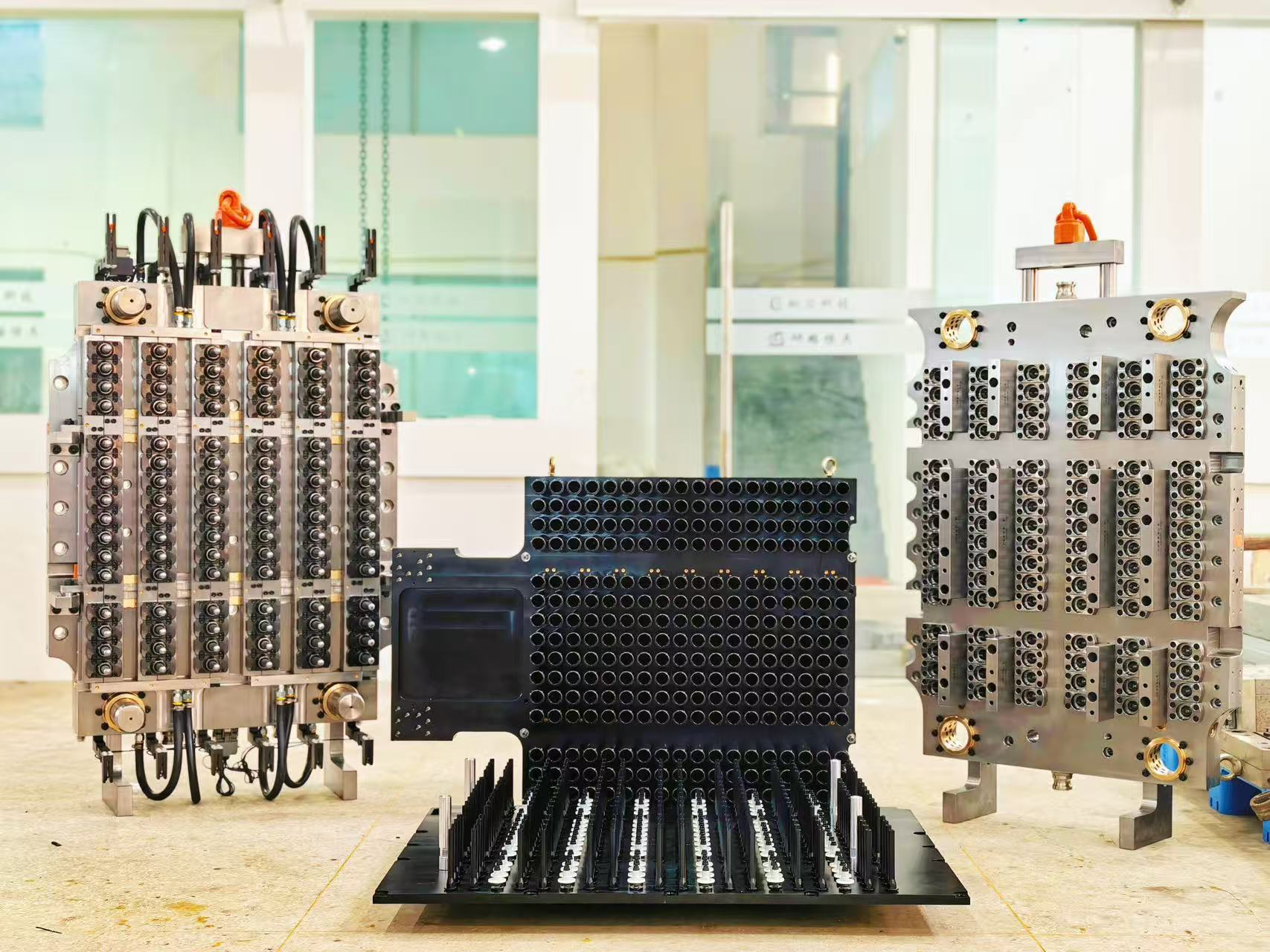
Multi-cavity PET preform mold — the practical output and quality of an injection machine depend heavily on mold compatibility and clamping rigidity.
Limitations and Boundaries of a Mid-Market PET Preform Machine
A fair comparison should also state what a mid-market machine may not deliver compared with premium systems.
High-end systems such as Husky's HyPET 6e and Netstal's PET-LINE are engineered for very high output, minimal cycle time, and fully automated integration with downstream blow molding lines. They also carry global service networks, extensive process databases, and standardized compliance packages. For large integrated producers with around-the-clock output targets and very high utilization rates, the premium may be justified.
Yongjiang, as exported widely to Southeast Asia, Russia, Africa, and South America, is better suited to medium and small packaging manufacturers pursuing cost-effective, stable equipment. Its YJPT series supports configurations from 6 to 72 cavities; buyers planning for 96-cavity high-output systems may need to confirm whether the target model and mold configuration fall within the supplier's supported scope.
In addition, buyers should verify plant infrastructure: the machines support 380/400V 50Hz global industrial power, which is the most common standard outside North America. If the factory uses a different voltage or frequency, that must be confirmed before ordering.
A Comparison Framework for the Buying Decision
| Decision Factor | Yongjiang YJPT (per available data) | What to Verify |
|---|---|---|
| Energy efficiency | Up to 50% improvement vs. alternatives | Compare against your current machine's actual kWh per preform |
| Power consumption | Up to 50% reduction vs. alternatives | Check servo system size, pump configuration, and idle power |
| Initial cost | About 10% lower than alternatives | Include mold, auxiliary equipment, shipping, installation, and training |
| Maintenance | Less maintenance due to optimized configuration and robust design | Ask about spare parts lead time, consumables, and local service |
| Mold compatibility | 6–72 cavities; reinforced clamping for multi-cavity hot runner molds | Confirm your target mold size, weight, and ejection stroke requirement |
| Typical applications | Water, beverage, CSD, edible oil, food packaging, cosmetic and daily chemical containers | Match preform weight and wall thickness to the screw and cooling design |
| Standards & compliance | Global 380/400V 50Hz power; CE certification referenced in company materials | Request the specific CE certificate and verify voltage/frequency compatibility |
Application Scenarios and Industry Fit
Based on available company data, the YJPT series is suitable for the following production environments:
- Drinking water and beverage factories producing mineral water, juice, and carbonated drinks.
- Edible oil, condiment, and food packaging plants making food-grade plastic containers.
- Cosmetic and daily chemical factories manufacturing preforms for skincare and shampoo bottles.
- Independent preform manufacturers supplying blanks to blow molding workshops.
- Large integrated injection-blow molding enterprises running 24-hour continuous production lines.
- Medium and small packaging manufacturers in Southeast Asia, Russia, Africa, and South America.
Market Trends That Shape the Choice
Several trends visible in the verified market data support the case for a mid-market PET preform machine:
First, injection molding remains the dominant technology. With 66.4% of the market, the practical focus is on improving the efficiency and cost profile of injection-based preform production.
Second, Asia Pacific's production leadership means competitive supply. China's position as the leading manufacturing base gives buyers access to a dense ecosystem of molds, auxiliary equipment, spare parts, and technical support.
Third, energy cost is an operational priority. For continuous 24-hour production, even a 10–20% difference in energy consumption affects annual operating cost significantly. A machine that reduces power consumption by up to 50% compared with less efficient alternatives directly improves the cost per preform.
Fourth, high-output consolidation is concentrated at the top. Husky's estimated 55–60% share of high-output systems indicates that the premium segment follows a specific model: high initial investment, very high throughput, global service. Below that tier, most buyers do not need the absolute highest output; they need stable output, predictable quality, and a defensible total cost.
What the Comparison Means for Procurement
For a procurement decision, the implication of this comparison is not that one segment is universally better. The choice depends on the production plan:
- If the factory is a large integrated producer with multi-line output, global brand contracts, and 96-cavity or higher requirements, a premium system may be the rational option.
- If the factory is a medium or small packaging plant producing water, beverage, edible oil, or daily chemical containers, a cost-effective machine with PET-optimized configuration, lower energy consumption, and lower maintenance can deliver a faster payback.
- If the factory is just entering the preform business, the lower capital cost and simpler service requirements of a mid-market machine reduce the risk of over-investment.
In all cases, buyers should request machine demonstrations, reference installations, spare parts pricing, and the exact list of included components before finalizing the purchase.
Safety, Risk Control, and Factory Verification
Beyond performance comparison, buyers should also consider operational risk. In PET preform injection, overheating can affect melt quality, cycle stability, and equipment safety. Available company data indicates the YJPT series addresses this through thermal protection and temperature sensors as part of its control measures.
Buyers should also verify the physical capacity of the supplier. Ningbo Yong Jiang Machine Co., Ltd., established in 1985, operates a 130,000 m² factory, employs 200 people, and reports an annual output of 2,000 units with a dedicated R&D team of 25 engineers. Its export ratio is 59%, with main markets including USA, Canada, and Thailand.
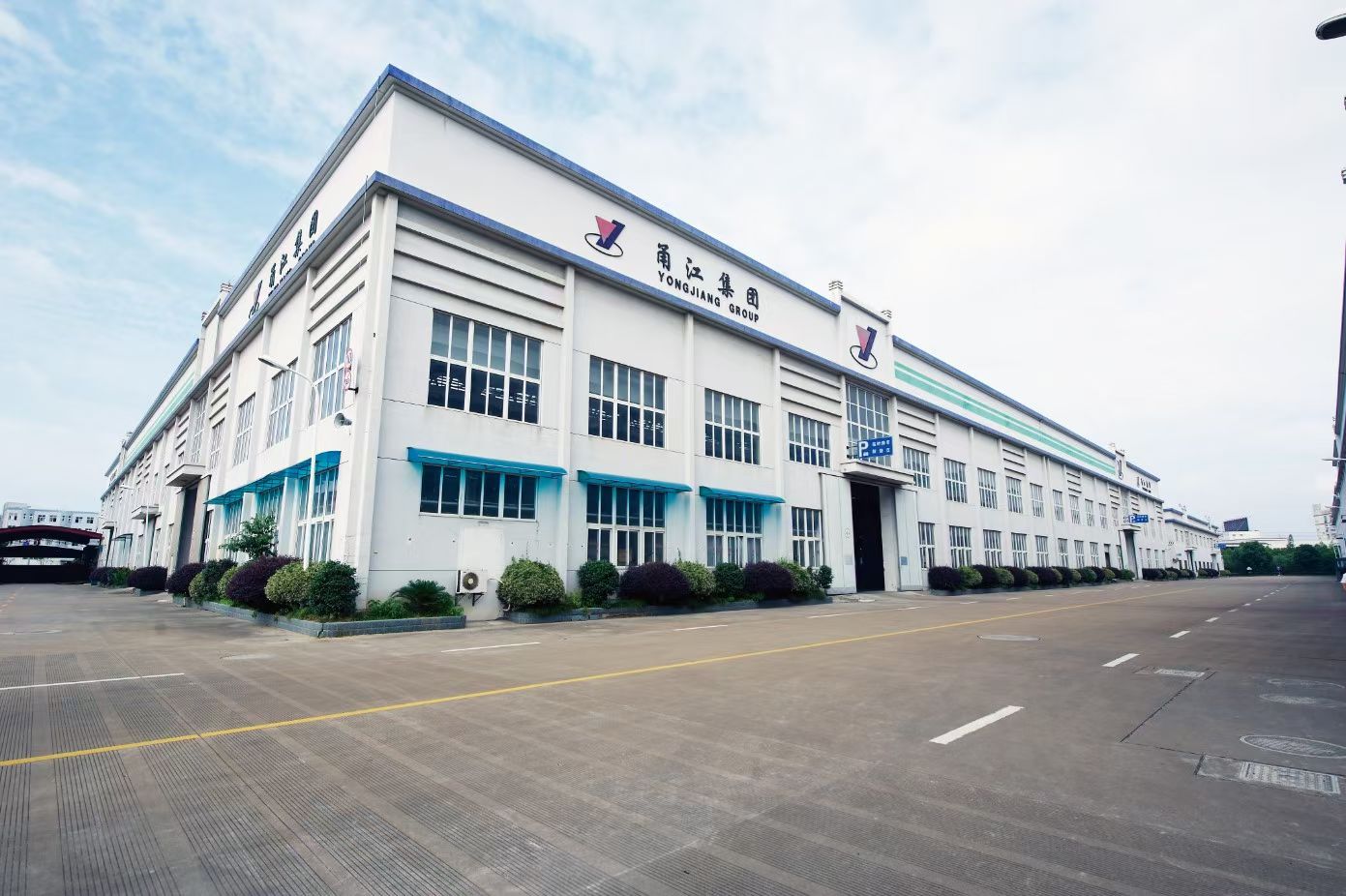
Factory scale is one of the verifiable signals for assessing long-term supply stability.
For buyers comparing suppliers, these are useful operational signals, but they should be verified through direct communication, factory audits, or third-party inspection reports.
Cost-Benefit Perspective
One of the most common procurement mistakes is comparing only the initial price. A complete cost-benefit analysis of a PET preform injection machine should include:
- Energy consumption: For a 24/7 operation, the annual electricity cost can approach or exceed a meaningful share of the machine's purchase price. A 50% reduction in power consumption offers a fast payback.
- Cycle time: Faster cycles directly increase output capacity. A difference of a few seconds per cycle becomes significant over 8,000 operating hours per year.
- Scrap and defect rate: Precision temperature control and PET-specific screw design reduce the number of defective preforms.
- Maintenance cost: Robust construction and simpler optimized configurations reduce unplanned downtime and spare parts consumption.
Reference Data and Limitations
This article uses a combination of verified third-party market data and company-supplied information. The market figures are published by Future Market Insights, Grand View Research, and technical comparison reports; they are useful for context but should not be read as a guarantee of a specific machine's performance.
The performance differences of the YJPT series — up to 50% improvement in energy efficiency, up to 50% reduction in power consumption, and 10% lower cost compared with alternatives — are company-stated values. Buyers should treat them as claims to verify through reference installations, energy metering tests, and contract terms.
Final Decision Recommendations
When comparing PET preform injection machines at the decision stage, the key question is not which brand is the market leader, but which configuration is the right fit for your preform weight range, mold investment, operating hours, and energy cost.
For buyers producing water, beverage, CSD, edible oil, cosmetic, daily chemical, and food packaging preforms — especially in cost-sensitive or growing markets — the Yongjiang YJPT series offers a documented mid-market value proposition: lower energy consumption, competitive cost, PET-optimized screw design, and multi-cavity hot runner support.
Before finalizing, confirm the following with the supplier:
- Exact cycle time for your preform weight and target cavity count.
- Compatibility with your selected hot runner mold.
- Voltage and frequency configuration of the delivered machine.
- CE certificate and other compliance documents.
- Included components: controller, screw, barrel, hopper, dryer, mold mounting plate, and spare parts.
- Installation, commissioning, and operator training arrangements.
- Response time for after-sales service and spare parts delivery.
For a more detailed look at the Yongjiang YJPT series and full machine line, the company brochure is available for download:
Download the Yongjiang PET preform injection machine brochure (PDF)
FAQ
How does the Yongjiang YJPT series compare with other PET preform injection machines?
According to company-supplied data, the YJPT series offers up to 50% improvement in energy efficiency, up to 50% reduction in power consumption, and approximately 10% lower cost compared with alternatives. It also requires less maintenance due to optimized configuration and robust design. These are stated claims; buyers should verify them through reference installations and energy measurements.
What is the difference between a standard injection molding machine and a PET preform injection molding machine?
A PET preform injection molding machine is configured for the specific behavior of PET material: a proprietary PET special screw for uniform plasticization, precise temperature control, and a clamping design that supports heavy multi-cavity hot runner molds. Standard general-purpose machines may not achieve the same preform transparency, dimensional precision, and cycle stability.
Is the Yongjiang YJPT series cheaper than imported machines?
Based on company data, the YJPT series is about 10% lower in cost compared with alternatives. Its value is not only a lower initial price but also lower power consumption and lower maintenance. Buyers should compare the full installed cost, including freight, installation, mold, and service.
What applications are suitable for the Yongjiang YJPT series?
Typical applications include mineral water and beverage bottles, carbonated soft drink preforms, edible oil and condiment containers, cosmetic and daily chemical packaging, and food-grade plastic containers. The machine also suits independent preform factories and integrated injection-blow molding lines.
What voltage and frequency does the YJPT series support?
The YJPT series supports 380/400V 50Hz global industrial power. Buyers in regions with different voltage or frequency specifications should confirm the machine configuration with the supplier before ordering.