
PET Preform Supplier Evidence: Samples, Necks, Cap Fit
PET Preform Supplier Evidence: Samples, Necks, Cap Fit
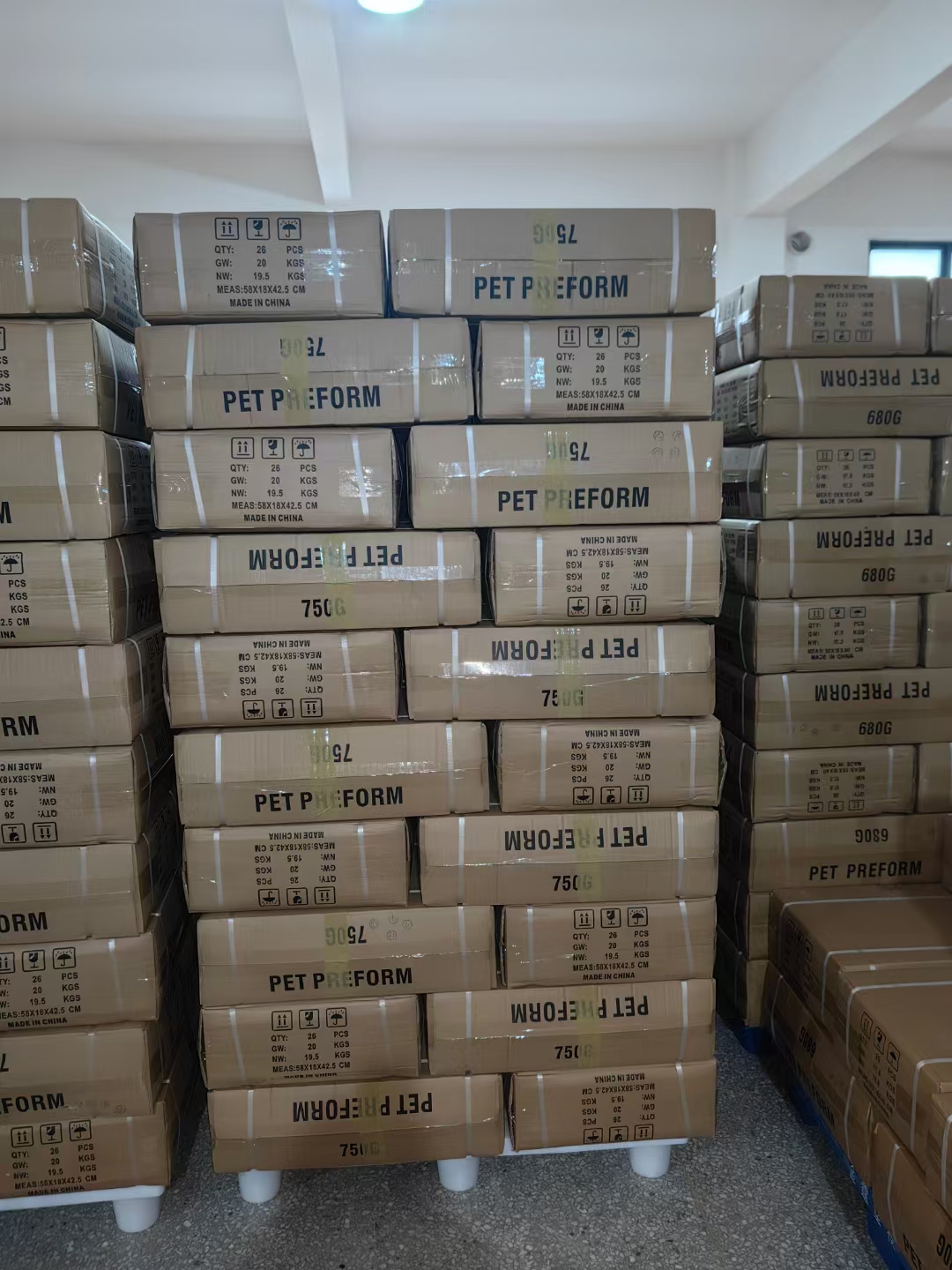
Bulk-packed PET preforms ahead of dispatch. Image: GuangDong Idea Plastic Packaging.
Approving a PET preform order on a quotation and a photograph is a common shortcut, and it is the one most often paid for later at the blowing machine. Capability in this category is not hard to test. It is simply rarely documented. Buyers moving from evaluation into execution can reduce most of the risk to four checkpoints: the pre-production sample, the neck drawing in millimetres, the closure the neck must accept, and the commercial terms that govern repeat supply.
GuangDong Idea Plastic Packaging is a PET preform manufacturer whose Guangdong facility supplies injection-moulded preforms into drinking water, beverage, edible oil, personal care and pharmaceutical packaging, and which lists OEM and ODM production among its services. The purpose of this review is not to restate that description but to convert it into evidence a buyer can request, measure and file before a purchase order is issued.
The commercial context explains why the check matters. Fortune Business Insights projects the global PET preform market to reach USD 78.74 billion by 2034, with Asia Pacific already the largest regional market at USD 22.84 billion in 2024. Large, growing supply bases are exactly where undifferentiated quotations look alike — and where the difference between two suppliers only becomes visible at sample stage.
What separates a specification from evidence
A specification describes what a preform should be. Evidence shows that the unit in the carton matches it. The traditional route — request a price, receive a photo and a weight, place a trial order — transfers nearly all verification to the buyer's own filling line, where a failed neck or a thin wall is expensive to discover. The evidence route front-loads the same checks into documents and samples that cost a fraction of a stopped line.
For a PET preform buyer, three failure modes account for most of that cost. The first is dimensional: a neck finish outside tolerance will not seal, regardless of how good the bottle body looks. The second is mass distribution: weight variation indicates uneven wall thickness, and thin walls collapse during blowing, filling, stacking or transport. The third is documentation: a food-contact test report that does not cover the resin grade, colour or item actually shipped is not evidence of anything.
Each of the following sections maps a supplier capability to a specific artefact a buyer can ask for and keep on file.
1. Pre-production samples: the first real evidence
A sample only proves something if it is representative. Ask explicitly whether the sample was moulded on the production machine, from the production mould and from the resin grade that will be used for the order; a sample from a different cavity set or a trial resin answers a different question. Search variants such as “bottle perform” or “preform perform” describe the same part — the specification, not the spelling, is what gets verified.
A workable sample record captures, at minimum: preform weight in grams, neck finish dimensions, overall length, body diameter, gate appearance quality, colour against the approved reference, and the cavity or cavity group that produced the unit. Weight deserves particular attention because it is a proxy for wall thickness. The company states that automatic checkweighing rejects any unit outside the set weight range rather than packing it, which is the control that prevents thin walls from reaching a blowing line in the first place.
Food-contact documentation belongs at this stage, not after the order. Two test records appear in the company's published evidence set. The first is a food-contact plastic test report issued by TÜV Rheinland, report number 180327075a 001, dated 23 April 2025, against Regulation (EC) No 1935/2004 and Commission Regulation (EU) No 10/2011, with a scope covering sensorial assessment, overall migration, specific migration of 18 metals, primary aromatic amines, colourfastness, terephthalic and isophthalic acid, ethylene glycol and antimony. The second is a food-contact plastic test report issued by Taizhou Customs Comprehensive Technology Service Center, report number TZA25001027, dated 25 June 2025, against GB 4806.7-2023 together with GB 31604.8-2021, GB 31604.2-2016, GB 31604.9-2016, GB 31604.7-2023 and GB 31604.41-2016, covering sensory assessment, overall migration, potassium permanganate consumption, heavy metals as lead, decolorisation and antimony.
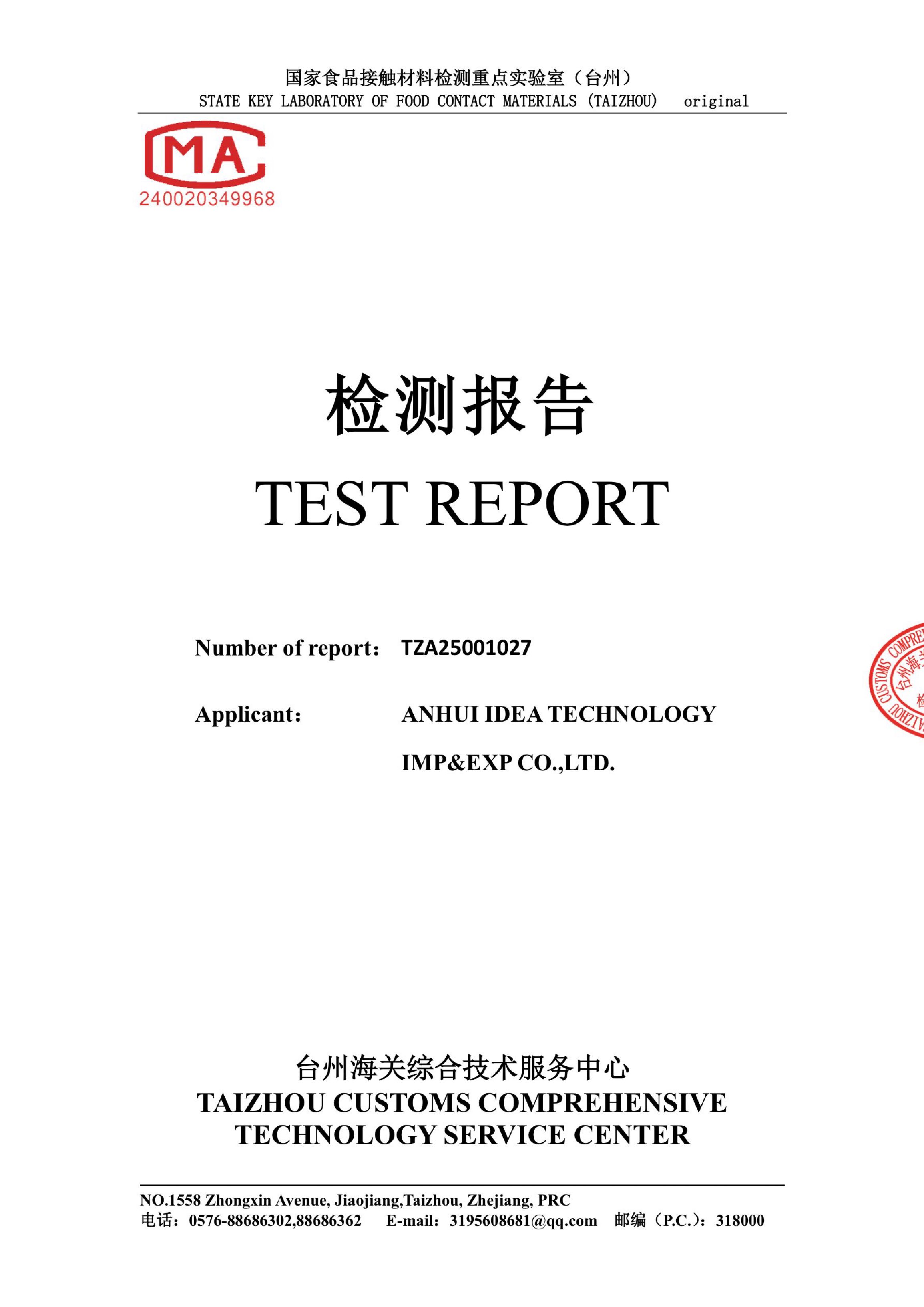
A food-contact test report in the supplier's published evidence set. Image: GuangDong Idea Plastic Packaging.
Two qualifications belong beside those documents. Neither record carries an expiry date in the published data, so a buyer should request written confirmation of current validity rather than assume it. And both records are linked in the source material to Water Bottle Preform-401, which means a buyer ordering Cosmetic Preform-402, Wide Mouth Preform-403 or Oil Preform-405 should ask which report applies to that specific item, resin and colour before treating the file as complete.
2. Custom neck dimensions: the millimetre questions
A neck finish is an interface, not a diameter. Two preforms can share a nominal neck size and still fail against the same cap if the thread profile, sealing surface, tamper-evident bead or support ring differs. That is why the useful artefact at this stage is a dimensioned drawing in millimetres with stated tolerances, agreed in writing, rather than a size label in a catalogue.
The company's published product catalogue lists neck finishes including PCO 1881, 29/25, 30/25 and 38 mm, and neck size is listed among the customization options, together with weight, colour matching and mould customization. A listed finish tells a buyer which family exists; it does not tell them the tolerance band achieved on their cavities. Both questions should be asked separately.
Where a project needs a finish outside the listed range, treat it as a tooling project rather than a catalogue selection. In practice that means drawing approval, a sample from the new mould, dimensional verification, then production — a different sequence and a different timeline from the 15-day production window the company quotes for orders of 10,001 to 200,000 pieces. Buyers should confirm whether the quoted lead time starts after sample approval and tooling sign-off.
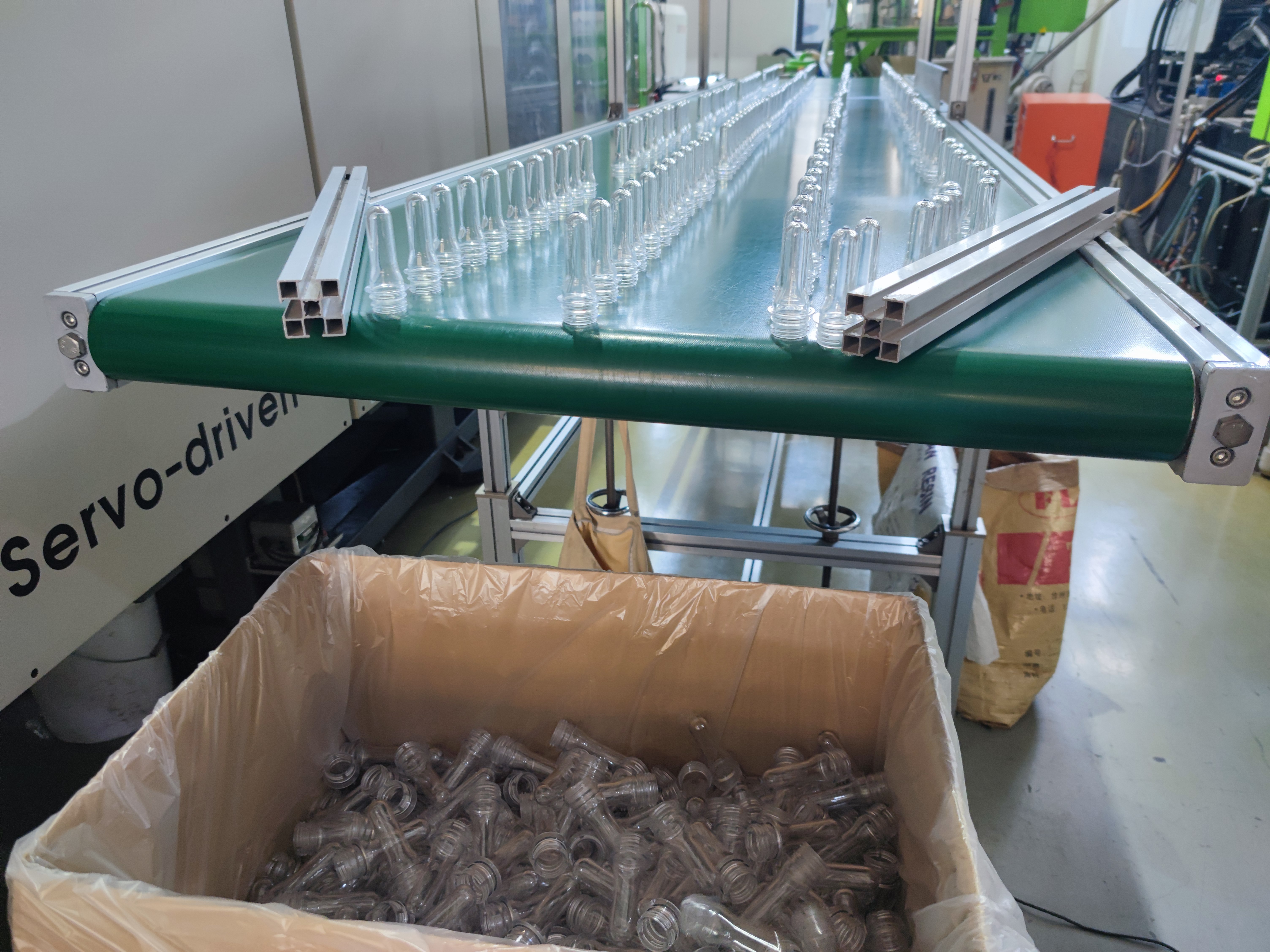
The control that closes this gap is stated plainly in the company's own technical notes: neck finish tolerance control with dimension spot checks, plus cap fitment tests to confirm the thread engages correctly with the matching closure. The same notes identify the realistic failure triggers — mould wear or damage, process drift, resin batch variation, cooling inconsistency, and pairing the preform with a cap made to a different neck-finish standard. Note that “28mm PET preform” on its own is an incomplete description: a 28 mm reference without the finish standard, weight and tolerance band does not define a part anyone can inspect against.
3. Cap-system matching: PET, PP and aluminium closures
Neck verification does not end with the preform. The closure changes the mechanics of the joint. Polypropylene is the common rigid-closure material for beverage and personal-care packs; aluminium closures are roll-formed onto the finish during capping, so the finish geometry and the capping setup interact; and PET closures are chosen where a single-material package is preferred for recycling. Each closure family places different demands on the same neck drawing, which is why the cap drawing — not the cap sample alone — should be part of the preform specification.
The practical rule the supplier applies is that preforms and caps should be bought and qualified as a matched set, with cap fitment tests confirming engagement rather than assuming it. Two conditions make that work. First, one party must be accountable for the joint; if the closure comes from a third party, send those closures to the preform supplier for fitment testing on the production cavities. Second, capping torque must be controlled during filling, because a correct neck can still leak under incorrect application torque.
For a buyer, the evidence to request is specific: the neck drawing, the mating closure drawing and standard, a fitment test result produced on the same preform lot that will ship, and a statement of the capping parameters the test assumed. For Oil Preform-405 and other edible-oil applications, where Mordor Intelligence reports PET penetration above 65% in developing economies, closure choice frequently involves aluminium rather than plastic, so the finish must be signed off against that closure type before tooling is committed.
4. Logo, graphic and colour: four definitions to fix first
The company lists logo, packaging, graphic, neck size, weight, colour and mould among its customization options. That list is useful, but a purchase order needs it defined. Four questions resolve most ambiguity: where the branding sits (on the preform surface, on the shipper, or on printed graphics supplied with the pack); whether the colour is matched to a physical reference or a numeric code; whether the requested colour falls inside the scope of the food-contact report already held; and whether the change requires a new mould or only a new colour batch.
The colour question carries compliance weight. A test report issued against a specific material and colour set does not automatically extend to a different masterbatch, so buyers should ask the supplier to confirm coverage in writing rather than infer it. Colour matching and mould customization are both listed capabilities, which means the answer should be available before sampling rather than after.
5. Using the model range as an evidence checklist
The listed coverage in this range is Water Bottle Preform-401, Cosmetic Preform-402, Wide Mouth Preform-403 and Oil Preform-405. Each raises a different verification emphasis, and the range is more useful read that way than as a product list.
Water Bottle Preform-401 is the item to which the published food-contact test records relate, and it is also the item named in the company's published case entries — bottled water, juice, health supplement and edible oil packers, with annual contract values between USD 300,000 and USD 500,000 and “stable filling performance” given as the result. Those entries are company-reported, and duration is not publicly disclosed, so they are useful as application context rather than as independent performance proof.
Cosmetic Preform-402 sits in personal care, where colour and surface appearance usually carry more weight in the approval decision than barrier performance, making the colour-reference and report-scope questions the priority. Wide Mouth Preform-403 changes the finish geometry, so the closure drawing and a fitment test on the actual wide-mouth closure matter more than neck dimension alone. Oil Preform-405 requires the buyer to state the oil type and storage conditions up front, because food-contact suitability is condition-dependent.
6. Capacity, MOQ and inspection: the commercial evidence
Capability claims should survive contact with the order plan. The company states a production capacity of 500,000 pieces per month, a minimum order quantity of 10,000 pieces, pre-shipment inspection as its quality control method, OEM and ODM production modes, global export markets and remote after-sales support. Commercial terms published alongside these are FOB, CIF or EXW depending on whether the buyer nominates a forwarder, and payment of 30% T/T deposit before production with 70% T/T against a copy of the bill of lading.
Read against a real forecast, three of those numbers carry consequences. An order programme that exceeds 500,000 pieces a month needs a scheduling conversation, not just a larger purchase order. A 10,000-piece MOQ with price breaks above it means the trial quantity and the production quantity may be priced differently, so the sampling decision should be taken with the volume tier in view. And pre-shipment inspection only protects a buyer if the acceptance criteria are agreed first — the AQL level, the test items and the report format should be settled before production begins, not argued after the container is loaded.
| Checkpoint | Evidence to request | What it protects |
|---|---|---|
| Sample | Production-cavity sample, weight in grams, colour against reference | Wall-thickness consistency at blowing |
| Neck | Dimensioned drawing in millimetres with tolerances | Seal integrity and capping repeatability |
| Closure | Cap drawing, cap standard, fitment test on the shipping lot | Leakage and torque-related rejects |
| Compliance | Test report matching item, resin and colour, plus validity confirmation | Food-contact acceptance at destination |
| Commercial | Written MOQ, lead time, Incoterm, AQL and test items | Predictable cost and acceptance at delivery |
Where the evidence stops: fit boundaries
An honest capability review includes the questions a supplier's material does not answer. Three stand out here.
The preforms described are moulded from food-grade virgin PET resin rather than recycled material, per the company's own technical notes, and the company's stated conditions exclude hot filling and prolonged contact with acidic or high-alcohol contents. Buyers whose product or process falls outside those conditions should confirm suitability before ordering rather than after. Separately, virgin PET still accounted for 72.0% of material demand in the preform market as of 2026, while the EU Single Use Plastics Directive requires PET beverage bottles to contain at least 30% recycled content by 2030 — a buyer with a 2030 European obligation therefore needs to raise recycled-content availability as its own question, since it is not answered by the published records summarised here.
Two further limits are commercial rather than technical. After-sales support is listed as remote support, so a buyer who expects on-site assistance during blowing trials should establish the scope before order. And the certificates cited are scope-specific test reports, not a blanket product certification: they evidence defined migration and compositional tests on defined items, and nothing more.
Outlook for buyers
If the market forecasts hold — the Fortune Business Insights projection of USD 78.74 billion by 2034 rests on a commercial research estimate rather than audited trade data — the supply base will keep widening, and the marginal supplier will keep quoting on photographs. That makes documentary evidence a durable differentiator rather than a one-off exercise. The regulatory direction reinforces the same conclusion: as recycled-content obligations tighten toward 2030, the buyers who can already read a migration report, a neck drawing and a fitment result will be the ones able to qualify a new material or a new supplier without restarting the process.
For a first order, the sequence that costs least is: agree the neck drawing and closure standard, take production-cavity samples against that drawing, confirm the test report covers the actual item and colour, agree AQL and test items, then book capacity against the agreed volume tier. Full product and customization details are available in the company brochure (PDF), and company information is published at GuangDong Idea Plastic Packaging.
FAQ
What should a buyer check in a pre-production PET preform sample before approving an order?
Confirm the sample came from the production mould, machine and resin grade, then record weight in grams, neck finish dimensions, overall length, body diameter, gate quality and colour against the approved reference. Ask which cavity produced it. Weight is the practical proxy for wall thickness, and the supplier's stated control is automatic checkweighing that rejects out-of-range units. Request the food-contact test report at the same time and check that it covers the item, resin and colour being ordered.
How are custom neck dimensions specified and verified in millimetres?
Through a dimensioned drawing with stated tolerances rather than a nominal size. The drawing should define the thread profile, sealing surface, tamper-evident bead and support ring in millimetres, plus the mating closure standard. Verification is then dimensional spot checks against that drawing and cap fitment tests with the actual closure. A listed range such as PCO 1881, 29/25, 30/25 or 38 mm identifies the finish family only; the tolerance band achieved on the specific cavities is a separate question.
How is cap fitment confirmed when the closure is PET, PP or aluminium?
By testing the preform and the closure as a matched set. Polypropylene, aluminium and PET closures load the same neck differently, and aluminium closures are roll-formed onto the finish during capping, so the finish drawing must be checked against the specific closure type. Ask for a fitment test performed on the preform lot that will ship, using the closure you will actually run, and control capping torque during filling — a correct neck can still leak under incorrect application torque.
What are the ordering terms for a custom PET preform run?
The stated terms are a minimum order quantity of 10,000 pieces, with price breaks at higher volumes, and a lead time of 15 days for orders of 10,001 to 200,000 pieces; above 200,000 pieces delivery time is negotiable. Delivery can be FOB, CIF or EXW depending on whether the buyer nominates a forwarder. Inspection is by pre-shipment test with a report provided before goods leave, and payment is 30% T/T deposit before production with 70% T/T against a copy of the bill of lading.
Which preform types cover water, cosmetic, wide-mouth and oil applications?
The listed coverage comprises Water Bottle Preform-401, Cosmetic Preform-402, Wide Mouth Preform-403 and Oil Preform-405. Water Bottle Preform-401 is the item to which the published food-contact test reports relate and the item named in the company's reported case entries. For the other three, buyers should confirm which report applies to that item, and for wide-mouth finishes the closure drawing and fitment test become the controlling evidence.
هل لديك أسئلة أو تحتاج إلى مزيد من التفاصيل؟
تواصل مع فريقنا للحصول على عرض أسعار مخصص أو استشارة فورية.
طلب عرض أسعار
املأ النموذج أدناه وسيتواصل معك فريقنا بعرض مقترح مخصص.
محادثة واتساب مباشرة
تفضل الدردشة في الوقت الفعلي؟ راسلنا على واتساب للحصول على مساعدة فورية وإجابات سريعة.
- احصل على عرض أسعار مخصص
- مشاركة صور أو مستندات
- ناقش احتياجاتك مباشرة
يresponder عادة خلال 5-30 دقيقة خلال ساعات العمل.