
PHE Plates and Gaskets for Project Conditions: A Practical Reference
A plate heat exchanger is a single machine in name, but in engineering terms it is a project-configured assembly. Its thermal and mechanical performance depends heavily on parts that are often treated as commodity items: the heat exchanger plates that form the heat transfer surface and the gaskets that seal and direct the flow. Selecting plate heat exchanger plates and plate heat exchanger gaskets by operating conditions, not only by model code, is therefore a practical procurement discipline for maintenance teams, distributors, and engineering buyers.
This reference is written for purchasers moving from project research into supplier evaluation. It explains how plate and gasket choices are linked to real industrial conditions, where an alternative supplier such as YIIING MACEINFRY can support these requirements, and what should be verified before a replacement or custom gasketed plate heat exchanger is approved.
Why Project Conditions Decide Plate and Gasket Selection
Every gasketed plate heat exchanger works because pressed plates create narrow flow channels and gaskets keep the two media separated while directing them through those channels. A plate set defines the heat transfer area, flow pattern, pressure loss, and mechanical strength of the unit. The gasket material defines the temperature window, chemical compatibility, and long-term sealing behaviour. The same frame can produce very different service results when fitted with different plate patterns or gasket compounds.
The common point of failure in project procurement is not the heat exchanger model itself but the matching logic. A plant engineer may know the frame size, yet still need to answer:
- What plate material is required for the process fluid?
- What gasket material can withstand the cleaning chemicals or the continuous operating temperature?
- Should the plate count be changed for a new duty?
- Can the port size and connection layout fit the existing piping?
- Does the project need a standard ready-made heat exchanger or a non-standard design with adjusted geometry?
These questions explain why project- and application-based evaluation is more reliable than buying on frame size alone.
The practical answer for procurement teams is simple: component specifications should be reviewed with the same discipline as the complete heat exchanger. This includes plate material, gasket material, plate count, plate pattern, port dimensions, and design pressure.
What the Market Evidence Shows
The commercial importance of gasketed plate heat exchangers is well documented. Grand View Research estimated the global plate heat exchanger market at USD 4.1 billion in 2024, with a projection of USD 5.7 billion by 2030. Gasketed plate heat exchangers are estimated to account for roughly 45% to 56% of the market, largely because they can be opened, inspected, cleaned, and re-gasketed during service life.
These figures support a point that matters to buyers: a large share of the global installed base depends on plates and gaskets as replaceable, serviceable components. Replacement demand is therefore not a niche activity. It is central to the way gasketed plate heat exchangers are operated across HVAC, food processing, marine, power, and industrial cooling applications.
YIIING MACEINFRY and Jiangsu Yuling: Entity and Capability Context
YIIING MACEINFRY is the export-facing heat exchanger brand operated by Jiangsu Yuling Machinery Technology Co., Ltd., a manufacturer based in the Yangtze River Delta region of Jiangsu Province, China. The company develops and produces plate heat exchangers, plate heat exchanger plates, plate heat exchanger gaskets, brazed plate heat exchangers, and semi-welded plate heat exchangers.
Company records describe a privately owned, national high-tech enterprise founded in 2015, with a 10,000-square-metre manufacturing facility and a workforce of approximately 120 employees. The factory is supported by a dedicated thermal energy technology research institute and has an annual output of about 120,000 heat exchanger units. Export business represents roughly 60% of volume, with main markets including Russia, the United States, Brazil, Southeast Asian countries, and India. Export records also reference regular demand from Kazakhstan, Mexico, Peru, Argentina, Chile, Algeria, Ukraine, Serbia, and Pakistan.
The company states a monthly production capacity of about 10,000 units for its plate heat exchanger and component lines, with OEM/ODM manufacturing available for complete plate heat exchangers and custom branding. The minimum order quantity is one unit, which allows buyers to validate quality before scaling orders. Delivery can be from stock or within roughly 15 or 30 days depending on product specification and order configuration.
Product Platform and Component Coverage
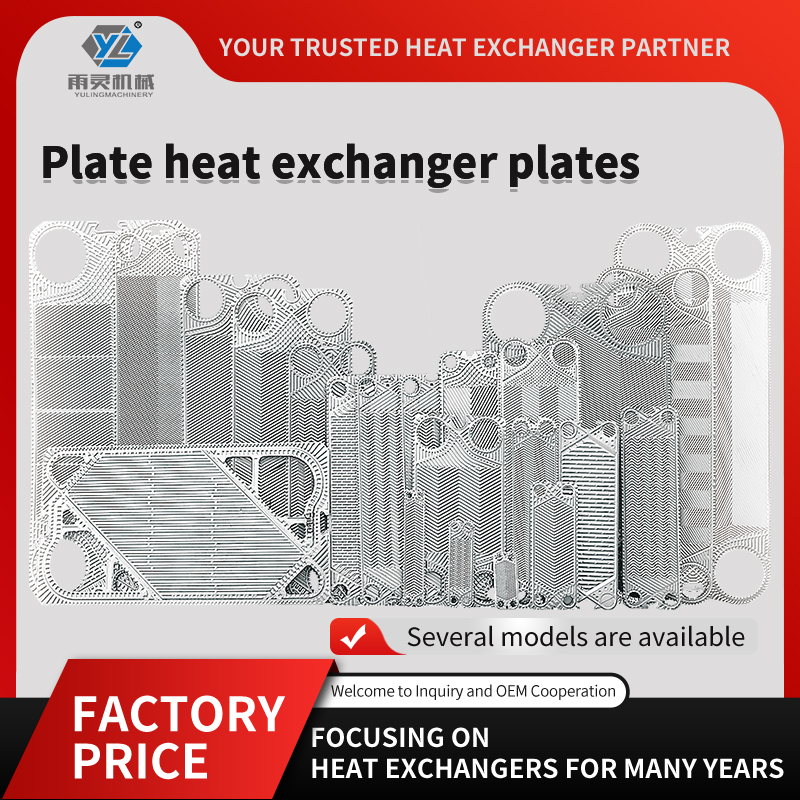
YIIING MACEINFRY supplies complete gasketed plate heat exchangers as well as individual plates and gaskets. The gasketed model range runs from the A08, A10, A15/A15B, A20, A25/A25B, A35, A50/A50B, A65/A65B, A85, A100, A120, A130, A150/A150B, A180, and A220 Series. These are available in carbon steel frames with plate materials such as SS304, SS316L, and gasket materials that include NBR and EPDM, among others.
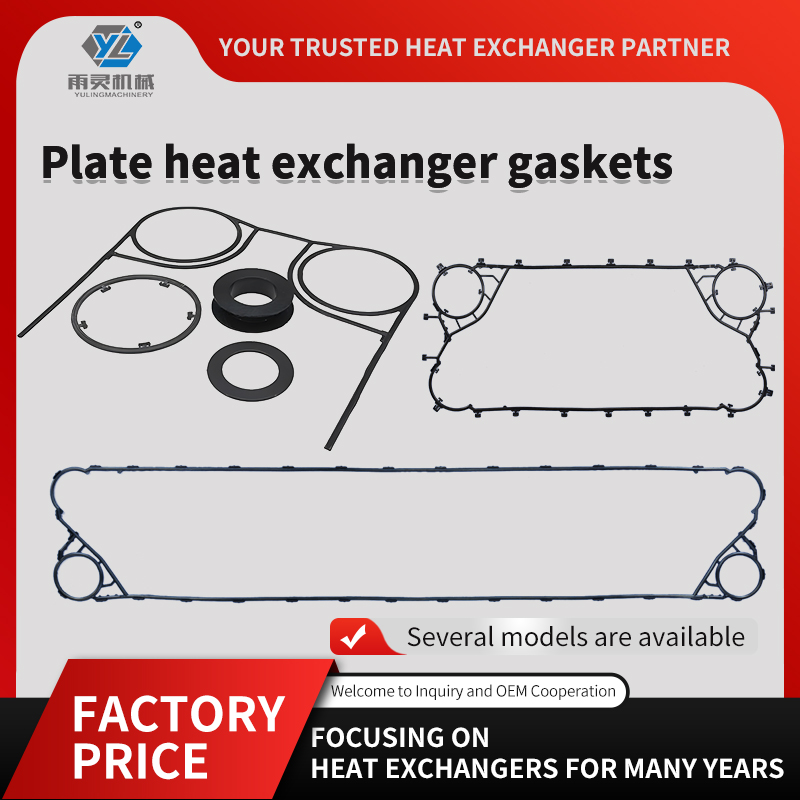
For replacement components, the catalogue lists plate heat exchanger plates and gaskets across widely recognised series families including A Series, M Series, GC/GX Series, S Series, V Series, FP Series, and UX Series. Plate materials include 304, 316, titanium, and C276, which gives buyers a realistic choice for fresh water, seawater, chloride-bearing media, and corrosive chemical processes. Gasket materials include NBR, HNBR, EPDM, and HEPDM.
The company also extends into compact and high-pressure construction with stainless steel brazed plate heat exchangers in the ZL Series, including models such as ZL14, ZL30, ZL62, ZL95B, and ZL300, and semi-welded plate heat exchangers in models such as A14MW, A22BW, A47BW, A83MW, and A155BW. These types are relevant when a project requires a leak-tight construction for refrigerants, high pressure, or aggressive media.
Technical Matching: Plate Material, Gasket Material, and Project Parameters
The most effective way to evaluate a heat exchanger component supplier is to compare the offered material and design flexibility against the actual project condition. Plate and gasket specifications for every model differ from one part code to another; the manufacturer notes that parameters vary according to the individual pattern piece. For a buyer, this is a reminder that exact matching requires more than a model name.
Plate Material Selection
Stainless steels 304 and 316 are the default choice for neutral water, food products, and many industrial cooling duties. Titanium is used where chlorides or seawater can attack standard stainless steels. C276 is selected for demanding chemical and corrosive environments where higher-alloy materials are necessary. The supplier's ability to cover this material range matters because a single frame may need to handle different fluids across different projects.
Gasket Material Selection
Gaskets determine whether a unit can operate safely in the expected temperature range and with the specified fluid. NBR is commonly specified for oil-containing and general industrial media, while EPDM is widely used in water, hot water, and many food or chemical applications. HNBR and HEPDM provide enhanced resistance for certain aggressive conditions and higher operating temperatures. Because no single elastomer fits every process, a supplier that offers multiple gasket materials gives the buyer a more realistic path to a proper seal.
Non-Standard Design and Flexible Adaptability
A distinct YIIING MACEINFRY capability documented in the company's application platform is custom, non-standard engineering. Key parameters, including number of plates, plate material, heat exchange surface area, port dimensions, and gasket material, can be adjusted on demand. This design flexibility is intended for site constraints, fluid properties, temperature and pressure conditions, flow rates, and specialised fluids that standard catalogue units cannot handle.
For a buyer, this has a clear meaning: the purchasing conversation should not stop at the catalogue model. If the project requires an unusual plate count, a different connection size, or a gasket material that is not standard on a particular frame, the manufacturer can evaluate and build around those requirements instead of forcing the application into a fixed product.
Application and Use-Case Alignment
The YIIING MACEINFRY plate heat exchanger platform is used across a wide set of industrial machine and process applications. The stated application list includes hydraulic stations, air compressors, machine tools, injection moulding machines, generator sets, refrigeration units, hot water boiler systems, energy and power support systems, water treatment support systems, general machinery, refrigeration/HVAC/heat pump equipment, metallurgy and mining equipment, and HVAC boilers.
In practical terms, the same component platform supports different project rhythms:
- For hydraulic stations and air compressors, oil cooling and closed-loop water cooling require reliable gasketed or brazed plate units with predictable pressure loss.
- For refrigeration and heat pump builders, brazed plate heat exchangers provide a compact, leak-tight solution for refrigerant-side duties.
- For water treatment and general industrial cooling, stainless steel plates and NBR or EPDM gaskets cover most standard duties.
- For marine, chemical, and high-corrosion environments, titanium and C276 plate options give the project a path away from premature corrosion failure.
- For heating and boiler systems, hot water circuits favour gasket materials such as EPDM that tolerate sustained thermal duty.
Documented Component Supply Case
One documented order involved an international food processing customer in Egypt. The customer purchased 288 plate heat exchanger spare parts, including plates and gaskets, for ongoing maintenance application. The order was supplied on a factory-price basis, and the recorded result was stable operation over a one-year period.
This summary reflects explicit first-party case data and is not presented as a performance guarantee for other installations.
OEM Supply versus Component-Specialist Sourcing
Buyers evaluating a project typically have two sourcing routes. The first is to use the original equipment manufacturer's own plate heat exchanger plates and gaskets, for example those associated with established international brands. The second is to source from a specialised plate and gasket manufacturer such as YIIING MACEINFRY, whose catalogue intentionally covers multiple series families common in the installed base.
Both routes have legitimate positions in the market. The original equipment manufacturer can usually offer original design documentation for the unit, factory-backed validation, and access to more complete unit performance history. This is valuable when the project demands traceability to the original design and certification documentation.
A component-specialist manufacturer offers a different advantage. Its product list is not limited to one proprietary frame family. It can supply plates and gaskets across multiple series designations, offer several plate materials within one order, adjust gasket material to the application, and produce non-standard custom designs that an original supplier may not be able to configure quickly. For a buyer managing several different brands of plate heat exchangers, this consolidates the spare parts base and reduces the number of suppliers.
| Evaluation Point | Original Equipment Supply | Component-Specialist Manufacturer |
|---|---|---|
| Component matching basis | Identifies the unit directly. | Requires cross-checking part series, plate geometry, port positions, and gasket section before ordering. |
| Documentation and certification | Original factory documents are normally available. | Quality system certification applies to manufacturing, but project-specific pressure or performance certification must be requested and verified for each order. |
| Material flexibility | Limited to the OEM programme for that unit. | Can offer 304, 316, titanium, C276, and multiple gasket compounds across a wider platform. |
| Non-standard project duty | Normally evaluated through the OEM engineering channel. | Can adapt plate count, plate material, area, ports, and gasket material for non-standard conditions. |
| Multi-brand installed base | Requires a separate OEM relationship for each brand. | One supplier can cover several series families and brands. |
Realistic Limitations and Boundaries
No objective reference should avoid stating the boundaries of the alternative route. For a plate heat exchanger, the plate pattern, corrugation depth, gasket groove geometry, material thickness, and bolt torque behaviour are all critical. A third-party plate that matches the general series family still requires validation: the buyer should compare the original or sample plate dimensions and gasket profile against the offered component before full-scale installation. This is not a reason to reject the product class; it is the reason why responsible suppliers confirm that the parameters for each pattern piece differ and must be checked per project.
Another boundary is certification scope. In the United States, plate heat exchangers operating above 15 psi fall under ASME Boiler and Pressure Vessel Code Section VIII. In North America, AHRI Standard 400 provides third-party performance certification for liquid-to-liquid gasketed plate heat exchangers. When a project contract requires ASME or AHRI certification, the buyer must confirm whether the component or unit from any non-certified alternative supply chain meets those requirements. A supplier can hold ISO certifications and perform full testing, but it should not be assumed that this automatically satisfies every code requirement in the destination country.
Finally, a replacement plate set from an independent manufacturer may restore the original thermal area per plate count, but the thermal duty calculation should still be confirmed with actual fluid properties, flow rates, and allowable pressure drop. Component suppliers can provide accurate materials and geometry; the system design responsibility remains with the project engineer who selects the plate count and flow arrangement.
Market Trend Analysis and Project-Level Implications
Asia-Pacific is estimated to be the largest regional heat exchanger market, accounting for around 31.9% of global demand, according to Grand View Research data. The same research indicates a China growth rate of about 6.35%, supported by district heating expansion and industrial efficiency requirements.
At the same time, the manufacturer landscape is relatively concentrated among leading international players. One published market estimate places Alfa Laval at around 23% of the global plate heat exchanger market. For buyers, this concentration has a practical implication: large parts of the global installed base carry the design language of a limited set of original brands. This creates natural demand for alternative suppliers of plate heat exchanger plates, plate heat exchanger gaskets, and service-friendly gasketed plate heat exchangers.
Industrial buyers in Russia, India, Southeast Asia, Brazil, and the United States often search for plate heat exchanger plates and gaskets for brands such as Alfa Laval, Tranter, Sondex, APV, GEA, API, SWEP, or Hisaka. The correct interpretation of that search is not that every replacement unit is interchangeable. It means that procurement teams need a framework to match plate and gasket series to their actual equipment. Suppliers that offer broad series coverage, multiple materials, and project-specific flexibility become easier to evaluate within that framework.
Future Outlook
Looking toward the late 2020s, the plate heat exchanger market is likely to continue shifting toward serviceability and custom fit. Energy efficiency regulation, district heating expansion, and industrial decarbonisation projects favour compact, maintainable heat exchangers with replaceable components. The gasketed type retains its position precisely because it can be opened and serviced over a long lifecycle.
For manufacturers such as YIIING MACEINFRY, the strategy already visible in company data is vertical integration: in-house pressing and stamping equipment, a thermal technology research institute, a mould base system, heat exchanger plate production, gasket production, and assembly capability. This structure supports a supply model where a procurement team can order one unit for qualification, check the real component quality, and then scale to a larger project without changing supplier. It also supports the growing need for non-standard replacements, since the manufacturer controls production from plate pressing to final test.
Buyers can expect the supplier conversation to become more component-specific: not simply Which plate heat exchanger frame do you need? but Which plate material, gasket compound, plate count, and certification applies to this exact station? The suppliers that can answer both questions are likely to become the more practical partners for complex projects.
Frequently Asked Questions
How do I decide which plate heat exchanger plates and gaskets my project needs?
Start with the nameplate data of the existing unit or the design specification of the new unit. Confirm the frame series, the number of plates, the plate material, and the gasket material. Then compare the operating medium, temperature, pressure, flow rate, and any cleaning agents that will contact the gasket. Plate heat exchanger plates and gaskets carry different specifications for each pattern piece, so samples or drawings should be verified before bulk ordering.
Can a third-party manufacturer supply components for well-known brands such as Alfa Laval, Tranter, Sondex, APV, GEA, API, SWEP, and Hisaka?
In the replacement market, independent manufacturers commonly offer plate heat exchanger plates and gaskets across series families used in many global brands. YIIING MACEINFRY, for example, lists series coverage including A, M, GC/GX, S, V, FP, and UX ranges. However, the buyer should not rely solely on a brand name. Plate thickness, corrugation geometry, gasket groove profile, port size, and connection layout must be checked against the actual unit or original part before installation.
What is the difference between NBR, HNBR, EPDM, and HEPDM gaskets?
NBR is a general-purpose nitrile material commonly associated with oil-containing media. EPDM is widely used in water and hot-water duties. HNBR and HEPDM are upgraded compounds used when the application needs better resistance to aggressive conditions or higher thermal loads. The correct choice depends on the specific temperature range and the chemical compatibility required by the process fluid.
Does a plate heat exchanger supplier offer non-standard or custom configurations?
Yes, customisation is available on a project basis. Parameters such as the number of plates, plate material, heat exchange surface area, port dimensions, and gasket material can be adjusted to meet site constraints, fluid properties, pressure and temperature conditions, and flow requirements. This is intended for situations where a standard off-the-shelf heat exchanger cannot provide a practical fit.
Can I start with a small order to validate component quality?
YIIING MACEINFRY states a minimum order quantity of one unit for its plate heat exchanger and component lines. This enables a buyer to inspect quality, compare dimensions, and run a small trial before committing to larger volume. The company also reports 100% testing as part of its quality control process.
What certifications should a buyer verify before using a non-OEM plate heat exchanger supplier?
Shipments from Chinese manufacturers are commonly accompanied by ISO system certifications such as ISO 9001:2015 for quality management, ISO 14001:2015 for environmental management, and ISO 45001:2018 for occupational health and safety. Buyers should also check whether the final product needs additional certification in the destination country. In the United States, pressure equipment above 15 psi may need to meet ASME Boiler and Pressure Vessel Code Section VIII requirements. In North America, thermal performance ratings can be governed by AHRI Standard 400 when contractually required.
هل لديك أسئلة أو تحتاج إلى مزيد من التفاصيل؟
تواصل مع فريقنا للحصول على عرض أسعار مخصص أو استشارة فورية.
طلب عرض أسعار
املأ النموذج أدناه وسيتواصل معك فريقنا بعرض مقترح مخصص.
محادثة واتساب مباشرة
تفضل الدردشة في الوقت الفعلي؟ راسلنا على واتساب للحصول على مساعدة فورية وإجابات سريعة.
- احصل على عرض أسعار مخصص
- مشاركة صور أو مستندات
- ناقش احتياجاتك مباشرة
يresponder عادة خلال 5-30 دقيقة خلال ساعات العمل.