
PL02 LED Panel Light: Evidence of Manufacturing Capability
PL02 LED Panel Light: Evidence of Manufacturing Capability
Commercial LED panel lighting is judged at the ceiling line: a thin, evenly lit plane that sits flush in a shallow void, runs on a driver that survives daily switching, and matches every panel installed beside it. Zhejiang Lepeng Electric Appliance Co.,Ltd. — an LED lamp and luminaire manufacturer founded in 2009 and headquartered in the Baiguan Industrial Zone, Shangyu District, Shaoxing, Zhejiang Province, China — publishes the PL02 series as a documented example of that capability. This article examines what the PL02 specification, its third-party certification record and the manufacturer's production data actually evidence, and where the limits of that evidence lie.
The question addressed here is narrow and practical: when a buyer in the research or evaluation stage asks a supplier to demonstrate panel light manufacturing capability, what counts as evidence? The PL02 is used as the working example because three separate evidence types can be checked independently — the published configuration, the certificate record, and the production scale behind the product.
Why a panel light is a manufacturing test, not a catalogue line item
A panel light is a five-part assembly: an LED board, a driver, a diffuser, a frame, and the mounting and connection hardware that holds it in the ceiling. Failures in commercial interiors rarely come from the concept. They come from variation between units — a colour point that drifts from one fixture to the next, a cut-out that does not match the ceiling framing, a driver that behaves differently after a year of daily switching.
Consistency is where indoor commercial specification gets difficult. In a corridor or an open office, two adjacent panels with slightly different colour points read as a defect even when each unit is individually within tolerance. In a retail or clinical interior, an inconsistent driver turns a lighting package into a long-term maintenance line item. Because a buyer cannot audit a production line directly, they audit documents and physical samples instead.
That is the opportunity for a manufacturer that keeps a disciplined, publishable record. Specification sheets with real dimensions, certificates that name the product scope, and a capacity statement with a stated lead time are the practical substitutes for a factory visit — and they are far easier to compare across a shortlist than verbal assurance. The sections below test the PL02 against that standard.
The PL02 series: what the specification documents
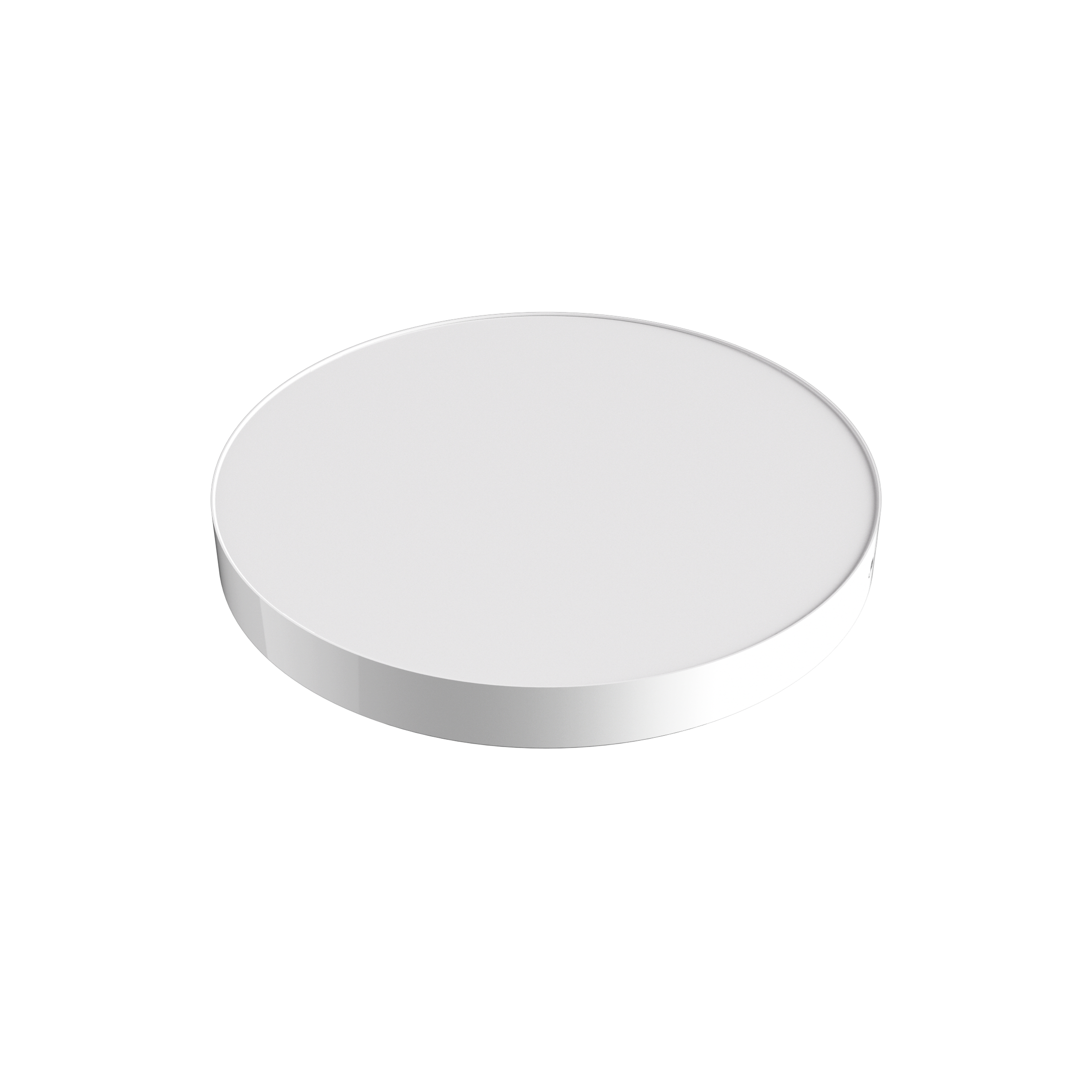
The PL02 is a surface-mounted or recessed LED ceiling panel light offered in round and square formats and three sizes: 5 inches, 8 inches and 12 inches. It is positioned for commercial and residential indoor applications, with a frame and diffuser combination of aluminium or plastic frame plus a PC diffuser.
Configuration and dimensions
The series is defined by a size-and-shape matrix rather than by a single SKU. Each size is available in both round and square format, and the two formats carry their own external dimensions while sharing a defined cut-out range.
| Size | Shape options | Round dimensions | Square dimensions | Cut-out range |
|---|---|---|---|---|
| 5 inches | Round / Square | φ160 × 40 mm | 160 × 160 × 40 mm | φ75–125 mm |
| 8 inches | Round / Square | φ203 × 40 mm | 203 × 203 × 35 mm | φ75–150 mm |
| 12 inches | Round / Square | φ305 × 40 mm | 305 × 305 × 40 mm | φ75–250 mm |
For a retrofit project the cut-out range is the number that matters, because existing ceiling apertures are fixed before the fixture is chosen. The cut-out dimensions are specified in 25 mm increments, which gives a project a defined sequence to match against an existing opening instead of improvising around it.
Electrical and light-quality parameters
Power, efficacy and control parameters are published at series level rather than per size, which means a buyer should confirm the exact combination for the order.
| Parameter | Specification |
|---|---|
| Power | 9 / 12 / 18 / 24 W |
| Luminous efficacy | 90 / 110 lm/W |
| Colour temperature | 2700K–6000K, 3-CCT selectable |
| Dimming | Three-level brightness: 50% / 75% / 100% |
| Protection rating | IP20 |
| Control | Remote control plus microwave sensor (auto ON/OFF) |
| Frame and diffuser | Aluminium or plastic frame with PC diffuser |
| Mounting | Surface-mounted or recessed, adjustable sliding hole spacing, quick-connect interface |
Colour temperature, dimming and presence sensing
The 3-CCT selectable design is the feature with the clearest commercial consequence. A single fixture covers the 2700K to 6000K range and the colour temperature is set through a switch, so one part number can serve several ambiance requirements — warmer settings in hospitality and residential interiors, neutral settings in offices, cooler settings where task visibility matters. For a distributor or contractor, that reduces the number of stock lines a project requires.
Three-level dimming at 50%, 75% and 100% covers the common requirement of reducing output in circulation areas after hours without installing a separate dimming system. The built-in microwave sensor switches the fixture on and off automatically when the space is occupied or vacant, and the remote control operates the light without a wall-mounted device. Luminous efficacy is published at up to 110 lm/W, and the ultra-thin profile keeps the visible fixture depth at 35 to 40 mm depending on format.
Mechanical design and installation
Two installation routes are supported by the same housing: surface-mounted for solid ceilings and recessed for grid or plaster ceilings, with adjustable sliding hole spacing that absorbs small deviations in the ceiling structure. The quick-connect interface is designed for fast installation and removal, which matters during phased fit-outs and for later maintenance access. Round and square formats in all three sizes allow a single specification language to be carried from small rooms through to larger interiors.
Third-party compliance evidence attached to the PL02
The most checkable piece of evidence for any luminaire is a certificate whose declared scope names the product. For the PL02, the company's certification record lists a CE-EMC Attestation of Conformity issued by TUV SUD under certificate number E8A 123276 0630 Rev. 00, issued on 7 November 2024, with the applicable standard stated as EMC Directive 2014/30/EU and a declared scope of fixed general purpose luminaires / LED panel light, applicable to the EU market.
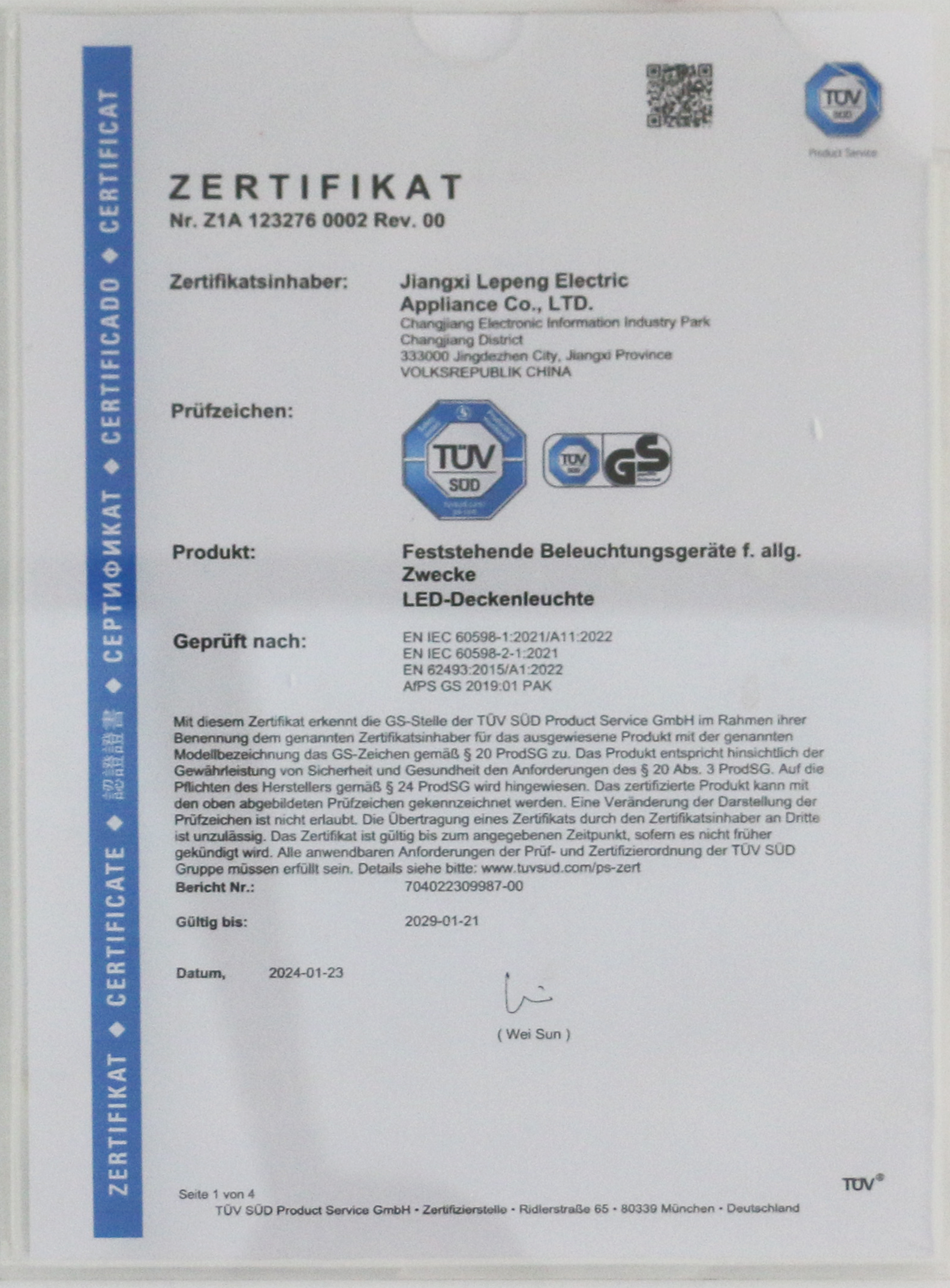
The same record lists the PL02 among the products covered by a GS (ZERTIFIKAT) certificate, number Z1A 123276 0002 Rev. 00, issued by TUV SUD and dated 23 January 2024, applicable to the EU market and referencing EN 60598-1:2021+A11:2022, EN 60598-2-1:2021, EN 62493:2015 and AFPS GS 2019:01 PAK.
For context, the wider standards framework a buyer typically maps these documents against includes IEC 60598 for luminaires, and for the United States UL 1598 for luminaires and UL 8750 for LED equipment, as published by UL Solutions. A certificate answers a compliance question for the jurisdiction named on it and nothing more, so the correct reading of the PL02 record is that it documents EU-market conformity for the listed scope — not universal market access.
Where the PL02 fits in indoor commercial projects
The PL02 is specified for commercial and residential indoor applications. In practice that covers offices, retail interiors, hospitality areas, education and healthcare interiors, corridors, stairwells and back-of-house spaces. The feature set maps onto those spaces in a fairly direct way: three-level dimming suits rooms whose occupancy changes through the day, the microwave sensor suits intermittently occupied circulation areas where a permanently lit fitting wastes energy, and the 3-CCT switch suits projects that need more than one colour temperature under a single procurement line.
Size selection follows the ceiling. The 5-inch format fits corridors, toilets and secondary rooms where a compact aperture is preferred; the 8-inch format suits general office and retail ceilings; the 12-inch format gives larger luminous area for higher ceilings and public interiors. Because both round and square formats are available in every size, the same series can be carried across a mixed project without introducing a second supplier.
The manufacturer's project supply record covers contractors, distributors, and commercial and municipal buyers, with applications that include residential and commercial interiors; product life in that record is described as 5 to 10 years of stable operation. For a buyer building a repeat-order programme, that combination — a documented product specification plus a stated supply history across wholesale and project channels — is the practical form that capability evidence takes.
What the market data indicates about commercial LED lighting demand
Published market research places the demand context clearly. Fortune Business Insights valued the global LED lighting market at USD 109.11 billion in 2025 and projects it to reach USD 336.90 billion by 2034. Grand View Research estimated the global commercial lighting market at USD 47.54 billion in 2024, with LED products holding a 58.1% revenue share of that total. Separately, the Observatory of Economic Complexity reports that China exported USD 31.4 billion in light fixtures in 2024, equal to 59.3% of global light fixture exports.
Two implications follow for buyers. First, the LED share of commercial lighting is already the majority of the category, so the competitive question is no longer whether to specify LED but which supplier can repeat the specification consistently. Second, because China remains the dominant export origin for light fixtures, the practical differentiator between suppliers is documentation quality — dimensions, certificate scope and capacity — rather than the availability of the technology itself. Panel lighting sits squarely inside that shift, since it is a standard item in interior retrofit and new-build packages.
How the PL02 compares with conventional indoor lighting approaches
The relevant comparison for most projects is not one LED panel against another, but a modern CCT-selectable, sensor-capable panel against the conventional indoor fixture it replaces — typically a fluorescent troffer or a single-colour LED panel with external control accessories.
| Decision factor | Conventional indoor troffer / basic single-colour panel | PL02 LED panel light |
|---|---|---|
| Colour temperature | Usually one fixed colour temperature per unit; a change means a different SKU | 3-CCT selectable from 2700K to 6000K on one unit, set by switch |
| Dimming | Often requires a compatible external dimmer and matching driver | Three-level brightness at 50% / 75% / 100% built into the fixture |
| Presence control | Usually an added sensor accessory with separate wiring | Integrated microwave sensor with automatic ON/OFF |
| Total fixture depth | Dependent on housing and driver arrangement | Ultra-thin profile, 35–40 mm depending on format |
| Retrofit aperture fit | Cut-out dictated by the specific housing | Cut-out ranges stated in 25 mm increments across three sizes |
| Mounting flexibility | Typically recessed only, or surface-mounted only | Surface-mounted or recessed, with adjustable sliding hole spacing |
| Installation handling | Terminal-by-terminal connection | Quick-connect interface for fast fitting and removal |
The honest boundary of this comparison is that integration is not the same as system-level control. The PL02's sensing and dimming are self-contained functions of the fixture; a project that requires continuous dimming curves, addressable control or central management is working at a different specification level and should be evaluated against fixtures built for that requirement. Comparing the PL02 to a networked lighting control system would overstate what the published specification supports.
Limits and boundaries to plan around
Capability evidence is only useful if the limits are stated with the same clarity as the strengths. The following boundaries follow directly from the PL02 specification and the manufacturer's published data.
- IP20 is an indoor dry-location rating. The fixture is protected against solid objects above 12.5 mm and has no water protection, so it is not specified for wet, damp, semi-exposed, or heavily dust-laden environments. Those locations need a fixture rated for the exposure.
- Colour temperature is set at installation. The 3-CCT design is switched rather than scene-tunable, so each area is configured once rather than adjusted per event.
- Dimming is three discrete levels. The 50% / 75% / 100% scheme is not continuous dimming and is not a bus-based dimming interface such as 0–10 V or DALI.
- Control is local. Remote control and a built-in microwave sensor provide automatic ON/OFF and manual operation; the published specification does not describe networked or centrally managed lighting control.
- The certificate record supplied is EU-market evidence. The CE-EMC and GS documents apply to the EU market and named scopes. Buyers in other jurisdictions must confirm the approvals their market requires, mapping against the applicable framework such as IEC 60598, UL 1598 or UL 8750.
- Power options and sizes are published as a series matrix. The exact wattage available in a given size should be confirmed for the order rather than assumed from the series list.
- Retrofit fit must be verified before ordering. Cut-out ranges and the 35–40 mm fixture depth have to match the existing ceiling void and framing; the sliding hole spacing accommodates small deviations but does not replace a dimensional check.
- Scheduling depends on stated lead time. Production lead time is 30 to 45 days, and the minimum order quantity depends on the individual product, both of which need to be built into project timelines.
A procurement evidence checklist
For buyers evaluating a panel light supplier at the research and evaluation stage, the following evidence items translate the discussion above into a comparable checklist. The right-hand column states where the PL02 record currently stands.
| Evidence item | What it verifies | PL02 / Lepeng Electric record |
|---|---|---|
| Dimensional drawing with cut-out ranges | Whether the fixture fits the existing or planned ceiling aperture | Round and square dimensions listed for 5-inch, 8-inch and 12-inch formats; cut-outs in 25 mm increments from φ75 mm |
| Protection rating | Whether the environment is within the fixture's intended use | IP20, indoor commercial and residential use |
| Colour and control specification | Whether one SKU can cover the project's ambiance and switching needs | 3-CCT selectable 2700K–6000K; three-level dimming; remote control plus microwave sensor |
| Certificate with named product scope | Market access for the destination region | CE-EMC Attestation of Conformity E8A 123276 0630 Rev. 00 scoped to LED panel light; GS (ZERTIFIKAT) Z1A 123276 0002 Rev. 00 listing the PL02 |
| Capacity statement | Whether repeat and volume orders can be absorbed | Monthly capacity of 45 million LED lamps and 5 million LED luminaires across the manufacturer's production bases |
| Lead time and MOQ | Whether the delivery window fits the project programme | Lead time 30–45 days; MOQ depends on the product |
| Physical sample of the exact configuration | Confirms finish, diffuser appearance and fit before volume release | Sampling and configuration confirmation are handled through the manufacturer's OEM/ODM communication |
A certificate, a drawing and a capacity figure each answer a different question. Suppliers that can supply all three, with the certificate naming the product rather than the company, remove most of the verification burden from the buyer's side of the table.
Future outlook
Indoor commercial lighting is moving in a direction that makes this kind of documentation more important rather than less. Sensor-integrated, colour-selectable fixtures compress what used to be several SKUs into one, which reduces inventory risk for distributors but raises the burden of proof on consistency, because a single part number now has to perform across many project conditions. Panel fixtures are also a standard line item in retrofit packages, so suppliers are increasingly compared on the evidence they can file with a project: a dimension drawing, a certificate with a named scope, and a capacity statement with a lead time.
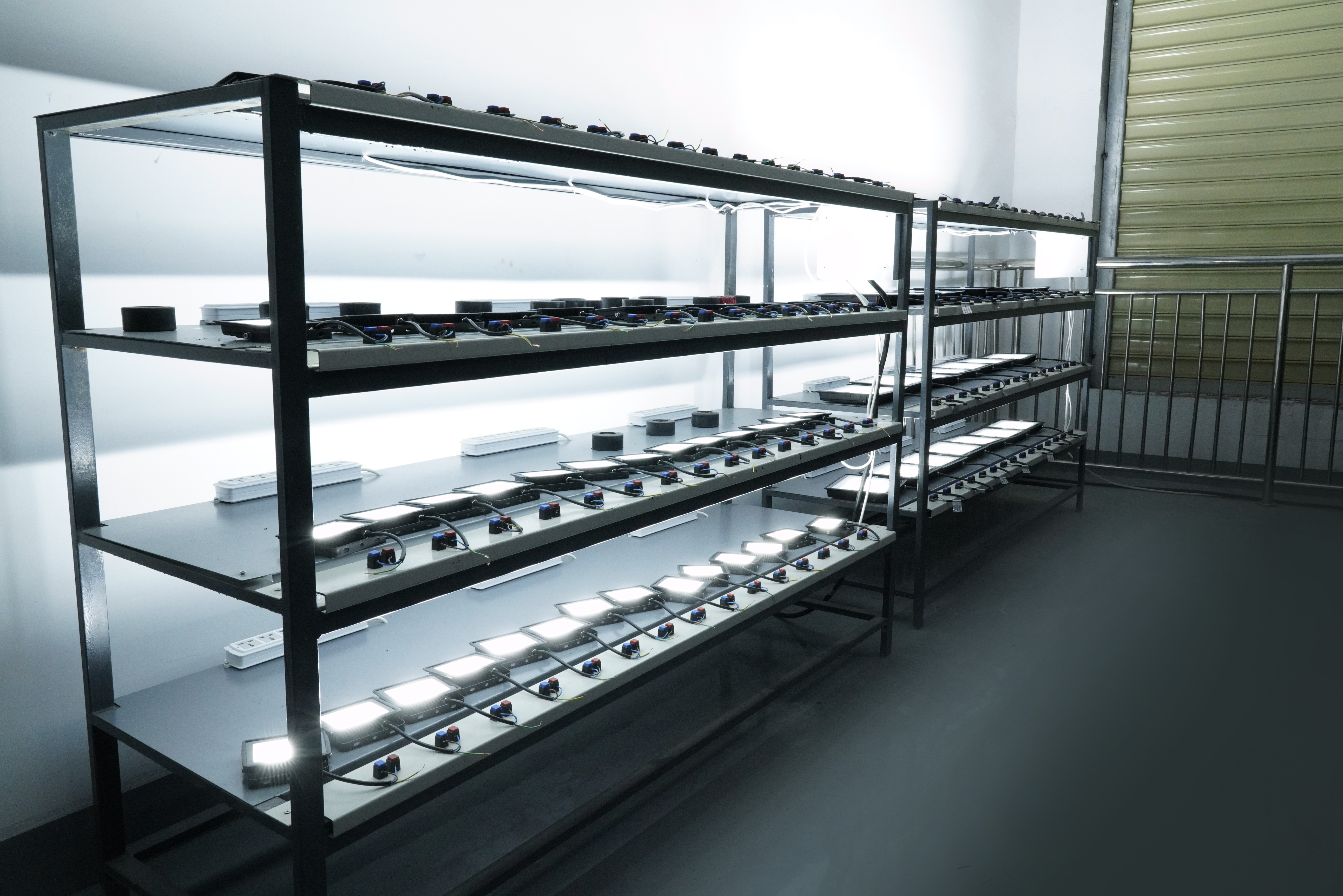
For Zhejiang Lepeng Electric Appliance Co.,Ltd., the relevant facts are scale and coverage rather than claims. The company reports 2,000 employees, three production bases — the headquarters factory in the Baiguan Industrial Zone of Shangyu, Zhejiang, plus production bases in Qiandaohu, Zhejiang and Jingdezhen, Jiangxi — a monthly capacity of 45 million LED lamps and 5 million LED luminaires, an export ratio of 90% across the EU, Southeast Asia, the Middle East and Latin America, and OEM/ODM project capability alongside its own MKOPTO brand and remote after-sales support. Those figures indicate the type of order the manufacturer is built to handle; the PL02 specification and its certificate record indicate what the product is. Both are needed before an indoor commercial package is released for production.
Frequently asked questions
What does the IP20 rating mean for a commercial LED panel light installation?
IP20 indicates protection against solid objects larger than 12.5 mm and no protection against water. The PL02 LED panel light carries an IP20 rating, so it is intended for indoor dry locations such as offices, corridors, retail interiors and similar commercial and residential interiors. It is not specified for wet, damp, semi-exposed or heavily dust-laden environments; those conditions require a fixture rated for the exposure, such as an IP65 luminaire.
How does 3-CCT selectable colour work across a project with several areas?
The PL02 offers a selectable colour temperature range of 2700K to 6000K, set through a switch on the fixture rather than through an external control system. One part number therefore covers warm through cool settings, which allows different areas of a building to be configured differently without adding SKUs. The setting is a fixed configuration made at installation; the fixture is not scene-tunable from a controller.
Which third-party documents support the PL02 for EU market projects?
Two documents are listed in the company's certification record. The first is a CE-EMC Attestation of Conformity issued by TUV SUD, certificate number E8A 123276 0630 Rev. 00, issued on 7 November 2024, with the applicable standard stated as EMC Directive 2014/30/EU and a scope of fixed general purpose luminaires / LED panel light, applicable to the EU market. The second is a GS (ZERTIFIKAT) certificate, number Z1A 123276 0002 Rev. 00, issued by TUV SUD on 23 January 2024, referencing EN 60598-1:2021+A11:2022, EN 60598-2-1:2021, EN 62493:2015 and AFPS GS 2019:01 PAK, which lists the PL02 among the covered products.
What sizes and cut-out dimensions does the PL02 series cover for retrofit work?
Three sizes are available — 5, 8 and 12 inches — each in round or square format. Round dimensions are φ160×40 mm, φ203×40 mm and φ305×40 mm; square dimensions are 160×160×40 mm, 203×203×35 mm and 305×305×40 mm. Corresponding cut-out ranges are φ75–125 mm, φ75–150 mm and φ75–250 mm, stated in 25 mm increments. Both surface-mounted and recessed installation are supported, with adjustable sliding hole spacing and a quick-connect interface.
What production scale and lead time sit behind a PL02 order?
Zhejiang Lepeng Electric Appliance Co.,Ltd. reports 2,000 employees and three production bases — the headquarters factory in the Baiguan Industrial Zone, Shangyu, Zhejiang, plus bases in Qiandaohu, Zhejiang and Jingdezhen, Jiangxi — with a monthly capacity of 45 million LED lamps and 5 million LED luminaires. Stated production lead time is 30 to 45 days, and the minimum order quantity depends on the product. The company also states OEM/ODM customization capability and remote after-sales support.
Where to check the detail
The PL02 configuration, dimensions and control options are published in the manufacturer's product documentation, which can be downloaded as a PDF brochure: Lepeng Electric product brochure (PDF). Company and product information is also published at idealbright.com. Buyers preparing a commercial LED panel light specification should treat the certificate scope, the cut-out ranges and the stated lead time as the three items to confirm in writing before an order is released.