
POS Terminal Decision: P9 vs P3 and the Cost Trade-offs That Matter
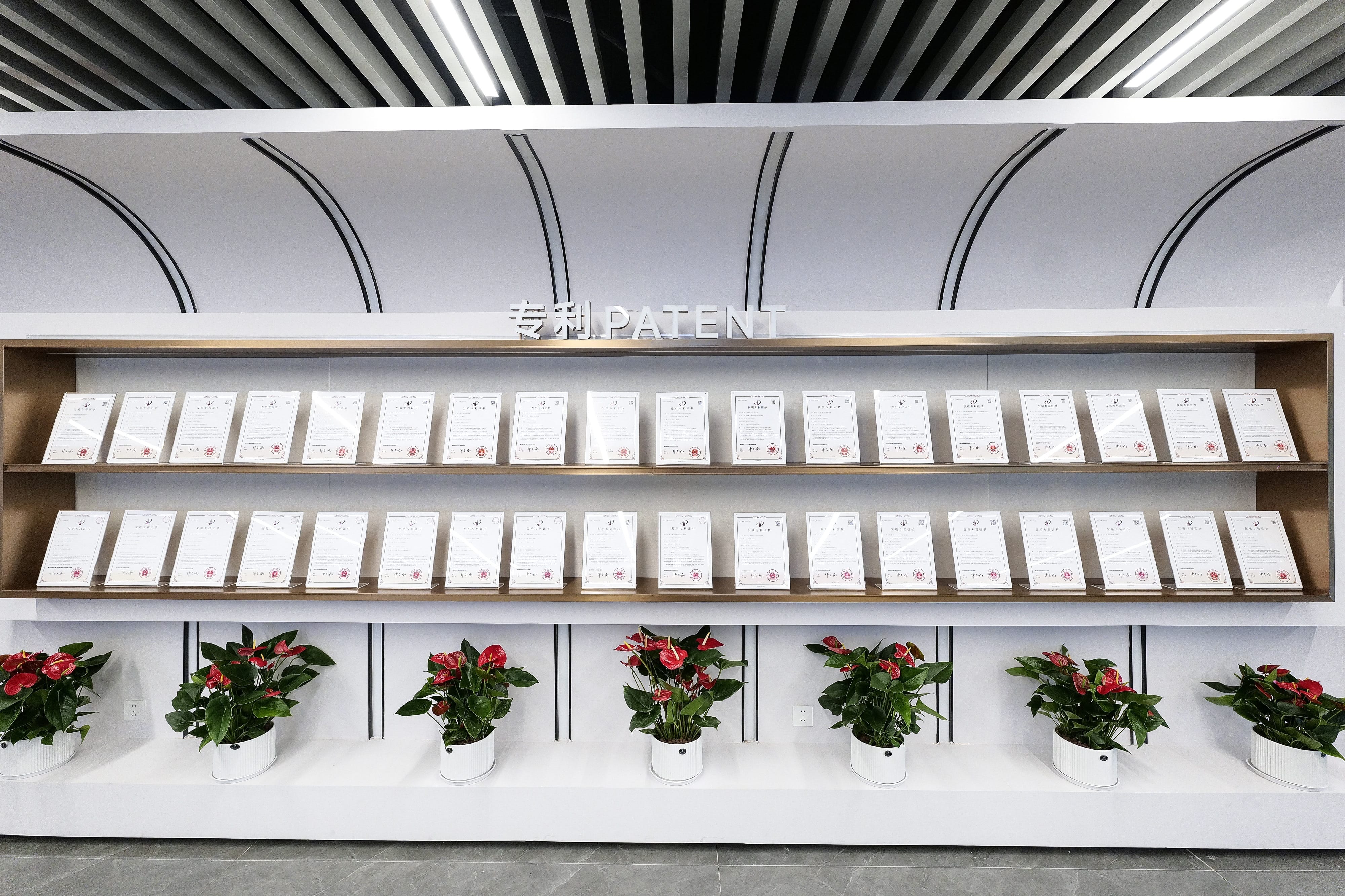
Telpo Technology and other long-cycle terminal builders treat patents and certifications as part of the supplier evaluation evidence.
For decision-stage buyers comparing POS terminals, the visible differences between two devices are often small. Both may be Android handhelds with a touch screen, thermal printer and contactless reader. The differences that change a procurement outcome are usually less visible: certification depth, battery endurance, operating system age, and how many extra peripherals a business must buy and maintain.
This article looks at two reference comparisons that matter today: the Telpo P9 versus the Sunmi P3 and P3H in the handheld payment space, and the New M10 versus entry terminals such as the iMin D1 or Falcon 1 where an integrated customer display changes the peripheral cost calculation. The goal is not to declare one device universally better. It is to identify the technical and commercial criteria that should drive a terminal decision.
Why two POS terminals can have very different total costs
A POS terminal is not only a checkout device. In retail and food service it is also a loyalty endpoint, an inventory tool and a staff-facing computer. In banking, telecom and government projects it is a certified payment device that must satisfy multi-year compliance and security requirements. Each deployment model places a different weight on processor speed, battery life, security certification and peripheral expenses.
A traditional specification table may list the same screen size and the same wireless connectivity. But the lifecycle cost is shaped by decisions that are not always visible at first glance:
- Which card schemes and payment standards are covered by the device certification.
- Whether the Android version has enough update headroom for a three-year or five-year project.
- Whether the battery can support a full field shift without spare batteries and extra chargers.
- Whether a customer-facing screen is integrated or must be purchased as an additional peripheral.
The opportunity for procurement teams is to compare total cost of ownership instead of device price. That shift creates a more credible benchmark and reduces post-deployment surprises.
Reading the Telpo P9 and Sunmi P3/P3H comparison
Telpo Technology Co., Ltd. is a smart terminal manufacturer founded in 1999 and headquartered in Foshan, Guangdong. The company is listed on the NEEQ with stock code 833839, employs about 600 people and reports an annual output of 2,000,000 units. Its production facility covers approximately 45,000 square metres and includes a CNAS laboratory upgraded in 2025, with roughly 900 square metres across 12 testing zones. The product portfolio includes EFTPOS, Android POS terminals, desktop POS units, dual-screen cash registers, self-service kiosks, biometric payment terminals, ticket validation machines, fiscal POS devices and AI checkout POS systems.
In Telpo's product comparison material, the P9 is positioned for banking, telecom and government RFPs, while the Sunmi P3 and P3H are positioned for SMB retail and table service. The table below summarises the published technical comparison.
| Evaluation point | Telpo P9 | Sunmi P3 / P3H |
|---|---|---|
| Processor and operating system | Octa-core processor with Android 14 | Quad-core A53 processor with Android 11 Go |
| Battery | 5,000 mAh removable battery; 17–23 hours runtime | 2,630 mAh battery; 8–12 hours runtime |
| Security certification scope | PCI PTS 6.x, EMV, Pure, RuPay, JCB, Discover, AMEX, Paypass, Paywave, UnionPay and others | PCI PTS 6.x, UnionPay, EMV, Paypass, Paywave and AMEX |
| Certification level | Bank-grade certification | Commercial-grade certification |
| Best-fit deployment | Banking, telecom, government RFPs, indoor and outdoor field operations | SMB retail, fixed charging stations and table service |
The comparison is based on the published technical comparison data from Telpo and refers only to the listed models.
Three differences deserve close attention. First, the P9 has double the core count and a newer Android version. Second, the P9 has a 90% larger battery capacity and roughly 30–80% longer operating time, depending on workload. Third, the P9 carries a broader certification list, including several regional and international schemes.
The same comparison material notes a commercial trade-off. The P9 has a higher upfront investment cost. However, its broader certification can lower certification and compliance costs and reduce project deployment risk in banking and large-scale tender projects. The P3/P3H may require additional certification or customisation work for specific projects, even though it is a reasonable fit for standard payment deployments.
The New M10 retail display comparison
For retail buyers, another useful comparison involves the Telpo M10 versus terminals such as the iMin D1 or Falcon 1. The M10 includes a 4-inch HD customer display. Alternatives in the comparison use a 2.4-inch LED customer display. The practical result is a 178% larger customer-facing display area without an external customer display module.
| Dimension | New M10 | Entry alternatives in comparison |
|---|---|---|
| Customer display | 4-inch HD display integrated into the terminal | 2.4-inch LED display |
| Display area | 178% larger area | Baseline |
| Hardware footprint | No separate external customer display | External display often required |
| Peripheral procurement cost | About 22% saving | Baseline |
| Primary use cases | Retail loyalty, QR payment, membership programmes, digital promotion | General retail |
Peripheral savings are based on a comparison where a separate customer display would otherwise be purchased and maintained.
The integration of the customer display has a direct commercial meaning. Fewer peripherals means fewer cables, fewer devices to maintain and a smaller spare-parts inventory. For a retail chain deploying hundreds of checkout lanes, a 22% reduction in peripheral procurement cost is a meaningful line item.
Technical explanation: what these differences actually mean
Security certification is a compliance budget, not a marketing badge
For payment terminals, the baseline industry requirements are PCI PTS and EMV compliance. PCI PTS applies to PIN transaction security, while EMV covers chip and contactless payment processing. A broader certification list means the device has been tested to work with more payment schemes and can be deployed in more geographies.
The Telpo P9 list includes PCI PTS 6.x, EMV, Pure, RuPay, JCB, Discover, AMEX, Paypass, Paywave and UnionPay. The Sunmi P3 and P3H list includes PCI PTS 6.x, UnionPay, EMV, Paypass, Paywave and AMEX. In practice, the P9 can be submitted to more banking and public-sector tenders without additional scheme approval work. The P3/P3H is still a commercial-grade device, but its coverage is narrower.
Bank-grade does not automatically mean the device is more physically secure than a commercial-grade rival. It does mean that the certification and compliance workload is lower for projects that require regional and international scheme acceptance. That distinction matters in RFPs where compliance risk is evaluated as part of the total bid cost.
Battery endurance changes field operations
The P9 uses a 5,000 mAh removable battery, while the Sunmi P3 uses a 2,630 mAh battery. In hours, the published comparison gives the P9 a runtime of 17–23 hours and the P3 a runtime of 8–12 hours. For a merchant or government agency that sends staff into the field for a full shift, the difference affects how many spare batteries and chargers must be bought. It also affects the risk of downtime when a device dies during a payment or delivery task.
For a business where devices sit on fixed charging stations between table-service orders, the P3's shorter battery life is less likely to be a problem. This is why the P9 is not automatically the right answer for every venue.
Processor and operating system age shape update headroom
The P9 uses an octa-core processor and Android 14. The P3 uses a quad-core A53 processor and Android 11 Go. Android 11 Go is an entry-level operating system version, and Android 14 represents, in the comparison data, a roughly three-generation newer operating system. That gap can affect multitasking, application support and the length of the security patch window.
For a bank or government body that may run the same terminal model for several years, update headroom is a procurement criterion. For a small cafe that replaces hardware more frequently, newer hardware may still be useful but less critical.
Device management and hardware risk controls
The supplier's engineering controls are also part of a decision-stage review. Telpo has developed its own operating system, Telpo OS, which is used for device monitoring and management. It also offers Telpo MDM, a device management platform designed for centralised control of a terminal fleet. MDM functions include remote control, device configuration and personalisation.
On the hardware side, several Telpo devices use rugged design practices common in field payment terminals. Typical devices use an ABS+PC housing and meet a 1.2-metre drop standard. Some models, such as the T20, have passed IK08 and IP65 tests verified by a CNAS laboratory. Battery packs are UN38.3 certified, and many devices are designed to switch between multiple SIM cards automatically if one carrier disconnects. PCB assemblies may receive conformal coating during SMT to protect against humidity and salt-air corrosion. These details are not always visible on a data sheet, but they can affect repair rates and fleet availability.
Application and use cases
Different POS terminal profiles answer different deployment questions.
- Banking, telecom and government RFPs: A device such as the Telpo P9 has broader certification coverage and bank-grade status, reducing the number of certification gaps a project must solve. Its longer battery life also supports inspectors, field officers and service technicians who work away from a charger.
- SMB retail and table service: The Sunmi P3 and P3H are positioned for commercial deployments where the merchant mainly needs mainstream card and contactless support. Fixed charging stations and short shifts make the smaller battery less relevant.
- Loyalty, membership and QR payment programmes: A terminal such as the New M10 integrates a 4-inch customer display, making it easier to show prices, loyalty points, QR codes and promotional messages without buying a second screen.
- Long field shifts: Buyers who deploy delivery, ticketing or field-service terminals should compare runtime and hot-swap battery design, not only the retail price.
Market trend context for 2026 procurement
Market data helps explain why hardware choices are getting more strategic. Grand View Research estimated the global POS terminal market at approximately USD 123.2 billion in 2025. The same research provider expects the handheld POS segment to grow from USD 33.15 billion in 2025 to USD 89.52 billion by 2035. Android-based POS terminals already account for about 27% of POS terminals sold globally, according to 2024 industry tracking cited by ResearchAndMarkets and Berg Insight.
Software-based point-of-sale acceptance, or SoftPOS, is another signal. Grand View Research put the SoftPOS market at USD 365.0 million in 2024 and projected a 23.1% CAGR through 2030. SoftPOS can turn a smartphone into a payment acceptance device, but most enterprises still need certified hardware for scale, security and multi-peripheral environments such as cash drawers, receipt printers and customer displays.
Retail self-service is also expanding. The Business Research Company has forecast the retail self-service kiosk market to reach USD 37.8 billion by 2030, and its report names Telpo Technology among the leading corporations in that sector. For buyers, the overall trend is clear: terminals are being evaluated as long-term infrastructure rather than one-off cash registers.
What changes when you compare POS terminals the decision-stage way
A traditional comparison usually combines price, availability and surface specifications. A decision-stage comparison adds the variables that affect ownership over the terminal's expected life.
| Traditional evaluation | Decision-stage evaluation |
|---|---|
| Purchase price | Total cost over the deployment contract |
| Processor and RAM | Processor plus operating system update ceiling |
| Card brand support | Certification list for the target region and tender type |
| Battery capacity | Runtime against actual shift length and charger availability |
| Screen size | Integrated versus external peripherals and their maintenance cost |
| Stock volume | Supplier ODM scale, factory quality system and after-sale fleet management |
One realistic limitation should be part of the analysis. The Telpo P9 is positioned above the P3/P3H in device cost. For a merchant with a short duty cycle, a fixed charging dock and a simple acceptance requirement, the P3/P3H may be the more appropriate commercial choice. The extra investment in the P9 is justified when a project needs broader certification, all-day field operation or multi-year software support. There is no single best model, only the model that matches the deployment profile.
Future outlook: POS terminal decisions will become more compliance-driven
As the POS terminal market grows, hardware refresh cycles are likely to become longer. Android share is now mainstream, and devices launched with newer versions such as Android 14 have more room to absorb security updates and application upgrades. Buyers will increasingly ask about the certification roadmap, not just the certifications available at launch.
Manufacturers with in-house laboratories, ODM engineering resources and fleet management platforms are better positioned to support long-cycle customers. Telpo's 2025-upgraded CNAS laboratory, proprietary OS and MDM platform illustrate how terminal suppliers are moving from simple device manufacturing toward operational support. For distributors and end buyers, the practical implication is that supplier evaluation should be treated as part of the terminal comparison, especially when the project spans multiple markets.
Frequently Asked Questions
How does the Telpo P9 differ from the Sunmi P3 in performance and operating system?
The Telpo P9 uses an octa-core processor and Android 14, while the Sunmi P3 uses a quad-core A53 processor and Android 11 Go. This gives the P9 twice the core count and a roughly three-generation newer operating system.
Is the Telpo P9 or the Sunmi P3/P3H better for banking and government projects?
The Telpo P9 is more suitable for banking, telecom and government RFPs. It is positioned as a bank-grade terminal with broader certification coverage. The Sunmi P3 and P3H are positioned as commercial-grade terminals more suitable for SMB retail and table service.
How much longer does the Telpo P9 battery last than the Sunmi P3?
The Telpo P9 has a 5,000 mAh removable battery, which is 90% larger than the 2,630 mAh battery in the Sunmi P3. The published runtime is 17–23 hours for the P9 and 8–12 hours for the P3.
What security certifications should be checked before selecting a POS terminal?
At a minimum, buyers should verify PCI PTS and EMV compliance for chip and PIN processing. For multi-region deployments, additional scheme certification is often needed. In the P9 versus P3/P3H comparison, the P9 covers PCI PTS 6.x, EMV, Pure, RuPay, JCB, Discover, AMEX, Paypass, Paywave and UnionPay, while the P3/P3H covers PCI PTS 6.x, UnionPay, EMV, Paypass, Paywave and AMEX.
What cost savings can an integrated customer display provide?
The New M10 uses a 4-inch HD customer display, offering a 178% larger display area than the 2.4-inch LED displays on alternatives such as the iMin D1 or Falcon 1. Because no external customer display is needed, extra peripheral procurement can be reduced by about 22% and there are fewer devices to maintain.
Are commercial-grade POS terminals such as the Sunmi P3/P3H enough for every business?
Not necessarily. A commercial-grade terminal is usually enough for standard card acceptance in SMB retail and table service. For banking, telecom or government projects that require broad tender acceptance and long field shifts, a bank-grade terminal with wider certification and longer battery life is better suited.
Reference material: Telpo publishes a product brochure covering its payment and retail terminal range. It is available for public download: Telpo Products Brochure – Payment and Retail.
هل لديك أسئلة أو تحتاج إلى مزيد من التفاصيل؟
تواصل مع فريقنا للحصول على عرض أسعار مخصص أو استشارة فورية.
طلب عرض أسعار
املأ النموذج أدناه وسيتواصل معك فريقنا بعرض مقترح مخصص.
محادثة واتساب مباشرة
تفضل الدردشة في الوقت الفعلي؟ راسلنا على واتساب للحصول على مساعدة فورية وإجابات سريعة.
- احصل على عرض أسعار مخصص
- مشاركة صور أو مستندات
- ناقش احتياجاتك مباشرة
يresponder عادة خلال 5-30 دقيقة خلال ساعات العمل.