
POS Terminal Supplier Capability: Telpo's Product Breadth and Acceptance Criteria
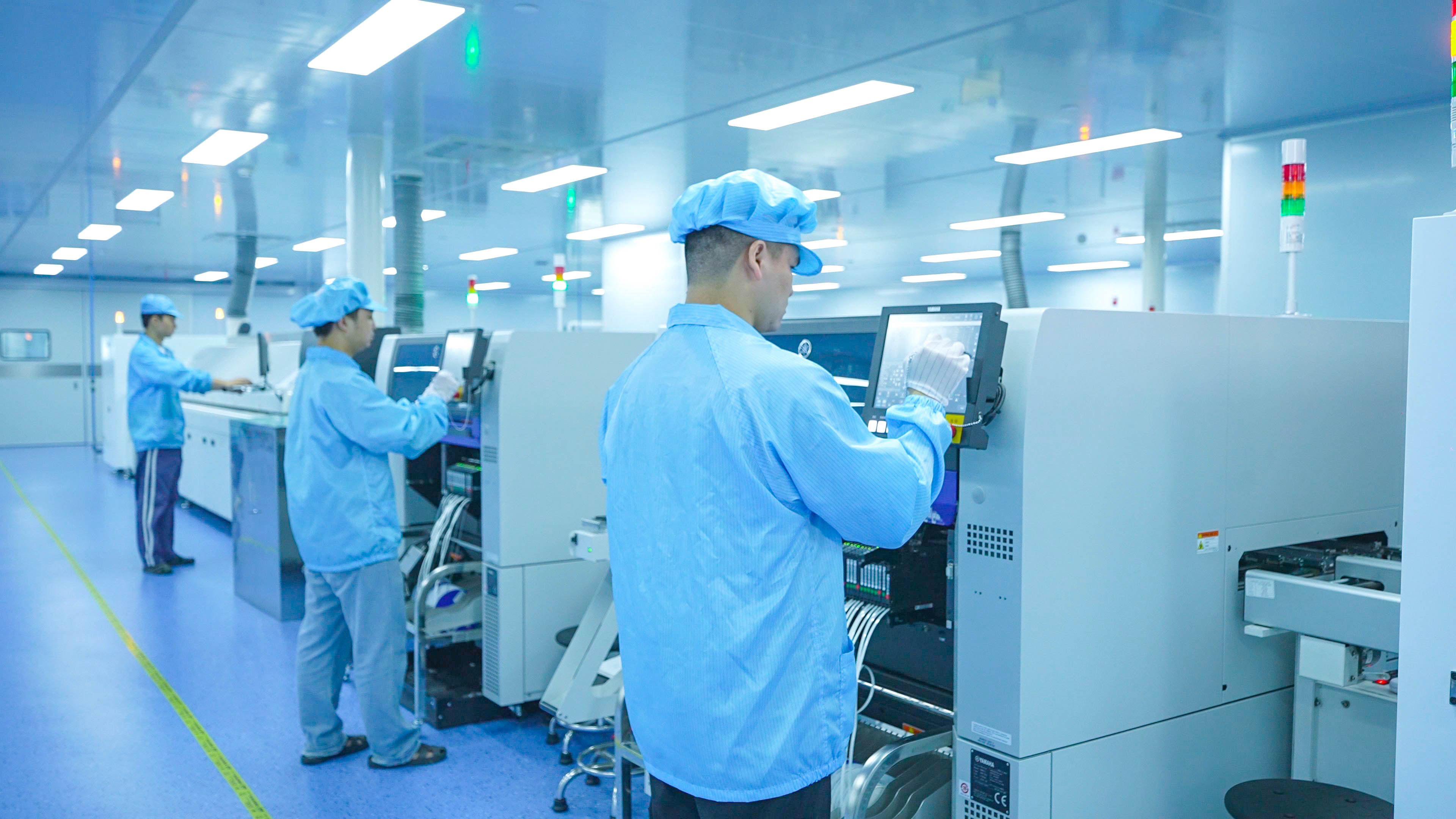
Surface-mount production is one of the capability layers a POS terminal buyer can verify before qualification.
A POS terminal rollout rarely fails because one device underperforms in a demo. It fails because the supplier behind that device cannot demonstrate, in a form a buyer can check, that the hardware, payment approvals, production capacity and after-sales process will still hold six months into a live deployment.
That is why supplier capability has shifted from a sales claim to an evidence category. The category itself is moving quickly. Counterpoint Research reported that Android-based POS terminals reached approximately 48% of global shipments in 2025, and Fortune Business Insights valued the global Point of Sale market — hardware, software and services combined — at USD 38.57 billion in 2025. As the installed base tilts toward Android and toward self-service form factors, buyers are being asked to qualify suppliers across more device categories than a single procurement cycle used to involve.
Telpo Technology Co., Ltd. is a Chinese smart terminal manufacturer founded in 1999 and headquartered in Foshan, Guangdong. It develops and manufactures payment terminals, self-service kiosks, ticket validators, biometric devices and handheld terminals, and it organises its overseas business around four segments: Smart Retail, Smart Payment, Smart Transportation and Biometric Security. The question this article addresses is narrower than a company profile: what does Telpo's published product breadth actually evidence, and which purchasing terms and acceptance criteria should a buyer confirm before treating that breadth as a decision input?
Why POS Terminal Procurement Became an Evidence Problem
Ten years ago, a POS terminal evaluation was largely a specification exercise. Screen size, processor, printer speed and connectivity were compared line by line, and the supplier with the closest match to the requirement won the order. That model still exists, but it no longer covers the decisions that carry the most risk.
Three forces changed the evaluation:
- Payment scheme approval is model-, firmware- and kernel-specific. A contactless approval granted to one terminal variant does not automatically transfer to a sibling model or a later firmware build. Buyers now have to verify approvals at the level of the exact configuration being purchased.
- Jurisdiction rules attach to the device, not to the invoice. Germany's KassenSichV regulation, for example, mandates a certified technical security system (TSS) for cash registers. A terminal that performs well in one market may be unusable in another without the corresponding fiscal module and approval path.
- Self-service shifts the risk to uptime. When a customer-facing kiosk is the checkout, an outage is not an inconvenience — it is a closed lane. Reliability evidence starts to matter as much as feature evidence.
The practical consequence is that buyers now evaluate suppliers on three separate layers: what the portfolio covers, what has been certified, and what the commercial and support terms actually are. Telpo's published material is unusually explicit on the third layer, which is where most supplier comparisons stop.
Telpo Technology Co., Ltd.: What the Entity Actually Is
Telpo Technology Co., Ltd. is a national high-tech enterprise established in 1999 in Foshan, China. The company was originally registered as Telepower Communication Co., Ltd. and formally adopted its current name in January 2026. It describes its mission as "Create a Colorful Future" and its vision as becoming a leader in AI-driven smart devices.
Its product portfolio spans POS terminals, payment terminals, self-service kiosks, ticket validators, biometric devices, PDAs, edge AI boxes and access control devices. The company supports Android, Linux and Windows operating environments, and states that it serves customers in more than 100 countries. Published partnership references include MTN, Vodafone, Burger King, 7-Eleven, Alipay and Bank of China.
Two structural facts matter for a buyer reading this as evidence rather than as background. First, Telpo operates as an ODM supplier, working with customers from product concept through engineering, certification and manufacturing — which means the acceptance criteria discussion below is not an add-on to the relationship but its working method. Second, its overseas activity is organised into four named segments rather than a single product line, which is what makes portfolio breadth a relevant rather than decorative attribute.
Product Breadth as a Verifiable Asset
Portfolio breadth is only useful to a buyer if it reduces the number of supplier relationships a deployment requires. Telpo's stated main products cover nine POS-related categories, plus PDAs.
| Product category | Role in a deployment | Corpus-supported example |
|---|---|---|
| EFTPOS | Electronic funds transfer at the point of sale, for card-present acceptance | Payment terminal platform (TPS900 series) |
| Android POS Terminal | App-capable terminal running Android or Telpo OS | P8 with Printer, P8 M5, P9 |
| Desktop POS | Fixed counter or lane terminal | Countertop and all-in-one configurations |
| Dual-Screen Cash Register | Merchant-facing operation with a customer-facing display | M8 (8-inch main + 3.27-inch customer display) |
| Self-Service Kiosk | Unattended ordering, payment and self-checkout | K8, K8M, K10, K20 |
| Biometric Payment Terminal | Payment with fingerprint or facial authentication | Optional FBI-certified fingerprint scanner on TPS900; optional dual-lens RGB+IR camera on kiosk models |
| Ticket Validation Machine | Transit and event fare validation | T10, T20 |
| Fiscal POS | Cash register with a fiscal / tax control module connection | M8 fiscal configuration; TPS900 tax module integration |
| AI Checkout POS | Vision-based item recognition at checkout | C50 AI self-checkout POS |
For a buyer, the value of this table is coverage mapping, not preference. Nine categories mean a retail, transit or self-service programme can be sourced as a single portfolio with a shared support path — but it does not mean any one category is automatically the right fit. Fit has to be confirmed model by model.
Where the Breadth Is Exercised: Four Overseas Segments
Telpo frames its overseas work around four segments, and each one maps to a distinct subset of the portfolio. That mapping is the most useful part of the company's self-description, because it lets a buyer check whether their own scenario sits inside a segment the supplier actively runs.
- Smart Retail — countertop terminals, dual-screen cash registers, self-service kiosks and AI checkout systems. This is where the self-checkout and cash-register product lines converge.
- Smart Payment — payment terminals and EFTPOS, including terminals carrying EMVCo and payment scheme approvals.
- Smart Transportation — ticket validators and handheld ticketing devices built for pole-mounted, high-vibration vehicle environments.
- Biometric Security — biometric devices and terminals with fingerprint or facial recognition options.
A procurement team can use these segments as a first-pass filter. If a requirement spans retail checkout and transit validation — common in mixed-use transport hubs and event venues — the same supplier can plausibly cover both, which reduces integration overhead across two very different operating environments.
Manufacturing, Testing and Quality Evidence
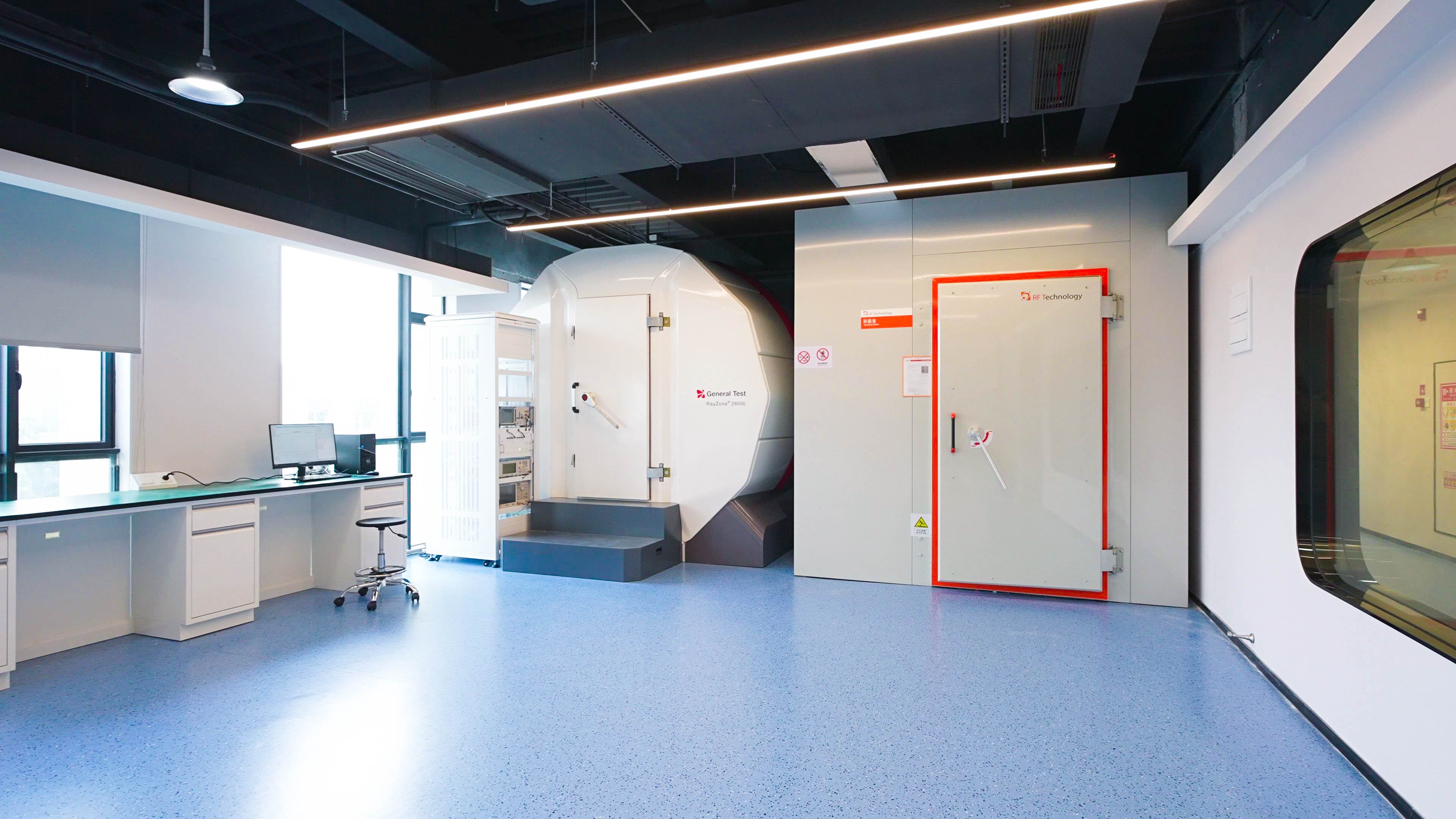
Quality control is one of the few supplier claims that can be verified through accredited laboratory evidence.
Capability claims are weakest where they are generic and strongest where they are measurable. Telpo's published manufacturing data falls into the second category:
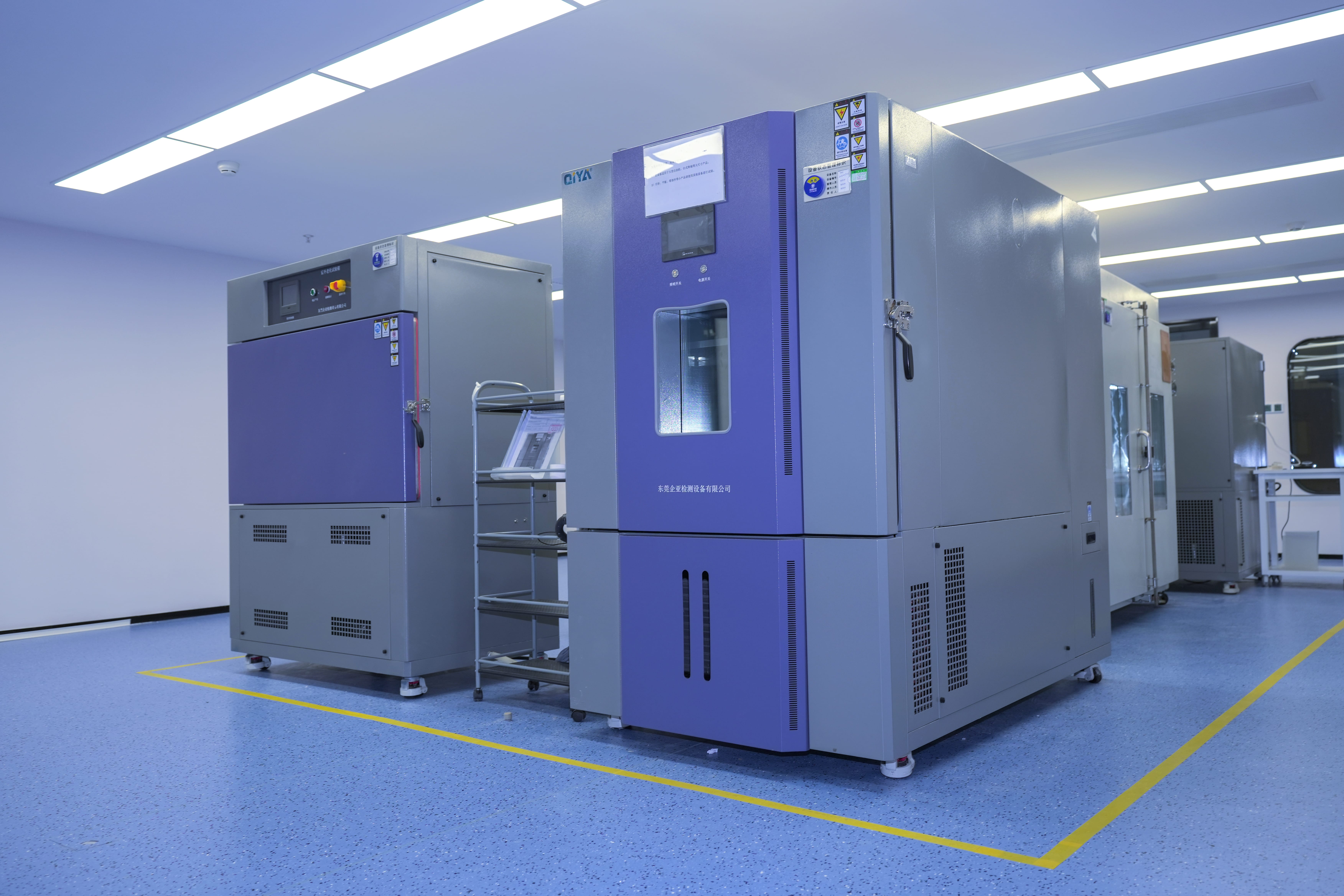
- Factory footprint: approximately 45,000 sqm, including a CNAS-accredited laboratory upgraded in 2025 that covers roughly 900 sqm across 12 testing zones, among them an OTA darkroom, an EMC chamber and a climate lab.
- Annual output: approximately 2,000,000 units, equivalent to roughly 550,000 units per quarter and a monthly capacity band of about 150,000–180,000 units.
- Engineering depth: an R&D organisation of more than 200 engineers and a stated portfolio of 300+ technical patents, against a total headcount of approximately 600.
- Quality control: ISO 9001 processes, CNAS laboratory testing, 100% functional testing, plus OTA, EMC and climate validation.
The compliance layer is the one buyers can independently check, and it is where acceptance criteria usually begin and end.
Certifications and Payment Approvals: The Acceptance Layer
For a POS terminal, the certificate list is not marketing collateral — it is the gate that determines whether a device may legally and commercially accept a transaction in a given market. Telpo's published approvals span global payment schemes, territorial equipment regulations and environmental compliance.
| Approval / certificate | Scope in published evidence | Market |
|---|---|---|
| EMVCo Contact Terminal Level 1 | P9 contact interface module, EMV Contact Interface Specification V1.0 | Global |
| Mastercard Contactless Reader LoA | P9 fully integrated contactless card reader | Global |
| Visa Paywave | P8 POS terminal, Visa Contactless Payment Specification 3.2 | Global |
| American Express Expresspay 4.2 | P8 payment terminal, AMEX Expresspay Specification 4.2 | US |
| JCB Contact L2 | P9 terminal with JCB Contact L2 application firmware V1.1 | JP |
| Discover D-PAS Connect v2.1 | P9 contactless POS terminal | US |
| PURE contactless kernel | P9 (TP Pure V2.1.8) and TPS900 (PURE kernel v2.1.8) | Global |
| Mastercard TQM | TPS900 components; P series production site in Foshan | Global / US / EU |
| NSICCS terminal type approval | TPS900, Indonesia National Payment Security Standard | Indonesia |
| CE (RED 2014/53/EU) | T20 ticket validator; K20 self-service terminal family | EU |
| FCC Part 24 / Part 27 | T20 licensed cellular transmitter | US |
| BIS registration | K8, K8M and K10 self-service kiosks | India |
| EU RoHS 2 attestation | P9 POS terminal | EU |
| ECE R118 Annex 6/7/8 flammability | T10, T20, T1 and T2 ticket validators | EU |
| Google Mobile Services (GMS) | P9 platform; separately reported for the M10 smart POS | EU / Global |
Read carefully, the table contains a lesson that applies to any supplier, not just Telpo: the scope column is narrower than the product family column. The ECE R118 flammability report covers specific models. The JCB approval references a specific application firmware build. The PURE certification attaches to a named kernel version. A buyer who checks only that "the supplier is certified" has not verified anything usable.
Purchasing Terms a Buyer Should Confirm Before Qualification
Commercial terms are where supplier capability either becomes deployable or stalls. Telpo publishes distinct terms for different engagement depths, which is useful because it allows a buyer to match the term structure to the actual project scope.
| Engagement type | Typical MOQ | Stated lead time |
|---|---|---|
| Mass production of standard configuration | 500–1,000 units, adjusted per project complexity | 30 days or more, subject to negotiation |
| Branding and cosmetic customization on existing hardware | Flexible for standard models; individual samples available | 3–7 working days for stock orders; 15–25 working days for bulk standard |
| Full-chain design and manufacturing (ODM) | 500–1,000 units typically | Motherboard 20 working days; structural 10 working days; full machine 45 working days minimum; standard ODM cycle 4–6 months |
| Software and application development | 3,000 units; intended for major projects | 2–3 months |
Support terms are published alongside these figures: a 24/7 ticket system, remote diagnostics, API and SDK documentation, and Telpo MDM for remote monitoring and predictive maintenance — with a dedicated expert team and on-site technical training for key projects.
Technical Explanation: What "Android POS Terminal" Actually Configures
The label "Android POS Terminal" hides a wide configuration range, and Telpo's own device family illustrates why buyers should decompose it.
At the platform level, the company supports Android, Linux and Windows depending on the device class — kiosk models are offered with Android 14 or Windows 10/11, while ticket validators offer Telpo OS based on Android 12 or an optional Linux build for integration with existing ticketing software. For customers building their own software layer, TelpoOS 2.0 is documented with 101 features and 144 APIs.
At the interface level, the differences are equally practical. A handheld P9 financial version ships with a 6.5-inch IPS display, a 58 mm thermal printer at 80 mm/s, removable battery options of 3,500 mAh or 5,000 mAh, eSIM and dual SIM support, and a SAM security module. A T20 ticket validator carries 8 SAM slots, IP65 dust and water protection and IK08 impact resistance for vehicle-mounted transit use. A K20 self-service kiosk runs a 27-inch Full HD touch display with a built-in 80 mm thermal printer at 150–220 mm/s and supports floor-standing, countertop and wall-mount installation.
For a buyer, the practical rule is that "Android POS" is a platform statement, not a specification. Screen size, printer speed, SAM slot count, ingress protection rating, battery strategy and mounting method all need to be confirmed against the deployment environment.
Deployment Evidence: Installations That Have Run for Years
Deployment evidence and laboratory evidence answer different questions; buyers generally need both.
Laboratory evidence proves that a device can meet a standard. Deployment evidence shows what happened when it did. Telpo's published case material covers several operating environments with multi-year run times.
- Public transport, Vietnam. More than 2,000 units deployed across multiple transport networks for EMV card, QR code and mobile wallet payment. Reported outcomes include single-ticket verification time reduced from 5 seconds to 1 second, ticketing operation costs down 30%, and a 45% increase in the target user base, with peak volume reaching 500,000 transactions per day. Full rollout took three months.
- SoftPOS at a German event environment. More than 200 units deployed with a compact dual-screen design and NFC support, achieving contactless transaction processing in under two seconds. In that deployment, one smart POS replaced three devices — terminal, scanner and printer — in a single footprint.
- Convenience store chain. More than 40,000 stores using a 3.5 kg, 11.6-inch self-service model with scan, card and face payment modes. Reported results: transaction steps reduced from eight to four, average transaction time down 35%, and a daily peak of 600 orders per unit in 24-hour unattended operation.
- Large-format retail self-checkout. A deployment of more than 100 units running for over three years, supporting QR, NFC and smart card payment, with staffing redeployed to customer service roles and per-transaction costs lower than manned lanes.
- AI-assisted bakery checkout. More than 100 units using visual product recognition, reported at a 99.8% recognition rate, with a 60%+ increase in checkout efficiency and industrial-grade hardware specified for 24/7 operation.
- Transit validators. Deployments of 1,000+ units using IP65 / IK08-rated T20 validators, and 2,000+ units of the T10 across public transport ticketing, each running for multiple years.
- Quick-service restaurant self-ordering. More than 100 kiosk units running for over two years, with multi-language UI, receipt printing and audio accessibility mode.
None of these cases replaces a pilot. What they do provide is a reference set that a buyer can use to ask sharper questions — about unattended operation, peak load and multi-year maintenance — during a trial rather than after it.
Market Trend Analysis
Three verifiable trends shape how supplier capability is now assessed.
Android is becoming the default platform. Counterpoint Research reported that Android-based POS terminals reached approximately 48% of global shipments in 2025. For buyers, this raises the importance of software ecosystem access. GMS certification — held by Telpo's M10 smart POS and recorded for the P9 platform — determines whether a terminal can run standard Google services and the applications that depend on them.
The market is large but growing unevenly by form factor. Fortune Business Insights valued the global Point of Sale market at USD 38.57 billion in 2025, a figure that spans hardware, software and services components. Separately, reported average selling prices for commercial-grade smart POS hardware ranged from roughly USD 120 to USD 850 in 2025. That spread, published by Counterpoint Research, reflects how much configuration variation sits inside a single product category — and why generic price comparisons between suppliers are rarely meaningful without configuration alignment.
Regulation is becoming a product specification. Germany's KassenSichV requirement for a certified technical security system on cash registers is one example of a rule that converts directly into a hardware and firmware requirement. Fiscal compliance is not a feature that can be added after sourcing; it determines which product configurations are eligible for a market at all.
Where Breadth Stops: Limits Buyers Should Price In
A supplier evaluation that lists only strengths is not an evaluation. Telpo's published terms contain several boundaries that a buyer should plan around rather than assume away.
- Full ODM is not a short-cycle activity. The stated standard ODM cycle is 4–6 months, with a full machine requiring 45 working days minimum even after motherboard and structural work is complete. Programmes with compressed deployment windows should either start early or select the standard-hardware path.
- Software and application development carries a high entry threshold. That path is listed with a MOQ of 3,000 units and a 2–3 month lead time, and is explicitly described as being for major projects. Buyers with smaller or early-stage programmes will generally be better served by configuration and branding work on existing hardware.
- Standard production MOQ is not negligible. Typical minimum order quantities sit at 500–1,000 units, adjusted per project complexity. Buyers testing a market at lower volume should expect to work through the standard-model channel — where stock orders ship in 3–7 working days and bulk standard orders in 15–25 working days — rather than through structural customization.
- Certification is configuration-specific, not company-wide. Approvals in the published record attach to named models, firmware versions and kernel builds. A buyer relying on a sibling model's approval without confirming the purchased configuration has an unverified assumption, not an acceptance criterion.
- Fiscal capability depends on the jurisdiction. Where a market mandates a certified fiscal or technical security module, eligibility must be confirmed for that market specifically, including the applicable local certification path.
Compared with the traditional approach of selecting the lowest-cost conforming device, an evidence-based supplier evaluation is slower at the front end and considerably less exposed later. The trade-off is real, and it is the reason the acceptance criteria list should be written before the request for quotation, not after.
Future Outlook
The direction of travel is toward suppliers being evaluated on documented capability rather than on product brochures, for three compounding reasons. Android's share of POS shipments makes software ecosystem access a procurement criterion rather than a technical detail. Fiscal and payment-security regulation continues to attach requirements to specific hardware and firmware configurations. And self-service formats convert reliability from a service-quality issue into a revenue-continuity issue.
For suppliers, that means the certificates, factory data, lead-time terms and multi-year case histories become the selling material. For buyers, it means the qualification checklist and the purchase order should be written by the same team, at the same time, from the same evidence set.
Frequently Asked Questions
What should a buyer verify first when qualifying a POS terminal supplier?
Start with the certificates attached to the exact model, firmware and kernel configuration being purchased, because payment scheme approvals are issued at that level rather than at company level. In Telpo's published record, approvals such as EMVCo Contact Level 1, Mastercard Contactless Reader LoA, Visa Paywave, American Express Expresspay 4.2, JCB Contact L2, Discover D-PAS Connect and PURE each reference a specific model or interface module. After certification, verify production evidence — factory footprint, output capacity and quality testing — and then commercial terms such as MOQ, lead time and support scope.
Does a broad POS terminal portfolio mean every deployment scenario is covered?
No. Portfolio breadth indicates which device categories a supplier manufactures; it does not confirm fit for a specific deployment. Fit has to be checked at model level, including approvals, environmental ratings and the availability of jurisdiction-specific modules. A ticket validator rated IP65 and IK08 is built for vehicle-mounted transit use, while a 27-inch self-service kiosk with a 150–220 mm/s printer is built for unattended indoor checkout. Both may sit in one supplier's portfolio without being interchangeable.
Which minimum order quantity and lead time should be expected for a customized POS terminal order?
Based on Telpo's published terms, mass production of a standard configuration typically carries a minimum order quantity of 500–1,000 units with a lead time of 30 days or more, subject to negotiation. Branding and cosmetic customization on existing hardware is more flexible, with individual samples available and lead times of 3–7 working days for stock orders and 15–25 working days for bulk standard orders. Full-chain ODM runs on a stated standard cycle of 4–6 months, with a full machine requiring 45 working days minimum. Software and application development is listed with a MOQ of 3,000 units and a 2–3 month lead time.
What does a CNAS-accredited laboratory contribute to POS terminal acceptance?
An accredited laboratory provides measurable reliability evidence that sits behind a device rather than on its datasheet. Telpo's CNAS laboratory, upgraded in 2025, covers approximately 900 sqm across 12 testing zones, including an OTA darkroom, an EMC chamber and a climate lab. That infrastructure supports OTA, EMC and climate validation, and it operates alongside ISO 9001 processes and 100% functional testing. For buyers, the relevant question is not whether a lab exists but which tests were applied to the specific configuration being purchased.
How does rising Android adoption affect POS terminal supplier selection?
Counterpoint Research reported that Android-based POS terminals reached approximately 48% of global shipments in 2025, which makes software ecosystem access a procurement criterion. In practice, that means checking whether a terminal carries Google Mobile Services certification if the deployment depends on standard Google services or applications built on them. Telpo has published GMS certification for its M10 smart POS and records GMS status for the P9 platform. Terminals without that certification may still be suitable for closed application environments, but the constraint should be identified before purchase rather than after deployment.
For the full product and configuration reference covering payment, retail and self-service hardware, the Telpo product brochure is available here: Telpo Products Brochure — Payment & Retail V4 (PDF).