
PPWR-Certified Bakery Packaging Shortlist: Containers, Trays & Tamper-Evident Picks
Bakery packaging procurement in 2026 has become a documentation exercise as much as a design exercise. Under the EU's Packaging and Packaging Waste Regulation (PPWR), buyers specifying clear clamshells, thermoformed trays and tamper-evident formats are increasingly asked to demonstrate that the exact model they purchase has been tested, in the exact markets where it will be sold. This shortlist works from one verifiable reference point — TÜV Rheinland PPWR Product Test Report 178251114a 001, valid from 2026-08-14 to 2030-08-14 — and maps that evidence onto the bakery packaging models a purchasing team is most likely to compare.
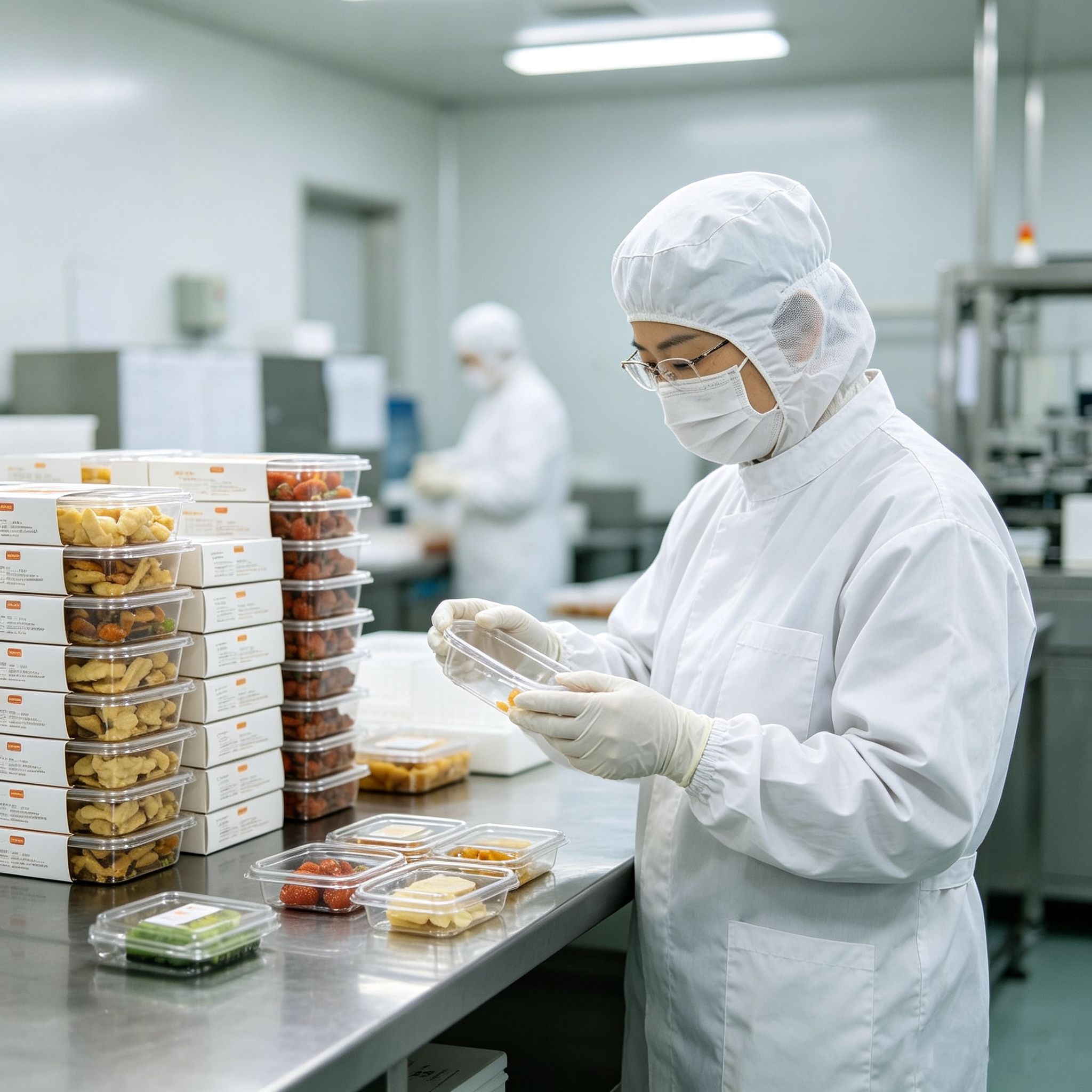
Batch-level acceptance and documentation are now part of bakery packaging procurement, not an afterthought. Image: Weifang Chuanhe New Material Co., Ltd.
The compliance problem bakery buyers now inherit
Bakery packaging has traditionally been specified on three variables: does the pack protect the product in transit, does it present the product on shelf, and what does it cost per unit. PPWR adds a fourth question: can the buyer document the food-contact safety and material composition of the specific model being purchased, across every market where that pack will be sold?
The pressure is not hypothetical. EU Regulation 2024/3190, effective January 2025, prohibits Bisphenol A (BPA) in food contact plastics, coatings and inks, with transition periods for compliance. For a bakery operator buying clear containers, that regulation alone changes the questions put to a supplier: not "is your plastic food grade?" but "is this model BPA-free, and what documentation supports that claim?"
The opportunity sits on the other side of the same coin. A supplier who can attach a model-level test report to a shortlist makes the buyer's evaluation faster and less risky. Where that evidence does not exist, buyers tend to reduce risk by narrowing the supplier list — which is how a compliance document becomes a commercial advantage rather than a cost centre.
What PPWR Product Test Report 178251114a 001 actually documents
TÜV Rheinland PPWR Product Test Report 178251114a 001 carries a validity window from 2026-08-14 to 2030-08-14. Within that window the report is referenced for a defined set of bakery packaging models rather than for an entire catalogue — a distinction that matters in procurement, because certification by brand name is not the same as certification by model.
The certification scope associated with this report applies to the EU market, the North America market, the Latin America market, the Southeast Asia market and the Middle East market. That geographic breadth is relevant for exporters who run one pack format across several destinations and prefer a single documentation set over five separate ones.
The testing behind the report covers global migration, specific migration of metals, SVHC screening, PFAS, and total lead, cadmium, mercury and hexavalent chromium. In practical terms that is a food-contact migration screen plus a contaminants screen — the two areas where bakery buyers most often need a model-specific answer rather than a generic marketing statement.
According to the certification content associated with this shortlist, PPWR coverage applies to tray formats including HB-T9333, HB-221360(PP), HB-MG24 OZ, HB-MG08 OZ, the HB-75-28(PP) polypropylene tray and the HB-1912 food plastic tray, and to the bakery container and tamper-evident formats shortlisted below: HB-SP1510, HB-5209, HB-1966, HB-16OZ, HB-8OZ, HB-24 OZ, HB-32 OZ and HB001-55.
Shortlist group 1 — clear PET bakery containers and clamshells
Clear PET clamshell containers are the default format for bakery counters that sell on visibility. Three container models anchor this group: HB-SP1510, a 16 × 16 × 6.7 cm square clamshell in PET; HB-1966, a 19.7 × 11.7 × 4.9 cm rectangular clamshell in PET; and HB-5209, a 21.5 × 21.5 × 15.3 cm tall clamshell in PET designed for deeper and higher-profile baked goods.
Adjacent sizes in the same container family extend the shortlist for buyers who need a single format across a product range: HB-5295 (16.2 × 16.2 × 5 cm), HB-5211 (17.4 × 17.4 × 9.8 cm), HB-5115 (11.7 × 11.2 × 7.6 cm), HB-1022 (18.3 × 12.3 × 5.6 cm), HB-7097 (16.1 × 14.9 × 7.8 cm), HB-1007 (23.5 × 22.5 × 8.3 cm) and HB-1008 (26.5 × 26.5 × 8.5 cm).
The container group shares a common set of characteristics recorded in the product content units:
- Crystal clear PET body intended to maximize the display of baked goods and support retail sales.
- Food-grade BPA-free material, specified for direct contact with cakes, pastries and desserts.
- Snap lock closure, dust-proof and designed to prevent bakery items from drying out.
- Tough, shatter-resistant construction aimed at lowering breakage risk during transport.
- Stackable design to save shelf and warehouse space.
- Smooth rounded edges intended to avoid scratching cream and baked products.
- Multiple standard sizes covering donuts, cupcakes, sliced cakes, cookies and Swiss rolls.
- Custom size, color and logo printing available for brand owners.
- Factory-direct supply supporting both small and bulk wholesale orders.
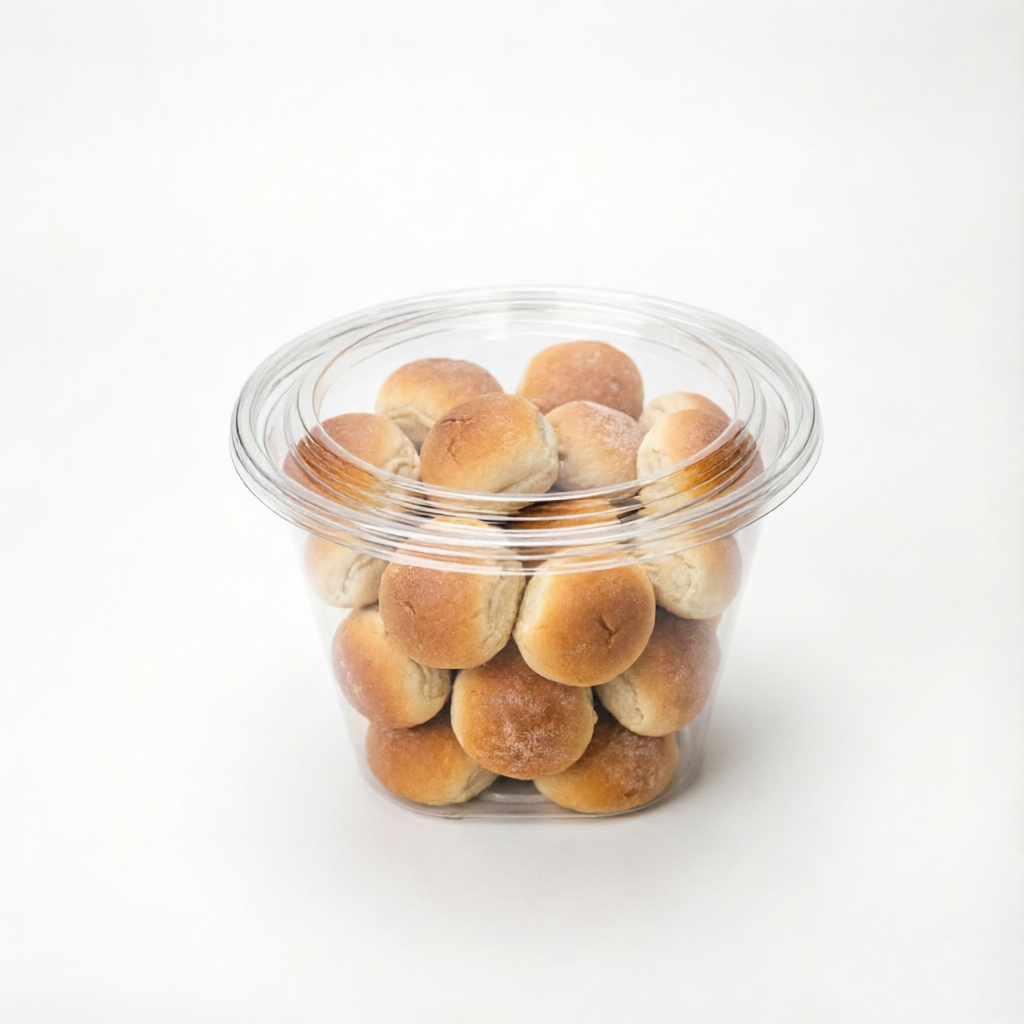
Model HB-5209: a 21.5 × 21.5 × 15.3 cm clear PET clamshell container in the bakery container shortlist.
Shortlist group 2 — bakery trays, including MAP-compatible PP
Trays solve a different problem from clamshells. They hold a flat or shallow product while allowing a lidding film, a MAP gas flush or a simple over-wrap. The tray models named in the certification record are HB-T9333 (16.8 × 11.4 × 3 cm), HB-221360(PP) (22.2 × 13 × 6 cm), HB-MG24 OZ (18.6 × 18.6 × 8.9 cm), HB-MG08 OZ (14.2 × 12.5 × 6.8 cm), HB-75-28(PP) (16.8 × 11.4 × 3 cm) and HB-1912 (19 × 12 × 3 cm). HB-221360(PP) and HB-75-28(PP) are polypropylene; HB-T9333, HB-MG24 OZ, HB-MG08 OZ and HB-1912 are PET.
Shared tray characteristics recorded in the product content units include:
- Food-grade BPA-free plastic, stated as compliant with food contact safety standards.
- Rigid, sturdy structure designed to resist deformation and reduce goods damage during transit.
- Compatibility with MAP modified atmosphere packaging production lines.
- Multiple sizes covering produce, bakery, meat, poultry and ready meals.
- Stackable design saving warehouse and retail display space.
- Clear transparent tray for supermarket sales display.
- Custom shape, color, embossing and logo printing available.
- Factory-direct supply with support for small trial orders and bulk wholesale.
The PET/PP split is a decision variable rather than a preference. PP trays in this shortlist are the formats specified for MAP lines and for applications where the tray itself must tolerate a modified-atmosphere process; PET trays are specified where optical clarity and cold-chain presentation carry more weight than heat tolerance. Choosing on appearance alone is one of the more common errors in bakery packaging specification.
Shortlist group 3 — tamper-evident formats
Tamper-evident bakery packaging adds a visible sealing or opening mechanism so that a customer can see whether a pack has been opened before purchase. It is a retail-trust format as much as a protective one, and it is typically chosen for self-service bakery fixtures, grab-and-go dessert cases and delivery channels where the pack passes through several hands.
Five tamper-evident models define this group, all in PET: HB-16OZ (14 × 11.6 × 6.2 cm), HB-8OZ (13.4 × 12.1 × 3.6 cm), HB-24 OZ (17.2 × 15.5 × 4.8 cm), HB-32 OZ (17.2 × 15.5 × 6.2 cm) and HB001-55 (19 × 15.7 × 4.5 cm). Additional options in the same tamper-evident family include HB-20 OZ (14 × 11.6 × 7.9 cm), HB5298 (15.4 × 15.4 × 6.1 cm), HB006-6102 (19 × 15.7 × 6.3 cm), HB002-63 (14.6 × 12.3 × 6.7 cm) and HB005-7402 (19 × 15.7 × 7.5 cm).
The characteristics recorded for this group are:
- Customized shapes available in rectangle, square, round and fully customized profiles.
- High transparency PET material, keeping contents visible to the shopper.
- Broad application range spanning cake and bakery packaging, salad containers, fruit and vegetable packs, frozen food trays and dried fruit containers.
- Customizable colors and sizes to match specific product dimensions.
- ODM/OEM services supporting customized packaging programmes across industries.
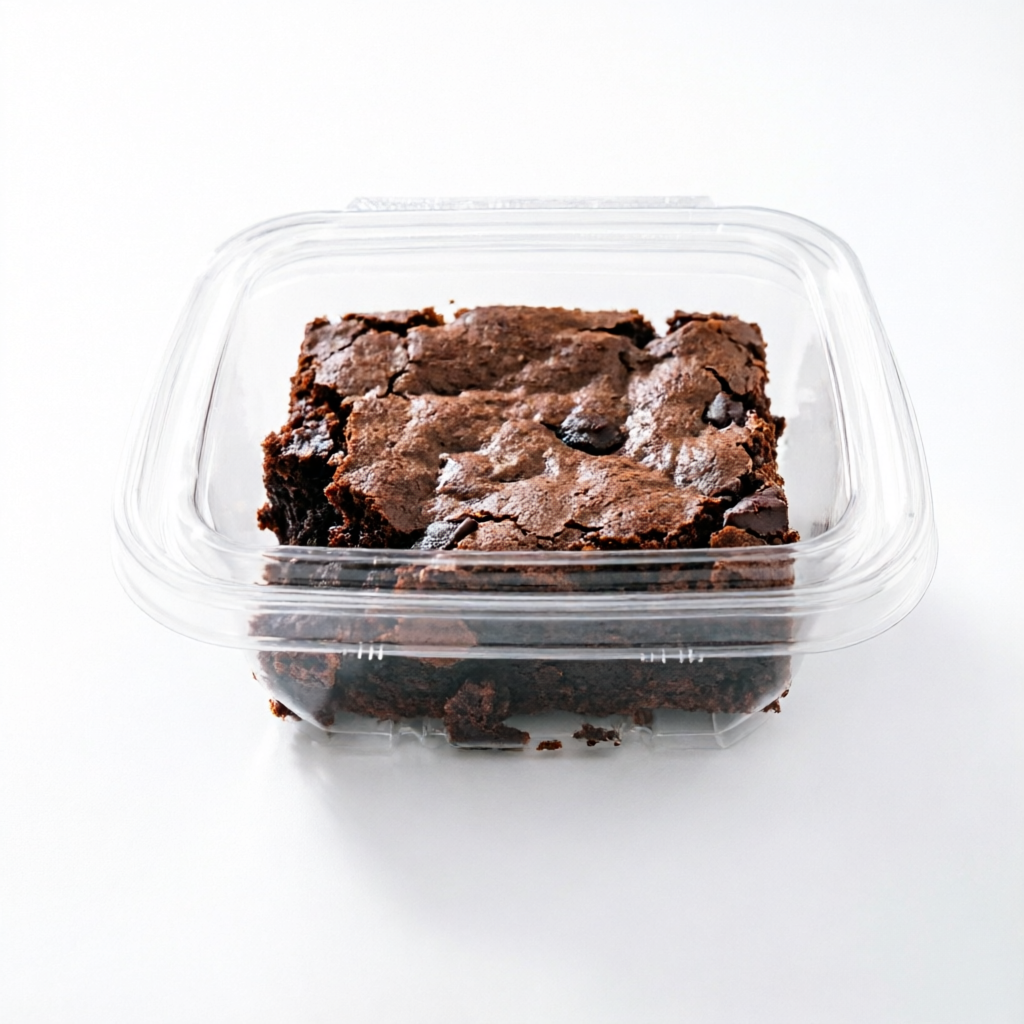
Model HB-16OZ: a 14 × 11.6 × 6.2 cm tamper-evident PET container in the shortlist.
Buyer acceptance criteria: comparing the shortlist side by side
The table below compares the shortlisted formats on the variables that most often decide a bakery packaging project: format type, material, footprint and the product profile each size is realistically suited to.
| Model | Format | Material | Dimensions (cm) | Typical bakery fit |
|---|---|---|---|---|
| HB-SP1510 | Square clamshell container | PET | 16 × 16 × 6.7 | Cakes, cupcakes, small pastries |
| HB-1966 | Rectangular clamshell container | PET | 19.7 × 11.7 × 4.9 | Sliced cake, pastries, cookies |
| HB-5209 | Tall clamshell container | PET | 21.5 × 21.5 × 15.3 | Layer cakes, tall desserts |
| HB-5295 | Square clamshell container | PET | 16.2 × 16.2 × 5 | Shallow cakes, tarts |
| HB-1912 | Shallow tray | PET | 19 × 12 × 3 | Pastry, cookies, display trays |
| HB-75-28(PP) | MAP-compatible tray | PP | 16.8 × 11.4 × 3 | Bakery and ready-meal MAP |
| HB-221360(PP) | Deep tray | PP | 22.2 × 13 × 6 | Larger bakes, ready meals |
| HB-16OZ | Tamper-evident | PET | 14 × 11.6 × 6.2 | Individual desserts and portions |
| HB-8OZ | Tamper-evident | PET | 13.4 × 12.1 × 3.6 | Small grab-and-go items |
| HB-24 OZ | Tamper-evident | PET | 17.2 × 15.5 × 4.8 | Sharing portions, sweet treats |
| HB-32 OZ | Tamper-evident | PET | 17.2 × 15.5 × 6.2 | Cream cakes, deeper desserts |
| HB001-55 | Tamper-evident | PET | 19 × 15.7 × 4.5 | Multi-item snack packs |
Read the table in two passes. First filter by the physical constraint — product height and footprint decide whether a clamshell, a tray or a tamper-evident format is even viable. Then filter by the commercial constraint: does the chosen format accept the closure, lidding or MAP process your line already runs? A model that fails the second filter usually fails in production rather than in the sampling room.
Application scenarios where this shortlist fits
The scenario data behind these formats is consistent across segments. Supermarkets place produce or prepared items in trays and boxes for consumer selection; e-commerce channels require sturdy, volume- and weight-optimised packs to control logistics cost; exporters must account for shipping, inspection and overseas regulations. The stated operating mode is 24/7, with material variety and OEM/ODM customization as the working conditions.
Four recurring scenarios define where the shortlist applies:
- Retail bakery and supermarket display. Clear clamshells and shallow trays support consumer selection while protecting contents; the food-grade, BPA-free requirement applies alongside stackability, shatter resistance and transparent retail display design.
- MAP and extended-shelf-life lines. PP trays in the shortlist are specified as compatible with modified atmosphere packaging production lines, which is the format decision point for buyers running MAP equipment.
- E-commerce and delivery. Stackable, shatter-resistant formats reduce breakage across multiple handling points, and tamper-evident closures make the pack's integrity visible to the end customer.
- Export and cold chain. Formats are specified for compatibility with EU and FDA food contact standards, BPA-free materials and stackable design, which supports container loading and cold storage planning.
Delivery evidence supports these scenarios rather than replacing them. A Latin America project covering Chile, Argentina, Brazil, Colombia and Peru has run for more than six years at a monthly volume of 250,000 food plastic containers, covering fresh fruit and vegetable packaging, baking packaging, food factory processing and supermarket retail display. A Southeast Asia project across Malaysia, Thailand, Vietnam, Singapore and Indonesia has run for more than twelve years at 500,000 pieces per month, including seafood and meat cold chain packaging. A European project across the United Kingdom, Germany, France, Italy, Spain, Finland, the Netherlands and Portugal has run for more than seven years at 350,000 pieces per month with EU standard compliance noted as a highlight. A United States importer and food retail distributor has ordered 120,000 pieces per month for more than three years for fresh fruit and ready meal packaging, with FDA food contact standard qualification, PET material, microwave-safe capability and customized printing.
Market trend analysis: what the numbers actually support
Third-party data gives the shortlist its context. The global food packaging market was valued at USD 421.6 billion in 2025 and is projected to reach USD 599.0 billion by 2033 (Grand View Research). Asia Pacific dominated that market in 2025 with a 40.0% revenue share, driven by rapid urbanisation and online food delivery. Within that broader category, the global thermoform packaging market was valued at USD 54.7 billion in 2025, with PET holding the largest material share at 44.8% — which explains why PET clamshells and trays dominate bakery shortlists rather than appearing as one option among equals.
The tamper-evident segment is the fastest-moving part of the shortlist. That market is projected to grow from USD 2.56 billion in 2025 to USD 4.26 billion by 2030, a CAGR of 10.72% (Mordor Intelligence). On the supply side, China exported USD 1.28 billion in baked goods in 2024 (Observatory of Economic Complexity), and associated primary packaging demand moves with it.
One caution is worth stating. Published market sizing for "bakery packaging" diverges sharply by scope: one estimate places the category near USD 12.4 billion while another exceeds USD 57 billion, a gap that reflects different definitions of what is counted. Category-level numbers are useful for planning narrative, but they are not procurement evidence — model-level documentation is.
Third-party research identifies Amcor Plc, Berry Global Inc., Sealed Air Corporation and Mondi Group among the notable global players in bakery packaging, alongside regional thermoformers. Their presence is context for how a buyer benchmarks supply options, not a substitute for verifying a specific model.
Where rigid thermoformed bakery packaging has limits
A shortlist that only lists advantages is not a shortlist. Three boundaries matter here.
Certification is model-specific and market-specific. PPWR Product Test Report 178251114a 001 applies to the named models and to the EU, North America, Latin America, Southeast Asia and Middle East markets. It is not a blanket approval across an entire catalogue, and it does not replace destination-level obligations such as labelling, extended producer responsibility registration or recyclability requirements, which remain the buyer's responsibility to verify.
Material choice imposes real trade-offs. PET formats in this shortlist are specified for clarity and cold-chain presentation; PP trays are specified where MAP compatibility and process tolerance are required. Rigid thermoformed containers also compete with fibre-based formats in markets where paperboard is preferred — PET offers visibility and a dust-proof snap closure, but it is not a like-for-like substitute where a buyer's format strategy is fibre-led.
Tamper-evident formats cost more than plain clamshells. The closure mechanism adds material and tooling complexity, and it typically requires pack-out process adjustments on the buyer's line. Where a pack does not pass through multiple handling points, a standard snap-lock clamshell may deliver the same product protection at a lower unit cost.
Purchasing terms to plan around
- Minimum order quantity: 10,000 pcs.
- Lead time: 30–45 days.
- Customization: logo, size and color under OEM/ODM.
- Quality control: 100% test.
- Export markets served: North America, EU, Middle East, Southeast Asia and Latin America.
- After-sales scope: real-time order and shipment tracking, customs clearance documentation assistance, technical consultation on product parameters, resolution of quality and damaged-goods issues, packaging and shipping optimisation suggestions, and continuous support for customized design.
The manufacturing base behind these formats is Weifang Chuanhe New Material Co., Ltd., a PET and PP thermoformed packaging manufacturer founded in 2013 and located in Weifang, China, adjacent to Qingdao Port. The facility covers more than 62,000 m² and operates 20 fully automatic thermoforming machines and 20 standard thermoforming machines, including 4 Kiefel machines imported from Germany, supported by 4 PET sheet extrusion lines, 2 PP sheet extrusion lines and an in-house mold workshop. The company reports annual output of 54,000 tons, monthly capacity of 4,500 tons, 51–100 employees, 5 R&D engineers and a 100% export ratio, with stated certifications covering CE, BRC, FDA, EU and SGS quality management systems.
Future outlook
Three things are likely to shape bakery packaging shortlists between now and 2030. First, the certification window itself sets the planning rhythm: a report valid to 2030-08-14 gives buyers a stable documentation reference across multiple annual sourcing cycles, which reduces the cost of switching models inside a certified family. Second, tamper-evident demand is growing faster than the packaging market overall, which will push more bakery SKUs toward closure formats that were previously reserved for salads and prepared foods. Third, material selection will keep tightening as migration, SVHC and PFAS screening become routine buyer questions rather than specialist ones.
For procurement teams, the practical implication is that shortlists will increasingly be built from evidence rather than from catalogues. A model that carries a named test report, a defined geographic scope and a documented test method is easier to defend internally than a model that does not — and that difference will compound as compliance expectations expand.
Full model specifications, dimensions and customization options are compiled in the company brochure, available for download: Weifang Chuanhe New Material Co., Ltd. product brochure.
FAQ
What does PPWR Product Test Report 178251114a 001 cover?
TÜV Rheinland PPWR Product Test Report 178251114a 001 is valid from 2026-08-14 to 2030-08-14. The testing covers global migration, specific migration of metals, SVHC screening, PFAS, and total lead, cadmium, mercury and hexavalent chromium. It applies to a defined set of named packaging models rather than to an entire catalogue.
Which models are named in the certification record?
The certification content associated with this shortlist names the HB-T9333 tray, HB-221360(PP) tray, HB-MG24 OZ tray and HB-MG08 OZ tray, and states that the HB-75-28(PP) polypropylene tray and HB-1912 food plastic tray are certified to PPWR requirements. The shortlist also covers the bakery container models HB-SP1510, HB-5209 and HB-1966, and the tamper-evident models HB-16OZ, HB-8OZ, HB-24 OZ, HB-32 OZ and HB001-55.
Which markets does the certification apply to?
The certification applies to the EU market, the North America market, the Latin America market, the Southeast Asia market and the Middle East market. It does not by itself cover destination-level obligations such as labelling, extended producer responsibility or local recyclability rules.
How should a buyer choose between a PET clamshell and a PP tray?
The decision usually follows the process, not the product. PP trays in this shortlist are specified as compatible with MAP modified atmosphere packaging production lines, so they suit buyers running MAP equipment. PET clamshells are specified for crystal-clear retail display, snap-lock dust protection and stackable presentation. If the line runs a gas flush, the material question is largely settled before the appearance question is asked.
When does a tamper-evident format make more sense than a standard clamshell?
Tamper-evident formats make sense where the pack must show visible integrity to the end customer — typically self-service bakery fixtures, grab-and-go dessert cases and delivery channels with multiple handling points. Where a pack moves directly from production to a controlled retail display, a standard snap-lock clamshell may deliver comparable protection at a lower unit cost, since tamper-evident closures add material and tooling complexity.
What purchasing terms should a bakery buyer plan for?
The recorded terms are a minimum order quantity of 10,000 pcs, a lead time of 30–45 days, and OEM/ODM customization covering logo, size and color, with 100% test quality control. Monthly capacity is stated at 4,500 tons against an annual output of 54,000 tons. After-sales support covers order and shipment tracking, customs clearance documentation, technical consultation on product parameters, resolution of quality and damaged-goods issues, and packaging and shipping optimisation suggestions.
What are the limits of the certification for a project buyer?
The report covers named models across five markets and a defined set of test methods. It does not certify unlisted models, and it does not substitute for the buyer's own destination compliance checks. Buyers should also confirm that BPA-free declarations align with the transition timelines under EU Regulation 2024/3190, which became effective in January 2025 and prohibits Bisphenol A in food contact plastics, coatings and inks with transition periods for compliance.