
PSA vs. Membrane: A Data-Driven Nitrogen Generator Comparison for Independent Buyers
Nitrogen keeps packaged food fresh, blankets chemical reactors, inertises offshore tanks and shields laser-cut edges from oxidation. For decades most plants bought that nitrogen as delivered liquid or cylinders. A growing share now generate it on site — and the first decision an independent buyer faces is not which brand to sign with, but which separation technology to specify.
Two technologies dominate on-site nitrogen generation: pressure swing adsorption (PSA), which separates nitrogen using carbon molecular sieves, and membrane separation, which relies on hollow-fibre bundles. Both take compressed air as their raw material. They diverge on achievable purity, footprint, maintenance profile and energy demand — differences that decide whether a system still meets specification in its eighth year of operation.
This reference compares the two routes using published equipment specifications, third-party market data and documented maintenance intervals. It is written for engineering, procurement and operations teams still in the awareness and research stage of an equipment decision.
Why the PSA-versus-membrane question became a mainstream sourcing decision
The global industrial nitrogen generator market was valued at USD 4.29 billion in 2023 and is projected to reach USD 6.47 billion by 2031, according to Verified Market Research. PSA technology accounts for roughly 48% of that market by technology share — the largest single technology segment — while membrane systems hold the remainder alongside cryogenic supply.
Demand is not evenly spread. Grand View Research reports that the food and beverage segment alone held approximately 49.8% of nitrogen generator revenue in 2023, driven largely by modified atmosphere packaging. Analysts also expect the chemical industry segment to grow at the fastest rate of any application, at around 6.0% CAGR, on the back of reactor blanketing, tank sealing and pipeline purging. Regionally, Asia-Pacific is projected to hold about 35% of the market by 2032, according to Verified Market Research.
One caution for buyers who use market reports as a budgeting input: published market-size estimates vary widely by scope. Figures as low as USD 4.29 billion and as high as USD 19.53 billion appear for overlapping years, because some studies count equipment only while others include the broader industrial gas supply chain. Treat such figures as directional context, not as a price benchmark.
How the two technologies separate nitrogen
PSA: adsorption on a carbon molecular sieve
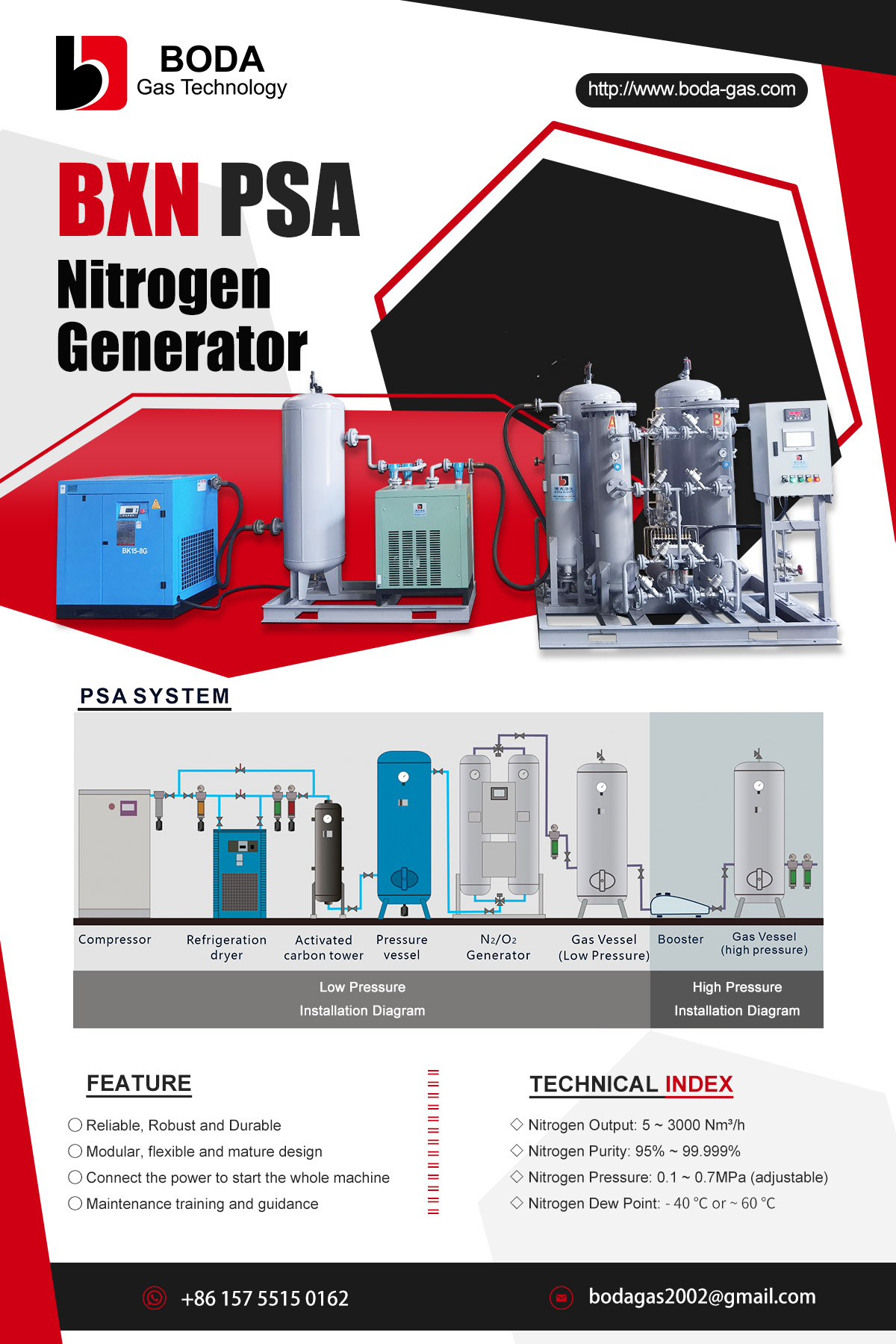
Under pressure, nitrogen and oxygen diffuse at very different rates inside carbon molecular sieves (CMS). Oxygen molecules are preferentially adsorbed by the sieve while nitrogen concentrates in the gas phase, producing a nitrogen-rich stream. Two adsorption towers alternate between adsorption and regeneration so that production is continuous: while one tower generates nitrogen, the other depressurises to release trapped gases and restore the sieve. Pre-treated, dried and filtered compressed air is the only feed required. With CMS, PSA nitrogen generators can deliver nitrogen at purities up to 99.999%, as noted by General Air Products.
Membrane: permeation through hollow fibres
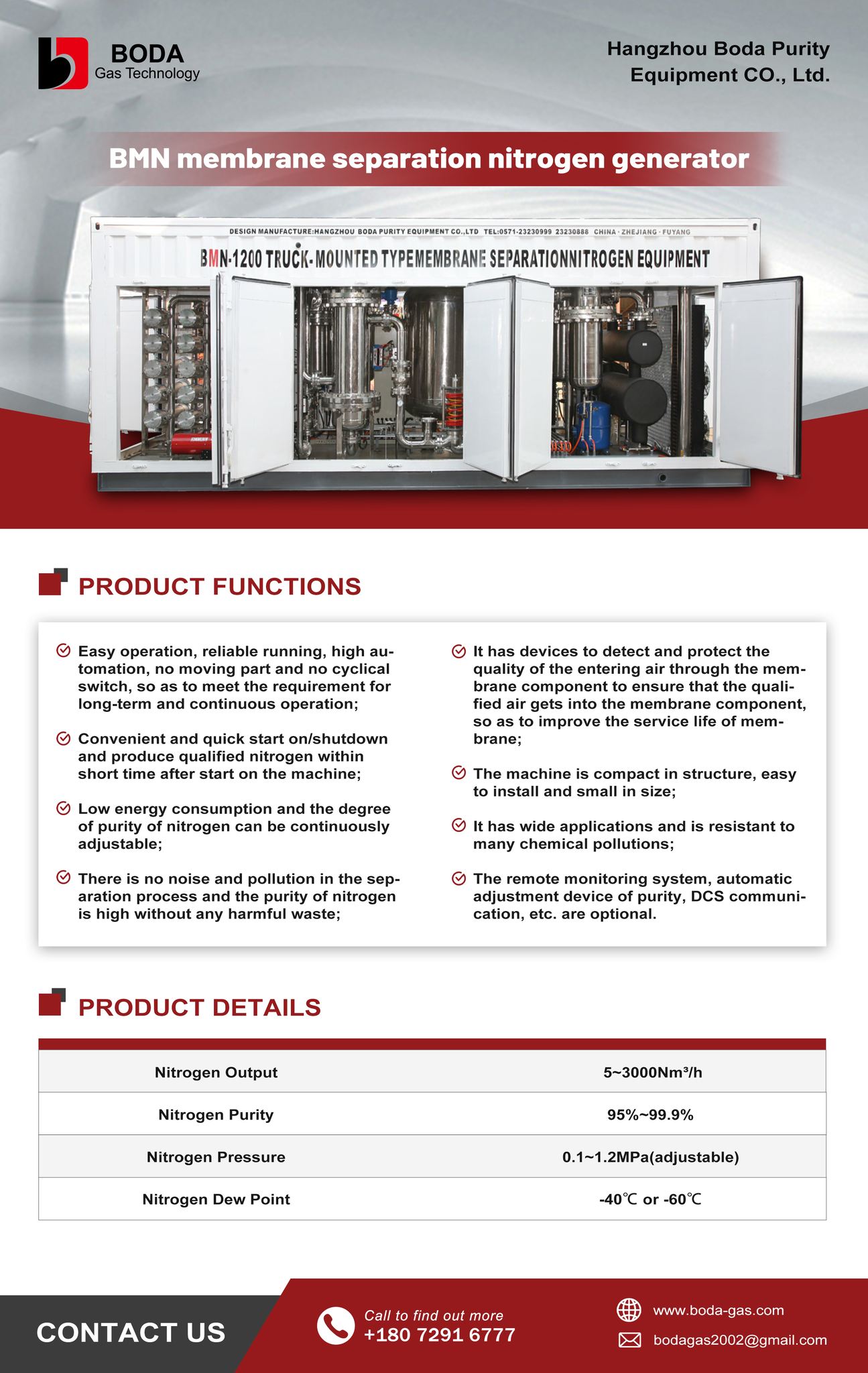
Membrane separation depends on the pressure differential across a bundle of hollow fibres. Water vapour, oxygen and other fast-permeating gases cross the membrane first and form an oxygen-rich permeate stream. Nitrogen, which permeates more slowly, is retained and concentrated into dry nitrogen-rich gas. There is no adsorbent to regenerate and no moving part in the separation stage itself, which is why membrane packages are typically described as quiet, compact and low-maintenance.
The upstream air-treatment chain is the same for both
Both routes sit downstream of the same air-treatment train. A complete nitrogen generation system normally comprises an air compressor, an air receiver tank, particulate and coalescing filters, an air dryer, an activated carbon filter, the nitrogen generator unit, a nitrogen buffer tank, an oxygen analyser and a control system. When quotations are compared, this chain should be compared line by line — not only the generator skid — because the dryer and the carbon filter determine whether the separation stage reaches its expected service life.
Side-by-side: what published specifications actually show
The table below is assembled from published equipment specifications for one PSA nitrogen generator series (1–3,000 Nm³/h; 95%–99.999% purity), one membrane separation nitrogen generator series (5–3,000 Nm³/h; 95%–99.9% purity), and a carbon-loaded purification nitrogen generator (1–500 Nm³/h; purity of 99.9995% or above). It is not a ranking; it is a specification map.
| Parameter | PSA (carbon molecular sieve) | Membrane (hollow-fibre) |
|---|---|---|
| Separation medium | Carbon molecular sieve beds | Hollow-fibre membrane bundles |
| Published purity range | 95%–99.999%; 99.9995% or above when a purification stage is added | 95%–99.9% |
| Practical purity band | Preferred where the requirement exceeds 99.9% | Most efficient where the set point is at or below roughly 99.5% |
| Flow range | 1–3,000 Nm³/h; 1–500 Nm³/h for the purification-stage model | 5–3,000 Nm³/h |
| Outlet pressure | 0.1–1.15 MPa, adjustable | 0.1–1.2 MPa, adjustable |
| Dew point | −40 °C to −70 °C | −40 °C or −60 °C |
| Moving parts in the separation stage | Switching valves and cycle control | None |
| Noise | 65–85 dB(A) for the generator series | Low enough for direct production-floor installation |
| Footprint | Larger; offered as skid-mounted or movable containerised packages | Compact; can be installed inside the production hall |
| Principal replacement item | Carbon molecular sieve, typically every 6–10 years | Membrane module |
Two conclusions can be drawn from the specifications alone. Membrane wins on simplicity, footprint and noise; PSA wins on attainable purity. Everything else — energy consumption, spares strategy, service cost — follows from that single trade-off.
Purity: the first decision gate and the largest cost lever
Purity is not a preference; it is the specification that drives energy consumption, equipment size and price. Published selection guidance maps purity bands to applications.
| Purity band | Applications named in published guidance |
|---|---|
| 95%–98% (low) | Fire protection, marine tank blanketing, oilfield pipeline purging, general-purpose tyre inflation |
| 99%–99.9% (medium) | Food and beverage modified atmosphere packaging, winemaking, conventional plastic moulding |
| 99.95%–99.99% (high) | Mild-steel laser cutting, electronics manufacturing, cable production, pharmaceutical tank blanketing |
| 99.999% and above (ultra-high) | Cutting of special metals such as titanium alloy, high-end electronics production, specialised laboratory work |
Industry-level documentation narrows the choice further. Oil and gas inerting and purging typically calls for 95%–99.9%; chemical reactor blanketing for 99.0%–99.99%; food and beverage packaging for 99.0%–99.9% food-grade oil-free nitrogen; pharmaceutical production and packaging for 99.99%–99.999%. Electronics work is stricter still: a common SMT workshop specification sits at 99.99%, while chip-and-wafer manufacturing can require 99.999% to 99.9999% with a dew point of −60 °C or lower. Laser and plasma cutting splits by material — carbon steel tolerates 95%–99%, while mirror-finish stainless steel cutting calls for 99.99%–99.999% at high pressure.
| Application | Documented purity requirement | Typical technology fit |
|---|---|---|
| Oil and gas — tank blanketing, purging, well work-over | 95%–99.9% | PSA or membrane |
| Chemical — reactor shielding, pipeline purging | 99.0%–99.99% | PSA; membrane at the lower end |
| Food and beverage — modified atmosphere packaging | 99.0%–99.9%, food-grade oil-free | Membrane or PSA |
| Pharmaceutical — production, sealing, packaging | 99.99%–99.999% | PSA with purification stage |
| Electronics — SMT and wafer processing | 99.99%; 99.999%+ at dew point ≤ −60 °C | PSA with purification stage |
| Laser and plasma cutting | 95%–99% carbon steel; 99.99%–99.999% stainless | PSA or membrane at the low end |
| Tyre inflation | 95%–98% | Membrane or PSA |
Two practical conclusions follow. First, where the process can run below roughly 99.5% nitrogen, membrane is normally the more economical separation route, and it allows the operator to dial purity to the level the process genuinely requires instead of paying for purity that is never used. Second, once the requirement crosses about 99.5% and certainly beyond 99.9%, PSA becomes the practical choice — membrane purity in published specifications tops out at 99.9%.
There is one trap worth naming. A PSA generator on its own does not automatically deliver ultra-high purity. Where oxygen content must sit at or below 5 ppm, carbon dioxide at or below 1 ppm and dew point at or below −60 °C, an additional purification stage is required. That is a separate equipment block, not a control setting.
Flow rate, scale and installation profile
Small systems dominate the installed base. Published segmentation data places roughly 42% of PSA nitrogen generator installations below 100 Nm³/h, 36% between 100 and 500 Nm³/h, and 22% above 500 Nm³/h. That distribution matches the profile of food packaging, tyre inflation and sheet-metal cutting buyers rather than only large process plants.
Both technologies scale into industrial territory: PSA from 1 to 3,000 Nm³/h and membrane from 5 to 3,000 Nm³/h. The difference lies in how capacity is packaged. A skid-mounted PSA nitrogen generation package suits a fixed plant room with a defined gas demand. A movable containerised PSA nitrogen generator suits remote oilfield, offshore or temporary construction sites where a permanent building is impractical — and one market study projects a 7.6% CAGR for containerised PSA nitrogen generators from 2025 to 2032, although that estimate carries lower confidence than the broader market figures cited earlier because it comes from a single research house. Membrane systems sit at the opposite end of the installation spectrum: their compact footprint and quiet operation allow direct installation on the production floor.
Operating cost: where the money actually goes after commissioning
Both technologies share the same ancillary cost base. The compressor, receiver tanks, filters and dryers are required either way. Documented service intervals for a well-specified system are broadly consistent across installations.
| Service item | Documented interval |
|---|---|
| Precision filter element replacement | Every 8,000 operating hours |
| Air compressor service (oil, oil filter, air/oil separator) | Every 3,000–4,000 running hours |
| Air dryer desiccant replacement | 16,000–24,000 hours |
| Carbon molecular sieve (PSA) | 6–10 years |
| Membrane module (membrane systems) | Replacement item; no moving parts to service |
The technology-specific cost line is therefore the sieve bed or the membrane module, not the daily running cost alone. On the PSA side, the sieve is also the component most exposed to upstream contamination: oil poisoning is described as one of the most important failure modes of gas-generation adsorbents, which is why an activated carbon filter with residual oil content below 0.003 mg/m³ and an oil remover rated below 0.01 mg/m³ are specified in the pretreatment train, behind a first-stage oil-water separator with greater than 98% liquid separation efficiency. A quotation that trims this chain is cheaper on paper and more expensive over the equipment life.
Against delivered gas, the economics are usually the deciding factor. One industry analysis referencing U.S. Department of Energy material puts the reduction in nitrogen supply cost from on-site generation at up to 40% compared with traditional cylinder deliveries, mainly by removing logistics and cylinder handling. That figure is an estimate and is configuration-specific; it should be validated against a site's actual cylinder or liquid consumption before it is used in a business case.
On-site generation versus the traditional delivered-gas baseline
The conventional alternative is not another generator — it is delivered liquid nitrogen or cylinder supply. Delivered gas has low upfront capital cost, requires no compressed-air infrastructure indoors, and shifts purity responsibility to the gas supplier. On-site generation reverses those trade-offs: higher initial capital outlay, dependence on a functioning compressor and air-treatment train, and full responsibility for purity verification sitting with the operator.
On-site generation also removes the practical constraints of delivered supply — cylinder handling, storage, delivery scheduling and exposure to gas-market price movement — and allows purity and flow to be adjusted to process demand. For a site with steady, substantial nitrogen consumption and available utilities, the on-site route is normally the lower-cost option over a multi-year horizon. For intermittent, low-volume or very high-purity demand with no compressor infrastructure, delivered gas can still be the more rational choice.
Boundaries and limitations a fair comparison must state
- Membrane has a purity ceiling. Published membrane specifications reach 99.9% purity, and the technology is most efficient below roughly 99.5%. Above that level, PSA is the more efficient separation route.
- PSA is not a UHP device by default. Reaching oxygen levels of 5 ppm or lower with carbon dioxide below 1 ppm requires a downstream purification stage such as a carbon-loaded or hydrogenation purification unit.
- PSA is mechanically busier. Switching valves, cycle control and sieve beds mean more serviceable components, a larger footprint and generator noise in the 65–85 dB(A) range.
- Membrane is not maintenance-free. It removes the adsorbent and the valves, but the compressor, dryers and filters upstream remain, and those carry the majority of routine service hours.
- Feed-air quality is a shared dependency. Both technologies are damaged by oil and water carry-over. Neither will compensate for an undersized dryer or a missing carbon filter.
- Cost claims require local validation. Savings versus delivered gas depend on consumption profile, utility costs and site logistics; published percentages are indicative, not guaranteed.
A procurement checklist for independent buyers
1. Fix the specification before comparing prices
- Required nitrogen purity (%), with the tolerance that matters to the process
- Required flow rate in Nm³/h, including peak demand rather than average demand
- Discharge pressure in bar, plus any booster requirement
- Required dew point, especially for high-purity or low-temperature processes
- Site conditions: altitude, ambient temperature, voltage, phase and frequency, indoor or outdoor installation
- Duty cycle — continuous or intermittent
2. Verify the compliance basis
- For the European Union, pressure vessels in PSA nitrogen generators must comply with the Pressure Equipment Directive (PED 2014/68/EU) and bear the CE mark.
- For food-grade nitrogen, EIGA standards require at least one continuously online residual oxygen analyser in the nitrogen stream.
- For hazardous areas such as Zone 1 or Zone 2 oil and gas locations, specify explosion-proof construction rather than relying on a standard package.
- Where ASME or ATEX certification is required, confirm it is included in the scope rather than listed as an option.
3. Inspect the parts that decide service life
Component brand selection for valves and control instrumentation, carbon molecular sieve grade and filling method, spray-paint coating thickness, and the completeness of the buffer-tank and analyser package are the practical indicators of long-term purity stability. A factory acceptance test with a recorded purity and flow record at the specified operating point is more informative than a specification sheet.
4. Confirm who is actually building the equipment
Manufacturer status, engineering headcount, production floor area and annual output are verifiable indicators. They also determine whether a non-standard configuration or a customised working voltage, outlet pressure or material grade is realistically deliverable.
What BODA GAS covers across both technology routes
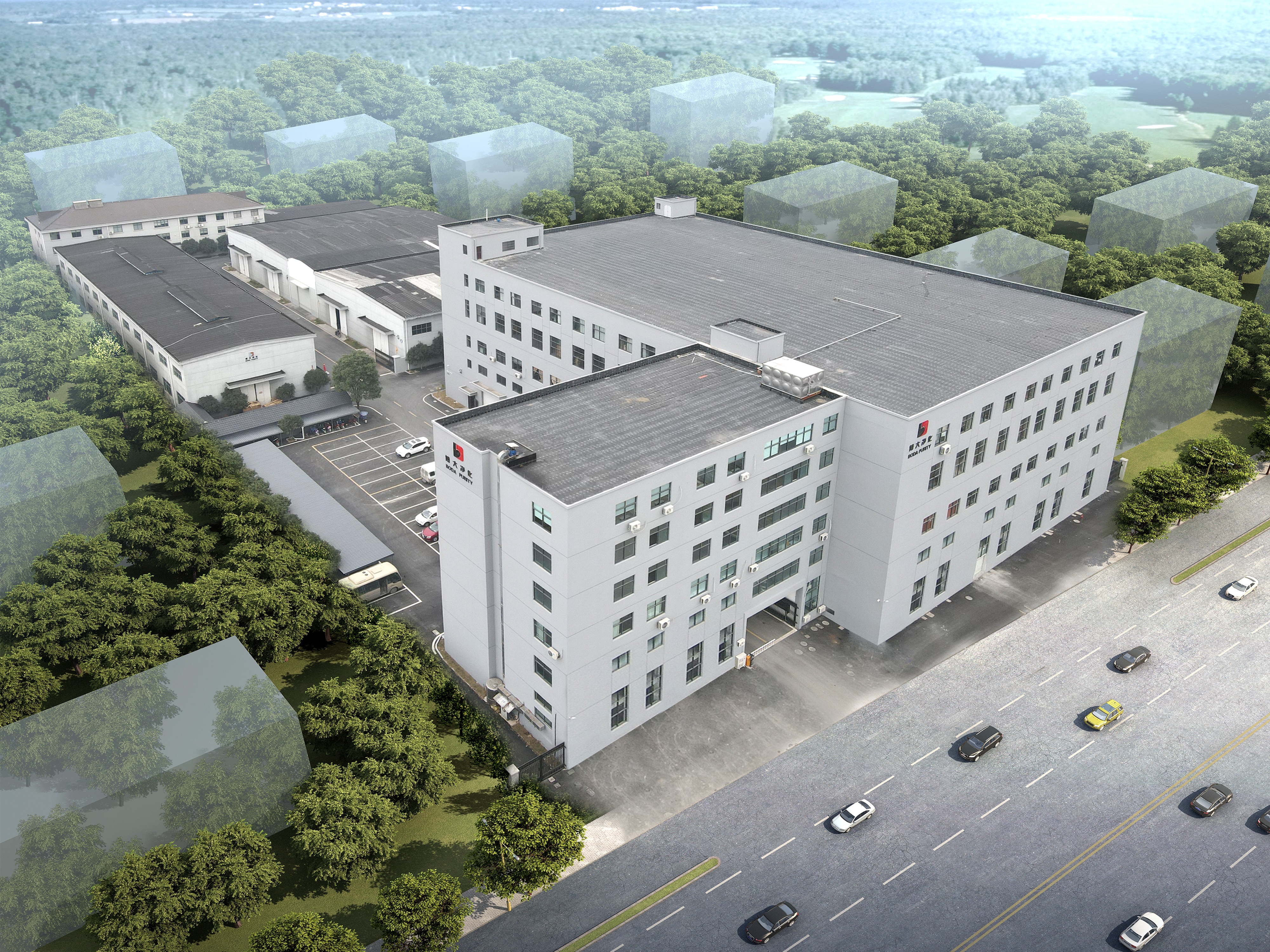
Hangzhou Boda Purity Equipment Co., Ltd., trading as BODA GAS, was established in 2002 and specialises in the research, development and manufacturing of PSA nitrogen generators, PSA oxygen generators and compressed air purification equipment. The company is headquartered in Hangzhou, Zhejiang Province, China, operates a production base of more than 30,000 m², employs approximately 58 staff including a 15-engineer R&D team, and reports annual output of 480 units with export business accounting for 30% of sales.
For nitrogen generation specifically, the portfolio spans both technologies described in this comparison:
| Series | Technology | Published specification |
|---|---|---|
| BXN Series | PSA nitrogen generator (carbon molecular sieve) | 1–3,000 Nm³/h; 95%–99.999% purity; 0.1–1.15 MPa adjustable; dew point −40 °C to −70 °C; 65–85 dB(A); carbon steel or SS304; ATEX, ASME, CE, ISO options |
| BMN Series | Membrane separation nitrogen generator | 5–3,000 Nm³/h; 95%–99.9% purity; 0.1–1.2 MPa adjustable; dew point −40 °C or −60 °C; carbon steel or SS304; ATEX, ASME, CE options |
| BCP Series | Carbon-loaded purification nitrogen generator | 1–500 Nm³/h; purity 99.9995% and above; oxygen ≤5 ppm; carbon dioxide ≤1 ppm; dew point ≤−60 °C; hydrogen-free construction |
| BHP Series | Hydrogenation purification nitrogen generator | 10–2,000 Nm³/h; purity 99.9995% and above; oxygen ≤5 ppm; dew point ≤−60 °C; hydrogen content adjustable or ≤5 ppm depending on model |
The supporting air-treatment range includes refrigeration dryers, heatless and heated desiccant dryers, combined low-dew-point dryers, mobile pipeline-specific compressed air dryers, oil-water separators, precision filters, high-efficiency oil removers, activated carbon filters and sterilizing filters — the components that determine whether the separation stage reaches its documented service interval. The company holds ISO 9001, ISO 13485, ISO 14001 and ISO 45001 certifications, along with invention patents and utility model patents relating to its gas-generation equipment.
BODA GAS equipment is applied in electric power, oil and gas, chemical engineering, coal mining, medical treatment, food processing, new energy, metallurgy, electronics and environmental protection, with a documented export footprint across the Middle East, Africa, Central Asia, Eastern Europe, Southeast Asia and Latin America.
Market trend analysis: where nitrogen demand is moving
Three shifts are visible in the available market data, and each has a direct procurement consequence.
PSA has become the default separation technology. A roughly 48% share of the global nitrogen generator market means that supply chains, spare parts and service competence for PSA systems are now widely distributed. Buyers benefit from competitive pricing, but also face a market in which many suppliers assemble rather than manufacture — which raises the importance of component-level due diligence.
Food and beverage remains the anchor application. At approximately 49.8% of 2023 revenue, packaging and preservation demand sets the volume standard for mid-purity systems. Meanwhile the chemical segment is expected to grow fastest at around 6.0% CAGR, driven by blanketing and reactor purging, which pulls demand toward higher purities and explosion-proof construction.
Deployment is shifting toward mobile and remote configurations. Asia-Pacific is projected to hold around 35% of the market by 2032, and containerised nitrogen generation is projected to grow ahead of the overall market according to at least one research house. The practical implication is that buyers should check whether a supplier can deliver skid-mounted and containerised configurations, not only fixed indoor packages.
The supplier landscape named in market research includes Linde plc, Air Liquide, Air Products, Atlas Copco and Parker Hannifin at the global level, alongside regional manufacturers. For independent buyers, the relevant question is not who is largest, but which supplier can document the purity, flow, dew point and compliance evidence for the specific configuration being purchased.
Future outlook
On-site generation is likely to keep displacing delivered gas wherever consumption is steady and purity requirements sit in the mid to high range, because the cost structure favours it and because on-site supply removes logistics risk. Within that shift, the technology split will continue to follow purity: membrane for compact, low-to-medium purity duties, PSA for anything approaching or exceeding 99.9%, and a purification stage on top whenever oxygen content is measured in single-digit ppm.
Two developments are worth watching. First, integration — combined dryer and generator packages, containerised skids and mobile pipeline systems reduce site engineering work and shorten commissioning. Second, instrumentation — dew point detection, online oxygen analysis and DCS communication interfaces are moving from options to expectations, because they are the only way an operator can prove that purity has stayed in specification over a multi-year run.
Frequently asked questions
What are the key differences between PSA and membrane nitrogen generators?
PSA systems use carbon molecular sieves to trap oxygen under pressure, which allows very high purities up to 99.999%. Membrane systems use hollow-fibre bundles to separate gases by permeation speed and are published with purity ranges of 95% to 99.9%, with most efficient operation below roughly 99.5%. In practice, PSA is preferred where more than 99.9% purity is required, while membrane offers a compact, quiet design with no moving parts in the separation stage.
What equipment is included in a nitrogen generator system?
A complete on-site nitrogen system typically includes an air compressor, an air receiver tank, multiple filters for dust, particles and liquid contamination, an air dryer with automatic drainage, an activated carbon filter for residual oil vapour, the nitrogen generator unit itself (carbon molecular sieve or hollow-fibre membrane), a nitrogen buffer tank for peak flow, an oxygen analyser or purity sensor that vents out-of-specification gas, and a control system governing valve action, purge cycles and pressure regulation.
Why does a nitrogen generator need an air dryer?
A dryer is generally required for high-purity nitrogen where the end-use points specify water-content or dew-point performance, and also where the site has a high ambient temperature. In the standard train, the refrigerated dryer removes the bulk of the moisture, while a desiccant or combined low-dew-point dryer takes the air down to the dew point the nitrogen process requires.
What is the purpose of the receiver tank in a nitrogen system?
A nitrogen system normally uses three buffer vessels. The wet-air buffer tank stabilises compressed-air pressure, reserves air volume and reduces pressure impact. The dry-air buffer tank maintains a stable dry-air supply for the adsorption towers against peak-demand pressure drop. The nitrogen buffer tank smooths the pressure and flow fluctuation caused by tower switching and covers peak gas consumption at the point of use.
How should the nitrogen purity of an on-site generator be chosen?
Purity should be matched to the application. The 95%–98% band suits fire protection, marine tank blanketing, oilfield pipeline purging and general tyre inflation. The 99%–99.9% band suits food and beverage modified atmosphere packaging, winemaking and conventional plastic moulding. The 99.95%–99.99% band applies to mild-steel laser cutting, electronics manufacturing, cable production and pharmaceutical tank blanketing. Purity of 99.999% and above is used for cutting special metals such as titanium alloy, high-end electronics production and specialised laboratory work. Specifying purity above the process requirement increases energy consumption and equipment cost without adding process value.
What is the maintenance and cost profile of an on-site nitrogen system?
Routine maintenance follows predictable intervals. Precision filter elements are typically replaced every 8,000 operating hours; air compressor service including oil, oil filter and air/oil separator changes falls every 3,000 to 4,000 running hours; air dryer desiccant generally lasts 16,000 to 24,000 hours; and carbon molecular sieve in a PSA system is commonly replaced after 6 to 10 years. Membrane systems have no moving parts in the separation stage and are serviced mainly through the upstream compressor, dryer and filter chain. On-site generation also avoids cylinder handling, delivery scheduling and liquid nitrogen supplier management, which is where a large share of the lifetime cost of delivered gas originates.
For readers who want the underlying equipment specifications and pretreatment component data referenced in this comparison, the BODA GAS product manual is available as a downloadable PDF: BODA GAS product manual (PDF).
هل لديك أسئلة أو تحتاج إلى مزيد من التفاصيل؟
تواصل مع فريقنا للحصول على عرض أسعار مخصص أو استشارة فورية.
طلب عرض أسعار
املأ النموذج أدناه وسيتواصل معك فريقنا بعرض مقترح مخصص.
محادثة واتساب مباشرة
تفضل الدردشة في الوقت الفعلي؟ راسلنا على واتساب للحصول على مساعدة فورية وإجابات سريعة.
- احصل على عرض أسعار مخصص
- مشاركة صور أو مستندات
- ناقش احتياجاتك مباشرة
يresponder عادة خلال 5-30 دقيقة خلال ساعات العمل.