
PU Gasket Dispensing Machine: Verifying Supplier Evidence
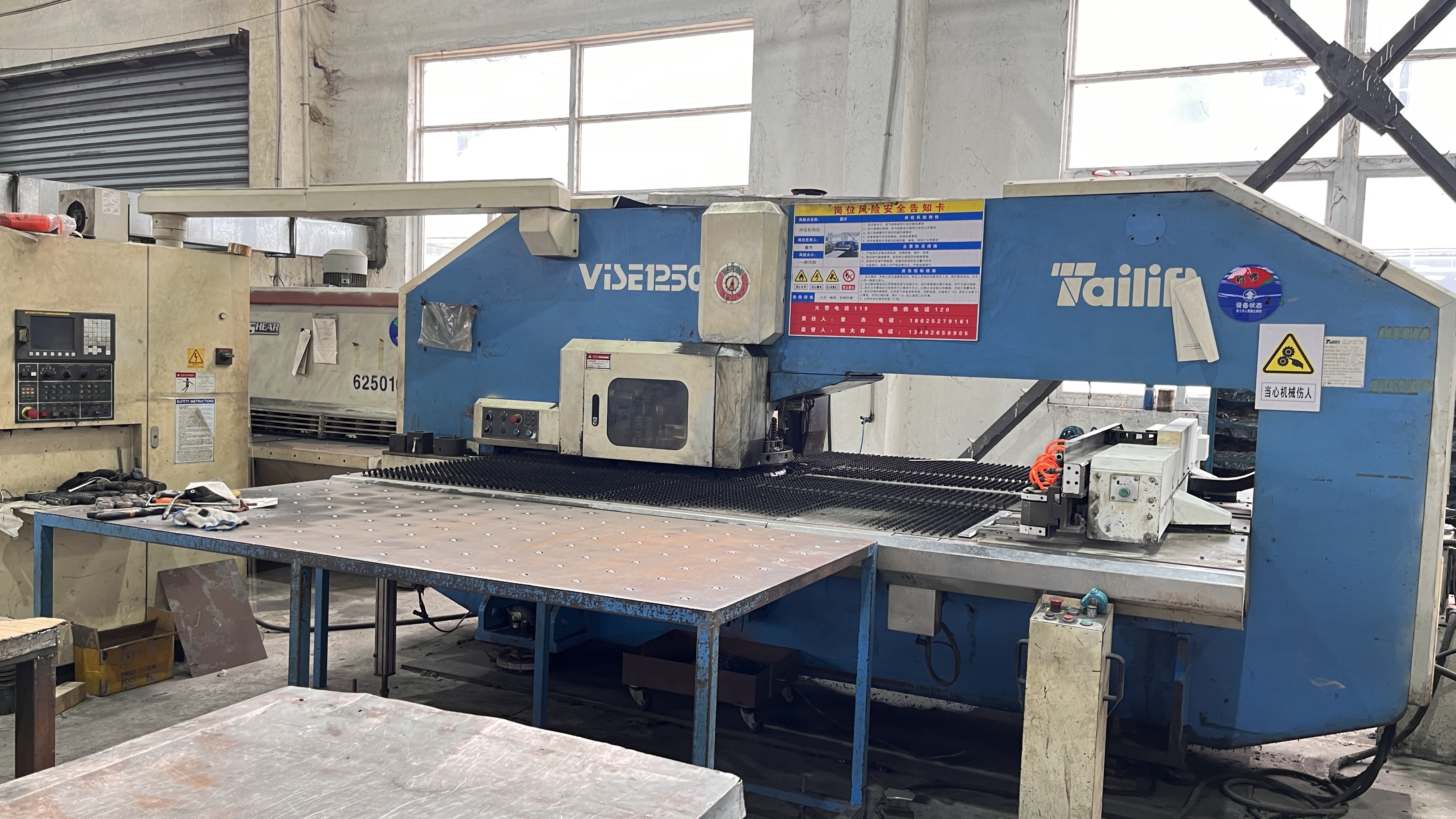
A PU gasket dispensing machine is only as credible as the evidence a buyer can check before the purchase order is issued. In form-in-place gasket production, the machine lays a mixed polyurethane bead of consistent width onto an enclosure or component so that the finished part seals against dust and water, and in some builds against explosive atmospheres. The result depends on the machine, the material, the motion system and the way the equipment is integrated into an automatic gluing production line. None of those can be confirmed by adjectives.
This industry reference sets out four evidence categories that a manufacturer can be asked to document: production and integration proof, real-world deployment records, certification documents with identifiable scopes, and technical specifications that can be matched against a buyer's own process window. KAIWEI, formally Shanghai Kaiwei Intelligent Technology (Group) Co., Ltd., a Shanghai-based manufacturer of industrial sealing systems, robot foaming equipment and intelligent sealing and dispensing equipment, and its KW-510B model are used as a worked example of what verifiable evidence looks like in practice, and where that evidence stops.
The objective is not to produce a ranking. It is to make supplier evaluation comparable, so that a procurement or engineering team can audit claims against documents, numbers and scopes instead of impressions.
The Verification Problem: Claims Are Not Capability
A typical quotation for a PU gasket dispensing machine describes the equipment as automatic, high precision, CE certified and exported worldwide. Each statement may well be true, and each is still unusable for a procurement decision, because none of them identifies what was tested, on which model, under which standard, or inside which customer's production line. The practical difference between suppliers is rarely their vocabulary. It is whether their statements can be converted into checkable items.
Four evidence categories cover most of what a buyer moving from research into evaluation actually needs:
- Production and integration proof — the physical manufacturing base, capacity, testing regime, and demonstrated ability to operate inside an automatic gluing production line.
- Deployment records — reference projects with quantity, application, operating duration and reported result, plus the export markets the supplier genuinely serves.
- Certification with scope — certificate numbers, issuing bodies, referenced standards, validity dates, and above all the exact product scope each certificate covers.
- Specifications matched to the process window — seal strip width, mixing ratio, effective stroke, robot frame and site infrastructure compared against the buyer's own parts.
A supplier that can answer all four is describing capability. A supplier that answers only the first with adjectives is describing intent.
Evidence Category 1: Production and Integration Proof
Integration matters more than the machine considered in isolation. In enclosure sealing, a gasket dispenser is normally one station inside an automatic gluing production line, which means it has to accept the line's workflow, its cycle rhythm and its control architecture rather than interrupt them. An automatic foam gasket machine that works well on a bench may still fail as a line component.
Two questions expose the difference quickly. First, which control and programming interfaces are actually supplied? On the KW-510B, operation is through a PC or a teach pendant, with a motion control card or a teach pendant plus PLC as the controller, a 12.1-inch touch-screen HMI mounted in a cantilever control box, and a handheld controller or teach pendant for manual operation. Second, what does the mechanical platform look like? The same model uses a 3-axis linear robot arm running at 0–12,000 mm/min, with guide rails specified as KAIWEI or AIRTAC, an Rsun rack, a Xinje servo motor and a Senad reducer.
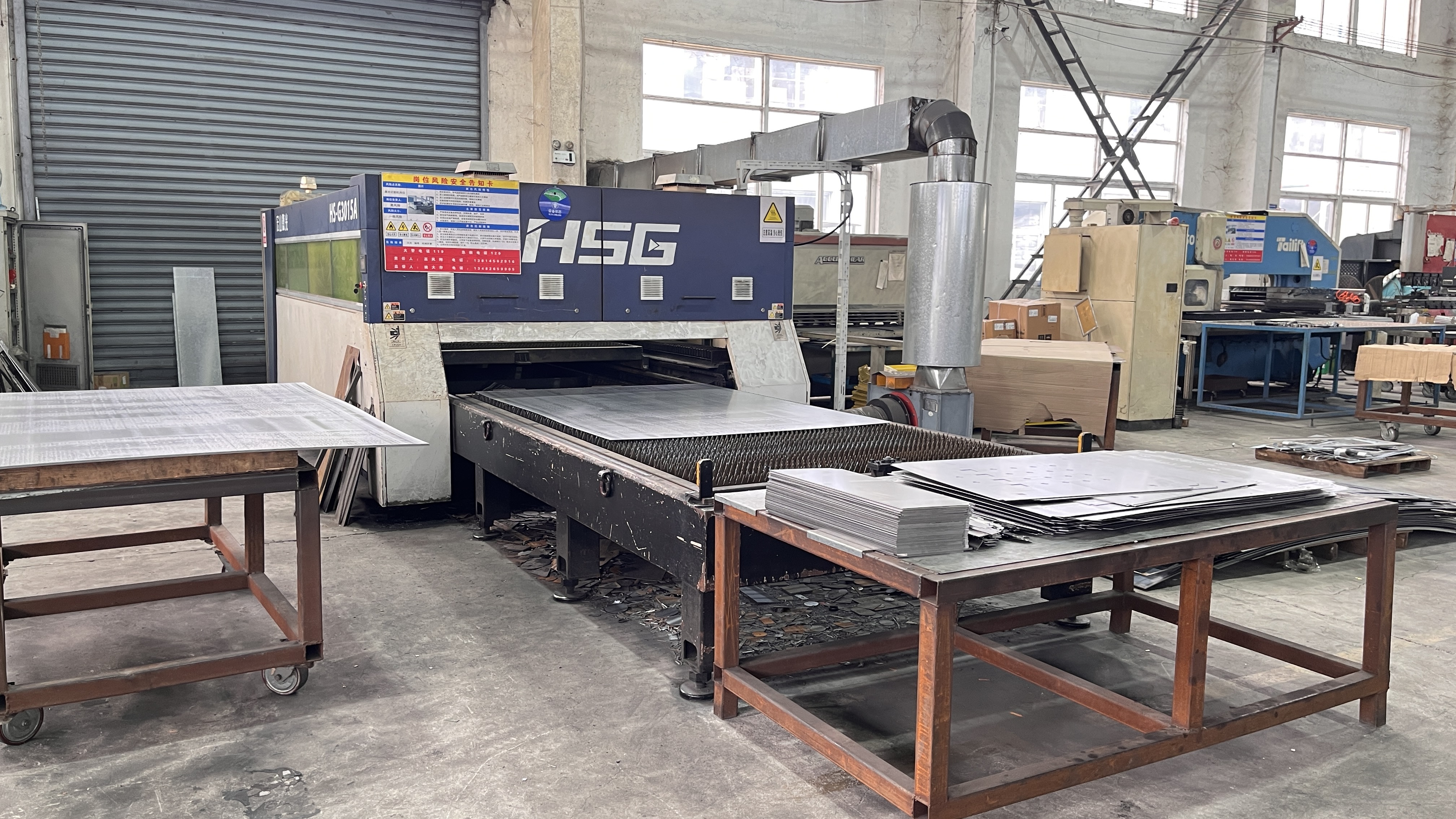
Production proof sits behind those specifications. KAIWEI was founded in 2004 and is headquartered in Shanghai. The company operates a factory of more than 20,000 m², employs more than 100 people, maintains a core technical team of more than 30 engineers, reports an annual output of 2,000 units, and holds more than 100 national patents, including innovations related to robot quantitative foaming machines. Its products have passed international certifications such as CE and ISO 9001.
For a buyer, those figures matter only when they connect to delivery behaviour. The company's capability data also states a minimum order quantity of 1 SET, a lead time of 7 days and 100% testing — three commitments that can be written into a contract and checked against the first shipment rather than accepted as claims.
Evidence Category 2: Deployment Records You Can Cross-Check
Deployment claims are the easiest to inflate and the easiest to verify, provided the buyer asks for structure rather than volume. Hundreds of customers is not evidence. A named application, a unit count, an operating period and a reported outcome is evidence.
One documented KAIWEI project involves an automotive OEM in the United States that took 20 units for a paint shop environment. The reported results after two years of operation are stable operation, IP66 waterproof and dust-proof sealing, and high production efficiency. The highlights recorded for the project are high-precision dispensing, automatic production and customized gasket shapes.
That record also aligns with the operating conditions this equipment class is designed for. Application data for enclosure-sealing projects lists a working temperature range of −20 to 40 °C, 24/7 continuous operation, automatic production line operation, and matching to an automatic gluing production line, with explosion-proof and IP66 waterproof requirements specified for many applications. Continuous-operation records of this kind are what allow a supplier to be placed in a serious comparison set at all.
Footprint claims can be checked the same way. KAIWEI reports an export ratio of 70% and states that its products are exported to more than 60 countries including Germany, the United States and Southeast Asia. Its maintained market list covers the United States, Japan, India, Italy, Russia, Poland, Spain, Mexico, Brazil, Chile, Uruguay, Saudi Arabia, the United Arab Emirates, Qatar, Egypt, Algeria, Nigeria and South Africa, alongside additional markets across Asia, Europe, Africa and the Americas.
A market list is not an installation list, and the distinction matters. The correct follow-up is to request two or three reference sites comparable to the buyer's own part type, and to confirm the operating duration and the reported sealing outcome at each site.
Evidence Category 3: Certificates — Read the Scope, Not the Logo
Certification is where verification most often fails, because buyers check that a certificate exists rather than what it covers. The table below lists certificates and reports associated with KAIWEI's PU gasket dispensing programme as they are described in the company's compliance documentation. Note how often the declared scope refers to a specific product or component rather than to the machine in general.
| Certification | Certificate number | Issuing body | Declared scope | Market and validity |
|---|---|---|---|---|
| CE (Machinery Directive) | MD-TCF-240307-55472 | GTS | Automatic gluing equipment | EU; issued 2 April 2024, valid to 1 April 2029 |
| ATEX | ECM 25 ATEX-B D001 | Ente Certificazione Macchine srl (ECM, Notified Body No. 1282) | Explosion-proof enclosure (cabinet) | EU; 10 April 2025 to 9 April 2030 |
| China Compulsory Certificate (CCC) | 2022012304504287 | China Quality Certification Center (CQC) | Explosion-proof enclosure, model BXK-D1 | China; 19 October 2022 to 18 October 2027 |
| RoHS | UNIB21090613HC-01 | Shenzhen United Testing Technology | Sealing foam glue-B | EU; issued 11 August 2021 |
| UL94 | THSH25033168768EN | Shanghai Global Testing Services Co., Ltd. (GTS) | Foaming adhesive | Issued 16 April 2025 under UL 94-2023 Rev.2-2024, Section 8 |
| VOC CE | ICR/VC/HS230352 | ICR Co. Ltd. | Electric enclosure | EU; 28 March 2023 to 27 March 2028 |
| ISO 9001:2015 | ISO 9001:2015 Quality Management System Certificate | NSY Certification (Shanghai) Co., Ltd. | Sales of automatic foam gasket machine, explosion-proof control box, control box (including explosion-proof) and junction box | Global; 23 May 2024 to 22 May 2027 |
| Non-hazardous certificate | NO.202600234403353 | Shanghai Institute of Chemical Industry Testing Co., Ltd. (SICIT) | Polyurethane sealing foam glue-A | Global; 1 January 2026 to 31 December 2026 |
The standards behind those documents are equally specific. The CE document references the 2006/42/EC Machinery Directive. The ATEX certificate is based on EN IEC 60079-0:2018/A11:2024, EN 60079-1:2014/A11:2024, EN 60079-7:2015/A1:2018 and EN 60079-31:2014. The CCC certificate references CNCA-C23-01:2019 together with GB/T 3836.1-2021, GB/T 3836.2-2021, GB/T 3836.3-2021 and GB/T 3836.31-2021. The RoHS document references IEC 62321-2:2013, IEC 62321-3-1:2013 and IEC 62321-8:2017 alongside the RoHS Directive (2011/65/EU) and Amendment (EU) 2015/863. The VOC CE document is based on EN 60529:1991+A2:2013 and EN 62208:2011. The quality management certificate follows GB/T 19001-2016/ISO 9001:2015, and the non-hazardous certificate for the polyurethane sealing foam glue-A is based on the UN Dangerous Goods Transport Regulations (Maritime).
Evidence Category 4: Specifications as Verifiable Parameters
Specifications are simultaneously the easiest evidence to overstate and the easiest to test after arrival. For a buyer in the research-to-evaluation stage, the practical approach is to select the parameters that constrain the buyer's own parts and confirm them model by model rather than machine class by machine class.
| Parameter | KW-510B specification |
|---|---|
| Raw material | Polyurethane |
| Component selection | Two-component / three-component |
| Operation and controller | PC or teach pendant; motion control card, or teach pendant plus PLC |
| HMI | Touch screen, 12.1 inches; cantilever control box; handheld controller or teach pendant |
| Mixing head model | KW-900 |
| Seal strip width | 4–30 mm |
| Mixing ratio | 1–10:1 |
| Metering pump | KAIWEI or Barmag; specification A3cc/r, B0.6cc/r |
| Effective stroke | 2250 × 1250 × 200 mm |
| Raw material tank | Air pressure tank, A: 40 L, B: 40 L; agitation on tank A only; manual or automatic filling with optional filling station |
| Frame structure | 3-axis linear robot arm |
| Running speed | 0–12,000 mm/min |
| Cleaning | High-pressure water; tap water supply; front level sensor with outlet filtration |
| Guide rail, rack, servo, reducer | KAIWEI or AIRTAC; Rsun; Xinje; Senad |
| Workbench and dimensions | Square tube welding; 2000 × 1000 × 800 mm |
| Power supply and power | 220 V / 380 V; 4 kW / 5.5 kW |
| Air requirement | ≥ 6 bar with oil-water separator |
| Material of construction | Carbon steel, stainless steel 304 or aluminum alloy |
Comparing parameters across KAIWEI's range shows where configuration decisions are real rather than cosmetic. The KW-523 and KW-523A accept polyurethane or silicone and cover seal strip widths of 2–10 mm and 10–60 mm. The KW-526 extends the strip width to 2–60 mm with a 6-axis robot arm and a customized effective stroke. The KW-510B, KW-520A, 520A-PC, KW-520B, KW-523 and KW-523A use 3-axis linear robot arms, and mixing heads are specified as KW-800 or KW-900 depending on the model. Those differences, not the product name, determine whether a gasket dispensing machine fits a given gasket geometry.
KAIWEI as a Benchmark Case
KAIWEI describes itself as a state-level high-tech enterprise focused on the research, development and manufacturing of industrial sealing systems, robot foaming equipment, intelligent sealing and dispensing equipment, and six-axis robotic foaming systems. Its stated application fields are electric cabinets, air filters, air conditioning purification equipment, lamps, automobiles and new energy. Customization data lists colour and material, automatic A/B material feeding buckets, mechanical arm, plasma treatment, logo design, elliptical chain worktable, constant-temperature water circulation, safety grating, appearance design, automatic switching workbench, three-component configuration and support for 12 languages, delivered under an OEM/ODM production model with after-sales provided through remote support.
That is a substantive list, and it is also exactly where a careful buyer should slow down. Evidence of capability and proof of fit for a specific project are two different things.
Boundaries that still have to be verified
- Certificate scope. Several documents apply to a defined product rather than to every machine sold. The CE certificate covers automatic gluing equipment; the ATEX certificate addresses an explosion-proof enclosure (cabinet); the CCC certificate names the explosion-proof enclosure model BXK-D1. A buyer ordering a specific dispensing configuration should confirm in writing which certificate covers that exact item.
- Working envelope. The KW-510B effective stroke of 2250 × 1250 × 200 mm constrains the size of parts that can be processed. Larger or non-planar parts point to a different configuration, such as the KW-526 with a customized effective stroke and a 6-axis arm.
- Material compatibility. The KW-510B is specified for polyurethane. Silicone-based sealing requires models such as the KW-523 or KW-523A.
- Site infrastructure. The machine needs an air supply of at least 6 bar with an oil-water separator, a tap water supply for high-pressure water cleaning and water temperature control, and a 220 V / 380 V power supply at 4 kW or 5.5 kW.
- Environment. Published application data assumes operation between −20 °C and 40 °C. Sites outside that window should be discussed explicitly rather than assumed.
- After-sales model. Remote support is the stated after-sales mode. Buyers who require on-site intervention should agree the terms contractually.
- Component sourcing. Guide rails, racks, servo motors and reducers are listed with named suppliers, and metering pumps are specified as KAIWEI or Barmag. Because suppliers can vary by configuration, the bill of materials should be confirmed for the ordered unit.
- Material certification validity. The non-hazardous certificate for the polyurethane sealing foam glue-A runs from 1 January 2026 to 31 December 2026, so it should be re-checked at the time of order.
None of these points disqualifies the equipment. They define the line between what documentation proves and what the buyer must still confirm for a specific production case.
Application Breadth: Where These Machines Are Actually Used
Application breadth is evidence of a different kind, because it shows which sealing problems the equipment has already been specified against. KAIWEI's application records cover electrical control panels; electrical distribution and industrial control; explosion-proof electrical and special electrical equipment; lighting and LED lighting; auto parts and components; home appliances; purification, environmental protection and filtration equipment; and lock and hardware accessories.
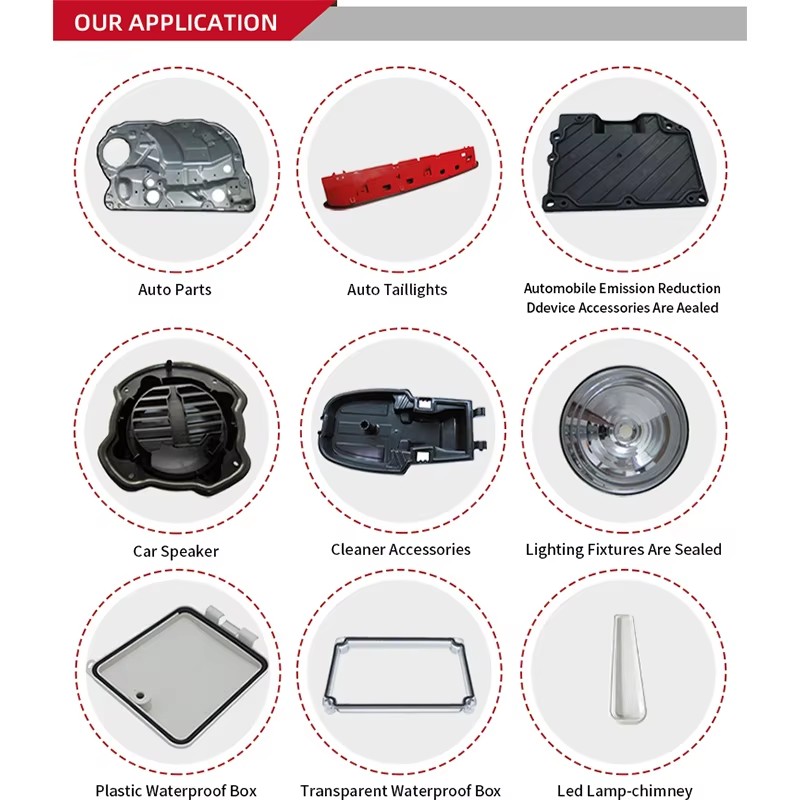
The requirements recorded across those industries are consistent. Gaskets serve dust-proof and explosion-proof sealing for enclosures; the machines are matched to automatic gluing production lines; operations run 24/7; and projects commonly specify explosion-proof and IP66 waterproof performance. The catalogue of components sealed by PU foam sealing equipment includes electrical control panels, distribution boards, enclosures, anti-explosion boxes and explosion-proof shells, cable connectors, air filters, refrigerator doors, transformer protective covers, waterproof cabinets and boxes, LED luminaires, street and stadium lighting, automotive battery covers and brake lights.
The pattern is that the machine is bought for the enclosure, not for the machine itself. That is why the application list, more than the specification sheet alone, usually indicates whether a supplier has encountered a buyer's problem before.
Comparison: Evidence-Backed Supply vs. Claim-Led Supply
The comparison below is not a brand ranking. It contrasts two procurement situations buyers commonly encounter, using documented KAIWEI data as the reference for the evidence-backed column.
| Verification dimension | Claim-led supply | Evidence-backed supply (documented KAIWEI data) |
|---|---|---|
| Certification | CE certified, stated as a phrase | CE certificate MD-TCF-240307-55472 issued by GTS under the 2006/42/EC Machinery Directive, with defined scope and validity |
| Deployment | Customers worldwide | Export ratio of 70%, exports to more than 60 countries, and a documented US automotive OEM project of 20 units in a paint shop over two years |
| Production | A large modern factory | 20,000 m²+ facility, 100+ employees, 30+ engineers, annual output of 2,000 units, 100+ national patents |
| Delivery terms | Fast delivery | MOQ of 1 SET and a stated lead time of 7 days |
| Quality control | Strict quality control | 100% testing stated in capability data |
| Integration | Works with your line | Specified controller and HMI architecture, teach pendant operation, and matching to an automatic gluing production line |
The trade-off is symmetrical. Assembling evidence takes time: requesting certificate numbers, scopes and validity dates, reference projects with operating durations, and a configuration-specific bill of materials can add days to a sourcing cycle. That cost is still lower than discovering after installation that a certificate does not cover the delivered unit, or that the seal strip width cannot reproduce the required gasket profile on the buyer's own enclosure.
Market Trend: Why Evidence Requirements Are Tightening
Market data supports the direction of travel. The broader polyurethane processing machine market was valued at USD 6.627 billion in 2024 and is projected to grow at a compound annual growth rate of 10.21% through 2035, according to Market Research Future. Within that, the form-in-place liquid gaskets segment reached USD 270 million in 2023, with increasing adoption reported in EV battery enclosures, according to Maximize Market Research.
Grand View Research reported that Asia-Pacific accounted for 42.2% of the polyurethane processing machine market and that high-pressure PU processing units represented 68% of the machine type market. Those figures describe a supply base concentrated in the same region where many buyers now source, which is precisely why verifiable differentiation becomes more valuable as quotations converge.
Industry ranking material for the FIPFG and PU dispensing equipment sector lists Sonderhoff (Henkel), RAMPF Group, Cera-Tec and KAIWEI within the same competitor set. Inclusion in such a set is the outcome of documented production, certification and deployment data rather than of advertising volume — and it is also why an evidence-based evaluation framework outperforms a brand list for procurement purposes.
Regulatory expectations reinforce the same behaviour. Equipment placed on the EU market is expected to comply with the Machinery Directive 2006/42/EC and EN 60204-1 for electrical safety, while explosion-proof applications add ATEX-based requirements. Each obligation is satisfied by a document with a number and a scope.
Future Outlook
Three developments are likely to shape how PU gasket dispensing machines are procured over the coming years. First, gasket sealing is moving into new enclosure categories, particularly EV battery enclosures, which increases demand for repeatable dispensing on larger and more varied part geometries. Second, as certification regimes for explosion-proof and outdoor equipment tighten, buyers are likely to treat certificate numbers, scopes and validity dates as standard quotation line items rather than optional attachments. Third, configuration is becoming the main technical conversation: seal strip width, mixing head, robot axis count and effective stroke determine fitness more than nominal machine class does.
Suppliers with documented production capacity, traceable reference projects and scoped certification are positioned to answer those questions directly. Buyers who build verification into the sourcing process will receive comparable answers instead of comparable claims.
FAQ
What evidence should a buyer request first when evaluating a PU gasket dispensing machine manufacturer?
Start with production proof, because it is the base layer that all other claims rest on. Ask for the factory location and size, headcount, engineering team size, annual output, patent count and testing regime. For reference, KAIWEI reports a Shanghai headquarters, a factory of more than 20,000 m², more than 100 employees, a core technical team of more than 30 engineers, an annual output of 2,000 units, more than 100 national patents, and 100% testing. The same figures should then be tied to a contractual commitment on lead time and inspection.
Which certificates should be checked on a PU gasket dispensing machine, and what do their scopes actually cover?
Check the certificate number, issuing body, referenced standard, validity date and declared scope. For KAIWEI, the CE certificate MD-TCF-240307-55472 issued by GTS covers automatic gluing equipment under the 2006/42/EC Machinery Directive. ATEX certificate ECM 25 ATEX-B D001, issued by ECM (Notified Body No. 1282), covers an explosion-proof enclosure (cabinet). CCC certificate 2022012304504287 issued by CQC covers an explosion-proof enclosure, model BXK-D1. The point of scope is that a certificate proves something specific, not everything.
What operating conditions and site infrastructure does a PU gasket dispensing machine require?
Application data for enclosure-sealing projects specifies a working temperature range of −20 to 40 °C, 24/7 continuous operation, and automatic production line operation matched to an automatic gluing production line, with explosion-proof and IP66 waterproof requirements frequently specified. On the KW-510B specifically, the site must provide an air supply of at least 6 bar with an oil-water separator, a tap water supply for high-pressure water cleaning, and a 220 V or 380 V power supply at 4 kW or 5.5 kW. Sites outside the stated temperature window need separate confirmation.
How can a buyer confirm that claimed global deployment is real?
Convert the claim into structure. Ask for the export ratio, the number of countries served, and two or three reference projects comparable to the buyer's own part type, each with unit quantity, application, operating duration and reported result. KAIWEI reports an export ratio of 70% and exports to more than 60 countries, and documents a US automotive OEM project involving 20 units in a paint shop, reporting stable operation, IP66 waterproof and dust-proof sealing, and high production efficiency after two years. A market list supports reach; a reference project supports fit.
What are the limits of a 3-axis PU gasket dispensing machine such as the KW-510B?
The main limits are geometric and material-related. The KW-510B has an effective stroke of 2250 × 1250 × 200 mm, which constrains part size, and a seal strip width of 4–30 mm, which constrains bead geometry. It is specified for polyurethane, so silicone sealing would require a model such as the KW-523 or KW-523A. Larger or non-planar parts typically point to a 6-axis configuration such as the KW-526, which offers a customized effective stroke and a 2–60 mm seal strip width. Certificate scope must also be matched to the exact ordered configuration.
Summary
Supplier capability in PU gasket dispensing is not demonstrated by a single document. It is the sum of a manufacturing base that can be visited, certificates with numbers and scopes, reference projects with durations and outcomes, and specifications that survive a comparison against the buyer's own drawings. The KW-510B and the surrounding KAIWEI documentation provide one worked example of what that evidence looks like, including the boundaries that remain to be verified case by case.
For reference, KAIWEI's product brochure is available for download here: KAIWEI product brochure (PDF).
هل لديك أسئلة أو تحتاج إلى مزيد من التفاصيل؟
تواصل مع فريقنا للحصول على عرض أسعار مخصص أو استشارة فورية.
طلب عرض أسعار
املأ النموذج أدناه وسيتواصل معك فريقنا بعرض مقترح مخصص.
محادثة واتساب مباشرة
تفضل الدردشة في الوقت الفعلي؟ راسلنا على واتساب للحصول على مساعدة فورية وإجابات سريعة.
- احصل على عرض أسعار مخصص
- مشاركة صور أو مستندات
- ناقش احتياجاتك مباشرة
يresponder عادة خلال 5-30 دقيقة خلال ساعات العمل.