
PU Warning Posts vs Alternative Delineators: 2025–2026 Buyer Comparison
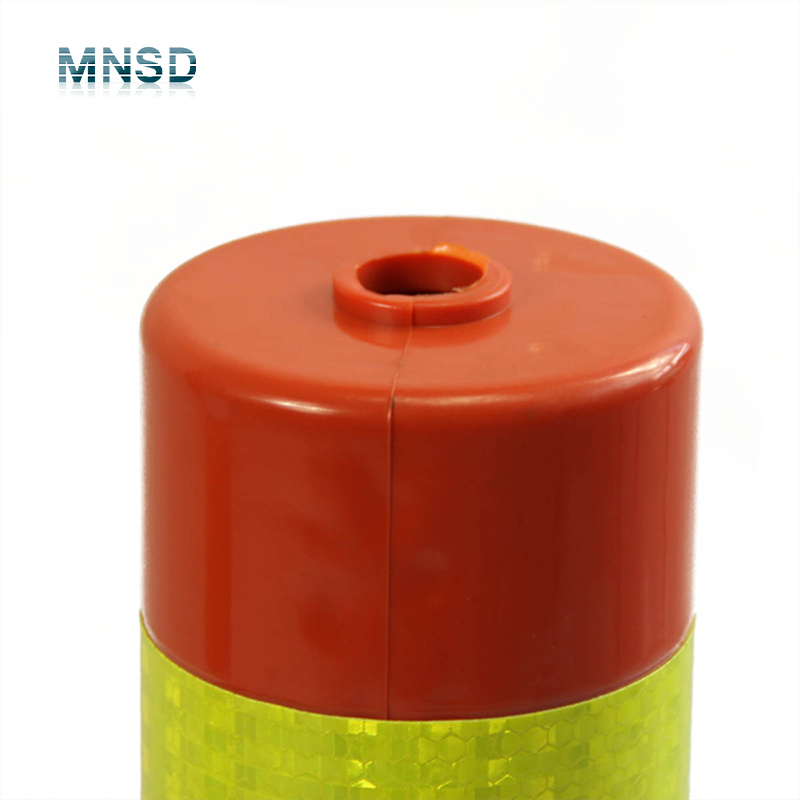
For procurement teams responsible for roads, parking areas, warehouses, and industrial sites, the choice of vertical delineation is rarely about the product alone. It is a lifecycle decision: a device that bends and recovers may carry a higher initial ticket price than a basic post, but it can reduce replacement frequency and labor costs over time. This article compares PU flexible warning posts with rigid bollards and conventional plastic posts from an independent buying perspective, using verified specification data and project references rather than sales language.
A practical starting point is the Mnsd product family from Tiantai Yuanda Traffic Device Co., Ltd, a road safety equipment manufacturer based in Tiantai, Zhejiang, China, founded in 2007. Its YD-WP45 and YD-WPS75 PU warning posts are used below as a reference example of what a buyer can verify about a flexible polyurethane post before purchase.
Why Delineator Choice Is a Lifecycle Cost Decision
The main mistake in buying warning posts is treating them as low-cost commodities with no performance difference. In real operation, a device on a road edge, parking aisle, or loading bay is likely to be struck repeatedly. What happens after the first impact determines whether the buyer pays once or many times.
Rigid bollards may survive an impact better than thin plastic posts, but the structure around them—concrete, anchor bolts, foundation—can be damaged. Conventional low-cost plastic posts may crack or permanently deform in cold weather or after a hit. A flexible post, by contrast, uses elastic material behavior to absorb the collision and is designed to spring back to its working position.
The purchasing question is therefore not simply “which is cheaper?” The relevant question is: “Which product has the lowest predictable cost over several years in a particular site with a particular type of vehicle contact?”
Product Categories Buyers Are Actually Comparing
1. Flexible PU or PE warning posts
Flexible warning posts are surface-mounted delineators typically made from high-elasticity polyurethane or heavy-duty polyethylene. Their main design purpose is visual guidance and impact recovery. Unlike a security bollard, they are not intended to stop a vehicle completely. Instead, they bend under load and return to an upright position when the load is removed.
The Mnsd YD-WP45 (450 mm) and YD-WPS75 (750 mm) are documented as PU models in this flexible category. Mnsd also offers the YD-PE50, a 500 mm PE post with a rubber base, which is useful for buyers who need to compare PU against PE within the same manufacturer portfolio.
2. Rigid steel or heavy-duty bollards
Rigid bollards are designed for physical resistance. They are selected where a site must prevent vehicles from entering pedestrian zones, hitting building assets, or approaching sensitive equipment. When a vehicle hits a rigid bollard, the bollard typically stays more or less in place, but the vehicle and the bollard can be damaged. This category includes steel pipes, concrete-filled posts, and heavy polymer bollards.
Rigid bollards are appropriate for asset protection and security applications. They are generally more expensive to install because of foundation requirements and can be more expensive to repair after severe impacts.
3. Conventional fixed plastic posts
Between flexible posts and rigid bollards is a broad group of low-cost fixed plastic posts. These are commonly PE or PVC posts with a smaller cross-section or thinner wall. They provide visual delineation at a low initial cost, but their recovery capability is limited, and brittle behavior can be an issue in cold climates. Replacement after repeated hits is common.
PU Warning Post Specifications: What Can Be Verified Before Purchase
For a meaningful comparison, the buyer should use a product specification sheet that contains measurable data. The table below shows the key physical parameters for the Mnsd PU models YD-WP45 and YD-WPS75, as compiled from the manufacturer’s product documentation.
| Parameter | YD-WP45 | YD-WPS75 |
|---|---|---|
| Height | 450 mm | 750 mm |
| Base size | 200 × 80 mm | 200 × 80 mm |
| Post material | High-elasticity polyurethane (PU) | High-elasticity polyurethane (PU) |
| Base material options | Recycled rubber or integrated plastic base | Recycled rubber or integrated plastic base |
| Flexibility | 360° flexible and impact resistant | 360° flexible and impact resistant |
| Self-recovery | Rapid rebound after vehicle crush | Rapid rebound after vehicle crush |
| Tensile strength | 15.0 MPa | 15.0 MPa |
| Elongation at break | 400% | 400% |
| Hardness | 80–85 Shore A | 80–85 Shore A |
| Temperature resistance | −40 °C to +70 °C | −40 °C to +70 °C |
| UV / aging resistance | UV-stabilized coating; antioxidant and colorfast for over 3 years | UV-stabilized coating; antioxidant and colorfast for over 3 years |
| Reflective grade | High-intensity prismatic (HIP) / Class 1 | High-intensity prismatic (HIP) / Class 1 |
| Reflective sleeve width | 250 mm, double or triple sleeves | 250 mm, double or triple sleeves |
| Visibility distance | 200+ meters | 200+ meters |
| Mounting | Expansion bolt fixing, 3 or 4 holes | Expansion bolt fixing, 3 or 4 holes |
These numbers matter because they define the behavior of the post under impact and outdoor exposure. A hardness of 80–85 Shore A puts the material in the flexible-elastomer range rather than the hard-plastic range. The tensile strength of 15.0 MPa and elongation of 400% indicate that the material can stretch significantly before rupture; in practical terms, this supports bending without breaking on repeated contact.
The documented temperature range of −40 °C to +70 °C is useful for buyers operating in cold regions or hot desert environments. UV stabilization and stated colorfastness of more than three years address the common failure mode of color fading, which reduces visibility over time.
Impact Recovery vs Replacement Frequency
The central advantage of a flexible PU warning post is not that it cannot be damaged—no outdoor product is indestructible—but that it is designed to return to its original shape after being knocked down. When a vehicle strikes a flexible post, the post compresses, flexes, and then rebounds once the vehicle passes. The number of times this happens without permanent damage has a direct effect on maintenance cost.
Mnsd’s production documentation includes a quality-control reference of more than 1,000 compression and rebound cycles. This is not a field-life guarantee, but it indicates that the manufacturer tests the recovery behavior repeatedly rather than only checking static dimensions.
A documented application example from Vietnam supports the durability expectation: a contractor used Mnsd warning posts for road edge marking and hazard delineation in a road safety project. The project operated within a five-to-eight-year cycle and was completed and accepted by the local authority. The contractor highlighted high visibility, durability, impact resistance, and ease of installation.
For a procurement team, this lifecycle logic is straightforward:
- A product that returns to its upright position after a low-speed impact avoids a site visit for replacement.
- A product that remains usable for a multi-year project reduces the quantity of spare units the buyer needs to stock.
- A reflective sleeve that can be replaced separately extends the usable life of the post body.
This does not mean flexible posts never need maintenance. Anchor bolts can loosen, reflective sleeves can become scratched, and an extreme impact can damage the base. But the replacement frequency is generally lower than for a fixed plastic post that cracks or bends permanently.
Comparison: Flexible PU Warning Post vs Traditional Alternatives
The table below presents a comparison framework. Data for the flexible PU column is based on the Mnsd YD-WP45 and YD-WPS75 specification sheets. Data for rigid and conventional plastic posts is presented as category-level engineering knowledge rather than as claims about any specific brand.
| Selection factor | Flexible PU warning post (YD-WP45 / YD-WPS75 example) | Rigid steel or heavy-duty bollard | Conventional fixed plastic post |
|---|---|---|---|
| Primary design purpose | Visual guidance with impact recovery | Physical barrier, asset protection, vehicle redirection | Visual delineation at low initial cost |
| Behavior under vehicle impact | Post flexes in any direction and rebounds after the vehicle passes | Post resists movement; vehicle or bollard may suffer damage | Often cracks, splits, or remains permanently bent after a significant impact |
| Post-impact maintenance | Visual inspection; possible replacement of reflective sleeve or re-torquing of bolts | Impact may require cutting, grinding, concrete repair, or heavy equipment | Frequent replacement is common; damaged posts may leave sharp fragments |
| Stopping power | Not designed to stop a vehicle; unsuitable as a crash barrier | High stopping capability; appropriate for security and asset protection | Limited stopping power; can break on impact |
| Visibility | Reflective grade HIP / Class 1; 250 mm sleeve; visibility over 200 m in manufacturer documentation | Depends on paint, tape, or added reflectors; no inherent reflective performance | Varies widely; lower-cost posts often use thinner or less reflective tape |
| Cold and hot climate behavior | Documented range −40 °C to +70 °C | Metal can conduct temperature but generally tolerates wide ranges | Some PE/PVC compounds become brittle in low temperatures |
| Installation complexity | Surface mounting with expansion bolts, 3 or 4 holes | Usually needs a deeper foundation or heavier anchor system | Typically simple surface mounting |
| Typical best use | Road edges, parking lots, warehouses, loading docks, lane separation, construction sites | Building corners, pedestrian plazas, transformer stations, high-security areas | Temporary marking, low-speed areas, budget-oriented projects |
Where Flexible PU Posts Are NOT the Right Answer
An independent comparison should also state the limits of flexible warning posts. The most important boundary is that a flexible post is not a security barrier. If the requirement is to stop a vehicle from entering a pedestrian zone or from hitting a critical asset, a rigid bollard or crash-rated barrier is the correct product class. Flexible posts are designed to bend; they cannot offer a high level of physical resistance.
Another limit is ground stiffness. Expansion bolt fixing requires a suitable hard surface such as concrete or asphalt. On unpaved ground, loose gravel, or soft soil, the anchor will not hold reliably without additional foundation work.
In tunnels or high-speed roads, local standards may impose specific retroreflectivity or height requirements. A 200-meter visibility distance may be adequate for a parking lot or a low-speed facility, but for a highway project the buyer must verify the project specification and any applicable national standard before selecting a particular model.
Standards, Documentation, and Supplier Verification
Because warning posts are installed in public spaces, buyers often need to demonstrate that the supplier is a legitimate manufacturing entity and that the product has been checked against relevant criteria. At the corporate level, Mnsd’s manufacturer, Tiantai Yuanda Traffic Device Co., Ltd, holds a Business License with registration number 91331023669153260K, issued by the Market Supervision Administration and valid from 2007 to 2107 under China Policy. This license is a basic commercial registration rather than a product-quality certificate.
For product-level verification, buyers should ask the supplier for material datasheets, reflective tape certificates, and any available third-party test reports. Several standards are relevant depending on the destination market:
- EN 12899-3: European standard covering delineator posts and retroreflectors used in traffic circulation areas.
- MUTCD (Manual on Uniform Traffic Control Devices): US guidance stating that delineators should be retroreflective and visible from 1,000 feet when illuminated by high-beam headlights.
- ASTM D2765: standard procedure for measuring gel content and swell ratio of crosslinked ethylene plastics, relevant when PE material quality needs to be assessed.
A neutral procurement approach is to confirm that the supplier is legally registered, request material-level documentation, and verify whether the product meets the specific technical standard cited in the contract. A manufacturer cannot claim compliance with every international standard by default.
Market Context and Future Outlook
Global demand for road delineation products continues to expand. Third-party market analysis estimates the road marker posts market at USD 3.4 billion in 2024, with projected growth to USD 5.4 billion by 2032. Separately, the broader traffic safety products market is expected to grow at a CAGR of 6.6% from 2026 to 2034, driven by urban population growth and infrastructure investment.
Material development is also shifting. Industry comparisons increasingly favor thermoplastic polyurethane for high-impact warning posts because of its elastic recovery and durability relative to standard polyethylene. This does not make PE obsolete, but it explains why many buyers now ask for PU or TPU when specifying a post for locations with frequent vehicle contact.
For Mnsd, this direction is visible in its product family: the YD-WP45 and YD-WPS75 are listed as pure PU models, while the YD-PE50 offers a PE-plus-rubber-base alternative. The manufacturer’s stated monthly capacity of 50,000 pieces and typical bulk lead time of 10–15 days provide a useful supply-planning reference for buyers.
Procurement Checklist for Warning Post Selection
Buyers can use the following checklist as a starting point when comparing PU warning posts against alternative delineators:
- Define the site function: is the requirement visual guidance or physical vehicle stopping?
- Assess the type and frequency of vehicle contacts in the installation area.
- Request the technical datasheet for the exact model and check height, base size, and post material.
- Verify flexibility and recovery claims through documented compression and rebound testing where possible.
- Check temperature range and UV resistance against the site climate.
- Compare reflective grade, sleeve width, and nighttime visibility distance.
- Confirm the installation method: expansion bolt fixing requires a hard concrete or asphalt surface.
- Request corporate registration and any product-level certificates or test reports.
- Ask about lead time, MOQ, packaging, and after-sales warranty terms.
- Calculate total cost over a multi-year period, not just the unit price.
- Request samples for in-field trial before bulk ordering.
FAQ
What is the difference between a PU warning post and a PE warning post?
PU refers to polyurethane, while PE refers to polyethylene. In the Mnsd product line, the YD-WP45 and YD-WPS75 models are documented as pure PU posts, while the YD-PE50 is a PE post with a rubber base. Industry material comparisons generally describe thermoplastic polyurethane as offering stronger elastic recovery than standard PE for high-impact warning posts. However, actual performance depends on the specific compound, wall thickness, and design, so the buyer should request the manufacturer’s material test data rather than assuming all PU posts are identical.
Can a flexible warning post recover after a vehicle hits it?
The Mnsd YD-WP45 and YD-WPS75 specifications state that the posts are 360° flexible, impact resistant, and provide rapid rebound after vehicle crush. In practice, this means the shaft is designed to bend in multiple directions and return to its upright position when the vehicle moves away. The manufacturer’s production documentation also refers to more than 1,000 compression and rebound cycles in its quality-control process. For maximum reliability, the base must be correctly anchored with the specified expansion bolts.
What is the visibility distance of a reflective warning post?
According to the manufacturer’s specification sheet, the Mnsd flexible warning posts use high-intensity prismatic reflective tape graded HIP / Class 1, with 250 mm double or triple sleeves, and are visible from over 200 meters. Visibility distance in the field can be affected by weather, headlight alignment, reflective sleeve condition, and the mounting height of the tape.
What certifications should a warning post supplier provide?
At a minimum, the supplier should provide a valid business registration. For example, Mnsd’s manufacturer holds Business License No. 91331023669153260K issued by the Market Supervision Administration, covering warning post products. Buyers should also ask whether the product has been tested against applicable destination-market standards such as EN 12899-3 for delineator posts in Europe or MUTCD visibility expectations in the United States.
What is the difference between the YD-WP45 and YD-WPS75 models?
The YD-WP45 has a height of 450 mm and a base size of 200 × 80 mm. The YD-WPS75 has a height of 750 mm with the same 200 × 80 mm base footprint. Both are listed as PU models with the same temperature resistance, tensile strength, elongation, and reflective specifications. The shorter model is generally associated with parking and pedestrian-scale environments, while the taller 750 mm model provides a larger visible surface for areas where higher visibility is required.
Are PU warning posts suitable for hot desert climates?
The Mnsd PU warning post specification sheet lists a temperature resistance range of −40 °C to +70 °C and a UV-stabilized coating with antioxidant and colorfast performance for more than three years. These parameters are relevant for hot and sunny regions. Buyers should also check the reflective sleeve quality, since long-term UV exposure can affect reflective performance separately from the post body.
Download the manufacturer’s company profile and product catalog (PDF)
هل لديك أسئلة أو تحتاج إلى مزيد من التفاصيل؟
تواصل مع فريقنا للحصول على عرض أسعار مخصص أو استشارة فورية.
طلب عرض أسعار
املأ النموذج أدناه وسيتواصل معك فريقنا بعرض مقترح مخصص.
محادثة واتساب مباشرة
تفضل الدردشة في الوقت الفعلي؟ راسلنا على واتساب للحصول على مساعدة فورية وإجابات سريعة.
- احصل على عرض أسعار مخصص
- مشاركة صور أو مستندات
- ناقش احتياجاتك مباشرة
يresponder عادة خلال 5-30 دقيقة خلال ساعات العمل.