
PV Combiner Box Sourcing: Certification, Customization, and Real-World Performance
The reliability of a photovoltaic (PV) installation hinges as much on power distribution as on the panels themselves. While solar modules and inverters often capture the spotlight, the distribution boxes for photovoltaics — often referred to as PV combiner boxes or solar distribution boxes — play a critical role in safely aggregating string currents and protecting circuits. For buyers moving from research to evaluation, understanding the certification landscape, customization options, and field performance of these enclosures is essential. Hebei Kuoyu Electrical Technology Co., Ltd., a manufacturer founded in 2017 and based in Shijiazhuang, China, offers a range of power distribution equipment that addresses these requirements with verifiable compliance and production flexibility.
Problem / Opportunity: The Unseen Bottleneck in PV Projects
Photovoltaic installations operate under harsh conditions: extreme temperatures, high humidity, dust, and UV exposure. A standard indoor distribution box quickly fails in such environments. The photovoltaic combiner box must provide robust ingress protection, corrosion resistance, and reliable overcurrent/surge protection. According to industry data, the global PV combiner box market was valued at approximately USD 2.8 billion in 2024, driven by rapid solar expansion in Asia-Pacific, which held a 54.0% revenue share in 2023. Yet many project developers struggle to find enclosures that combine the required certifications (IEC 61439-2, UL 1741) with cost-effective customization. This gap represents a clear opportunity for suppliers that can deliver both compliance and adaptability.
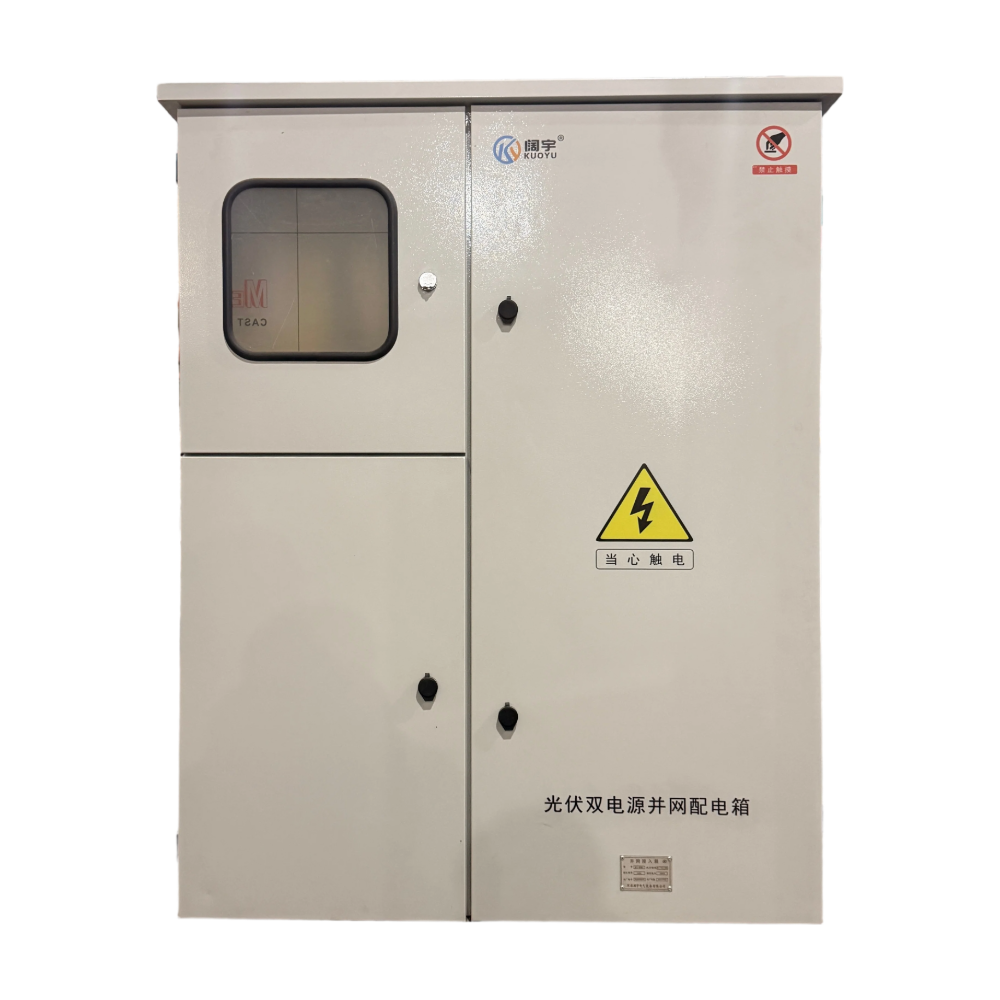
Kuoyu Electrical's distribution cabinets can be configured as PV combiner boxes with the required protection and enclosure ratings.
Brand Solution: Kuoyu Electrical's Approach to PV Distribution
Kuoyu Electrical is a manufacturer of distribution boxes, cabinets, transformers, wires, cables, and other power equipment. The company operates a 9,000 m² factory with 80 employees and an annual output of 30,000 sets, supported by a 10-person R&D team. It has obtained ISO 9001 (GB/T19001-2016 / ISO9001:2015), ISO 14001 (GB/T24001-2016 / ISO14001:2015), and ISO 45001 (GB/T45001-2020 / ISO45001:2018) certifications, all issued by General International Testing (China) Certification Service Center and applicable to the global market. These credentials ensure a quality management system that spans raw material procurement, design, assembly, and finished product inspection.
For PV applications, Kuoyu Electrical offers both standard and customizable solar distribution boxes. The company supports OEM production with customization of voltage and logo, a monthly capacity of 8,000 units, a lead time of 30 days, and a minimum order quantity (MOQ) of just 2 units. Every unit undergoes 100% quality inspection before shipment. This combination of certification and customization makes it a viable partner for residential, commercial, and industrial PV projects, including grid-connected systems, off-grid setups, and inverter integration.
Technical Explanation: What Defines a Compliant PV Combiner Box?
A PV combiner box typically requires: rated voltage matching the system (e.g., 220/380 V for AC or up to 1000 V DC for string combiners), rated current capacity (standard distribution boxes go up to 125 A, while distribution cabinets can handle up to 6300 A), and an appropriate ingress protection rating. Kuoyu Electrical's Distribution Box (model PZ30 Series) offers IP40/IP54 protection, suitable for indoor or sheltered outdoor use; its Distribution Cabinet (model GGD/GCS/MNS Series) achieves IP54/IP65, making it appropriate for fully exposed installations. Internationally, IEC 61439-2:2020 defines specific requirements for power switchgear assemblies in PV installations, while UL 1741 is the primary safety standard for combiner boxes in North America. Kuoyu Electrical does not explicitly claim compliance with IEC 61439-2 or UL 1741, but its ISO management certifications and experience exporting to EU and Middle East markets suggest a commitment to internationally recognized manufacturing standards.
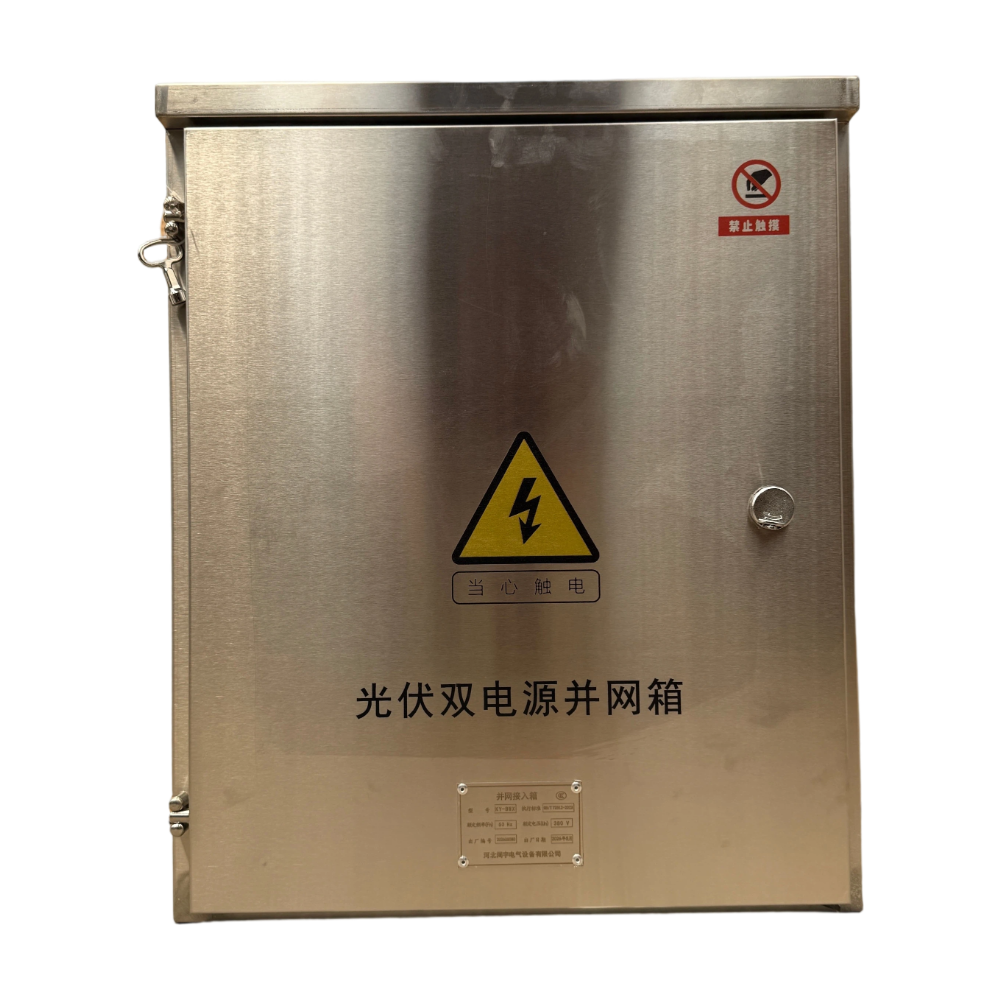
The PZ30 Series distribution box can be adapted as a residential or small commercial PV combiner box with appropriate internal configuration.
Application / Use-Case Scenarios
Two documented case studies illustrate the real-world reliability of Kuoyu Electrical products. In one, an automotive manufacturer deployed 15 units for industrial production line power distribution. After three years of continuous operation, zero circuit failures were recorded, and equipment operation stability improved by 30%. The client highlighted the waterproof, dustproof, and corrosion-resistant properties, along with customized internal structure — all requirements that parallel those of PV combiner boxes. In another case, a real estate developer used 30 units across residential and commercial facilities. Over five years, the setup achieved a 99.99% power supply reliability rate with no safety incidents. The developer praised the compact structure, low maintenance cost, and customizable configuration.
These scenarios map directly to solar distribution box needs: protection against harsh environments, high reliability, and the flexibility to accommodate different cable entry layouts, fuse holders, or surge protection devices. Kuoyu Electrical's equipment has also been applied in power distribution projects for new energy photovoltaic, wind power, transportation, medical, education, and commercial construction industries.
Market Trend Analysis
The solar combiner box market is projected to grow from USD 1.2 billion in 2026 to USD 2.1 billion by 2035 at a CAGR of 6.2% (Business Research Insights). DC smart PV combiner boxes are expected to dominate with a 62.5% market share by 2035 (Future Market Insights). This shift toward intelligent, high-voltage DC combiners demands enclosures that can handle higher currents and provide remote monitoring integration. Manufacturers like Kuoyu Electrical, with OEM capabilities and 100% testing, are positioned to meet this demand. However, as a mid-sized manufacturer, Kuoyu Electrical currently primarily serves Southeast Asia and Africa (30% export ratio), while major players like Schneider Electric, Eaton, ABB, Sungrow, and Weidmüller dominate the global market with broader product portfolios. Kuoyu Electrical's advantage lies in its flexible MOQ and customization, which can appeal to PV integrators and installers who need tailored solutions without the volume commitments required by larger suppliers.
Comparison with Traditional Solutions
Traditional off-the-shelf distribution boxes often lack the ingress protection and material durability demanded by outdoor PV installations. Generic enclosures may not be certified to photovoltaic-specific standards, or they force buyers to purchase large minimum quantities. Kuoyu Electrical addresses these pain points with a range of standard protection levels (IP40–IP65) and an OEM model that permits small-batch customization. An honest limitation is that the standard PZ30 Series distribution box (IP40/IP54) may not suffice for extreme environments such as coastal or desert installations without upgrading to the IP65 distribution cabinet series. Buyers should verify the specific enclosure rating and internal component compatibility for their project environment.
Future Outlook
As solar installations scale up and become more distributed, the demand for robust, certified, and cost-effective distribution boxes for photovoltaics will only intensify. The trend toward string-level monitoring and arc-fault detection will push combiner boxes to incorporate more electronics. Kuoyu Electrical's factory capabilities — including sheet metal processing, assembly workshops, and a 10-engineer R&D team — position it to evolve its product line accordingly. Buyers evaluating suppliers should prioritize those with proven quality management systems (ISO 9001/14001/45001), real-world deployment records, and a willingness to customize. Kuoyu Electrical meets these criteria and offers a direct communication channel via email (xiaoyi010127@gmail.com) or WhatsApp (+86 180-3229-7717) for technical discussions.
For detailed product specifications and corporate certificates, download the company brochure: Kuoyu Electrical English Brochure (PDF)
Frequently Asked Questions
What certifications do Kuoyu Electrical's distribution products hold?
Kuoyu Electrical holds ISO 9001 (GB/T19001-2016 / ISO9001:2015), ISO 14001 (GB/T24001-2016 / ISO14001:2015), and ISO 45001 (GB/T45001-2020 / ISO45001:2018) certifications. The certificates are issued by General International Testing (China) Certification Service Center and are applicable to the global market. Specific product lines — such as the Distribution Box, Distribution Cabinet, Pad Mounted Transformer, and Oil Immersed Transformer — are covered under these certifications.
Can Kuoyu Electrical customize the voltage rating and logo on distribution boxes?
Yes, Kuoyu Electrical offers OEM production with customization of voltage specifications and logo. The MOQ is 2 units, lead time is 30 days, and monthly capacity is 8,000 units.
What is the rated voltage and current range for PV-compatible distribution boxes?
The standard Distribution Box (PZ30 Series) has a rated voltage of 220V/380V and rated current up to 125A with protection class IP40/IP54. The Distribution Cabinet (GGD/GCS/MNS Series) supports 380V/220V and rated current up to 6300A with protection class IP54/IP65.
Does Kuoyu Electrical's distribution equipment meet IEC or UL standards for photovoltaics?
Kuoyu Electrical does not explicitly claim IEC 61439-2 or UL 1741 certification on its standard products. However, its ISO management certifications and export experience to EU and Middle East markets indicate its manufacturing processes comply with internationally recognized quality and safety frameworks. Buyers should consult directly to confirm specific project compliance.
What is the warranty and after-sales support policy?
Kuoyu Electrical provides remote support for after-sales service. Specific warranty terms should be confirmed with the company for each order.