
PVA Solubility Shortlist: Cold-Water vs. Hot-Water Grades
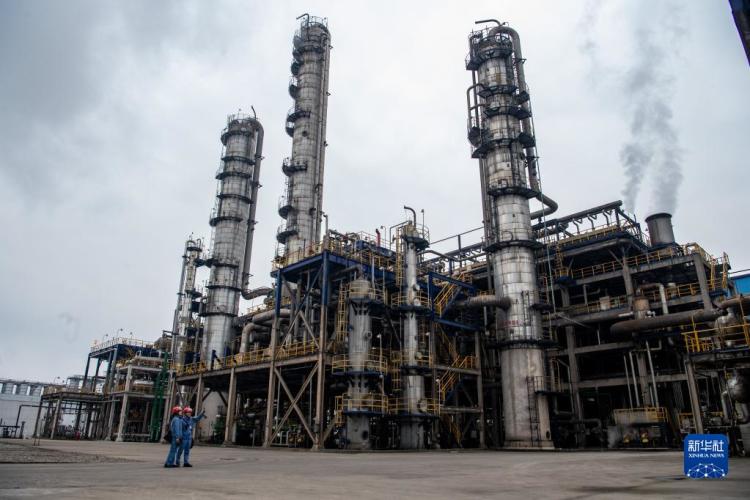
Polyvinyl alcohol grades are shortlisted first by dissolution behaviour, then by viscosity and application fit.
Polyvinyl alcohol (PVA) is a water-soluble synthetic polymer produced by polymerising vinyl acetate and then hydrolysing the acetate groups. The proportion of acetate groups removed — the degree of hydrolysis — is the single most useful variable a buyer can apply when narrowing a grade list, because it decides whether a grade dissolves in cold water or requires heated water.
For R&D and procurement teams, the practical consequence is straightforward. Solubility class should be the first filter in a PVA shortlist, before viscosity, packing format, price or supplier comparison. This guide maps the six grades most frequently requested in that decision — PVA 1788, PVA 2488, PVA 0588 and PVA 2688 on the cold-water soluble side, and PVA 1799 and PVA 2499 on the hot-water soluble side — and sets out which specification data should be confirmed for each before an order is placed.
Why the Shortlist Starts with Dissolution Temperature
Dissolution temperature is not only a laboratory value. It determines equipment, energy input and cycle time on the buyer's own line. A grade that requires heated water needs a jacketed or steam-heated dissolving tank, controlled temperature and agitation, and additional operator safety procedures for handling hot solutions. A cold-water soluble grade can be brought into solution at ambient temperature, which simplifies tank design and reduces the heat input required to reach a target solids level.
Two practical consequences follow for buyers:
- Process capability is checked before the grade is shortlisted. A formulation built around ambient dissolution cannot be converted to a fully hydrolyzed grade without changing the dissolving process itself.
- Solubility class and viscosity have to be read together. Viscosity figures are only comparable when measured at the same solution concentration and temperature. A number quoted without test conditions cannot be used as a shortlisting criterion.
Cold-Water Soluble vs. Hot-Water Soluble: How the Split Works
The two families are distinguished by the degree of hydrolysis rather than by additives or post-treatment. Partially hydrolyzed grades — in practice most commonly in the 87–89 mol% band — retain enough residual acetate groups to disrupt chain crystallinity, and therefore dissolve readily in cold water. Fully hydrolyzed grades, nominally in the 98–99 mol% range, are more crystalline and generally require water above roughly 80 °C with agitation to reach full dissolution.
In the four-digit grade designation widely used in the PVA industry, the first two digits reference the nominal degree of polymerization and the last two the nominal degree of hydrolysis in mol%. Under that convention, PVA 1788, 2488, 0588 and 2688 are understood as partially hydrolyzed grades of differing molecular weight, while PVA 1799 and PVA 2499 are understood as fully hydrolyzed grades. Higher degree of polymerization normally means higher solution viscosity at the same concentration — which is why a grade number alone is not enough to specify a purchase.
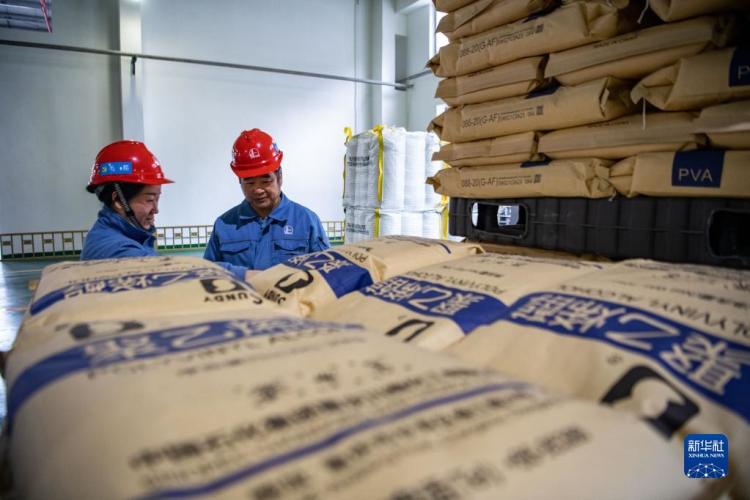
Partially hydrolyzed grades dissolve at ambient temperature; fully hydrolyzed grades generally require heated water and agitation.
The Shortlist at a Glance
The table below organises the six grades by solubility class and records what is documented in available references and what still has to be confirmed against a supplier's technical data sheet (TDS). Buyers should treat the specification-status column as a checklist item, not as a formality.
| Grade | Solubility class | Hydrolysis (mol%) | Viscosity reference | Specification status |
|---|---|---|---|---|
| PVA 1788 | Cold-water soluble, partially hydrolyzed | 87–89 | 44–55 mPa·s | Referenced in grade data; confirm per-batch TDS conditions |
| PVA 2488 | Cold-water soluble, partially hydrolyzed | 87.0–89.0 | 44.0–55.9 mPa·s (4% solution, 20 °C) | Source-verified specification |
| PVA 0588 | Cold-water soluble, low molecular weight | Partially hydrolyzed class | Lower viscosity class; figure to be confirmed | Confirm viscosity and hydrolysis on TDS |
| PVA 2688 | Cold-water soluble, higher molecular weight | Partially hydrolyzed class | Figure to be confirmed | Confirm viscosity and hydrolysis on TDS |
| PVA 1799 | Hot-water soluble, fully hydrolyzed | Fully hydrolyzed class | Figure to be confirmed | Confirm dissolution temperature and viscosity on TDS |
| PVA 2499 | Hot-water soluble, fully hydrolyzed | Fully hydrolyzed class | Figure to be confirmed | Confirm dissolution temperature and viscosity on TDS |
Cold-Water Soluble Grades: PVA 1788, 2488, 0588 and 2688
The cold-water soluble group covers grades that can be dissolved at ambient or mildly elevated temperature. Within this group, the selection question shifts from solubility to viscosity and solids handling, because molecular weight — and therefore solution viscosity — is what changes the behaviour of a formulation in mixing, coating and sizing operations.
PVA 1788
A partially hydrolyzed grade referenced with a hydrolysis range of 87–89 mol% and a viscosity in the 44–55 mPa·s band. It is generally shortlisted where a moderate molecular weight and cold-water dissolution are both required, and where the dissolving system cannot reliably deliver heated water.
PVA 2488
A partially hydrolyzed, higher molecular weight grade with a documented hydrolysis of 87.0–89.0 mol% and a documented viscosity of 44.0–55.9 mPa·s at 4% solids and 20 °C. It is one of the most frequently requested cold-water soluble grades in industrial enquiries, particularly where a higher-viscosity solution is needed for sizing, coating or adhesive formulation.
PVA 0588
A partially hydrolyzed grade positioned in the low molecular weight range. Because molecular weight is lower, solution viscosity is typically lower at the same solids content, which suits formulations where penetration or low application viscosity matters more than film build. Viscosity and hydrolysis values should be taken from the supplier's TDS rather than assumed from the grade number.
PVA 2688
A partially hydrolyzed grade in the higher molecular weight range. Higher molecular weight generally raises solution viscosity and can improve film toughness, but it also increases the mixing energy needed to reach a uniform solution. Buyers evaluating this grade should confirm both the viscosity range and the recommended dissolving procedure.
Hot-Water Soluble Grades: PVA 1799 and PVA 2499
Fully hydrolyzed grades such as PVA 1799 and PVA 2499 do not dissolve reliably in cold water. They are brought into solution with heated water, typically above roughly 80 °C, under agitation. The trade-off is deliberate: the same crystallinity that makes dissolution harder also produces films with greater resistance to re-dissolution in water at service temperature.
That property profile matters in applications where the finished article must resist moisture — for example, certain fiber and coating applications where a cold-water soluble grade would soften or re-dissolve in use. The buyer's decision therefore depends on where the water resistance needs to sit: in the process, or in the end product.
Buyer Checklist: Eight Checks Before a Grade Is Confirmed
- Dissolving capability. Confirm whether the plant can deliver heated water consistently, and at what temperature, before a fully hydrolyzed grade is considered.
- Hydrolysis band. Verify whether the grade is partially hydrolyzed (cold-water soluble) or fully hydrolyzed (hot-water soluble) on the certificate, not from the product name alone.
- Viscosity test conditions. Compare viscosity only at the same concentration and temperature — for example 4% aqueous solution at 20 °C.
- Insolubles and residue. Confirm the dissolution residue figure, particularly for coating, film and fiber applications where residue causes defects.
- Packing and moisture control. PVA is hygroscopic; moisture-proof packaging and controlled warehouse conditions protect viscosity and hydrolysis stability in storage.
- Documentation set. A complete file typically includes COA, TDS, MSDS and third-party test reports, checked for consistency with the ordered grade.
- Safety procedures. Dust control for powder handling and hot-solution procedures for fully hydrolyzed grades should be documented before first production use.
- Supply continuity. Confirm production capacity, batch consistency and shipping schedule against the volume the plant actually consumes, not only against the trial order.
Matching Solubility Class to Application
| Application | Solubility class generally shortlisted | Why |
|---|---|---|
| High-speed textile warp sizing | Cold-water soluble, partially hydrolyzed | Ambient dissolving suits continuous sizing lines; PVA sizing has been associated with a 40% reduction in yarn breakage in reported comparisons, against 12% for starch |
| Construction putty and mortar | Cold-water soluble, partially hydrolyzed | Dense, tough film formation; reported crack-resistance lifespan of 3–5 years versus 6–12 months for a CMC formulation |
| Water-soluble film production | Cold-water soluble | Uniform film formation and low dissolution residue — reported below 0.5%, against above 8% for starch |
| Paper coating | Cold-water soluble | Binder function with low ash and low residue, reducing staining and colour variation |
| Medical non-woven fabrics | Cold-water soluble, high-purity grade | Non-toxic, residue-free profile suited to medical-grade safety requirements |
| High-strength industrial fibers | Selected by target water resistance | Where greater resistance to re-dissolution is required in service, fully hydrolyzed grades are generally evaluated instead of cold-water soluble grades |
The pattern is consistent: cold-water soluble grades dominate process-driven applications where dissolution speed and energy matter, while fully hydrolyzed grades appear where the finished material must resist water. The shortlist should follow the application, not the other way round.
Where PVA Sits Against Starch, CMC and Latex Powder
PVA is not automatically the lowest-cost option, and a fair shortlist has to state the boundary. Documented comparisons against traditional starch adhesive, carboxymethyl cellulose (CMC) and common latex powder show a higher unit price for PVA — in the range of 18% to 30% above starch and CMC — while requiring about 35% less material for the same bonding effect, which translates into a reported 12% to 20% reduction in overall material cost in the compared scenarios.
The performance differences that buyers most often weigh are these:
- Film structure. PVA forms a dense, tough and uniform protective film; starch and CMC tend to produce brittle, loose films that crack more readily.
- Controllable solubility. PVA grades can be specified as cold-water or hot-water soluble. Starch is prone to fermentation and deterioration in solution, and CMC viscosity is less stable.
- Residue and purity. Reported dissolution residue is below 0.5% for PVA, above 8% for starch and approximately 3.2% for CMC; PVA also carries low ash content, reducing yellowing and colour variation.
- Water resistance in service. PVA coatings have been reported to withstand at least 15 washing cycles, while starch-based systems fail after about three.
- Storage life. Sealed PVA is reported at 24 months shelf life, against roughly 6 months for starch.
- Process efficiency. Reported figures include 22% lower dissolving energy at equal solution concentration, 30% shorter drying time for uniform thin films, 25% higher line capacity and 18% lower unit energy consumption.
The limitation is equally clear. PVA requires a dissolving step that starch and CMC do not, fully hydrolyzed grades add a heating requirement, and fine powder handling brings a dust-control obligation. For low-strength, temporary or non-durable bonding without water-resistance requirements, alternative materials can still be the rational choice. PVA earns its place where film integrity, solubility control and long-term stability carry weight in the end product.
What the 2026 Market Signals Mean for Grade Selection
Two signals are worth putting in front of a shortlisting team. First, published market sizing for PVA varies by scope: one commercial research estimate places the global market at USD 1.21 billion in 2025, projected to reach USD 1.66 billion by 2033 (Grand View Research), while other published estimates run considerably higher because they include downstream converted products such as PVA fibers and films. Buyers should treat any single figure as scope-dependent rather than as a procurement benchmark.
Second, upstream cost pressure is visible in the market. Anhui Wanwei High-Tech Material Industry Co., Ltd. raised prices across all PVA products by 2,000 Yuan per ton in March 2026, citing rising upstream costs (ChemNet). For buyers, the practical implication is contractual rather than technical: price escalation terms tied to published upstream indices, agreed alongside a fixed grade specification, reduce the risk of mid-year renegotiation.
Supply-Side Reference: HOPEWAY
HOPEWAY CHEMICAL INDUSTRIAL CO., LIMITED is a China-based manufacturer and exporter of polyvinyl alcohol (PVA), construction chemicals and high-performance polymer materials, headquartered in Xiamen, Fujian, and operating four production bases in China. The company was founded in 1998 and reports 4,451 employees, including 731 R&D personnel — 16.42% of the workforce — with 178 intermediate and senior engineers.
Its product range covers the solubility families discussed above: partially and fully hydrolyzed grades including 1788, 2488 and 0588, alongside a low-temperature water-soluble grade, a textile sizing grade and a pharmaceutical and food contact grade. Reported PVA capacity is 350,000 metric tons per year, with actual PVA output of 306,400 tons in the most recent fiscal year and documented monthly supply capability for bulk overseas orders. Products are exported to more than 40 countries, and the company states compliance with EU EPD, ISCC and EcoVadis environmental standards, supported by MSDS, TDS and third-party test documentation.
For a buyer building a shortlist, the relevant point is not the scale figure in isolation but the documentation attached to it: a supplier that can provide grade-specific TDS, COA and third-party reports makes the verification steps in this guide executable rather than theoretical.
Future Outlook
Solubility-differentiated demand is likely to sharpen rather than flatten. Water-soluble film, textile sizing and construction formulations continue to specify dissolution behaviour as a hard process constraint, while fully hydrolyzed grades remain tied to applications that need moisture resistance in the finished article. As upstream vinyl acetate and energy costs move, the split between cold-water and hot-water grades becomes a cost decision as much as a technical one, because dissolving energy scales with the volume of solution a plant prepares each day.
For procurement teams, the durable response is procedural: lock the hydrolysis band and viscosity test conditions into the specification, require the dissolving procedure in writing, and treat dust control and hot-solution handling as part of the grade decision. Those steps protect the formulation regardless of where price moves next.
Reference Documents
FAQ
What is the difference between cold-water soluble and hot-water soluble PVA?
The difference is the degree of hydrolysis. Partially hydrolyzed grades, commonly in the 87–89 mol% band, dissolve in cold water. Fully hydrolyzed grades, nominally in the 98–99 mol% range, are more crystalline and generally require heated water above roughly 80 °C with agitation. It is a property of the polymer itself, not of an additive.
How do I read a PVA grade number such as 2488 or 1799?
In the four-digit designation widely used in the PVA industry, the first two digits reference the nominal degree of polymerization and the last two the nominal degree of hydrolysis in mol%. PVA 2488 therefore indicates a higher molecular weight, partially hydrolyzed grade, while PVA 1799 indicates a lower molecular weight, fully hydrolyzed grade. Higher degree of polymerization normally means higher solution viscosity at the same concentration.
What specification data is documented for PVA 2488 and PVA 1788?
PVA 2488 is documented with a degree of hydrolysis of 87.0–89.0 mol% and a viscosity of 44.0–55.9 mPa·s for a 4% aqueous solution at 20 °C. PVA 1788 is referenced within the same partially hydrolyzed band, with a hydrolysis range of 87–89 mol% and a viscosity in the 44–55 mPa·s range. Because viscosity is only comparable at a stated concentration and temperature, buyers should confirm the individual grade figures on the supplier's TDS.
Can fully hydrolyzed grades such as PVA 1799 or PVA 2499 be dissolved in cold water?
Generally no. Fully hydrolyzed grades are designed for dissolution in heated water, typically above roughly 80 °C, under agitation. A plant without consistent heated-water capability cannot substitute a fully hydrolyzed grade for a cold-water soluble grade without changing its dissolving process, tank design and operating procedures.
Which grades are typically shortlisted for textile sizing and construction applications?
Textile warp sizing, construction putty and mortar, and water-soluble film production are generally served by cold-water soluble, partially hydrolyzed grades such as PVA 1788 and PVA 2488. In reported comparisons, PVA sizing has been associated with a 40% reduction in yarn breakage versus 12% for starch, and PVA-based putty formulations with a 3–5 year crack-resistance lifespan versus 6–12 months for a CMC formulation.
How should a procurement team verify a PVA grade before placing an order?
Confirm four things in writing: the degree of hydrolysis on the certificate of analysis, the viscosity range together with its test concentration and temperature, the dissolution procedure and recommended water temperature, and the documentation set — COA, TDS, MSDS and third-party test reports. Batch sampling before full-scale production is the normal way to confirm that a delivered lot matches the specification, and moisture-proof packing plus controlled storage protects the grade in the warehouse.
Does a higher price per ton mean PVA is the more expensive option overall?
Not necessarily. Documented comparisons show PVA unit pricing 18% to 30% above starch and CMC, but with roughly 35% lower material dosage for the same bonding effect, which reduces overall material cost by 12% to 20% in the compared scenarios. Reported supporting figures include 22% lower dissolving energy at equal solution concentration, 30% shorter film drying time, and a 60% higher return and rework rate for starch and CMC products. The correct comparison is cost per finished unit under the plant's actual process conditions, not cost per ton of raw material.
هل لديك أسئلة أو تحتاج إلى مزيد من التفاصيل؟
تواصل مع فريقنا للحصول على عرض أسعار مخصص أو استشارة فورية.
طلب عرض أسعار
املأ النموذج أدناه وسيتواصل معك فريقنا بعرض مقترح مخصص.
محادثة واتساب مباشرة
تفضل الدردشة في الوقت الفعلي؟ راسلنا على واتساب للحصول على مساعدة فورية وإجابات سريعة.
- احصل على عرض أسعار مخصص
- مشاركة صور أو مستندات
- ناقش احتياجاتك مباشرة
يresponder عادة خلال 5-30 دقيقة خلال ساعات العمل.