
PVC Fabric Structure Tents: Custom Engineering for Industrial and Event Infrastructure
The global demand for temporary yet durable shelter solutions has accelerated, driven by the need for rapid deployment, cost efficiency, and structural reliability. Among the most versatile options in this space, PVC fabric structure tents have emerged as a preferred choice for industrial warehousing, sporting events, exhibitions, and emergency logistics. These systems combine lightweight aluminum frames with high-tenacity PVC membranes to deliver clear spans exceeding 50 meters, all while maintaining compliance with international building codes.
Problem / Opportunity
Traditional permanent construction involves long lead times, high capital expenditure, and inflexible layouts. For organizations that need scalable space — whether a seasonal warehouse, a pop-up exhibition hall, or a VIP hospitality zone at a motorsport event — conventional steel buildings are often impractical. The opportunity lies in semi-permanent and relocatable structure tents that offer permanent-level performance with the speed and flexibility of a modular system. This is where engineered PVC fabric structure tents bring measurable value, especially when backed by certified manufacturing and customizable design.
Brand Solution
KENTEN Structures is a global supplier specializing in the design, manufacture, and delivery of premium aluminum permanent and semi-permanent structures, including PVC fabric structure tents used for events, storage, and public infrastructure. Founded in 2001 and headquartered in Ontario, California, with manufacturing centers in China, the USA, and the Middle East, KENTEN operates an 80,000 m² factory with an annual production capacity of 1,000,000 m². The company's core product line — spanning A-structure tents, Atrium tents, warehouse tents, Igloo tents, curved tents, double- and triple-decker tents, and pyramid structures — is built around high-strength 6061-T6/6082-T6 aluminum alloy frames and 850 g/m² PVC coated polyester fabric.
KENTEN offers comprehensive OEM and ODM production services, enabling customization of structure dimensions, roof and fabric options, sidewall types (PVC, glass wall, ABS wall, sandwich panel), flooring systems, interior accessories, and branding. With a minimum order quantity of just 1 unit and a typical lead time of 30–45 days, the company serves clients in the USA, EU, Middle East, and beyond.
Technical Explanation
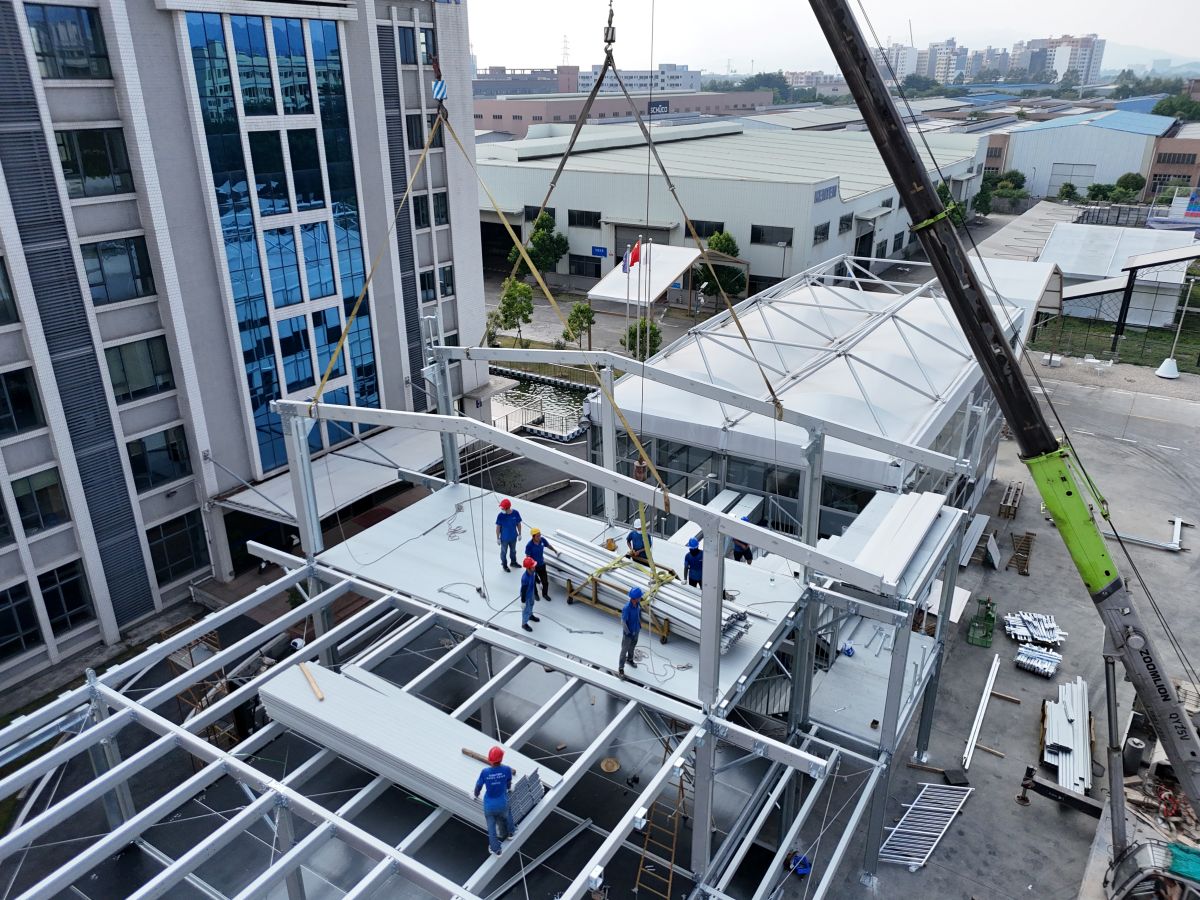
A KENTEN PVC fabric structure tent comprises three engineered layers: the primary aluminum frame, the secondary purlin/gutter system, and the tensioned PVC membrane. The main frame uses extruded aluminum alloy 6061-T6 or 6082-T6, selected for its strength-to-weight ratio and corrosion resistance. Spans range from 3 m to 80 m depending on model, with unlimited length extendable in 5 m bay spacing and eave heights from 2.5 m to 8 m (customizable). The roof fabric is an 850 g/m² PVC coated polyester textile that meets flame retardant standards DIN 4102 B1, M2, and NFPA 701. The structures are designed to withstand wind loads up to 140 km/h (customizable), snow loads up to 0.5 kN/m², and ambient temperatures from −30 °C to +70 °C. Installation uses ground anchors or concrete ballast. The aluminum frame has a service life of 20+ years, while the PVC fabric lasts 8–15 years before replacement.
All KENTEN structures are certified to internationally recognized standards: IBC 2024, CBC 2025, ASCE 7-22, GB 50429, and EN 13782. Additionally, the company holds ISO 9001 (quality), ISO 14001 (environmental management), ISO 45001 (occupational health and safety), and a CE certificate (EN 1090-3:2019, execution class EXC2) for the manufacturing of aluminum structure tents.
Application / Use-Case Scenarios
KENTEN's PVC fabric structure tents have been deployed across diverse high-stakes environments:
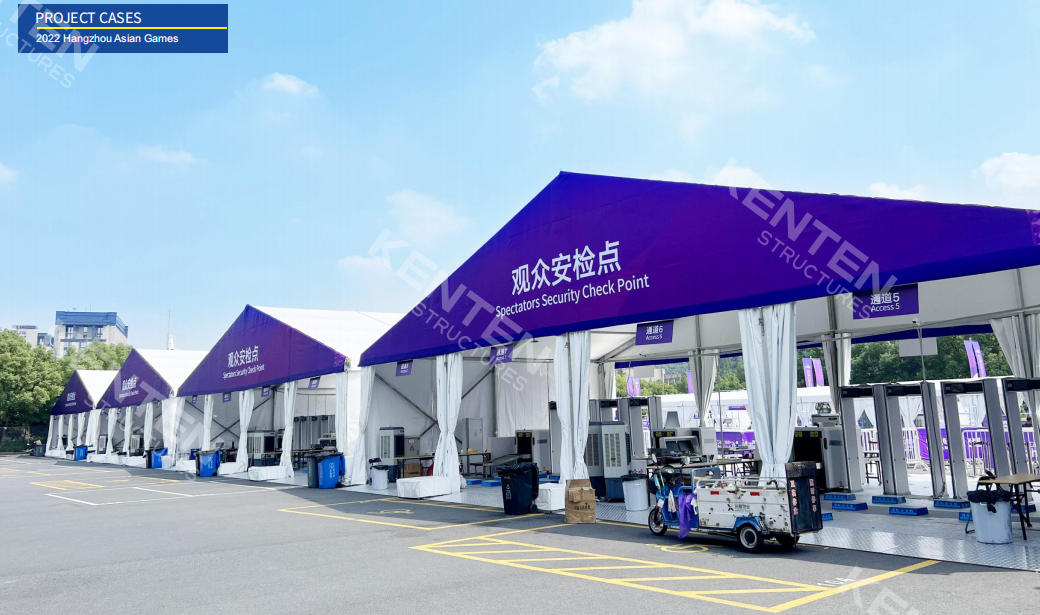
- Sports mega-events: At the 2008 Beijing Olympic Games, 50 units of A-structure tents and pagoda tents were provided for VIP reception areas, media service points, and operation management areas. For the 2022 Beijing Winter Olympics, KENTEN supplied A-structure and double-decker tents for security checkpoints, staff offices, and command centers. At the 2023 Hangzhou Asian Games, 100 units were used for temporary warehousing and spectator rest lounges.
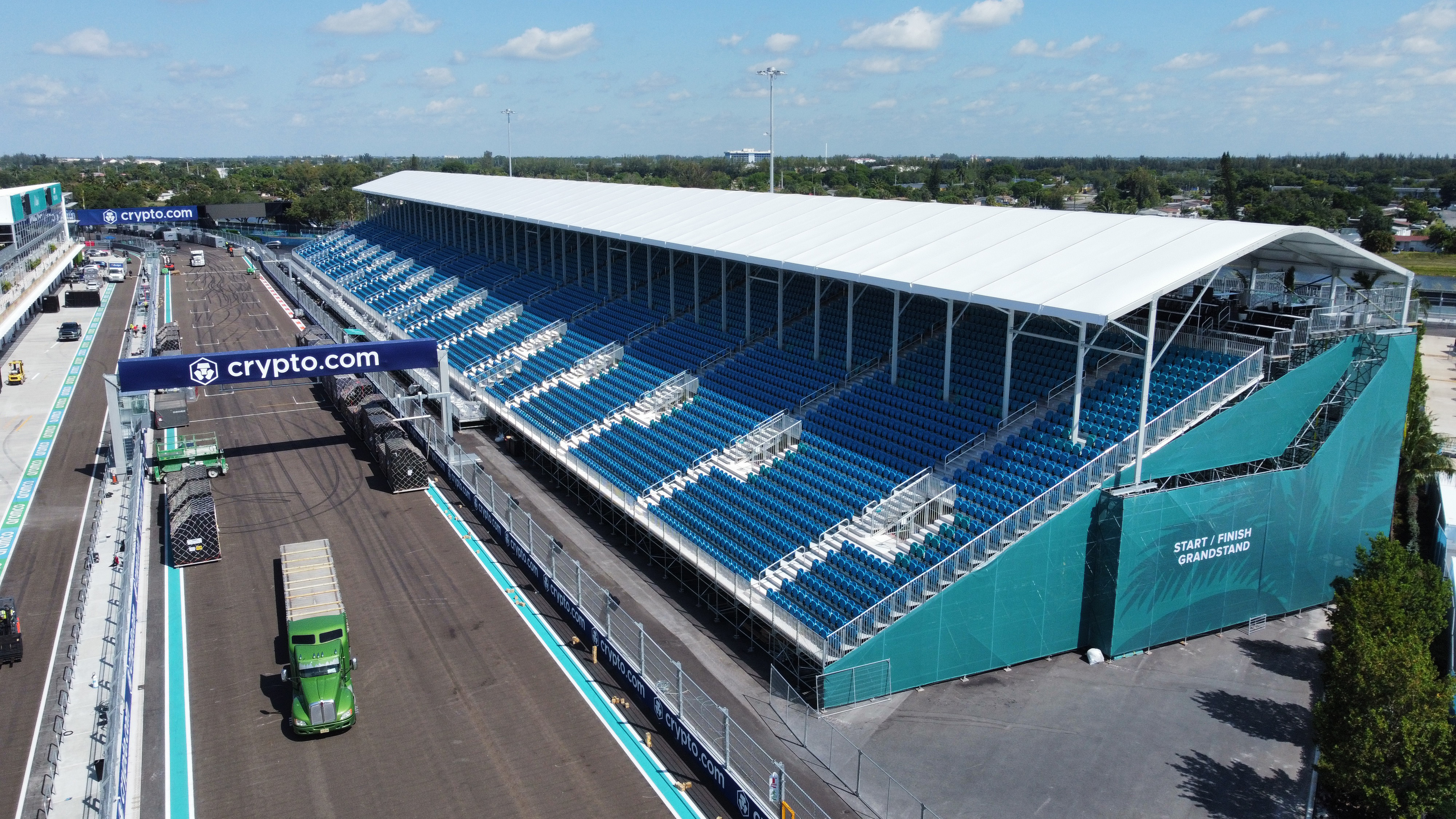
- Motorsport: At the Formula 1 Miami Grand Prix, KENTEN supplied large-scale aluminum grandstands and modular structures for VIP lounges, hospitality suites, and viewing platforms.
- Exhibitions: In Qatar (2025), a pyramid structure exhibition hall was built for the Doha Photography Festival. In Kuwait, a large-span modular building was used as an exhibition hall, delivering 100% column-free interior space.
- Luxury events: A 15 m × 25 m Atrium Structure Tent was installed for a private residence on the East Coast of the United States, serving as a climate-controlled wedding and event venue steps from the ocean.
Market Trend Analysis
According to OEC data, China's exports of tents, awnings, and sails reached approximately USD 3.11 billion in 2024, representing 53.3% of the global market, cementing its position as the world's largest exporter. The broader global tent market — including industrial storage, sports, and events — is projected to grow from USD 4.01 billion in 2025 to USD 6.07 billion by 2033, with a CAGR of 5–7% (Shelter Structures/Rethinking The Future). In this expanding landscape, manufacturers that combine aluminum frame engineering with PVC fabric technology and hold multi-standard certifications are gaining preference. KENTEN, with 80% of its production exported to the USA and EU, aligns with the trend toward certified, customizable, and high-performance temporary shelters.
Comparison with Traditional Solutions
Compared to conventional steel warehouses or rigid event buildings, a PVC fabric structure tent offers several advantages: lower upfront cost, faster installation (days vs. months), complete relocatability, and a lighter foundation requirement. The aluminum frame eliminates rust risks common in steel, and the modular bay system allows easy extension. One honest limitation is that the PVC fabric membrane has a shorter lifespan (8–15 years) compared to permanent rigid walls, but it can be replaced inexpensively without affecting the frame. For projects requiring 20+ year durability, KENTEN also offers optional sandwich panel sidewalls to enhance insulation and longevity.
Future Outlook
As industries demand more sustainable and flexible infrastructure, the role of PVC fabric structure tents will expand beyond temporary events into semi-permanent and permanent installations. KENTEN's integration of advanced materials, digital fabrication, and certified engineering positions it to serve applications in logistics, aviation (hangars), sports venues, and disaster relief. With continuous investment in R&D (10 engineers on staff) and a global network of manufacturing centers, the company is well-placed to meet the evolving needs of both OEM partners and end-users.
FAQ — PVC Fabric Structure Tents
Can the tent be customized to specific dimensions and branding?
Yes. KENTEN offers OEM and ODM production services that include customization of structure dimensions, roof and fabric options, sidewall choices, flooring systems, interior accessories, and branding and appearance.
What international certifications do these structures hold?
KENTEN's aluminum frame PVC fabric structures are certified to IBC 2024, CBC 2025, ASCE 7-22, GB 50429, and EN 13782. The company also holds ISO 9001, ISO 14001, ISO 45001, and CE (EN 1090-3:2019 EXC2) certifications.
What is the typical lead time for a custom order?
Standard lead time is 30–45 days for a customized unit. Minimum order quantity is 1 unit.
Can these tents withstand extreme weather conditions?
Yes. The structures are designed for wind resistance up to 140 km/h (customizable), snow load up to 0.5 kN/m², and operating temperatures from −30 °C to +70 °C.
What installation support is provided?
KENTEN offers 24/7 remote technical support, spare parts supply, and on-site installation guidance. Ground anchors or concrete ballast are used for anchoring.
For detailed specifications, configurations, and project references, download the complete KENTEN Structures catalog (PDF).
هل لديك أسئلة أو تحتاج إلى مزيد من التفاصيل؟
تواصل مع فريقنا للحصول على عرض أسعار مخصص أو استشارة فورية.
طلب عرض أسعار
املأ النموذج أدناه وسيتواصل معك فريقنا بعرض مقترح مخصص.
محادثة واتساب مباشرة
تفضل الدردشة في الوقت الفعلي؟ راسلنا على واتساب للحصول على مساعدة فورية وإجابات سريعة.
- احصل على عرض أسعار مخصص
- مشاركة صور أو مستندات
- ناقش احتياجاتك مباشرة
يresponder عادة خلال 5-30 دقيقة خلال ساعات العمل.