
PVC Panel Buyer Comparison: How to Evaluate Suppliers Side by Side
A PVC panel supplier can be compared objectively before the first order. Factory status, minimum order quantity, production capacity, lead-time stability, FOB price structure and payment terms are all verifiable, and they predict delivery performance far better than a catalogue does. This reference sets out a six-criteria scorecard that applies to any supplier, then runs one manufacturer — XHDeco — through it as a worked example rather than a recommendation.
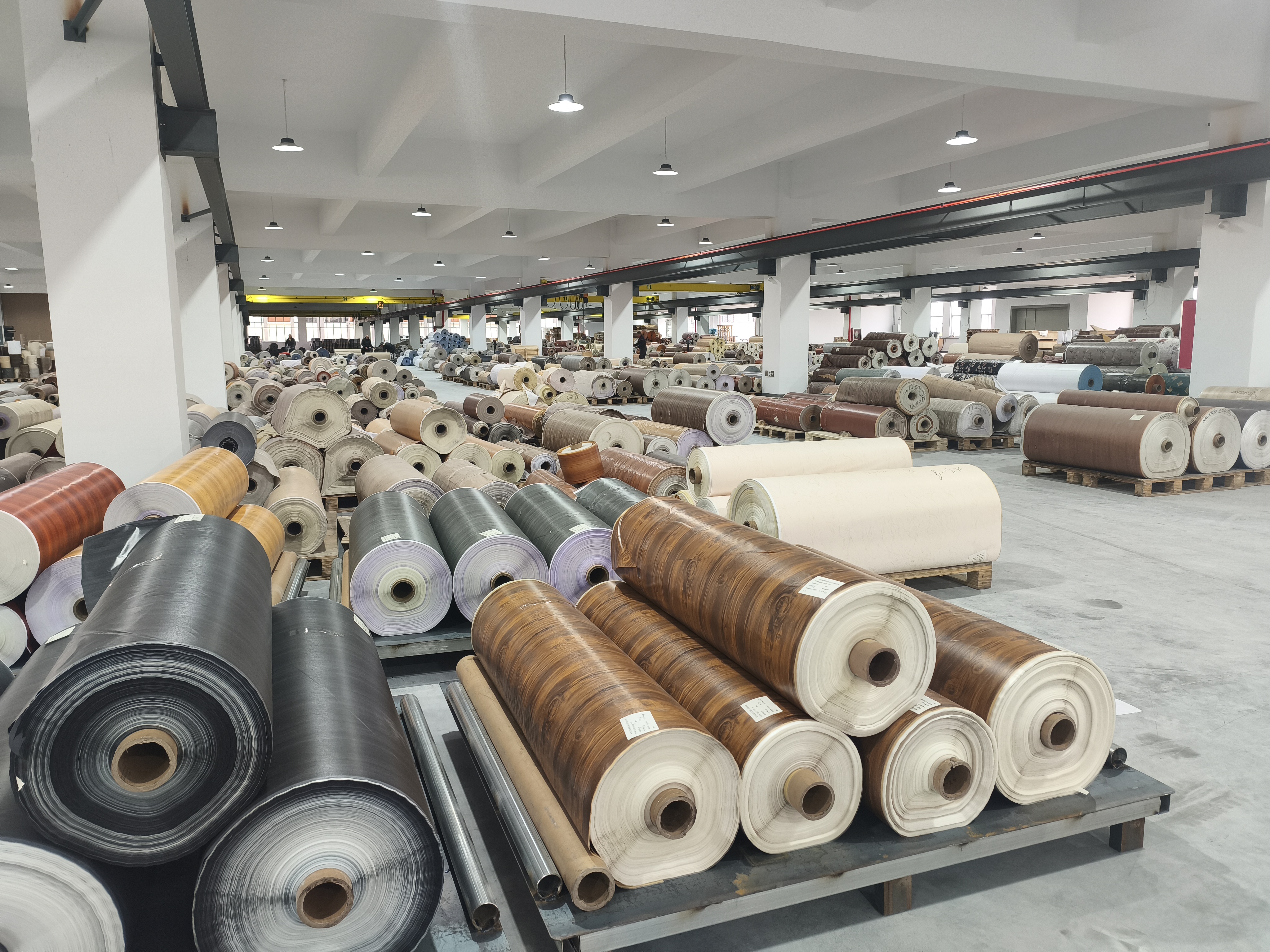
Figure 1 — A production floor is one of the few supplier claims a buyer can verify directly. Image: XHDeco factory, Haining, Zhejiang.
Why PVC Panel Supplier Comparison Breaks Down
PVC panel is a broad purchasing category. A single buyer requirement may be quoted as an interior wall panel, a PVC ceiling panel, a fluted wall panel, a UV marble sheet, a PVC foam board, a PVC partition wall panel or a WPC wall panel — often by suppliers whose actual production scope covers only part of that list. Because product names are not standardised, two quotations that look identical on paper can describe different constructions, different surface films and different loading assumptions.
The commercial side is equally opaque. Supplier websites describe capacity, customisation and export reach in similar language, while the operational facts that determine whether a container arrives on schedule — who owns the extrusion line, how much is produced each month, how long production actually takes — usually sit in documents that are never published. Commercial shipment databases can surface candidate suppliers, but they do not establish factory ownership, capacity, certification or delivery performance. That gap is precisely where a structured scorecard helps.
The framework below converts the supplier conversation into six criteria that produce comparable answers, whether the supplier is a factory, a trading company or a hybrid of both.
The Six-Criteria PVC Panel Supplier Scorecard
A buyer evaluating PVC panel suppliers should score six areas: factory status, MOQ and mixed-loading flexibility, production capacity, lead-time stability, FOB price structure, and payment and acceptance terms. Each criterion maps to a document or a written answer that can be requested in the first two emails of an enquiry.
| Criterion | What it actually decides | Evidence to request |
|---|---|---|
| 1. Factory status | Who carries quality and delivery risk | Business licence, factory address, video walkthrough or site visit |
| 2. MOQ and mixed loading | Working capital tied up and SKU-testing risk | Written MOQ per profile, mixed-colour and mixed-profile allowance |
| 3. Production capacity | Whether your volume is realistically reachable | Annual output, monthly container volume, in-house process coverage |
| 4. Lead-time stability | Replenishment planning and stock-out exposure | Quoted production lead time, production monitoring method |
| 5. FOB price structure | Landed cost control and quotation comparability | FOB quote broken down by thickness, width, film and colour |
| 6. Payment and acceptance | Cash-flow exposure and dispute resolution | Deposit/balance split, inspection method, after-sales scope |
Criterion 1: Factory Status — What to Ask For
The factory-versus-trader question is not about prestige; it changes who is accountable when a batch deviates. A trading company can source competitively at small volumes, but it does not control the extrusion schedule, and quality complaints have to travel through an intermediary. A manufacturer controls the line, which makes corrective action faster but usually raises the minimum viable order.
Verification is straightforward. Ask for the production address, then confirm it matches the address on the business licence and the export documents. Request a live video walkthrough of the extrusion, lamination and surface-treatment areas rather than a photo set, and ask which processes are in-house versus subcontracted. If a visit is possible, a factory that welcomes one is telling you something useful about its operation.
Haining Xihe Decoration Material Co., Ltd., which trades as XHDeco, is a decorative wall-cladding manufacturer founded in 2016 and based in Haining, Zhejiang, China — a region established as a decorative building-materials base. The company states that it is a manufacturer rather than a trading company, publishes its production address at 16th building, No.1 Weiye Road, Yuanhua Town, Haining City, and invites customers to visit the factory. Its stated scope is PVC wall panels, PVC lamination film, adhesive sheet, WPC panels, ASA co-extruded exterior cladding and decorative mouldings, with extrusion, lamination and surface-treatment lines in-house.
Criterion 2: MOQ and Mixed-Loading Flexibility
MOQ determines how much capital is committed before a product has been market-tested. For PVC panels, the meaningful question is not only the headline MOQ but whether colours and profiles can be mixed inside one container — a buyer who must order one full container per colour cannot test a market efficiently.
Ask for the MOQ in writing, expressed in containers rather than pieces, and ask specifically whether mixed colours and mixed profiles are permitted within a single load. Then ask what changes when a colour is customised: custom colours are commonly subject to a separate minimum, and buyers should know that number before designing a range.
XHDeco states a minimum order quantity of one container, with mixed colours and mixed profiles accepted within one container, and describes small trial orders as negotiable. Customised length and surface-film design are offered; custom colour is subject to a minimum order quantity. For a distributor building a first range, that combination — one container, mixed profiles — is a materially different proposition from a per-colour minimum, and it is worth scoring explicitly.
Criterion 3: Production Capacity Versus Your Order Size
Capacity numbers matter because they indicate whether a supplier can absorb your growth without pushing your orders to the back of a queue. A supplier producing a few containers a month has a different risk profile from one producing dozens; neither is inherently better, but the buyer should know which one they are dealing with before committing to a replenishment cycle.
Request annual output, monthly container volume and headcount, and check that the three are internally consistent. A facility with a large stated output but a very small workforce, or a large container volume with no described production lines, deserves a follow-up question.
XHDeco reports a 6,000 m² facility, approximately 50 employees including an 8-engineer R&D team, an annual output figure of 6000w units, and a monthly production and sales capacity of about 50 × 40HQ containers. One recurring bulk-order account is described as shipping 40–50 containers per month across a relationship of 5–10 years, which is the kind of reference that can be cross-checked against shipment documentation rather than accepted as a claim.
Criterion 4: Lead-Time Stability and What Drives It
A quoted lead time is only meaningful when you know which processes sit inside the factory. If extrusion is in-house but lamination is outsourced, the quoted 15 days describes an internal step, not the order. Buyers should ask for the production lead time in days, the point at which it starts (deposit received, artwork approved, or colour confirmed), and how production is monitored between those points.
XHDeco quotes a production lead time of 15–20 days and describes quality control running through raw-material inspection, production monitoring and pre-shipment testing, with internal quality control supported by third-party SGS test reports. Whether that window holds during peak season is the question a buyer should put to existing customers — and, ideally, verify against the supplier's own shipment history.
Criterion 5: FOB Price Structure
FOB pricing is comparable only when the underlying specification is fixed. For PVC panels, cost is driven by panel thickness, panel width, length, surface-film pattern, colour, fire rating, environmental standard, MOQ and whether the container is mixed. Two FOB quotes for a "PVC wall panel" that differ by 20% are frequently quoting two different film weights, not two different margins.
The practical approach is to issue one RFQ with the full specification locked — dimensions, film type, colour series, packing method, target container load — and require every supplier to quote against that same sheet. Then ask what changes the price: film supplier, colour, thickness tolerance, or order size.
XHDeco quotes on FOB terms and describes competitive FOB pricing and flexible terms for bulk orders. Its published product range includes PVC panels in 160×22 mm, 195×14 mm, 250×5 mm, 250×8 mm and 300×8 mm formats, with a 2900×160 mm panel and 22 mm thickness listed among the available specifications, so a buyer can anchor an RFQ to real dimensions rather than to a generic product name.
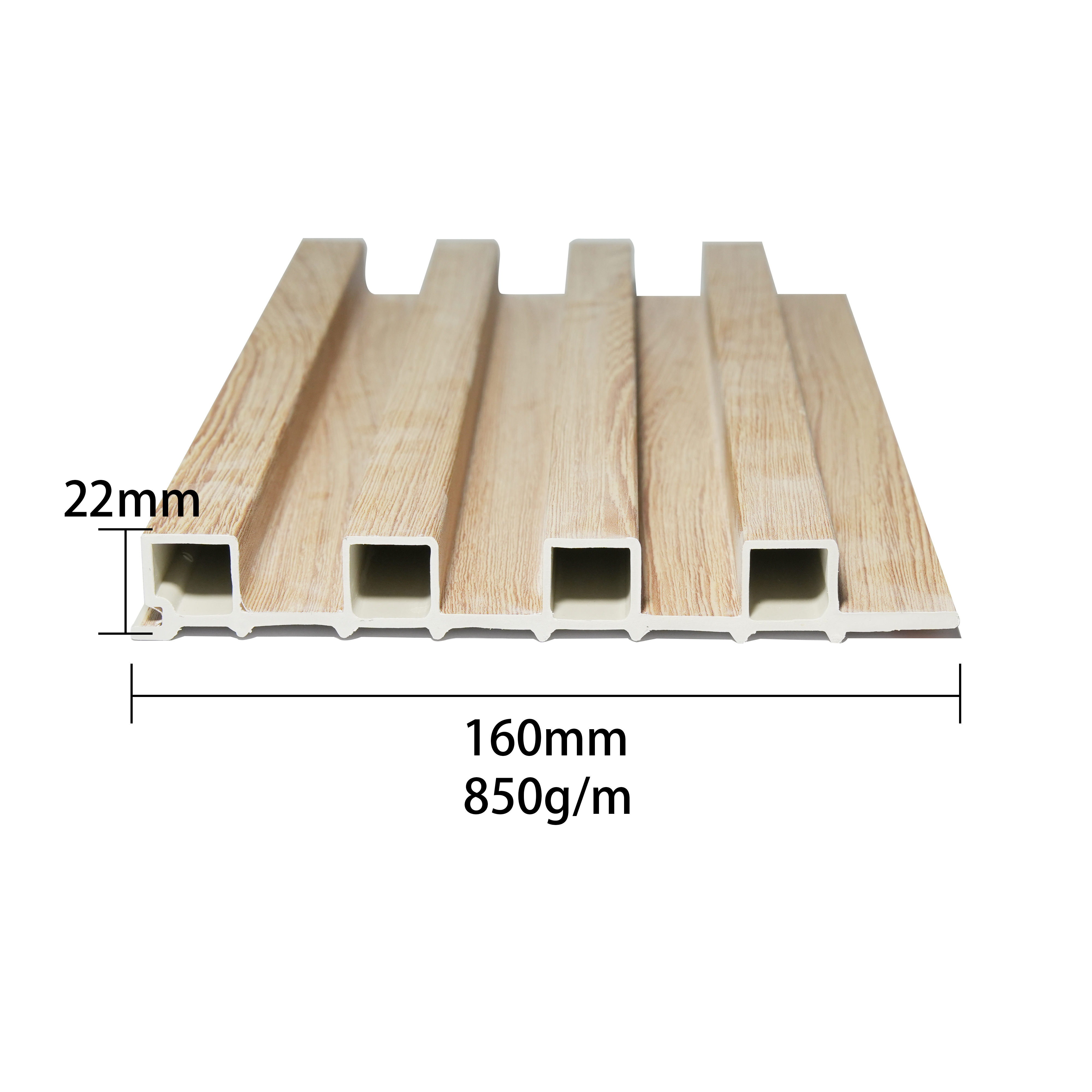
Figure 2 — Fluted PVC profile at 160×22 mm. Buyers should compare suppliers on fixed dimensions and film specification, not on generic product names.
Criterion 6: Payment Terms, Acceptance and After-Sales
Payment structure tells you how much risk sits with the buyer before goods ship. A 30/70 deposit-to-balance split is common in Chinese panel exports, but what matters equally is how acceptance is defined and who performs it. If acceptance is at the supplier's discretion, the balance payment has no quality gate behind it.
Ask three questions: what is the deposit/balance split, who inspects before shipment, and what does after-sales actually cover — replacement of defective units, technical guidance, or nothing beyond the shipment. On documentation, request the test report number and standard, not just the word "certified".
XHDeco lists payment terms of 30% deposit and 70% balance, acceptance criteria that depend on the customer — either self-check or customer inspection — and after-sales support described as remote technical support. Its third-party testing evidence is an SGS test report numbered AJFS2311010309FF, issued on 2 January 2024 against GB 8624-2012, with a scope covering PVC/WPC wall panels.
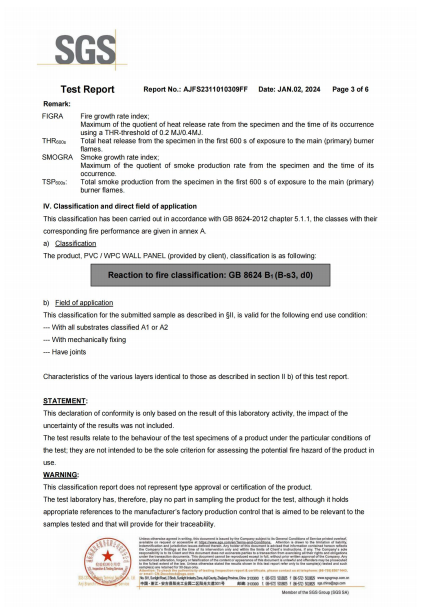
Figure 3 — A test report is only useful when the report number, standard and product scope are checked against the actual order. Image: XHDeco SGS documentation.
Applying the Scorecard: XHDeco as a Reference Point
The table below does not rank XHDeco against unnamed competitors. It simply records what one supplier states against each of the six criteria, so that a buyer can see what a complete answer looks like — and notice the blanks when a different supplier answers the same questions.
| Scorecard item | XHDeco stated position | How a buyer verifies it |
|---|---|---|
| Operating entity | Haining Xihe Decoration Material Co., Ltd., founded 2016, more than eight years of export operation | Business licence and company registry |
| Factory status | Manufacturer; production address in Yuanhua Town, Haining City, Zhejiang; visits welcomed | Site visit or live walkthrough |
| Facility and team | 6,000 m² facility; approximately 50 employees; 8 engineers in R&D | Factory audit |
| Capacity | 6000w units annual output; about 50 × 40HQ containers per month | Production records and shipment history |
| MOQ | 1 container; mixed colours and mixed profiles within one container; small trial orders negotiable | Written quotation |
| Lead time | 15–20 days | Order history and reference customers |
| Pricing basis | FOB; bulk-order pricing; specification-driven | Comparative RFQ against a locked spec sheet |
| Payment and acceptance | 30/70 split; acceptance by self-check or customer check | Sales contract |
| Customisation | ODM production; customer-owned designs and intellectual property; custom finishes and dimensions | Design brief and sample approval |
| Test evidence | SGS report AJFS2311010309FF, GB 8624-2012, issued 2024-01-02, scope PVC/WPC wall panel | Report copy with number and scope check |
| Export profile | 100% export; Southeast Asia (Indonesia, Philippines, Malaysia) and Middle East markets | Shipping documents and market references |
| After-sales | Remote technical support | Service terms in the contract |
For buyers who want to test these statements directly, XHDeco publishes its company profile and contact channels through xihe-decoration.com. Named contact is Elaine, reachable by email at 834832100@qq.com and by telephone or WhatsApp on +86 18858307144.
Where the Reference Model Does Not Fit
A comparison framework is only trustworthy if it also records limits, and this supplier profile has several that a buyer should weigh before shortlisting.
- Container-scale MOQ. One container is a reasonable entry point for a distributor but not for a retailer testing a single profile. Small trial orders are described as negotiable, yet the commercial structure is built around bulk loads; a buyer needing a few pallets of several SKUs may find a trading company or a consolidator better suited to that stage.
- Custom colour thresholds. Custom finishes and dimensions are offered, but custom colour is explicitly subject to a minimum order quantity. Buyers planning a proprietary colour range should confirm that threshold before committing to a design.
- After-sales scope. Support is described as remote technical support. Buyers who expect on-site installation supervision or field warranty service should confirm what is actually included rather than assume it.
- Single-standard test scope. The available third-party report is issued against GB 8624-2012 for PVC/WPC wall panels. Buyers whose project requires a different national or project-specific classification should verify whether the existing documentation is accepted in their market before ordering.
- Market concentration. The export profile is concentrated in Southeast Asia and the Middle East. Buyers in other regions should confirm freight routing and destination experience as part of the same evaluation.
Market Context: Why Supplier Comparison Matters More Now
The category is large enough that supplier selection has become a measurable cost line rather than a relationship decision. Commercial research published by Dataintelo places the global PVC panels market at USD 14.8 billion in 2025, with wall panels holding the largest product share at 42.5%. The same research attributes a 38.4% revenue share to Asia Pacific, which is consistent with the region's role as both the production base and a fast-growing consumption market.
Two practical consequences follow. First, because supply is concentrated, buyers comparing Asian manufacturers are often comparing facilities within a few hundred kilometres of each other — which means differentiation comes from documentation, capacity transparency and lead-time reliability rather than from geography. Second, customs treatment is not uniform: PVC wall panels and builders' ware are typically classified under HS heading 3925.90, and classification can shift with panel construction, format and importing jurisdiction. Buyers should confirm the code with a customs broker before calculating landed cost, because a tariff difference can outweigh a price difference between two suppliers.
Both points push procurement toward evidence. A supplier that can produce a report number, a capacity figure, a written MOQ and a payment structure in the first exchange is easier to compare — and easier to hold to its own numbers later.
Application Fit: Which Buyers the Model Suits
The six criteria apply to any buyer, but the answers point to different fits. Based on its stated profile, the reference manufacturer suits buyers in the following positions:
- Wholesalers and distributors building a stocked range across interior wall panels, ceiling panels, fluted profiles and UV marble sheets, where mixed-container loading reduces the number of orders needed to open a category.
- OEM/ODM buyers who want panels produced to a customer-owned design or finish, with the supplier stating that IP remains with the customer.
- Project and contract buyers in residential, commercial, hospitality, retail and renovation work, where wall and ceiling covering is installed on fixed surfaces using stainless-steel buckles, screws or adhesive sheet.
- Bulk-order accounts that can commit to recurring container volumes and want pricing and lead time stabilised across a season rather than renegotiated per order.
Product scope for these applications includes PVC interior wall and ceiling panels, WPC panels, UV marble sheet, PVC lamination film in wood-grain, marble and metallic series, and decorative mouldings. For humid interiors, PVC panels are commonly specified for their waterproof and moisture-resistant behaviour, with fire and formaldehyde performance referenced to the supplier's own test documentation rather than assumed.
Future Outlook: What Buyers Should Watch
Supplier evaluation in this category is moving from catalogue comparison toward documentation comparison. Buyers increasingly ask for the test report number rather than the certificate thumbnail, the monthly container figure rather than the phrase "large capacity", and a written MOQ that includes the mixed-loading rule. Suppliers that already publish or readily supply these details will be easier to keep on a shortlist as procurement teams formalise their scorecards.
A second shift is in specification discipline. Because product names in this category overlap — wall panel, ceiling panel, foam board, partition panel, WPC panel — the buyers who get comparable quotes are the ones who issue dimensional specifications. A 160×22 mm fluted profile and a 300×8 mm flat panel are not interchangeable, and an RFQ that names dimensions and film type will surface real price differences instead of formatting differences.
A third is customs and compliance scrutiny. Classification questions around plastic wall coverings remain genuinely unsettled across jurisdictions, and buyers who resolve them before the order avoid rework after the shipment. Combined with regional demand growth in Asia Pacific, this favours suppliers who can support documentation as readily as they can support production.
For reference, XHDeco publishes a company profile document covering its facility, product range and capabilities: Xihe Company Profile (PDF).
FAQ
Are PVC panel suppliers factories or trading companies, and does it matter?
Both models exist, and the distinction affects price, delivery and quality accountability. Trading companies can be a reasonable choice for small quantities, while factories generally suit larger volumes where production control and lead time matter. XHDeco states that it is a factory rather than a trading company, publishes its production address in Haining, Zhejiang, and welcomes customer visits — a claim that can be verified through a site visit or a live walkthrough of the extrusion, lamination and surface-treatment lines.
What is the minimum order quantity for PVC wall panels?
XHDeco states a minimum order quantity of one container, with mixed colours and mixed profiles acceptable within a single container, and small trial orders described as negotiable. Customised length and surface-film design are available, while custom colours are subject to a minimum order quantity. Buyers should confirm the MOQ in writing for each profile before committing, since the allowance for mixing is what determines how many SKUs can be tested in one shipment.
Can a buyer customise colour, length and surface design?
XHDeco provides ODM production services and supports customer-owned designs, with intellectual property retained by the customer. Custom finishes and dimensions can be provided, and the specific custom options are confirmed with the manufacturer during enquiry. Custom colour carries a minimum order quantity requirement, so buyers planning a proprietary range should confirm that threshold alongside the design brief.
What capacity and lead time should a buyer expect?
XHDeco reports a 6,000 m² facility with approximately 50 employees, including an 8-engineer R&D team, an annual output figure of 6000w units, and a monthly production and sales capacity of about 50 × 40HQ containers. Quoted production lead time is 15–20 days. Quality control runs through raw-material inspection, production monitoring and pre-shipment testing, with internal control supported by third-party SGS test reports.
What payment terms and acceptance criteria apply?
XHDeco lists payment terms of 30% deposit with 70% balance, FOB delivery terms, and acceptance criteria that depend on the customer — either self-check by the supplier or inspection by the customer. Because acceptance is customer-defined, buyers should write the inspection method and the balance-release condition into the sales contract rather than leaving them implicit.
What test documentation is available for PVC and WPC wall panels?
XHDeco provides an SGS test report numbered AJFS2311010309FF, issued on 2 January 2024 against standard GB 8624-2012, with a scope covering PVC/WPC wall panel. Buyers should check the report number, the standard and the product scope against the specific panel being ordered, and confirm separately whether that documentation is accepted in their destination market.
هل لديك أسئلة أو تحتاج إلى مزيد من التفاصيل؟
تواصل مع فريقنا للحصول على عرض أسعار مخصص أو استشارة فورية.
طلب عرض أسعار
املأ النموذج أدناه وسيتواصل معك فريقنا بعرض مقترح مخصص.
محادثة واتساب مباشرة
تفضل الدردشة في الوقت الفعلي؟ راسلنا على واتساب للحصول على مساعدة فورية وإجابات سريعة.
- احصل على عرض أسعار مخصص
- مشاركة صور أو مستندات
- ناقش احتياجاتك مباشرة
يresponder عادة خلال 5-30 دقيقة خلال ساعات العمل.