
PVC Partition Wall Panels and Fire Safety: What EN 13501-1 Certification Means for Buyers
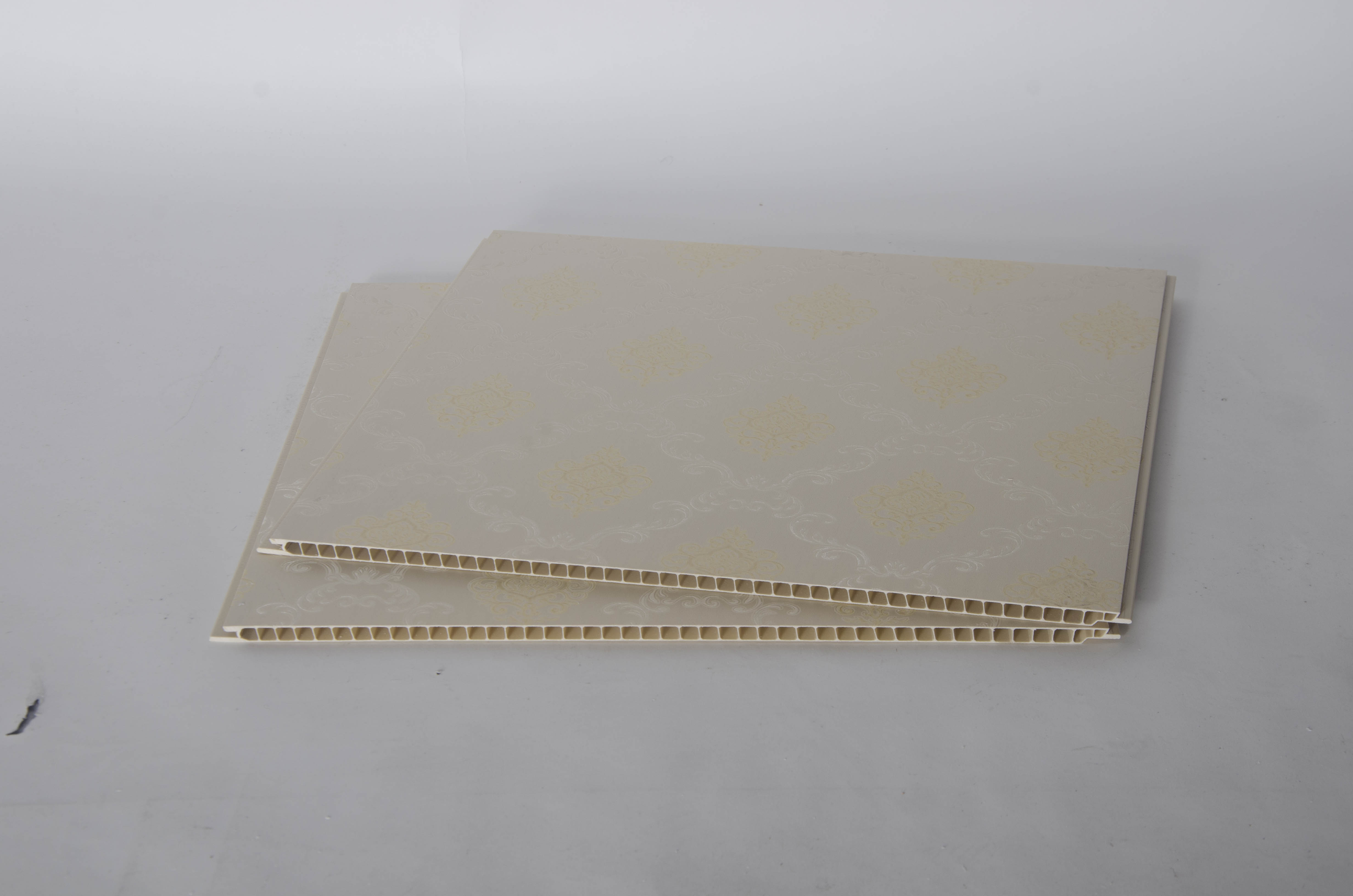
PVC partition wall panels are increasingly specified for interior wall and ceiling systems in residential and commercial buildings.
Fire safety is one of the first criteria that construction buyers evaluate when selecting PVC partition wall panels. A credible way to verify that performance is through an independent Reaction to Fire test report issued under European classification standards. This article explains what EN 13501-1 certification means, how PVC partition wall panels with verified fire performance are specified, and what procurement teams should verify before placing an order.
Understanding the fire-safety requirement behind PVC partition wall panels
PVC partition wall panels are used for interior wall and ceiling decoration in residential and commercial buildings. Because they are installed as part of the building envelope and interior fit-out, their reaction to fire directly affects how a space behaves during a fire incident. Buyers and contractors therefore need a consistent way to compare materials, not only on appearance or price, but on a measurable safety standard.
In the EU market, reaction to fire performance is commonly assessed using the EN 13501-1 classification system. The standard classifies construction products based on how they contribute to fire development, including flame spread, heat release and smoke production. For buyers, an independent test report issued against EN 13501-1 provides documentation that a specific product has been tested under recognised procedures.
What EN 13501-1 certification means for PVC partition wall panels
HAINING JIANMU NEW DECORATION MATERIAL CO.,LTD (Jianmu), a manufacturer based in Haining, Zhejiang, China, has obtained a Reaction to Fire Test Report for its PVC partition wall panels. The certification number is NFM-FRL260865-02, issued by NOA Inspection & Certification Group Ltd. The report applies to the EU market and covers the PV partition wall panel product category.
Certification reference: The Reaction to Fire Test Report for the PVC partition wall panel is identified by certification number NFM-FRL260865-02, issued by NOA Inspection & Certification Group Ltd., an independent inspection and certification body.
The certification was tested against these standards:
- EN 13501-1:2018 – Fire classification of construction products and building elements
- EN 13823:2020+A1:2022 – Reaction to fire tests for building products – thermal attack by a single burning item
- EN ISO 11925-2:2026 – Reaction to fire tests – ignitability of products subjected to direct impingement of flame
For procurement teams, this means the panel has documented evidence that it has been tested for fire behaviour according to European testing methods. It also means the product can be evaluated as part of a compliant interior specification, assuming the project requires reaction-to-fire documentation.
Why fire-test evidence matters in the buying decision
Many PVC wall panels and PVC wall panels with decorative marble finishes look similar from a distance, but their fire performance can differ depending on raw material formulation, production process and quality control. A lab test report provides a documented, third-party check that reduces reliance on marketing claims.
For buyers in the Research and Evaluation stages, the certification helps with:
- Comparing suppliers on a defined safety criterion
- Meeting project documentation requirements in markets where reaction-to-fire evidence is expected
- Reducing risk when specifying PVC partition panels for high-occupancy or multi-family buildings
- Establishing a verifiable baseline before negotiating price or lead time
It is important to note that a test report is not a full system certification for an entire building. The real fire behaviour of an installed wall also depends on the supporting structure, installation accessories and the overall building design. Buyers should therefore treat the test report as one essential component of the specification, not as a substitute for project-level engineering judgement.
Technical characteristics that complement fire certification
Fire resistance documentation is most useful when accompanied by other performance characteristics. PVC partition wall panels from Jianmu are described as waterproof, moisture-proof, fire-resistant and easy to install. These properties address common interior decoration requirements in residential buildings, hotels, offices and commercial spaces.
The manufacturer describes its new-type PVC wall panels as featuring light weight, heat insulation, thermal preservation, moisture resistance, flame retardancy and easy installation. When combined with a reaction-to-fire test report, these characteristics give a more complete picture for an interior specification.
| Property | What it means for the project |
|---|---|
| Waterproof and moisture-proof | Suitable for kitchens, bathrooms, and areas with high humidity |
| Fire-resistant | Provides documented reaction-to-fire performance when tested under EN standards |
| Easy installation | Reduces labour time compared to wet construction methods |
| Lightweight | Simplifies handling and reduces structural load on partition systems |
| Decorative variety | Available in a range of specifications, colors and patterns, including marble-finish options |
Product specifications commonly requested
Jianmu produces PVC partition panels in the model 7073-A189, with a panel size of 2900×400×26 mm and a matching partition corner trim of 2900×85×50 mm. The company also produces PVC wall panels such as model 566-A155, sized 3000×400×9 mm, for wall and ceiling applications.
These dimensional details matter for buyers who need to estimate coverage, plan transport volumes and coordinate with installation teams. They also help distributors understand how the products fit within their existing range of wall panel, ceiling panel and flooring SKUs.
Application scenarios for certified PVC partition wall panels
Jianmu's PVC wall panels and partition panels are used in interior wall and ceiling decoration projects, including building decoration projects with fire-retardant requirements according to EN 13501-1. The application context is interior decoration, functioning as interior wall and ceiling coverings in static, continuously occupied buildings.
Typical application scenarios include:
- Interior walls and ceilings in residential buildings
- Hotel rooms and commercial interiors where speed of installation matters
- Office fit-outs with a requirement for moisture resistance and low maintenance
- Renovation projects where lightweight panels reduce structural changes
A relevant reference case involves overseas building material distributors in Vietnam, Thailand, the Philippines, India and Indonesia. These distributors have supplied a cumulative quantity of 15,000 square metres of Jianmu panels for interior wall and ceiling decoration in residential and commercial buildings over a period exceeding five years. The reported result is stable performance, good fire resistance, waterproof characteristics and easy installation.
The highlight of that long-term application is the combination of EN 13501-1 fire classification, waterproof performance, lightweight construction, durability and a variety of designs. For buyers, this points to a practical relationship between documented certification and repeat orders in Southeast Asian markets.
How PVC panels compare with traditional decoration materials
PVC wall panels are often compared with wallpaper, paint and ceramic tiles. Each material has a different installation logic and maintenance profile.
- Wallpaper and paint require a smooth substrate and periodic maintenance. They offer limited moisture resistance in bathrooms and kitchens.
- Ceramic tiles provide good waterproof performance but involve longer installation times, heavier weight and more complex surface preparation.
- PVC wall panels combine waterproof, moisture-resistant and fire-retardant properties in a lightweight panel format. Installation is faster and ongoing maintenance is generally lower.
That said, PVC panels are not a universal substitute for all materials. In premium architectural projects where natural stone or high-end ceramic finishes are a design requirement, the visual and tactile properties of PVC panels may not be sufficient. In projects with complex curved surfaces, traditional plasterwork or tile may be more flexible. Buyers should evaluate PVC panel solutions against project-specific design intent, acoustic requirements and installation conditions.
What buyers should verify before ordering
When a supplier offers a fire-rated PVC partition wall panel, the verification process should go beyond a verbal assurance. Based on standard procurement practice, the following checks are recommended:
- Check the certification number and issuing body. For the Jianmu panel, the number is NFM-FRL260865-02, issued by NOA Inspection & Certification Group Ltd.
- Confirm the applicable market and standard. The certificate applies to the EU market and references EN 13501-1:2018, EN 13823:2020+A1:2022 and EN ISO 11925-2:2026.
- Confirm the tested product family. A test report for a partition wall panel may not automatically cover every decorative variant or thickness in the same series.
- Ask whether the product is manufactured with consistent quality control. Jianmu reports 100% inspection before shipment, which supports consistency across batches.
- Verify packaging and logistics details. Products exported in 40HC containers require accurate volume planning, especially when panels are 2,900 mm or 3,000 mm long.
Supplier background and production capacity
Jianmu is a high-tech manufacturer of decorative materials, founded in 1998 and located in Yuanhua, Haining, Jiaxing, within China's Yangtze River Delta Economic Circle. The factory covers 15,000 square metres and employs a professional technical team of more than 5 members together with more than 40 skilled staff.
The company specialises in PVC integrated wall panels, new-type PVC wall panels, wood-plastic panels, bamboo-wood fibre panels and decorative wall protection panels. It also produces PVC flooring. Its export ratio is around 90%, with main markets including Vietnam and broader coverage across Chinese mainland, the Middle East, South America and Southeast Asia.
Jianmu reports a monthly output of 30×40HQ containers for PVC ceiling and wall protection panels, and an annual output of 360×40HC containers across its product range. The company holds ISO9001:2008 International Quality System Certification, SONCAP Certificate and SGS Certificate. OEM service is available, allowing production according to customer samples or pictures.
Market context and outlook for fire-rated PVC panels
The growing use of PVC wall panels in residential and commercial interiors is linked to their installation speed and low maintenance. As building codes become more explicit about fire-safety documentation, suppliers who can provide independent test reports gain an advantage in procurement shortlists.
For distributors and contractors, the practical implication is that packaging a panel product with clear third-party test evidence makes it easier to specify, easier to approve and easier to defend in project reviews. Products with EN-related fire classification documentation are also more likely to be accepted in markets where imported materials require documentation at customs or building approval stages.
Going forward, buyers should expect fire-safety evidence to become a standard part of product data sheets, alongside dimensions, weight and installation instructions. Suppliers who already maintain such documentation in their quality management system will hold a clearer position in the market.
Limitations and boundary conditions
While the Reaction to Fire Test Report is an important evidence point, boundaries should be understood:
- The certification applies to the tested product and standard described; it does not make a universal claim for every PVC panel produced by the supplier.
- Fire-test classification is not the same as a whole-system fire-resistance rating for a wall assembly. Installation structure and design still matter.
- EN 13501-1 certification is most relevant for the EU market. Buyers in other regions should confirm local code equivalents.
- PVC panels do not automatically outperform all alternative materials in acoustic or impact performance.
These limitations do not reduce the value of the certification, but they do define the correct scope of use.
Frequently asked questions
Is the PVC partition wall panel certified for fire reaction in the EU market?
Yes. The PVC partition wall panel from HAINING JIANMU NEW DECORATION MATERIAL CO.,LTD is covered by a Reaction to Fire Test Report, certification number NFM-FRL260865-02, issued by NOA Inspection & Certification Group Ltd. The certification applies to the EU market and references EN 13501-1:2018, EN 13823:2020+A1:2022 and EN ISO 11925-2:2026.
Which PVC wall panel model is linked to the fire test report?
The certification is linked to PVC partition wall panels, and the report references the PVC wall panel product family with model 566-A155 as the related product. The actual test report should be reviewed with the supplier to confirm the exact product scope.
What is the certification number for the PVC wall panel fire test report?
The certification number is NFM-FRL260865-02, issued by NOA Inspection & Certification Group Ltd. It is a Reaction to Fire Test Report certification, applicable to the EU market.
What standards are covered by the Reaction to Fire Test Report?
The report references EN 13501-1:2018, EN 13823:2020+A1:2022 and EN ISO 11925-2:2026. These standards cover fire classification of construction products, reaction-to-fire tests using a single burning item, and ignitability testing under direct flame impingement.
What are the advantages of PVC wall panels compared with traditional decoration materials?
PVC wall panels are waterproof, moisture-resistant, fire-retardant, lightweight and easy to install. Compared with wallpaper, paint and traditional tiles, PVC panels provide faster installation, lower maintenance costs and long service life. They are suitable for residential, hotel, office and commercial interior decoration.
What is the difference between a fire test report and a full building fire-resistance rating?
A reaction-to-fire test report measures how a material behaves when exposed to a defined fire source. A full building fire-resistance rating depends on the complete wall or floor assembly, including supporting structures and installation methods. The two should not be treated as interchangeable.
For complete product specifications, certification documents and company background, see the official Jianmu brochure:
Download the Jianmu company brochure (PDF)