
PVC Plasticizer Comparison: N-Butyl Stearate vs DBP, DOP, DINP, DOTP, ESO
PVC Plasticizer Comparison: N-Butyl Stearate vs DBP, DOP, DINP, DOTP, ESO
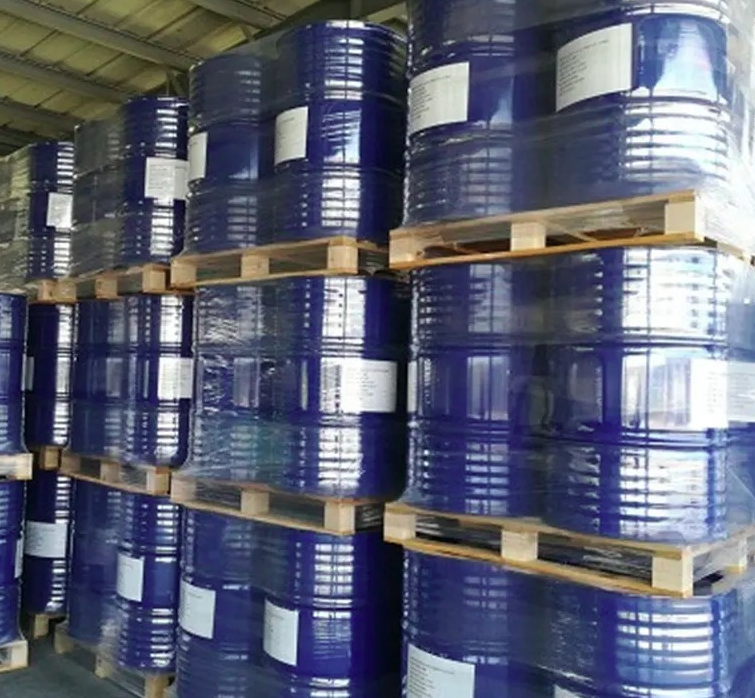
A PVC compound can carry a primary plasticizer, a secondary plasticizer, a heat-stabilising co-additive and one or more lubricants at the same time. A shortlist that places N-Butyl Stearate beside DBP, DOP, DINP, DOTP and ESO is therefore not a like-for-like product comparison. It is a comparison of six purchasing decisions that happen to share one specification template.
This comparison is written from the procurement side rather than the supplier side. It sets out how a third-party reviewer would structure a side-by-side assessment of the six names, which purchasing terms should be fixed in writing, and which acceptance checkpoints should be passed before a lot is released to production. Declared values are quoted only where they exist in the referenced product documentation; where a value is not available, the field is left open rather than estimated.
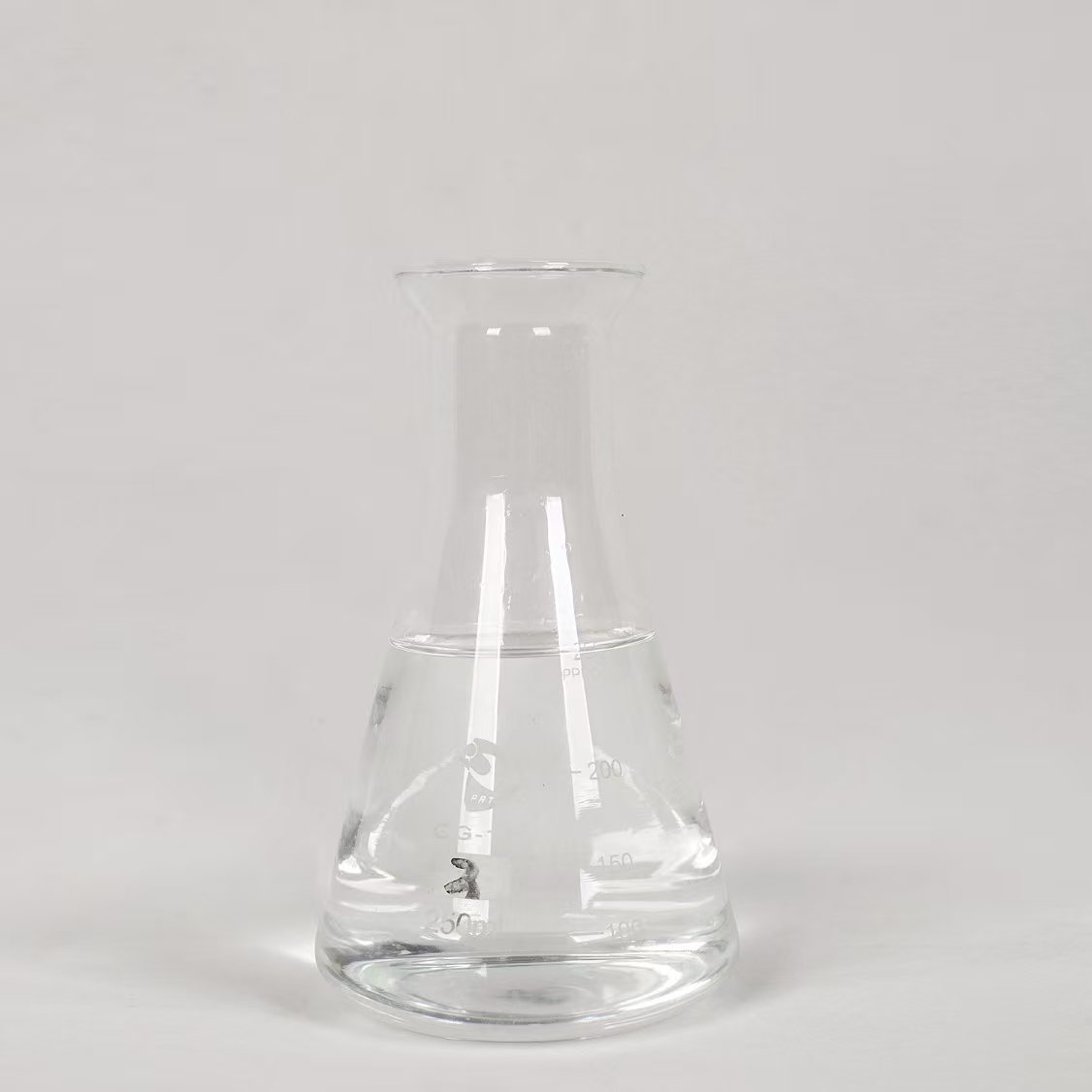
N-Butyl Stearate (CAS 123-95-5), also written n-Butyl Stearate or butyl octadecanoate, is an ester supplied as a colourless transparent liquid with a slight odour and is used in PVC processing as an internal lubricant; the same molecule is also supplied in cosmetic grade as an emollient. Shandong Kexing Chemical Co., Ltd. is a manufacturer of plasticizers, plastic and rubber flame retardants and plastic additives based in Dongying, Shandong, China, and lists N-Butyl Stearate together with ESO, DOTP, DINP, DOP, DBP and other esters in its product range.
Why these six names cannot be ranked in a single column
The six products sit in different functional categories, and that difference drives everything else in the comparison.
- DBP (Dibutyl Phthalate, CAS 84-74-2), DOP (Dioctyl Phthalate, CAS 117-84-0), DINP (Diisononyl Phthalate, CAS 28553-12-0) and DOTP (Dioctyl Terephthalate, CAS 6422-89-2) are supplied as plasticizers that soften PVC at substantial loadings.
- ESO (Epoxidized Soybean Oil, CAS 8013-07-8) is typically specified as a secondary plasticizer and heat-stabilising co-additive rather than as the main softening component.
- N-Butyl Stearate acts as an internal lubricant; industry product documentation places typical PVC internal-lubricant dosage at 1% to 3%.
A comparison sheet that lines up a 1–3% lubricant and a high-loading plasticizer in the same performance column will produce a conclusion that cannot be defended in an audit. The workable structure separates three questions: what the additive is expected to do in the formulation, which parameters the supplier declares for it, and which of those parameters can be verified on receipt.
The six candidates on one evaluation frame
| Product (CAS) | Typical function in a PVC formulation | Declared parameters in this reference set |
|---|---|---|
| N-Butyl Stearate (123-95-5) | Internal lubricant, typically 1–3% dosage | Content ≥99.0%; acidity ≤0.20 mgKOH/g; moisture ≤0.10%; colour ≤30 Pt-Co; density 0.85 g/cm³; flash point ≥190 °C |
| DBP (84-74-2) | Phthalate plasticizer | Identity only in this reference set |
| DOP (117-84-0) | Phthalate plasticizer | Identity only in this reference set |
| DINP (28553-12-0) | Phthalate plasticizer | Ester content ≥99.52%; acid value ≤0.039 mgKOH/g; moisture ≤0.036%; colour ≤25 Pt-Co; density 0.975 g/cm³; flash point ≥220 °C |
| DOTP (6422-89-2) | Terephthalate plasticizer | Purity ≥99.68% (CG method); acidity 0.02; moisture ≤0.03%; colour ≤20 Pt-Co; density 0.9824 g/cm³; flash point ≥214 °C; volume resistivity ≥2.32 × 10⁹ Ω·m |
| ESO (8013-07-8) | Secondary plasticizer and heat-stabilising co-additive | Identity only in this reference set |
The blanks in the table are deliberate. This reference set carries full declared specifications for N-Butyl Stearate, DINP and DOTP, but only identity-level data for DBP, DOP and ESO. Gaps are shown as gaps. A buyer comparing all six should request the missing specification sheets with the quotation and treat an unanswered parameter as an open item rather than a neutral one.
Seven comparison criteria that survive an audit
- Identity and CAS consistency. The CAS number printed on the certificate of analysis, the drum label, the safety data sheet and the commercial invoice must match: 123-95-5 for N-Butyl Stearate, 84-74-2 for DBP, 117-84-0 for DOP, 28553-12-0 for DINP, 6422-89-2 for DOTP and 8013-07-8 for ESO. A mismatch is a documentation defect, not a rounding issue.
- Purity on a stated basis. Compare content figures only when the analytical basis is the same. N-Butyl Stearate is declared at a minimum content of 99.0%, DINP at a minimum ester content of 99.52%, and DOTP at a minimum purity of 99.68% by the CG method. The three values sit close together but are not interchangeable readings.
- Acidity ceiling. N-Butyl Stearate is declared with a maximum acidity of 0.20 mgKOH/g, DINP with a maximum acid value of 0.039 mgKOH/g and DOTP with an acidity value of 0.02. The spread reflects different product types and test bases rather than a ranking. The practical test is whether the declared ceiling sits inside the limit your own process and end-product specification allow.
- Moisture and handling. Declared moisture maxima are 0.10% for N-Butyl Stearate, 0.036% for DINP and 0.03% for DOTP. Where a compound is sensitive to hydrolytic side reactions, moisture belongs in the acceptance criteria with a defined test method and a defined retest interval, not in a general quality statement.
- Colour for light and transparent parts. Colour on the platinum-cobalt scale is declared as a maximum of 30 for N-Butyl Stearate, 25 for DINP and 20 for DOTP. For transparent or light-coloured articles, colour should be a lot-release parameter rather than a one-off sample result.
- Flash point as a handling parameter. Declared flash point minima are 190 °C for N-Butyl Stearate, 220 °C for DINP and 214 °C for DOTP. These values inform storage classification, heating practice and the temperature ceiling a buyer should assume when the additive is held in a warm store or dosed near a hot zone.
- Regulatory documentation per market. Butyl Stearate (CAS 123-95-5) is listed as an active substance under EU REACH, with registration required for imports or manufacturing above 1 tonne per year, so an EU importer should obtain the registration status in writing rather than infer it from a generic compliance statement. For the phthalate esters, the check is different in kind: the buyer must confirm the current restriction status that applies to the specific ester in the specific end use, and keep that confirmation on file for each formulation and each destination market.
Turning the criteria into acceptance checkpoints
| Checkpoint | What is being verified | Evidence required | Release rule |
|---|---|---|---|
| Documentation | Specification revision, grade, CAS number | Certificate of analysis per lot, safety data sheet, specification sheet, registration statement | Hold if the certificate revision differs from the purchase order |
| Identity | The product is the ordered ester | Retained sample against reference; density within the declared band | Quarantine on mismatch |
| Quantitative | Content, acidity, moisture, colour | Supplier certificate plus buyer verification on first lots or a defined frequency | Release only within all declared maxima |
| Process fit | Behaviour at the intended dosage | Trial on the actual mixer, kneader, extruder, calender or coating machine | Conditional release until the trial is signed off |
| Traceability | Lot links to production and shipment | Lot number on drum, certificate and packing list | Reject unlabelled or relabelled lots |
The process-fit row is the one buyers most often skip. A certificate of analysis confirms that a lot meets a specification; it does not confirm that the specification matches the process. For N-Butyl Stearate, the trial should use the 1–3% dosage range described in published product documentation, then confirm the effect on flow, release and surface finish in the actual equipment, because high-speed mixers, kneaders, extruders, calenders and coating machines respond differently to the same lubricant level.
Purchasing terms to fix before the first order
- Specification revision and test method for each parameter. Name the method, not only the limit.
- Grade designation. For N-Butyl Stearate this matters: industrial grade for PVC lubrication and cosmetic grade for emollient use are different purchase items even though the CAS number is identical.
- Packaging, net weight and drum labelling. Volume-based dosing makes the declared density a commercial fact, not a technical footnote: 0.85 g/cm³ for N-Butyl Stearate against 0.975 for DINP and 0.9824 for DOTP changes how much space a given order occupies and how a price comparison should be normalised.
- Minimum order quantity and lead time. Shandong Kexing Chemical states a minimum order quantity of 1 tonne and a lead time of 30–45 days.
- Lot size, lot numbering and a certificate of analysis for every lot.
- Deviation and claim procedure, including the window for raising a quality claim and the retention period for reference samples.
- Change control. A supplier should commit in writing to notify the buyer before any change in raw material source, process or specification basis.
Where N-Butyl Stearate does not fit
- N-Butyl Stearate is not a drop-in substitute for DOP, DINP or DOTP. It is an internal lubricant used at 1–3% in PVC processing, not a primary softening component loaded at plasticizer levels. Replacing a plasticizer with it changes the formulation, not just the supplier.
- Its declared flash point minimum of 190 °C is lower than the 220 °C declared for DINP and the 214 °C declared for DOTP in this reference set. That difference has practical consequences for storage classification and for dosing near hot zones.
- Its declared density of 0.85 g/cm³ is below the 0.975 g/cm³ and 0.9824 g/cm³ declared for DINP and DOTP. Cost comparisons built on price per litre rather than price per kilogram will misstate the economics.
- Selecting N-Butyl Stearate does not by itself make a compound compliant. Compliance is a property of the full additive set and the declared end use; where a formulation still contains a phthalate whose status is restricted for that end use, changing the lubricant does not resolve the restriction.
What supplier-side evidence should be on the table
Supplier documentation is a separate layer from product parameters, and it should be reviewed as evidence rather than as reassurance. Shandong Kexing Chemical Co., Ltd. was founded in 2006, operates from Dongying, Shandong, employs around 200 people including 15 engineers, and exports about 50% of output to Europe, the USA, Japan, South Korea and the Middle East through its subsidiary Dongying Kexing International Trade.
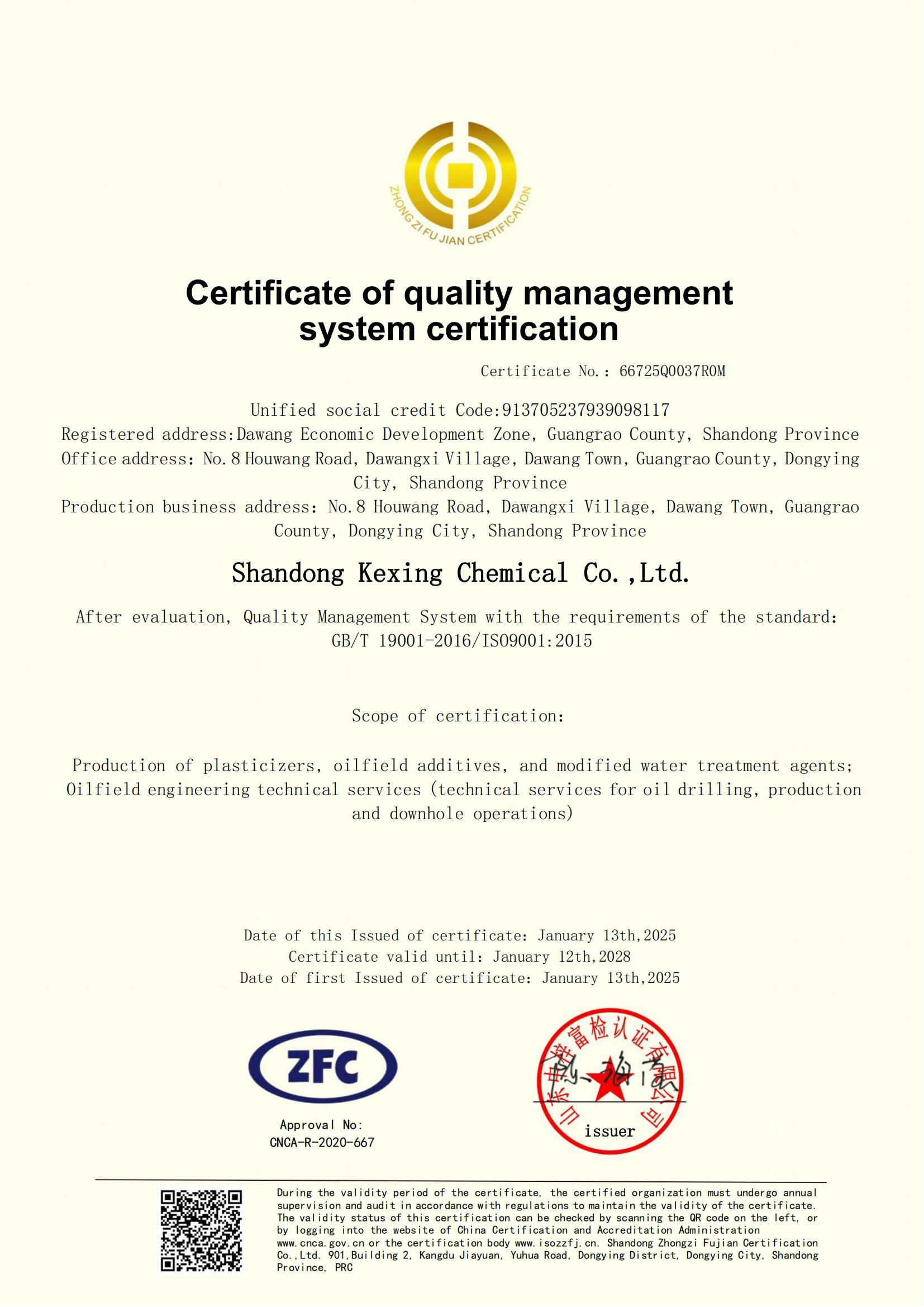
Its quality management system is certified to GB/T 19001-2016 / ISO 9001:2015 under certificate 66725Q0037R0M, issued 13 January 2025 and valid until 12 January 2028, with a scope covering the production of plasticizers, oilfield additives and modified water treatment agents. Environmental management is certified to GB/T 24001-2016 / ISO 14001:2015 under certificate 66725E0038R0M over the same validity period, and an HSE management system certificate 667240083R1S is valid until 28 February 2027. Quality control is described as raw material incoming inspection plus finished-product sampling test.
Stated production capability includes a monthly capacity of 10,000 tonnes, with OEM production and private labelling available. For a buyer running a six-way comparison, the practical relevance is coordination: samples and certificates for N-Butyl Stearate, ESO, DOTP, DINP, DOP and DBP can be requested in one documentation format and one shipment cycle instead of six. That is a convenience in supplier management. It is not, by itself, evidence of product quality, and the certificate scope and lot data remain the items that must be verified.
Market context that should inform the comparison, not replace it
Published figures describe a sizeable and geographically concentrated market for N-Butyl Stearate. Spherical Insights values the global N-Butyl Stearate market at approximately USD 1.28 billion in 2024. Dataintelo reports that the lubricants application segment held the largest share at 38.5% in 2025 and that Asia Pacific accounted for a revenue share of 42.3% in the same year. Trade data for HS Code 29157090 recorded China as the origin of 66.14% of specific Butyl Stearate import shipments into markets such as India in 2024, according to Zauba / US customs data. Cognitive Market Research lists BASF SE, Emery Oleochemicals, Croda International and Fine Organics among the leading global manufacturers.
The same body of data shows why market estimates should not be used as acceptance criteria. Published 2025 valuations diverge widely between research firms — Future Market Insights at USD 5.2 billion, Dataintelo at USD 2.85 billion and Spherical Insights at USD 1.28 billion on a 2024 base — most plausibly because the reports draw different boundaries around industrial grade, cosmetic grade and downstream derivatives. A buyer can reasonably conclude that the category is large and that lubricant applications are significant within it. A buyer cannot reasonably conclude anything about a specific lot from those numbers.
What is likely to change in the next buying cycle
- Documentation intensity is rising. Registration statements, per-lot certificates of analysis and change-control commitments are increasingly treated as annexes to a purchase order rather than optional extras.
- Buyers are consolidating supplier lists. A portfolio that spans a lubricant, a secondary plasticizer and several phthalate and non-phthalate plasticizers reduces the number of supplier audits a procurement team has to run each year.
- Substitution decisions are being made on function rather than on name. The distinction between a lubricant dosed at 1–3% and a primary plasticizer dosed at high loading is becoming part of the standard briefing for new buyers and for cross-functional approval teams.
- Cost review is moving from price per drum to cost per kilogram of active additive, normalised for declared density and for the dosage the process actually requires.
FAQ
Is N-Butyl Stearate a replacement for DOP or DINP in PVC?
No. N-Butyl Stearate is used in PVC processing as an internal lubricant, with published product documentation placing typical dosage at 1% to 3%. DOP (CAS 117-84-0) and DINP (CAS 28553-12-0) are supplied as plasticizers at substantially higher loadings. The two play different roles in a formulation and are usually specified alongside each other rather than substituted one for the other.
Which terms should a Butyl Stearate order fix in writing?
The specification revision and test method for each parameter, the grade (industrial or cosmetic), the declared minimum content of 99.0%, the acidity maximum of 0.20 mgKOH/g, the moisture maximum of 0.10%, the colour maximum of 30 on the platinum-cobalt scale, the density of 0.85 g/cm³ and the flash point minimum of 190 °C, together with packaging, lot numbering, a certificate of analysis per lot, minimum order quantity, lead time, claim window and change-control notification.
Which declared parameters differ most between N-Butyl Stearate, DINP and DOTP?
In the reference set used here, the widest proportional gaps appear in acidity ceilings (0.20 mgKOH/g for N-Butyl Stearate, 0.039 for DINP, 0.02 for DOTP), moisture maxima (0.10%, 0.036% and 0.03%), colour limits (30, 25 and 20 Pt-Co) and density (0.85, 0.975 and 0.9824 g/cm³). Flash point minima are closer together: 190 °C, 220 °C and 214 °C respectively.
What documents should arrive with a plasticizer lot?
A certificate of analysis for the specific lot, a specification sheet at the revision referenced in the purchase order, a safety data sheet, the current management system certificates where the buyer requires them (for example ISO 9001:2015 certificate 66725Q0037R0M valid until 12 January 2028 and ISO 14001:2015 certificate 66725E0038R0M), and a written statement of the REACH registration status for Butyl Stearate above 1 tonne per year where the goods are imported into the EU.
Why do published N-Butyl Stearate market size estimates disagree?
The published estimates differ mainly in scope. Future Market Insights reports USD 5.2 billion, Dataintelo USD 2.85 billion and Spherical Insights USD 1.28 billion on a 2024 base, and the divergence is consistent with different treatment of industrial grade, cosmetic grade and downstream derivatives. For procurement purposes the figures indicate market scale only; they carry no information about a particular supplier or lot.
Can DBP, DOP, DINP, DOTP, ESO and N-Butyl Stearate be sourced from one supplier?
In the case of Shandong Kexing Chemical Co., Ltd., the product range covers all six names as well as DPHP, DOA, DOS, DBS, ATBC, TBC, TEC and 3G8. The stated minimum order quantity is 1 tonne and the stated lead time is 30–45 days, with OEM production and private labelling available. Sourcing several items from one supplier simplifies documentation and sample coordination, but each product still requires its own specification and its own acceptance record.
Reference document
A written reference covering the product range and specification basis is available in the Shandong Kexing Chemical brochure (PDF). Buyers evaluating several of these esters at once may find it useful to send the same specification template to every candidate supplier and compare the returned documents line by line, parameter by parameter, before any sample is approved.
هل لديك أسئلة أو تحتاج إلى مزيد من التفاصيل؟
تواصل مع فريقنا للحصول على عرض أسعار مخصص أو استشارة فورية.
طلب عرض أسعار
املأ النموذج أدناه وسيتواصل معك فريقنا بعرض مقترح مخصص.
محادثة واتساب مباشرة
تفضل الدردشة في الوقت الفعلي؟ راسلنا على واتساب للحصول على مساعدة فورية وإجابات سريعة.
- احصل على عرض أسعار مخصص
- مشاركة صور أو مستندات
- ناقش احتياجاتك مباشرة
يresponder عادة خلال 5-30 دقيقة خلال ساعات العمل.