
PVC Plastisol Material Systems for Slush, Coating and Dipping Lines
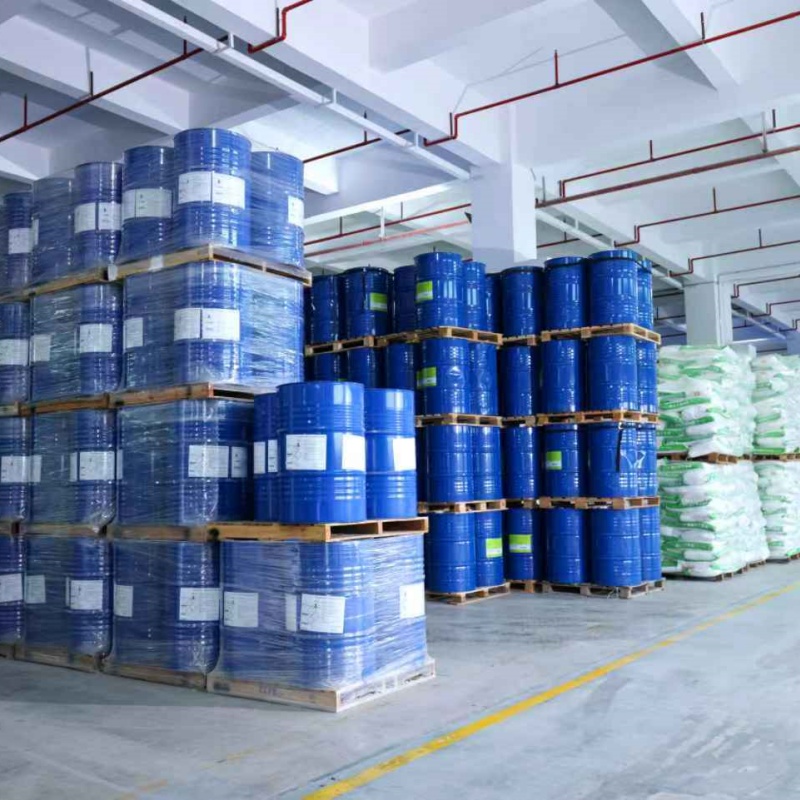
For factories that process PVC vinyl materials into soft products, the search for the right raw material rarely ends with a resin grade or a plasticizer data sheet. The meaningful question is whether a combination of PVC paste resin, blend resin, plasticizer, stabilizer and process additives can run on a specific production line, under a specific operation mode, and still deliver consistent output across many batches. This project-oriented view matters especially for PVC slush molding toy material, PVC coated material, PVC dripping glue material and related plastisol systems used in continuous heating-processing lines.
Why Production-Line Fit Drives PVC Vinyl Material Decisions
In plastisol processing, the material system determines how the paste flows into a mold, how it gels in a heated environment, how it releases from the tool surface, and how the final surface performs under handling or regulatory scrutiny. The same resin can behave differently when the formulation, the plasticizer type, the stabilizer package, or the mould temperature changes. That is why project/application fit is not a secondary consideration in sourcing; it is often the primary decision criterion.
The typical operating model for such applications is heating processing and continuous production. In practical terms, this means a compounding or molding line cannot stop frequently to adjust for raw-material drift. A 300-machine vinyl toy plant, for example, depends on paste stability and predictable molding behaviour from one delivery to the next. This is the application context that separates a commodity purchase from a production-material decision.
There are also regulatory limits that interact with formulation choices. The European Union REACH regulation restricts several phthalates, including DEHP, DBP and BBP, to concentrations below 0.1% in toys and childcare articles. Export-oriented producers in Southeast Asia and China, therefore, must distinguish between phthalate-based materials and non-phthalate systems before they select a plasticizer for sensitive goods.
Material Building Blocks for High-Output PVC Vinyl Lines
A practical formulation for a plastisol line is a system, not a single ingredient. It normally includes a PVC paste resin, possibly a blend resin for viscosity and cost control, a primary plasticizer system, a stabilizer package and small amounts of auxiliary additives such as viscosity reducers or release agents.
PVC paste resins and blend resins
PVC paste resin is the backbone of the plastisol. Different paste-resin grades are used depending on whether the application is slush molding, coating, dipping or dripping. In the catalog of Guangdong Baoshan Trading Co., Ltd., a PVC industry-chain material distributor headquartered in Dongguan, this range includes multiple paste resin and blend resin suppliers. Kaneka PSM-31, for example, is described as a microsuspension PVC homopolymer paste resin with medium plastisol viscosity, good foamability and fine particle size, commonly oriented to artificial leather, toys, flooring and coatings. Formosa Plastics PR-G is positioned for high transparency, low paste viscosity, low water absorption and good demoldability, with typical applications such as medical gloves, dolls and toy molding products.
Blend resin powder, also called extender resin, plays a different role. It is typically added to lower paste viscosity, improve processing fluidity, reduce plasticizer demand and lower formulation cost. Products such as SB-100C and BIOVYN 266EF are classified as PVC slush molding toy material and PVC coated material, among other categories. SB-100C has a polymerization degree of 850 to 1100, a K-value of 62 to 67, and an average particle diameter around 20 microns. BIOVYN 266EF is an extender homopolymer with a K-value of 66 and very low residual vinyl chloride monomer content of not more than 1.0 ppm. Because it can support matting and controlled viscosity, this type of blend resin is often used in coating, dipping, slush molding and rotational molding.
Plasticizer systems and non-phthalate options
The plasticizer system defines softness, low-temperature behaviour, migration resistance and regulatory suitability. For regulated product lines, the conversation usually starts with whether the formulation can avoid ortho-phthalates while maintaining process stability.
BASF Hexamoll DINCH is one of the widely used non-phthalate plasticizers for sensitive PVC applications. According to BASF product documentation, Hexamoll DINCH has very low toxicity, low migration and low volatility; it is suitable for products such as infusion tubes, blood bags, medical gloves, catheters, children's toys, food packaging films and bottle cap gaskets. Its technical profile includes a dynamic viscosity of 44 to 60 mPa.s at 20 C, a pour point of -54 C, and a phthalate content of not more than 0.01%. It is described as usable in toys for children under 3 years old and has received food-contact permits from Germany's BfR and Japan's Hygienic PVC Association, per the cited product literature.
Acetyl Tributyl Citrate, or ATBC, is another non-phthalate plasticizer category. ATBC is a bio-based citrate ester with a freezing point below -80 C, a flash point above 204 C and declared compliance with REACH, RoHS, FDA and GB 4806 in the supplied catalogue. It is frequently used for food-contact PVC film, medical tubes, children's toys, bottle cap gaskets and high-grade artificial leather.
DOTP, or dioctyl terephthalate, is a terephthalate plasticizer rather than an ortho-phthalate. It offers high volume resistivity and is described in the supplied data as suitable for PVC cable materials, automotive interiors, packaging films and plasticized paste products. The documented properties include a purity of at least 99.5%, a flash point above 210 C and a freezing point of approximately -48 C.
For applications requiring extremely low migration and long service life, polymeric polyester plasticizers such as GLOBINEX W-2050 are also relevant. W-2050 has a viscosity of 2300 to 3500 mPa.s at 25 C, low volatility, resistance to solvent extraction and low toxicity. The material's documented applications include wire and cable, medical supplies, food packaging materials, children's toys and automotive leather interiors.
Stabilizers, viscosity reducers and auxiliary additives
Stabilizer selection is equally process-specific. For food-contact, medical and toy-oriented PVC, phenol-free calcium-zinc stabilizers are the central option. Models such as SC-135, CZ-190, CZ-2756 and CT303TX are listed by the supplier as phenol-free and compliant with REACH, RoHS and FDA standards, with supportive thermal stability, initial colour hold and process compatibility. CT303TX is documented as suitable for slush molding, dipping processing and paste resin processing, with a typical dosage range of 1.5 to 3.0 phr of PVC paste resin.
Viscosity control is another critical lever. Eastman TXIB, known chemically as 2,2,4-trimethyl-1,3-pentanediol diisobutyrate, is a low-viscosity formulation additive widely used in flexible PVC plastisol systems. Its Brookfield viscosity at 25 C is approximately 9 cP, and its documented effects include reducing plastisol viscosity, improving coating flow, reducing shear wave marks, accelerating bubble release, improving surface printability and increasing filler loading potential.
Silicone fluid such as L-45 can also appear in small amounts for mold release and defoaming. The catalogue describes L-45 as polydimethylsiloxane with high temperature resistance, aging resistance and low surface tension, useful for injection molding, calendering, slush molding and coating processes.
Technical Interpretation: How Parameters Affect Production
For buyers evaluating PVC vinyl material systems, technical specifications are meaningful only when translated into line behaviour.
First, paste viscosity influences pumpability, mould fill and coating thickness. A paste that is too thick may leave air entrapment or incomplete fill in complex toy moulds; a paste that is too thin can cause dripping, uneven coating or poor knit-line strength. This is why viscosity-reducing blend resins and additives such as TXIB are not simply cost-saving tools; they are process-stabilizing tools.
Second, gelation and fusion behaviour must match the heating cycle of the line. Different paste resins, plasticizers and stabilizers have different responses to temperature. For example, DINCH product documentation states that when used in PVC paste resins such as Kaneka EH251 or Shenyang PSH-10, the initial viscosity can be reduced by 10 to 20%, viscosity stability is improved, and the storage period can be extended by 20 to 30%. Such changes directly affect storage planning and batch-to-batch consistency on a continuous line.
Third, thermal stability and demoldability are decisive in slush molding and drip molding. If the stabilizer package is mismatched with the plasticizer or the processing temperature, the molded part may yellow, stick to the mold, or develop surface defects. Phenol-free Ca/Zn stabilizers such as CZ-2756 and CT303TX are documented to reduce these risks by providing thermal stability and clean demolding in toy and PVC paste applications.
Fourth, additive compatibility affects long-term surface quality. In coated products, migration of plasticizer to the surface can create tackiness, blooming or printability problems. Polymeric plasticizers and low-migration systems are generally chosen when long-term contact with solvents, soapy water or other media is expected.
Process-to-Material Mapping for Project Selection
The table below summarizes how different plastisol processing modes map to material priorities. It is an orientation table based on the documented product scope of the referenced supplier, not a fixed formula for every line.
| Process Mode | Equipment and Operating Context | Key Material Requirements | Representative Material Orientations from Catalogue Data |
|---|---|---|---|
| PVC slush molding / rotational molding for toys | Heating-processing cycle; typical equipment includes rotomolding machines for vinyl toys; multiple mould stations require continuous paste supply. | Stable paste viscosity, low air entrapment, good thermal stability, easy demolding, consistent surface finish. | Paste resin such as PR-G, Kaneka PSM-31 or LF-51; blend resin such as SB-100C or PB-1000; non-phthalate plasticizer such as Hexamoll DINCH or DOTP; phenol-free Ca/Zn stabilizer such as CT303TX or CZ-2756. |
| PVC coating for artificial leather, wallpaper and flooring | Continuous coating lines; heating and gelling in ovens; shear forces from knife-over-roll or reverse-roll coating. | Controlled rheology, low foam, smooth film surface, compatibility with foaming agents where required. | Paste resins such as SH-14, PSM-31 or SY-Z140; TXIB or blend resin for viscosity adjustment; ATBC, DINCH or DOTP depending on final-market compliance; Ca/Zn stabilizer for heat stability. |
| PVC dipping for gloves and coated goods | Dipping process with gradual build-up of layers; continuous production of protective or medical-style products. | Low and stable paste viscosity, good film-forming behaviour, consistent build-up thickness, low gelation temperature. | Paste resin such as PR-G or PSH-10S, with a non-phthalate plasticizer and food/medical-grade stabilizer when the final product requires it. |
| Dripping and dispenser-applied PVC material | Dripping machines and glue dispensers apply PVC paste to points, edges, labels or decorative parts; operation mode is heating processing with continuous output. | Good paste stability, controlled flow, fast bubble release, clean edge definition, strong adhesion to substrate. | PVC paste resin with appropriate viscosity; Hexamoll DINCH or DOTP in pastes for drip plastic trademarks; CT303TX as a stabilizer compatible with PVC paste systems. |
Evidence from a High-Volume PVC Vinyl Toy Operation in Vietnam
One documented application example in the supplier corpus is a PVC vinyl toy manufacturer in Vietnam operating around 300 vinyl machines. The stated case result is close cooperation and stable production; the production highlights are stable molding for consistent toy quality and high efficiency for mass toy production. The material relationship covers a broad range of paste resins, blend resins, plasticizers and stabilizers, including DINCH, ATBC, DOTP, TXIB, Kaneka resins and Ca/Zn stabilizers.
This example illustrates a recurring industry pattern. A toy plant with hundreds of molding stations cannot afford to discover mid-run that a new raw-material batch behaves differently in the mold. What the buyer needs from a PVC vinyl material supplier is not just a product certificate, but an assurance that the next delivery will run the same way as the last. The durability of the material system, its consistency, and the supplier's ability to support process troubleshooting all become part of the procurement decision.
What a Specialized Distributor Contributes to Production Planning
Guangdong Baoshan Trading Co., Ltd., a company established in 1994 and located in Chang'an, Dongguan, functions as a master distributor for the PVC raw-material chain. Its commercial scope includes PVC paste resins, blending resins, plasticizers, stabilizers and key additives from major global suppliers. The company describes itself as an authorized distributor of BASF Hexamoll DINCH in China and an authorized distributor of Eastman TXIB in China. It also maintains relationships with suppliers such as Kaneka, Formosa Plastics and others whose resins appear across the product catalogue.
For a buyer evaluating project/application fit, these distributor relationships are relevant for several practical reasons.
First, range width matters. A single supplier carrying paste resin, blend resin, plasticizer and stabilizer reduces the risk of incompatible systems from multiple sources. The catalogue includes, for example, Kaneka PSH-10S for cap compounds, Kaneka PSH-10 for vinyl toys and artificial leather, Shenyang PSM-31 for general PVC paste applications, and blend resins from SB-100C to PB-1000 and BIOVYN 266EF.
Second, test capability matters. The company operates a chemical analysis laboratory with Agilent GC-MS, ICP-MS and Waters LC-MS/MS instruments. It reports providing testing for high-risk substances such as phthalates, heavy metals, bisphenol A and organotin, and states that this testing supports traceability of material sources. For buyers, such in-house capability is useful evidence when a new project requires verification before mass production.
Third, logistics and inventory affect line continuity. The company reports a 20,000-square-meter self-built warehouse, 16 liquid storage tanks, and a safety stock of more than three months for bulk European materials. These operational facts matter to procurement teams because a production line cannot wait for an ocean shipment once a formula has been qualified.
Fourth, the company's production mode is general agency and trading, with formula design, formula optimization and customized production as listed capabilities. Monthly sales volume is reported at 4,000 tons, lead time is 3 to 5 days, and the minimum order quantity is 20 kg. Export markets include Vietnam, Indonesia and other Southeast Asian markets. This commercial model allows a buyer to test a small batch in the line without immediately committing to a full container.
Market Context and What It Means for Buyers
Third-party market data suggests that demand for PVC paste resin and regulated plasticizers is expanding. Market Research Future estimates that the global PVC paste resin market was roughly USD 2.67 billion in 2024 and could reach USD 4.47 billion by 2035. The same source states that Asia-Pacific accounts for over 60% of global PVC paste-grade resin volume, with China alone responsible for more than 45% of consumption. For buyers in Southeast Asia, this regional concentration means that most paste resin and additive supply chains will pass through China-based distributors or China-linked logistics networks.
Meanwhile, the global eco-friendly plasticizer market was valued at about USD 5.03 billion in 2024 and is projected by MarketsandMarkets to reach USD 7.55 billion by 2030, at a CAGR of roughly 7.0%. Medical plastics, including PVC for medical devices, are also growing at a projected rate of about 6.0% per year in the 2025 Grand View Research estimate. These trends point toward sustained demand for non-phthalate plasticizer systems that can be used in toys, food-contact products and medical consumables.
The practical translation for a procurement or production team is that a purely price-driven comparison of individual chemicals is becoming less useful. Buyers increasingly need to evaluate the whole material system, its regulatory documentation, its batch consistency and the supplier's ability to provide application-oriented support.
Comparison with Traditional Solutions and Practical Limits
Traditional flexible PVC formulations have often relied on general-purpose plasticizers such as DOP or DINP, sometimes combined with conventional heat stabilizers. These systems have deep processing experience behind them and can be cost-effective where the end market accepts the chemistry. They are still widely used across industries that do not require food-contact, medical or children's product compliance.
The shift toward non-phthalate systems is therefore not a universal replacement of old chemistry. It is, for many producers, a requirement driven by destination-market regulation. Under the EU REACH restriction, for example, several ortho-phthalates are limited to below 0.1% in toys and childcare articles; products intended for EU sale cannot simply continue with DEHP-based formulations. Similar scrutiny applies to heavy metals, PAHs, BPA and PFAS in sensitive product categories.
There are also real boundaries that buyers should recognize. Replacing one plasticizer with another is not equivalent to re-validating the entire production line. The gelation curve, paste rheology and stabilizer interaction can change; what worked with a phthalate primary plasticizer may require a different mixing protocol, a slightly different oven temperature or a different mold-release strategy with a non-phthalate system. Even Hexamoll DINCH, which the product documentation says is fully compatible with commonly used PVC plasticizers and needs only fine-tuning of processing parameters when mixed with DOP, DOTP or DINP, should still be tested in the actual line before mass production.
Another boundary is regulatory. A non-phthalate plasticizer may satisfy the chemical restriction for toys, but final-product compliance still depends on all ingredients, extraction and migration tests, and the specific food-contact or medical application in question. A plasticizer having food-contact approval does not automatically make every formulation food-safe. Buyers should request supportive test reports, certificates of analysis and, where relevant, third-party migration data for the final article.
Finally, the lowest-cost quote is rarely the lowest-risk quote for a continuous line. If a factory does not know the batch history, the residual monomer level or the thermal stability of a resin, it cannot predict how the material will perform across a six-week production window. This is why many serious buyers use a first-order, small-lot validation before scaling up. In the Baoshan commercial model, the 20 kg minimum order and 3 to 5 day lead time make such validation economically practical.
Future Outlook
The direction of the PVC vinyl material market is increasingly toward formulation systems that combine process stability with low-migration chemistry. In toy manufacturing, the movement away from restricted phthalates is well established. In medical consumables and food-contact packaging, the trend points to materials that can be documented, traced and repeatably supplied.
We can also expect more bio-based and low-VOC options. The presence of products such as BIOVYN 266EF, a bio-based extender resin with low residual VCM, and ATBC, a citrate-based plasticizer derived from renewable sources, shows that material suppliers are widening the toolkit for producers targeting sustainable product lines. The same logic applies to viscosity management: instead of simply diluting a paste with extra solvent or plasticizer, processors can now use purpose-designed viscosity reducers or extender resins that preserve physical properties and lower cost simultaneously.
For a buyer in Southeast Asia or China, the future procurement question will be less about finding any random PVC resin powder and more about finding a counterpart who can connect resin, plasticizer, stabilizer, additive and compliance documentation into one controllable supply chain. This is the direction already reflected in the distributor model represented by Guangdong Baoshan Trading and similar PVC raw-material consolidators.
FAQ
Which PVC vinyl materials are suitable for slush-molded toy production?
Slush-molded toy production usually relies on PVC paste resin with controlled viscosity and good fusion characteristics. In the referenced catalogue, paste resins such as Kaneka PSM-31, Formosa Plastics PR-G and LF-51 are oriented to toy molding or related PVC paste products, while blend resins such as SB-100C and PB-1000 are used to adjust paste viscosity and improve processing fluidity. The plasticizer system and stabilizer must match the export-market regulations for children's products.
How can a processor reduce plastisol viscosity without increasing plasticizer content?
One practical route is to blend in an extender or blend resin powder. SB-100C, for example, is documented as reducing the viscosity of PVC paste and improving processing fluidity while partially replacing higher-cost paste resin. For a more targeted viscosity effect, Eastman TXIB is a low-viscosity formulation additive widely used in PVC plastisol systems. In the case of a blend resin such as Zhongtai PB-1000, the catalogue states that ideal viscosity reduction can be achieved at a recommended dosage of about 20% to 30% of the resin system.
When comparing ATBC and BASF Hexamoll DINCH, which one is better for food-contact PVC?
There is no universal better choice without knowing the specific food-contact conditions and the final product formulation. Both are non-phthalate plasticizers with food-contact-oriented documentation. ATBC is a citrate ester with declared compliance with REACH, RoHS, FDA and GB 4806 in the supplied catalogue. Hexamoll DINCH is documented as suitable for food packaging films, bottle cap gaskets and children's products, with food-contact permits from Germany's BfR and Japan's Hygienic PVC Association. The final decision should be made after evaluating migration, taste and odour, processing behaviour and the target market's legal requirements.
What compliance tests matter for PVC materials used in toys or food-contact products?
For export-oriented production, common checks include phthalate content, heavy metals, PAHs, brominated flame retardants, bisphenol A and PFAS, depending on the product category and destination market. EU REACH restricts several phthalates to below 0.1% in toys and childcare articles. Toy standards such as EN71-3 may also apply to heavy-metal migration. A material supplier should be able to provide certificates of analysis and, where relevant, chromatographic testing data such as GC-MS or ICP-MS results.
Is a small minimum order useful for production-line validation?
Yes, because it allows a processor to run a limited trial before committing to a full-scale order. The referenced supplier operates with a 20 kg minimum order quantity and a reported lead time of 3 to 5 days. That makes it possible to compare a candidate material system against the current line behaviour, evaluate gelation and demolding, and then scale up only after the trial is successful.
Do non-phthalate plasticizer systems require different processing conditions?
Not necessarily different from all other plasticizers, but they do justify a processing trial. Hexamoll DINCH, according to its product documentation, can be mixed with DOP, DOTP and DINP at any proportion, and may require fine-tuning of processing parameters. The paste viscosity behaviour, storage stability and gelation curve can still differ from one formula to another. Therefore, a buyer should validate the complete formulation under real production conditions before switching at scale.
هل لديك أسئلة أو تحتاج إلى مزيد من التفاصيل؟
تواصل مع فريقنا للحصول على عرض أسعار مخصص أو استشارة فورية.
طلب عرض أسعار
املأ النموذج أدناه وسيتواصل معك فريقنا بعرض مقترح مخصص.
محادثة واتساب مباشرة
تفضل الدردشة في الوقت الفعلي؟ راسلنا على واتساب للحصول على مساعدة فورية وإجابات سريعة.
- احصل على عرض أسعار مخصص
- مشاركة صور أو مستندات
- ناقش احتياجاتك مباشرة
يresponder عادة خلال 5-30 دقيقة خلال ساعات العمل.