
PVC Vinyl Materials: A Capability-Based Sourcing View for Custom Formulations
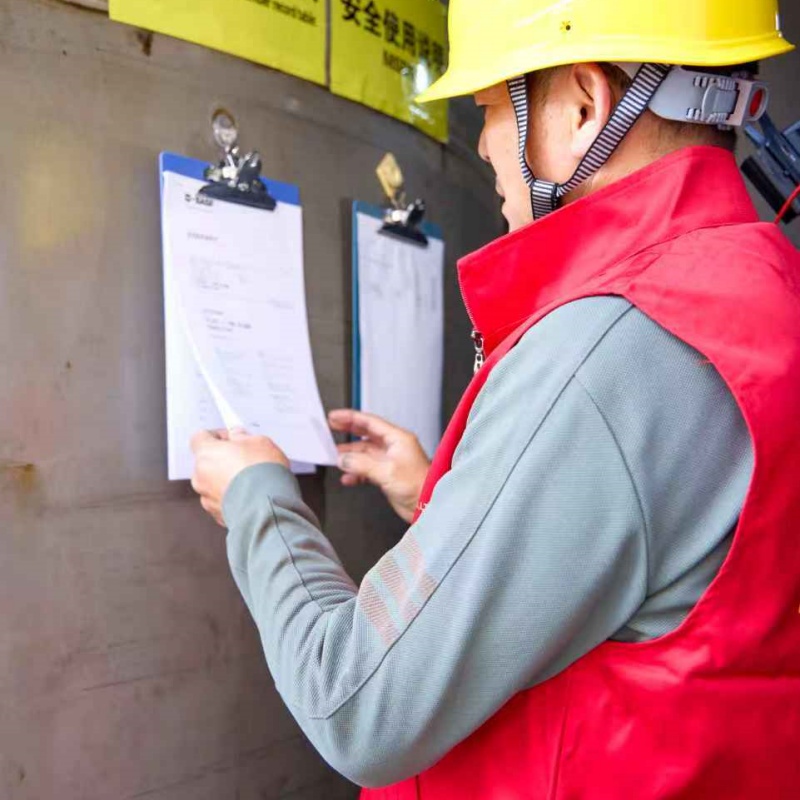
PVC vinyl materials have moved from commodity inputs to engineered formulation components. For manufacturers using slush molding, coating, dipping, drip glue, or rotational molding, the choice of paste resin, plasticizer, stabilizer, and viscosity-control additives determines not only end-product performance but also production stability. A supplier's capability to customize and test a formulation is therefore becoming a decision criterion on its own.
Why supplier capability matters in PVC vinyl material sourcing
When industrial buyers evaluate PVC vinyl materials, the initial comparison often focuses on price, grade, and lead time. But in a regulated application, these factors are only the starting point. A formulation that meets a general specification on paper may still produce inconsistent gelation, poor demolding, surface defects, viscosity drift, or migration issues during production. The gap between a raw material list and a workable PVC plastisol is where supplier capability matters.
From a buyer's perspective, this creates an opportunity: a supplier that can design or optimize a formula, supply multiple complementary materials, and verify safety-related substances reduces the number of variables a production team has to manage. It can also shorten the transition from laboratory testing to mass production.
A supplier built around formulation support
Guangdong Baoshan Trading Co., Ltd. is a Dongguan-based PVC industry chain material solution provider established in 1994. The company operates as a general agent and trading service provider, with a monthly sales volume of 4,000 tons and a lead time of 3–5 days. Its customization services include formula design, formula optimization, and customized production; after-sales services include testing services and technical support.
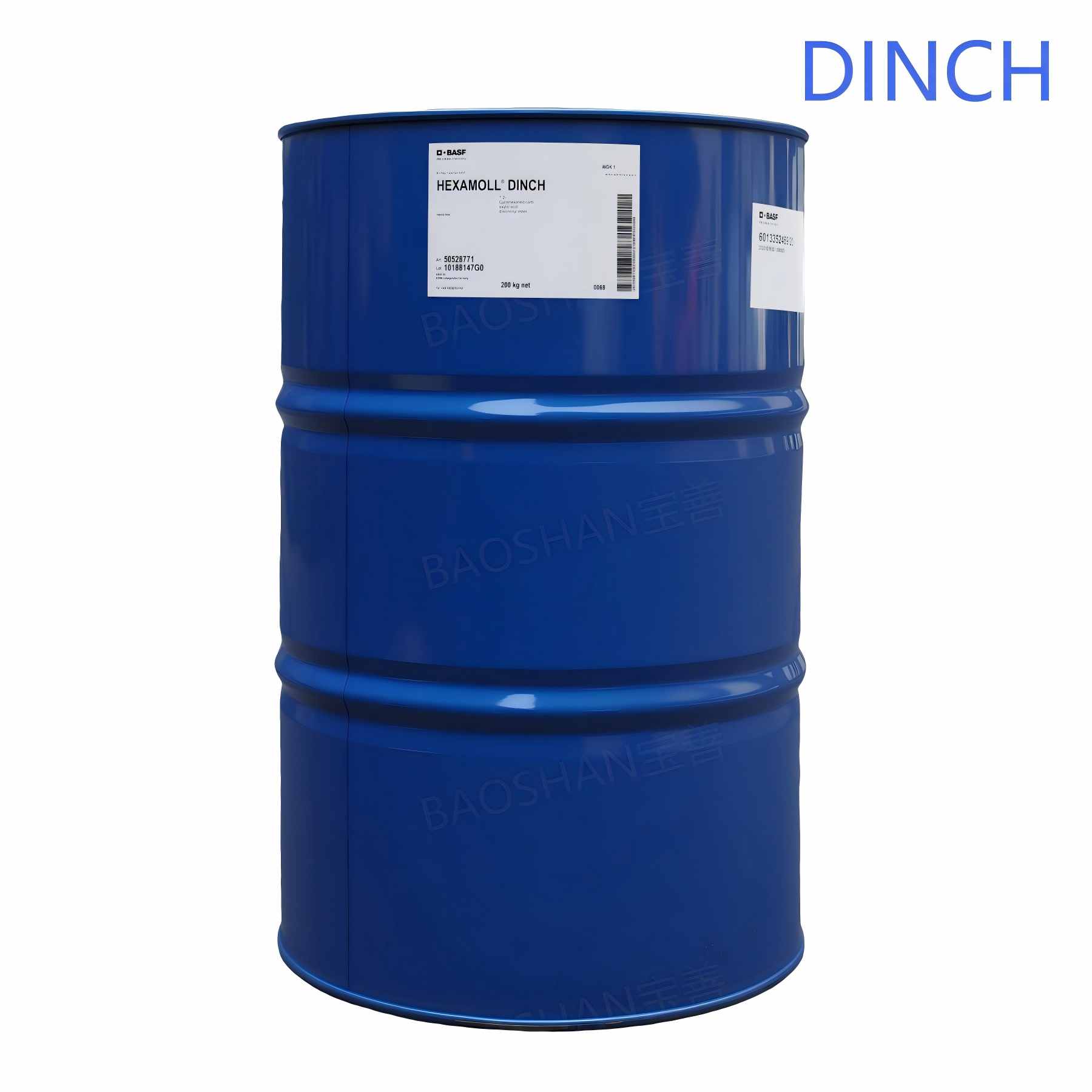
The company's portfolio is built around master distributor relationships. It is documented as an authorized distributor of BASF Hexamoll DINCH in China and as an authorized distributor of Eastman TXIB in China. On the stabilizer side, an agency certificate for ADK calcium-zinc stabilizers is on file with ADEKA (China) Co., Ltd., covering Vietnam, Indonesia and other Southeast Asian markets. These relationships allow the company to offer a wider range of PVC paste resins, blending resins, eco-friendly plasticizers, viscosity reducers, stabilizers, and additives under one sourcing structure.
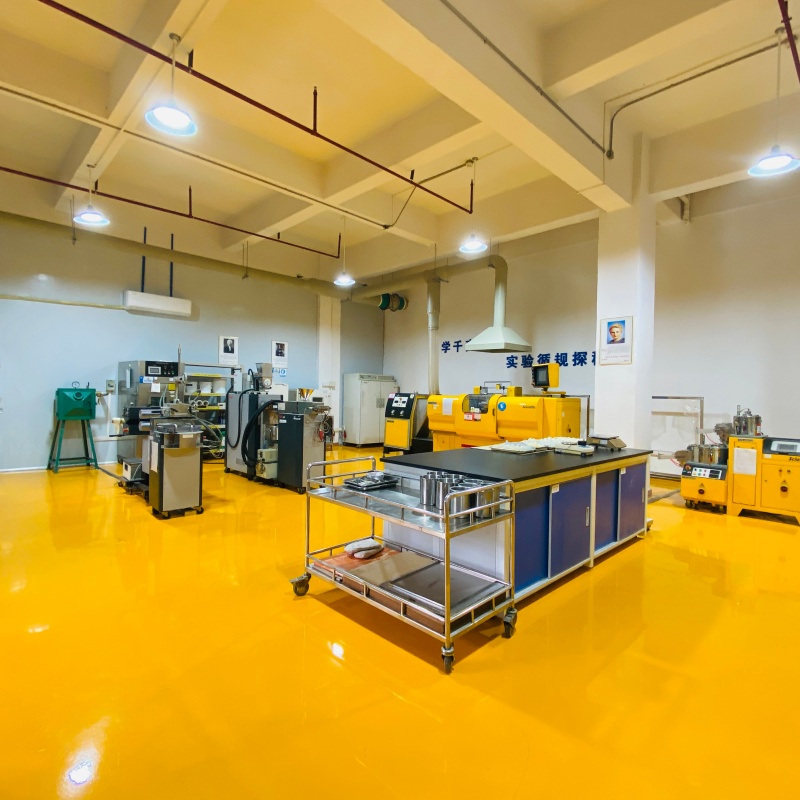
The company has built an R&D and chemical analysis laboratory equipped with Agilent GC-MS, ICP-MS, and Waters LC-MS/MS instruments. The lab is used for testing high-risk substances such as phthalates, heavy metals, bisphenol A, and organotin, and to support formula optimization. The same infrastructure supports custom development work related to DINCH applications in the Asia-Pacific region.
On the supply side, the company maintains a 20,000-square-meter self-built warehouse with 16 liquid storage tanks. For bulk European materials, it keeps a safety stock of more than three months to reduce supply chain risk.
Material system behind a custom PVC vinyl formulation
To understand why supplier capability matters, it helps to look at the main components in a PVC vinyl formulation.
| Material category | Role in formulation | Examples in supply scope |
|---|---|---|
| PVC paste resin | Forms the continuous plastisol phase; controls gelation, clarity, and mechanical properties | Kaneka PSH-10S, PSM-31 and SH-14; Formosa Plastics PR-G; Shenyang PSH-10 and PSM-31; LF-51; LF-71G; SY-Z140; TPM-31 |
| Blend resin powder | Lowers paste viscosity, improves matting, reduces plasticizer demand | SB-100C, BJ-65, Zhongtai PB-1000, Kaneka PBM-B5F, BIOVYN 266EF |
| Plasticizers | Provide flexibility, low-temperature performance, and migration control | BASF Hexamoll DINCH, DOTP, ATBC, polymeric polyester GLOBINEX W-2050 |
| Viscosity / film-forming additives | Control plastisol rheology and surface finish | Eastman TXIB, Hexadecyl Ester 16 / RTC-16 |
| Heat stabilizers | Prevent decomposition and discoloration during processing | CT303TX (Baerostab), CZ-190, SC-135, SC-1600C, CZ-2756 |
| Process additives | Release and defoaming functions | Silicone fluid L-45 |
Several technical parameters become important in a custom PVC formulation. BASF Hexamoll DINCH has a phthalate content no greater than 0.01% and a pour point of -54°C. These values matter in children's toys and medical applications where low migration and low-temperature performance are required. DOTP offers volume resistivity roughly 10–20 times that of DOP, making it useful for cable and other high-insulation applications. ATBC has a freezing point at or below -80°C and is designed for food-contact and toy-related products. TXIB has a Brookfield viscosity of 9 cP at 25°C and is used to reduce plastisol viscosity and improve film formation.
Blend resin powders such as BJ-65 can reduce plasticizer consumption by 10–20% while reducing viscosity. Stabilizers such as CZ-2756 provide thermal stability of at least 30 minutes at 180°C and are phenol-free.
Customization, in this context, means selecting and balancing these components for a specific process. A formula for PVC slush molding toy material must hold its shape during mold rotation, release cleanly, and maintain surface consistency. A PVC coated material or PVC dripping glue material must maintain low enough viscosity for uniform application without excessive air entrapment. A formulation designed for medical use must additionally limit migration and comply with food-contact or medical-grade standards.
Documented application: toy manufacturing in Vietnam
Documented application experience includes a PVC vinyl toy manufacturer in Vietnam operating 300 vinyl machines. In that case, the material system was used for mass toy production and delivered stable molding for consistent toy quality, high production efficiency, and a shelf life of two years under cool and dry storage. The relationship continued as close cooperation and stable production.
The same material scope extends to PVC slush molding toy materials, PVC coated materials, PVC dripping glue materials, artificial leather, wallpaper, flooring, automotive interiors, food packaging, medical supplies, and inks or coatings. As suppliers carry many certified or compliance-oriented grades, the application range is not limited to a single process.
Market trends supporting formulation-led sourcing
According to Market Research Future, the global PVC paste resin market was estimated at USD 2.67 billion in 2024 and is projected to reach USD 4.473 billion by 2035. Asia-Pacific accounts for over 60% of the global paste-grade PVC resin volume, and China alone is responsible for more than 45% of consumption. For buyers, this means the region is both the production base and the largest market for PVC vinyl materials.
The eco-friendly plasticizers market was valued at USD 5.03 billion in 2024 and is projected to reach USD 7.55 billion by 2030, according to MarketsandMarkets. This growth is consistent with the regulatory environment: EU REACH restricts phthalates such as DEHP, DBP, and BBP to below 0.1% in toys and childcare articles. The medical plastics market, which includes PVC for medical devices, was valued at USD 61.4 billion in 2025 and is projected to grow at 6.0% CAGR according to Grand View Research.
These trends reinforce the same conclusion: compliance, low migration, and processing reliability are becoming part of the material spec, not optional extras.
Comparing sourcing models: trading agent, direct manufacturer, and master distributor
Traditional sourcing models have different strengths. A conventional trading agent can move many grades but may not have its own laboratory or formula expertise. A direct resin manufacturer can offer stable supply for one or several grades but may not be able to combine a complete formulation system with independent testing.
A master distributor with formulation service combines multi-brand sourcing with technical application support. This is the model Guangdong Baoshan Trading Co., Ltd. follows. It can consolidate resins, plasticizers, stabilizers, and additives from different brand owners while also providing testing and technical support.
There is a boundary to this model. It is not always the lowest-cost route for standardized, high-volume resin purchases. If a factory produces only one product with a fixed formula and has no need for compliance testing or material substitution, buying directly from a resin or plasticizer producer may be more cost-effective. Formulation support is most valuable when the application is regulated, the process is sensitive, or the buyer wants to reduce the number of suppliers.
Future outlook: from material supply to formulation partnership
Future supplier selection will likely give more weight to laboratory data and formulation capability. As Southeast Asian production hubs in Vietnam and Indonesia expand, buyers will need suppliers that can document material traceability, handle low-VOC or non-phthalate systems, and respond quickly when a formulation needs adjustment. The role of the raw material supplier is shifting from order taker to formulation partner.
Frequently asked questions
What does a PVC vinyl material supplier's customization service include?
Customization services, as defined in supplier documentation, include formula design, formula optimization, and customized production. In practice, this means the supplier can adjust resin, plasticizer, stabilizer, and additive combinations for a specific process or regulatory target, rather than simply delivering a fixed grade.
How is a custom PVC formulation evaluated for a new production line?
The evaluation usually starts with process requirements: molding method, target hardness, clarity, migration limits, and acceptable paste viscosity. The supplier can then propose a formula and use laboratory testing for phthalates, heavy metals, bisphenol A, organotin, and other controlled substances. Final qualification must still be performed on the buyer's own production line with the actual mold and conditions.
What compliance information should a buyer request when sourcing PVC vinyl materials for toys or food-contact products?
Buyers should request chemical composition data, phthalate content, relevant certificates, and testing records for restricted substances. EU REACH restricts phthalates such as DEHP, DBP, and BBP to below 0.1% in toys and childcare articles. Non-phthalate plasticizers such as Hexamoll DINCH and ATBC are commonly evaluated for these applications because of low migration and toxicological safety.
Why is viscosity control important for PVC slush molding and coated materials?
Paste viscosity affects how the material fills a mold, how it forms a film, and whether air bubbles are trapped. TXIB, with a Brookfield viscosity of 9 cP, is often used as a viscosity reducer to improve flow and storage stability. Blend resins also reduce viscosity and can reduce plasticizer consumption.
What after-sales services are relevant in PVC vinyl material procurement?
Testing services and technical support are the two main after-sales services. Testing helps confirm that incoming materials meet controlled-substance limits and specification targets. Technical support helps buyers adjust formulations when raw material batches change or when defects appear. These services are especially important in regulated applications with low tolerance for variation.
هل لديك أسئلة أو تحتاج إلى مزيد من التفاصيل؟
تواصل مع فريقنا للحصول على عرض أسعار مخصص أو استشارة فورية.
طلب عرض أسعار
املأ النموذج أدناه وسيتواصل معك فريقنا بعرض مقترح مخصص.
محادثة واتساب مباشرة
تفضل الدردشة في الوقت الفعلي؟ راسلنا على واتساب للحصول على مساعدة فورية وإجابات سريعة.
- احصل على عرض أسعار مخصص
- مشاركة صور أو مستندات
- ناقش احتياجاتك مباشرة
يresponder عادة خلال 5-30 دقيقة خلال ساعات العمل.