
PX, PC and 2PG-Y Crusher Combinations for Stone Crushing
A stone crushing production line is not specified machine by machine in the way it is eventually operated. It is specified as a chain of duties — coarse reduction, secondary reduction, fine reduction or shaping, and final sizing — and the crushers chosen for the middle and the finish of that chain decide how much work the screens must do afterwards.
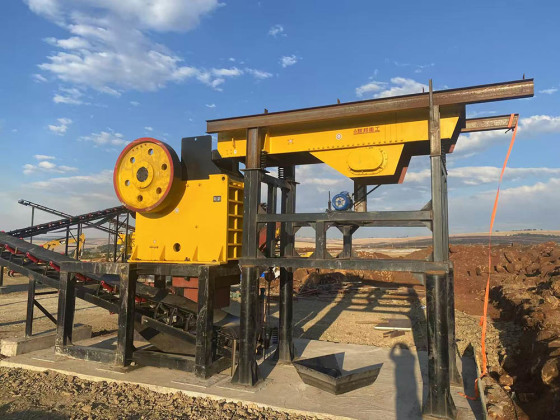
A complete aggregate production line supplying road and port construction: crusher stages and screening stages have to be sized together, not separately.
This shortlist looks at three crusher families that frequently appear in the same tender for a stone crushing production line: the PX Crusher (a new type fine impact crusher used as a sand maker or fine crusher), the PC Crusher (a hammer crusher family), and the 2PG-Y Roller Crusher (a hydraulic two-roll roller crusher). The purpose is not to rank them, but to show how a buyer should compare combinations of them by line stage, by material role, and by compatibility with the YK Screen that classifies their output.
Shandong Lianbang Heavy Industry Co., Ltd., trading under the brand Shanyuan LBZG, is a Linyi, Shandong-based manufacturer of sand-stone crushing, sand-making and solid-waste recycling equipment. Registered in 2013, with technical origins traced back to Chengming Machinery (1996), the company supplies both standalone machines and complete EPC production lines, and is a participant in revising national crusher industry standards.
Why a combination shortlist beats a single-machine comparison
When a PX Crusher, a PC Crusher and a 2PG-Y Roller Crusher are compared side by side on catalog tonnage alone, the comparison usually fails at the first engineering review. The three machines do different jobs. A hammer crusher reduces a large feed in a single pass. A fine impact crusher shapes what has already been reduced. A roller crusher sizes a limited tonnage to a controlled product. Placing any of them at the wrong stage produces a line that either recirculates excessively or cannot reach its target gradation.
A documented capacity-matching rule for crushing and screening plants gives a workable frame for the comparison. The feeder is normally sized at 1.1–1.2 times the rated capacity of the primary crusher; the secondary crusher at 1.0–1.1 times the actual output of the primary stage; the vibrating screen at 1.2–1.3 times line capacity; and the belt conveyor at 1.2 times maximum flow. The intent is that no single unit runs permanently at its limit and no stage starves the next one.
Three axes for comparing PX, PC and 2PG-Y combinations
- Line stage. Is the crusher doing secondary reduction, tertiary or fine reduction, or final sizing? Stage determines acceptable feed size, and therefore what the previous unit must deliver.
- Material role. Reduction, shaping, or sizing into a narrow band. Hammer crushing, impact fine crushing and roll crushing change the particle population in different ways, and the required product gradation decides which effect is wanted.
- Downstream compatibility. The YK Screen has to handle the crusher’s actual output, not its rated output. Layer count, screen aperture and unit capacity are the practical constraints.
The shortlist: four combinations worth comparing
The combinations below are assembled from catalog models and catalog capacity ranges. They are starting points for a technical discussion rather than a guarantee of site performance; catalog output is measured under standard test conditions, and actual throughput varies with rock hardness, feed size, moisture content and feeding continuity.
| Option | Line stage | Crusher combination (catalog models) | Catalog capacity | Paired YK Screen | Belt conveyor |
|---|---|---|---|---|---|
| A — Compact | Secondary → fine | PC-600×400 or PC-800×600; optional PX-800 for a fine fraction | PC: 50–80 t/h and 60–130 t/h; PX-800: 30–45 t/h crushing duty | 2YK-1248 or 3YK-1248 (5.5 kW) | B400 / B500 |
| B — Mid-duty | Secondary → fine | PC-1000×800 or PC-1000×1000; PX-1010 for a fine stage | PC: 80–200 t/h and 100–260 t/h; PX-1010: 45–55 t/h | 3YK-1548 or 3YK-1854 (7.5–11 kW) | B650 / B800 |
| C — Heavy-duty | Secondary / tertiary | PC-1500×1200 or PC-1600×1600; PX-1614 for fine duty | PC: 300–680 t/h and 500–1,000 t/h; PX-1614: 100–140 t/h | 3YK-2160 / 3YK-2470 (15–22 kW), usually in parallel | B800 / B1000 / B1200 |
| D — Sizing loop | Final sizing | 2PG-600 or 2PG-1000 hydraulic two-roll roller crusher, downstream of the PC or PX stage | 2–18 t/h | 2YK-1248 or 3YK-1248 | B500 |
Option A — a compact line built around one hammer crusher
Option A suits a small stone plant where the feed has already been reduced and the target is a single aggregate band. The PC-600×400 hammer crusher is catalogued at 50–80 t/h with a discharge size below 15 mm; the PC-800×600 is catalogued at 60–130 t/h with the same discharge band. Both use a high-manganese steel hammer head and a cast steel rotor, and both are listed for stone plant, cement, coal and building material fine crushing.
The 2YK-1248 (two layers) or 3YK-1248 (three layers) screen is the natural partner at this scale: 5.5 kW motor, screen aperture below 50 mm, and a catalog capacity of 15–200 t/h, with total weight of 3.6 t and 3.8 t respectively. Where a manufactured-sand fraction is also required, a PX-800 fine impact crusher is catalogued at 30–45 t/h on its crushing duty with a 5–20 mm discharge band, which makes it a finishing unit rather than a replacement for the hammer stage.
Option B — the mid-duty configuration most tenders settle on
Option B is where a PX and a PC crusher most often appear together in the same flow sheet. The PC-1000×800 (80–200 t/h, discharge below 15 mm) or PC-1000×1000 (100–260 t/h, discharge below 15 mm) carries the main reduction duty. A PX-1010 fine impact crusher at 45–55 t/h, with a 5–20 mm discharge band, then handles the fine or sand-making fraction.
The screening stage moves up one size class: 3YK-1548 (7.5 kW, 4.8 t) or 3YK-1854 (11 kW, 5.8 t), both three-layer units with apertures below 50 mm and a 15–200 t/h catalog range. Belt conveyors in this band are the B650 (80–200 t/h) or B800 (280–500 t/h). Because the PC stage and the PX stage produce different particle populations, three screening layers are usually needed to keep the return load from the PX stage separate from the main aggregate cuts.
Option C — heavy-duty reduction with a parallel screening bank
Option C is the configuration for a large stone crushing production line. The PC-1500×1200 hammer crusher is catalogued at 300–680 t/h with a discharge below 20 mm, and the PC-1600×1600 at 500–1,000 t/h with a discharge below 25 mm; both are classed as heavy-duty hammer configurations with total weights of 36 t and 76 t respectively. A PX-1614 fine impact crusher at 100–140 t/h can sit downstream for fine or sand-making duty.
This is also where the screening decision changes character. The largest YK units documented — 3YK-2160 (15 kW, 7.5 t) and 3YK-2470 (22 kW, 8.8 t) — are catalogued in the same 15–200 t/h band as the smaller models. A line targeting several hundred tonnes per hour therefore needs a screening bank rather than a single screen, and the number of screens becomes a cost line in the shortlist that buyers frequently omit at the enquiry stage.
Option D — where the 2PG-Y Roller Crusher belongs
The 2PG-Y Roller Crusher is a hydraulic two-roll machine, catalogued in two documented models: 2PG-600 with a 600 mm roll diameter, 950 mm roll length, 2–18 t/h capacity, 18.5 kW × 2 motor power and a total weight of 7 t × 2; and 2PG-1000 with a 1,000 mm roll diameter, 950 mm roll length, 2–18 t/h capacity, 37 kW × 2 motor power and a total weight of 18 t × 2. Both use a cast steel roll with an alloy steel roll skin and are listed for cement, metallurgy, building material, refractory material and coal crushing.
Its role in a combination is final sizing, not main reduction. Where a buyer needs a controlled final product from a brittle feed, the roller crusher is placed after the PC or PX stage and closed against a small screen. A documented combination illustrates this: in a cement and building materials aggregate project operated by Sinoma Group, the equipment list for the crusher and screening sets includes the PC-800×600 hammer crusher, the 2PG-600 roller crusher, the 3YK-1548 circular vibrating screen, the ZSW-490×96 vibrating feeder and the B800 belt conveyor, deployed across three production lines with a recorded cement-grade aggregate qualification.
Comparing the three crusher families by material role
| Family | Documented type | Discharge band (catalog) | Wear part described | Listed applications |
|---|---|---|---|---|
| PX Crusher | New type fine impact crusher (sand maker) | 5–20 mm | High-manganese steel hammer head, cast steel rotor | Sand making, building material, metallurgy, refractory material fine crushing |
| PC Crusher | Hammer crusher, compact to heavy-duty configurations | Below 10 mm (PC-400×300) to below 25 mm (PC-1600×1600) | High-manganese steel hammer head, cast steel rotor | Stone plant, cement, coal, mining, building material fine crushing |
| 2PG-Y Roller Crusher | Hydraulic two-roll roller crusher | Controlled sizing through roll setting | Cast steel roll, alloy steel roll skin | Cement, metallurgy, building material, refractory material, coal crushing |
The table shows why the three are complementary rather than interchangeable. The PC family spans the widest capacity range and the widest discharge range in the group, which is why it appears in every option except the sizing loop. The PX family is a fine-duty device across all its documented models, with a fixed 5–20 mm discharge band. The 2PG-Y family is a narrow-throughput, precisely sized device, and it is the only one of the three whose listed applications are dominated by cement, refractory and coal rather than quarry aggregate.
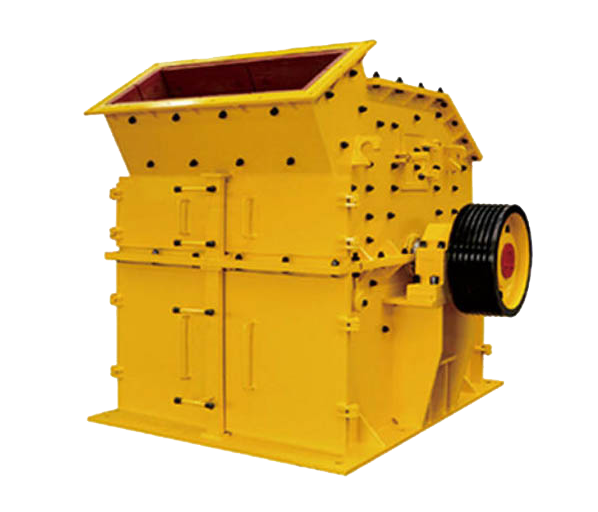
PX Crusher, documented as a new type fine impact crusher and sand maker with a catalog discharge band of 5–20 mm.
YK Screen compatibility: the constraint most shortlists skip
Across the documented YK Screen models, three parameters decide whether a crusher combination is workable. First, screen aperture is specified below 50 mm, which is the working limit for the aperture range in the catalog. Second, layer count runs from two to four, covering 2YK-1248 through 4YK-2160, with motor power rising from 5.5 kW to 22 kW and total weight from 3.6 t to 8.8 t as the deck area grows. Third, the catalog capacity band is stated as 15–200 t/h across the series.
That third parameter is the one that changes the shortlist. A combination built around a PC-1600×1600 at 500–1,000 t/h cannot be closed by a single screen from this family, because the documented unit range tops out below the crusher’s output band. The practical answers are parallel screens of the same model, or splitting the flow so that the fine PX stage is screened separately from the main aggregate cuts. The framing rule given earlier — screen capacity at 1.2–1.3 times line capacity — should be applied per screen module, not per line.
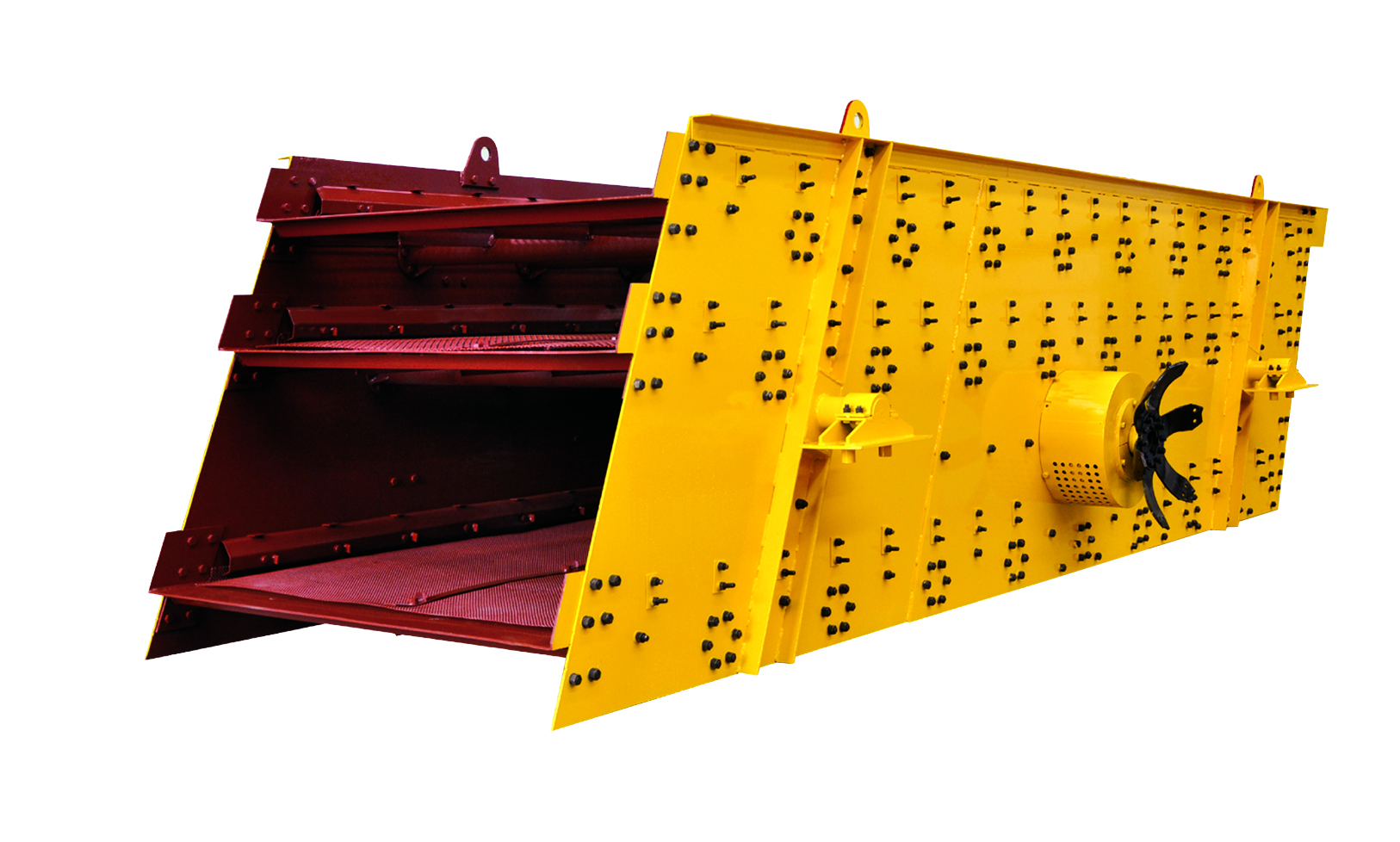
YK series circular vibrating screen: 2–4 layers, screen aperture below 50 mm, catalog capacity 15–200 t/h per unit.
What the shortlist does not solve
Three limitations are worth stating before any of these combinations is written into a tender document.
- Roller crusher throughput is low in absolute terms. Both documented 2PG-Y models are catalogued at 2–18 t/h. That is a sizing duty, not a production stage, and it cannot carry the tonnage of a line built around a PC-1000×1000 or larger unit.
- Hammer crushers are sensitive to moisture and abrasion. Hammer crushing handles moist and sticky feed less well than impact or compression crushing, and high-silica feed accelerates hammer wear. Hammers, screens and similar consumables are wear items that are excluded from main-machine warranty coverage, so the cost of the PC stage is a running cost, not a one-off purchase cost.
- Catalog figures are not site figures. Rated capacity is measured under standard test conditions. Actual throughput shifts with material hardness, feed size, mud and moisture content, power supply stability and the wear condition of consumable parts. A shortlist should therefore be read as a ranking of configuration logic, and confirmed against site conditions before purchase.
A fourth boundary applies to the PX family specifically. Because every documented PX model discharges into a 5–20 mm band, a PX crusher is a fine-reduction and shaping device. It does not replace the coarse or secondary reduction stage; it narrows the product after that stage has already been done.
Where these combinations have been applied
The combinations above map onto the project types where LBZG equipment is documented in service. National key highway and railway projects, including the Lunan High-Speed Railway reference line, run in 24/7 continuous production with strict gradation and particle-shape requirements; the documented Lunan configuration combines 14 main units, including three PE-1200×1500 jaw crushers, three sets of cone crushers, two VSI sand makers, four YK-series screens and two ZSW-series feeders, across a capacity range of 2,000–40,000 t/d and more than five years of operation. The same project record lists 20 units of jaw, cone, impact and sand-making equipment, including a PX-1614 fine impact sand maker, which places the PX family in a large railway aggregate line rather than only in small sand plants.
Hydropower and water conservancy projects place a different demand on the same logic: long-term continuous production, high-strength aggregate specification, a wear-resistant crushing chamber and remote-site serviceability. New town and airport construction projects add large-volume output with airport-grade aggregate specification and dust suppression. Overseas quarry and infrastructure projects — including Belt & Road export lines, one of which is documented at a continuous 350 t/h output with a PE-600×900 primary jaw crusher, a PF-1214 impact crusher, YK screens and BS conveyors operating for more than three years — require the combination to be adapted to local voltages of 380V, 440V, 415V or 660V and to tropical, arid or high-altitude conditions.
For a buyer evaluating these options, the practical takeaway is that the crusher combination and the screening bank should be tendered as one scope. Splitting them across two suppliers usually transfers the recirculating-load risk back to the operator.
Market context for combination-based procurement
Procurement behaviour in this category is shaped by a market that is large, geographically distributed and increasingly sensitive to operating cost. Market Research Future estimates the global stone crushing equipment market at USD 8.47 billion in 2024. On the supply side, the Observatory of Economic Complexity reports that China was the leading exporter of machines to crush or grind stone, ores and minerals in 2024, with exports valued at USD 1.38 billion, which keeps a wide pool of Chinese crusher and screen suppliers in most international shortlists.
Equipment mix is also stable in a way that favours combination thinking. Polaris Market Research reports that jaw crushers held a 35.2% share of the crusher market in 2025, reflecting their role as the standard primary stage. Downstream demand remains volume-driven: USGS and Research Nester data record United States crushed stone production of 1.5 billion tons in 2023, valued at over USD 24 billion. Where the primary stage is standardised, differentiation between suppliers shifts to the secondary, fine and screening stages — which is exactly where a PX, PC and 2PG-Y combination is decided.
Regulatory direction adds a further reason to compare combinations rather than single units. ISO 21873-2:2019 specifies safety requirements and verification for mobile crushers used to crush rock or reprocess construction materials, and a 2026 revision of China’s mandatory energy efficiency standards is reported to add standby power limits to industrial machinery. Both trends push specification conversations towards total line configuration, because energy and safety performance are properties of the line, not of one machine.
Future outlook
Two shifts are likely to affect how PX, PC and 2PG-Y combinations are specified over the next procurement cycles. The first is the move from single-machine comparisons to line-level performance commitments, in which the supplier is asked to state gradation, recirculating load and power consumption for the whole flow rather than catalog tonnage for one crusher. The second is the growing share of projects where aggregate production is paired with waste-to-resource output: the documented construction waste project using YCG-J750 and YCG-I1214 tyre-type mobile stations recorded on-site processing, zero transport waste and a 60% reduction in disposal cost relative to landfill over a project duration of more than two years, which shows how recycling duty is now evaluated on the same cost logic as quarry aggregate.
For buyers, the practical implication is that a combination shortlist should be built early, before individual machine quotations are requested, because the screening stage and the recirculating load are the two items that are hardest to change after the layout is fixed.
FAQ
Where does a PX Crusher sit in a stone crushing production line compared with a PC Crusher?
Both are reduction devices, but at different stages. The PX Crusher is documented as a new type fine impact crusher and sand maker with a catalog discharge band of 5–20 mm across all its models, and crushing-duty capacities ranging from 30–45 t/h (PX-800) to 210–270 t/h (PX-1822). The PC Crusher is a hammer crusher family with a catalog discharge band from below 10 mm (PC-400×300) to below 25 mm (PC-1600×1600) and capacities from 30–50 t/h to 500–1,000 t/h. In line terms, the PC stage performs the main reduction and the PX stage performs fine reduction or shaping after it.
How should a YK Screen be matched to a PX or PC crusher in the same line?
Match on three parameters. First, screen aperture: documented YK models are specified with a screen hole size below 50 mm. Second, layer count: models run from two to four layers (2YK-1248 to 4YK-2160), which determines how many product cuts can be separated in one pass. Third, capacity: the documented catalog capacity band across the YK series is 15–200 t/h per unit, so the documented matching rule of screen capacity at 1.2–1.3 times line capacity should be applied per screen module. Where a crusher combination exceeds the capacity of one screen, parallel screens or a split flow are required.
What role does the 2PG-Y Roller Crusher play in a combination, and when is it unnecessary?
The 2PG-Y Roller Crusher is a hydraulic two-roll roller crusher, documented in two models: 2PG-600 (600 mm roll diameter, 950 mm roll length, 2–18 t/h, 18.5 kW × 2, 7 t × 2) and 2PG-1000 (1,000 mm roll diameter, 950 mm roll length, 2–18 t/h, 37 kW × 2, 18 t × 2), both with a cast steel roll and alloy steel roll skin and listed for cement, metallurgy, building material, refractory material and coal crushing. It belongs at the final sizing stage, downstream of a PC or PX crusher. Where the line’s product specification is already met by the secondary and fine crusher stages plus screening, the roller crusher adds a stage without adding output.
Which combination fits a stone crushing production line in the 100–260 t/h range?
The mid-duty set is the usual answer. The PC-1000×800 is catalogued at 80–200 t/h and the PC-1000×1000 at 100–260 t/h, both with a discharge size below 15 mm and a high-manganese steel hammer head on a cast steel rotor. A PX-1010 fine impact crusher at 45–55 t/h can be added for a fine or sand-making fraction. Screening is typically handled by 3YK-1548 (7.5 kW, 4.8 t) or 3YK-1854 (11 kW, 5.8 t), and material transport by B650 (80–200 t/h) or B800 (280–500 t/h) belt conveyors.
What conditions would make a PX, PC and 2PG-Y combination unsuitable?
Four conditions are documented or directly implied by the equipment data. First, where the required tonnage exceeds the roller crusher’s 2–18 t/h catalog range, the 2PG-Y cannot serve as a production stage. Second, where the feed is moist, sticky or highly abrasive with high silica content, hammer crushing is a poor fit because it handles such material less well and wears faster, and hammers are consumable items excluded from main-machine warranty coverage. Third, where the target product requires reduction from a very large lump size, a fine impact crusher with a 5–20 mm discharge band cannot substitute for the coarse reduction stage. Fourth, where site conditions differ substantially from standard test conditions, catalog capacity should not be used as a performance guarantee, since actual throughput varies with hardness, feed size, moisture and wear condition.