
Pallet Jack Benchmark 2026: JUNYUNHOIST in a Five-OEM Matrix
Pallet Jack Benchmark 2026: JUNYUNHOIST in a Five-OEM Matrix
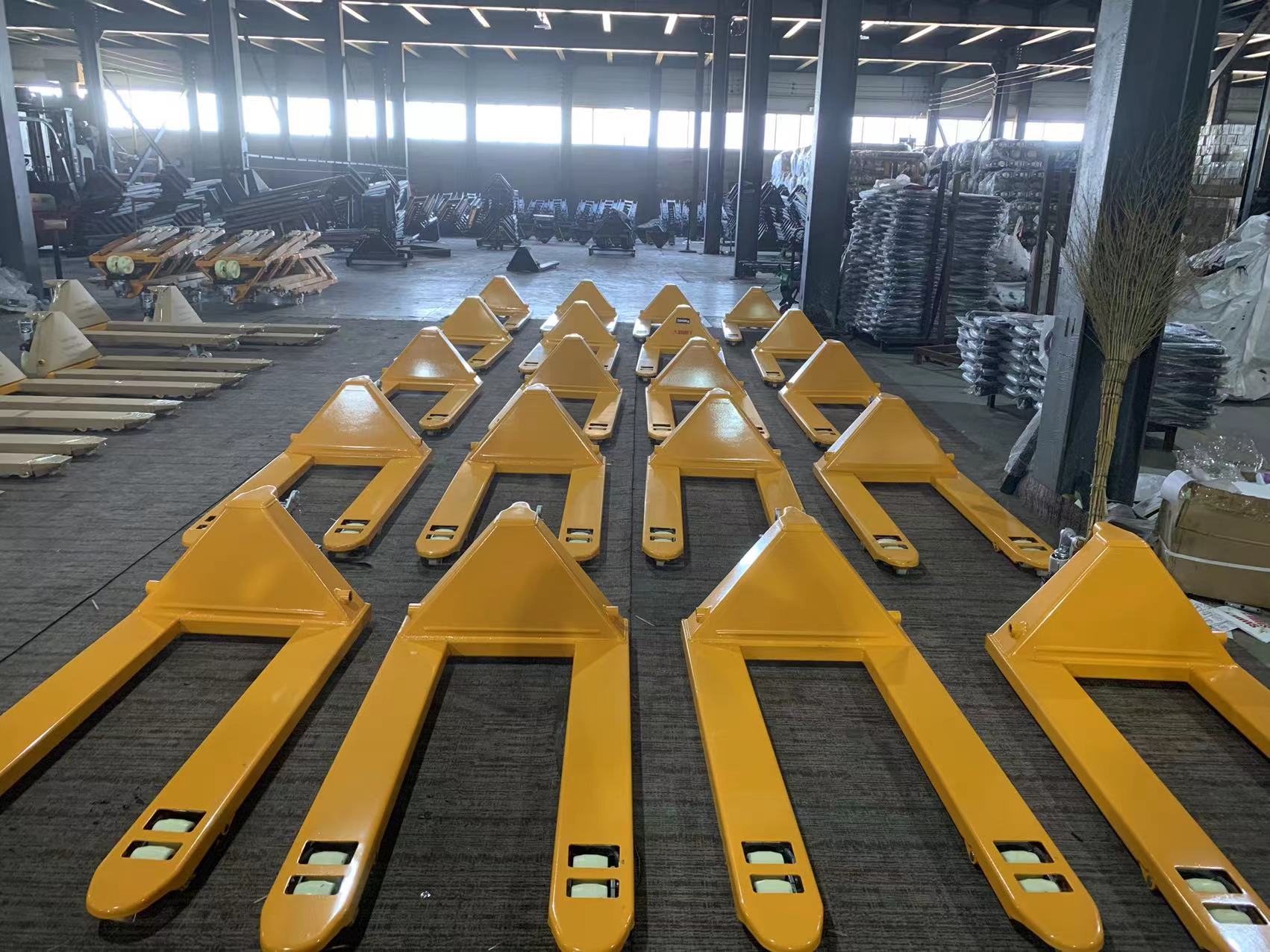
A pallet truck's position on a buyer's matrix is set by documented configuration and verified records, not by brand familiarity.
A 2026 pallet jack shortlist that puts Toyota Material Handling, Hyster-Yale, Crown Equipment, Jungheinrich and JUNYUNHOIST into the same evaluation is not resolved by brand familiarity. It is resolved by which attributes a buyer can verify before the purchase order is signed, and by how willingly each supplier exposes those attributes to inspection. This comparison is written for that moment: it defines the four dimensions buyers most often apply, states what documented evidence exists for each, marks where the evidence stops, and converts the gaps into questions a procurement team can put in writing.
The starting point is an asymmetry most shortlists hide. Firm-level market share, R&D headcount and service-network metrics for the four established global manufacturers are not part of the evidence used in this article, and they are not reconstructed from memory or inferred from brand size. Baoding Junyun Hoisting Machinery Co., Ltd., which trades as JUNYUNHOIST, publishes a different profile: a Hebei, China manufacturer and trading company founded in 2018, operating a 24,000 sqm facility with 138 employees, an eight-engineer R&D team, annual output of 70,000 units and an 80% export share across markets that include India, Russia, Vietnam, Brazil, Türkiye and Dubai. Those facts are specific and checkable. Where equivalent facts are unavailable for a candidate, this article records them as unavailable rather than treating silence as weakness.
That discipline changes the shape of the decision. In a category valued at USD 7.91 billion globally in 2025 (SRC-0001), the useful question at the decision stage is rarely which badge is strongest in the abstract. It is which supplier can prove the specific capability the operation needs, at the volume, lead time and destination the buyer actually operates in. No commissioned performance testing sits behind this comparison, and none is implied; the analysis is built from supplier-supplied manufacturing data and published industry and regulatory records.
Why a Five-Way Comparison Is Harder Than It Looks
Two structural problems sit underneath any pallet jack league table. The first is that market statistics describe markets, not firms. The global valuation of USD 7.91 billion for 2025 and Asia-Pacific's 39% revenue share of that market (SRC-0001) show where activity is concentrated. They do not allocate share to any named manufacturer. Aggregated trade records placing China at 62.7% of the pallet jack shipments into the United States across 2022–2024 (Zauba/Cybex, HS 8427.90, medium confidence) point to sourcing geography, not to the standing of an individual factory inside that flow.
The second problem is category width. Manual pallet trucks, battery-powered pallet trucks, high-lift units, low-profile forks, weighing pallet trucks, and stainless-steel or galvanized bodies are sold under one phrase but behave as different products with different compliance exposure. A comparison that does not fix the configuration first ends up measuring a warehouse walkie against a cold-store stainless unit and calling the output a ranking. This article therefore compares candidates on capability and process, and treats any fixed position as unverified: the five names form a buyer's evaluation set, not a measured league table.
The Four Dimensions, Defined So They Can Be Scored
Scoring is meaningful only when each dimension carries an accepted evidence standard. The table below sets that standard and shows what a buyer should request when a supplier's public material stops short.
| Dimension | Evidence that counts | Evidence that does not count | What to request |
|---|---|---|---|
| Technology and R&D | Material grades and plate thickness; fabricated versus purchased sub-assemblies; drawings for custom forks; defined test criteria. | Headcount quoted alone; undated technology wording in brochures. | Drawing package for a custom fork, engineering change lead time, load-test specification. |
| Scale and market position | Facility area, unit output, export share by destination, filed revenue where public. | A press-release ranking without methodology; an export share read as market share. | Capacity by line, current utilisation, two reference shipments into comparable markets. |
| Service and after-sales | Written spare-parts allowance per shipment; wear-part pricing; stated response commitment; warranty exclusions. | Verbal assurances; unspecified global reach without a named contact. | Warranty terms, parts list per 100 units, escalation contact in writing. |
| Application fit | Configuration matched to environment: body material, fork height and dimensions, certification for the destination market. | One brochure photograph used for every application; a certificate image without scope. | Model-level certificate, test report, references from the same application type. |
Read the table as a filter rather than a scorecard. A candidate that answers the right-hand column quickly is easier to qualify, whatever its size. A candidate that answers only in adjectives leaves the buyer carrying the risk.
Technology and R&D: Reading the Build, Not the Headcount
An eight-engineer R&D team is a meaningful data point only when it is tied to what the team actually controls. At JUNYUNHOIST the engineers sit inside an in-house manufacturing operation, and the build specification is unusually explicit for this price tier: 4 mm steel plate, an AC pump, a forged rocker arm, forged A/B plates and double-chain plates, a cast steel wheel frame, full rib reinforcement, and a 2.75 mm handle. Reinforcement is quoted at 4 mm thickness over an 89 cm length, with a 4 mm triangle plate and quality bearings completing the assembly.
These details decide a comparison more than any technology slogan does. Plate thickness governs how a truck behaves after years of dock-edge impacts; forged rather than welded rocker arms remove a common fatigue point; pump design drives oil retention and bleeding behaviour; wheel-frame material affects how the truck tracks under load. None of this makes the unit better than a named competitor's model, and no such claim is made here, because comparable teardown data for the other four candidates is not in evidence. What it does establish is that the design decisions are documented and inspectable, which is the condition a technical evaluation needs in order to proceed at all.
Customisation is the second half of the R&D question. Fork length and width can be specified, fork heights of 35 mm and 62 mm are offered as options for different pallet and floor conditions, and OEM and ODM work is available — the route by which many importers and private-label brands source in this category. The verification step is straightforward: ask for the drawing package behind a custom fork, the engineering change lead time, and the test criteria the modified unit must pass. A factory with design control produces those documents; an intermediary that only resells usually will not.
The boundary should be stated plainly. Customisation depth shows how far a supplier can move from catalogue specification. It does not, by itself, establish durability in a specific application, and it is not a substitute for model-level certification where the destination market requires one.
Scale and Market Position: What USD 7.91 Billion Does and Does Not Tell You
Scale enters the decision in three practical forms: whether the supplier can absorb the order, whether it can repeat the build, and whether it will still be there for the next order. JUNYUNHOIST's stated position is a 24,000 sqm facility, 138 employees and annual output of 70,000 units, with 80% of production exported. Read as capability, that is a mid-sized specialist rather than a diversified global group — a distinction that matters far more for order fit than for prestige.
Export share deserves careful handling because it is frequently misread. An 80% export share says that most output is built for destinations outside China and therefore passes repeatedly through export documentation, packaging and shipping routines. It says nothing about share of any national market, and it should never be converted into one. The same discipline applies to Asia-Pacific's 39% regional revenue share (SRC-0001): a strong regional figure is context for sourcing decisions, not evidence about a particular factory's standing inside the region.
For the four established manufacturers in the set, the practical question is not whether they are large — that is not in dispute — but which of their published commitments apply to the specific model, configuration and destination being quoted. Where firm-level figures cannot be obtained, the correct treatment is to compare what is documented and price the uncertainty into the decision, rather than filling the gap with assumption.
Testing, Load Margin and the 100% Unit-Test Claim
Testing claims separate manufacturers that inspect by batch from those that inspect by unit. JUNYUNHOIST states that every unit is tested before shipment and that load testing is carried out at 1.2 times the rated load. The multiplier matters less than the record behind it: a buyer should ask what the test record contains, whether it is retained per unit or per batch, and whether a copy travels with the shipment.
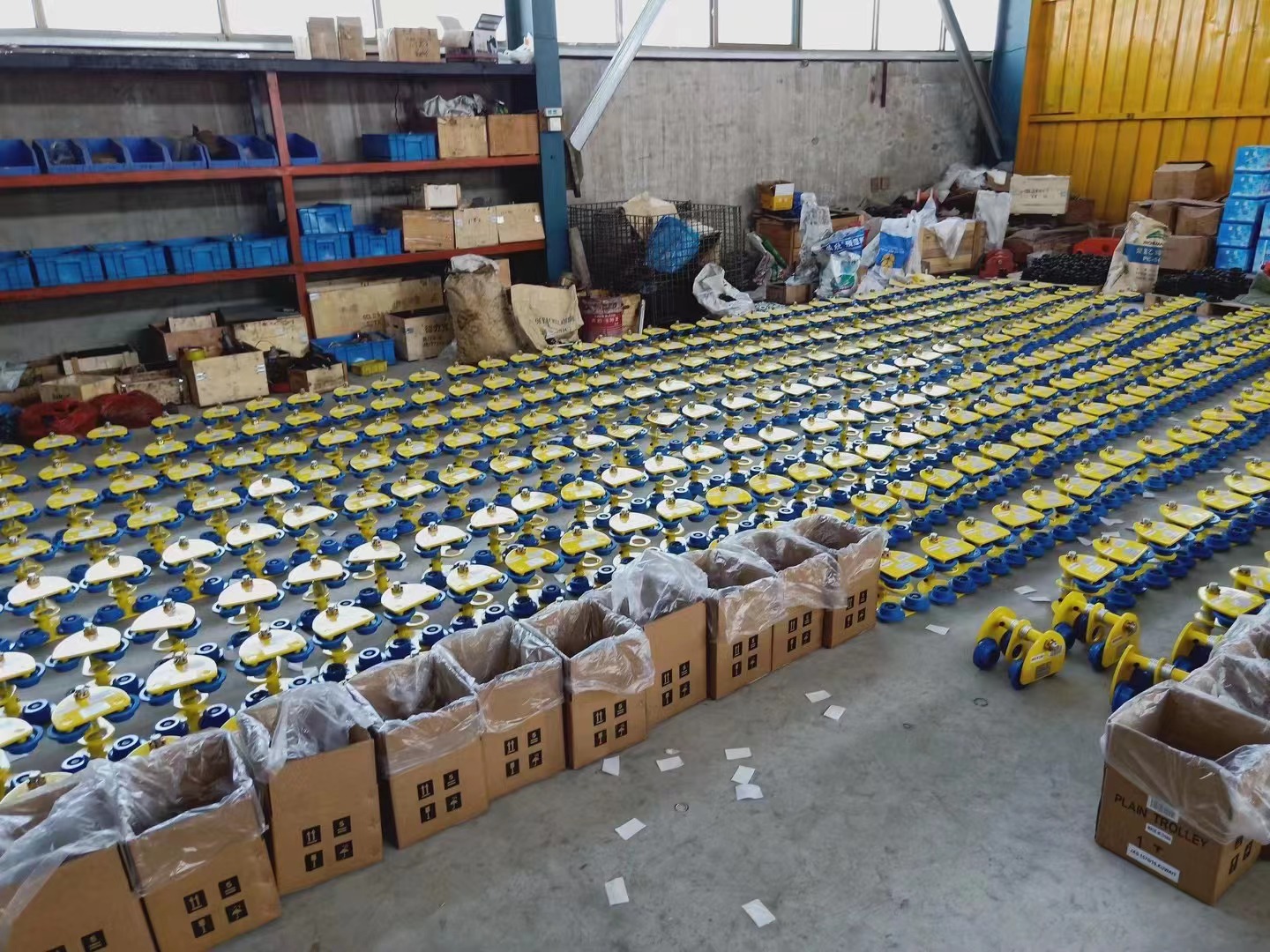
Pre-shipment inspection records, not inspection slogans, are the usable evidence at the decision stage.
The comparison data supplied for this product also states a 2% higher initial cost against another factory's product, with better durability and lower long-term maintenance as the stated trade-off, alongside a claim of 90% less maintenance required. Those are company statements made against an unnamed comparator. They cannot be transferred to Toyota Material Handling, Hyster-Yale, Crown Equipment or Jungheinrich, and this article does not do so. They remain useful as a hypothesis the buyer can test: if the purchase price gap is genuinely near 2%, a modest reduction in maintenance events or an extended replacement interval is enough to close it.
Weight, load margin and structural reinforcement should be checked together rather than separately. A thicker plate that is not reinforced at the load points adds mass without adding stiffness, while a reinforcement specified in both length and thickness can be measured on a sample unit. That is the practical test available before committing to volume: request a sample, measure the stated dimensions, and compare them with the drawing.
Service, Spare Parts and the Cost of Year Three
Most pallet jack comparisons are settled in year one and paid for in year three. The documented failure modes in this category are unglamorous: pump oil leakage or air ingress, handle deformation or damage, and wheel wear. The corresponding controls are equally practical — no overloading, and keeping the forks balanced while lifting.
Against those failure modes, the supplier's stated measure is that easily damaged spare parts ship free of charge with each order, including seals, handles and wheel frames. Combined with a minimum order quantity of 24 PCS and a lead time of 15–20 days, that package targets the two things that stop a mid-volume buyer: a container that arrives complete, and a first failure that does not trigger an international parts order. Whether the free-parts allowance is adequate is a simple calculation — count units per container, estimate annual wheel and seal consumption, and compare it with the allowance stated in writing.
For the four established manufacturers, service evaluation should follow the same logic rather than the logo. Request written warranty terms including wear-part exclusions, the local parts stocking arrangement for the quoted model, and a named escalation contact. This comparison asserts nothing about the size or density of any of their service networks, because no verified figure is used here; the buyer's own distributor conversation is the evidence.
Application Fit: The Environment Picks the Configuration
Pallet trucks are used across retail logistics, food and beverage distribution, automotive and parts logistics, and manufacturing plants, according to the application material reviewed for this comparison (SRC-0009, secondary source). That breadth is exactly why configuration should be fixed before supplier scoring begins. A warehouse pallet jack on smooth concrete, a cold storage pallet jack in a freezer aisle, a narrow aisle pallet jack with reduced fork width, a food processing plant pallet jack needing washdown-compatible materials, a factory workshop unit facing swarf and uneven floors, a supermarket backroom truck working in tight turns, and a logistics center unit running high cycles are seven distinct specifications.
Material choice carries much of that fit. Carbon steel is the default for dry indoor work; galvanized steel and stainless steel are specified where corrosion or hygiene dominates; food-grade finishes and rust-proof treatment belong to washdown and cold environments; weighing pallet trucks build load capture into the move itself; high-lift and low-profile bodies solve, respectively, raised work heights and low-clearance pallet entry. A supplier offering manual, electric, galvanized, stainless and weighing variants from one production base can consolidate an order that would otherwise be split across several vendors — a sourcing advantage, not a performance claim.
Compliance attaches to the configuration, not to the badge. In the European Union, pallet trucks are classified as machines and require CE marking for market access (SRC-0002). In the United States, powered industrial trucks — including powered pallet jacks — fall under OSHA 29 CFR 1910.178, which covers low-lift and high-lift trucks controlled by riding or walking operators (SRC-0007), and operator training under that framework involves formal instruction, practical training, workplace evaluation, refresher training and certification, with reevaluation at least every three years (SRC-0008). None of that automatically reaches a manual hand pallet truck, which is precisely why the manual-versus-powered decision should be taken deliberately rather than by default.
Where Each of the Five Fits: Conditional Placements
The placements below are conditions, not ranks. Each candidate is described by what is established, what the buyer must verify, and the situation in which that candidate belongs on the shortlist.
Toyota Material Handling
An established manufacturer of material handling equipment with pallet truck models in its range. Verification focus: configuration documentation and the service commitments of the local dealer handling the account. Conditional fit: operations that already standardise on the brand and want one service relationship across a mixed fleet, subject to the quoted model's documentation and total landed cost.
Hyster-Yale
An established manufacturer with a broad industrial truck portfolio that includes warehouse equipment. Verification focus: the model-level specification for the exact pallet truck quoted, plus parts and warranty terms available in the destination market. Conditional fit: buyers whose application mixes powered warehouse equipment with counterbalance trucks and who value a single supplier relationship.
Crown Equipment
An established manufacturer with warehouse-focused equipment design. Verification focus: documentation for the specific model and whether the quoted configuration is available in the destination market within the required lead time. Conditional fit: operations prioritising a warehouse-centric equipment portfolio supported by local dealer coverage.
Jungheinrich
An established manufacturer with warehouse and material handling equipment in its range. Verification focus: written specification, delivery schedule and after-sales terms for the quoted configuration. Conditional fit: buyers building an established European supplier relationship across a mixed warehouse equipment programme.
JUNYUNHOIST
A China-based manufacturer and trading company, founded in 2018, with a 24,000 sqm facility, 138 employees, an eight-engineer R&D team, 70,000 units of annual output and an 80% export share. Verification focus: unit test records, drawing packages for custom forks, the written spare-parts allowance per container, and model-level certification for the destination market. Conditional fit: mid-volume buyers — from one container upward at a 24 PCS minimum — who need configurable manual or powered pallet trucks, adjusted fork dimensions or 35 mm and 62 mm heights, OEM or ODM branding, and a 15–20 day production lead time, and who are prepared to qualify the supplier on documents rather than on familiarity.
No ordering is implied among the first four, and none is implied between them and JUNYUNHOIST. The matrix is a buyer's instrument; where a candidate sits on it is produced by the buyer's own verification results.
Commercial Terms and the 2% Price Question
At the decision stage, price comparisons fail most often because they compare unit prices instead of cost per pallet moved. A workable model has four lines: purchase price; expected maintenance and spare parts over the intended service life; downtime cost per failure; and the working-capital effect of the lead time and minimum order quantity.
Against that model, the supplied comparison data places this product roughly 2% above another factory's product at purchase, with lower maintenance and better durability claimed as the offset, and a 90% lower maintenance requirement. A 2% premium is recovered quickly if it removes even one wheel or seal replacement event per unit over the service life; it is not recovered if the application overloads the truck or the parts allowance is consumed in the first year. The buyer's task is to convert the claim into a testable expectation and write it into the order, not to accept or reject it on the strength of the wording.
A Verification Protocol You Can Run Before the Order
The following sequence fits inside a normal evaluation window and produces comparable answers from all five candidates.
- Fix the configuration first: manual or powered, load capacity, fork length, width and height (including the 35 mm or 62 mm options where offered), body material, and destination market.
- Request the model-level certificate required for that market — CE documentation for the European Union, and the applicable documentation and training position for powered trucks in the United States.
- Ask for a unit test record and the load at which testing is performed; confirm retention and whether a copy ships with the order.
- Request the drawing package for any non-standard fork or height, together with the engineering change lead time.
- Obtain the written spare-parts list per container and per 100 units, priced separately.
- Confirm minimum order quantity, production lead time and shipping terms in writing — for JUNYUNHOIST the stated figures are 24 PCS and 15–20 days.
- Ask every supplier to price the same accessory set: wheels, seals, handle assembly and any weighing option.
- Request two reference shipments into comparable markets, with permission to contact the buyers.
- Compare landed cost rather than ex-works price, including packaging and the spare-parts allowance.
- Score the answers against the evidence standard in the table above, and record "not provided" as a result rather than as a neutral blank.
What Changes Through 2026 and 2027
Three variables are worth watching in this category, and none of them requires a forecast. The first is the manual-to-powered shift. Where ergonomic rules tighten around manual handling, powered pallet trucks become more attractive — but they also bring operator training, evaluation and certification obligations under the U.S. framework described above, so the conversion carries an administrative cost that belongs in the business case rather than in the footnote.
The second is compliance documentation. CE marking is a market-access condition for machines in the European Union (SRC-0002), and enforcement attention tends to fall on documentation quality rather than on the truck itself. Suppliers that hold model-level documents and can release them quickly will be easier to qualify than suppliers that answer with a certificate image lacking scope.
The third is sourcing concentration. With China accounting for 62.7% of pallet jack shipments into the United States in the 2022–2024 trade records analysed (Zauba/Cybex, medium confidence), diversification conversations will continue. For most mid-volume buyers, though, the operative question is not whether to source from China but which factory, qualified on which evidence, with which fallback arrangement if a shipment slips.
Conclusion: Position on the Matrix, Not Position in a League Table
Placed on the four dimensions used here, JUNYUNHOIST is strongest where documentation and configurability meet mid-volume sourcing: a stated 24,000 sqm facility, eight engineers working inside an in-house build, unit-level testing at 1.2 times rated load, custom fork dimensions with 35 mm and 62 mm heights, OEM and ODM support, a 24 PCS minimum, 15–20 days of production lead time, and a spare-parts allowance in every container. It is correspondingly unproven wherever a buyer needs firm-level market data, a large local service footprint, or model-level certification evidence that has not yet been requested — not because those gaps are established, but because they remain unverified.
That is the defensible answer to how the company compares with four established manufacturers in 2026: on verified capability criteria it qualifies as a serious candidate for configurable, mid-volume pallet truck programmes, while on published comparative performance data no defensible rank can be assigned to any of the five. The buyer closes that gap with the verification protocol, and the supplier that answers it fastest usually wins the order. Baoding Junyun Hoisting Machinery Co., Ltd. publishes its configuration and capacity details on its official website, and the detailed specification set is available in the company product brochure (PDF).
FAQ: Buyer Questions on the Five-Way Comparison
How should a buyer compare pallet jack manufacturers when public data is incomplete?
Compare on attributes that can be documented for every candidate, and treat missing data as a task rather than a verdict. Four criteria work in practice: design control, evidenced by drawings and material specifications; scale relative to the actual order; written after-sales terms; and configuration fit for the destination market. Where firm-level market share or R&D headcount is unavailable for some candidates, remove that criterion from the scoring instead of filling it with assumptions, because an unscored criterion is safer than an invented one.
Is JUNYUNHOIST comparable with Toyota, Crown, Hyster-Yale and Jungheinrich on technology?
Comparability depends on what is being compared. On documented design detail — 4 mm steel plate, a forged rocker arm, forged A/B plates and double-chain plates, a cast steel wheel frame, full rib reinforcement, a 2.75 mm handle, an AC pump and 1.2 times load testing — JUNYUNHOIST publishes specifics a buyer can inspect. Equivalent published teardown data for the other four is not part of this comparison's evidence, so no superiority claim is made in either direction. The productive comparison is between drawing packages, test records and certificates for the exact configuration quoted.
What do a 24 PCS minimum order and a 15–20 day lead time imply for a mid-sized buyer?
Together they describe a mid-volume sourcing model rather than a full-container one. A 24 PCS minimum allows a mixed trial order across configurations, and 15–20 days of production lead time supports replenishment without heavy buffer stock, provided the buyer adds its own transit time before setting the reorder point. Both figures should be confirmed in writing alongside shipping terms, since lead time normally refers to production and excludes freight.
Which pallet jack configuration fits cold storage, food processing and narrow aisles?
The environment sets the material and the dimensions. Cold storage and food processing call for corrosion-resistant bodies such as galvanized or stainless steel, food-grade finishes and rust-proof treatment where washdown occurs; narrow aisles call for reduced fork width and tighter turning geometry; low-profile forks suit low-clearance pallet entry, while high-lift bodies serve raised work heights. Manual, battery-powered and weighing variants are separate choices layered on top of those. The destination market's certification requirement should be confirmed for the configuration finally selected.
Does a 2% higher purchase price mean a higher total cost?
Not necessarily. The supplied comparison data states roughly 2% higher initial cost against another factory's product, with lower maintenance and better durability claimed as the offset; that is a company statement against an unnamed comparator, not a measured field result. A buyer can test it by pricing wheels, seals and handle assemblies across the intended service life and adding downtime cost. If even a small reduction in replacement events is plausible for the application, the premium is recoverable within the service life. If the application overloads the truck, no price premium protects the unit.
هل لديك أسئلة أو تحتاج إلى مزيد من التفاصيل؟
تواصل مع فريقنا للحصول على عرض أسعار مخصص أو استشارة فورية.
طلب عرض أسعار
املأ النموذج أدناه وسيتواصل معك فريقنا بعرض مقترح مخصص.
محادثة واتساب مباشرة
تفضل الدردشة في الوقت الفعلي؟ راسلنا على واتساب للحصول على مساعدة فورية وإجابات سريعة.
- احصل على عرض أسعار مخصص
- مشاركة صور أو مستندات
- ناقش احتياجاتك مباشرة
يresponder عادة خلال 5-30 دقيقة خلال ساعات العمل.