
Pallet Jack Face-Off: 35mm vs 62mm Low-Profile Comparison
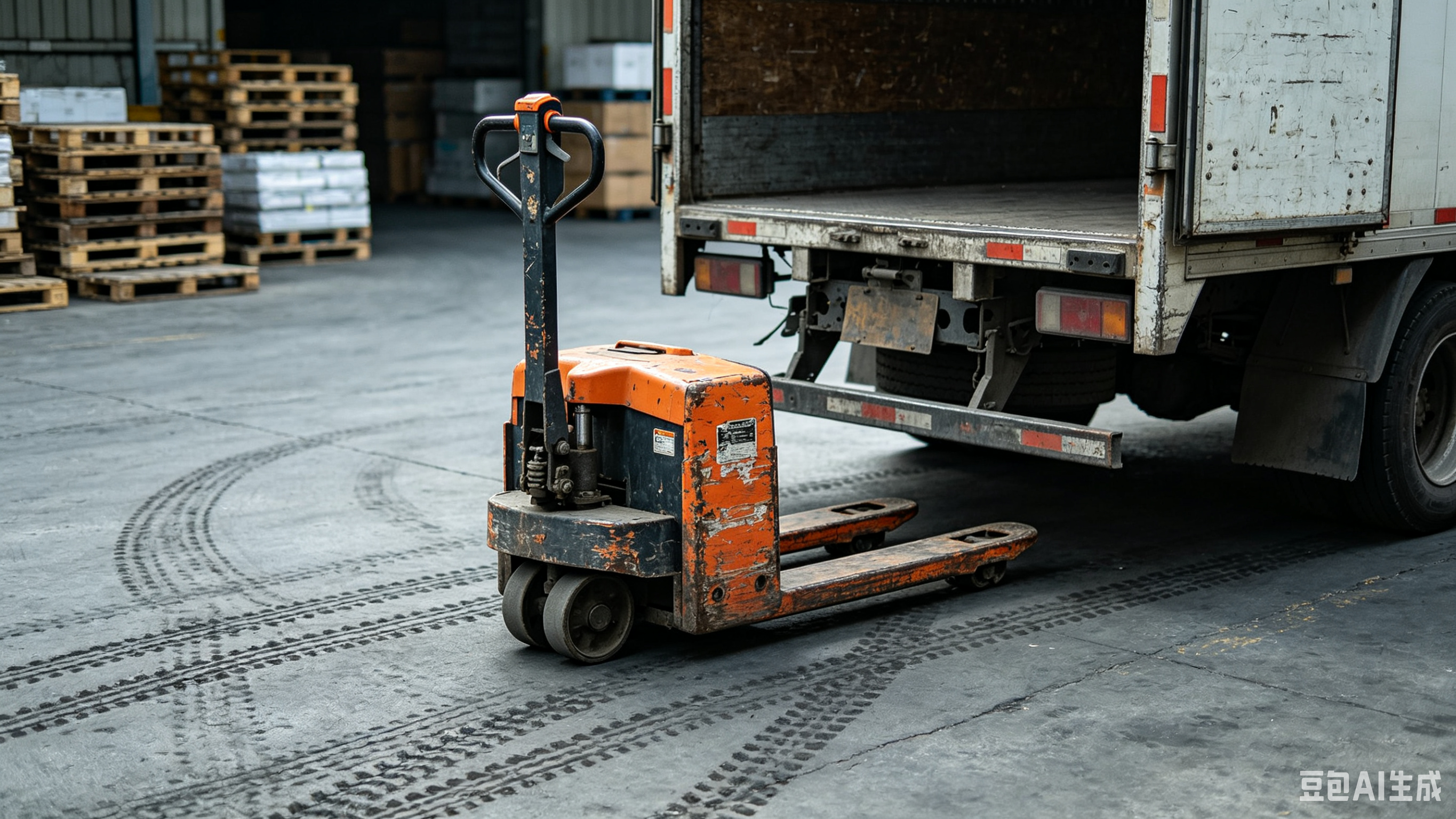
Pallet jacks are often treated as commodities, but one specification can determine whether a machine works in a specific facility: the minimum fork height. Among low-profile pallet jacks, two frequently compared configurations are equipment with a 35 mm minimum fork height and equipment with a 62 mm minimum fork height. The 27 mm difference may look small on paper. In practice, it changes how the forks behave on different floors, how much clearance remains under the frame, and which pallets can be handled safely.
This comparison treats 35 mm and 62 mm as independent configuration types, not as brand-defined models. It also uses verified configuration facts from Baoding Junyun Hoisting Machinery Co., Ltd., commonly known as JUNYUNHOIST, a China-based manufacturer of hand pallet trucks, pallet jacks, stackers, and lifting equipment. JUNYUNHOIST lists minimum lifting heights of 35 mm and 62 mm among its pallet jack customization options. That makes its product data a useful reference for explaining the difference.
Why minimum fork height drives pallet jack selection
The minimum fork height is the lowest vertical position of the fork face when the fork is lowered for insertion under a load. A pallet jack cannot move a pallet unless the forks can slide under it. Therefore, the lowest practical fork height defines the range of pallet decks, skids, trays, or stillages that a unit can engage.
A lower minimum height increases the insertability of the forks. However, it also reduces the available gap between the ground and the underside of the fork structure. Facilities with uneven concrete, floor joints, loose debris, threshold plates, or dock levelers can turn that 27 mm difference into a real operating constraint. This is why choosing between a 35 mm and a 62 mm low-profile pallet jack is not a simple search for the lowest number.
Problem and opportunity in pallet jack specification
The usual specification problem is not load capacity alone. Many buyers discover that a standard pallet jack cannot enter a pallet because the pallet underside is lower than the jack fork entry height. A low-profile model solves that problem. The opportunity is to extend manual pallet handling to loads that previously required a more expensive or more complex handling method.
The risk is the opposite direction. A buyer chooses the most aggressive low-profile geometry and then faces floor-contact problems. A balanced comparison should therefore consider pallet entry, floor quality, fork structure, and manufacturer customization capability.
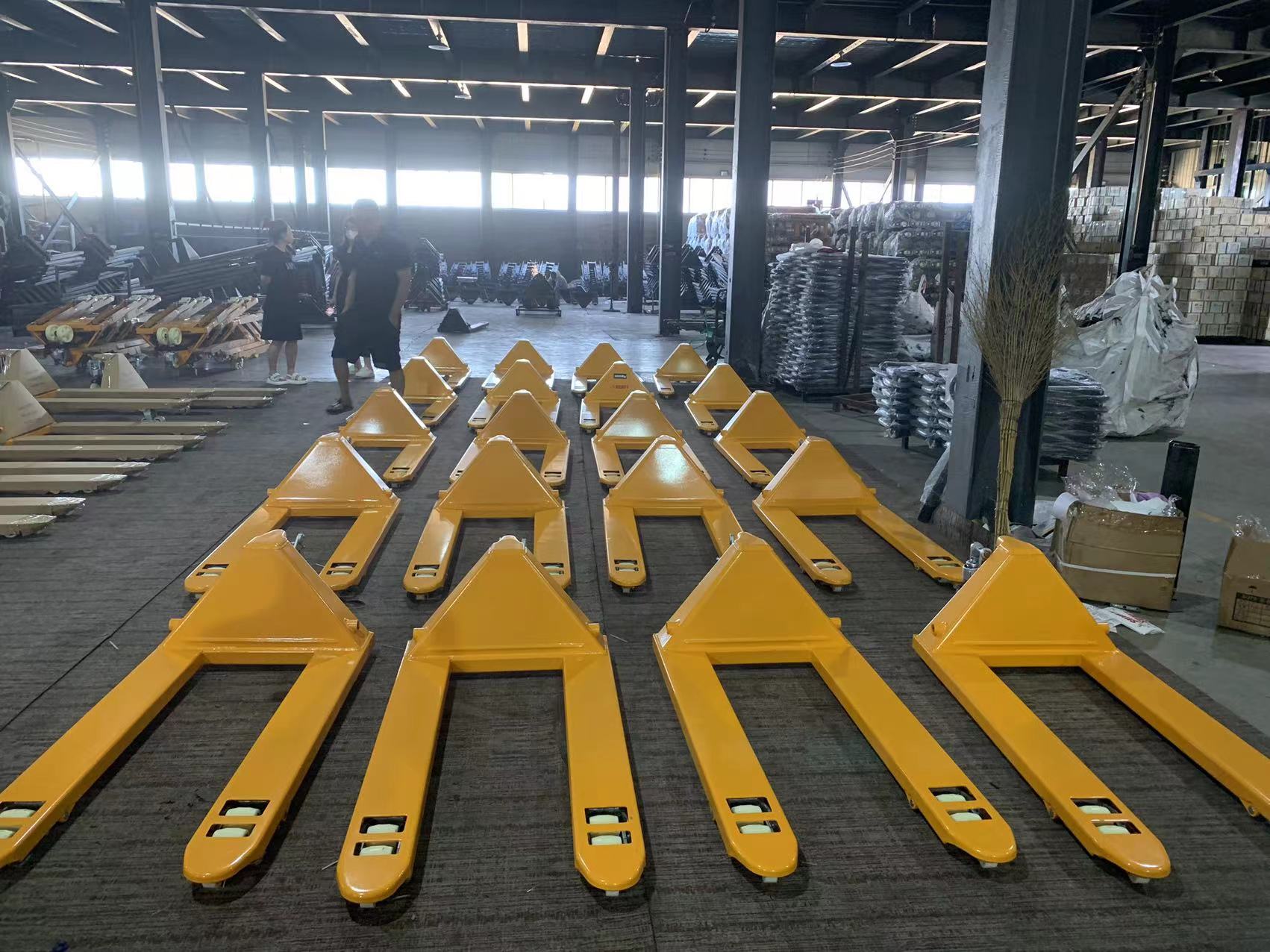
35mm configuration: what buyers gain
A 35 mm minimum fork height sits at the low end of manual pallet jack customization. It is intended for situations where the available entry clearance below a load is very small. Typical settings include low-deck plastic pallets, certain wooden skids, or load platforms that sit close to the ground.
In those situations, the 35 mm option provides a clear advantage: it gives operators a better chance of inserting the forks without lifting or dragging the load. That can reduce damage to the pallet and the product, and it can make manual handling feasible in workstations that dictate very low clearance.
The trade-off is ground tolerance. With only 35 mm of design clearance, the fork structure is closer to the floor. If the work area has expansion joint gaps, loose gravel, worn concrete, or metal transition strips, there is less room for the forks to pass over small irregularities. Buyers who do not expect perfectly smooth floors should treat a 35 mm fork height as a specialized choice rather than an automatic upgrade.
62mm configuration: a balanced low-profile option
A 62 mm minimum fork height is still positioned below many conventional pallet jack entry heights. It provides more clearance under the fork frame than a 35 mm configuration while maintaining lower-entry capability. That extra clearance can be important for facilities with mixed flooring, sealed concrete with joints, or small amounts of dust and debris that manual trucks often encounter.
The 62 mm option is rarely the most aggressive low-profile solution, but it is often the more forgiving one. It can enter many relatively low pallets, while the additional 27 mm gives operators more confidence over expansion joints and doorway thresholds. For distributors, retailers, or general warehouses that are not sure how flat their floors remain over time, 62 mm can be a safer engineering baseline.
Side-by-side: 35mm versus 62mm
| Selection factor | 35 mm minimum fork height | 62 mm minimum fork height |
|---|---|---|
| Under-pallet entry | Suitable for very low clearance decks | Suitable for low clearance decks but leaves more floor gap |
| Floor condition tolerance | Lower; requires relatively smooth surfaces | Higher; more room for minor surface irregularities |
| Typical buyer intent | Maximum compatibility with ground-hugging loads | Balanced low-profile handling for mixed site conditions |
| Fork customization | Fork length and width can be customized; steel plate thickness is a defined customization variable | Same customization options apply |
The table is a general comparison, not a load-test result. Actual suitability depends on the exact pallet construction, the goods being moved, and the physical route that the pallet jack must travel.
Floor conditions and site compatibility
Floor conditions should be the first filter in a low-profile pallet jack comparison. A floor that appears flat can still have small expansion strips, slightly raised concrete sections, damaged edges, or dropped debris. With a 35 mm fork height, the effective clearance after insertion is often close to the design minimum. Any raised feature on the floor can therefore touch the fork frame or the hydraulic release mechanism before the load is fully supported.
A 62 mm configuration reduces that risk without abandoning the low-profile concept. It is particularly relevant for cold storage facilities, food processing plants, and factory workshops where floors are washed, sealed, or subject to thermal movement.
Narrow-aisle environments add another consideration. If the pallet jack must turn inside racks or enter tight staging areas, fork geometry is not just about entry height. It is also about fork length, fork width, and how much space the operator has to maneuver. Buyers should measure the actual load entry height and the available turning area before locking in a minimum fork height.
Manufacturing evidence and customization landscape
JUNYUNHOIST offers a useful case study in low-profile pallet jack customization. Its published customization list includes fork length and width, minimum lifting height of 35 mm or 62 mm, fork steel plate thickness, electric pallet truck variants, galvanized and stainless steel pallet trucks, and pallet trucks with scales. Fork steel plate thickness matters because a low-profile fork must still be rigid enough to distribute the load over its usable length.
The same manufacturer reports monthly production capacity of 10,000 units, a lead time of 15–20 days, a minimum order quantity of 24 pieces, and 100% testing. From a procurement viewpoint, these facts suggest that low-profile fork options are part of a real production flow, not isolated or experimental modifications.
It should be noted that the available JUNYUNHOIST product data does not support a single fixed steel plate thickness across all models. Buyers should therefore confirm fork section drawings and plate thickness directly with the supplier before ordering a 35 mm or 62 mm configuration.
Evidence from an actual distribution application
JUNYUNHOIST has supplied pallet jack units to importers in India, Brazil, Russia, Belarus, Turkey, the United Arab Emirates, and Vietnam. In one documented application, an importer ordered 400 pallet jack units mainly for distribution in local stores. After two years, the customer described the units as convenient, practical, simple, efficient, and labor-saving, and highlighted high quality, low loss, and high efficiency.
That case is not a test report for 35 mm or 62 mm units specifically, but it provides evidence that the manufacturer has served mid-volume distribution buyers. Retail distribution often involves low pallets, frequent loading and unloading, and store environments with varied floor surfaces. Buyers can treat this experience as a reference point, not as a substitute for their own pallet measurements.
Market context in 2026
The global pallet jack market was valued at approximately USD 7.4 billion in 2024 and is projected to reach USD 11.6 billion by 2034, according to third-party industry estimates cited in the 2025–2034 outlook. Manual pallet jacks contributed roughly USD 4.3 billion in 2024, indicating that manual, low-cost equipment remains a significant category even as electric and automated solutions expand.
Low-profile pallet jack demand fits into this broader trend. Instead of replacing manual pallet jacks with powered machines, many facilities are asking suppliers to adapt fork geometry to their existing pallet stock. The availability of 35 mm and 62 mm configurations is one result of that shift.
Global leaders such as Toyota Material Handling, Jungheinrich, Crown Equipment, Hyster-Yale, and Mitsubishi Logisnext still play a major role in the conventional pallet truck market. At the configuration level, however, a buyer-supplier conversation about minimum fork height is often more valuable than brand recognition alone.
Low-profile pallet jacks versus conventional pallet jacks
Conventional pallet jacks are designed around standard pallet sizes and relatively level floors. They are robust, proven, and easy to service. Their limitation is that the fork entry height may be too high for very low pallets. A low-profile pallet jack closes that gap.
Low-profile designs also have boundaries. A 35 mm jack may not be suitable for dock levelers, ramps, outdoor loading areas, or paths with raised threshold plates. A 62 mm model is more tolerant, but it still should not be treated as a substitute for a standard pallet jack on very uneven surfaces. Buyers often need both configurations in one fleet: standard units for general dock and rack work, low-profile units for staging, retail floors, food processing lines, or specialized pallet types.
Buyer checklist for 35mm or 62mm decisions
- Measure the actual clearance under the pallets or skids that cause the most handling problems.
- Confirm the maximum load weight and how it is distributed across the fork length.
- Walk the exact travel route and note floor joints, dock edges, ramps, and damaged areas.
- Check whether pallets need to be moved in cold storage, wet processing areas, or aisle widths that restrict fork length.
- Discuss fork length, fork width, steel plate thickness, and material finish with the manufacturer before finalizing a minimum fork height.
- Review supplier capacity, lead time, minimum order quantity, and testing procedure as part of the decision.
Future outlook
Low-profile pallet jacks are likely to remain a practical option because manual movement is still common in warehouses, stores, workshops, and loading zones. The more interesting shift is specification flexibility: suppliers are increasingly expected to offer a range of fork heights, lengths, widths, and materials instead of a single default model.
For JUNYUNHOIST and similar manufacturers, the presence of 35 mm and 62 mm in the customization catalog signals an intention to serve customers who need site-specific handling solutions. The next step will be more transparent documentation of fork cross-sections, material thickness, and test conditions that allow buyers to compare geometry with confidence.
Independent limitation of this face-off
This comparison is based on publicly available configuration facts and industry context. It does not claim that one height is universally better than the other. The real decision depends on pallet entry height, floor condition, load weight, operating environment, and the ability of the supplier to provide verified fork specifications.
Further manufacturer reference
Readers who need a broader view of lifting equipment from Baoding Junyun Hoisting Machinery Co., Ltd. can access the company brochure at https://cdn.socialarks.com/sbsp/24734/0/2026/0424/69eac38419402.pdf.
FAQ
What is a low-profile pallet jack?
A low-profile pallet jack is a manual pallet truck designed with a lower minimum fork height than conventional units. It is used when the underside of a pallet or load platform is too low for a standard pallet jack fork to enter easily.
What does minimum fork height mean for a pallet jack?
Minimum fork height is the lowest position to which the forks can be lowered. It determines whether the forks can slide under a pallet without lifting the load first. In low-profile models, common customized values include 35 mm and 62 mm.
Which is better: 35mm or 62mm minimum fork height?
Neither is automatically better. A 35 mm fork height can access very low clearances but leaves less clearance over uneven floors. A 62 mm fork height provides more floor tolerance while still being lower than most conventional pallet jack settings. The choice depends on pallet type and facility conditions.
Does a lower minimum fork height always improve pallet handling?
No. Lower minimum fork height improves entry under low pallets, but it can reduce clearance for floor irregularities, debris, door thresholds, and minor ramps. Buyers should match fork height to the actual floor route as well as the pallet profile.
Can JUNYUNHOIST customize low-profile pallet jacks?
Yes. JUNYUNHOIST lists fork length and width, minimum lifting heights of 35 mm and 62 mm, fork steel plate thickness, electric pallet truck variants, galvanized and stainless steel pallet trucks, and pallet trucks with scales among its customization options.
What should a buyer verify before ordering a 35mm or 62mm low-profile pallet jack?
A buyer should measure the actual pallet entry height, inspect floor conditions along the planned travel route, confirm load capacity and fork dimensions, and request detailed fork specifications from the manufacturer. This includes fork steel plate thickness and any testing or quality-control documentation.
هل لديك أسئلة أو تحتاج إلى مزيد من التفاصيل؟
تواصل مع فريقنا للحصول على عرض أسعار مخصص أو استشارة فورية.
طلب عرض أسعار
املأ النموذج أدناه وسيتواصل معك فريقنا بعرض مقترح مخصص.
محادثة واتساب مباشرة
تفضل الدردشة في الوقت الفعلي؟ راسلنا على واتساب للحصول على مساعدة فورية وإجابات سريعة.
- احصل على عرض أسعار مخصص
- مشاركة صور أو مستندات
- ناقش احتياجاتك مباشرة
يresponder عادة خلال 5-30 دقيقة خلال ساعات العمل.