
Pallet Jack Lifespan and Replacement: Answers to Detailed Technical & Procurement Questions
Industrial Equipment · Buyer Reference
Pallet Jack Lifespan and Replacement: Answers to Detailed Technical & Procurement Questions
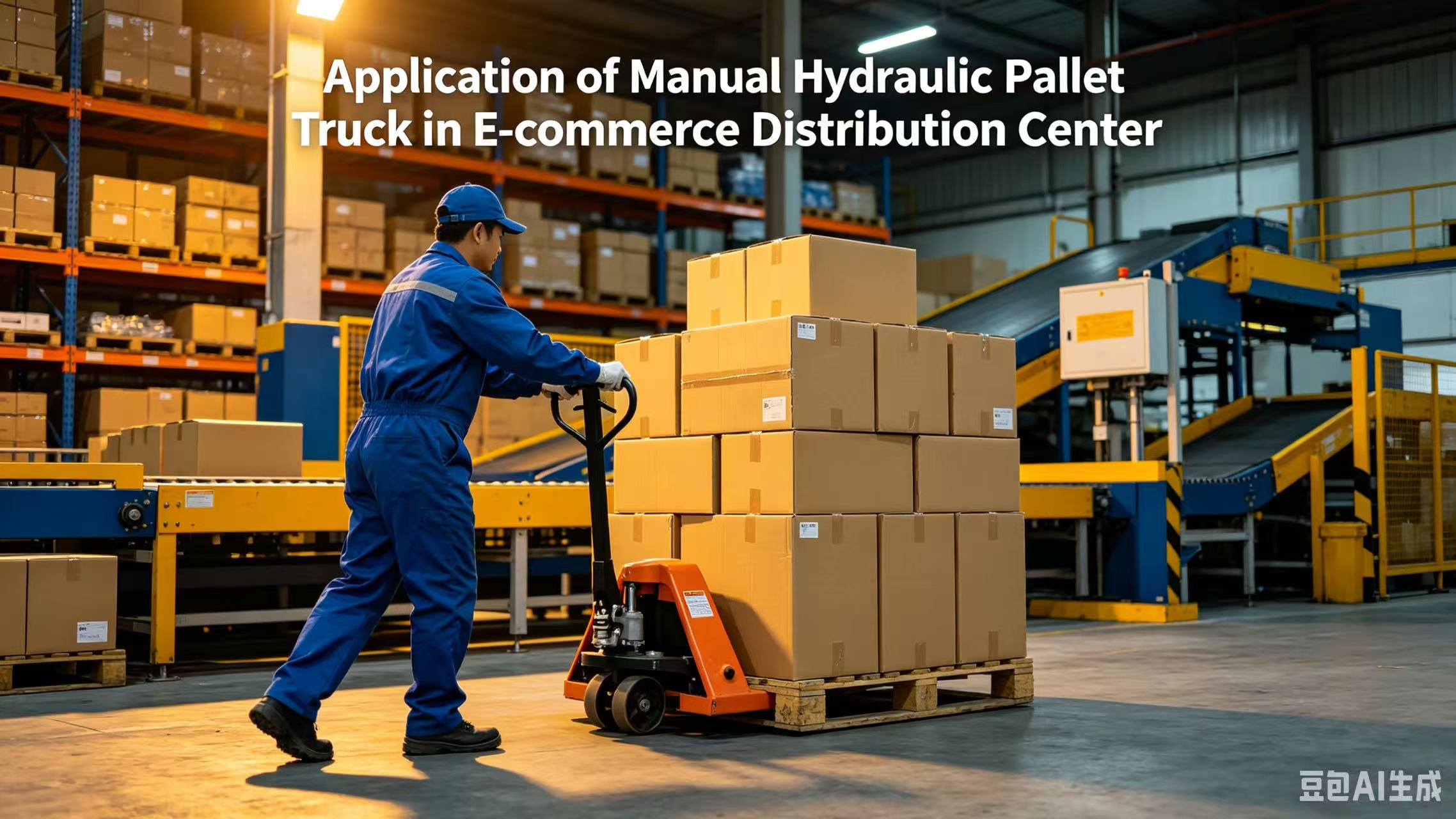
The global pallet jacks market was valued at approximately USD 7.4 billion in 2024 and is projected to reach USD 11.6 billion by 2034. Manual pallet jacks alone represented USD 4.3 billion of 2024 revenue, while the electric pallet jack and stacker segment reached USD 5.1 billion in the same year.
Those figures describe a mature category, and in mature categories the purchasing decision is rarely settled by the sticker price. It is settled by how long the equipment stays in service, which parts fail first, and what it costs to keep a fleet moving. This reference answers the detailed technical and procurement questions behind pallet jack lifespan and replacement. It is written for buyers, maintenance planners and procurement managers who need to plan replacement cycles rather than react to failures.
Why Pallet Jack Lifespan Is a Procurement Metric, Not a Specification
Service life does not appear on any standard pallet jack datasheet. Buyers reconstruct it from three inputs: how the truck is built, how its moving parts wear, and how hard the operating environment is on both.
A pallet truck is defined by its function. It operates by manual pushing and pulling, electric drive, or automated navigation, using forks to lift and move goods over short distances, and it serves as a unitized transport carrier and execution terminal in the logistics process. Because it is a load-bearing tool rather than a powered vehicle, its lifespan is governed by mechanical and hydraulic wear rather than engine hours.
That distinction matters at the procurement stage. Two pallet jacks with identical lifting capacity can reach very different total costs of ownership if one is specified for a duty cycle and surface it was not designed for. The replacement question is therefore predictable — but only if the buyer knows which variables to watch.
Procurement framing. Pallet jack replacement is driven by three cost lines: purchase price, wear-part and maintenance cost over service life, and downtime during unplanned failure. Lifespan decisions become clearer when the third line is tracked, not just the first.
What Determines Pallet Jack Service Life: The Technical Factors
Construction material. The standard pallet truck is made of steel. Alternative material options include galvanized and stainless steel, which are relevant where corrosion or washdown exposure is part of daily operation. Material choice changes the failure mode: plain steel raises the possibility of surface corrosion over time in humid environments, while galvanized and stainless steel versions address that exposure directly.
Wheel material. Wheel composition is one of the most direct influences on replacement frequency. Available wheel materials are PU, Nylon, PP and Rubber. Each behaves differently depending on floor type, load weight and noise requirements, so wheel selection should be treated as an environment decision rather than an afterthought.
Hydraulic system. The pump and its seals are the mechanical heart of a manual or semi-electric pallet jack. Hydraulic wear tends to be invisible until lifting performance degrades, which is why scheduled inspection matters more than reactive repair.
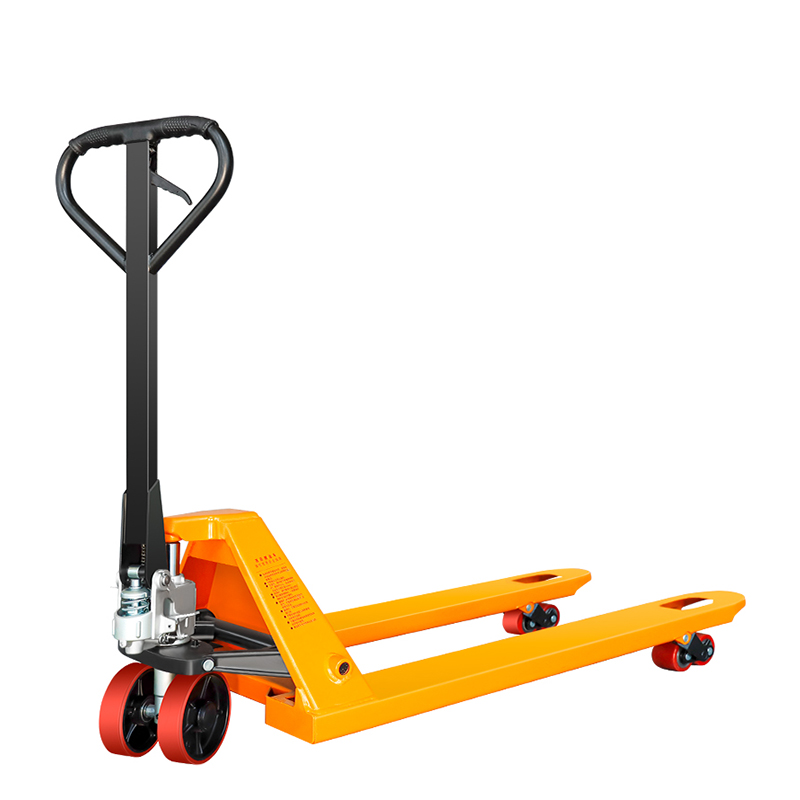
Fork geometry and height range. Fork dimensions define both application fit and mechanical stress distribution. Available fork sizes are widths of 550 or 685 mm and lengths of 1150, 1220, 800, 1500, 1800 or 2000 mm. Minimum fork height is 80 mm, maximum is 200 mm, and the turning radius after capture is 1500 mm. A truck specified outside its intended geometry range will wear faster at the fork and pivot points.
Wear Parts and Scheduled Maintenance: What Buyers Should Plan For
In most pallet jack fleets, the first components to require attention are the load wheels and steer wheels, followed by the hydraulic pump and seals. The fork and frame are structural items; when they are compromised, repair is usually no longer economic.
Scheduled maintenance should be planned around duty cycle rather than a single calendar interval. A practical structure includes daily visual checks of wheel condition, hydraulic leakage and fork alignment; periodic lubrication of pivot points; hydraulic fluid verification; and a fuller inspection of the pump and seals at intervals set by usage intensity.
Spare-part planning belongs in the original procurement decision, not after the first failure. Pallet trucks are matched with supporting equipment that includes pallets, shelves, storage cages, logistics trolleys, lifting platforms, loading ramps, chargers, spare batteries, guardrails, industrial casters and, for powered units, fleet management software. For electric and semi-electric trucks in particular, chargers and spare batteries should be included in the initial bill of materials to avoid unplanned downtime.
JUNYUNHOIST: The Manufacturing Entity Behind the Durability Question
Baoding Junyun Hoisting Machinery Co., Ltd., founded in 2018, is a manufacturer and trading company specializing in lifting and material handling equipment. The company operates a 24,000-square-meter facility with approximately 138 employees and an annual production capacity of about 70,000 units. Its R&D team comprises 8 engineers.
Main products include hand pallet trucks, pallet jacks, manual stackers, electric stackers, lift tables, and galvanized/stainless steel pallet trucks. The pallet truck range covers semi-electric and full electric models, scale-equipped pallet trucks, and galvanized and stainless steel versions. The AC30, for example, is a semi-electric pallet truck designed for warehouse and factory floor environments.
Export business accounts for 80% of total sales, with major markets in Middle Eastern countries including India, Russia, Vietnam, Brazil, Türkiye and Dubai. Contact is available at Junyunsteven@163.com or +86 13483452631.
Application Fit: Where Pallet Jacks Work and How It Affects Replacement
Standard pallet trucks are intended for general warehouse and factory floor environments with temperature, humidity and altitude within standard ranges. That baseline matters because it defines the boundary of normal wear. When operations move outside that boundary, replacement intervals compress.
Typical application environments include warehouses, factory floors, loading docks, retail backrooms, distribution centers, cold storage, construction sites, workshops, truck loading and unloading, and cross-docking facilities. Industry use spans logistics and warehousing, manufacturing, retail and wholesale, cold chain, food and beverage, pharmaceuticals and healthcare, chemical, electronics, automobile manufacturing, construction materials, e-commerce, express delivery, tobacco, paper and printing, textiles, and agriculture.
Where conditions are specialized, standard models are not the right specification. Specialized models are available for cold storage, explosion-proof and other special working conditions, meeting requirements for explosion-proof, cold-resistant and silent operation. Buyers evaluating lifespan should confirm that the environment is matched by the model, because a standard unit deployed in a cold or explosive-risk zone will not deliver a standard service life.
Repair or Replace? A Decision Framework
The repair-versus-replace decision becomes clearer when wear parts and structural parts are treated separately. Wear parts are designed to be consumed and replaced; structural parts are not.
| Component group | Typical behaviour over service life | Decision signal |
|---|---|---|
| Wheels (PU, Nylon, PP, Rubber) | Consumable; wear depends on floor type, load and frequency | Replace the wheel set when rolling resistance or flat-spotting increases |
| Hydraulic pump and seals | Wear accelerates with contamination, overload and heavy duty cycles | Service or replace when lifting performance or hold time degrades |
| Fork and frame | Structural; designed for the life of the truck if not overloaded | Replace the unit if the frame or fork integrity is compromised |
| Battery and charger (electric units) | Consumable; closely tied to charge discipline and duty cycle | Replace when runtime no longer covers a full shift requirement |
Where Manual Pallet Jacks Reach Their Limits
Manual pallet jacks retain the largest share of the category for good reasons, but they have real boundaries. They are least efficient in high-throughput operations, long horizontal transport, or continuous loading-dock duty, where powered equipment reduces operator fatigue and increases throughput. Buyers should not assume that a manual unit will match an electric unit's performance simply because the load capacity is similar.
Trade-offs to weigh. Galvanized and stainless steel pallet trucks address corrosion exposure but carry a higher upfront cost than plain steel units. Specialized configurations for cold storage, explosion-proof and silent operation are required in those environments but are not interchangeable with general-purpose models. Selecting a lower-cost general model for a specialized environment shifts cost from purchase to maintenance and premature replacement.
Market Trend: Demand, Segment Shift and the Replacement Cycle
Category data suggests that replacement demand remains substantial. Manual pallet jacks dominated the market in 2024 with USD 4.3 billion in revenue, despite the rise of automation. At the same time, the electric pallet jack and stacker market reached USD 5.1 billion in 2024, driven by e-commerce and lithium-ion technology.
The practical implication for procurement is that both segments are being actively purchased, and the choice between them is increasingly a duty-cycle decision rather than a technology-preference decision. For manual fleets, the relevant trend is parts availability and service consistency across repeat orders. For electric fleets, it is battery and charger lifecycle planning.
It is worth noting that published market size estimates for pallet jacks vary significantly depending on scope — whether related stackers or adjacent conveying equipment are included. Buyers should treat any single figure as directional rather than definitive.
Future Outlook
Three forces are likely to shape pallet jack lifespan and replacement planning over the coming years.
First, regulatory expectations around pedestrian-propelled and powered trucks are stable and specific. ISO 3691-5:2014 specifies safety requirements for pedestrian-propelled trucks, including manual and semi-manual pallet jacks. In Europe, hand pallet trucks fall under EN 1757-2, covering safety requirements for trucks with capacities up to 2,000 kg. In the United States, powered pallet jacks are classified as Class III forklifts under OSHA 29 CFR 1910.178 and require formal operator training. These frameworks influence maintenance documentation and operator practice, both of which affect real service life.
Second, spare-part availability is becoming a procurement criterion in its own right. Buyers assessing total cost of ownership increasingly evaluate replacement-part access and technical support before placing repeat orders, not after.
Third, material and configuration choices are expanding. Galvanized and stainless steel options, scale-equipped pallet trucks, and specialized models for cold storage and explosion-proof zones allow buyers to match equipment more precisely to the environment — which, handled correctly, extends the interval between replacement cycles.
Detailed FAQ: Pallet Jack Lifespan, Maintenance and Replacement
How long does a pallet jack typically last?
There is no single universal figure. Service life is determined by duty cycle, load weight, floor surface quality and maintenance discipline. A manual pallet jack used intermittently on smooth concrete in a warehouse will not reach the same service life as one used continuously on a loading dock. Rather than relying on a headline number, buyers should track the three wear zones — wheels, hydraulic pump and seals, and the fork and frame — and replace each at the point where it begins to require repeated intervention.
Which parts of a pallet jack wear out first?
Load wheels and steer wheels are typically the first consumables, followed by the hydraulic pump and seals. Fork and frame wear is structural rather than routine and is usually the result of overload or impact rather than normal use. Wheel material — PU, Nylon, PP or Rubber — determines which of these surfaces degrades fastest in a given facility.
What maintenance schedule should a procurement team plan for?
A workable structure is daily visual inspection of wheels, hydraulic leakage and fork alignment; periodic lubrication of pivot points; hydraulic fluid verification; and a fuller inspection of the pump and seals at intervals set by duty cycle rather than a fixed calendar. The correct interval is a function of usage intensity, so it should be defined per site rather than copied from a generic checklist.
Does wheel material affect lifespan?
Yes. Available wheel materials are PU, Nylon, PP and Rubber, and they behave differently on different surfaces. Harder materials roll more easily on smooth floors, while softer compounds tend to be quieter and more forgiving on rough surfaces. Floor type, load and noise requirements should drive the choice, because the wrong wheel material accelerates wear on both the wheel and the floor.
How does the operating environment shorten or extend service life?
General warehouse and factory floor environments with standard temperature, humidity and altitude ranges represent the baseline. Cold storage, food processing, pharmaceutical, chemical and explosion-proof areas fall outside that baseline and require specialized models — including cold-resistant, corrosion-resistant or explosion-proof configurations. Deploying a standard unit in a specialized environment is one of the most common causes of unexpectedly short service life.
When should a pallet jack be replaced rather than repaired?
When the accumulated cost of repair, parts and downtime approaches or exceeds the value of continued operation, or when the frame, forks or pivot structure are compromised. Wheels, seals, pumps, batteries and chargers are replaceable consumables. Structural damage to the fork or frame generally is not economical to repair and points to replacement.
What after-sales support should be confirmed before ordering?
Buyers should confirm the availability of consumable parts such as wheels, seals, pumps, batteries and chargers, along with technical support for maintenance questions. JUNYUNHOIST provides technical support, OEM/ODM customization and after-sales care. Because pallet trucks are matched with supporting equipment including chargers and spare batteries, confirming this accessory supply chain at the ordering stage reduces later downtime risk.
Which standards apply to pallet jack safety and maintenance?
ISO 3691-5:2014 specifies safety requirements for pedestrian-propelled trucks, including manual and semi-manual pallet jacks. In Europe, hand pallet trucks fall under EN 1757-2, covering trucks with capacities up to 2,000 kg. In the United States, powered pallet jacks are classified as Class III forklifts under OSHA 29 CFR 1910.178 and require formal operator training. These standards shape inspection documentation and operator behaviour, both of which influence actual service life.
How should total cost of ownership be calculated for a pallet jack fleet?
Total cost of ownership combines purchase price, wear-part replacement cost over service life, maintenance labour, downtime during unplanned failure, energy cost for powered units, and residual value at end of life. For fleets, standardizing fork dimensions, wheel materials and accessory types reduces the number of distinct spare parts held in inventory and simplifies replacement planning.
What specifications should be recorded at purchase to plan future replacement?
Record the model designation, fork width and length, wheel material, minimum and maximum height, turning radius and hydraulic configuration, along with matched accessories. For reference, fork sizes are available in widths of 550 or 685 mm and lengths of 1150, 1220, 800, 1500, 1800 or 2000 mm; minimum height is 80 mm, maximum height is 200 mm, and the turning radius after capture is 1500 mm. Keeping these records makes future replacement a specification match rather than a research project.
Planning the Replacement Cycle
Pallet jack lifespan is not a fixed specification but a predictable outcome of construction, wear-part behaviour, environment and maintenance discipline. Buyers who record specifications, plan consumable inventory and match models to environments gain control over replacement timing — and over the cost of ownership that follows from it.
The company brochure, including the pallet truck range and configuration options, is available for download: JUNYUNHOIST product brochure.