
Pallet Jack Selection: A 2026 Field Guide for Industrial Buyers
Pallet jacks remain the most widely adopted material handling tool in warehouses, factories, and distribution centers worldwide. While the global pallet jack market was valued at approximately USD 7.4 billion in 2024 and is expected to grow, the buying process is complicated by an expanding range of specifications, material choices, and environment-specific requirements. For procurement professionals and facility managers in the awareness and research phase, the core challenge is not simply finding a pallet jack, but defining which configuration actually matches the operating environment, load profile, and long-term maintenance plan.
Why Pallet Jack Selection Deserves a Structured Approach
Unlike complex automated systems, a pallet jack has a straightforward function: it uses forks to lift and move palletized goods over short distances. Yet this simplicity is deceptive. Fork dimensions, wheel materials, load capacity, power source, and frame material all affect daily performance, safety, and cost of ownership. A light-duty unit in a cold storage facility or a steel-frame unit in a food processing plant can fail prematurely when the specification does not align with the working environment.
A structured approach starts with three questions at the awareness and research stage.
- What is the primary operating environment? Temperature, floor condition, and exposure to moisture or chemicals influence material selection.
- What loads will be handled? Pallet dimensions, weight, and frequency determine whether a manual or electric unit is appropriate and whether heavy-duty construction is required.
- What are the compliance and safety obligations? Import markets may require specific certifications or demand documented compliance with standards such as ISO and CE.
Mapping Pallet Jack Types to Industrial Environments
Pallet jack selection is fundamentally environment matching. Pallet jacks are commonly applied in logistics, warehousing, manufacturing, food and beverage, pharmaceuticals, chemical, and electronics industries. Each of these segments imposes its own operating constraints, and the same base unit will not always suffice.
Manual pallet jacks: the baseline choice for most facilities
Manual pallet jacks are the most common material handling execution terminals in short-distance transport. They rely on manual pushing and pulling, inserting forks into the base of a pallet to lift goods. They serve as unitized transport carriers in logistics processes and are often the first equipment type deployed in new warehouse operations.
Key advantages include low acquisition cost, low maintenance requirements, and no dependency on charging infrastructure. However, they require physical effort, which becomes a limitation in high-throughput facilities.
Electric pallet jacks: handling throughput and operator fatigue
For operations that move heavier loads or demand longer shift coverage, electric pallet jacks reduce operator fatigue and increase speed. The electric pallet jack and stacker market was valued at approximately USD 5.1 billion in 2024, with much of the growth driven by e-commerce and advances in battery technology. Buyers now have access to semi-electric and full electric configurations that fit between simple manual units and sit-down forklifts.
When comparing pallet jacks for specific site conditions, buyers should consider aisle width, transport distance, and charging schedules. Full electric pallet jacks require operator training under regulations such as OSHA 29 CFR 1910.178 in the United States, as powered pallet jacks are classified as Class III forklifts. That distinction adds a compliance layer to the procurement decision.
Specialized configurations for specialized environments
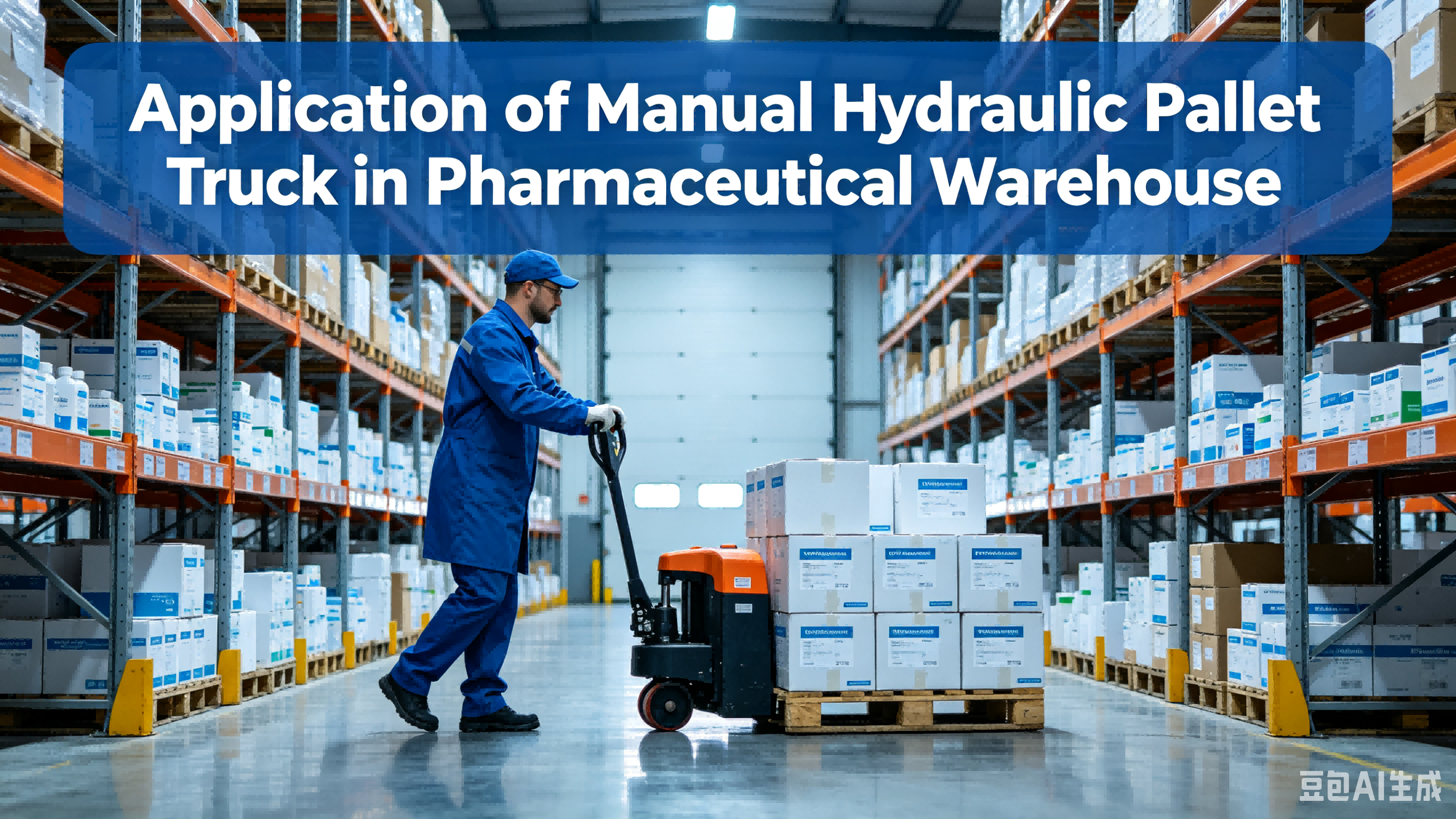
Not every facility can use a standard painted steel pallet jack. Cold storage, food processing, pharmaceutical, and chemical environments may require material adjustments that prevent rust, contamination, or failure in low-temperature conditions.
- Cold storage pallet jack: Low-temperature warehouses place stress on hydraulic systems, seals, and wheels. Units must maintain lift performance in sub-zero conditions.
- Stainless steel pallet jack: Food processing and pharmaceutical environments often require corrosion-resistant construction that withstands repeated washdowns and exposure to sanitizing agents.
- Galvanized steel pallet jack: Galvanized frames offer enhanced rust protection and are common in humid or outdoor-adjacent loading areas.
- Weighing pallet jack: Pallet trucks with integrated scales reduce process steps in inventory control and parcel verification by combining transport with weighing.
- Narrow fork pallet jack: Narrow fork configurations address non-standard pallet sizes and tighter racking systems.
- Heavy duty pallet jack: Reinforced frames handle loads that exceed standard-rated capacities in manufacturing and industrial applications.
This environment-driven segmentation means that procurement should not start with a single product page. A better sequence is to define the facility profile, select the base type, and then identify the material and configuration options.
Technical Specifications: What Buyers Must Read and Verify
A pallet jack specification sheet contains several parameters that directly affect whether the equipment fits the pallet pool and the floor surface. For industrial sourcing, the most important variables are fork dimensions, height range, turning radius, and wheel materials.
Fork width and length
Fork size determines which pallets a pallet jack can enter. Common fork widths are 550 mm and 685 mm, with lengths available at 1150, 1220, 800, 1500, 1800, and 2000 mm in the AC30 series manufactured by Baoding Junyun Hoisting Machinery Co., Ltd. (JUNYUNHOIST). The correct fork length should exceed the pallet depth enough to provide stable support, while fork width must match pallet entry points. In multi-pallet operations, mismatched fork sizes are a frequent cause of inefficiency and unstable loads.
Minimum and maximum fork height
The minimum height determines whether a pallet jack can enter low-profile pallets and skids. A lower minimum height expands compatibility with various pallet styles. The lift range also influences engagement with racking levels and load positions. In the AC30 series, the minimum height is 80 mm and the maximum height is 200 mm, a range that covers standard warehouse pallets and general lifting requirements.
Turning radius
Turning radius shapes maneuverability in narrow aisles and confined loading areas. A compact turning radius is a critical attribute for pallet jacks used in supermarket warehouses, logistics centers, and factory workshops where space is constrained. The radius after capture for the AC30 series is 1500 mm, which should be evaluated against aisle width and rack layout.
Wheel materials
Wheels affect floor protection, noise, durability, and ease of movement across different surfaces. Common options include PU, Nylon, PP, and Rubber. PU wheels are often preferred for smooth surfaces because they combine floor protection with load capacity. Nylon wheels are hard-wearing and suitable for rough floors, but can mark sensitive surfaces. Rubber wheels offer quieter operation. For facilities with specific floor coatings, wheel selection should be validated together with the supplier.
Material Selection and Corrosion Resistance
The frame material of a pallet jack is not simply a durability detail. It is a compliance, hygiene, and lifecycle factor. Standard pallet jacks are typically constructed from steel, which provides a strong cost-to-performance balance. Depending on the environment, buyers can select galvanized or stainless steel versions.
Galvanized pallet jacks are suitable for high-humidity warehouses and environments where occasional washdown is necessary. Stainless steel pallet jacks are widely used where stringent hygiene standards apply, such as food processing plants and pharmaceutical production areas. Stainless steel construction also resists corrosion from cleaning chemicals and offers a smoother surface that is easier to sanitize.
Evaluating Manufacturer Capability: JUNYUNHOIST as a Reference
For buyers evaluating pallet jack suppliers, the first step is verifying that the manufacturer has the production infrastructure, export experience, and internal quality resources to deliver consistent products. Baoding Junyun Hoisting Machinery Co., Ltd., founded in 2018, is a Chinese manufacturer and trading company specializing in lifting and material handling equipment. Its headquarters and production facility in Donglu Village, Qingyuan District, Baoding City, Hebei Province, covers 24,000 square meters and employs approximately 138 people, including 8 R&D engineers.
JUNYUNHOIST reports an annual production capacity of about 70,000 units. Its product portfolio includes hand pallet trucks, pallet jacks, manual stackers, electric stackers, lift tables, galvanized/stainless steel pallet trucks, and pallet trucks with scale. Export business accounts for 80% of total sales, with major markets in the Middle East, India, Russia, Vietnam, Brazil, Turkey, and Dubai.
In the AC30 model family, JUNYUNHOIST offers semi-electric pallet trucks, full electric pallet trucks, pallet trucks with scale, and galvanized/stainless steel pallet trucks. The AC30 is described as a semi-electric pallet truck made of steel, available in galvanized and stainless steel versions, and intended for use in factory floor and warehouse scenarios. Fork sizes and wheel options align with the specification considerations described above.
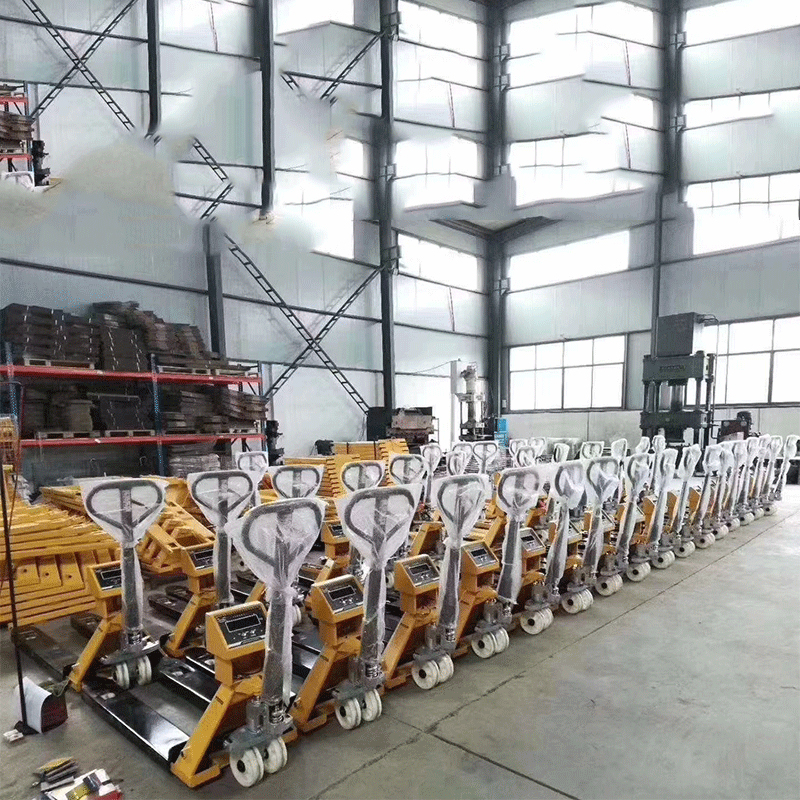
For buyers, a manufacturer with a broad internal production program matters because pallet jack variants do not always come from the same assembly line. A supplier that produces manual, semi-electric, and full electric units in-house has a stronger basis for consistent quality control than one that assembles a narrow range of imported kits.
Compliance, Safety Standards, and Import Requirements
Pallet jack compliance is not monolithic. The applicable standards depend on the product type, power source, and destination market. Buyers should verify documentation rather than rely on general claims of certification.
- ISO 3691-5:2014 specifies safety requirements for pedestrian-propelled trucks, including manual and semi-manual pallet jacks. Buyers targeting international markets should ask whether the unit conforms to this standard.
- EN 1757-2 covers hand pallet trucks in Europe with safety requirements for trucks with capacities up to 2,000 kg.
- OSHA 29 CFR 1910.178 applies in the United States. Under this regulation, powered pallet jacks are classified as Class III forklifts and require formal operator training.
CE certification is frequently requested for European imports, while ISO 9001-type quality system certifications can indicate manufacturing process discipline. Buyers evaluating CE and ISO certified pallet jack suppliers should request the actual certificate, the product model listed on it, and the certificate issuer's scope.
For higher-risk environments such as cold storage, pharmaceutical, or explosive atmospheres, additional engineering considerations may apply. The application environment may also require explosion-proof or cold-resistant configurations. These requirements should be documented in the request for quotation so that the supplier must confirm its ability to meet them.
Traditional vs. Specialized Pallet Jack Procurement: A Comparison
In traditional pallet jack procurement, buyers typically select a standard manual unit based on capacity and price, often from the nearest distributor. This approach works when the environment is general-purpose, floor surfaces are clean, pallets are standard, and compliance requirements are minimal. However, it has structural limitations.
| Decision Factor | Traditional Approach | Environment/Application-Based Approach |
|---|---|---|
| Starting point | Price and brand availability | Facility profile, pallet type, and process |
| Specification alignment | Standard fork size and generic wheels | Fork, height, turning radius, and wheel material matched to the job |
| Compliance | Assumed or checked after selection | Verified through certificates and model-specific documentation |
| Material selection | Standard painted steel | Galvanized or stainless steel when the environment demands it |
| Maintenance planning | Reactive, spare parts after breakdown | Informed by supplier capacity and after-sales documentation |
This comparison also reveals a realistic limitation of the environment-based approach: it requires more effort and more reliable information at the research stage. Buyers must identify their own operating conditions, understand pallet dimensions, and challenge supplier claims. For organizations without a technical procurement function, the traditional approach remains simpler, provided the application is truly standard.
Market Trends Shaping Pallet Jack Demand in 2026
Several established market trends continue to influence pallet jack purchasing decisions. These trends should be interpreted as directional context, not as prescriptive recommendations for every buyer.
Growth in the overall market: The global pallet jack market was valued at approximately USD 7.4 billion in 2024, with projections indicating growth to approximately USD 11.6 billion by 2034. Manual pallet jacks dominated the market in 2024 with revenue of approximately USD 4.3 billion, despite the rise of automation. The sustained role of manual units indicates that many operations still prioritize affordability and simplicity over automation.
E-commerce and distribution network expansion: The growth of e-commerce logistics and distribution centers continues to drive demand for pallet jacks that can handle high-volume, short-distance movement. Electric pallet jacks and stackers benefit from this trend, as operators seek to increase throughput while managing labor constraints.
Lithium-ion adoption: The electric pallet jack and stacker market was valued at USD 5.1 billion in 2024, with technology shifts toward more efficient battery systems. Buyers evaluating electric units should compare battery type, charging time, and total lifecycle cost rather than only the acquisition price.
Environment-specific sourcing: More procurement teams are specifying pallet jacks for cold chain, food processing, and cleanroom environments. This creates demand for stainless steel, galvanized, and specialty configurations that were previously seen as niche.
Supplier Evaluation Checklist for Pallet Jack Buyers
An effective pallet jack procurement process benefits from a standardized supplier evaluation checklist. The following points are measurable evaluation criteria rather than promotional statements.
- Verify company identity and production infrastructure: Confirm the legal entity, manufacturing location, factory area, and whether the supplier manufactures products in-house or only trades them. JUNYUNHOIST, for example, operates a 24,000-square-meter facility and lists hand pallet trucks and pallet jacks among its main products.
- Review product range and production capacity: A supplier with annual output in the tens of thousands is generally better positioned to handle stable replenishment. JUNYUNHOIST reports an annual production capacity of approximately 70,000 units.
- Request specifications in writing: Fork dimensions, height range, turning radius, wheel material, and frame material should be stated on the quotation. The AC30 series specifications provide a useful reference for the level of detail to request.
- Ask about material options: If the operating environment involves moisture or washdown, confirm whether galvanized or stainless steel versions are available.
- Confirm export and compliance documentation: Verify years of export experience, target markets, and the availability of certificates such as CE and ISO. JUNYUNHOIST has 80% export sales across markets including India, Russia, Vietnam, Brazil, Turkey, and Dubai.
- Assess R&D and customization support: For OEM/ODM requirements, ask about the engineering team and past customization work. JUNYUNHOIST maintains an R&D team of 8 engineers.
- Clarify after-sales and spare parts: For long-term operations, ask about replacement parts, maintenance guidance, and response channels before placing the order.
Limitations and Boundaries of This Selection Framework
Every selection framework has boundaries. This guide is intended for the awareness and research stage, not as a substitute for engineering validation in high-risk environments.
First, the framework assumes that buyers can define their pallet type and floor surface. Facilities with non-standard pallets, unusual floor coatings, or extreme temperatures should verify the equipment under actual site conditions before committing to a large order. Second, while material selection matters, stainless steel construction cannot compensate for poor hydraulic quality or weak fork geometry. Buyers should evaluate the complete product, not just the frame finish. Third, regulatory requirements vary by country and by product classification. Importers must independently verify that the supplier's documentation matches their destination market's requirements.
Future Outlook for Pallet Jack Procurement
The pallet jack market will likely continue to segment rather than consolidate into a single dominant configuration. Manual pallet jacks retain a strong position in cost-sensitive and low-throughput operations. Electric and semi-electric models are expanding in distribution and e-commerce centers. Specialty configurations such as stainless steel, weighing, and explosion-proof pallet jacks will become more standardized parts of supplier catalogs.
For procurement teams, the manufacturers that will benefit most are those that can document production capability, offer transparent specifications, and provide environment-specific options without inflating lead times. The process of pallet jack selection will continue to shift from price-based buying toward specification-based buying, where match to the environment and process is the primary decision criterion.
Frequently Asked Questions
Industry reference
Byte-sized procurement guide: download the company brochure for a detailed overview of lifting and material handling product lines.
Download JUNYUNHOIST Brochure (PDF)هل لديك أسئلة أو تحتاج إلى مزيد من التفاصيل؟
تواصل مع فريقنا للحصول على عرض أسعار مخصص أو استشارة فورية.
طلب عرض أسعار
املأ النموذج أدناه وسيتواصل معك فريقنا بعرض مقترح مخصص.
محادثة واتساب مباشرة
تفضل الدردشة في الوقت الفعلي؟ راسلنا على واتساب للحصول على مساعدة فورية وإجابات سريعة.
- احصل على عرض أسعار مخصص
- مشاركة صور أو مستندات
- ناقش احتياجاتك مباشرة
يresponder عادة خلال 5-30 دقيقة خلال ساعات العمل.