
Pallet Jack Sourcing as a Long-Term Partnership: Key Criteria for 2026
Pallet jacks, also called pallet trucks or hand pallet trucks, remain a core material handling device for warehouses, factories, and distribution centers. According to Vertex AI Search / Industry Report 2025-2034, the global pallet jack market was valued at approximately USD 7.4 billion in 2024 and is projected to reach USD 11.6 billion by 2034. For industrial buyers, the practical question in 2026 is not only which pallet jack model to order but which pallet jack supplier can sustain quality, delivery, and support across multiple orders and multi-year operations.
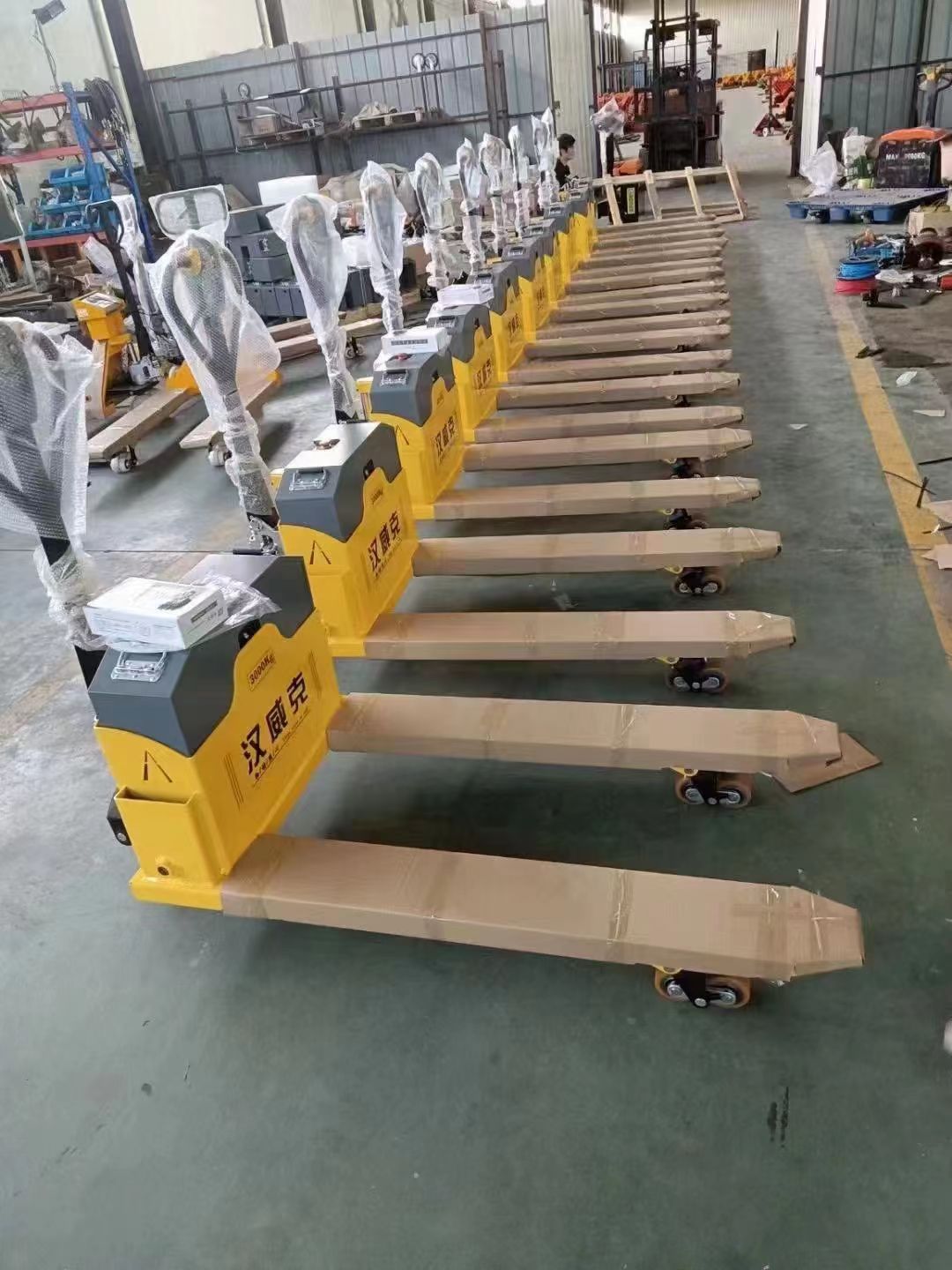
Electric pallet truck from JUNYUNHOIST's product portfolio
The Problem and Opportunity in Long-Term Pallet Jack Procurement
Evaluating a pallet jack supplier for a multi-year relationship is structurally different from evaluating a one-time shipment. When buyers treat pallet jacks as a spot purchase, the real cost of the equipment is often underestimated. It includes equipment downtime, replacement cycles, spare-part availability, inspection failures, and the administrative cost of switching suppliers later.
The most common long-term procurement risks are: inconsistent quality across production batches, delayed response to urgent replacement needs, limited spare parts for older models, and an inability of the supplier to scale production when order volumes grow.
These risks define the opportunity. A manufacturer that controls its own production, maintains transparent inspection processes, and documents its construction standards can reduce the buyer's total cost of ownership. For procurement teams, that is the core value of a long-term pallet jack partnership.
Who JUNYUNHOIST Is as a Manufacturing Partner
Baoding Junyun Hoisting Machinery Co., Ltd. — operating under the brand name JUNYUNHOIST — is a vertically integrated manufacturer and trading company based in Baoding, Hebei Province, China. The company specializes in manual pallet trucks, electric pallet trucks, manual and electric stackers, lift tables, galvanized and stainless steel pallet trucks, and pallet trucks with built-in scales.
JUNYUNHOIST was founded in 2018 and operates a 24,000-square-meter manufacturing facility with approximately 138 employees. The company's annual output is around 70,000 units, and its R&D team includes eight engineers. Around 80% of production is exported, with primary markets including India, Russia, Vietnam, Brazil, Türkiye, Dubai, and the broader Middle East.
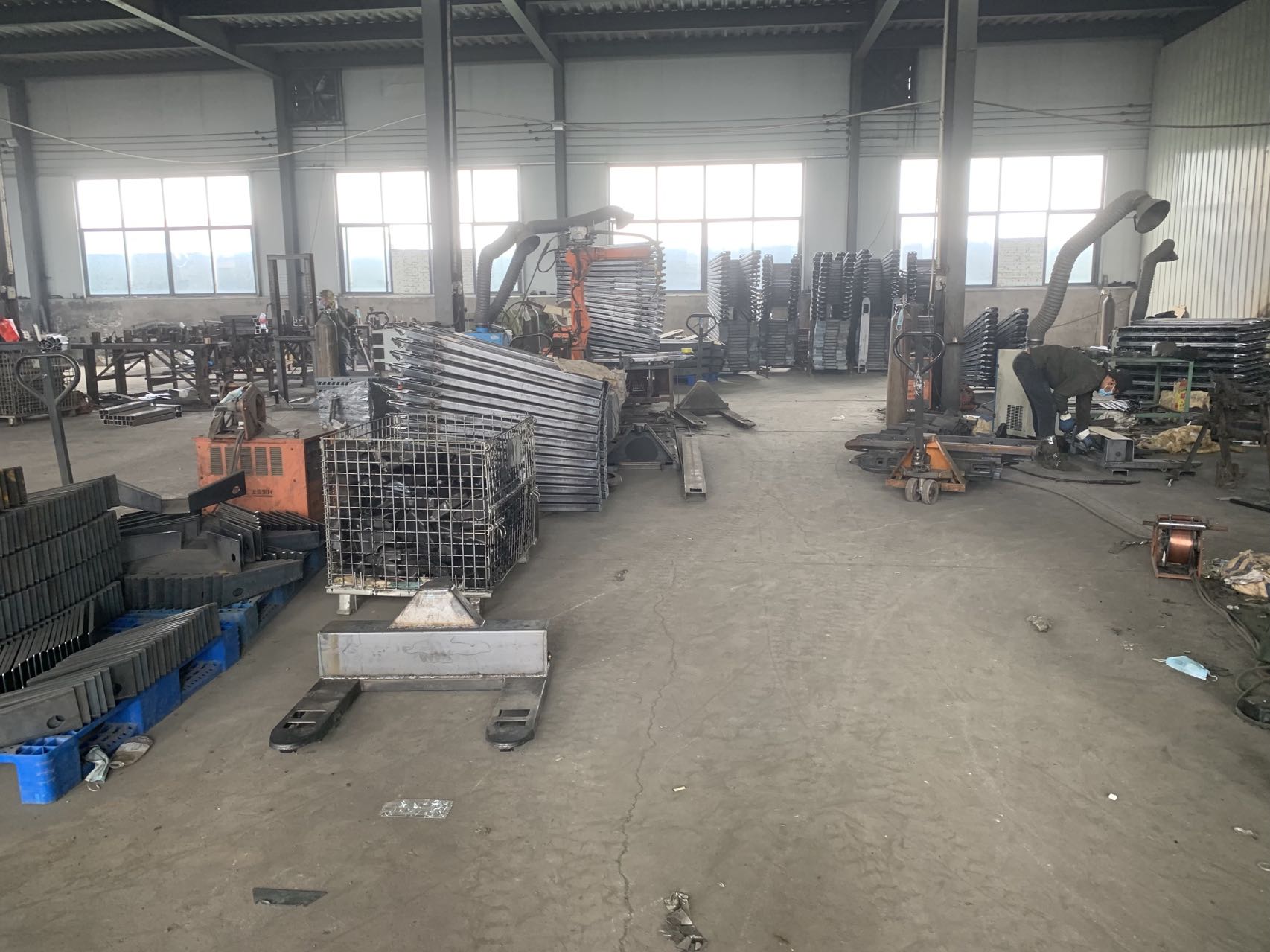
In-house pallet truck production at JUNYUNHOIST
For buyers evaluating a long-term supplier relationship, this combination of in-house manufacturing, export experience, and documented capacity is directly relevant. It means the supplier has direct control over quality, cost, and lead time, and can support OEM/ODM customization — a point the company highlights in its customer-facing materials.
How the AC30 Pallet Jack Is Built: Materials and Specifications
JUNYUNHOIST's AC30 manual pallet truck series demonstrates the company's construction approach. The truck is built on a 4 mm steel plate frame, uses an AC pump, forged rocker arms, and forged AB plates and double chain plates. The wheel frame is cast steel, the chassis includes reinforcement ribs, and the handle is thickened for durability.
Key AC30 specifications include: a minimum height of 80 mm, a maximum height of 200 mm, a turning radius of 1500 mm, wheel options in PU, nylon, PP, and rubber, and fork widths of 550 mm or 685 mm with fork lengths of 800, 1150, 1220, 1500, 1800, and 2000 mm.
According to JUNYUNHOIST's comparison data, the AC30 uses thicker materials than a standard factory pallet jack: a 4 mm steel plate, 4 mm reinforcement along an 89 cm length, a 4 mm triangle ruler, a 2.75 mm handle, and high-quality bearings. Load testing is conducted at 1.2 times the rated load, which provides a margin of confidence above nominal capacity.
The company also documents common failure risks and prevention measures. The main risk points are hydraulic pump oil leakage or trapped air, deformed or damaged handles, and wheel wear. Recommended practices include avoiding overload and keeping the forks balanced when lifting loads. To reduce downtime, JUNYUNHOIST sends commonly needed spare parts — including seals, handles, and wheel frames — together with equipment shipments.
Application Environments for Pallet Jacks
Pallet jacks are not limited to standard warehouse aisles. JUNYUNHOIST lists the following applicable environments for its pallet truck line: warehouse, factory floor, loading dock, retail backroom, distribution center, cold storage, construction site, workshop, truck loading and unloading, and cross-docking facility.
For buyers operating across multiple facility types, the product lineup supports standardization. Standard manual pallet trucks cover general warehousing and docking operations. Semi-electric and full-electric pallet trucks reduce physical strain over longer transport distances. Pallet trucks with scales combine weighing with movement to simplify inventory workflows.
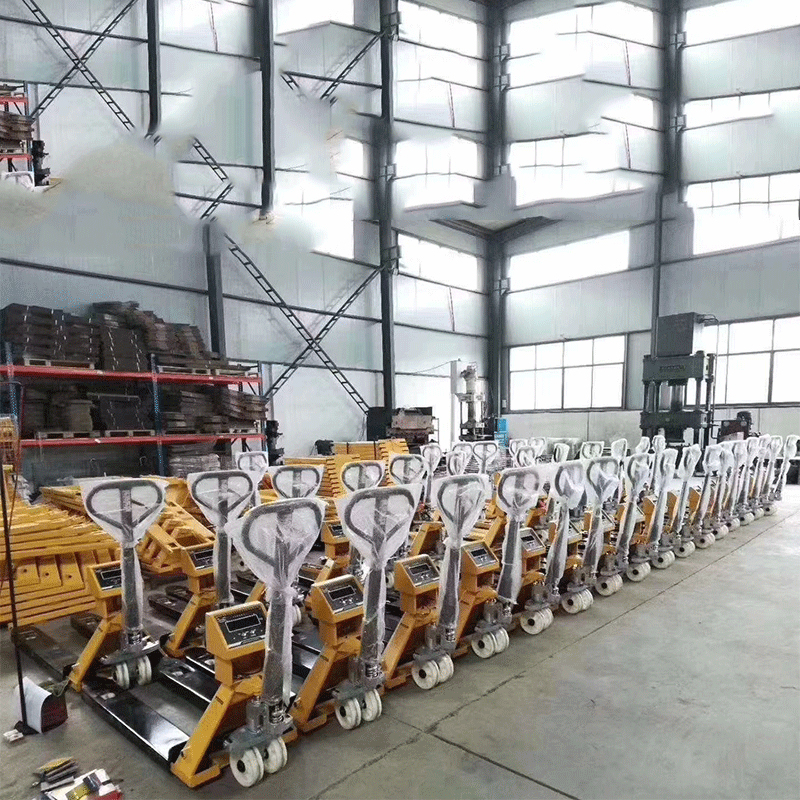
Pallet truck with scale, one of the specialized variants in the JUNYUNHOIST portfolio
Galvanized and stainless steel pallet trucks are available for environments requiring corrosion resistance, moisture tolerance, or higher cleanliness standards. This variety matters for long-term sourcing because it allows buyers to consolidate their supplier base instead of qualifying separate vendors for different operating environments.
Market Trends and Compliance Context in 2026
Third-party market data points to durable demand for pallet jacks. Manual pallet jacks generated USD 4.3 billion in revenue in 2024 and remained the dominant segment despite automation growth, according to Industry Forecasts Report 2025-2034. The electric pallet jack and stacker market was valued at USD 5.1 billion in 2024, driven in part by e-commerce adoption and lithium-ion technology, according to the Electric Pallet Jack Market Size 2032 Report.
Market size estimates vary by scope definition. One narrower estimate puts the pallet jack market at approximately USD 1.7 billion in 2025, according to Fact.MR, while a broader estimate reaches USD 7.91 billion for 2025, according to Fortune Business Insights. Buyers should review what product categories are included in any market figure before using it as a benchmark.
Compliance is a growing part of supplier evaluation. ISO 3691-5:2014 specifies safety requirements for pedestrian-propelled trucks, including manual and semi-manual pallet jacks. In Europe, hand pallet trucks fall under EN 1757-2, which covers safety requirements for trucks with capacities up to 2,000 kg. In the United States, OSHA 29 CFR 1910.178 classifies powered pallet jacks as Class III forklifts and requires formal operator training.
The competitive landscape includes large global manufacturers such as Toyota Material Handling, Jungheinrich AG, Crown Equipment, Hyster-Yale, and Mitsubishi Logisnext, according to a 2024 electric pallet jack market outlook. Regional manufacturers such as JUNYUNHOIST compete through vertical integration, customization, and procurement economics rather than global service footprints.
JUNYUNHOIST vs. Standard Factory Production
Comparing JUNYUNHOIST's pallet jack with a standard factory-produced unit makes the material differences measurable. The JUNYUNHOIST unit uses a 4 mm steel plate, 4 mm reinforcement over an 89 cm length, a 4 mm triangle ruler, a 2.75 mm handle, forged rocker arms and chain plates, a cast steel wheel frame, and reinforced ribs. Conventional units are commonly built with thinner structural material and fewer reinforcements.
According to JUNYUNHOIST's comparison data, the direct cost of this construction is modest — approximately 2% higher initial cost than a standard factory product. The offset is longer service life and lower maintenance expense; maintenance requirements are projected at roughly 90% less over the equipment's usable life.
One honest limitation should be noted. A regional manufacturer based in China does not operate the same physical field-service footprint as multinational brands with established global networks. Buyers with facilities in multiple regions should weigh local service requirements against supply economics and plan maintenance accordingly. For many importers and distributors, this trade-off is manageable — which is why OEM and distribution partnerships are a common route to market for regional manufacturers.
The Outlook for Pallet Jack Supply Partnerships
The manual segment's continued market dominance in 2024 suggests that hand pallet trucks will remain a core procurement category for the foreseeable future. At the same time, demand is shifting toward a broader product ecosystem — electric variants, weighing capability, corrosion-resistant materials, and OEM/ODM configurations.
JUNYUNHOIST's capacity data supports a recurring-order model. The company maintains a monthly production capacity of 10,000 units and an annual output of approximately 70,000 units. According to its 2026 communications, the minimum order quantity is 24 units, with a typical production lead time of 15–20 days. For buyers consolidating multiple facilities or planning periodic fleet refreshes, these figures represent the operational basis of a long-term sourcing arrangement.
In 2026, the more relevant question for procurement teams is not whether to standardize on pallet jacks. It is how to select a supplier whose capacity, quality systems, and commercial terms can sustain the relationship beyond the first order. Evaluating those criteria deliberately is what separates a sourcing transaction from a supply partnership.
Frequently Asked Questions
Q: What is JUNYUNHOIST's minimum order quantity for pallet jacks?
According to JUNYUNHOIST's public procurement information, the standard minimum order quantity is 50 units. The company's 2026 communications also cite a minimum order of 24 units, with a typical production lead time of 15–20 days. The applicable MOQ depends on the pallet jack model and configuration.
Q: Which delivery terms does JUNYUNHOIST support?
JUNYUNHOIST supports FOB, EXW, CIF, and CFR delivery terms for pallet jack orders.
Q: What inspection and acceptance options are available to buyers?
The company supports pre-shipment testing and third-party inspection, including SGS inspection, before equipment is shipped.
Q: What are the payment terms for pallet jack orders?
Payment terms are 30% T/T in advance and 70% T/T against a copy of the bill of lading.
Q: What spare parts does JUNYUNHOIST provide with shipments?
JUNYUNHOIST includes commonly needed spare parts with its pallet jacks — including seals, handles, and wheel frames — to help reduce equipment downtime.
Q: What is JUNYUNHOIST's production capacity?
JUNYUNHOIST has a monthly production capacity of 10,000 units, supporting an annual output of approximately 70,000 units.
Q: What standards apply to pallet jacks in international markets?
ISO 3691-5:2014 covers safety requirements for pedestrian-propelled trucks, including manual and semi-manual pallet jacks. EN 1757-2 applies to hand pallet trucks in Europe for capacities up to 2,000 kg. OSHA 29 CFR 1910.178 classifies powered pallet jacks as Class III forklifts in the United States and requires formal operator training.
JUNYUNHOIST — Baoding Junyun Hoisting Machinery Co., Ltd.
Vertically integrated manufacturer of pallet jacks, stackers, lift tables, and lifting equipment in Baoding, Hebei Province, China. Serving importers, distributors, and industrial buyers in India, Russia, Vietnam, Brazil, Türkiye, Dubai, and the Middle East.
Website: www.junyunhoist.com
Email: Junyunsteven@163.com
WhatsApp: +86 134 8345 2631
Company brochure: Download PDF