
Pallet Jack Supplier Staying Power: Junyun vs. Four Global OEMs
Pallet Jack Supplier Staying Power: Junyun vs. Four Global OEMs
Pallet jack programmes rarely fail at the point of purchase. They fail two or three years later, when a seal is out of stock, a three-week lead time becomes three months, or a custom fork length can no longer be reordered because the tooling was retired.
That failure pattern is why buyers at the decision and execution stage evaluate suppliers on a different basis from first-time purchasers. Unit price still matters, but it stops being the deciding variable. What decides the outcome is whether the supplier can reproduce the same specification, the same documentation and the same spare-part availability across several order cycles.
The commercial backdrop is large enough to justify that discipline. The global pallet jack market reached USD 7.91 billion in 2025, with Asia-Pacific accounting for 39% of revenue, according to a September 2026 industry analysis by Vertex. Those numbers describe market scale, not the reliability of any single supplier — which is exactly the gap a structured evaluation has to close.
Why the second purchase order is the real test
A first order is a transaction: specification, price, inspection, shipment. A second order is a relationship. Between the two, three questions appear that were invisible during the first negotiation. Can the supplier still match the original configuration? Can it hold the lead time when its own order book is full? And who answers when a unit is down at a customer site on a Saturday?
For a distributor, each of those questions carries a cost that does not appear on the quotation. A stopped pallet truck in a customer's cold store is a service call the distributor absorbs. A discontinued wear part turns an inexpensive repair into a fleet-level problem. A custom fork that cannot be reordered forces the end user to standardise on a different platform mid-contract.
This is also where the two supplier archetypes diverge most sharply. Global brand incumbents and OEM-direct manufacturers do not publish the same information by default, so a buyer comparing them has to actively equalise the data rather than read two brochures side by side. That equalisation work — not the brand comparison itself — is what produces a defensible long-term decision.
Four dimensions of supplier staying power
The framework used here has four dimensions, chosen because each one predicts something different about years two through five of a supply relationship:
- R&D depth — who reviews a non-standard specification, and how many custom projects can run at once.
- Production capacity — the volume a supplier can actually commit to, and the lead time that commitment implies.
- After-sales continuity — which parts are covered, how they reach the buyer, and for how long.
- Export-market coverage — whether the buyer's destination is routine business or a first-time shipment.
Each dimension has a normal validation route. None of them requires a factory visit, and none of them can be answered by a catalogue page alone.
Dimension 1 — R&D depth: what eight engineers signal to a buyer
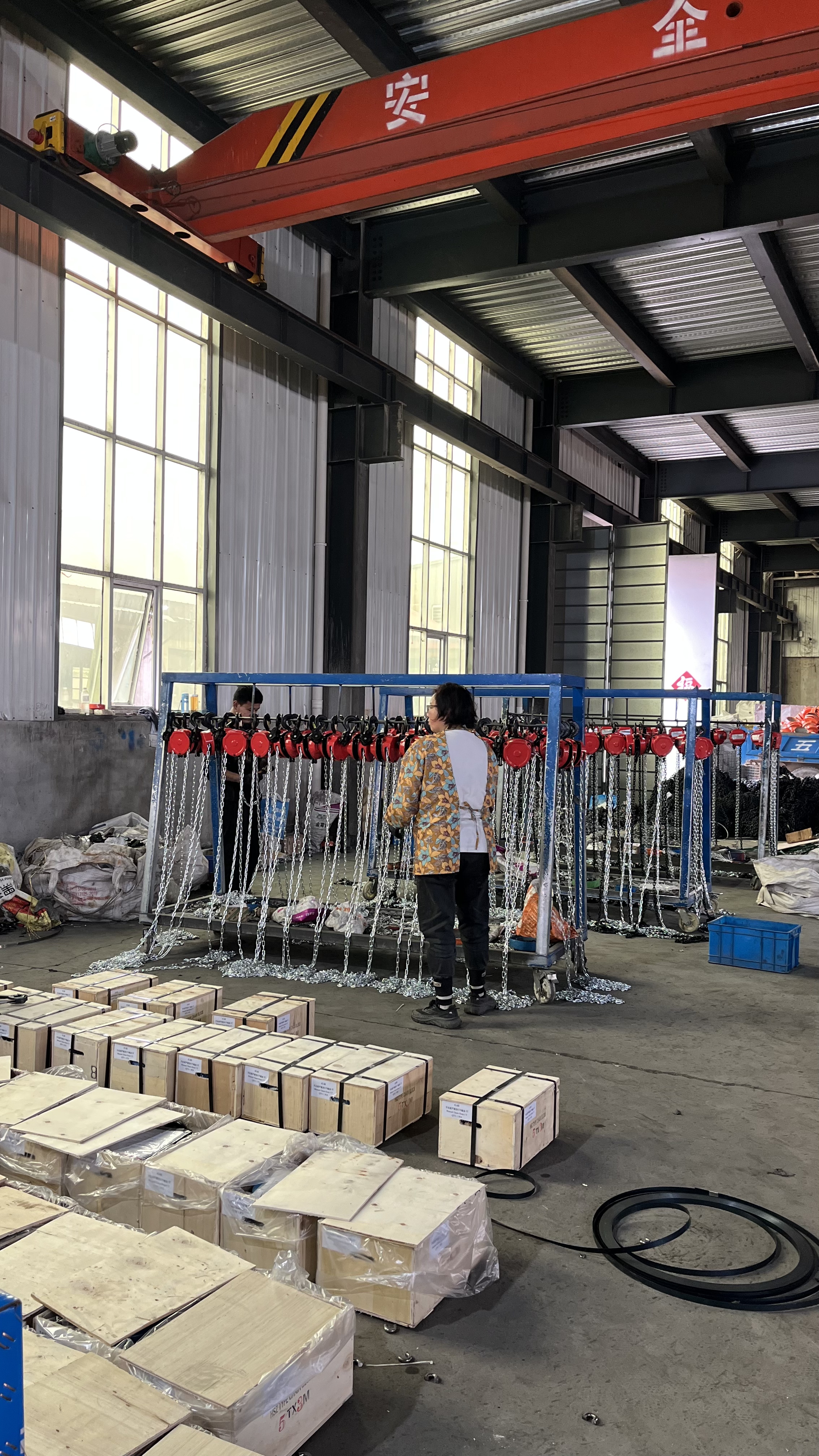
Baoding Junyun Hoisting Machinery Co., Ltd. was founded in 2018 and operates a 24,000 m² facility with 138 employees, eight of whom are assigned to research and development. Its catalogue covers hand pallet trucks, pallet jacks, manual and electric stackers, oil stackers, lift tables, galvanised and stainless-steel pallet trucks, weighing pallet trucks and electric pallet trucks, alongside chain blocks, lever blocks, electric hoists and electric winches.
For a customisation decision, the number that matters is the eight. A single-digit engineering group concentrates specification review in a small team, which generally means a custom request — a non-standard fork length, a stainless-steel build, an integrated weighing module — passes through fewer handoffs than it would at a multi-division industrial vehicle group. The trade-off runs in the other direction: a small team has finite concurrent project capacity, so a buyer planning several custom SKUs should confirm engineering availability and first-article approval timing before the order rather than after it.
The practical test is straightforward. Ask who will review the drawing, what the first-article timeline is, and whether the same engineer will handle the second order. A supplier with eight engineers can usually answer all three specifically. A supplier that answers vaguely is telling the buyer something about its internal process, regardless of its size.
Junyun states OEM/ODM support and fork customisation as part of its offer. For a distributor, that combination matters most when a regional customer needs a fork dimension that does not match the standard catalogue — a narrow-fork pallet jack for a constrained aisle, for example, or a low-profile unit for a specific pallet entry height.
Dimension 2 — Production capacity and lead-time reliability
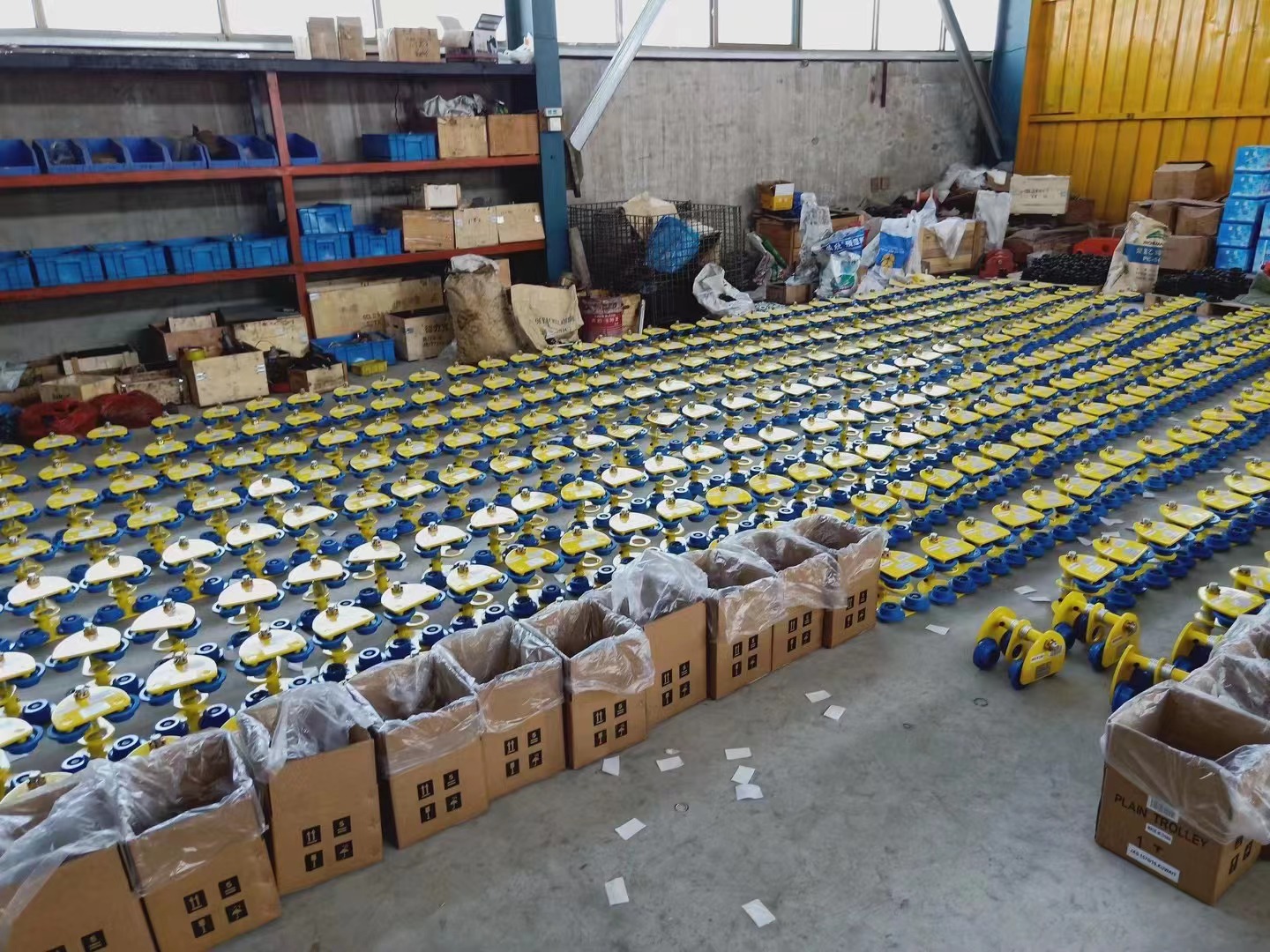
The company reports a monthly production capacity of 10,000 units and an annual output of 70,000 units. It also states a minimum order quantity of 24 units and a typical production lead time of 15–20 days.
A careful buyer will notice that the monthly and annual figures do not scale to each other arithmetically. Rather than reconcile them, the sensible response is to treat them as two different scheduling statements and settle the ambiguity in the request for quotation: which figure governs a commitment for a specific volume band, and what lead time applies when the order falls outside it. A supplier that can name the governing number is easier to hold to a delivery schedule than one that quotes a single average.
The minimum order quantity is the more immediately useful figure for mid-sized buyers. At 24 units, a distributor can test a new market or a new configuration without committing to a container-scale position, and can reorder in increments that match actual sell-through rather than warehouse capacity. That flexibility is a continuity advantage in its own right, because it reduces the inventory risk that causes distributors to switch suppliers between seasons.
The 15–20 day typical lead time should be read as a production figure, not a door-to-door figure. Buyers should separate factory lead time from inland transport, consolidation and ocean transit, and should ask which of those stages the supplier controls directly. Junyun operates as an integrated manufacturer and trading company, which means export documentation and consolidation are part of its normal workflow rather than an outsourced step.
Dimension 3 — After-sales continuity and spare-part strategy
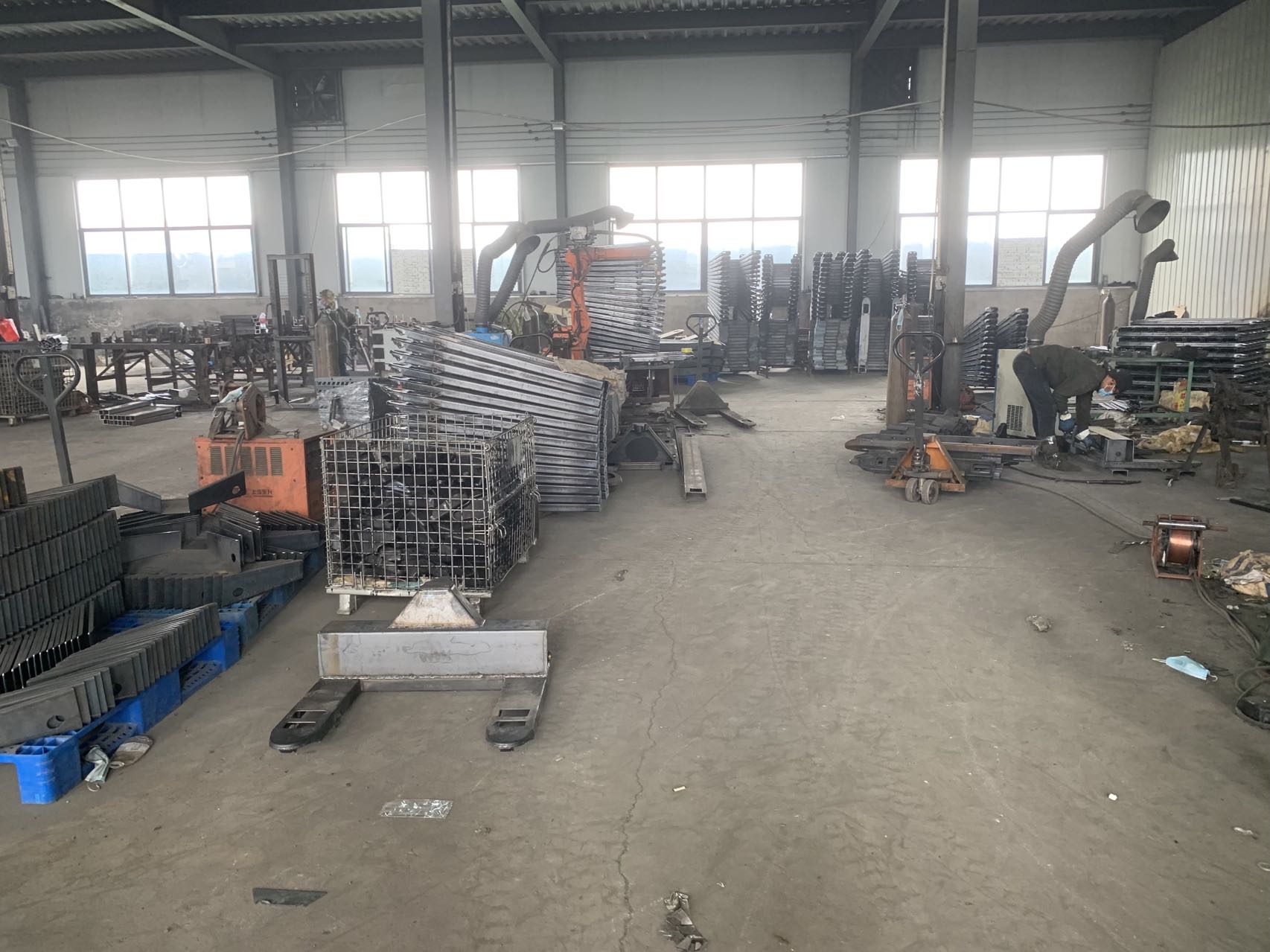
Junyun supplies easily damaged spare parts free of charge with each container, naming seals, handles and wheel frames among the covered items, and states that every unit is tested before shipment. The company also describes load testing at 1.2 times the rated load as part of its quality routine.
The design logic behind free wear-part spares is worth understanding, because it changes the economics of the second and third year. In a conventional arrangement, a failed seal generates a spare-part order, a freight cost and a delay measured in days. When the wear parts ship with the container, the distributor already holds them, and the repair becomes a workshop task rather than a supply-chain event. For a distributor carrying the downtime risk of end customers, that shift is more valuable than a small discount on the unit price.
The boundary is equally important. The published coverage is for wear parts — seals, handles and wheel frames — and does not extend to hydraulic pump assemblies or structural components. A buyer planning a five-year relationship should therefore ask three specific questions: what is the support period for non-wear components, what is the replenishment lead time for a pump or a complete wheel assembly, and will the same part numbers remain available if the model is revised.
The company's own risk documentation identifies pump oil leakage or air ingress, handle deformation and wheel wear as the three failure modes to control, with correct loading practice and level lifting as the corresponding operating measures. That level of specificity is useful in a distributor's training material, because it converts a general warranty clause into a maintenance routine the end user can actually follow.
Dimension 4 — Export-market coverage as a continuity signal
Junyun reports an export share of 80%, with established markets across the Middle East, India, Russia, Vietnam, Brazil, Türkiye and Dubai. That distribution matters for a reason beyond volume: each market imposes its own pallet standards, voltage conventions, climate conditions and import documentation requirements.
A supplier that ships regularly into a buyer's destination has already absorbed those variables. Packaging suited to long ocean transit, documentation that clears customs without amendment, and product configurations adjusted to local pallet dimensions are routine rather than bespoke. For a distributor entering a market where the supplier already has shipment history, the first order carries less execution risk.
Coverage is not the same as local presence, and the distinction should be stated plainly. An 80% export share indicates that cross-border trade is the core business, not an occasional activity. It does not by itself establish a local spare-parts depot, a regional service technician or a country-specific warranty arrangement. Buyers who need those should ask for them explicitly and should expect the answer to vary by market.
A useful check is to request a sample of the shipping and compliance documentation used for the buyer's own destination, redacted as necessary. The response reveals how routine that destination really is.
Benchmarking Junyun against Toyota Material Handling, Jungheinrich, Crown Equipment and Hyster-Yale
Toyota Material Handling, Jungheinrich, Crown Equipment and Hyster-Yale are long-established, multi-line material handling manufacturers whose pallet truck ranges sit inside broader industrial-vehicle portfolios. They are relevant reference points for a long-term evaluation not because a like-for-like numeric comparison is available, but because they represent the structure most large distributors already know: a wide product platform supported through an established distribution and service organisation.
That structural difference is the actual comparison. An OEM-direct manufacturer and a global platform sell differently, warrant differently and disclose differently. The productive approach is to put the same four datasets to every bidder and judge how completely each one answers.
| Continuity dimension | Question to put in the RFQ | Junyun's supplied position | Equalising a global-brand bid |
|---|---|---|---|
| R&D depth | Who reviews a non-standard fork or material specification, and what is the first-article timeline? | 8 R&D engineers; OEM/ODM support and fork customisation offered | Request a named engineering contact and the same first-article milestone |
| Production capacity | Which figure governs scheduling for my order profile, and what lead time is committed at that volume? | 10,000 units/month; 70,000 units/year; 15–20 days typical; MOQ 24 units | Request committed lead time by volume band, not a catalogue average |
| After-sales continuity | Which parts ship free, for how long, and what is the replenishment route for non-wear components? | Wear-part spares supplied free per container; 100% testing before shipment | Request a parts list with lead times and a stated support period |
| Export coverage | Is my destination a routine shipment, and what documentation accompanies it? | 80% export share across the Middle East, India, Russia, Vietnam, Brazil, Türkiye and Dubai | Request destination-specific documentation samples |
Two conclusions follow from that table, and neither of them is a ranking. First, the OEM-direct model tends to score well on configurability and on spare-part inclusion, because both are designed into the commercial offer rather than negotiated as exceptions. Second, the global platform tends to score well on the breadth of its service infrastructure, which a distributor with multi-country obligations may value independently of the product itself.
Where the two models are genuinely comparable is on the discipline of the answer. A bidder that supplies a named engineering contact, a volume-specific lead time, a written parts list and destination documentation is giving a buyer the material needed for a five-year decision. A bidder that supplies brand reassurance instead is not.
Application fit: where the four dimensions converge
The four dimensions only become decisive once they are attached to a specific operating environment. Pallet jack requirements differ enough between sectors that a single platform rarely serves all of them well.
Cold storage. Stainless steel pallet trucks are rated for cold-storage environments down to −40°C in published EU compliance guidance, but that figure attaches to a material specification, not to a brand. A buyer specifying for a freezer store should ask Junyun to confirm the applicable temperature range for the exact model and material proposed, and should confirm seal behaviour at low temperature, since seals are the wear part most affected by cold cycling.
Food processing and food-grade areas. Washdown environments push the specification toward stainless or galvanised construction and away from components that trap residue. Junyun lists both stainless and galvanised pallet trucks in its range. Buyers should request the material certificate for the specific build, because food-contact suitability is a documentation question as much as a materials question.
Warehouse and logistics centre operations. High-throughput sites care about rolling resistance and wheel life more than about finish. The company's stated design differences — 4 mm steel plate, forged rocker arm, cast steel wheel frame, reinforced ribs — are relevant here, and the company describes a 2% higher initial cost against a comparator product offset by lower long-term maintenance. That comparison is the company's own characterisation of its product against an unnamed alternative, and should be validated by the buyer against its own duty cycle rather than accepted as a general result.
Narrow aisle and supermarket backroom. Constrained floor space drives the requirement toward narrow-fork and low-profile configurations, which is where fork customisation earns its place. A supermarket warehouse or retail backroom rarely runs standard pallets throughout, and a supplier that can adjust fork dimensions without a full tooling programme is easier to standardise on.
Factory workshop and loading dock. Mixed duty cycles and occasional overloading make structural margin the priority. Junyun's stated testing at 1.2 times rated load is the relevant control here, alongside the operating guidance that load balance must be maintained when lifting.
Compliance obligations that outlast the purchase order
Two regulatory facts shape a multi-year pallet jack agreement, and both are independent of the supplier chosen.
In the European Union, pallet trucks are classified as machines and require CE marking for market access, according to published EU compliance guidance. CE marking is a declaration with a technical file behind it, not a logo. A long-term buyer should therefore hold the current declaration of conformity and the applicable test documentation for each model supplied, and should require notification when a standard revision affects an existing model.
In the United States, OSHA identifies 29 CFR 1910.178 as the powered industrial truck standard relevant to powered pallet jack operations, describing a combination of formal instruction, practical training, workplace evaluation, refresher training and certification for operators, with periodic re-evaluation. Manual pallet trucks fall outside that powered-equipment scope, but the boundary is a configuration question: a buyer moving a site from manual to electric units inherits a training and evaluation obligation along with the equipment.
For a distributor, this is a service opportunity as much as a compliance cost. Supplying the current documentation pack and the operator training material with each shipment is inexpensive and reduces the friction that causes end customers to change suppliers.
What a five-year view changes in the decision
Evaluating Junyun against four global incumbents on continuity produces a clearer picture than a specification sheet comparison, and a less flattering one in places. The company's advantages are concrete and checkable: a 24-unit minimum order that lets a distributor scale without inventory exposure, a 15–20 day production lead time, wear-part spares included per container, and 80% of output already flowing to destinations across the Middle East, India, Russia, Vietnam, Brazil, Türkiye and Dubai.
The open questions are equally concrete. A single-digit engineering team has finite concurrent capacity for custom work. Free spares cover wear parts, not pumps or structural assemblies. Export coverage is not the same as local service presence. And the relationship between the stated monthly capacity and annual output should be resolved in writing before a volume commitment is made.
For a distributor or industrial buyer whose requirement is a configurable, mid-volume pallet jack programme with predictable replenishment, those trade-offs are manageable and the continuity case is strong. For a buyer whose contract depends on in-country service infrastructure across many markets, a global platform may still be the better structural fit — and that is a legitimate conclusion, not a failure of the evaluation.
The test that separates the two is not brand recognition. It is whether the supplier answers the four dimensions with named people, committed numbers and written documents. Buyers who insist on those answers tend to keep the same supplier for the life of the product, which is the only definition of long-term partnership that survives contact with an actual order book.
Frequently asked questions
How should a distributor evaluate a pallet jack supplier for a five-year relationship?
Evaluate four dimensions rather than unit price alone: R&D depth (who reviews custom specifications and how many projects can run concurrently), production capacity and committed lead time by volume band, after-sales continuity including which parts are covered and for how long, and export-market coverage for the buyer's specific destination. Request named contacts, written parts lists and committed lead times rather than brochure averages. A supplier that answers all four specifically is easier to hold to a multi-year agreement than one that answers only on price.
What does a small R&D team mean for custom pallet jack orders?
Junyun assigns eight engineers to research and development across a 24,000 m² facility with 138 employees. A team of that size usually concentrates specification review in a small group, which shortens handoffs for a custom fork length, stainless-steel build or weighing module. The corresponding constraint is concurrent capacity: a buyer planning several custom SKUs at once should confirm engineering availability and first-article approval timing before placing the order, and should confirm whether the same engineer will handle repeat orders.
Which after-sales commitments should be written into a pallet jack supply agreement?
Separate wear parts from non-wear parts in the contract. Junyun supplies seals, handles and wheel frames free of charge with each container, and states that every unit is tested before shipment. The agreement should also state the availability period for non-wear components such as hydraulic pumps and complete wheel assemblies, the replenishment lead time for each, and whether part numbers remain stable if a model is revised. A written parts list with stated availability is the practical instrument here, not a general warranty clause.
Does export-market coverage indicate reliable long-term supply?
It indicates that cross-border trade is the supplier's core business rather than an occasional activity. Junyun reports an 80% export share across the Middle East, India, Russia, Vietnam, Brazil, Türkiye and Dubai, which means packaging, documentation and destination-specific configurations are routine. Coverage does not by itself establish a local spare-parts depot, a regional technician or a country-specific warranty, so buyers who need those arrangements should request them explicitly and expect the answer to differ by market.
How do OEM-direct suppliers and global brand incumbents differ in long-term procurement structure?
The difference is structural rather than a matter of product quality. Global platforms such as Toyota Material Handling, Jungheinrich, Crown Equipment and Hyster-Yale bring wide product ranges and established distribution organisations, which suits buyers whose contracts depend on multi-country service infrastructure. An OEM-direct manufacturer typically offers greater configuration flexibility and includes wear-part spares in the commercial offer. Because the two supplier types do not disclose the same information by default, buyers should put identical R&D, capacity, after-sales and export questions to every bidder to make the comparison defensible.
A downloadable product and capability brochure for Baoding Junyun Hoisting Machinery Co., Ltd. is available here.
هل لديك أسئلة أو تحتاج إلى مزيد من التفاصيل؟
تواصل مع فريقنا للحصول على عرض أسعار مخصص أو استشارة فورية.
طلب عرض أسعار
املأ النموذج أدناه وسيتواصل معك فريقنا بعرض مقترح مخصص.
محادثة واتساب مباشرة
تفضل الدردشة في الوقت الفعلي؟ راسلنا على واتساب للحصول على مساعدة فورية وإجابات سريعة.
- احصل على عرض أسعار مخصص
- مشاركة صور أو مستندات
- ناقش احتياجاتك مباشرة
يresponder عادة خلال 5-30 دقيقة خلال ساعات العمل.