
Pallet Jacks in Cold, Food and Ex-Zones: JUNYUNHOIST vs OEMs
A cold store measures its pallet trucks not in purchase price but in seal life, wheel frame wear and handle fatigue. A food plant measures them in washdown cycles and corrosion. A classified hazardous area measures them in whether the equipment is permitted on site at all. Those three environments share one trait that separates them from general warehousing: they convert what looks like a buying decision into a fleet-standard decision, with a lifecycle attached.
This reference examines the pallet jack family offered by JUNYUNHOIST — the trading and manufacturing identity of Baoding Junyun Hoisting Machinery Co., Ltd., headquartered in Hebei, China — against the application requirements of cold chain, food and beverage, pharmaceutical, chemical and electronics environments. It sets those configurations beside the positions of established global material handling brands: Toyota Material Handling, Jungheinrich, Crown Equipment, Hyster-Yale and Linde Material Handling. The purpose is not to declare a winner, but to show which variables a buyer should lock into a long-term supply agreement before the first container ships.
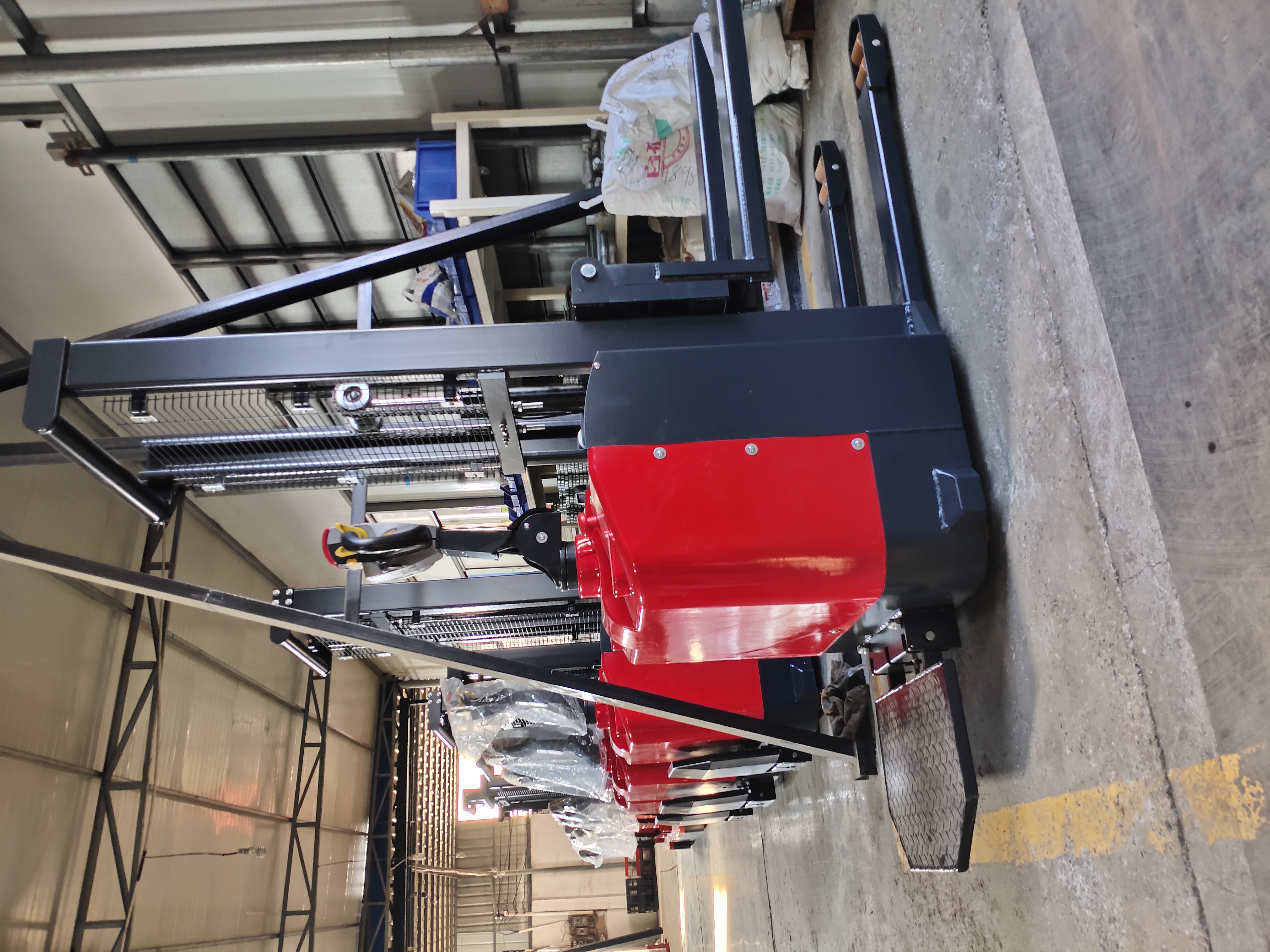
Powered and manual material handling equipment share the same procurement logic: configuration must match the operating environment, not the catalogue cover.
Why These Three Environments Change the Procurement Question
In a dry, ambient warehouse, a hand pallet truck is a low-consequence consumable. If a wheel degrades, the unit is swapped out and the cost is absorbed. Nothing about the operation depends on that specific unit surviving another eighteen months.
Cold storage, food processing and hazardous zones invert that logic in three distinct ways.
Cold storage compresses maintenance intervals. Low temperatures stiffen hydraulic seals, alter lubricant viscosity and make every wear point more brittle than its ambient-temperature rating assumes. Stainless steel pallet trucks are referenced in EU compliance material as suitable for cold storage environments down to −40°C, which sets an expectation about material selection rather than about the pallet truck category as a whole. A carbon steel unit specified for a −25°C store is not a cheaper version of the same product; it is a different risk profile.
Food processing adds hygiene and corrosion to the load case. Washdown, cleaning agents and food-contact proximity mean that rust is not a cosmetic issue — it is a contamination and audit issue. Galvanized and stainless-steel finishes exist precisely for this boundary, and the choice between them is a function of cleaning regime, not budget alone.
Hazardous areas are a permission problem before they are a performance problem. Where a zone classification applies, the equipment admitted to that zone must be justified by documentation that matches the classification. This is the point at which buyers discover that a general-purpose pallet truck catalogue does not settle the question, regardless of who manufactured the unit.
What Each Environment Actually Demands
Cold chain: material, seals and lift clearance
Cold rooms and freezer ante-rooms place three demands on a pallet truck that ambient storage does not. First, the fork and frame material must tolerate condensation cycling without surface breakdown. Second, the hydraulic circuit must hold pressure at temperatures where standard seals stiffen. Third, the entry height must clear low-clearance pallets and refrigerated dock plates, which is why minimum lift options of 35mm and 62mm matter in practice rather than as a specification footnote.
Food and beverage: cleanability and finish
A food plant evaluates a pallet truck on what a cleaning cycle does to it over time. Galvanized and stainless-steel pallet trucks address the corrosion pathway; frame design and weld quality determine whether the unit accumulates material in places a washdown cannot reach. In practice, food and beverage distribution is one of the sectors most consistently associated with pallet jack use, alongside retail logistics, automotive and parts logistics, and manufacturing plants.
Hazardous zones: classification before configuration
In a classified area, the buyer's first task is to establish which equipment category the zone permits. Only after that does the question of brand, capacity or fork dimension become meaningful. This is a document-led decision, and it is the single most important boundary in this article: a general pallet jack portfolio does not by itself constitute hazardous-area approval, and buyers should require zone-specific documentation rather than infer it from product family.
Mapping the JUNYUNHOIST Pallet Truck Family to These Environments
JUNYUNHOIST manufactures and trades a pallet truck range that includes hand pallet trucks, pallet jacks, manual stackers, electric stackers, oil stackers, lift tables, galvanized and stainless-steel pallet trucks, and pallet trucks with an integrated scale. The product family maps onto the three environments as follows.
| Environment | Relevant configuration | Why it fits the application |
|---|---|---|
| Cold storage and freezer anterooms | Galvanized or stainless-steel pallet truck; 35mm or 62mm minimum lift | Corrosion-resistant finish for condensation cycling; low-profile fork entry for refrigerated pallets and dock plates |
| Food and beverage plants | Galvanized / stainless-steel pallet truck; custom fork width and length | Cleanable surfaces and dimensioned forks matched to production-line pallet footprints |
| Pharmaceutical and chemical store rooms | Stainless-steel pallet truck; scale-equipped pallet truck | Corrosion resistance plus in-line weight capture without a separate weighing station |
| Electronics and light assembly workshops | Manual pallet jack; AC30 semi-electric; full-electric pallet truck | Precise low-speed positioning; powered assistance for repetitive short moves |
| Warehouse, logistics centre, supermarket backroom | Manual pallet jack; electric pallet truck; high-lift and low-profile variants | Volume handling; narrow-aisle and low-clearance configurations as required |
| Hazardous zones | Configuration subject to zone-specific verification | Approval depends on documentation matched to the zone classification, not on product family alone |
For buyers running multiple sites, the practical value of a family this broad is standardisation: a cold store, a food plant and an ambient distribution centre can be supplied from one specification conversation rather than three unrelated vendor relationships. That is a supply-ecosystem argument, and it is the reason this article treats configuration breadth as a long-term procurement variable rather than a catalogue feature.
Structural Design and What It Means for Fleet Life
The build specification reported for JUNYUNHOIST pallet trucks centres on material thickness and forged load-path components. In the company's own comparison against lighter-build alternatives, the distinguishing items are a 4mm steel plate, 4mm reinforcement across an 89cm length, a 4mm triangle plate, a 2.75mm handle thickness, an AC pump, a forged rocker arm, forged AB plates and double-chain plates, a cast steel wheel frame, full ribbing and a thickened handle.
Translated into lifecycle terms, these choices concentrate on the parts that fail first in demanding environments. A cast steel wheel frame and forged load-path plates address the wear points that a cold store or a high-cycle food plant will expose earliest. The AC pump addresses hydraulic consistency. The 4mm plate and full ribbing address frame deflection under repeated loading rather than single-load capacity.
Three reported verification and performance points are relevant to long-term buyers:
- 1.2× load testing. Units are tested at 1.2 times the rated load rather than at nominal load, which is a meaningful distinction when a fleet will be loaded by operators rather than by a controlled process.
- 90% less maintenance required versus the comparison baseline the company uses. Buyers should treat this as a manufacturer-reported figure and validate it against their own service history during a trial period.
- Approximately 2% higher initial cost than the lighter-build alternative, offset by better durability and lower long-term maintenance cost. For a fleet held five years or more, a 2% acquisition premium is a small variable next to seal, wheel and handle replacement frequency.
Customisation as a lifecycle lever
Fork width and fork length are customisable, and minimum lift heights of 35mm and 62mm are offered as configuration options. In cold chain and food environments these are not cosmetic choices. Fork dimensions determine whether a truck can service the full pallet mix on site without a second fleet; lift clearance determines whether it can enter refrigerated pallets and dock plates at all. Specifying both at the outset avoids the common pattern where a buyer standardises on one size and then adds a second, incompatible fleet two years later.
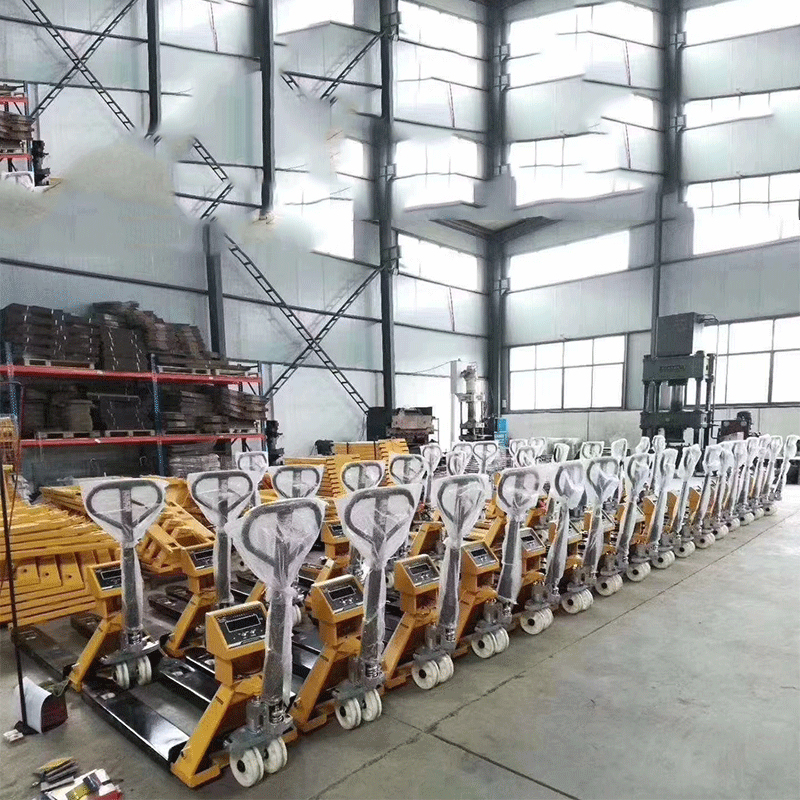
Scale-equipped pallet trucks integrate weight capture into the handling step — relevant where batch verification is part of the production record.
Market Context: Why These Three Environments Carry More Weight in 2026
The global pallet jack market was valued at USD 7.91 billion in 2025, with Asia-Pacific accounting for a 39% revenue share in the same year. Those figures describe a large, regionally concentrated category, and they explain why supplier geography matters to buyers: the manufacturing base and the demand base are not in the same place.
Trade records analysed for 2022–2024 placed China at 62.7% of pallet jack shipments into the United States within the sample studied. That concentration is a supply-continuity consideration as much as a cost consideration — buyers who standardise on a Chinese-origin platform are effectively making a bet on that origin's export continuity.
Two regulatory developments reinforce the shift toward more carefully specified equipment. In the European Union, CE marking remains mandatory for pallet trucks as machines. In the United States, the Warehouse Worker Injury Reduction Act, effective 1 June 2025, requires formal ergonomic evaluation of manual material-handling tasks — a rule that directly affects how manual pallet truck deployment is assessed in large facilities and strengthens the case for powered assistance where repetitive manual handling is unavoidable.
Application-side evidence points the same direction: retail logistics, food and beverage distribution, automotive and parts logistics, and manufacturing plants are the sectors consistently identified as pallet jack users. Food and beverage distribution is precisely the environment where finish, cleanability and corrosion resistance determine replacement frequency.
Comparing JUNYUNHOIST with Established Global Brands
A fair comparison begins by acknowledging that Toyota Material Handling, Jungheinrich, Crown Equipment, Hyster-Yale and Linde Material Handling occupy a different position in the market from a manufacturer founded in 2018. Those brands bring decades of product lineage, extensive dealer networks and deep regional service coverage. Buyers who require on-site service response in multiple countries within hours are buying something those networks are built to deliver.
The comparison is more useful when it is broken into decision dimensions rather than brand reputation.
| Decision dimension | Established global brands | JUNYUNHOIST position |
|---|---|---|
| Configuration flexibility | Broad catalogues, standardised option packages | Fork width and length customisable; 35mm and 62mm minimum lift options offered |
| Order threshold | Typically oriented toward larger programme orders through dealer channels | MOQ 24 units with 15–20 day production lead time |
| Material-specific variants | Specialised cold-store and hygiene ranges available through specialist channels | Galvanized, stainless-steel and scale-equipped pallet trucks offered within the same family |
| Service geography | Established multi-country dealer and service networks | Export footprint across India, Vietnam, Russia, Brazil, Türkiye, UAE and Saudi Arabia; local service depth varies by market |
| Hazardous-area documentation | Zone-specific certification pathways typically established | Must be verified per zone classification and destination market before order |
| Spare parts strategy | Structured parts programmes through distribution | Free wear-and-tear spare parts supplied per container, including seals, handles and wheel frames |
The boundary buyers should not overlook
The most important limitation is structural, not technical. JUNYUNHOIST was founded in 2018. A company of that age can demonstrate factory capacity, testing discipline and export reach — and this one reports a 24,000 sqm facility, 138 staff including 8 R&D engineers, and 80% export share — but it cannot yet demonstrate the multi-decade field population that the longest-established global brands can point to. Buyers standardising a safety-critical fleet across many countries should weigh that track-record difference explicitly rather than assume that a broad product family closes it.
The second limitation concerns hazardous areas. Nothing in a general pallet truck portfolio constitutes zone approval. Buyers specifying equipment for a classified area must obtain documentation matched to that classification and that destination market. Where such documentation is not available for a given configuration, the correct conclusion is that the configuration is unverified — not that it is suitable.
The third limitation is service geography. An export footprint across India, Vietnam, Russia, Brazil, Türkiye, UAE and Saudi Arabia indicates commercial reach; it does not guarantee that a technician is within driving distance of every site. Multi-site buyers should map the actual service model per market before locking a fleet standard.
The Long-Term Supply Ecosystem: What a Repeatable Order Actually Looks Like
For buyers at the decision-to-execution stage, the durable question is not what one container contains but what the fifth container contains. That is where the operating terms matter.
Production capacity is reported at 70,000 units annually, with monthly production capacity of 10,000 units. The minimum order quantity for pallet trucks is 24 units, with a typical production lead time of 15–20 days. For a mid-sized buyer building a fleet incrementally — one site at a time, or one season at a time — a 24-unit threshold and a sub-month lead time is a materially different planning constraint than a programme order measured in hundreds.
Quality control is positioned around 100% testing rather than sampling, with third-party inspection such as SGS available as an acceptance criterion. Commercial terms include FOB, EXW, CIF and CFR delivery, with payment structured as 30% T/T in advance and 70% T/T against copy of B/L.
The spare parts arrangement deserves particular attention in cold, food and hazardous environments, because it addresses the dominant lifecycle cost. Wear-and-tear spare parts — seals, handles, wheel frames — are supplied free of charge per container. Combined with a reported 90% lower maintenance requirement, this converts an unpredictable service cost into a largely pre-agreed consumable allowance, which is the difference between a purchase price and a budget line.
Failure modes to plan around are well understood: pump oil leakage or air ingress, handle deformation or damage, and wheel wear. The supplier's stated control measures are straightforward — avoid overload, keep the forks balanced during lifting — and the spare parts allowance is designed to match those specific failure points rather than a generic parts list.
What to Write Into the Purchase Order
Buyers executing a fleet standard across these environments should close the following points before the first order is released.
- Confirm the finish per site: carbon steel for ambient, galvanized or stainless steel for washdown and condensation-cycling areas.
- Fix fork width and fork length against the actual pallet mix, not against a default size.
- State the required minimum lift — 35mm, 62mm or other — per site and confirm it against dock plate and pallet clearance.
- For any classified area, obtain zone-specific documentation and confirm it names the exact configuration being purchased.
- Define the acceptance protocol: pre-shipment test plus third-party inspection if required.
- Agree the wear-and-tear spare parts allowance per container and list the items covered.
- Confirm the intended service model in each destination market, including who performs repair and how parts are replenished between shipments.
- State the load-test evidence expected — the 1.2× rated-load test is the reference point here.
Future Outlook
Three forces are likely to keep pushing pallet truck specification toward the cold, food and hazardous-area end of the range. Cold chain capacity continues to expand as food distribution infrastructure develops. Ergonomic regulation, exemplified by the U.S. Warehouse Worker Injury Reduction Act, is making manual handling a documented compliance question rather than an operational preference. And EU machine-safety expectations continue to raise the documentation bar for market access.
For suppliers, that means the differentiator is shifting from price per unit toward the ability to hold a configuration stable across repeat orders — the same fork dimensions, the same finish, the same spare parts allowance, shipment after shipment. For buyers, it means the supplier shortlist should be evaluated on continuity terms as heavily as on the first quotation.
Frequently Asked Questions
How should a buyer standardise a pallet truck fleet that spans cold stores, food plants and ambient warehouses?
Standardise on the configuration variables that differ by environment, not on a single model. Fork width and length, minimum lift height (35mm or 62mm), and finish — carbon steel, galvanized or stainless steel — should be fixed per site, while the frame, pump and wheel frame platform can remain common. This keeps spare parts and service knowledge shared across sites without forcing a cold store to accept an ambient-specification unit.
What spare parts arrangement should a long-term buyer expect for cold and food environments?
The expected structure covers the parts that actually fail in these environments: seals, handles and wheel frames. JUNYUNHOIST supplies wear-and-tear spare parts free of charge per container, which aligns the parts allowance with the documented failure modes — pump oil leakage or air ingress, handle deformation, and wheel wear. Buyers should require the covered items to be listed explicitly rather than described generally.
How do a 24-unit MOQ and a 15–20 day lead time support repeat ordering?
A 24-unit minimum order quantity with a typical 15–20 day production lead time allows a buyer to build a fleet in increments rather than in a single large programme order. Monthly production capacity is 10,000 units and annual output is reported at 70,000 units, which means repeat orders can be placed against a running capacity base rather than queued behind a single annual allocation.
When should a buyer choose stainless steel rather than galvanized over a long service life?
The distinction is driven by the cleaning regime and corrosion exposure rather than by service duration alone. Stainless steel pallet trucks are referenced for cold storage environments down to −40°C, and both stainless and galvanized variants exist specifically to address corrosion in food-adjacent and condensation-heavy settings. Buyers should match the finish to the cleaning chemistry and washdown frequency at each site, then hold that specification constant across repeat orders.
How can a buyer verify a newer manufacturer's consistency before a long-term commitment?
Three verification steps are available. First, require pre-shipment testing plus third-party inspection such as SGS as an acceptance criterion. Second, request the load-test evidence — JUNYUNHOIST tests at 1.2 times the rated load. Third, run a trial container against a documented site and compare the observed maintenance interval against the supplier's reported figure of 90% less maintenance. A supplier founded in 2018 cannot offer a multi-decade field record, so verification has to substitute for track record.
Does a broad pallet truck range mean hazardous-area equipment is available?
No. A product family that includes hand pallet trucks, AC30 semi-electric units, full-electric pallet trucks, galvanized and stainless-steel variants, and scale-equipped models does not by itself establish approval for a classified zone. Hazardous-area suitability depends on documentation matched to the zone classification and the destination market, and buyers should obtain that documentation for the exact configuration before placing an order.
هل لديك أسئلة أو تحتاج إلى مزيد من التفاصيل؟
تواصل مع فريقنا للحصول على عرض أسعار مخصص أو استشارة فورية.
طلب عرض أسعار
املأ النموذج أدناه وسيتواصل معك فريقنا بعرض مقترح مخصص.
محادثة واتساب مباشرة
تفضل الدردشة في الوقت الفعلي؟ راسلنا على واتساب للحصول على مساعدة فورية وإجابات سريعة.
- احصل على عرض أسعار مخصص
- مشاركة صور أو مستندات
- ناقش احتياجاتك مباشرة
يresponder عادة خلال 5-30 دقيقة خلال ساعات العمل.