
Panels or Production Lines? A Wood Panel Sourcing Decision Framework
Panels or Production Lines? A Wood Panel Sourcing Decision Framework
Wood panel sourcing is usually described as a purchasing task. For a growing share of buyers, it is actually a business-model question: buy finished board by the container, or take on the capacity to make it? The global plywood market was valued at USD 80.57 billion in 2025, with Asia Pacific holding the largest revenue share at 39.4% (Grand View Research). Supply of finished board is therefore deep and competitive, which shifts the real difficulty away from availability and toward position: which side of the wood panel process a given business is actually equipped to hold.
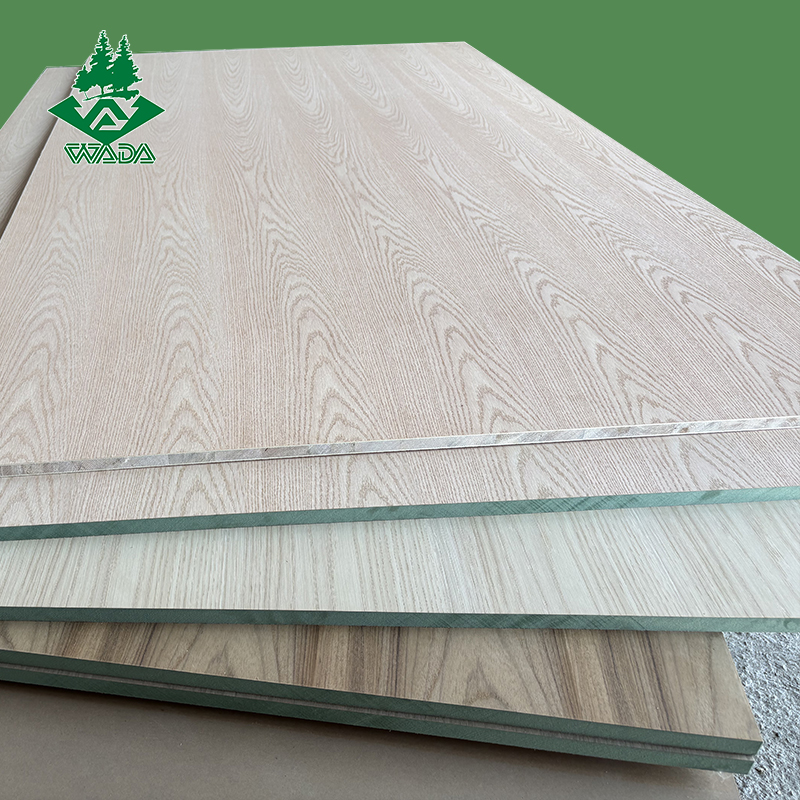
Finished panel supply covers a wide range of faces, cores and thicknesses. Choosing between buying panels and building a line is a positioning decision before it is a price decision.
Two Buyers, One Search Term
Consider two buyers who both describe themselves as sourcing wood panels. The first is a distributor ordering film faced plywood for a formwork contractor. The second is a manufacturer that already operates a veneer yard and is evaluating whether to press its own board. They use the same vocabulary, appear in the same supplier conversations, and are frequently quoted the same way. Their decisions, however, share almost nothing: the distributor is purchasing someone else's capacity, while the manufacturer is deciding whether to own it.
The consequence of treating these as one question is predictable. Distributors are pushed toward equipment budgets they cannot absorb, and manufacturers are sold finished containers when what they actually lack is control over the middle of the process. The framework below separates the two routes using four tests that can be answered before any quotation is compared.
A Four-Question Framework
The tests are deliberately unglamorous. They concern stage, capital, output and capability, in that order.
- Business stage. Are you selling panels into a market, or manufacturing panels for sale? A distributor, importer, furniture maker or contractor earns margin on resale, conversion or installation. A board manufacturer earns margin on conversion of raw material into board. Until the second model is the business, a line is a project without a home.
- Cost flexibility. Panel purchasing converts cost into per-order transactions: one container, one invoice, one shipment. A production line converts cost into fixed commitments — equipment, spare parts, glue and chemical supply, energy, trained operators and raw material inventory carried ahead of production. The question is not which is cheaper in absolute terms, but which cost shape the business can finance through a slow quarter.
- Production goal. Buyers who need range usually buy panels. Buyers who need one configured output at volume usually build capacity. A single line produces the formats its press, lay-up and finishing configuration can produce; a panel supplier's catalogue can move between LVL, structural plywood, marine plywood, film faced plywood, MDF, OSB, veneered board, melamine board and wall panels within the same commercial relationship.
- Technical and after-sales capability. Someone has to grade incoming veneer, control glue mix and press cycles, hold thickness tolerance, manage moisture and maintain the line. If that capability does not exist in-house or cannot be contracted locally, the line becomes dependent on remote guidance for every abnormal condition.
Route One: Buying Finished Panels
Dalian WADA International Trading Co., Ltd. is a manufacturer and global exporter of engineered wood products, established in 2010 and headquartered in Dalian, China, with multiple production bases in China and overseas branches in Japan and Singapore. The company exports 100% of its output and serves buyers across North America, the EU, Australia, Japan, South Korea, the Middle East, Mexico and South America, with long-term partnerships built across more than 50 countries.
For a buyer taking the finished-panel route, the practical scope of that catalogue is the first thing to understand. It spans LVL (including bed slats in sizes from 25–190mm with 7–15mm thickness and birch, beech or poplar faces), commercial plywood from 2–25mm, structural plywood from 9–28mm, marine plywood from 9–25mm with birch or okoume faces and melamine or phenolic WBP glue, and film faced plywood from 4–35mm with dark brown or black film surfaces and a stated re-use range of 2–40 times in concrete projects. MDF is produced from 1.2–50mm in formats from 4×8 to 8×16 feet using continuous flat pressing on Difenbach & Sinbelkamp (Germany) equipment, with density of 500–1000kgs/m³ and moisture content of 5%–13%. Veneered board is supplied from 2–25mm with white oak, red oak, black walnut, parota, wenge, ash, birch, pine or sapeli faces over plywood, MDF, chipboard or blockboard cores, and melamine board runs from 2–30mm with melamine paper, PET film or HPL surfaces.
The commercial terms attached to that range matter as much as the products. The minimum order quantity is one 40-ft container, production lead time is 25–45 days, and monthly panel capacity is rated at 10,000+ CBM. Customization is handled on an OEM/ODM basis covering size, thickness and layout, quality control is described as 100% inspection, and after-sales support is delivered remotely. For a distributor or importer, those four numbers define the entire planning cycle: how much capital is committed per order, how far ahead demand must be forecast, how much allocation risk sits in peak season, and how much of the receiving inspection burden remains with the buyer.
What the route does not require is equally important. The buyer takes on no veneer procurement, no glue kitchen, no press maintenance and no finished-goods inventory in board form. The trade is control for simplicity, and it is usually the correct trade until volume and raw material access make conversion economics meaningful.
Route Two: Building or Upgrading a Line
A complete plywood line is not a single machine, and buyers who evaluate it as one tend to underestimate the integration work. The equipment scope supplied alongside WADA's panel business covers ten defined stages: a plywood production machine, veneer peeling machine, veneer drying machine, veneer patching machine, core veneer composing machine, an automatic lay-up line for plywood production, cold press machine, hot press machine, plywood sanding machine and a fully automatic cross saw. Together these units describe a full-process solution running from log to finished board.
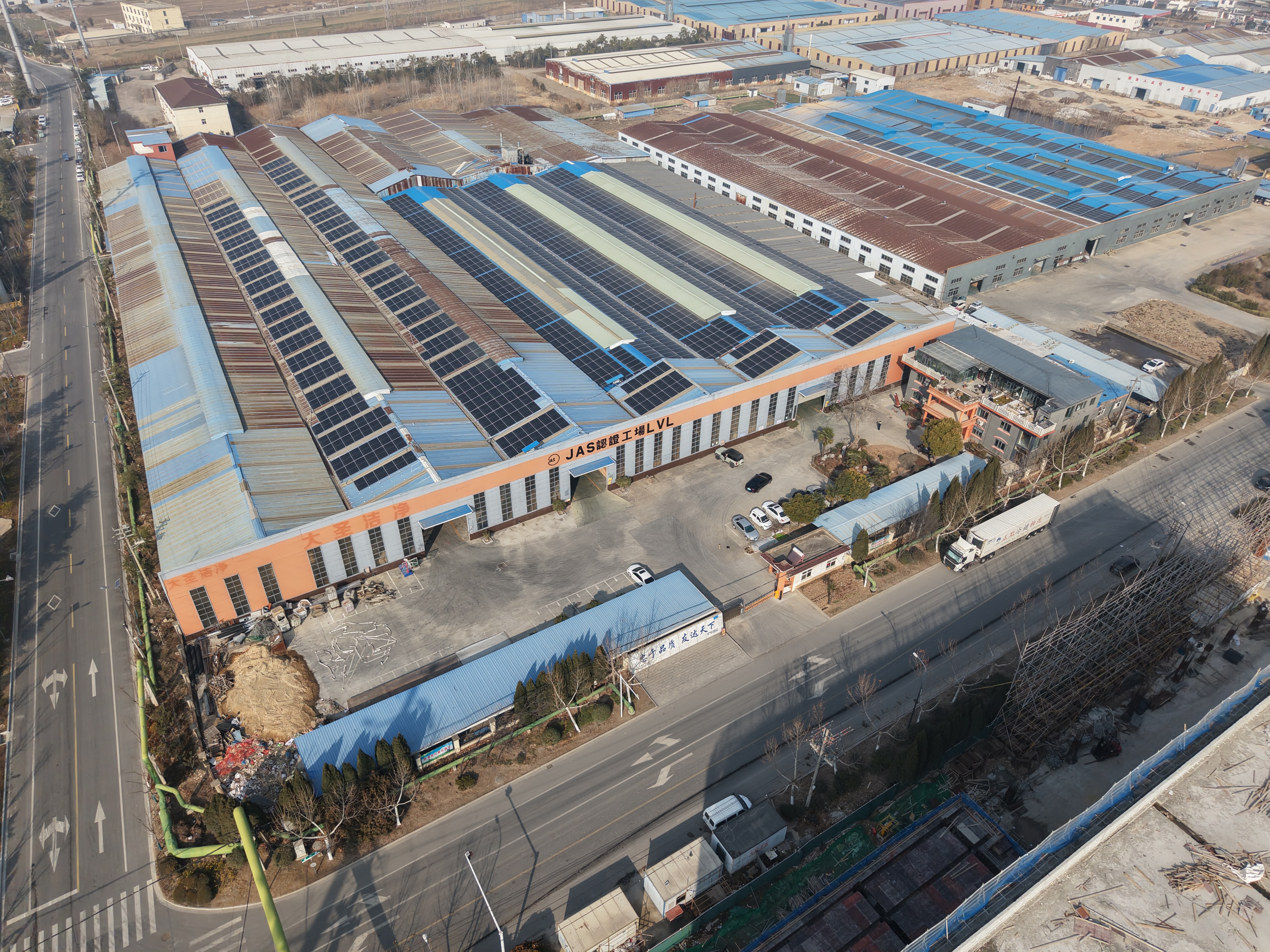
Line projects are judged on process integration — how veneer preparation, lay-up, pressing and finishing hand off to one another — rather than on any single machine.
A reference case illustrates the shape of this route. A plywood manufacturer in Vietnam purchased one complete line as a one-stop solution, and the stated outcome is stable production across plywood, veneer and engineered wood panels used in furniture, construction, packaging and interior applications. Notably, the buyer was already in the board business. That is the pattern: line investment consolidates an existing manufacturing position rather than creating one from a trading position.
Technical View: Where Automation Changes the Labour Equation
The most common reason cited for moving to a line is labour. In the configurations used for full-process plywood production, automation at the lay-up, pressing and sanding stages is associated with reductions in manual labour input in the range of 30–50%, because those stages are the most handling-intensive parts of the process: veneer sheets must be graded, glued and assembled into a mat, then transferred into and out of presses, then surfaced and cut to size.
That figure should be read precisely. It describes manual handling across those stages, not the total workforce of a board plant. Glue kitchen work, veneer grading judgement, press parameter setting, thickness and moisture verification, maintenance and spare-parts management remain skilled functions, and the last of these becomes more critical, not less, once a line is running. Buyers who model an automated line as a low-skill operation usually discover the gap during commissioning.
The technical variables that determine whether a line performs as expected sit upstream of the equipment list. In WADA's panel specifications, moisture content is held between 8% and 12% across plywood and veneered products, rising to a 5%–13% band for MDF, and glue systems are specified as E0, E1, E2, CARB P2, melamine WBP, phenolic WBP or MR depending on the application. On the finished-board side those figures are quality outcomes. On the line side they are process parameters that the operator must hold every shift — which is why the line route transfers responsibility for consistency from supplier to buyer.
Application Fit: Which Scenario Points Where
Scenario evidence is more useful than abstract comparison, because the conditions that make one route correct are usually visible in the project itself. The table below maps documented scenarios to the route their conditions support.
| Scenario conditions | Documented buyer profile | Route the conditions support |
|---|---|---|
| Outdoor structural use, waterproof and high-strength requirements | Construction builder, Japan — 200 containers of film faced and structural plywood for building structures, with durability and waterproof performance as the stated result | Panel purchasing: the requirement is performance specification, not conversion |
| Building construction with long-term outdoor structural exposure | Building contractor, Australia — 50 containers of structural and film faced plywood | Panel purchasing |
| Exterior wall cladding under UV exposure, long-term outdoor use, installation system and fasteners required | Wall cladding project, Portugal — 20 containers of marine plywood, stated result weather resistance with UV resistance as the highlight | Panel purchasing with a weather-resistant grade, not a line |
| Continuous workshop production for cabinets and panels, smooth surface and stable core required | Furniture manufacturer, Mexico — 100 containers across melamine board, veneered plywood, MDF and LVL bed slats for furniture and cabinet applications | Panel purchasing in multiple categories, unless volume justifies in-house pressing |
| Industrial packaging under heavy-duty transport, high load capacity, one-time or reusable crating | Commercial plywood used for crating and protection in heavy transport conditions | Panel purchasing; the cost driver is load capacity per unit, not capacity ownership |
| Existing board manufacturing position, full-process control required | Plywood manufacturer, Vietnam — one complete line, stated highlight one-stop solution, stated result stable production | Production line or upgrade |
The pattern is consistent: buyers whose value comes from installation, distribution, conversion into furniture, or project delivery buy panels. Buyers whose value comes from converting veneer into board buy lines. The scenario, not the order size, decides.
Panel Purchase vs. Production Line: A Side-by-Side View
The comparison below sets the two routes against the dimensions that actually change in a sourcing decision. It is written from the buyer's side of the table, using WADA's stated terms where they apply to panel supply and the line scope where they apply to equipment.
| Decision dimension | Buying finished panels | Building or upgrading a line |
|---|---|---|
| Entry commitment | One 40-ft container minimum order | Equipment set, spares, raw material supply, trained operators |
| Time to first saleable output | 25–45 days production lead time, before ocean transit and customs clearance | Installation, trial runs and operator familiarization must complete before commercial output |
| Product range flexibility | LVL, commercial, structural, marine and film faced plywood, MDF, OSB, veneered board, melamine board and wall panels within one supplier relationship | Output limited to the sizes, thicknesses and finishes the line configuration can produce |
| Cost structure | Per-order transaction cost; capital released between shipments | Fixed cost in equipment, maintenance, energy and raw material inventory |
| Labour exposure | Buyer side limited to receiving, storage and sales functions | Automation at lay-up, pressing and sanding is associated with 30–50% reductions in manual handling; skilled operators and maintenance staff remain essential |
| Raw material dependency | Managed by the supplier | Managed by the buyer — veneer, logs, glue and energy must be secured continuously |
| Quality responsibility | Supplier-side 100% inspection, with arrival verification by the buyer | Entirely buyer-side: veneer grading, glue mix, moisture control, thickness tolerance |
| Support model | Remote after-sales support | Remote support combined with local installation and maintenance capability |
| Best fit | Distributors, importers, furniture manufacturers, contractors, project buyers | Manufacturers with raw material access and stable long-run volume |
Where each route genuinely stops working
A framework without boundaries is not useful, and both routes have real limits.
- Panel supply is bounded by allocation, not availability. Monthly capacity of 10,000+ CBM is shared across export markets. A buyer who places peak-season orders late is competing for the same capacity as everyone else, and a 25–45 day lead time excludes transit. Buyers with hard project dates should treat the lead time as the start of a logistics plan, not the end of one.
- A one-container MOQ is a floor, not a trial format. Buyers who want to validate a panel in small quantities before committing will find that a 40-ft container is the smallest commercial unit. Sample validation has to be planned as a separate step.
- A production line does not solve raw material supply. Owning a press does not secure veneer, logs, glue or energy. Manufacturers without a raw material position often find that the constraint simply moves upstream and becomes more expensive to fix.
- Remote after-sales is not on-site engineering. Remote support is effective for parameter questions, troubleshooting and documentation. It cannot replace local mechanical and electrical capability during installation, commissioning or an unplanned stoppage. Buyers should confirm who is available locally before signing.
- Certification is product- and market-specific. WADA's products are certified to FSC, EUDR, CARB P2, EPA, JAS and JIS, and MDF documentation additionally lists FSC, CARB/EPA, JIS and EUDR. That documentation supports market access; it does not automatically satisfy a specific project's contractual paperwork, which remains a per-order verification.
Market Trend Analysis
Three demand-side signals make the decision more consequential than it was five years ago.
First, panel demand continues to expand in categories that require controlled production. The global MDF market is projected to grow from USD 44.96 billion in 2025 to USD 82.24 billion by 2033 at a CAGR of 8.2% (Grand View Research), and OSB production reached over 32 million cubic meters globally in 2024, with the USA accounting for 14 million cubic meters (Market Reports World). Growth of that kind is normally accompanied by tighter specification requirements rather than looser ones.
Second, compliance has become a purchasing filter. Under US EPA TSCA Title VI, formaldehyde emission limits for composite wood products are set at 0.11 ppm for MDF and 0.05 ppm for hardwood plywood, and wood-based panels used in construction in the European Union must comply with the harmonized standard EN 13986 for CE marking eligibility. Buyers who cannot document compliance at the product level are excluded from projects regardless of price. This favors suppliers with existing certification portfolios and, at the extreme end, favors manufacturers who control their own process parameters.
Third, the supply landscape is layered. West Fraser Timber, Arauco, Kronospan and EGGER Group are recognized as the top global leaders in the wood-based panel market (Global Market Insights) — producers operating at commodity scale. Below that layer sits the export-oriented supply base that most mid-market buyers actually buy from, where differentiation comes from range, customization and documentation rather than tonnage. China's position illustrates how integrated that layer is: it was the second largest exporter of raw timber under HS 44 to the United States in 2024, contributing USD 2.17 billion, a 9% share (ITC / US Census Bureau).
Adjacent categories reinforce the same direction. The Wood Plastic Composites market reached USD 8.89 billion in 2025 with an expected CAGR of 11.7% until 2033 (Grand View Research), which matters to buyers because WPC, wall panels and engineered boards increasingly compete for the same specification slots as traditional plywood and MDF.
Future Outlook
The direction of travel is toward fewer, better-documented supply relationships on the panel side, and toward more integrated process control on the manufacturing side. Three developments are likely to shape the next planning cycle.
On the panel side, range consolidation will continue. Distributors facing multiple compliance regimes prefer a supplier that can document LVL, plywood, MDF, veneered and melamine products under one commercial relationship, rather than assembling a portfolio from several vendors with inconsistent paperwork. The 25–45 day lead time and one-container MOQ terms that define this route will remain the planning constraints, and buyers who treat capacity allocation as a fixed input rather than a variable will plan better.
On the line side, the pressure will be on local capability. Automation reduces handling labour, but a line is only as stable as the maintenance and quality function behind it. Buyers evaluating an upgrade should assess their own technical bench at the same time they assess the equipment scope, and should treat remote support as a complement to local competence rather than a substitute for it.
For everyone in between, the useful discipline is sequencing. Decide the business model first, then the specification, then the supplier. The panel-versus-line question is not answered by a quotation comparison; it is answered by knowing which side of the process your margin actually comes from.
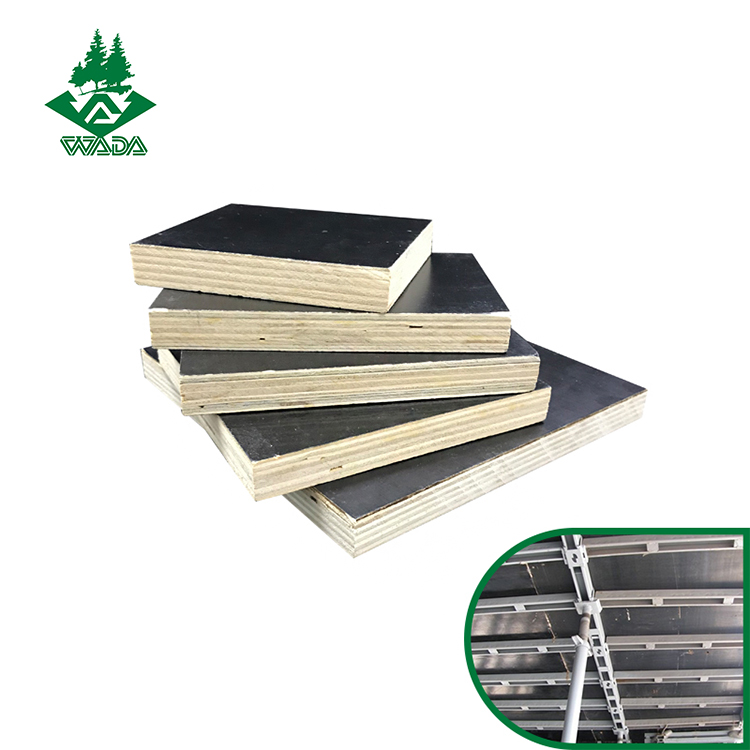
Film faced plywood illustrates the panel route at its most standardized: performance is specified, documented and inspected before shipment rather than controlled on the buyer's factory floor.
Frequently Asked Questions
1. What is the first question a buyer should answer when choosing between panels and a production line?
Start with the business model rather than the budget. If the company earns margin from distribution, furniture conversion, installation or project delivery, it is a panel buyer and should be optimizing specification, allocation and lead time. If it earns margin from converting veneer into board and already controls raw material, the line question is legitimate. WADA supplies both finished panels and complete production lines, and the two buyer groups differ primarily at this first question.
2. What does a complete plywood production line include?
The equipment scope covers ten defined stages: plywood production machine, veneer peeling machine, veneer drying machine, veneer patching machine, core veneer composing machine, automatic lay-up line for plywood production, cold press machine, hot press machine, plywood sanding machine and a fully automatic cross saw. Together they constitute a full-process solution from log to finished board.
3. How much does line automation reduce manual labour?
In the configurations used for full-process plywood production, automation at the lay-up, pressing and sanding stages is associated with a reduction of roughly 30–50% in manual labour input. The reduction applies to manual handling in those stages. Veneer grading, glue preparation, press parameter setting, moisture and thickness verification, and maintenance remain skilled functions that a line does not automate away.
4. What order terms apply when buying finished wood panels?
The minimum order quantity is one 40-ft container, production lead time is 25–45 days excluding ocean transit and customs clearance, and monthly panel capacity is rated at 10,000+ CBM. Customization is available on an OEM/ODM basis for size, thickness and layout.
5. What quality control and support apply to panel orders?
Panel production is supported by a quality inspection team and is described as 100% inspection, with after-sales support delivered remotely. For line buyers, remote after-sales support covers troubleshooting and parameter guidance, but installation and unplanned maintenance typically depend on locally available mechanical and electrical capability.
6. Which certifications matter when sourcing wood panels for regulated markets?
WADA's product documentation lists FSC, EUDR, CARB P2, EPA, JAS and JIS, with MDF additionally documented under FSC, CARB/EPA, JIS and EUDR. Buyers selling into the United States should also note that EPA TSCA Title VI sets formaldehyde emission limits of 0.11 ppm for MDF and 0.05 ppm for hardwood plywood, and buyers supplying construction projects in the European Union should note that wood-based panels must comply with EN 13986 for CE marking eligibility. Certification status is confirmed per product and per order.
Dalian WADA International Trading Co., Ltd. is headquartered in Dalian, China and publishes its product range and specification data at www.wadaplywood.com. Buyers who want the underlying specification tables, including panel formats, thickness ranges, glue systems and the machinery scope described above, can download the WADA GROUP product brochure (PDF) here: https://cdn.socialarks.com/sbsp/24890/common/2026/0604/%28%E5%B7%B2%E7%98%A6%E8%BA%AB%29Wada%20Group.pdf