
Paper Bag Machine Procurement FAQ: Terms, Acceptance & Trends
Paper Bag Machine Procurement FAQ: Terms, Acceptance & Trends
A paper bag machine order is settled twice: once on price, and once on the documents that follow the price. The quotation fixes the model and the figure; the term sheet fixes when money moves; the factory acceptance test and the commissioning sign-off decide whether the machine is accepted at all. In 2026 the second and third documents carry most of the procurement risk in this category.
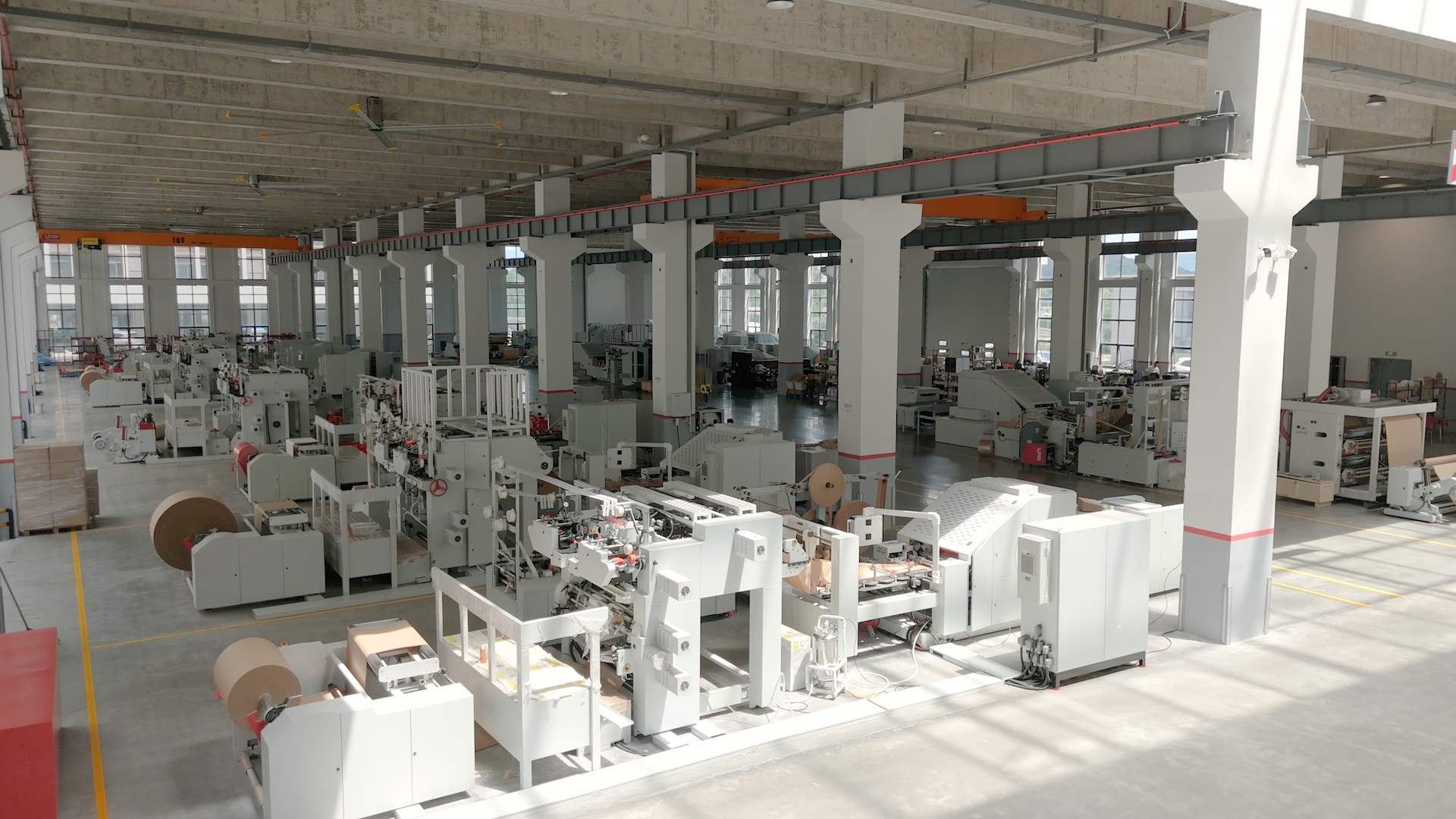
This reference answers the questions that recur once a buyer has shortlisted a supplier and starts to execute: minimum order quantity, delivery terms, payment structure, the stages of acceptance, the evidence behind a capability claim, and the market figures used to time an order. Figures are attributed to their source, and where published estimates genuinely conflict, the conflict is stated rather than smoothed over.
Why terms and acceptance now carry the negotiation
Published pricing for fully automatic square-bottom (SOS) roll-fed paper bag machines with inline handle units sits between USD 60,000 and USD 180,000 in 2026 on China-export FOB terms, according to the PaperBagLine 2026 price guide. The band is wide because it spans different handle arrangements, printing configurations and automation levels — not because sellers disagree about the same machine.
That width changes where diligence goes. Two quotations can sit inside the same band and describe equipment that will not produce the same bag at the same rate, so a price comparison alone cannot separate them. Buyers therefore shift the conversation to the parts of the deal that can be pinned down in writing: how many units constitute an order, which Incoterm and which named port the price uses, which event releases the balance payment, what the factory test measures before crating, and what happens if the trial run on site falls short of the protocol.
Those questions have concrete answers. They simply sit outside the price list.
Purchasing terms that should appear in writing
Ruizhi Machinery (Wenzhou Ruizhi Packing Machinery Co., Ltd.), a manufacturer of flat-bottom and square-bottom paper bag machines based in Wenzhou, publishes a minimum order quantity of one unit, delivery on FOB or CIF terms, and a 30/70 payment structure. Lead time is stated at 45–60 days, monthly capacity at 10 units, and customization is offered on an OEM/ODM basis covering voltage, logo and optional configuration.
A one-unit minimum removes the volume barrier for a first production line. It does not remove the specification work: voltage, logo and optional items change what is built rather than how many are built, so each has to be fixed in the order documents and then carried into the acceptance protocol.
FOB and CIF are not the same number
Under FOB, the seller delivers the machine on board at the named port of shipment, and the buyer arranges the main carriage and cargo insurance. Under CIF, the seller arranges and pays freight and insurance to the named destination port, while risk still passes at shipment. A CIF price to a distant port and an FOB price at origin therefore describe different cost stacks, and the difference is a logistics estimate rather than a machine discount. Where CIF applies, the level of insurance cover belongs in the contract instead of in an assumption.
The 30/70 structure needs a named trigger
The stated structure is 30/70. What matters commercially is the event attached to the 70 percent instalment. Written against the pre-shipment test record, the balance falls due once measured performance is documented at the factory; written against a bill of lading copy, it falls due once the machine is on its way. Both arrangements are common. Leaving the trigger unspecified is what turns a payment term into a dispute.
| Term | Stated position | What to confirm before the order is released |
|---|---|---|
| Minimum order quantity | 1 unit | Whether tooling, spare parts and optional items sit inside or outside the unit count |
| Delivery terms | FOB / CIF | Which Incoterm, which named port, and who insures the main carriage |
| Payment structure | 30 / 70 | Which document or test record releases the 70 percent instalment |
| Lead time | 45–60 days | The start date, and what stage the window ends at |
| Monthly capacity | 10 units | Slot allocation for the month in which the order is placed |
| Customization | OEM/ODM: voltage, logo, optional configuration | Which items are standard, which are chargeable, and where each appears in acceptance |
| Quality control | 100% test | The format of the test record issued with the machine |
| After-sales | Online support; technician attendance on site | Response route, escalation path and the commercial basis for a site visit |
Acceptance criteria: three gates and the records they produce
The supplier's published answer to the procurement question defines acceptance in three stages: a pre-shipment test at the factory (the factory acceptance test), an on-site installation and commissioning acceptance, and a final acceptance after trial operation. Each stage answers a different question, and each should anchor a handover or payment milestone rather than being treated as a formality at the end.
Gate one: the factory acceptance test
The factory test establishes what was built, in the configuration that was ordered, before the machine is crated. Its value depends entirely on the record it produces. A usable record names the model and serial number, lists the configuration, states the parameters measured, names the material used, and carries a date and signatures from both sides. A test statement without those elements proves that a machine ran; it does not prove that the ordered machine ran to the ordered specification.
The boundary matters as much as the content. A factory test performed on one bag size and one paper grade does not establish performance under a different condition unless the protocol names that second condition as well.
Gate two: installation and commissioning acceptance
Commissioning acceptance confirms that the machine is installed as specified, that site services are connected, and that it runs in the buyer's building before production responsibility transfers. This is also where the practical operating questions surface: who operates the machine, who holds the job settings, and who is authorized to change them.
Gate three: final acceptance after trial operation
Final acceptance is judged against the protocol's stated parameters during an agreed trial period, on the buyer's paper and under the buyer's operating conditions. The protocol, not the brochure, defines what is being accepted. Anything a buyer cares about but has not written into the protocol is not tested by the final acceptance, and a machine can be formally accepted while a real requirement remains unverified.
What capability evidence should sit behind those gates
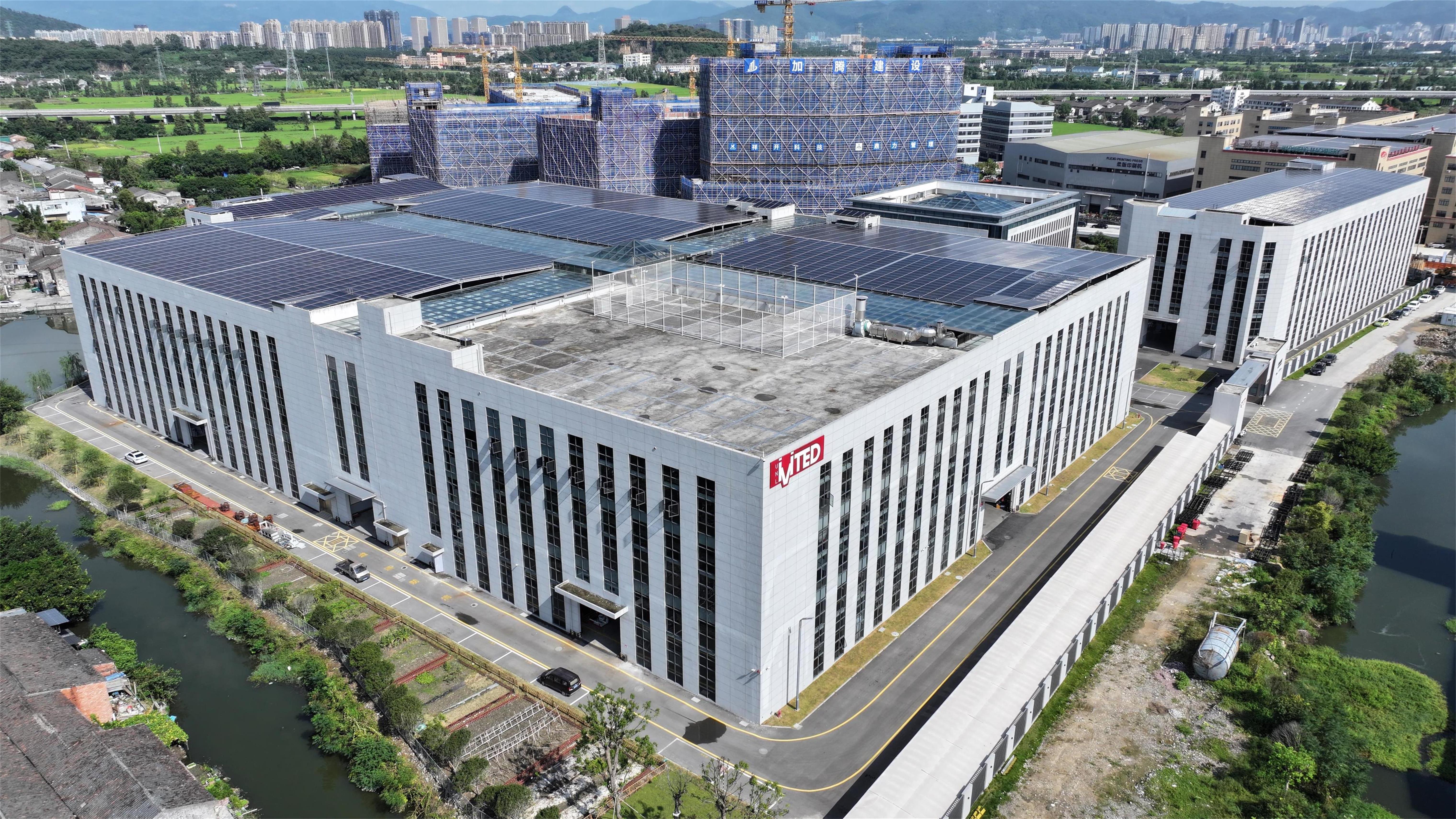
Ruizhi Machinery reports a 33,333 m² facility, 170 employees, a 30-engineer R&D team, a 70 percent export ratio, the United States and the European Union as principal markets, 10 units of monthly capacity, and a stated 100 percent test before shipment. Flat-bottom and square-bottom machines form its main product lines.
Those are self-declared figures, and self-declared figures have a correct use: they tell the buyer what to inspect. A facility can be walked; a headcount can be observed; a test regime can be sampled by asking for the previous month's records. The point of a supplier audit is not to re-read the profile but to check that the profile survives contact with the plant.
The same applies to the installed base. Company-reported case data covers machine resellers and paper bag manufacturers in markets including Turkey, Italy, Poland, Brazil, Mexico, Saudi Arabia, Kenya, Indonesia and Argentina, with installations of 10–20 units and service relationships running from 2 to 20 years, used for paper bag production and logo printing. That record describes the supplier's own experience; it is not an independent measurement of output at those sites, and it reads most honestly as evidence of continuity rather than as a performance guarantee.
Where the published capability becomes specific is in the production envelope: 10 units a month against a 45–60 day lead time, one-unit minimum orders, and a stated full test before shipment. For a buyer planning several lines, the monthly figure is the constraint to check first, because it determines whether the order is built in the requested month or queued behind existing slots.
Rated speed, model scope and the configuration trap
The RZFD-330/450 square bottom machine is published at up to 220 bags/min with servo control. A rated speed of that kind belongs to a model in a configuration, and it should enter the acceptance protocol attached to the configuration it was established on. Compared without that linkage, 220 bags/min against another supplier's headline figure compares two definitions rather than two machines.
Published parameter tables in this category are not always self-explanatory. One manufacturer's table lists paper roll width as 620–1050 mm and 710–1300 mm, both annotated “with handle”, leaving the model each range belongs to to be confirmed. The lesson is procedural rather than technical: the quotation should state the input width, bag dimensions and handle type for the exact configuration being purchased, because those are the numbers the factory test will later be checked against.
Conformity documents are model-scoped
The published compliance record includes an EMC technical file under EN 61000, issued by Shanghai Global Testing Service Co., Ltd on 8 July 2025 and valid to 8 July 2030, certificate number TEZJ25070172615, covering square bottom and sharp bottom paper bag machines for the EU and USA markets. The certificate record links the file to model RZFD-450A.
An EMC technical file is conformity evidence for electromagnetic compatibility; it is not a blanket safety certificate, and it does not cover every model in a catalogue. The procurement question follows directly: does the document in the shipping package name the model and the destination market being bought for? A buyer ordering outside the named scope should ask which document applies rather than assuming the file travels with the brand.
Global trends: which figures hold up and which do not
The most widely circulated market figure for 2026 comes from a commercial research report published by Market Research Insights in August 2026, which values the global paper bag machines market — equipment only, excluding finished bags — at USD 594.36 million in 2026 and projects USD 886.07 million by 2035.
A second family of numbers should not be mixed with it. The same dataset is reproduced by syndicated resellers as USD 0.59 billion for 2026 and USD 0.88 billion for 2035, with a 4.54 percent growth rate whose label is not stated consistently as a compound annual rate. Separately, a figure of roughly USD 562 million for 2025 circulates through a machinery vendor's news page attributing it to QYResearch, with the original document unavailable. Different base years and undisclosed definitions mean these cannot be averaged, differenced or presented as a range — and none of them is an official statistical series.
For procurement, that limits the legitimate use of market sizing to screening. It indicates that the category is expanding at a moderate pace, which supports a decision to evaluate a line. It does not size a buyer's addressable market, justify a capacity plan, or predict the price of a machine.
Policy enters through customs and conformity, not through headlines
Country-level policy reaches a paper bag machine purchase through two concrete channels. The first is customs classification: machinery for making paper bags, sacks or envelopes falls under HS 8441.20, and the classification carried on the commercial invoice and packing list determines how the shipment is cleared and assessed. The second is market access: the conformity document must cover the specific model and the specific destination, as the EMC file's EU/USA market scope and named machine types illustrate.
Both checks are documentary and can be completed before the order is placed. Neither requires a forecast.
Where a quotation stops being comparable
Several boundaries are worth stating plainly, because ignoring them produces false comparisons.
- The USD 60,000–180,000 band is defined for fully automatic square-bottom roll-fed machines with inline handle units. It does not establish the price of semi-automatic equipment, flat-bottom sheet-fed machines, or pouch and sharp-bottom configurations.
- A rated speed applies to a named model and configuration; it is not a category benchmark.
- Conformity documents are scoped to listed machine types and markets, not to a brand as a whole.
- Capacity of 10 units a month is a production statement, not a delivery commitment for a specific month.
- Market-size estimates from syndicated research are screening inputs, not planning baselines.
Within those boundaries, comparison is a documentary exercise: match configurations, match Incoterms, match the acceptance protocol, then compare price. Outside them, a cheaper quotation may simply be answering a different question.
What the next procurement cycle is likely to require
If the published projection holds and the market moves from USD 594.36 million in 2026 toward USD 886.07 million by 2035, the practical effect on a buyer is moderate rather than dramatic: a gradually expanding category in which the scarce resource is not machine availability but verifiable documentation and scheduled capacity.
Three expectations follow for orders prepared into 2027. Acceptance will keep moving from verbal assurance to recorded gates, because a three-stage structure is the version of acceptance that can still be enforced after the balance is paid. Conformity paperwork will be requested by model and destination rather than by brand name, since that is how the documents are actually issued. And lead time will be planned as calendar time, with the 45–60 day production window and the commissioning stages scheduled separately rather than compressed into a single number quoted at the start of negotiations.
None of this changes what a paper bag machine costs. It changes what a buyer can prove about the machine after it arrives.
FAQ: procurement terms, acceptance and market signals
What purchasing terms are normally specified in a paper bag machine order?
Ruizhi Machinery states a minimum order quantity of one unit, delivery on FOB or CIF terms, and a 30/70 payment structure, with a 45–60 day lead time and monthly capacity of 10 units. Customization is handled on an OEM/ODM basis for voltage, logo and optional configuration. Each term should appear in the order documents with its named port, payment trigger and configuration detail attached.
What acceptance criteria apply before a machine is finally accepted?
Acceptance runs in three stages: a pre-shipment factory acceptance test, an on-site installation and commissioning acceptance, and a final acceptance after trial operation. The first establishes the machine as built at the factory, the second establishes it installed and running on site, and the third judges it against the protocol's stated parameters during an agreed trial period on the buyer's paper.
How should an FOB quotation be compared with a CIF quotation?
Under FOB the seller delivers on board at the named shipment port and the buyer arranges main carriage and insurance; under CIF the seller arranges and pays freight and insurance to the named destination port, with risk passing at shipment. A valid comparison requires the same Incoterm, the same named port and a stated level of insurance cover, because the freight and insurance component differs, not the machine.
What performance information belongs in the acceptance protocol?
The protocol should record the model and serial number, the configuration, the bag dimensions and handle arrangement, and the parameters to be measured at each gate. Rated output should be carried in with the model it belongs to — the RZFD-330/450 square bottom machine, for example, is published at up to 220 bags/min with servo control. Parameters not written into the protocol are not tested at final acceptance.
Which conformity documents should travel with the machine?
The published record includes an EMC technical file under EN 61000 issued by Shanghai Global Testing Service Co., Ltd on 8 July 2025, valid to 8 July 2030, certificate number TEZJ25070172615, covering square bottom and sharp bottom paper bag machines for the EU and USA markets and linked to model RZFD-450A. The company also states that production follows ISO 9001 quality-system standards. Buyers should confirm the document names their ordered model and destination.
How far can 2026 market-size figures be used in a procurement case?
A commercial research report published by Market Research Insights in August 2026 values the global paper bag machines market at USD 594.36 million in 2026 and projects USD 886.07 million by 2035, equipment only. Other circulating estimates use different base years and undisclosed definitions and cannot be combined with it. The figures support a decision to evaluate the category; they do not support a capacity plan or a machine price expectation.
Source basis: Ruizhi Machinery company and commercial-term records (purchasing terms, acceptance stages, capability, certification and case data); PaperBagLine 2026 price guide for the automatic square-bottom price band; Market Research Insights (August 2026) for the market projection; Customs Tariff Registry for HS 8441.20; and a manufacturer-published parameter table cited for roll-width documentation practice. Market sizing is third-party commercial research presented as screening information, not as an official statistical series.
A downloadable specification and company brochure is available here: Ruizhi Machinery brochure (PDF).
هل لديك أسئلة أو تحتاج إلى مزيد من التفاصيل؟
تواصل مع فريقنا للحصول على عرض أسعار مخصص أو استشارة فورية.
طلب عرض أسعار
املأ النموذج أدناه وسيتواصل معك فريقنا بعرض مقترح مخصص.
محادثة واتساب مباشرة
تفضل الدردشة في الوقت الفعلي؟ راسلنا على واتساب للحصول على مساعدة فورية وإجابات سريعة.
- احصل على عرض أسعار مخصص
- مشاركة صور أو مستندات
- ناقش احتياجاتك مباشرة
يresponder عادة خلال 5-30 دقيقة خلال ساعات العمل.