
Paper Bag Machine Procurement: Building a Durable Supplier Ecosystem for Long-Term Production
The global paper bag machine market is projected to grow from approximately USD 554.89 million in 2024 to USD 762.49 million by 2033, driven by retailers and brand owners replacing plastic packaging with paper alternatives. That growth makes choosing the right machine important, but it also makes the choice of supplier equally critical. For production managers and packaging converters, the real test begins after the machine is installed: how quickly can the supplier deliver spare parts? Does the supplier provide installation and operator training? Can production be scaled as demand grows? This article examines paper bag machine procurement from a long-term perspective, focusing on supplier ecosystems, after-sales service, and operational continuity.
The Procurement Gap: What Happens After the Paper Bag Machine Arrives?
Many buyers focus on purchase price, delivery lead time, or headline speed when comparing paper bag machine suppliers. Yet the most common production risks appear after commissioning: unexpected machine stoppages, lack of spare parts, inadequate safety controls, and limited technical support. These risks translate into unplanned downtime and higher total cost of ownership.
The opportunity is a supplier model that treats the machine as the starting point of a longer relationship. Buyers who select a manufacturer with a structured after-sales process, safety risk controls, and documented acceptance procedures are better positioned to stabilize production and plan capacity expansion.
Ruizhi Machinery: A Long-Term Supplier Model for Paper Bag Production
Wenzhou Ruizhi Packing Machinery Co., Ltd. is a Chinese manufacturer specializing in environmentally friendly paper bag making machines. Based in Wenzhou, Zhejiang Province, the company operates a 33,333 m² factory with 170 employees and a 30-engineer R&D team. Its annual output is approximately 300 units, and about 70% of production is exported, with main markets in the USA and EU. The company produces flat bottom paper bag making machines and square bottom paper bag making machines, and states that its technical team has more than 20 years of production and R&D experience.
Ruizhi’s service model covers the full cycle: technical consultation, installation and commissioning, operation training, and after-sales support. The company also defines clear acceptance stages—pre-shipment factory acceptance testing, on-site installation and commissioning acceptance, and final acceptance after trial operation. For buyers moving from decision to execution, this structure reduces uncertainty about machine readiness and operator competency.
Supplier Evaluation Dimensions for Long-Term Projects
- Production capacity: A 33,333 m² factory and annual output of 300 units indicate the supplier can handle repeat orders and shorter lead times.
- Engineering depth: A 30-engineer R&D team supports customization and continuous improvement.
- Export experience: With 70% export ratio and main markets in the USA and EU, the supplier is familiar with international shipping, documentation, and compliance expectations.
- Structured handover: Acceptance procedures reduce disputes and help buyers plan commissioning resources.
Technical Foundations for Reliable Paper Bag Production
For square bottom paper bag production, Ruizhi’s model RZFD-450A is an example of a machine designed for continuous industrial use. Its key specifications include:
| Parameter | Value |
|---|---|
| Cut Bag Length | 300–630 mm |
| Paper Bag Width | 220–450 mm |
| Paper Bag Bottom Width | 100–200 mm |
| Paper Thickness | 80–150 g/m² |
| Machine Speed | 30–150 pcs/min |
| Paper Bag Speed | 30–130 pcs/min |
| Paper Roll Width | 670–1330 mm |
| Roll Paper Diameter | Φ1500 mm |
| Machine Power | 380V, 3-phase, 4-wire, 17.5 kW |
| Total Weight | 10,500 kg |
| Machine Dimensions | 11,500 × 3,650 × 1,960 mm |
The machine’s outer casing uses stainless steel, the frame uses carbon steel, and core components use alloy materials. Ruizhi also emphasizes the use of high-precision, high-strength fuselage plates: compared to other paper bag machines, the main unit’s steel plate thickness is 20–30% higher, which contributes to smoother running and longer service life, according to the company. One operational advantage of this construction is a higher bag-making speed—up to 160 pcs/min in some configurations—while the standard RZFD-450A model is rated at 30–150 pcs/min.
Managing Safety and Operational Risk
Ruizhi’s approach to risk management covers three levels. Safety risk control uses photoelectric eye detection, automatic shutdown, and emergency stop response. Operational risk control relies on fault alarms and maintenance guidance. Quality risk control includes 100% pre-delivery test running and standardized operation training. These measures are relevant for buyers who need to protect their workforce and meet local machine safety regulations.
Where Paper Bag Machines Deliver Value: Food, Retail, and E-commerce Packaging
Ruizhi’s RZFD-450A is listed as applicable to food packaging, retail packaging, and e-commerce packaging. These segments demand different bag formats: square bottom bags for foodservice and bakery items, flat bottom bags for retail and e-commerce shipping. Square bottom paper bag machines account for approximately 58.5% of total global unit installations as of 2023, reflecting their versatility. The ability to adjust bag length, width, bottom width, and paper thickness within the machine’s range makes it suitable for producers who need format flexibility without changing equipment.
For a bakery producer, a square bottom bag machine can produce bags with bottom widths from 100 mm to 200 mm, allowing different product sizes. An e-commerce packaging company can use the same machine to adjust bag length within a range of 300–630 mm, adapting to changing order volumes and packaging specifications.
Market Trends Shaping Paper Bag Machine Investment
Third-party data indicates that the automatic segment held the largest share—62.3%—of the global sheet-fed paper bag making machine market in 2025. Modern square bottom machines can operate at speeds exceeding 100 bags per minute and handle paper weights from 60 to 120 GSM, making them viable for medium-to-high volume production. China, India, and Germany collectively contribute more than 61.4% of the total global output of paper bag manufacturing machinery, confirming China’s role as a major production base.
Within this market, Wenzhou Ruizhi Packing Machinery has been identified as a key player in the sheet-fed paper bag making machine sector by Dataintelo Market Research. The EU is also transitioning from the Machinery Directive 2006/42/EC to a new Machinery Regulation (2023) with expanded software safety requirements. This suggests that buyers should expect future paper bag machines to integrate more advanced sensor and control functions, not just mechanical performance.
Comparing Automated Paper Bag Machines with Traditional Approaches
Replacing manual or semi-automatic bag-forming processes with a fully automatic paper bag machine such as the RZFD-450A changes both throughput and labor structure. Automation reduces reliance on manual folding and gluing, improves bag consistency, and supports higher output—up to 150 bags per minute on the standard model. However, there are limitations. Fully automatic machines require a stable three-phase power supply (380V, 17.5 kW), adequate floor space (roughly 11.5 meters in length), and trained operators who can manage photoelectric sensors and automated shutdown features. The higher steel plate thickness in Ruizhi machines, while beneficial for rigidity and service life, also carries a higher material cost—reported as 20–30% higher than other paper bag machines. Buyers must weigh this upfront cost against expected savings from lower maintenance and fewer unplanned stops over the machine’s life.
| Aspect | Manual / Semi-automatic | Automatic paper bag machine |
|---|---|---|
| Output | Low and operator-dependent | Up to 150 pcs/min (model-dependent) |
| Consistency | Variable | High, with automated folding and gluing |
| Labor | More operators | Fewer operators, but need electrical/mechanical skills |
| Power and space | Minimal | Requires 380V 3-phase 17.5 kW and 11.5m line |
| Maintenance | Lower initial cost, but frequent manual adjustments | Higher material specification may result in lower long-run maintenance |
Future Outlook: Supplier Ecosystems Become the Differentiator
As the paper bag machine market grows toward USD 762.49 million by 2033, competition will likely shift from machine specifications to service ecosystems. Buyers will increasingly evaluate suppliers on spare parts availability, remote diagnostics, safety compliance, and the ability to support new bag formats as packaging trends evolve. The EU’s new Machinery Regulation emphasizes software safety, meaning machine manufacturers will need to document firmware updates and control-system validation. Ruizhi’s existing controls—photoelectric detection, automatic shutdown, emergency stop—are aligned with this direction, but the company will need to keep investing in digital documentation and service training to meet evolving buyer expectations.
For distributors and brand owners, a long-term paper bag machine supplier should be able to provide consistent machine revisions, spare parts compatibility, and documentation in multiple languages. Suppliers with a stable engineering team and export orientation are better equipped for this role.
Frequently Asked Questions
What should buyers assess when evaluating a paper bag machine supplier’s long-term reliability?
Buyers should review the supplier’s factory size, engineering team, after-sales service structure, and acceptance procedures. Ruizhi Machinery operates a 33,333 m² factory, employs 170 people including a 30-engineer R&D team, and provides technical consultation, installation, commissioning, and operation training.
How does Ruizhi Machinery handle after-sales support and spare parts for paper bag machines?
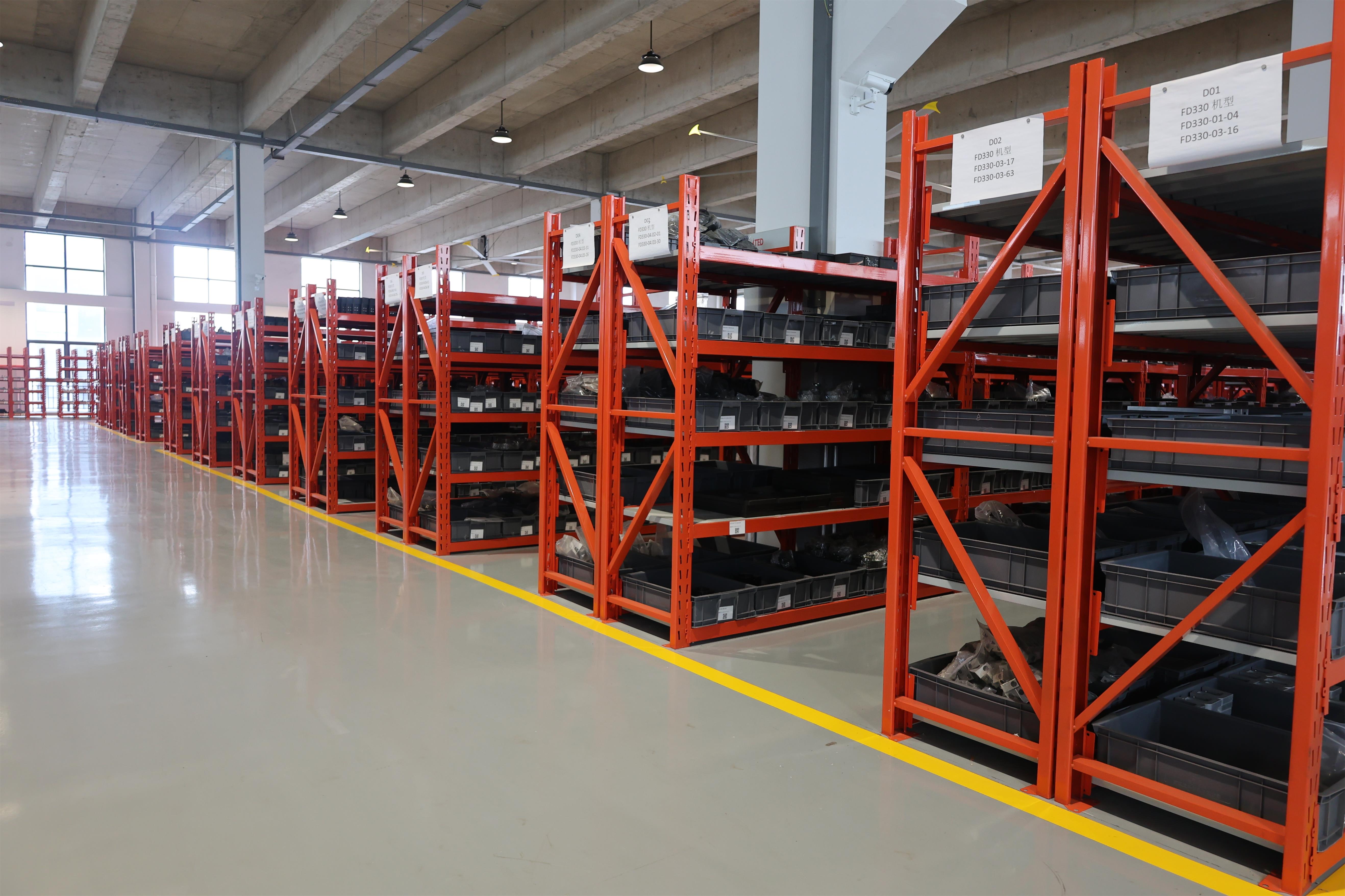
The company’s service model includes installation, commissioning, and operation training. Its factory also maintains a spare parts area, which supports faster response to maintenance requests.
What are the typical payment and delivery terms for a paper bag machine from Ruizhi?
For the RZFD-450A model, the minimum order quantity is one unit. Delivery methods include FOB and CIF. Payment terms are 30/70, meaning 30% down payment and 70% before shipment or as agreed.
What safety features are common on automatic paper bag machines?
Safety features typically include guards or covers for moving parts, photoelectric safety sensors, emergency stop buttons, paper jam detection systems, and automatic shutdown mechanisms. These help prevent mechanical injury and reduce unexpected downtime.
Can Ruizhi Machinery customize square bottom or flat bottom paper bag machines?
Ruizhi produces both flat bottom and square bottom paper bag making machines. The RZFD-450A square bottom model offers adjustable bag length, width, bottom width, and paper thickness within specified ranges, providing format flexibility for packaging lines.
How does machine acceptance work before shipment and after installation?
Ruizhi defines three acceptance stages: pre-shipment factory acceptance test, on-site installation and commissioning acceptance, and final acceptance after trial operation. This structured approach gives buyers documented checkpoints.
For detailed machine specifications and company information, Ruizhi Machinery provides a downloadable brochure: Ruizhi Machinery Company Brochure.