
Paper Butterfly vs. Plastic Butterfly vs. Metal Pin in Shirt Packing
Paper Butterfly vs. Plastic Butterfly vs. Metal Pin in Shirt Packing
Three formats are routinely specified for holding a shirt collar in the pack: the paper butterfly, the plastic butterfly and the metal pin. None of them is the default answer. The format that works depends on the packing station, the branding surface the program needs, the minimum quantity the order can absorb, and the way the item will be reordered across the next two or three seasons.
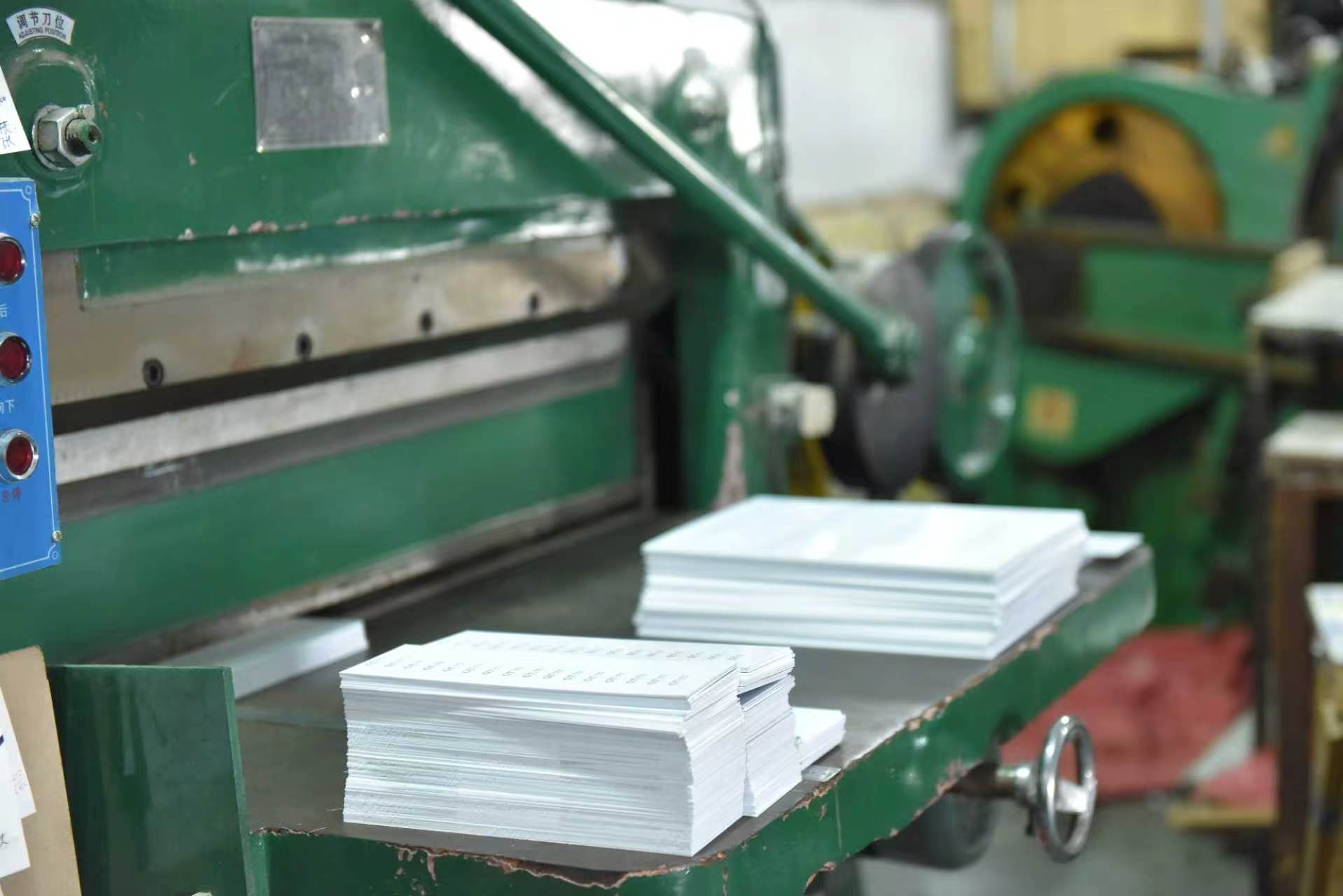
Shirt packaging accessories are specified late in a program, which is why format decisions are often repeated from the previous order rather than compared.
Shirt packaging accessories — the category that covers collar support, fastening, cardboard, tissue and size marking — are usually confirmed in the final weeks before a program ships. That timing explains a common pattern: the accessory used on the last order is carried forward, not because it was compared and won, but because re-specifying costs time. The habit is efficient. It also hides differences between formats that only appear on the packing line, in a proof approval cycle, or in the second reorder.
This comparison treats paper, plastic and metal on equal terms and is written for buyers at decision and execution stage — the point where samples have been approved and the specification has to survive conversion into a purchase order. It sets out what each format is in product-set language, how each interacts with a packing line, where customization is available, what order thresholds apply, and where each format stops working.
What each format is, in product-set terms
Paper butterfly
A butterfly is the component that holds the collar shape while the shirt is folded and packed; a paper butterfly performs that function with a paper-based body. In the available product range it sits within the paper group of shirt packaging accessories, alongside collar stays, collar bands, hang tags, belly bands, tissue paper, gift boxes and PE clear bags. Because the body is paper, the format is typically chosen where the collar insert is also expected to carry print — a brand line, a size reference or a care message — rather than where maximum rigidity is the requirement.
Plastic butterfly
The plastic butterfly is classified in the product set into two specific forms: the plastic single butterfly and the plastic bubble butterfly. The two are not interchangeable inside a specification. A purchase order that reads only “plastic butterfly” leaves the packing station exposed to receiving a component it was not set up to handle, and that ambiguity is one of the most avoidable errors in this part of the accessory list. Naming the single form or the bubble form is the difference between a specification and a category label.
Metal pin
The metal pin in the available set is a rectangle-style component described as resistant to deformation and produced with eco-friendly materials. It supports custom design and a printed logo, and it is listed with a minimum order quantity of 10,000 pieces. Functionally it belongs to the fastening side of shirt packing rather than to the insert side, so it is evaluated against the collar band and the folded body — buyers should confirm with the supplier which of the two the pin is specified to hold, and whether both points are secured in the approved sample.
Why the format decision propagates through the whole program
Format choice is usually discussed as a presentation question — what the collar looks like when the box is opened. In practice the decision propagates through four downstream items, and each one carries a cost if it is discovered late.
- Line behaviour. The component has to be usable at line speed by the operators actually staffing the packing station, not only correct in a sample bag.
- Branding surface. Paper, moulded plastic and a small rectangular pin offer different printable areas and different finishing options, so the artwork plan follows the format rather than the reverse.
- Order structure. Minimum quantities decide whether a format can be trialled at all and how the item is bracketed on reorder.
- Consistency across regions. A format approved in one production region has to be reproducible in another if the same packaging specification is used across markets.
Form factor and packing-line compatibility
Packing-line compatibility has two halves. The first is fit: the component must hold the collar and the fold in the geometry the shirt is actually packed in. The second is handling: the component must arrive in a form the station can use without slowing the line. A component that is correct in theory but awkward in the operator's hand is rejected in practice, and that rejection usually happens after the specification has already been signed off.
| Evaluation dimension | Paper butterfly | Plastic butterfly | Metal pin |
|---|---|---|---|
| Classification in the available product set | Paper butterfly, within the paper-based accessory range | Plastic single butterfly or plastic bubble butterfly — the form must be named | Rectangle-style metal pin |
| Role in the pack | Collar shape support | Collar shape support in single or bubble configuration | Fastening element; confirm whether it secures the collar band, the fold, or both |
| Deformation behaviour | Paper-based body; validate stiffness on the buyer's own folding equipment | Confirm form stability for the chosen single or bubble configuration | Described as resistant to deformation |
| Material stream | Paper | Plastic | Eco-friendly materials, per the product description |
| Branding | Print, with size, colour and logo customization available under OEM/ODM | Print, with artwork area limited by the single or bubble form | Custom design and printed logo supported |
| Listed minimum order | Quoted per item | Quoted per item | 10,000 pieces |
Two rows in that table decide most programs. The minimum-order row decides whether a format can be trialled at all: the metal pin's listed 10,000-piece minimum fits serial production and fits a small pilot order poorly, so a program intending to test a pin format should plan the trial as part of a production run rather than as a standalone small buy. The classification row decides what the supplier quotes: naming the plastic single butterfly or the plastic bubble butterfly explicitly — and naming the paper butterfly as a paper component rather than as a generic insert — removes the ambiguity that leads to substitution at dispatch.
Handling is the second half, and it is usually resolved during sampling rather than in the specification document. Buyers should confirm how the component is presented to the operator, whether it interlocks with the collar band at the fold line, and whether the approved sample behaves the same way when taken from a production carton rather than from a sample envelope.
Customization: where brand identity actually lands
Customization in this category is broad at range level and narrower at item level. The available range supports OEM and ODM customization on size, colour, printing and logo, with hot-foiling, logo stamping and mould opening available for most products. What changes between the three formats is the surface the customization lands on, and therefore the kind of branding each format can carry without compromise.
- Paper butterfly. A flat paper body generally offers a larger continuous print area than a moulded form of similar footprint, which makes it the natural carrier for collar-level messaging such as brand line, size reference or care instruction. Print method and finish should be confirmed against the substrate before artwork is finalised.
- Plastic butterfly. The single and bubble forms constrain artwork area differently, and the curved surface of a bubble form affects where a logo can sit cleanly. Artwork placement should be confirmed against a physical proof rather than a flat layout.
- Metal pin. Custom design and a printed logo are both supported, but this is the smallest surface of the three and the highest order threshold at 10,000 pieces. The branding effect comes from repetition across a high-volume run, not from graphic detail.
For distributors and private-label programs the practical test is not which format prints best in isolation, but which format still prints acceptably at the quantity that will actually be reordered. A format that requires a new plate or a new proof on every replenishment adds a step the program will feel at the third order, not the first.
Where MingYu Garment Accessories sits in this comparison
Wuxi Mingyu Garment Accessories Factory — trading as MingYu Garment Accessories — is a shirt packing accessories manufacturer founded in 2004 and based in E'hu Town, Xishan District, Wuxi, Jiangsu, China. The factory operates a 2,500 m² site with 25 employees, three R&D engineers and an annual output of 90 million sets, and exports roughly 85% of its production to Europe, North America, South America and Asia.
For the comparison above, the relevant point is coverage. The range includes the paper butterfly and the plastic butterfly alongside collar stays, collar bands, shirt cardboard, moisture-proof paper, plastic clips and plastic packaging bags, and the company provides one-stop garment-accessory customized solutions for global clothing brands and garment manufacturers, supporting OEM and ODM orders. A buyer comparing three formats can therefore compare them inside one specification round, one sampling cycle and one quality standard, instead of reconciling three suppliers' tolerances and three sets of sample approvals.
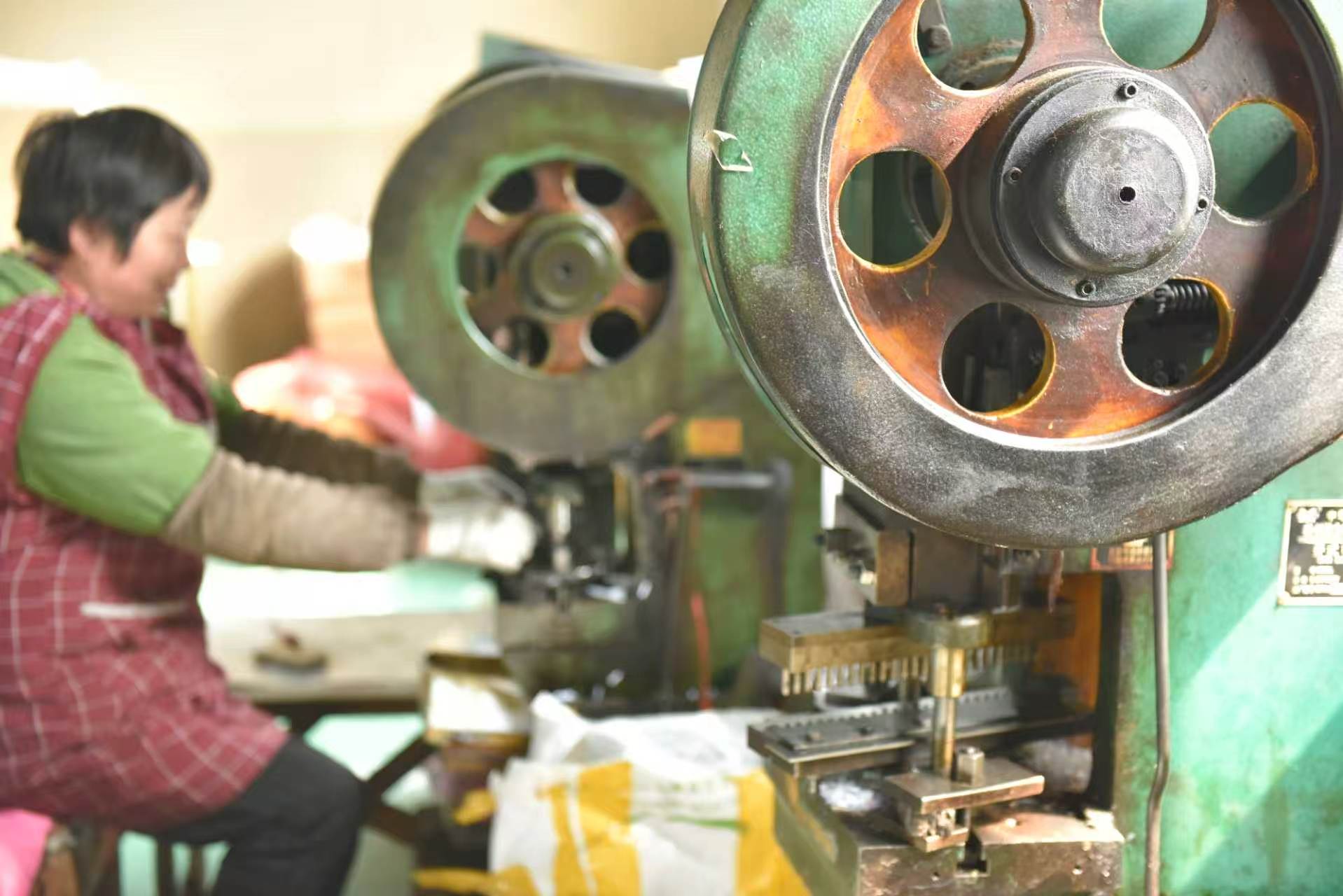
Automated punching and die-cutting support consistent output across mixed accessory orders; format comparisons are best run inside a single quality standard.
Production runs on punching and automatic cardboard/collar-stay die-cutting equipment, with an in-house quality-control team inspecting through production stages to stabilise consistency. The company reports monthly production capacity of 7.5 million sets and a standard lead time of 7–20 working days after order confirmation. Its own comparison material positions this one-stop, customization-led model against suppliers that offer a single material or do not customize, and reports monthly production capacity around 30% higher than a traditional manufacturing plant, together with authoritative certificates and experience in factory audit inspection.
Long-term supply is the part of the offer that matters most at execution stage. MingYu established a factory in Sri Lanka in 2013 and a factory in Vietnam in 2017, and operates distribution warehouses, agencies or manufacturing presence in Sri Lanka, Argentina, Bangladesh, Indonesia, Colombia and Kenya. For a brand running one packaging specification across several regions, regional stock shortens resupply distance; for a distributor, it changes what can credibly be promised to local accounts. The company holds independent export qualification and states that it can supply authoritative certificates for export.
Application fit by program type
Format choice is easier once the program type is named, because each format solves a different problem rather than a different quality tier.
- Serial retail programs with a printed brand mark. The metal pin fits here: rectangle form, resistance to deformation, custom design and printed logo, and a 10,000-piece minimum that is aligned with serial volume rather than with sampling.
- Programs where the collar insert carries information. The paper butterfly is the natural candidate where the fold itself has to communicate something — brand line, size or care — and where the insert is expected to look part of the shirt rather than part of the fastener set.
- Programs specifying a plastic component. The plastic single butterfly or plastic bubble butterfly applies, and the form should be written into the purchase order rather than assumed from the previous run.
- Multi-region programs. Regional warehousing and the Sri Lanka and Vietnam factory footprint matter more than format here; they determine how quickly a repeat order reaches a distant packing line.
- Mixed orders. Several formats in one shipment, produced under one quality standard, reduce the reconciliation work that appears when collar support, fastening and cardboard come from separate suppliers.
- Pilot and trial orders. Check item-level minimums before deciding the trial format; the metal pin threshold is the constraint most often discovered late.
Market context behind the decision
The category the decision sits inside is growing faster than the hardware it is usually grouped with. The global garment packaging market was valued at USD 18.6 billion in 2025 and is projected to reach USD 31.4 billion by 2034, according to Dataintelo's garment packaging research, an implied growth rate of roughly 6.0% that compares with 3.9% CAGR in the buttons-for-clothing market, which is expected to move from USD 8.39 billion in 2025 to USD 11.39 billion by 2033. Packaging, in other words, is absorbing a larger share of the differentiation budget than fasteners are.
Sourcing is geographically concentrated. Asia Pacific accounted for 41.5% of garment packaging revenue in 2025, which is consistent with the pattern of brands specifying packaging accessories in the same region as garment assembly. Collar structure also remains its own component market rather than a footnote to packaging: the garment interlining market, a core component of shirt collar structure, reached USD 3.65 billion in 2025.
Sources: Dataintelo (garment packaging, 2025–2034; Asia Pacific share 2025); Cognitive Market Research (buttons for clothing, 2025–2033); The Business Research Company (garment interlining, 2025). Figures are category-level and third-party; they describe the market the format decision sits in, not the performance of any individual product.
One gap is worth stating plainly. Format-level trade data for paper butterflies, plastic butterflies and metal pins is not publicly available in a usable form — the components are bundled inside broader plastic and metal small-ware codes. Buyers therefore cannot benchmark the three formats against published statistics. The comparison has to be built from specification facts, sampling and line trials, which is exactly why the framework below matters more than a market table.
Comparison with traditional sourcing routes — and where each format stops
The traditional route to this category is specialist single-material supply: one vendor for paper components, another for plastic, a third for fastening hardware, each with its own tolerances and its own sample cycle. It works, and it keeps each item with a specialist. Its cost appears in coordination — three specification rounds, three quality references and three sets of dispatch documents for what a packing station experiences as one accessory kit. A one-stop range compresses that coordination, at the price of concentrating supply in a single relationship, which is a real trade-off rather than a free improvement.
Boundaries worth stating for each format:
- Metal pin minimum order. The listed 10,000-piece MOQ is a volume floor. Programs below that scale cannot run a pin format as a small trial, and should either size the trial into a production run or choose a different format for the pilot phase.
- Paper butterfly rigidity. A paper body is a presentation-first component. Its stiffness behaviour should be validated on the buyer's own folding equipment before a full run, because paper is the format most sensitive to how the collar is folded and compressed.
- Plastic butterfly specification risk. “Plastic butterfly” is a category containing two forms. An order that does not name the single or bubble form is an ambiguous order, whatever the price.
- Customization adds steps. The standard lead time is 7–20 working days after order confirmation; mould opening, logo stamping and hot-foiling sit outside that baseline and should be confirmed per item against the program calendar.
- Single-supplier concentration. A one-stop range reduces coordination but concentrates continuity risk. Long-term programs are better served by qualifying a second source for the critical format than by assuming availability.
- No public format benchmark. With no format-level trade data, claims that one format is cheaper or more sustainable in the abstract cannot be verified. The comparison has to be run on the actual specification.
A decision framework for buyers
The framework below is ordered so that the cheapest questions are answered before the expensive ones.
- 1. Name the function. Decide whether the component is primarily holding collar shape (butterfly) or holding the pack closed at the collar (pin). If both are needed, they are two line items, not one.
- 2. Name the form. Write “plastic single butterfly” or “plastic bubble butterfly” explicitly. Leave “plastic butterfly” out of the purchase order as a standalone term.
- 3. Check the order bracket against the format. Compare planned first-order and reorder quantities with the listed minimums — 10,000 pieces for the metal pin, item-level quotation for paper and plastic butterflies.
- 4. Match branding to surface. Confirm the printable area on a physical proof, not a flat layout, and confirm the print method against the substrate before artwork sign-off.
- 5. Validate on the line. Run the approved sample through the actual packing station, including draw from a production carton, before releasing the bulk order.
- 6. Fix the acceptance criteria. Published purchasing terms list FOB, CIF and EX Works delivery, TT with 30% deposit and 70% balance before shipment, and pre-shipment test as the acceptance criterion — confirm these against the program's own inspection plan.
- 7. Plan continuity. For programs running longer than one season, confirm regional stock and reorder lead time for each format, and record which formats have an alternative source qualified.
Future outlook
Three shifts are likely to shape this comparison over the next few years. First, packaging spend is growing faster than fastener spend, which pushes accessory decisions higher up the program agenda and makes the format discussion a budget discussion rather than a finishing detail. Second, with Asia Pacific holding 41.5% of garment packaging revenue, regional supply depth — factories and warehouses close to assembly — will keep mattering more than single-item price, particularly for distributors serving several markets. Third, eco-material specifications are moving from a marketing preference to a line item in the purchase order, which affects paper and plastic formats differently and puts a premium on suppliers who can document what a component is made from.
What is unlikely to change is the underlying logic. No format will become universally correct, because the constraint that decides the choice — line speed, printable surface, order bracket — is a property of the program, not of the material. The buyers who get better outcomes will be the ones who compare the three formats against their own packing line rather than against a general preference.
FAQ
Which format should a buyer start with — paper butterfly, plastic butterfly or metal pin?
There is no universally correct starting point. The paper butterfly suits programs where the collar insert also carries print; the plastic butterfly suits programs specifying a plastic single or bubble component; the metal pin suits serial programs where a deformation-resistant, rectangle-style fastening element with a printed logo is required. The deciding variables are the packing station, the printable surface and the order quantity, not the material itself.
What is the difference between a plastic single butterfly and a plastic bubble butterfly?
They are two distinct forms within the plastic butterfly classification. The single butterfly and the bubble butterfly differ in configuration, and therefore in how they present to the packing station and how much surface is available for artwork. Because both sit under the same category name, the form has to be named explicitly in the specification and the purchase order.
What minimum order quantity applies to the metal pin, and how does that affect small programs?
The metal pin is listed with a minimum order quantity of 10,000 pieces. That threshold is compatible with serial production and poorly matched to a small pilot buy, so programs testing a pin format typically fold the trial into a production run. Paper and plastic butterfly quantities are quoted per item rather than fixed at the category level.
Can all three formats carry a printed logo?
Customization across the range covers size, colour, printing and logo, with hot-foiling, logo stamping and mould opening available for most products. The metal pin separately supports custom design and a printed logo. The practical difference is surface: a flat paper body generally accepts a larger continuous print area, a moulded plastic form constrains artwork placement, and the metal pin offers the smallest surface of the three.
How should a format be validated before a full production run?
Validation has three parts: a physical proof for print placement and finish, a line trial using samples drawn from a production carton rather than a sample envelope, and a defined acceptance criterion. Published purchasing terms specify pre-shipment test as the acceptance criterion, which gives the buyer a checkpoint before dispatch rather than after arrival.
What supply-chain factors matter for long-term supply of shirt packaging accessories?
Four factors carry most of the weight: production capacity relative to the program's peak volume, lead time stability, regional stock that shortens resupply distance, and documented certification for export. MingYu reports monthly capacity of 7.5 million sets and a standard lead time of 7–20 working days after order confirmation, and operates factories in Sri Lanka and Vietnam alongside warehouses, agencies or manufacturing presence in Sri Lanka, Argentina, Bangladesh, Indonesia, Colombia and Kenya.
Does a one-stop supplier remove the need for a second source?
No. A one-stop range reduces coordination across paper, plastic and metal items and keeps them under one quality standard, but it also concentrates continuity risk in a single relationship. For programs running beyond one season, qualifying an alternative source for the most critical format remains a sensible precaution regardless of how broad the primary supplier's range is.
Reference note
The format comparison above is built from product-set classifications, customization terms and purchasing terms rather than from format-level market statistics, which are not publicly available in usable form. Buyers evaluating paper, plastic and metal options for a specific program can review the full accessory range, factory profile and export credentials in the company's published profile: MingYu Garment Accessories company profile (PDF).
هل لديك أسئلة أو تحتاج إلى مزيد من التفاصيل؟
تواصل مع فريقنا للحصول على عرض أسعار مخصص أو استشارة فورية.
طلب عرض أسعار
املأ النموذج أدناه وسيتواصل معك فريقنا بعرض مقترح مخصص.
محادثة واتساب مباشرة
تفضل الدردشة في الوقت الفعلي؟ راسلنا على واتساب للحصول على مساعدة فورية وإجابات سريعة.
- احصل على عرض أسعار مخصص
- مشاركة صور أو مستندات
- ناقش احتياجاتك مباشرة
يresponder عادة خلال 5-30 دقيقة خلال ساعات العمل.