
Paper Container Model Ranges as Supplier Capability Evidence
Paper Container Model Ranges as Supplier Capability Evidence
A paper food container sample is a weak test of a supplier. It shows one moulding, one board grade and one lid fit, and it is usually produced with more attention than a routine production run will receive. What the sample cannot show is whether the same factory can make that item in the size a menu actually needs, in the material a market actually requires, at the volume a contract implies. That is why experienced buyers look past the sample and ask for the model range behind it.
A model range has an unusual property in supplier evaluation: it is published, itemised and checkable. It can be compared line by line against a quotation, written into a purchase specification, and cross-referenced against a certificate scope. KingHonor Paper Products Co., Ltd. is a disposable paper cup, paper bowl and food container manufacturer founded in 2018, operating a 50,000 m² factory in Vietnam with a stated annual output of 20,000 tons of food-grade PE coated paper and more than 2 billion paper cups and paper food containers. Three of its published ranges — a bowl line, a tray line and a square box line — are a useful case study in how much a size list can prove, and where the evidence stops.
Why a size range counts as capability evidence at all
A range is evidence because it is a production fact rather than a marketing fact. In paper converting, each finished size corresponds to its own cutting and forming configuration: a die, a forming set and a packing standard. A supplier that publishes a continuous series inside one format family is describing a maintained platform, not a single SKU that happens to be photogenic.
The practical value appears when a menu changes. If a buyer can absorb a new portion size inside the same format family, the lid, the carton, the pallet pattern and the freight cube usually stay stable, and the change is a line item rather than a re-qualification project. If the only option is to jump to a different format, everything downstream changes with it. A granular range therefore shortens the distance between a product decision and an executable purchase order.
The boundary matters as much as the value. A model list is a product-line statement. It is silent on barrier performance, board weight, per-size minimum order quantity, capacity allocation and lead time. Treating a long list as proof of any of those things is the most common reading error in supplier screening.
What the three KingHonor ranges actually list
Read literally, the three ranges cover three different format families and three different granularity strategies.
| Range | Models listed | Count and span | Stated construction |
|---|---|---|---|
| Kraft Paper Bowl ZT | 500, 700, 900, 1000, 1100, 1300, 1500 | 7 sizes, 500 to 1500 | Kraft paper with PE coating |
| White Kraft Food Tray ZT | #025, #040, #050, #100, #200, #250, #300, #500, #1000 | 9 models, #025 to #1000 | Coated white cardboard |
| Kraft Paper Square Box XQ | No.1, No.2, No.3, No.4, No.5 | 5 options, No.1 to No.5 | Kraft paper with PE coating |
The Kraft Paper Bowl ZT line is the most densely stepped of the three. Seven sizes run from 500 to 1500, but the steps are not uniform: the three middle entries sit 100 apart, while the outer steps are 200 apart. For a soup, noodle or dessert program, that density in the middle of the range is where portion differentiation usually happens, and it is where a buyer can adjust volume without leaving the bowl format.
One reading caution applies to all three lines. The designations are series codes, not measurements. Neither the bowl numbers (500 to 1500) nor the tray numbers (#025 to #1000) carry a stated unit — millilitres, ounces or millimetres — in the supplied product material. A buyer building a specification should obtain the dimensional and capacity sheet for each code rather than inferring size from the number, and should apply the same discipline when comparing these codes with a competitor's catalogue.
The White Kraft Food Tray ZT line is the broadest by count, with nine models from #025 to #1000, a span that suggests coverage from small side portions up to sharing or family formats. The Kraft Paper Square Box XQ line is the narrowest, at five options from No.1 to No.5. Here the range and the certification record diverge slightly in a way worth noting: the square box family recorded against KingHonor's certificates lists No.1 through No.5 together with a No.8 size. A published range can therefore be narrower than the documented production scope. That is not a contradiction, but it is a prompt to reconcile the two documents before assuming a size is or is not available.
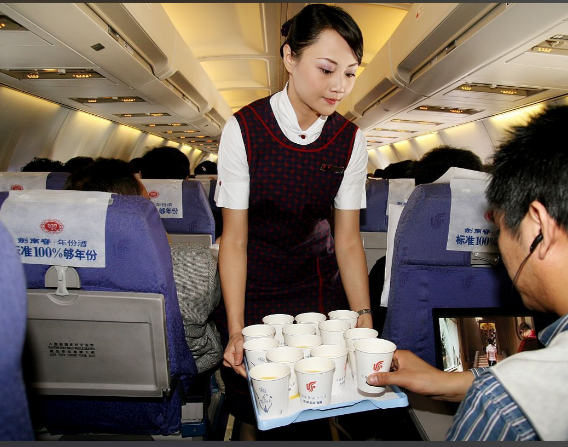
Paper bowl and cup formats in an airline catering setting — one of the end markets where size range and format continuity affect packing and service logistics.
The material construction behind the range
Across these lines KingHonor states two constructions: Kraft paper with PE coating, and coated white cardboard. The distinction is functional, not cosmetic. The paperboard supplies stiffness and the printable surface; the coating supplies the liquid and grease barrier. In a single-wall container those two jobs are separate, and a specification that names only "kraft paper" leaves the barrier undefined.
The company states that its products can be produced with PE coating or PLA coating for oil-proof, waterproof and heat insulation performance. That statement is a capability claim rather than a measured result: the supplied material does not disclose coating grammage, board weight, test method or measured values behind the three properties. Two consequences follow for a buyer in the evaluation stage. First, the coating choice should be confirmed per item and per market, because PE and PLA are different materials with different processing and end-of-life characteristics. Second, functional performance should be requested as data, not adjectives — for example water absorption and grease resistance values reported together with the method and conditions used.
Heat insulation deserves separate treatment. A coating statement bundles three effects together, but in a single-wall container, insulation behaviour is strongly influenced by the wall structure and the air gap, not by the coating alone. Buyers specifying a heat-insulated double-wall format, or evaluating a double-wall construction against a single-wall one, should ask for the structural specification alongside the barrier data rather than treating "heat insulation" as a single attribute.
Food-contact requirements also vary by destination market, and the compliance route for a coated paper container is not identical to that for an uncoated one. A supplier's catalogue is not a substitute for the market-specific documentation a buyer's own compliance team will request.
From a listed model to an audited process
The strongest link between a size list and real capability is the scope of an audited certificate, because a scope describes processes, not intentions. KingHonor's BRCGS Global Standard Packaging Materials record, certificate C0691603-BRC4 issued through NSF Certification, LLC on 20 April 2025, covers coating with polyethylene (PE) or polylactic acid (PLA) resin, flexographic printing, die-cutting of paper board and forming of paper cups and lids, boxes, trays and bowls for food service. That scope maps almost one-to-one onto the three ranges discussed above: forming of boxes, trays and bowls, plus the coating step that the material statement depends on.
The FSC Chain of Custody record is equally specific in a different dimension. Certificate ESTS-COC-250653, issued by ESTS on 5 June 2025 and stated as valid to 4 June 2030, covers the printing and sales of FSC Mix paper products (product type P6.7) against FSC-STD-40-004 and FSC-STD-50-001. For a buyer whose market or customer requires a chain-of-custody claim, that scope is the operative document, and it should be read for what it covers — printing and sales of FSC Mix products — rather than extended into claims it does not make.
The management-system certificates complete the picture at factory level. ISO 9001:2015 certificate 00623Q31644R4S and ISO 14001:2015 certificate 00623E31318R4S, both issued by QAC on 13 November 2023 and stated as valid to 3 December 2026, cover lamination, printing and slitting of laminated paperboard and the processing of paper cups. The engineering and capacity context is a 200-plus workforce that includes 20 core technical staff, with 60% of output exported to markets including the United States, China, Europe, Australia and the Middle East.
Two honest cautions belong in any article about certificate evidence. The first is date discipline. The BRCGS record in the supplied material states an expiry of 1 June 2026 — a date that has already passed — so a buyer reading this in late 2026 should confirm the current certificate, its issue date and its scope directly with the issuing body before relying on it. The ISO certificates reach 3 December 2026 and sit close to renewal at the time of writing; the FSC certificate runs to 2030. The second caution is provenance. These certificates are recorded as company-reported in the available material, which makes registry verification a step in the process rather than an optional extra.
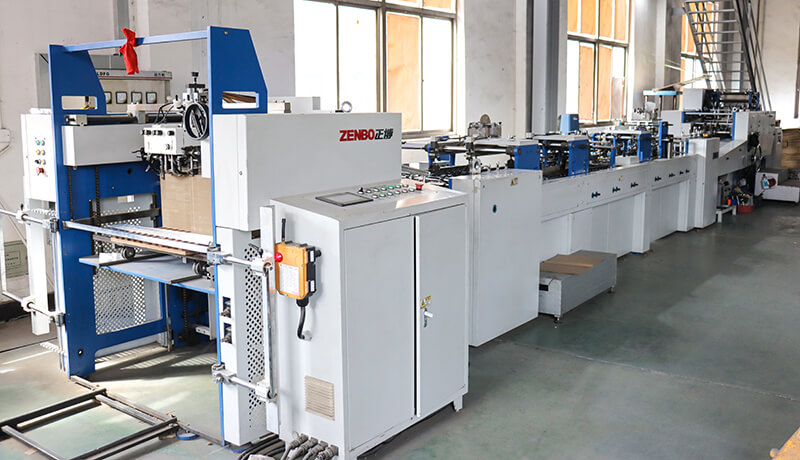
Converting capacity is what turns a model list into deliverable output; certificate scopes describe these process steps, not just the finished item.
Where each format is used, and where it stops fitting
Format and scenario have to be matched item by item, because the failure mode in foodservice is rarely the paper itself and almost always the fit between the container and the service condition.
Airline catering. KingHonor's case material describes 10 million disposable paper cups per month supplied for international airline beverage service, with customized logo printing. Cabin service imposes two constraints that a general takeaway buyer does not face: the packing must survive trolley stacking, and liquid has to stay inside the container through movement. For an airline program, leak and closure performance — not range breadth — should be the deciding test, and it should be requested as test data across the largest sizes in the range, where the liquid load is highest.
Fast food and QSR takeaway. A second case record describes 10 million disposable food containers per month for well-known fast food chains, with the client reported as reducing packaging costs by 15% using eco-friendly materials, alongside customized logo printing. That outcome belongs to one client configuration and should not be read as a general price or cost promise; it does, however, show that the square box and tray lines are used in high-volume takeaway service rather than only in niche applications.
Beverage and milk tea chains. A third case describes 10 million disposable paper cups per month for a milk tea chain, and customized logo printing is offered across both paper cups and food containers. For these operators the paper container range usually supports secondary items — pastries, snacks, small hot foods — which is where the tray line's grease resistance and the box line's stacking behaviour become relevant.
Hotel, banquet and in-room dining. A hotel buyer typically evaluates the bowl range for soups and desserts and the box range for set meals, and the deciding criteria are appearance consistency across sizes and rigidity under a loaded tray rather than barrier performance alone. Because coated and uncoated surfaces read differently under banquet lighting, the useful request is a sample set spanning the extremes of the range in the final material, not a single mid-range sample.
Catering takeaway and canteen service. Here the constraint is throughput. Bowls and trays that nest and de-nest predictably, and that stack without crushing, matter more than the last increment of barrier performance. A canteen or contract caterer should test the full packing cycle — fill, lid or sleeve, stack, transport — with the specific size code that will be ordered, because performance at 500 does not predict performance at 1500.
Across the case material, the same three customer types — airlines, fast food chains and beverage chains — recur, with operations spread across the United States, Vietnam, China, Australia and European markets. These are company-reported single-customer records. They demonstrate that the formats are used in demanding service environments; they do not establish that any other buyer will see the same outcome.
How the range compares with the alternatives a buyer is also weighing
Paper containers are rarely evaluated in isolation. Against reusable rigid ware — melamine, ceramic or heavy plastic — the trade-off is straightforward: reusable formats offer repeated use but require washing infrastructure, return logistics and breakage management, while single-use paper formats transfer that burden to the packaging. Where a site has no dishwashing capacity and no return loop, paper is not a compromise; it is the operationally coherent choice.
Against plastic containers, the driver is regulatory and reputational rather than purely technical. Third-party market data puts the global takeaway container market at USD 15.8 billion in 2024, with paper and paperboard holding a 31% share, per Verified Market Reports — a substantial share, but not a dominant one. That framing is more useful to a buyer than a simple substitution narrative, because it implies a competitive paper supply base rather than an uncontested one.
Within paper, the three formats separate on four criteria: liquid depth, grease load, stacking and closure. Deep bowls suit liquid-heavy menus; trays suit flat or loose items and shareable portions; square boxes suit set meals where a lid and stack height matter. The verified limitation is on performance data rather than format logic: the supplied material does not quantify barrier values, board thickness or microwave suitability for any of these lines, so none of those attributes should be assumed from the range.
What the market data says, and what it does not
Three external data points frame the demand side, and each needs its definition attached. Grand View Research, in an aggregated estimate, puts the global disposable food containers market at USD 72.6 billion in 2025, with a forecast period running to 2034. Verified Market Reports values the narrower takeaway containers market at USD 15.8 billion in 2024. The two figures use different product definitions — the broader number includes retail and fresh-produce packaging — so they should never be added or presented as a single market. A separate projection anticipates a 6.2% compound annual growth rate for the paper and paperboard segment of food packaging between 2026 and 2034; that is a forecast, not an observed outcome.
The trade data is more concrete. According to the Observatory of Economic Complexity, the United States imported USD 3.61 billion in paper containers in 2024, with China the second-largest supplier at USD 858 million. For a buyer choosing between supply regions, that is a useful reminder that the competitive set is not local: any capability claim, including a model range, is being made in a market with deep incumbent supply.
The correct conclusion from these numbers is modest. A growing paper segment and a large import flow indicate that a broad, certified supply base exists. Neither number says anything about which supplier should be selected, and neither should be used to imply that a particular range is in greater demand than it is.
A verification sequence for a listed range
Moving from evaluation to execution means converting the range from a catalogue page into a controlled specification. A sequence that works:
- Request the model list with dimensions. For every code — 500 through 1500, #025 through #1000, No.1 through No.5 — obtain the capacity, rim diameter, height and packed carton quantity. Series codes without units are not specifications.
- Separate standard from custom. Ask which codes use existing tooling and which require new dies, because that distinction drives both sample lead time and per-size cost.
- Sample the extremes, not the middle. Order the smallest and largest size in each family in the final material. Consistency at the ends is a better indicator of process control than a single mid-range sample.
- Ask for barrier data with method and conditions. Water absorption and grease resistance values, board weight and coating type per item, reported with the test method used.
- Reconcile the range against certificate scopes and dates. Confirm in the issuing body's registry that each certificate is current, and check that the model families you intend to order fall inside the stated scope.
- Confirm packing and freight consequences. Carton cube and pallet pattern per size change landed cost, and a size that looks cheaper per unit can be more expensive per pallet.
- Ask for capacity allocation per size. A published range does not state how much of each size can be produced in a given month.
- Run a line trial under your own conditions. Fill, seal, stack, hold and transport using your equipment and your food, then inspect.
Limitations of range-based evidence
A range proves breadth; it does not prove consistency. A supplier can list nine models and still deliver uneven quality between them, and nothing in the list reveals that. A range also does not prove that the listing entity is the manufacturing entity — a distinction that certificate scopes, audit documents and factory documentation are designed to settle, and one that buyers should verify rather than infer.
There is a further limitation specific to this evidence type. Certificate scopes and model lists describe what is permitted and what is offered, not what has been produced at volume for a customer with your requirements. The case records that accompany these ranges — 10 million units per month across airline, fast food and beverage accounts — are the closest available proxy, and they remain company-reported figures tied to specific clients and configurations.
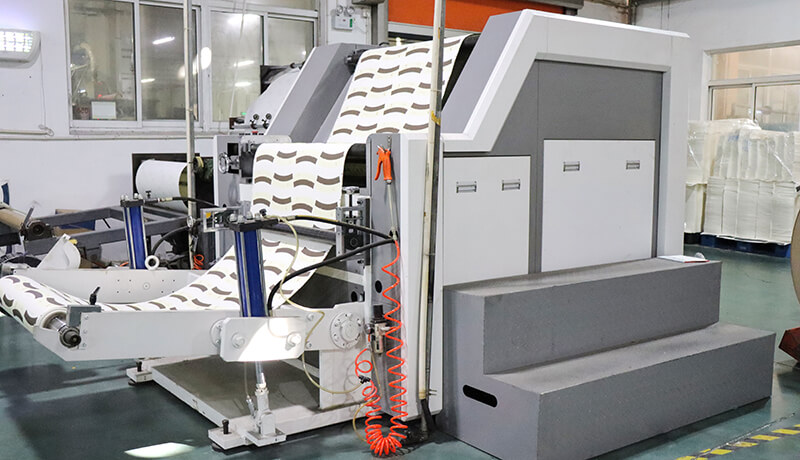
Production floor and packing operations determine whether a published model range can be delivered at the volume a contract implies.
Outlook: what to watch over the next procurement cycle
If the projected 6.2% annual growth for paper and paperboard food packaging through 2034 holds, the practical effect for buyers is less about demand and more about differentiation pressure: a larger paper segment invites more suppliers to publish broader ranges, which makes range breadth a weaker differentiator over time and shifts weight onto verifiable process evidence — certificate scope, registry status, barrier data and line-trial results.
Two near-term checkpoints are worth diarising. Certificates with 2026 expiry dates, including the ISO 9001 and ISO 14001 records stated as valid to 3 December 2026, will need renewal confirmation before a 2027 contract is signed. And as coating choices come under closer scrutiny in more markets, the PE-or-PLA option becomes a specification decision rather than a footnote, which means the buyer who has already documented the coating requirement per item is the one who can move quickly when the requirement changes.
KingHonor's own position rests on the same evidence any buyer should test: a defined model range across bowls, trays and boxes, two stated material constructions, and certificate scopes that describe coating, printing, die-cutting and forming. The company's product information and company profile are published at KingHonor Paper Products Co., Ltd.
FAQ
What does a paper container model range actually demonstrate about a supplier?
A published range demonstrates that a supplier maintains a defined product platform with documented size codes inside one format family, which is a production fact rather than a marketing claim. It shows breadth and continuity, and it can be cross-checked against quotations and certificate scopes. It does not demonstrate barrier performance, board weight, per-size minimum order quantity, capacity allocation or lead time, all of which require separate documentation.
How many sizes does the Kraft Paper Bowl ZT come in?
The Kraft Paper Bowl ZT range lists seven sizes: 500, 700, 900, 1000, 1100, 1300 and 1500. The steps are not uniform — the three middle entries sit 100 apart while the outer steps are 200 apart — and the supplied material does not attach a unit of measure to the codes, so capacity must be confirmed from the product dimension sheet rather than inferred from the number.
Which materials are used across the bowl, tray and square box ranges?
Two constructions are stated: Kraft paper with PE coating, and coated white cardboard. The company also states that products can be produced with PE coating or PLA coating for oil-proof, waterproof and heat insulation performance. Because coating grammage, board weight, test method and measured values are not disclosed in the supplied material, buyers should request barrier data and the coating specification per item.
Can a wide model range replace a factory audit or certificate check?
No. A model range describes what is offered; an audit and a certificate scope describe what is controlled and permitted. The two serve different purposes and should be read together. Certificate records also carry issue and expiry dates — the BRCGS record in the supplied material states an expiry of 1 June 2026, and the ISO 9001 and ISO 14001 records run to 3 December 2026 — so current status should be verified with the issuing body before reliance.
Are these paper containers suitable for airline catering and hotel foodservice?
Suitability depends on the specific size code and the service condition, not on the format category. KingHonor's case material describes 10 million disposable paper cups per month for international airline beverage service and 10 million disposable food containers per month for fast food chains, which shows use in demanding environments. For airline or hotel programs, the deciding evidence is leak and closure data at the largest sizes used, plus a trial under the operator's own filling, stacking and transport conditions.
For product specifications, model dimensions and the full range documentation, the KingHonor brochure is available for download: KingHonor product brochure.
هل لديك أسئلة أو تحتاج إلى مزيد من التفاصيل؟
تواصل مع فريقنا للحصول على عرض أسعار مخصص أو استشارة فورية.
طلب عرض أسعار
املأ النموذج أدناه وسيتواصل معك فريقنا بعرض مقترح مخصص.
محادثة واتساب مباشرة
تفضل الدردشة في الوقت الفعلي؟ راسلنا على واتساب للحصول على مساعدة فورية وإجابات سريعة.
- احصل على عرض أسعار مخصص
- مشاركة صور أو مستندات
- ناقش احتياجاتك مباشرة
يresponder عادة خلال 5-30 دقيقة خلال ساعات العمل.