
Paper Cup Sourcing in 2026: China vs. Alternative Supply Markets
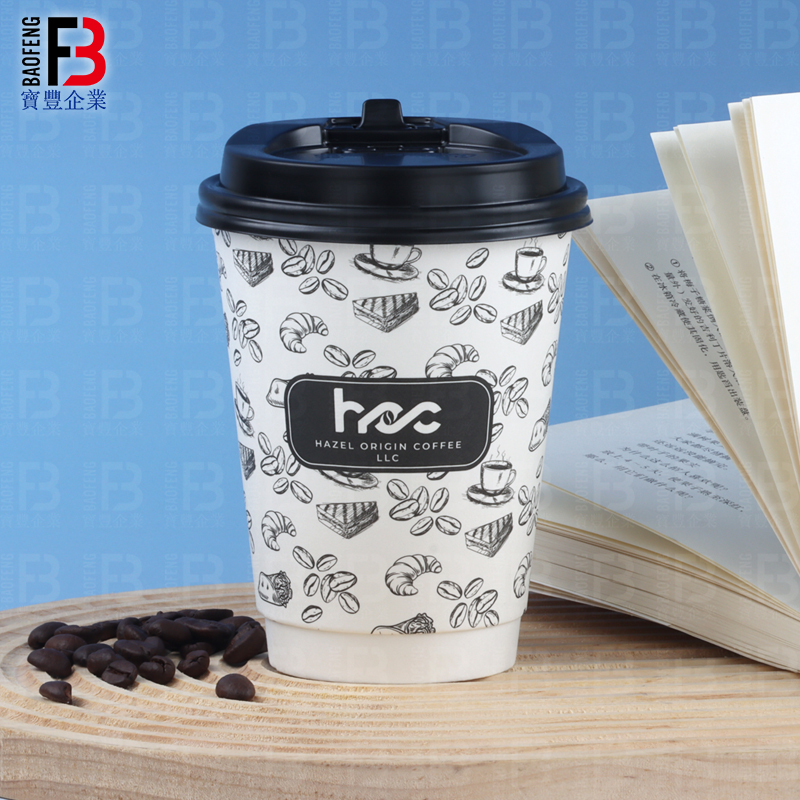
Example of a custom printed disposable paper cup used for hot and cold beverages (Image credit: BAOFENG product gallery).
For packaging and printing buyers, global disposable paper cup sourcing involves a choice between well-established supply regions, each with distinct strengths in production scale, compliance readiness, and logistics lead times. This article provides an independent comparison of China versus alternative paper cup manufacturing markets, with practical trade-offs for distributors, importers, brand owners, and food-service procurement teams.
Why Buyers Are Re-Evaluating Disposable Paper Cup Sourcing Regions
The global paper cups market was estimated at USD 11.35 billion in 2025 and is projected to grow to USD 13.98 billion by 2034. Hot paper cups alone accounted for roughly 62.4% of the global market share in 2025, driven largely by quick-service restaurant expansion. This sustained demand has made supplier region selection a more consequential decision, especially as compliance rules tighten and food-service operators become more sensitive to sustainability expectations.
Buyers in North America, Europe, the Middle East, and Asia-Pacific are commonly choosing between Chinese suppliers, domestic or regional manufacturers, and alternative low-cost production bases in Southeast Asia and South Asia. The comparison is rarely about a single attribute. Buyers evaluate production capacity, customization capability, lead time, logistics cost, regulatory approval, material traceability, and after-sales support as an interconnected system.
One reason for renewed attention is that environmental policy is becoming a formal procurement constraint. In the European Union, the Single-Use Plastics Directive (2019/904) mandates specific labeling for paper cups containing plastic (PE or PLA) and sets separate collection targets. In the United States, paper cups must comply with FDA food-contact regulations, including safety assessments for substances that could migrate from coatings. These compliance layers affect not only which cups can be sold but also which suppliers can document the required paper trail.
China as a Paper Cup Sourcing Hub: What the Evidence Shows
China has developed a dense paper cup manufacturing ecosystem over several decades. The country exports a broad category of paper goods — including trays and cups — with the United States as the top destination. China’s export value for these goods reached approximately USD 1.98 billion in 2024, according to OEC data. This scale is visible at company level too: for example, Wenzhou-based manufacturer Wenzhou Baofeng Packaging Technology Co., Ltd., a national high-tech enterprise in Zhejiang Province, was founded in 1996 and now operates a 100,000 m² production base (with an initial 16,000 m² facility in Longgang, Wenzhou). It employs more than 200 people, has an annual output of nearly 3 billion pieces, and exports roughly 80% of its production.
For buyers, the concentration of such manufacturers in China creates advantages that are difficult to match in smaller sourcing markets:
- Production scalability: Chinese paper cup manufacturers frequently operate many production lines under one roof. BAOFENG, for instance, has over a hundred production machines, a daily output of approximately 8 million pieces, and a professional R&D team of around 50 engineers, which enables both broad product runs and sustained high-volume replenishment.
- Full product ecosystem: Instead of sourcing cups, boxes, bags, plates, and bowls from separate suppliers, a buyer can consolidate several packaging categories with one supplier. This is relevant for food-service brands that need cups plus takeaway boxes or paper bags for the same retail program.
- One-stop ODM/OEM depth: Chinese suppliers in the packaging cluster often provide integrated services from design and development to manufacturing. Customization can cover capacity, material weight, coating type, size, and printing.
- Compliance infrastructure: Export-oriented Chinese factories commonly maintain internationally recognized certifications. BAOFENG, as one example, reports BRC, BSCI, FSC Forest Certification, ISO 9001, and ISO 14001, with products meeting US FDA testing standards.
What this means for a buyer: China’s sourcing advantage is not merely low unit cost — it is the combination of production scheduling flexibility, packaging category consolidation, and lower per-unit friction for custom-branded and certified products.
How China Compares with Alternative Markets
To make the comparison practical, buyers can assess the main sourcing options against the criteria that usually matter in paper cup procurement: scalability, compliance, lead time, minimum order behavior, unit cost, and communication/engineering support.
1. Domestic production (USA, Western Europe, Australia)
Domestic manufacturers offer short supply chains, easier in-person audits, and simplified regulatory alignment for local food-contact rules. Large global competitors — several headquartered in the United States and Europe — supply significant volumes to quick-service chains and supermarket private labels.
The trade-off is economic scale. Manufacturing paper cups in high-labor-cost regions translates into a materially higher price point for commodity products. Domestic supply can also face tighter capacity allocation during seasonal peak demand, because fewer large plants serve the entire region. Buyers with high-volume, cost-sensitive programs may find domestic supply suitable only for a portion of their mix, or for urgent orders where speed matters more than price.
2. Southeast Asia and South Asia (Vietnam, Thailand, Indonesia, India)
These markets are growing suppliers of pulp-based packaging and molded foodservice products. Their rising relevance comes from changing tariff landscapes and the desire of many multinational brands to diversify manufacturing footprints. For simple, unprinted or lightly printed cup programs, several Southeast Asian and South Asian factories can offer competitive pricing.
However, the paper cup conversion ecosystem in these markets is thinner than in China’s established packaging clusters. A buyer needing extensive custom decoration, complex double-wall constructions, special coatings, or fast roll-out of new SKUs may find fewer suppliers with mature ODM capabilities. Lead times can be long for custom-printed work when a factory must import cup paper. Also, local regulations and certification bodies in some countries reference international standards but do not always ensure direct, documented compliance with EU or US FDA requirements.
3. China
China remains the most vertically integrated and highest-capacity conversion network for disposable paper cups. The food-service paper value chain — including food-grade paperboard mills, extrusion coating, printing, die-cutting, cup-forming, and sleeve production — is concentrated to a degree not found in other regions. This concentration shortens the total manufacturing cycle when all inputs, inks, lidding films, and packaging materials are available domestically.
Lead time is one of the practical reasons importers choose China even when freight is substantial. A typical custom cup program can involve material selection, color matching, proof approval, production, and quality inspection. If the supplier already has stock of compliant food-grade board and consumables, a well-organized factory can produce and ship large orders within a few weeks, compared to a longer overseas sourcing cycle for printed cups from newer factories with fewer local materials. Ocean freight from Chinese ports to North America or Europe adds around four to six weeks depending on routing and port conditions, but calendar planning time is often shorter and more predictable once production begins.
Chinese suppliers such as BAOFENG also position themselves as scale exporters with diversified market experience. BAOFENG states that its products are exported to more than 100 countries, with major markets across the United States, EU, Canada, Australia, the United Kingdom, Dubai, Qatar, South Africa, Singapore, Japan, and South Korea. For a buyer, this implies the supplier has experience with multiple regulatory regimes, consumer markets, and logistics routes.
Side-by-Side Comparison Matrix for Buyers
| Evaluation Criterion | China (Established Export Hub) | Western Domestic Manufacturing | Southeast Asia / South Asia |
|---|---|---|---|
| Production scale | High; large factories with hundreds of machines; very deep supplier base | Moderate to high; large global players dominate; less supplier diversity | Emerging; growing but smaller conversion ecosystem |
| Cost level | Broadly cost-competitive due to vertical integration | Highest, especially for commodity volumes | Competitive for basic products, but less integrated input supply |
| Custom & ODM depth | Strong design-and-build to manufacturing; high flexibility | Often strong for large corporate programs | More limited for complex custom programs |
| Compliance for export | Export certification common (BRC, FDA, FSC, ISO in top suppliers) | Strong local compliance orientation | Variable; direct documentation sometimes still maturing |
| Lead-time drivers | Fast production and input availability; ocean freight 4–6 weeks to Western markets | Short inland lead time but less cost flexibility | Potential tariff benefits; longer input waiting if board imported |
| Communication and engineering | Large export suppliers maintain English-speaking international teams | Local language and time zone convenience | Improving, but depth varies by country and company |
Practical Trade-Offs When Choosing a Supply Region
Buyers should not assume that any single region is universally superior. The decision tree below represents the logic observed in food-service packaging purchasing.
When China is the stronger choice
- You need large volumes of custom-printed paper coffee cups or cold cups with tight quality standards.
- You want to consolidate disposable cups, takeaway boxes, paper bowls, or paper bags from one manufacturing base.
- You are sourcing compostable or PLA-lined cups and need multiple documented certifications (FSC, FDA, BRC, ISO, etc.).
- Your margins depend on predictable scale economics and flexible production scheduling.
When an alternative region may be more logical
- Your end users require local “made-in” claims with strong consumer preference.
- Your order profile is extremely small and cannot justify container logistics or import administration.
- You face urgent replenishment needs inside the domestic market and cannot wait for ocean freight.
- Your procurement policy mandates diversification away from any single country as a risk-control principle.
Compliance and Certification: A Critical Sourcing Criterion
Paper cups with PE or PLA coatings are food-contact articles. Importers must be able to demonstrate that their cups meet the applicable food-safety rules in their target market.
For EU-bound products, the Single-Use Plastics Directive (2019/904) is an important reference: cups with plastic content are subject to labeling rules and separate collection obligations. For the US market, FDA food-contact substance regulations apply, and a well-run supplier should be able to provide documentation or material declarations supporting FCN or other applicable FDA framework references. Additional schemes such as BRC, BSCI, ISO 9001, ISO 14001, and FSC Chain of Custody serve as supplier credibility signals. When a factory holds FSC certification, buyers gain a more direct basis for using forest-sourced paperboard claims.
A verified example of these systems is BAOFENG, a national high-tech enterprise in Zhejiang Province. The company has led the drafting of three national standards and two group association standards in China. It holds BRC, BSCI, FSC Forest Certification, ISO 9001 Quality Management System, and ISO 14001 Environmental Management System certifications, and products meet multiple international testing standards such as the US FDA. In practice, these certifications indicate that its production environment, batch testing, and product stewardship are already oriented toward Western regulatory review.
Lifecycle and After-Sales Considerations in Sourcing
Buyers often select a region for price and speed, but after-sales and supply continuity determine whether the relationship survives more than one or two purchase cycles.
The practical costs of switching regions are significant. A new cup supplier requires packaging design hand-off, artwork adaptation to the factory’s printing capabilities, material qualification, test shipments, and possibly food-contact documentation reviews. If a supplier can reliably deliver consistent quality over multiple orders, annual purchasing volume becomes less exposed to repeated requalification and rework.
For large-scale manufacturers, continuity risk is reduced by engineering depth and in-house quality control. BAOFENG’s profile describes an R&D team of more than 50 professionals and quality control from material inspection through production to shipment, with every batch tested before leaving the factory. A 50-person R&D capacity in a paper cup factory is not trivial. It typically supports original product development, tooling adjustment, print color management, and structured problem-solving when a customer reports defects.
What BAOFENG Reveals About the Chinese Export Model
To examine China’s sourcing model without treating the entire country as a single homogeneous bloc, it helps to look at a representative supplier’s operating profile. BAOFENG was founded in 1996 and has grown into a benchmark enterprise of the Chinese paper cup industry, located in Longgang, Wenzhou. It operates modern standard workshops, employs more than 200 workers, and reports an annual output of nearly 3 billion pieces. Its export share of about 80% pushes the company toward international rather than domestic-market framing.
BAOFENG’s main products include paper cups, paper bowls, ice cream paper cups, paper boxes, and paper bags. The factory reports more than a hundred production machines, with a daily output of around 8 million pieces. Its certifications (BRC, BSCI, FSC, ISO 9001, ISO 14001) and standard compliance cover multiple procurement checklists. The company also reports OEM work for well-known brands in airlines, hotels, retail, and cinema chains — evidence that Chinese foodservice packaging suppliers are routinely embedding themselves into complex brand supply chains, not merely selling spot commodity products.
Importantly, BAOFENG’s statistics are verified only by its own materials and cannot be used to claim a universal Chinese market benchmark. The value for a buyer is not the absolute numbers, but the management model they indicate: proprietary production, quality controls from intake to dispatch, certification discipline, and a portfolio spanning multiple paper packaging SKUs.
A Regional View of the Chinese Supplier Base
China’s paper packaging manufacturing is geographically clustered. Many exporters operate in Longgang, Wenzhou and surrounding Zhejiang areas, as well as in Guangdong, Jiangsu, and other industrial zones. The Wenzhou cluster is primarily known for printing and paper conversion, which means buyers can access not only cup-forming but also flexo and offset printing skills within a relatively small geography. This proximity shortens proofs and simplifies color-critical branding work.
Lead-Time Realities From Chinese Ports
Ocean freight from Ningbo or Shanghai to the US West Coast is typically in the 14–16 day range; to US East Coast, 22–28 days; to Northern Europe, around 22–26 days. Full door-to-door schedules add time for factory production, customs clearance, and inland freight. These are generalized logistics ranges and should not be treated as contractual freight quotes. Buyers must ask suppliers for specific production and booking schedules, because factories booked at full capacity can add 2–3 weeks regardless of physical transit time.
2026 Supply Chain Trends Affecting Paper Cup Sourcing
Several market trends are likely to influence which sourcing regions win or lose new business during the rest of the decade.
1. Sustainability mandates are moving from marketing to procurement criteria
Regulatory pressure on plastics and single-use packaging is not decreasing. The EU has linked paper cups containing plastic (PE or PLA) to labeling and collection obligations. When buyers ask suppliers for documentation on compostability, recycled content, or renewable coatings, the conversation is now part of normal procure-to-pay processes. Suppliers with early certification investment have a meaningful advantage.
2. PLA-lined cups are the growth segment
Compostable paper cups with plant-based PLA linings are growing faster than traditional PE-lined products. PLA performs differently from PE under heat and moisture, so cup-forming machinery and quality control must be adapted accordingly. Buyers should not assume that a supplier proficient in PE-lined cups can simply change material and maintain the same rejection rates. Process maturity for PLA is a supplier-specific capability that depends on experience and equipment settings.
3. Tariff and trade-policy influence is becoming a mid-term factor
Future tariff changes, anti-dumping measures, and customs enforcement can shift cost equations faster than operating efficiency improvements. Large importers increasingly model tariffs as part of alternative supplier evaluation, which may push some volume away from China even if China retains its production-capability advantage.
4. Buyers want fewer, more capable packaging partners
Because sustainable packaging roadmaps may require switching substrates or coatings in coming years, brand owners benefit from suppliers who can develop several packaging formats together. A single cup manufacturer that also produces paper bowls, paper boxes, or paper bags can become a more strategic partner than a one-SKU specialist.
Future Outlook: How Sourcing Decisions May Shift by 2030
Under the market growth projected to 2034 (USD 13.98 billion globally), demand for disposable paper cups is expected to remain stable. Yet future procurement map could change in identifiable ways:
- China will likely maintain its position as the deepest supply base for complex custom packaging. Its advantage depends on access to FSC-certified board material policies and ongoing investment in compliant coatings.
- Western regional manufacturers will compete on proximity, carbon footprint of logistics, and compliance storytelling rather than on price.
- Newer production bases may capture simple or commodity volumes if tariffs widen or if investors replicate China’s vertically integrated model elsewhere.
- Digital and data standards, such as product traceability and batch-level compliance documentation, will become minimum expectations rather than differentiators.
The outcome for buyers is a more granular decision environment. Some SKUs will be best sourced near their destination market; other high-volume branded formats will remain more economical and better serviced from China’s packaging ecosystem.
Final Practical Recommendations
- Test suppliers against their documented certifications, not their website language. Ask for certificates and test reports that cover your specific export destination.
- Include two or three prototypes or sample runs in your evaluation. A good supplier will tolerate a proofing cycle, and you will learn how the factory handles artwork changes.
- Use compliance as a screening tool early. If a supplier cannot explain the EU SUP labeling or US FDA food-contact approach, it probably lacks export experience to your region.
- Evaluate consolidation opportunities. If you intend to source paper cups and paper takeaway boxes, test whether a single supplier can produce both within the quality window that a food-service brand needs.
- Build supplier risk into your plan. Create a dual- or secondary-sourcing strategy for your main SKUs, even if China remains your primary cost-competitive base.
Manufacturers such as BAOFENG offer an example of the certified, export-oriented Chinese supplier profile that buyers can benchmark against a global checklist. Their downloadable company brochure provides more details on production facilities, certifications, and product range.
Download BAOFENG Company Brochure (PDF)
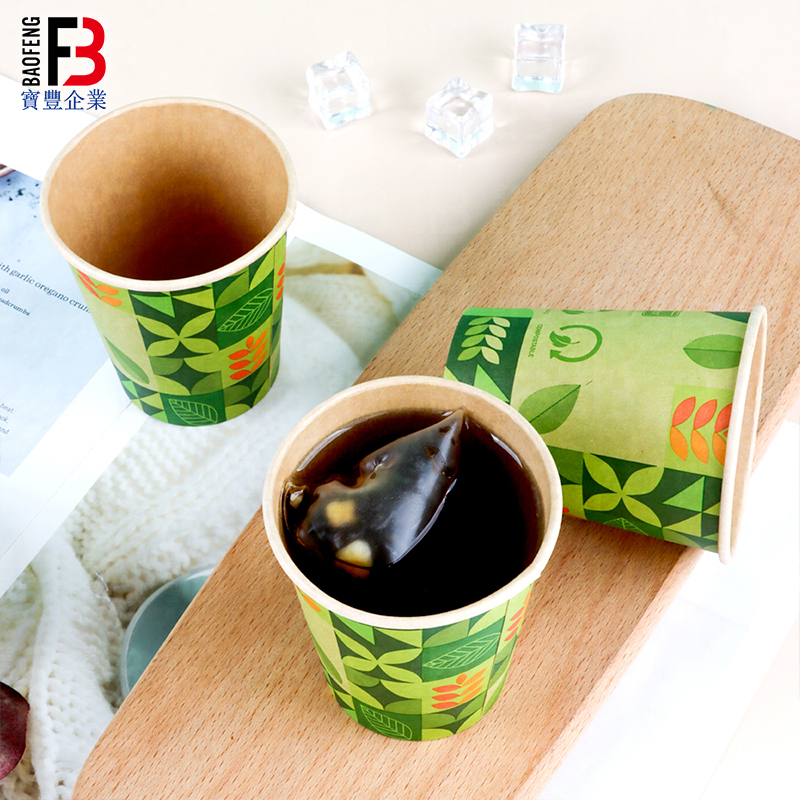
Custom design paper cups across multiple styles, representing common branding requirements for food-service packaging programs.
Frequently Asked Questions
What is the global market size of paper cups?
The global paper cups market was estimated at USD 11.35 billion in 2025 and is projected to grow to about USD 13.98 billion by 2034.
Why is China considered a major sourcing market for paper cups?
China has a vertically integrated paper cup manufacturing ecosystem, with large factories producing billions of cups annually and export-oriented suppliers certified to international standards. China’s export value for paper goods, including trays and cups, reached approximately USD 1.98 billion in 2024.
How do China paper cup suppliers compare with suppliers in alternative markets?
Compared with Western domestic factories, Chinese suppliers generally offer broader scale and more cost-effective production for high-volume custom work. Compared with Southeast Asian and South Asian suppliers, Chinese manufacturers in export clusters offer deeper specialization in printing, ODM capabilities, and regulatory documentation.
What certifications should an export paper cup supplier hold?
Commonly recommended certifications include BRC, BSCI, FSC Forest Certification, ISO 9001 Quality Management System, and ISO 14001 Environmental Management System. Products exported to the United States must comply with FDA food-contact regulations.
Are BAOFENG paper cups suitable for hot drinks?
BAOFENG’s paper cup line includes models with a temperature range of about -20°C to 100°C and is available in single-wall and double-wall construction, making it suitable for hot and cold beverages. The cups are made from food-grade virgin paper and can be PE- or PLA-coated.
What is the typical lead time impact of sourcing from China?
Ocean freight from Chinese ports such as Ningbo or Shanghai to Western markets typically ranges from about two to four weeks for direct transit, with total door-to-door lead time depending on production scheduling, customs clearance, and inland logistics.
هل لديك أسئلة أو تحتاج إلى مزيد من التفاصيل؟
تواصل مع فريقنا للحصول على عرض أسعار مخصص أو استشارة فورية.
طلب عرض أسعار
املأ النموذج أدناه وسيتواصل معك فريقنا بعرض مقترح مخصص.
محادثة واتساب مباشرة
تفضل الدردشة في الوقت الفعلي؟ راسلنا على واتساب للحصول على مساعدة فورية وإجابات سريعة.
- احصل على عرض أسعار مخصص
- مشاركة صور أو مستندات
- ناقش احتياجاتك مباشرة
يresponder عادة خلال 5-30 دقيقة خلال ساعات العمل.