
Paper Strength Agent Formats: A Buyer's Spec Comparison
Paper Strength Agent Formats: A Buyer's Spec Comparison
For a decision-stage buyer, the useful comparison is not simply “which paper strength agent costs less per ton?” but “which format and specification can be stored, dosed, trialled and accepted reliably in this mill?” Paper strength agents are sold as powders and liquids, with different active-content or solids bases, different pH ranges, different handling needs and different application fits. A price per wet ton can hide those differences. A specification-normalized comparison makes them visible.
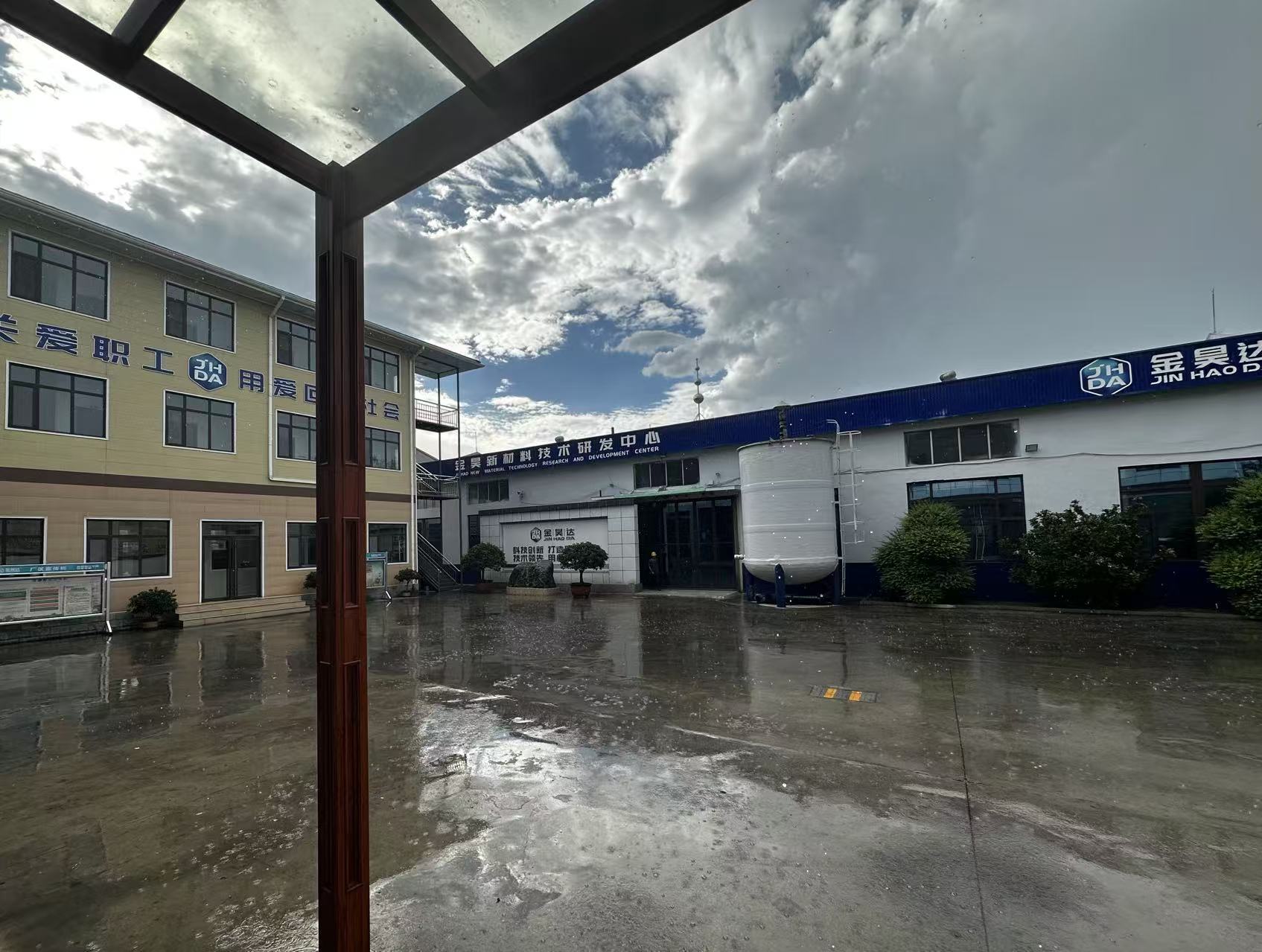
Qingzhou Jinhao New Material Co., Ltd. (JHDA) is a papermaking chemicals manufacturer founded in 2005 and based in Qingzhou City, Shandong Province, China. The company states ISO 9001 and ISO 14001 certification and SGS product compliance test reports, and offers custom formulation development based on pulp composition, machine conditions and paper requirements. Its portfolio includes dry-strength agents, wet-strength resin, retention aids and related papermaking chemicals. The company also states an MOQ of 1 MT for bulk orders. More information is available at Qingzhou Jinhao New Material Co., Ltd..
Why Format and Specification Beat Price per Ton
A liquid paper strength agent contains water. A powder dry-strength agent does not, or contains much less. That single difference changes how a quotation should be read. A liquid grade quoted at a certain price per wet ton is not directly comparable with a powder grade quoted at a price per dry ton unless the buyer converts both offers to a common active basis.
The same rule applies within liquid products. JH-D726 is listed with 15.0/20.0 ± 1.0% solids and pH 3.0–6.0. JH-2219 is listed with 20.0 ± 1.0% solids. Those are not the same delivered concentration, and they should not be compared by wet-ton price alone. The buyer should first confirm which solids level applies to the ordered grade, then compare delivered cost per unit of active solids and, later, cost per ton of furnished paper at the validated dosage.
This is an analytical purchasing step, not a market-price claim. It does not require a ranking of products. It requires the supplier to state the basis of the quotation clearly: product form, active content or solids, tolerance, pH, packaging, Incoterm, shelf life and batch basis. Without those fields, a low price per ton may simply reflect more water or a different dosage requirement.
The JHDA Format Map: Powder, Liquid and Adjacent Wet-End Categories
The JHDA portfolio should be read by functional category first. JH-1699 and JH-1697 are powder dry-strength grades. JH-D726 is a liquid dry-strength grade. JH-2219 is a liquid pulp-molding grade. JH-1201 is a wet-strength resin, and JH-8501 is a retention aid. These categories are related but not interchangeable. A wet-strength resin is not a dry-strength substitute, and a retention aid is not a like-for-like replacement for a fiber-bonding additive.
| Grade | Format and category | Disclosed specification | Targeted fit | First buyer check |
|---|---|---|---|---|
| JH-1699 | Powder dry-strength agent | ≥95.0% active content; 12-month shelf life | Dry-strength applications where powder handling and storage are acceptable | Confirm active basis, moisture, dissolution method and recommended dosage |
| JH-1697 | Powder dry-strength agent | Grade-specific values should be confirmed in the TDS | Powder dry-strength option within the same portfolio | Request active content, moisture, pH and shelf life before normalizing |
| JH-D726 | Liquid dry-strength agent | 15.0/20.0 ± 1.0% solids; pH 3.0–6.0 | Liquid dosing where the mill can manage a water-containing product | Confirm which solids level applies, viscosity, storage limits and shelf life |
| JH-2219 | Liquid pulp-molding grade | 20.0 ± 1.0% solids | Pulp-molding strength applications | Confirm pH, viscosity, dosage and food-contact documentation if applicable |
| JH-1201 | Wet-strength resin, cationic PAE | 12.5 ± 0.5% solids; pH 3–5; viscosity ≤300 mPa·s at 25°C | Wet-strength needs in tissue and pulp-molding applications | Confirm wet-strength target, cure conditions and product-specific compliance |
| JH-8501 | Retention aid | Numeric specifications should be confirmed in the TDS | Adjacent wet-end retention role, not a dry-strength substitute | Clarify retention target, dosage point and compatibility with other additives |
This table compares disclosed format and specification fields. It does not rank products by third-party test performance.
Powder dry-strength grades: JH-1699 and JH-1697
JH-1699 is the clearest powder benchmark in the portfolio because its disclosed active content is ≥95.0% and its shelf life is stated as 12 months. High active content reduces the water fraction in the delivered product, which is useful for storage, freight and make-down planning. It does not, by itself, prove a lower cost per ton of paper. The buyer still needs the recommended dosage, the furnish conditions and the strength target that the dosage is meant to achieve.
JH-1697 is another powder dry-strength grade and should be assessed on the same normalized basis. Buyers should request its grade-specific TDS for active content, moisture, pH, shelf life and recommended dosage before comparing it with JH-1699. Powder handling also has practical requirements: make-down equipment, dust control, dissolution time and storage conditions that keep the product free-flowing. A mill without suitable powder handling may find a liquid grade easier to adopt even when the powder grade has a higher active content.
For dry-strength applications, the relevant paper properties include ring crush, burst, tensile and stiffness. In recycled containerboard, corrugated medium and kraft linerboard, a dry-strength agent is used as a ring crush strength agent, burst strength improver or tensile strength additive within the wet-end system. The correct grade depends on the furnish, the target property and the machine chemistry, not on the product name alone.
Liquid dry-strength grade: JH-D726
JH-D726 is a liquid dry-strength option listed with 15.0/20.0 ± 1.0% solids and pH 3.0–6.0. The buyer should confirm which of the two solids levels applies to the grade being quoted. That point matters because the purchased wet tonnage includes water. A quotation that does not state the solids basis cannot be compared reliably with a powder grade or with another liquid grade.
The pH range of 3.0–6.0 is also a purchasing and application field. Wet-end pH affects additive compatibility, retention and dosing response. The buyer should check the mill’s typical wet-end pH against the product’s stated range and ask the supplier for guidance on dosing point, dilution and interactions with other wet-end chemicals. Liquid products also require storage and handling controls: tank compatibility, temperature limits, shelf life and protection against freezing or overheating should be confirmed in the TDS.
Pulp-molding grade: JH-2219
JH-2219 is a liquid grade listed with 20.0 ± 1.0% solids and is positioned for pulp-molding applications. Pulp molding is not a direct copy of a flat-paper wet end. The furnish, forming method, drainage and drying profile differ, so the dosage and acceptance tests should be set for the molded product rather than borrowed from a containerboard trial. Buyers should confirm pH, viscosity, recommended dosage, dilution practice and storage conditions in the grade-specific TDS.
Where the molded article is intended for food contact, the product should also be assessed through the applicable food-contact documentation route. A general “food-grade” description is not a substitute for a product-specific composition statement, intended-use declaration, regulatory citation and migration or compliance test report where required. The same discipline applies to a food-grade paper enhancer used in packaging paper.
Adjacent categories: JH-1201 wet-strength resin and JH-8501 retention aid
JH-1201 is a cationic polyamide-epichlorohydrin wet-strength resin. Its disclosed values are 12.5 ± 0.5% solids, pH 3–5 and viscosity ≤300 mPa·s at 25°C. It is intended for wet-strength needs, including tissue and pulp-molding applications. Wet strength is a different target from dry strength: it concerns the paper’s strength after water exposure, not only its dry ring crush, burst or tensile values. A buyer comparing dry-strength formats should keep JH-1201 in a separate evaluation track and avoid treating it as a drop-in dry-strength substitute.
JH-8501 is a retention aid. Retention aids support fines and filler retention in the wet end and are often considered alongside strength agents when a mill reviews overall chemical balance. They are not a like-for-like replacement for a dry-strength agent because the functional target is different. The buyer should ask for the retention target, dosage point, compatibility with the strength agent and any effect on drainage or sheet formation. A retention enhancer can be part of the same purchasing program without being part of the same strength-agent comparison.
Spec Normalization: Reading Active Content, Solids and pH
“Active content” and “solids” are not interchangeable labels unless the supplier defines them on the same basis. For a powder dry-strength agent, the buyer needs to know whether the stated percentage refers to active polymer, total solids or another measured fraction. For a liquid product, solids usually describe the non-volatile fraction, but the test method and tolerance still need to be stated. The purchasing team should require the same fields from every supplier before building a comparison.
A practical normalization is to convert each offer to delivered cost per kilogram of active content, then apply the trial dosage to estimate cost per ton of furnish. The formula is straightforward: quoted price per kilogram of product divided by the active fraction gives price per kilogram of active. That figure still needs the dosage, retention, freight, packaging and Incoterm context, but it is a more defensible starting point than price per wet ton. The buyer should not assume that a higher active content automatically means a lower use cost; overdosing, poor retention or machine downtime can erase the apparent advantage.
pH is the second normalization field. JH-D726 is listed at pH 3.0–6.0; JH-1201 at pH 3–5. These ranges should be checked against the mill’s wet-end pH and against the other additives in the system. A product can be technically suitable and still be a poor fit if the dosing point, dilution water or interaction with other chemicals is wrong. The supplier should provide guidance on these points in the TDS and during the trial design.

Application Fit by Mill Scenario
Format fit is a mill-specific decision. The same grade can be appropriate in one wet end and awkward in another because of storage, dosing equipment, furnish, pH or target paper property. The scenarios below show how the disclosed JHDA formats map to common buyer questions without turning the comparison into a performance ranking.
Recycled containerboard, corrugated medium and kraft linerboard
Recycled pulp strength booster programs often target ring crush, burst, tensile and stiffness. A powder grade such as JH-1699 or JH-1697 can be considered where the mill has suitable powder make-down and storage. A liquid grade such as JH-D726 can be considered where automated liquid dosing and reduced dust exposure are priorities. The buyer should compare the grades at the same target property and the same furnish, not at the same wet-product dosage.
For corrugated box strength agent programs, the acceptance test should match the commercial requirement. A mill supplying corrugated board may care most about ring crush and burst; another may need tensile or stiffness. The trial should define the control sample, the dosage ladder, the test method and the acceptance range before the first batch is ordered. Supplier claims about strength improvement are useful for trial design, but they do not replace mill data.
Pulp molding and tissue
Pulp-molding applications should start with JH-2219 as the dedicated liquid grade in this comparison. Tissue and other wet-strength-sensitive products should start with JH-1201 when the target is wet strength. The buyer should not compare JH-2219 and JH-1201 as if they were the same product category. One is directed at pulp-molding strength; the other is a wet-strength resin with its own solids, pH and viscosity profile.
For tissue, the relevant questions include wet-strength development, softness, machine runnability and the effect of the resin on the wet end. For pulp molding, the questions include formed-part strength, drainage, dimensional stability and drying. In both cases, the acceptance criteria should be written for the finished product and the machine, not copied from a containerboard trial.
Food-contact and food-grade paper applications
Food-contact paper adds a qualification layer. BfR Recommendation XXXVI is a relevant European reference for food-contact paper and paperboard, and the BfR BPA migration limit for recycled paper was reduced to 0.01 mg/kg effective 1 October 2025 according to the supplied regulatory record. In the United States, 21 CFR 176.170 and 21 CFR Part 176 set conditions for paper and paperboard components, including certain wet-strength and retention chemistries. These regulatory frameworks do not, by themselves, certify a named product.
If the end use is a food-grade paper enhancer, food packaging cardboard or a molded food-contact article, the buyer should request a product-specific compliance package: composition, intended-use statement, applicable regulatory citations, migration or extraction test reports where required, and a declaration that matches the actual grade and use conditions. The supplier’s ISO 9001, ISO 14001 and SGS reports support quality and compliance screening, but they should be read together with the product-specific food-contact documents.
Market Context: Growth and Compliance Pressure
Commercial research provides context for the category, but not a supplier ranking. Market Research Future estimated the global paper dry strength agent market at USD 0.86 billion in 2024 and projected growth from USD 0.8912 billion in 2025 to USD 1.273 billion by 2035, a compound annual growth rate of 3.63% over that period. Maximize Market Research valued the global wet strength additives market at USD 2.39 billion in 2025. These are separate product categories and should not be combined into a single market-size claim.
The compliance signal is more directly useful to buyers. Tighter food-contact limits and chemistry-specific regulatory frameworks increase the value of documentation discipline. A mill that can show a traceable specification, batch COA, TDS, MSDS and product-specific compliance file is better prepared for customer audits than one that relies on a generic “food-grade” label. The buyer should treat regulatory status as a qualification gate, not as a performance claim.
Purchasing Terms Buyers Should Verify
Before a paper strength agent is approved, the commercial and technical terms should be placed in the same quotation. The following fields are practical for a decision-stage buyer:
- Product identity and grade: exact product name, format, active content or solids basis, tolerance and batch number.
- Ordered quantity and MOQ: the company states an MOQ of 1 MT for bulk orders; confirm whether that applies to the specific grade and packaging.
- Packaging and labeling: drum, IBC, bag or bulk format; net weight; GHS label; lot marking and storage instructions.
- Delivery basis: Incoterm, port or destination, lead time, shipping documents and any dangerous-goods classification.
- Shelf life and storage: stated shelf life, temperature limits, freeze or heat protection, and retest or rehomogenization guidance where applicable.
- Technical documents: TDS, MSDS, COA template, test methods and recommended dosage range.
- Compliance file: ISO certificates, SGS reports, food-contact declarations and product-specific regulatory statements where the application requires them.
- Payment and traceability: sight L/C, T/T or other agreed terms; invoice, packing list, certificate of origin and pre-shipment inspection report where required.
The buyer should also ask the supplier to state whether the quoted price is per wet ton, per dry ton or per unit of active content. An indicative price without that basis is not a usable benchmark. This is especially important when comparing a ≥95.0% active powder with a liquid grade in the 15–20% solids range. The apparent price gap may be mostly a water gap.
From Sample to Acceptance: A Trial Protocol
A controlled trial turns product specifications into a purchasing decision. The protocol should be agreed before the sample is dosed, so that a positive or negative result can be interpreted. A practical sequence is:
- Define the target property. For containerboard, that may be ring crush, burst, tensile or stiffness. For tissue and pulp molding, it may be wet strength, formed-part strength or dimensional stability.
- Lock the control conditions. Record furnish, machine speed, pH, basis weight, retention aid, sizing chemistry and other wet-end additives. Changing several variables at once weakens the conclusion.
- Set the dosage ladder. Agree the starting dosage, the increments and the maximum trial dosage. Express dosage on a clear product or active basis.
- Agree the test methods. Use the mill’s standard methods for ring crush, burst, tensile, stiffness, Cobb, wet strength or retention, as relevant. Record conditioning and sample preparation.
- Monitor runnability. Check drainage, foam, deposits, sheet formation, breaks and dosing-line stability. A strength gain that causes machine instability is not an acceptable outcome.
- Verify the batch documents. Compare the COA with the TDS and the trial sample. Confirm solids or active content, pH and viscosity where stated.
- Check storage and handling. Keep a retained sample under the intended storage conditions. Confirm that powder remains free-flowing or that liquid remains homogeneous.
- Write the acceptance range. The final purchase specification should state the approved grade, dosage range, performance window, test methods, storage conditions and document requirements.
Supplier-reported comparative figures can help design the trial, but they should not be presented as third-party test rankings. The buyer’s own control sample and agreed methods are the basis for acceptance. This is also the point at which the commercial terms should be rechecked: a grade that passes the trial but cannot be supplied with stable batch documentation is not a qualified supplier.
Decision Framework: A Short Buyer Checklist
For a decision-stage comparison, the following questions are more useful than a single price-per-ton table:
- Does the quotation state the exact format, grade and active-content or solids basis?
- Is the pH compatible with the mill’s wet-end conditions and the other additives in the system?
- Can the mill store and dose the product safely, including shelf life and temperature limits?
- Is the target property dry strength, wet strength or retention, and does the selected grade match that function?
- Has the dosage been normalized to active content and tested on the actual furnish?
- Are the batch COA, TDS, MSDS and any food-contact documents available for the exact grade?
These questions do not remove the need for commercial negotiation. They make it possible to negotiate on a like-for-like basis. A supplier that can answer them clearly is easier to audit, easier to trial and easier to hold to an acceptance specification.
Frequently Asked Questions
How should buyers compare powder and liquid paper strength agents?
Compare them on a common active basis, not on price per wet ton. Confirm the powder’s active content and the liquid’s solids content, then convert the quotation to delivered cost per unit of active content. After that, apply the mill-trial dosage and include freight, packaging, storage and handling. A powder with ≥95.0% active content and a liquid with 15–20% solids are not directly comparable without this normalization.
What does “solids” mean in a liquid paper strength agent quote?
Solids generally refer to the non-volatile fraction of a liquid product, but the supplier should define the test method and tolerance. For JH-D726, the disclosed figure is 15.0/20.0 ± 1.0% solids, so the buyer should confirm which level applies to the ordered grade. For JH-2219, the disclosed figure is 20.0 ± 1.0% solids. The quote should state the basis clearly so it can be compared with other liquid or powder offers.
Which JHDA grade fits pulp molding, and which fits dry-strength paper?
JH-2219 is the dedicated liquid pulp-molding grade in this comparison, listed at 20.0 ± 1.0% solids. JH-1699 and JH-1697 are powder dry-strength grades, while JH-D726 is a liquid dry-strength grade. JH-1201 is a wet-strength resin, not a dry-strength substitute. The final choice should be confirmed through a trial on the actual furnish and target property.
Is JH-1201 a dry-strength agent or a wet-strength resin?
JH-1201 is a wet-strength resin, described as a cationic polyamide-epichlorohydrin product with 12.5 ± 0.5% solids, pH 3–5 and viscosity ≤300 mPa·s at 25°C. It is intended for wet-strength applications such as tissue and pulp molding. It should be evaluated separately from dry-strength agents because wet strength and dry strength are different performance targets.
Does a food-contact regulation make a paper strength agent compliant?
No. A regulatory framework such as BfR Recommendation XXXVI or 21 CFR 176.170 sets conditions and permitted uses, but it does not certify a named product. The buyer should request a product-specific composition statement, intended-use declaration, applicable regulatory citation and migration or compliance test report where required. The document package must match the exact grade and the actual food-contact use.
What should be included in acceptance criteria for a mill trial?
Acceptance criteria should include the approved grade, dosage range, target paper properties, test methods, conditioning, control-sample conditions, storage requirements and batch-document checks. For containerboard, that may include ring crush, burst, tensile and stiffness. For tissue or pulp molding, wet strength, formed-part strength and runnability should be added. The criteria should be agreed before the trial so the result can be judged consistently.
What a Defensible Comparison Looks Like
A defensible paper strength agent comparison keeps format, active content or solids, pH, shelf life, application fit and acceptance method in one view. It does not reduce the decision to price per ton. JH-1699 and JH-1697 represent powder dry-strength options; JH-D726 represents a liquid dry-strength option; JH-2219 is directed at pulp molding; JH-1201 is a wet-strength resin; and JH-8501 is an adjacent retention aid. Each has a different role in the wet end and a different set of questions for the buyer.
The practical next step is to request the grade-specific TDS, COA template and compliance file for the exact product under consideration, then compare offers on a normalized active basis. The mill trial should confirm the dosage, runnability and target properties before the grade becomes an approved specification. That approach gives the buyer a clearer basis for supplier qualification than a headline price or a supplier-reported performance claim.
Reference document: JHDA company brochure (PDF).
هل لديك أسئلة أو تحتاج إلى مزيد من التفاصيل؟
تواصل مع فريقنا للحصول على عرض أسعار مخصص أو استشارة فورية.
طلب عرض أسعار
املأ النموذج أدناه وسيتواصل معك فريقنا بعرض مقترح مخصص.
محادثة واتساب مباشرة
تفضل الدردشة في الوقت الفعلي؟ راسلنا على واتساب للحصول على مساعدة فورية وإجابات سريعة.
- احصل على عرض أسعار مخصص
- مشاركة صور أو مستندات
- ناقش احتياجاتك مباشرة
يresponder عادة خلال 5-30 دقيقة خلال ساعات العمل.