
Paper Strength Agent Shortlist: 6 JHDA Grades for Tissue, Corrugated, and Pulp Molding
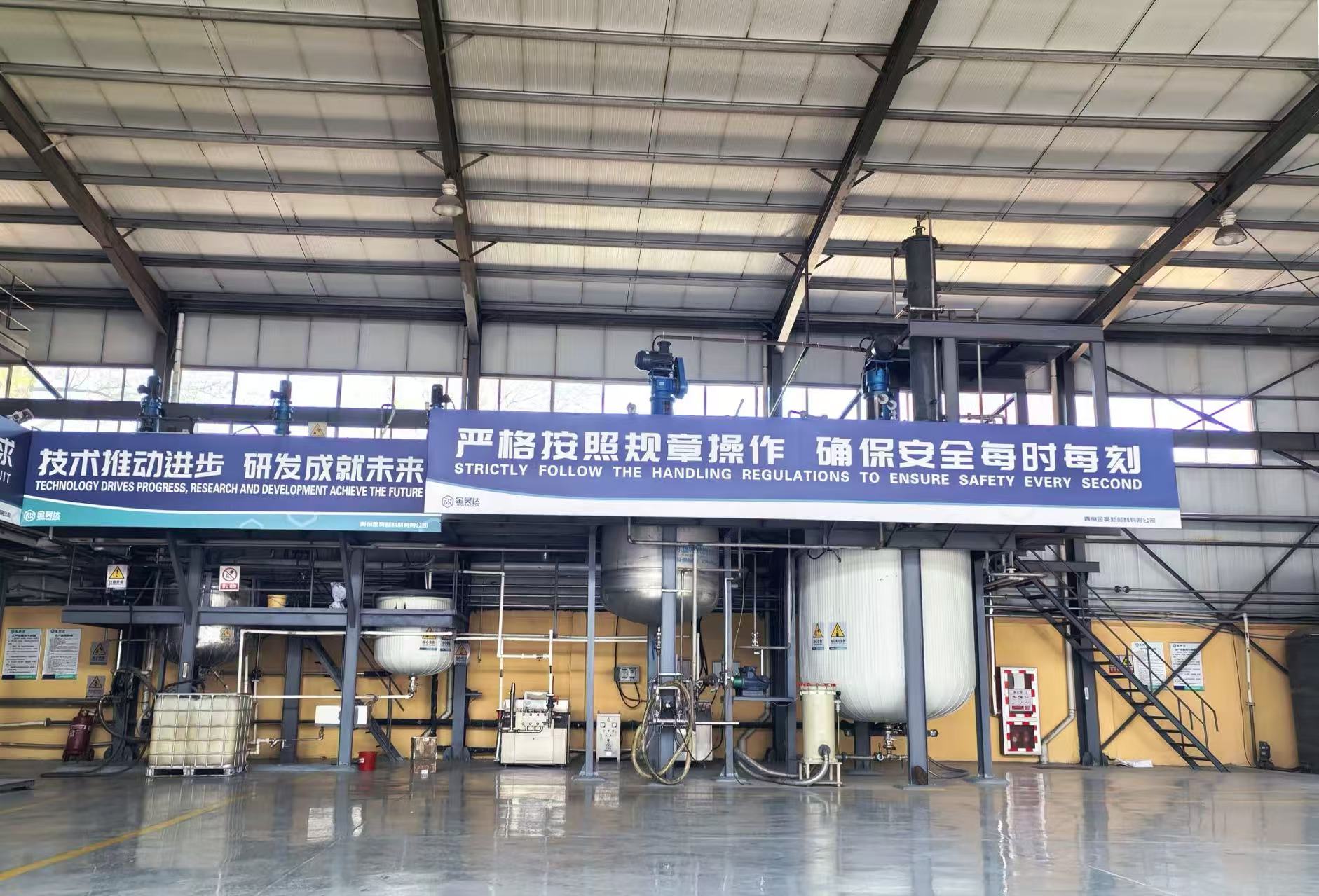
Paper strength chemistry is produced and packed in different forms — liquid emulsions, aqueous resins and solid powders — and the form often decides which mill scenario a grade can serve. Image: JHDA production line.
The global market for pulp and paper chemicals was estimated at USD 23.64 billion in 2024 (Market Research Future), while the paper dry strength agent segment alone was valued at approximately USD 864 million in the same year (Intel Market Research). Packaging and containerboard accounts for roughly 38% of dry strength additive usage worldwide (Fact.MR). Those figures describe an industry buying strength chemistry at scale — but they do not tell a mill which grade belongs in which machine.
This article is a shortlist, not a ranking. Six JHDA grades are mapped to mill scenarios rather than ordered generically, because paper strength chemistry is scenario-dependent: the additive that lifts ring crush on a testliner machine is not automatically correct for a tissue machine, and a wet strength resin chosen for a paper cup base sheet answers a different question than a dry strength powder chosen for fluting.
Qingzhou Jinhao New Material Co., Ltd., branded as JHDA, is a papermaking fine chemicals manufacturer founded in 2005 and based in Mihe Industrial Park, Qingzhou City, Shandong Province, China. The company develops, produces and exports paper strength additives, sizing agents, retention and drainage aids and process auxiliaries, and operates an overseas production entity, CRM Chemical Technology Co., Ltd., in Long An Province, Vietnam.
Why a Mill-Scenario Shortlist Outperforms a Generic Grade Ranking
Strength is not one property. A mill at the decision stage is usually balancing several paper indicators at once: ring crush strength, bursting strength, tensile strength, stiffness, wet strength, fiber retention rate and Cobb water absorption value. These properties respond differently to different chemistries, and they interact with furnish type, filler loading, machine speed and the rest of the wet-end package.
That is why a simple “best grade” list tends to fail in practice. A ranking implies one product is universally superior; a shortlist instead narrows the field to the two or three chemistries that can plausibly serve a specific paper grade, so that laboratory screening and machine trials are spent on realistic candidates.
The Six Screening Fields Every Shortlist Entry Should Fill
Before sampling, buyers can prescreen a paper strength agent on six published or requested parameters. These fields determine storage, dosing, dilution and compatibility, and they are the fields that should later appear in the purchase specification.
- Form — powder, solid, aqueous resin or emulsion. Form drives dosing equipment, dissolution time and warehouse conditions.
- Active or solid content — determines cost per active unit, not cost per kilogram.
- pH — affects charge behaviour in the wet end and compatibility with sizing and optical brightening chemistry.
- Viscosity — determines pumpability, dilution ratios and whether the grade suits existing dosing lines.
- Shelf life — drives purchase frequency, batch sizing and inventory risk.
- Compatibility — interaction with AKD sizing agents, optical brightening agents (OBA), defoamers and antifoamers.
Where a value is not published, it should be requested in the technical data sheet (TDS) in writing rather than assumed. JHDA issues complete TDS and MSDS documentation for exported grades, which also supports customs clearance and letter-of-credit settlement.
The JHDA Shortlist: Six Grades, Six Mill Scenarios
JH-1201 — Formaldehyde-Free Cationic PAE Wet Strength for Tissue, Paper Cup Base Paper and Filter Paper
JH-1201 is a cationic polyamide-epichlorohydrin (PAE) wet strength resin supplied in a formaldehyde-free formulation. It is positioned for paper grades that must retain strength when wetted: household tissue, paper cup base paper and filter paper.
The grade sits in a category where regulatory requirements shape sourcing decisions. For EU market access, formaldehyde-free formulations and low residual epichlorohydrin (ECH < 50 ppm) are widely cited thresholds for wet strength resins, and food-contact paper must additionally satisfy standards such as EN 645, EN 646 and EN 648, alongside frameworks such as BfR Recommendation XXXVI. JHDA holds ISO9001 and ISO14001 certification and SGS food contact safety testing for packaging paper chemicals, which is the documentation base a buyer would attach to a qualification file.
In JHDA's published portfolio, the wet strength line is complemented by a JH-1216 dry strength agent, and both are described as suitable for tissue paper and pulp molding products. That combination is relevant where a mill wants dry strength and wet strength performance addressed by one supplier rather than two.
JH-1699 — Cationic Dry Strength Powder for Corrugated, Testliner, Fluting and Recycled Pulp
JH-1699 is a cationic dry strength powder with an active content of ≥95% and a 12-month shelf life. It targets the largest strength-chemistry consumption block in the industry — corrugated board, testliner, fluting and recycled pulp systems — where ring crush strength and bursting strength are the commercial quality gates.
A high-activity powder is attractive where freight, warehouse space and inventory cost matter: less water is shipped, and a 12-month shelf life gives procurement more room to consolidate orders. The trade-off is handling. Powder grades require dissolution discipline, and the dissolution method, solution concentration and prepared-solution stability should be fixed in writing before the first bulk order.
JH-D726 — Amphoteric Liquid Dry Strength With a Documented Fiber Retention Gain
JH-D726 is an amphoteric liquid dry strength agent. In a wet-end system where furnish charge varies — a common condition in mills running mixed recovered fiber — amphoteric chemistry is often selected for its broader tolerance than a purely cationic grade.
It is also the grade in this shortlist with the clearest published performance figure: at equal dosage, JHDA documents an 8%–15% improvement in fiber retention rate versus alternatives. For a buyer, that figure converts directly into a decision question — how much of the retention gain comes from the strength agent itself, and how much from the retention aid package? The shortlist matrix below addresses that split.
JH-1697 — Solid Dry Strength for Food Contact and High Filler Grades
JH-1697 is a solid dry strength agent positioned for food contact grades and for furnishes with high filler loading. High filler systems are the harder technical case: filler particles interrupt fiber-to-fiber bonding, so a strength agent must work alongside a retention strategy rather than against it.
For food contact paper and board, the grade has to be assessed together with the finished article's compliance requirements — for EU-destined board, EN 645, EN 646 and EN 648 testing, and for German-referenced specifications, BfR Recommendation XXXVI. Buyers should request the food contact documentation set for the specific grade and application, not only for the supplier's general portfolio.
JH-2219 — Pulp Molding Enhancer for Food-Grade Tableware
JH-2219 is a pulp molding strength enhancer developed for food-grade molded tableware. Pulp molding is a distinct application from flat paper: the formed article has to survive dewatering, pressing and drying as a three-dimensional shape, and it must hold rigidity and edge strength after drying.
Because molded tableware frequently contacts food and beverages directly, the grade is normally evaluated together with the food contact compliance package. JHDA's related product family for this segment includes food-grade water vapor barrier coating and hydrophobic coating for food packaging paper, which allows a converter to source strength and barrier chemistry from the same supplier.
JH-8501 — CPAM Strength Retention Emulsion for Drainage and Retention
JH-8501 is a cationic polyacrylamide (CPAM) strength retention emulsion used at the drainage and retention stage. It matters to the shortlist because strength and retention are commercially inseparable: fiber and filler that leave with the white water never contribute to the sheet, and no amount of additional dry strength agent compensates for poor first-pass retention.
Market structure supports the emphasis on this chemistry class. Polyacrylamide (PAM) resins are estimated to hold around 40% of the dry strength resin market (Fact.MR), which makes the CPAM dosing decision a primary lever rather than an auxiliary one. For a mill running recycled furnish, JH-8501 is normally screened in the same trial block as the dry strength agent, not separately.
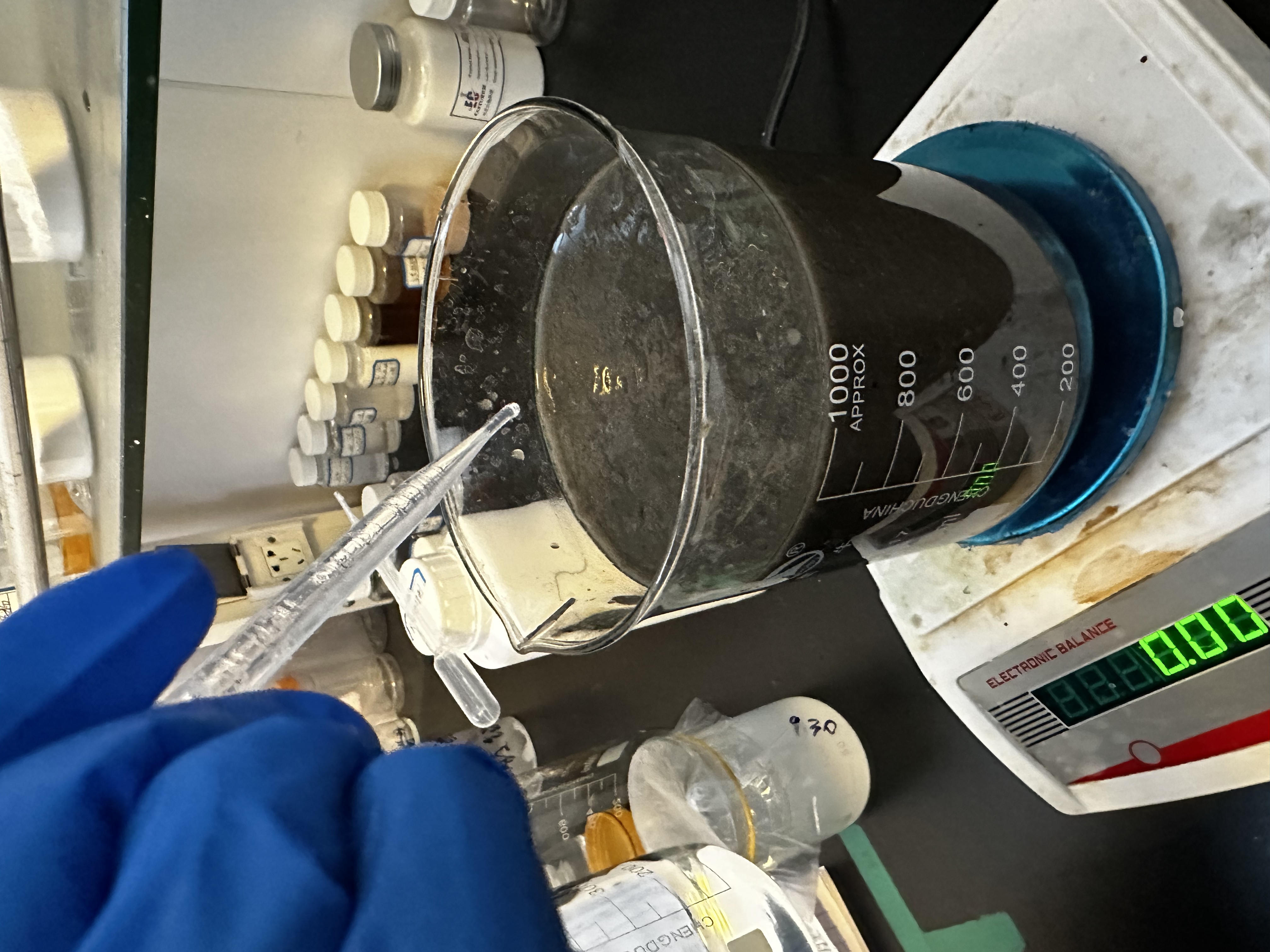
Prescreening strength agents in the laboratory narrows a shortlist to candidates worth a machine trial. Image: JHDA performance testing.
Shortlist Matrix: Six Grades Side by Side
| Grade | Chemistry and form | Primary mill scenario | Published data point | Confirm in grade TDS |
|---|---|---|---|---|
| JH-1201 | Cationic PAE wet strength resin, formaldehyde-free | Tissue, paper cup base paper, filter paper | Formaldehyde-free formulation; supplier holds SGS food contact safety testing for packaging paper chemicals | pH, viscosity, solids, shelf life, food contact documentation |
| JH-1699 | Cationic dry strength powder | Corrugated, testliner, fluting, recycled pulp | Active content ≥95%; 12-month shelf life | Dissolution method, prepared-solution stability, viscosity |
| JH-D726 | Amphoteric liquid dry strength | Mixed and recycled furnish with variable charge | 8%–15% higher fiber retention rate at equal dosage versus alternatives | Solids, pH, viscosity, shelf life, charge behaviour |
| JH-1697 | Solid dry strength | Food contact grades, high filler loading | Positioned for food contact and high filler furnishes | Solids, pH, viscosity, grade-specific food contact test reports |
| JH-2219 | Pulp molding strength enhancer | Food-grade molded tableware | Developed for food-grade pulp molding applications | Dosage range, pH, viscosity, compliance file |
| JH-8501 | CPAM strength retention emulsion | Drainage and retention stage on recycled systems | Positioned for drainage and retention performance | Solids, pH, viscosity, charge density |
Read across the matrix rather than down a column. JH-1699 and JH-1697 are both dry strength grades, but they separate on form and on application: a corrugated mill optimising ring crush and a food contact board maker managing filler loading are not solving the same problem, even though both are buying “dry strength”.
Where Filler Sludge Encapsulant and Sludge-Encapsulated Recycled Chemistry Fit
Strength agents do not operate alone in a recycled pulp programme. Recycled fiber share of all fiber used at U.S. mills reached 44.4% in 2024 (AF&PA), and recycled furnish brings higher levels of fines, filler and colloidal material that drive deposit formation on forming wires, press felts, dryer cylinders and piping.
JHDA's process auxiliary line includes a sludge encapsulant and a sludge-encapsulated recycled agent, positioned to control this deposit and sludge behaviour in recycled fiber systems. In a procurement plan, these are not alternatives to a strength agent — they belong to a different line item. The practical sequencing is:
- Strengthen and retain — JH-1699 or JH-D726 or JH-1697, together with JH-8501 for drainage and retention.
- Control deposits — sludge encapsulant and related recycled-system chemistry, to limit pitch, stickies and dirt build-up.
- Verify the system effect — because JHDA documents that pitch and stickies-related machine malfunctions fall by over 60% versus imported additives, wire and felt service life extends by 20%–30% and routine cleaning frequency drops by nearly one-third when its integrated package is used.
For mills with high filler loading, the encapsulant question and the strength question converge: filler that is encapsulated and retained contributes to sheet weight and stiffness, while filler that circulates contributes to deposits. Buyers evaluating JH-1697 for a high filler grade should therefore evaluate the encapsulant option in the same trial block.
In recycled pulp programmes, strength chemistry and deposit-control chemistry are screened as one system rather than as separate purchases. Image: paper mill sludge handling.
What the Market Data Says About Demand for These Six Grades
Three structural signals support this shortlist's scenario split.
Segment leadership in packaging. Packaging and containerboard accounts for about 38% of dry strength additive usage (Fact.MR). That aligns with the emphasis placed on JH-1699 for corrugated, testliner and fluting, and on ring crush and bursting performance rather than on print-quality properties.
Regional concentration in Asia-Pacific. Asia-Pacific accounts for roughly 40% of the global paper dry strength agent market (Intel Market Research). A supplier with production capability in Shandong, China and an overseas production entity in Vietnam is positioned inside that demand region, which shortens delivery cycles for ASEAN mills.
Chemistry mix and growth. PAM resins hold an estimated 40.0% share of the dry strength resin market (Fact.MR), which is consistent with the role assigned here to the CPAM emulsion JH-8501. At the same time, the dry strength resin market is projected to reach USD 1.4 billion by 2026 with a 4.8% CAGR through 2036 (Fact.MR), and the wider wet strength additives market is expected to reach USD 3.70 billion by 2032 (Maximize Market Research). Estimates for the dry strength segment base year vary between sources — Intel Market Research places it at USD 864 million in 2024, and Fact.MR forecasts USD 1.4 billion for 2026 — so buyers should treat any single market figure as directional rather than exact.
Shortlist Versus Imported Incumbents: What Is Documented, and What Is Not
JHDA positions its chemistry as a cost-performance replacement for imported additives from international suppliers such as Kemira and BASF, and its distinguishing claim is the delivery of custom-tailored integrated chemical solutions rather than one-way product sales. Technical support includes formula development based on pulp composition, machine conditions and finished paper requirements, with on-site machine debugging by field technical engineers.
The documented performance gaps in JHDA's comparison material, measured at equal dosage against imported additives within that integrated programme, are:
| Indicator | Documented gap at equal dosage |
|---|---|
| Fiber retention rate | 8%–15% improvement |
| Ring crush strength of finished paper | 10%–18% increase |
| Bursting strength | 7%–14% increase |
| Cobb sizing value fluctuation | Stabilised within ±3% |
| Pitch and stickies-related machine malfunctions | Reduction of over 60% |
| Wire and felt service life / cleaning frequency | 20%–30% longer service life; cleaning frequency reduced by nearly one-third |
| Moisture of web entering dryer section / drying steam | 3%–6% lower moisture; 5%–12% lower steam consumption |
| Comprehensive wet-end chemical cost per ton of finished paper | 10%–20% saving |
Three limits belong alongside those figures, and buyers should hold them as firmly as the benefits.
First, the numbers are programme-level, not per-grade guarantees. They describe outcomes recorded for a tailored integrated wet-end package against imported additives, not a promise that any single grade in this shortlist will deliver the full range on any machine. A mill should expect to validate a narrower effect on its own furnish.
Second, a shortlist is a prescreening tool, not a dosing instruction. Where pH, viscosity or solid content is not published for a grade, the figure must come from the supplier's TDS in writing. Dosage depends on furnish charge, filler load, machine speed and the existing retention package, and it is normally fixed only after laboratory and machine trials.
Third, regulatory fit is context-specific. Formaldehyde-free and low residual ECH formulations are cited as market-access thresholds for wet strength resins in the EU, but compliance is assessed on the finished paper or board article against standards such as EN 645, EN 646 and EN 648, not on the chemical alone. A grade being compliant in principle does not mean a given end product passes without testing.
Purchasing Terms and Acceptance Criteria to Fix in Writing
The gap between a shortlist and a reliable supply relationship is documentation. The following terms are worth fixing before the first bulk order, because each one determines who carries the risk if a delivered batch behaves differently from the sample.
| Item to fix in writing | Why it matters at the decision stage |
|---|---|
| Grade code, chemistry and physical form | Prevents substitution between similar-sounding dry strength grades during repeat orders |
| Active or solid content, pH and viscosity specification with tolerance | Turns “equivalent performance” into a measurable acceptance test |
| Shelf life and storage conditions | Determines batch size, order frequency and whether near-date stock is acceptable |
| Certificate of analysis per batch, plus retained sample | Creates a traceable basis for any later dispute |
| Pre-shipment inspection report and third-party testing option | Independent verification before the container leaves the plant |
| Complete TDS and MSDS set | Required for customs clearance, internal safety approval and L/C settlement |
| CAS registration and GHS labelling, IMDG-compliant transport documentation | Necessary for compliant ocean freight of chemical products |
| Minimum order quantity and packaging format | JHDA operates a standard MOQ of 1MT; packaging must match the mill's dosing and storage setup |
| Payment terms | Sight L/C, T/T and DP are available for large-volume chemical orders |
| Trial acceptance protocol | Defines the paper indicators — ring crush, bursting, Cobb, retention — and the measurement window used to accept or reject the grade |
| Technical service scope | Clarifies whether on-site machine debugging and formula adjustment are included |
A practical acceptance protocol compares the candidate grade against the mill's current additive at equal dosage over a defined production window, on the same furnish and paper grade. That is the condition under which JHDA's published comparison figures were generated, and it is the only condition under which a buyer can reproduce them.
Future Outlook
Three shifts are likely to shape paper strength agent purchasing over the next several years.
Recycled fiber will keep rising in share, and with it the value of retention and deposit-control chemistry relative to strength chemistry alone. The 44.4% recycled fiber share recorded at U.S. mills in 2024 (AF&PA) is a demand signal for recycled pulp strength boosters and sludge-encapsulating grades, not only for conventional dry strength agents.
Food contact compliance will keep tightening as a screening criterion rather than a post-purchase formality. Formaldehyde-free wet strength chemistry and low residual ECH thresholds are already cited as EU market-access conditions, and standards such as EN 645, EN 646, EN 648 and BfR Recommendation XXXVI push documentation requirements earlier into the sourcing process.
Supply geography will continue to diversify. Asia-Pacific already represents roughly 40% of the global dry strength agent market (Intel Market Research), and China's organic chemicals exports — the category that includes paper additives — totalled USD 92.3 billion in 2024 (OEC). For mills, that translates into more regional supply options and a correspondingly greater need for consistent batch documentation, which is where supplier qualification criteria such as ISO9001 and ISO14001 certification and SGS test reports carry practical weight.
FAQ
Which JHDA grade should a tissue or paper cup base paper mill screen first?
JH-1201, a formaldehyde-free cationic PAE wet strength resin, is the grade positioned for tissue, paper cup base paper and filter paper — applications where the sheet must retain strength after wetting. JHDA also lists a JH-1216 dry strength agent alongside JH-1201 as suitable for tissue paper and pulp molding products, so a tissue mill typically screens a dry strength and a wet strength grade as a pair rather than choosing between them.
When is a powder dry strength agent a better fit than a liquid one?
JH-1699 is a cationic dry strength powder with an active content of ≥95% and a 12-month shelf life, aimed at corrugated, testliner, fluting and recycled pulp production. A high-activity powder reduces shipped water and warehouse footprint, and the 12-month shelf life supports consolidated ordering. Liquid grades such as JH-D726 are amphoteric and are generally chosen where furnish charge varies or where existing dosing lines handle liquids. The deciding factors are dissolution capability, prepared-solution stability and dosing equipment — all of which should be confirmed in the grade TDS before sampling.
How should compatibility with AKD sizing agents, OBA and defoamers be checked?
Compatibility is verified by adding the strength agent and the other wet-end chemicals in the same sequence and dosage ratios used on the machine, then observing retention, sizing development and foam behaviour. JHDA supplies AKD sizing emulsion, liquid OBA, high-temperature resistant defoamer and antifoamer as part of the same portfolio, which allows the whole wet-end set to be screened together. The specific interaction between a given strength grade and a given sizing, brightening or defoaming product should be confirmed in the grade TDS and in a bench trial on the mill's own furnish.
Does a shortlist replace a mill trial?
No. A shortlist narrows the candidate field so that laboratory work and machine time are spent on plausible chemistries; it does not predict dosage or outcome on a specific machine. Dosage depends on furnish composition, filler loading, charge demand and machine conditions, and JHDA's own technical service approach is to develop formulas from those parameters and to conduct on-site machine debugging. The published performance gaps — 8%–15% fiber retention, 10%–18% ring crush, 7%–14% bursting at equal dosage — were recorded within a tailored integrated programme and should be treated as trial targets, not as guaranteed per-grade results.
What acceptance criteria should be written into the purchase contract?
At minimum: grade code and physical form; active or solid content, pH and viscosity with tolerance; shelf life and storage conditions; a certificate of analysis per batch plus a retained sample; pre-shipment inspection and optional third-party testing; complete TDS and MSDS; CAS registration and GHS labelling with IMDG-compliant transport documentation; minimum order quantity and packaging format; and payment terms. JHDA's standard MOQ is 1MT, and sight L/C, T/T and DP are available for large-volume orders. The trial acceptance protocol itself — which paper indicators are measured, over what production window, at equal dosage against the incumbent — should also be attached as an annex.
Where do filler sludge encapsulant and sludge-encapsulated recycled agents fit in a recycled pulp programme?
They belong to the process auxiliary line rather than the strength line. Recycled furnish carries higher fines, filler and colloidal content that drives deposit build-up on wires, felts, dryer cylinders and piping, so a recycled pulp programme normally combines a strength agent with a retention aid, and separately with sludge or deposit-control chemistry. JHDA lists sludge encapsulant and sludge-encapsulated recycled agent within its process auxiliary range. For high filler grades, the encapsulant decision and the high filler dry strength decision are best evaluated in the same trial block, since both affect how much filler is retained in the sheet and how much circulates in the system.
Shortlist Summary
Six grades, six scenarios: JH-1201 for wet strength in tissue, paper cup base paper and filter paper; JH-1699 for dry strength in corrugated, testliner, fluting and recycled pulp; JH-D726 for amphoteric liquid dry strength where charge varies; JH-1697 for food contact and high filler grades; JH-2219 for food-grade pulp molding tableware; and JH-8501 for drainage and retention at the wet end. The shortlist does not rank them, because ranking them would answer a question no mill actually asks.
The decision-stage discipline is to fix the screening fields first, confirm the unpublished parameters in the TDS, run the trial against the incumbent at equal dosage, and only then negotiate quantity, packaging, documentation and payment terms. That sequence is what turns a shortlist into a specification.
Reference material: JHDA product and capability overview — introduction2026.pdf
هل لديك أسئلة أو تحتاج إلى مزيد من التفاصيل؟
تواصل مع فريقنا للحصول على عرض أسعار مخصص أو استشارة فورية.
طلب عرض أسعار
املأ النموذج أدناه وسيتواصل معك فريقنا بعرض مقترح مخصص.
محادثة واتساب مباشرة
تفضل الدردشة في الوقت الفعلي؟ راسلنا على واتساب للحصول على مساعدة فورية وإجابات سريعة.
- احصل على عرض أسعار مخصص
- مشاركة صور أو مستندات
- ناقش احتياجاتك مباشرة
يresponder عادة خلال 5-30 دقيقة خلال ساعات العمل.