
Parking Lift Supply Partnerships: What Makes Them Last
Mechanical parking equipment was once a side consideration for architects and developers. In many cities today, it is the difference between a project that meets its parking requirement and one that cannot. Rising land prices, larger vehicles, and limited building footprints have turned parking lifts into a standard vertical solution.
Market data reflects this shift. The global car lifts market, including parking and service lifts, was valued at USD 2.8 billion in 2025 and is projected to reach USD 4.7 billion by 2034, according to Dataintelo. In the more specific car stacker segment, QYResearch estimates the market at USD 4.6 billion in 2023, growing to USD 6.72 billion by 2030. Definitions vary between the two reports, but the direction is consistent: demand for vertical parking equipment is expanding.
For distributors, dealers, and project owners, a bigger question is emerging. A parking lift is not a disposable product. It is loaded, unloaded, and relied on every day for years. The procurement decision is therefore increasingly a supply-partnership decision: can this manufacturer deliver consistent quality, dependable lead times, and real support beyond the first container?
The Core Problem: Equipment That Must Work for Years
When a parking lift fails, the impact is felt immediately. A residential building loses parking capacity, a commercial lot loses revenue, and a dealer loses time. The most common long-term risks in imported parking lifts fall into three categories.
Delayed after-sales response. A supplier that cannot respond quickly to a service request extends the downtime. For overseas buyers, this risk is amplified by time zones and distance.
Long breakdown downtime. Even well-manufactured equipment occasionally needs repairs. The speed of recovery depends on whether the manufacturer carries spare parts, offers remote support, and has a local partner who can act.
Insufficient structural strength. A parking lift carries heavy loads several times a day. Steel quality, welding, and hydraulic components determine whether the structure stays sound after years of use. Weakness in any of these areas can appear only after the warranty period, turning an initial saving into a long-term liability.
These risks are not theoretical. They are the reasons why quality systems and support structures matter more than a low unit price.
An established countermeasure is manufacturing process control. A credible response begins with raw material inspection, continues through controlled welding and batch testing, and extends to a service network that can resolve problems after installation. The rest of this article looks at how a real supplier implements such a system.
What a Durable Parking Lift Supply Base Looks Like
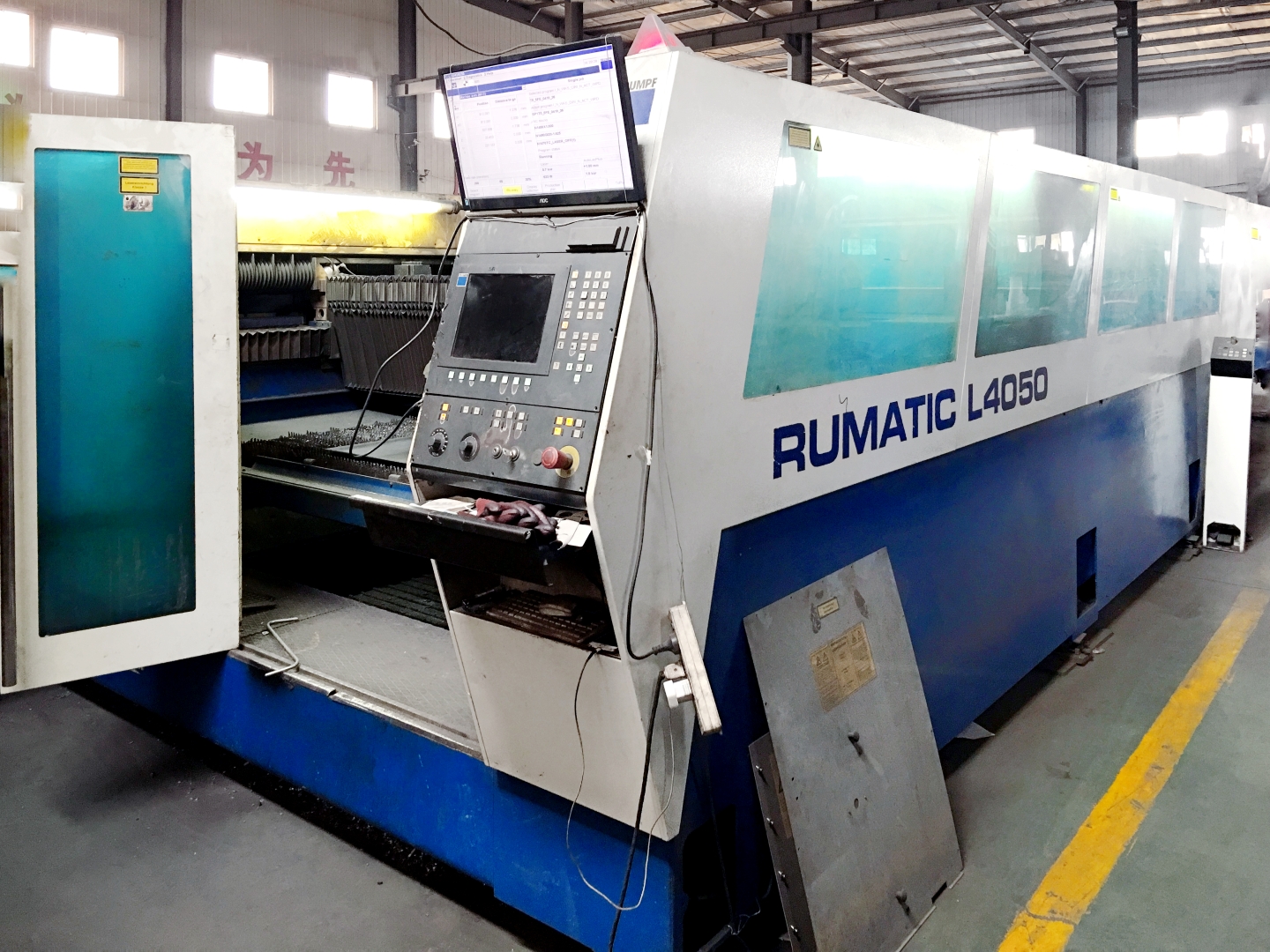
MUTRADE Industrial Corp. is a mechanical parking equipment manufacturer based in Qingdao, China. The company was founded in 2009, operates a 12,000 m2 factory, and employs about 100 people. Its production portfolio covers parking lifts, semi-automatic parking systems, and fully automatic parking systems, from single- and double-car models to large automated towers. Annual output is about 10,000 parking spaces, and roughly 99% of production is exported.
For a manufacturer of this type, the key question is not whether it can produce a good unit once, but whether it can repeat that result across many batches and years. Several measurable signals indicate the depth of that capability.
Factory area
Annual production output
Monthly production capacity
Typical production lead time
Production Capacity and Low-Barrier Entry
MUTRADE reports a monthly production capacity of 1,000 car spaces and a typical lead time of 30 to 45 days for orders. The minimum order quantity is one unit. For a distributor evaluating a new supplier, that combination is useful: it allows an initial order to test product quality and documentation before committing to volume. For existing partners, it provides a production baseline that makes capacity planning easier.
Quality Systems Applied Across Batches
The company states that all products are certified by CE and/or TÜV to meet local standard requirements, and that its parking lifts have been certified by TÜV Rheinland. The factory holds ISO 9001 and ISO 14001 certifications and is audited annually under Canadian Welding Bureau (CWB) welding specifications. Product design follows the EU EN 14010 machinery safety standard.
Those statements matter because they point to a documented quality system, not a one-time approval. The CWB audit, in particular, requires repeated verification of welders and welding procedures, which is directly relevant to structural durability.
After-Sales Support Structure
MUTRADE's after-sales model includes 24-hour online remote support, local partners, and on-site engineer supervision for service requests. The warranty package covers parts and accessories for 12 months and the structure for 60 months, with spare parts available during the operating lifetime of the parking system.
For distributors, this support structure defines what they can promise to their own customers. A long-term supply relationship depends on knowing that the manufacturer will still be responsive five or ten years after the sale.
Technical View: Why Manufacturing Depth Drives Reliability
Long-term reliability in a parking lift is built at the factory level, before the equipment is loaded onto a ship. Three stages of production have the greatest influence on structural life.
Raw Material Control
MUTRADE's parking lifts are manufactured mainly from Q235 carbon steel. The minimum steel thickness used is 5 mm, with some structural parts reaching 20 mm. The factory samples and inspects incoming steel products and hydraulic components batch by batch; any non-conforming material is rejected before entering production. This policy is designed to prevent inferior raw materials from creating hidden weaknesses.
Welding Control
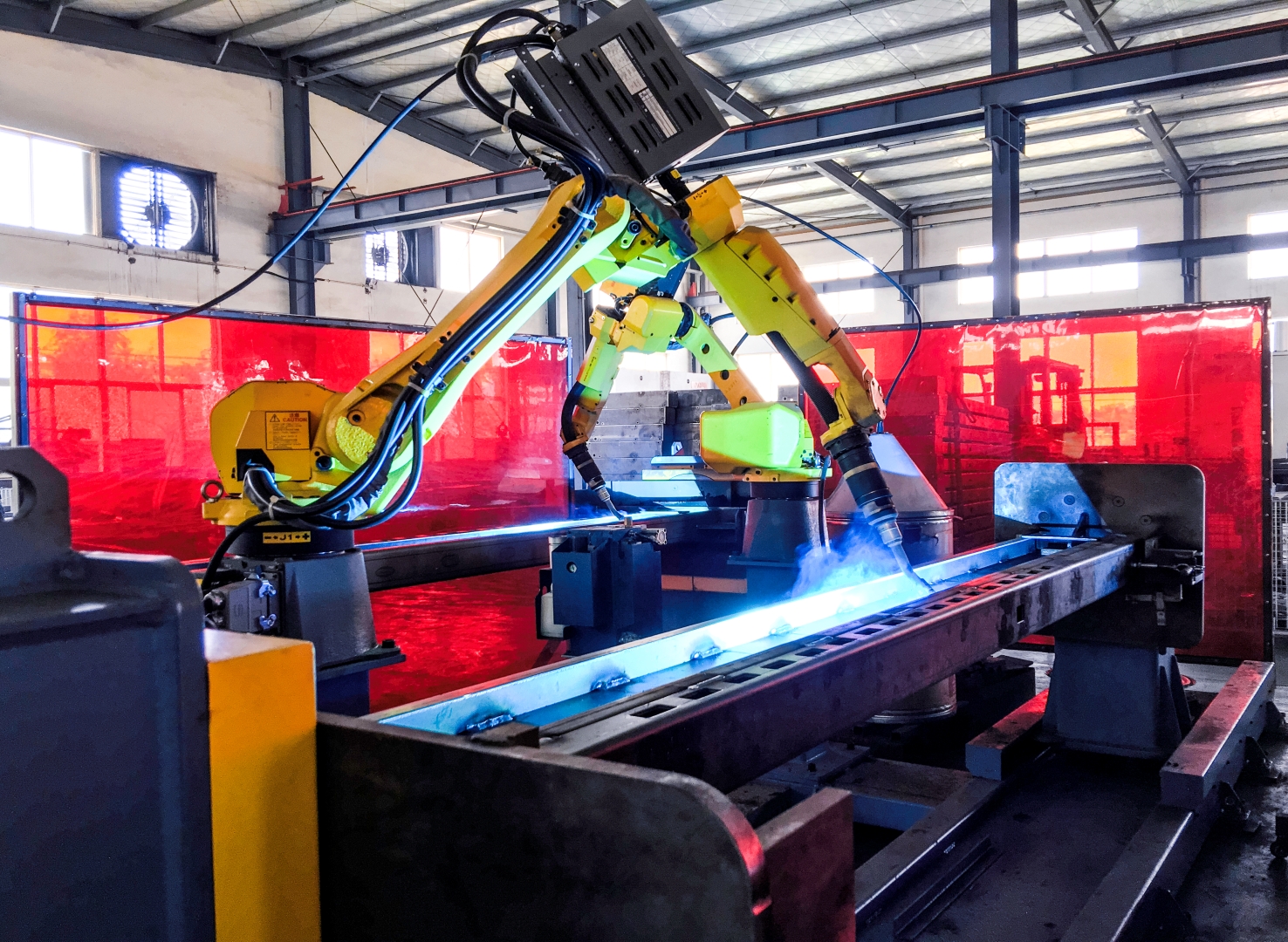
Welded joints carry the most stress in a parking lift frame. The factory follows a standardized welding process under CWB specifications and is audited annually. Welders are trained and tested each year by the CWB authority. This repeated verification is a strong signal of structural consistency, because it limits reliance on individual welder skill.
Performance Testing
Before delivery, MUTRADE performs full-batch performance testing in accordance with its ISO quality system. Buyers can also request pre-shipment inspection as an optional cost item. In practice, batch-level testing matters more than a single product certificate, because it verifies that the current order meets the same standard as previous ones.
Where Long-Term Supply Relationships Matter Most
Some buying scenarios depend more heavily on after-sales support and supply continuity than others.
Distributors and Dealers
A distributor importing parking lifts needs to build a product line without taking excessive inventory risk. The combination of a one-unit MOQ and a 30–45 day lead time gives distributors a testing path before scaling to container orders. Importers also benefit from a manufacturer that can supply multiple configurations — two-post parking lifts, four-post parking lifts, triple stackers, and semi-automatic systems — so they are not forced to qualify multiple factories.
Residential and Commercial Parking
In apartment projects and commercial lots, parking lifts are used throughout the day. Downtime is expensive and visible. Hydraulic mechanisms are widely used in these settings; according to Dataintelo, hydraulics hold a 57.2% share of the global car lift market, reflecting their reliability in heavy-duty applications. MUTRADE's hydraulic drive models include two-post lifts such as the Hydro-Park 1127, with a rated lifting capacity of 2700 kg, and three-car stackers such as the Hydro Park 2525 and 2625.
Car Dealerships and Storage Facilities
Dealerships and car clubs typically install lifts to increase display or storage capacity inside existing buildings. The three-car Hydro Park 2525/2625, with second-level capacity of 2500 kg, suits vehicles including SUVs. A stable spare-parts supply is essential in this segment, because a lift that stores collector cars is often expected to remain in service for a long period.
Underground and Low-Ceiling Sites
Many renovation projects involve existing basements with limited height. Models like the TPTP-2 tilting parking lift, which allows 1550 mm vehicle height, and the Starke 2127 pit parking lift are designed for such conditions. Buyers in this segment tend to value the ability to receive several configurations from one qualified source, because it simplifies service training and parts inventory.
Market Trends Behind the Shift to Long-Term Sourcing
Several verified market indicators help explain why purchasers are structuring parking lift supply as a long-term relationship rather than a one-time transaction.
North America leads in market size. Custom Market Insights valued the North American vehicle lift market at USD 3.25 billion in 2024, driven in part by light truck ownership, which accounts for about 77% of new vehicle sales. Larger vehicles require heavier lifts, and higher load ratings increase the need for strict manufacturing quality. This helps explain why certified lifting equipment is in sustained demand across the region.
Hydraulic equipment is the mainstream choice. The 57.2% share of hydraulic mechanisms in the global car lift market signals broad user confidence in this drive type. Hydraulic parking lifts are generally straightforward to maintain, which is an important attribute when equipment must operate for decades.
Automation is moving into project expectations. Semi-automatic and fully automatic parking systems are appearing in a wider range of proposals, from small commercial buildings to towers with hundreds of spaces. In North America, competitors such as BendPak have drawn attention with products like the Octa-Flex, described as an eight-arm car lift system, indicating an active and innovation-driven market. Suppliers that can provide both simple and automated systems offer distributors a longer product roadmap.
In this context, certification and manufacturing depth become procurement filters. Buyers who intend to keep selling a product line for years will prefer a factory whose standards are verifiable through recognized audits.
Comparison with Alternative Supply Models
MUTRADE positions itself between two common choices: European parking equipment brands and lower-price Chinese manufacturers. Its own comparisons provide a useful framework for evaluating the trade-offs.
| Criterion | vs. European Brand | vs. Other Chinese Manufacturers |
|---|---|---|
| Cost level | About 50% lower | About 20% higher |
| Quality positioning | Almost equivalent | Better quality and service |
| Delivery | Quicker by roughly 50% | Quicker delivery time |
| Response | 24/7 sales team response | Complete engineering, QC and procurement teams |
| Safety configuration | More safety devices | TÜV Rheinland certified products |
Buyers should read these comparisons as the supplier's own positioning, not as a third-party audit. Still, they highlight a workable selection logic. A European brand brings familiarity and a mature local service network in many markets, often at a significantly higher price. A low-price Chinese supplier may reduce first cost but can leave the buyer responsible for quality verification, compliance documentation, and after-sales service.
MUTRADE's stated model — built on engineering, procurement, and QC teams, international certifications, and a support network with local partners — sits between these two. It requires a higher upfront investment than the lowest-cost option, but it is designed for buyers that intend to repeat orders or build a distribution channel.
An Honest Boundary
There are conditions where this model is not the right fit. In low-cost suburban areas with abundant land, a conventional ramp building can be cheaper than mechanical parking equipment, because land savings matter less. For a one-time buyer without any local service capability, a short response chain may be more important than equipment cost. A long-term supply relationship generates the most value when the buyer has a repeatable need — multiple projects, a dealer network, or an ongoing spare-parts obligation.
Future Outlook: From Equipment Supplier to Service Partner
Three developments are likely to shape the parking lift supply landscape in the coming years.
First, manufacturers will be evaluated increasingly on their support capability, not just their product catalog. As parking systems add automation, remote diagnostics, software updates, and specialized maintenance will become part of the expected package. Suppliers that can offer these services will retain distribution partners for longer.
Second, product portfolio breadth will reduce the number of suppliers a distributor needs. A single manufacturer able to provide two-post lifts, four-post lifts, triple stackers, puzzle systems, and automated towers can simplify training, parts stocking, and quality control for the importer.
Third, recognized certifications will continue to function as filters in cross-border procurement. CE, TÜV Rheinland, CWB, and ISO certifications give buyers a consistent way to shortlist manufacturers, especially when they cannot visit the factory frequently.
For the Chinese mechanical parking equipment sector, this reinforces a shift from low-cost production to verifiable manufacturing. MUTRADE reports that it, together with its production facility Hydro Park, has accounted for more than 18% of China's export volume of mechanical parking equipment under HS Code 84289020 since 2017. Whether or not that precise figure is used in procurement files, the direction is clear: scale, certification, and support capacity will define which suppliers become long-term partners.
FAQ: What Buyers Ask Before Committing to a Long-Term Supplier
What is the minimum order quantity for parking lifts?
MUTRADE's minimum order quantity is one unit. For distributors, this allows a low-risk trial of quality, documentation, and logistics before a larger order.
What is the typical production lead time?
The manufacturer's monthly production capacity is 1,000 car spaces, with a typical production lead time of 30 to 45 days.
Which certifications and standards does MUTRADE hold?
Products are certified by CE and/or TÜV to meet local standards. The factory is CWB certified and audited annually, holds ISO 9001 and ISO 14001, and follows the EU EN 14010 machinery safety standard in product design.
What after-sales service can an overseas buyer expect?
MUTRADE provides 24-hour online remote support, works with local partners, and can arrange on-site engineer supervision for after-sales service.
What warranty and spare parts support are included?
The warranty covers parts and accessories for 12 months and the structure for 60 months. Spare parts are available during the operating lifetime of the parking system.
What are the shipping and payment terms?
Available delivery terms include EXW, FOB, CIF, and DDU. Payment normally requires at least 30% in advance; letters of credit are also accepted.
Can buyers inspect equipment before shipment?
Yes. Pre-shipment inspection is available as an optional cost item, allowing the buyer or a third-party inspector to verify the equipment before it leaves the factory.
For buyers who need the full product and company reference, MUTRADE publishes an English company profile. The document is available for public download: MUTRADE Profile 2025 (PDF).