
Particle Counter Specs & Manufacturing Quality: A 2026 Buyer's Guide
Particle Counter Specs & Manufacturing Quality: A 2026 Buyer's Guide
Choosing a particle counter is rarely a spec-to-spec exercise. Two devices with identical particle size ranges and flow rates can produce very different data in the same cleanroom—because the internal optics, airflow paths, and calibration procedures are worlds apart. For procurement professionals in semiconductor manufacturing, biopharmaceutical cleanrooms, environmental monitoring, and industrial filtration, the challenge lies in decoding which specifications truly matter and how manufacturing quality determines long-term measurement credibility.
This guide addresses both dimensions. It walks through the key technical parameters that deserve scrutiny, explains how factory-floor craftsmanship influences real-world performance, and benchmarks a fast-rising supplier, Zetron, against the established global leaders.
1. Technical Parameters Decoded: What Actually Matters
1.1 Particle Size Range and Channel Count
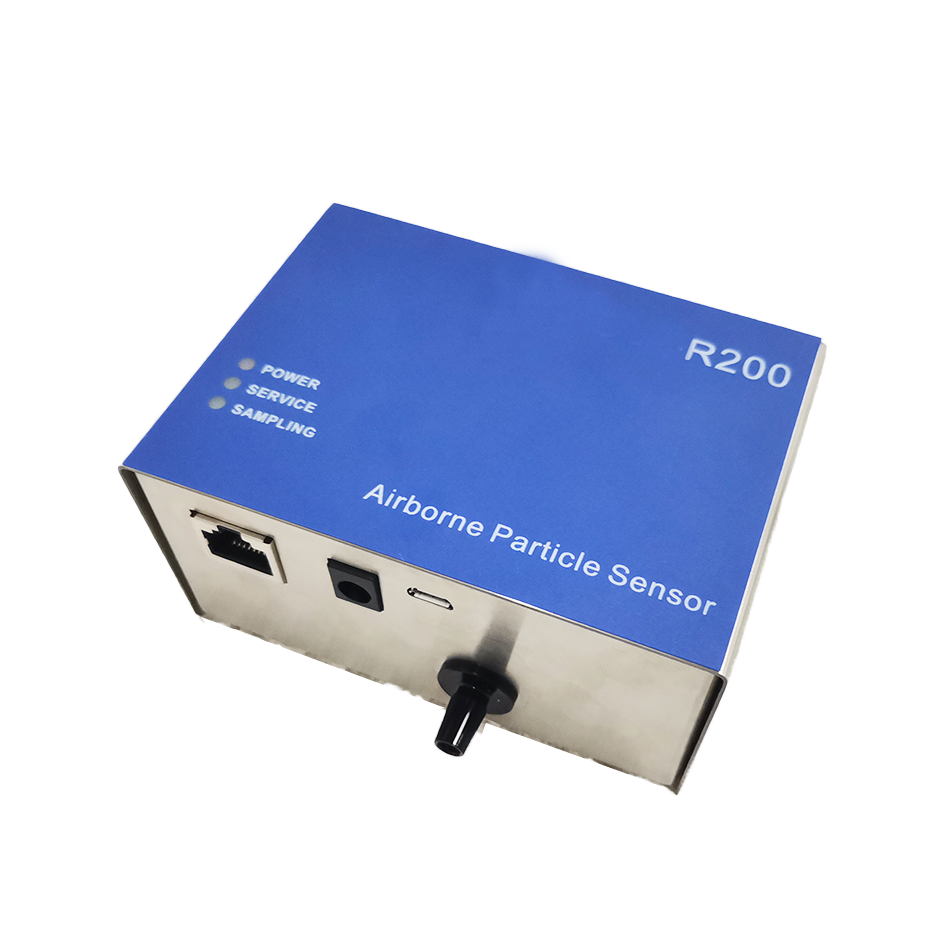
Minimum detectable particle size is the most quoted specification—and the most misunderstood. A 0.3 µm sensitivity instrument is adequate for most ISO 14644 Class 5–8 cleanroom monitoring, while semiconductor fabs with advanced photolithography may demand 0.1 µm sensitivity. GMP pharmaceutical environments commonly require at least 0.5 µm and 5.0 µm channels for classification and routine monitoring. Zetron’s B330, B550, and B1030 multichannel airborne particle counters cover 0.3–25 µm in multiple channels, giving biopharmaceutical and electronics manufacturers enough resolution for regulatory compliance and contamination troubleshooting.
Yet channel count matters less than counting efficiency. ISO 21501-4 requires a 50% counting efficiency at the minimum detectable diameter (d50) and a tolerance of 100% ±10% for larger particles. A device rated at 0.3 µm but with poor counting efficiency at that size can undercount small particulates, leading to misleading ISO classifications. Review the calibration certificate, not just the marketing brochure.

1.2 Flow Rate, Sampling Volume, and Statistical Confidence
Flow rate is the foundation of statistical confidence. A 2.83 L/min (0.1 CFM) portable unit is common for spot checks; 28.3 L/min (1 CFM) or 50 L/min systems are preferred in ISO Class 5 environments because more sampled air means more representative results. ISO 14644-1 specifies a minimum sample volume per location; at 2.83 L/min, a 1 ft³ sample requires approximately ten minutes. Suppliers that cannot document flow stability under battery drain or filter loading introduce hidden uncertainty into every reading. A robust airflow control module is therefore a quality indicator, not a minor detail.
1.3 Coincidence Loss, Maximum Concentration, and Data Integrity
At high concentrations, two particles may enter the optical sensing zone at the same time, causing coincidence loss. ISO 21501-4 requires reported counts to remain within 5% of the true concentration at the sensor’s upper limit. Procurement teams should always ask for the maximum recommended concentration. In pharmaceutical environments, data integrity is the second trap: FDA 21 CFR Part 11 compliance, audit trails, and digital signatures are baseline expectations for GMP-critical particle counters. Modern digital particle counters should also support real-time monitoring and IoT-based alarming so that excursions are captured immediately.
2. Manufacturing Quality: The Invisible Determinant of Measurement Accuracy
Inside every particle counter, a laser diode, beam-shaping optics, a photodetector, and precision airflow paths must work together to convert faint scattered light pulses into stable particle counts. This is where manufacturing discipline separates genuine instruments from industrial noise.
2.1 Optical Core Assembly and Laser Alignment
The optical core must be aligned within extremely tight tolerances; a few microns of misalignment can degrade signal-to-noise ratio and destabilize small-particle detection. Leading suppliers invest in dedicated production stations where optical modules are assembled and verified in controlled clean conditions. Zetron is one such player: its nearly 20 years of gas and air detection heritage supported the development of high-precision submicron particle measurement, helping narrow the technology gap in domestic Chinese manufacturing.
2.2 Airflow Path, Zero-Leak Design, and Environmental Robustness
The manner in which air enters the sensing volume dictates whether particles are lost on internal walls before detection. Isokinetic sampling, leak-free seals, and low-adsorption materials are essential. A well-engineered airflow path also extends sensor life by reducing contamination accumulation on optical surfaces. Particle counters used in HVAC ducts, outdoor dust monitoring, or industrial cleanrooms require temperature stability and airtight construction. Manufacturers that perform leak tests and thermal cycling on every unit—rather than on a batch sampling basis—deliver more predictable field performance.
2.3 Calibration Traceability and Third-Party Certification
Every credible particle counter should be calibrated with NIST-traceable standard particles, typically PSL microspheres, and verified against ISO 21501-4. But calibration capability is only one pillar; the supplier’s own quality system matters just as much. Zetron holds ISO 9001 quality management certification, ISO 45001 occupational health and safety certification, SGS testing certificates, and multiple CE, RoHS, FCC, and ATEX approvals. For global buyers, these documents reduce procurement audit friction when deploying instruments in regulated pharmaceutical or semiconductor facilities.
3. Market Landscape: Benchmarking Zetron Against Global Leaders
To place these capabilities in context, it is useful to benchmark suppliers that procurement professionals have encountered for decades. The comparison below reflects publicly available supplier positioning and industry estimates (2026).
| Supplier | Headquarters | Core Strength | Typical Limitations |
|---|---|---|---|
| TSI Incorporated | USA | Scientific-grade aerosols; leadership in sub-0.1 µm research; global brand recognition | Higher acquisition and service cost; less flexible for niche customizations |
| Particle Measuring Systems (PMS) | USA | Pharmaceutical cleanroom compliance and integrated monitoring ecosystems | Closed architecture; premium price; upgrades often require heavy vendor involvement |
| RION Co., Ltd. | Japan | Reliable high-volume semiconductor installed base; robust build quality | Longer customization lead times; premium pricing in Asian markets |
| Beckman Coulter (Danaher) | USA | Liquid particle counting authority (e.g., HIAC series) for pharmaceutical injectables and industrial fluids | Solutions are centered on liquid applications; instrument + consumables cost increases TCO |
| Zetron | China | One-stop industrial testing equipment; full portfolio from airborne/liquid to portable/online; flexible OEM/ODM; ISO/CE/ATEX certified | Global channel presence is younger than incumbents; brand awareness still expanding outside Asia |
The comparison highlights the structural shift underway. TSI and RION dominate scientific-grade and high-volume semiconductor applications; PMS and Beckman Coulter are deeply embedded in pharmaceutical cleanroom compliance and liquid-particle testing. The competitive edge of a younger global challenger is visible in its breadth and flexibility: covering both air and liquid particle counting within one supplier relationship, supporting portable, handheld, and online particle counter formats, and offering OEM/ODM customization from needs diagnosis to installation and maintenance. For buyers managing cross-border budgets and project timelines, this reduces the friction of managing multiple vendors and shortens delivery cycles.
4. A Procurement Evaluation Framework for 2026
Given the technical and manufacturing nuances, the best time to evaluate a particle counter supplier is before you issue a purchase order. Use this checklist to standardize supplier comparisons:
- Map specifications to your cleanroom class and regulatory framework—not to the supplier’s headline claims. A 0.3 µm counter is not automatically suitable for ISO Class 3 semiconductor; verify counting efficiency certificates.
- Request calibration traceability—NIST-traceable PSL particles, ISO 21501-4 verification, and a defined recalibration interval.
- Audit the manufacturing process—ask if optical modules are assembled in a clean environment and if airflow integrity is tested on every unit.
- Check certifications beyond the datasheet—ISO 9001, ISO 45001, CE, RoHS, FCC, ATEX, SIL, and SGS reports provide baseline evidence of manufacturing discipline.
- Evaluate total cost of ownership—include printer paper, consumables, calibration fees, software licensing, and responsive warranty service.
- Test the data ecosystem—can the device export to your LIMS or cloud platform? Is 21 CFR Part 11 audit trail available?
- Ask for references in your industry—a supplier with experience in biopharmaceutical cleanrooms is better positioned than a generalist in HVAC, and vice versa.
- Plan for growth—if your facility will expand cleanroom capacity, can the same sensor platform extend into online particle monitoring?
5. From Specifications to Operation: Real-World Validation
One of the strongest risk mitigations in procurement is evidence from similar industries. Zetron has built a credible reference base across segments that demand cleanroom-grade measurement. Donaldson Company, Inc., a global filtration leader, has worked with Zetron in air-quality instrumentation-related applications; Samsung has engaged Zetron for high-tech manufacturing support; and Bayer has relied on Zetron’s monitoring solutions in biopharmaceutical environments. These relationships—spanning R&D, factory, and compliance contexts—demonstrate that Zetron’s particle counting systems can operate at the same performance level expected by global technology leaders.
6. Outlook: Where the Particle Counter Market Is Headed
Three trends will define the next stage of the particle counter market. First, online real-time particle monitoring will become the default in pharmaceutical cleanrooms, reinforced by EU GMP Annex 1 requirements that push beyond manual portable checks. Second, IoT-enabled digital ecosystems—where particle counters connect with cloud platforms and thermal or humidity sensors—will create demand for open data standards rather than proprietary lock-in. Third, regional supply chains are resetting procurement decisions. Chinese manufacturers have moved from low-cost alternatives to credible partners with international certifications and advanced optical engineering. Zetron, with nearly 20 years of detection expertise and a one-stop industrial testing equipment portfolio, is aligned with this shift. For procurement teams, the business case is no longer “import versus domestic” but “competence plus compliance plus cost structure.”
7. Company Profile and Contact Information
Beijing Zetron Technology Co., Ltd. is a one-stop industrial testing equipment solution provider. The company develops and manufactures gas detection equipment, particle counters and air quality monitoring systems, online monitoring and pretreatment systems, miniature air monitoring stations, and environmental safety monitoring cloud platforms. Applications include semiconductor, lithium battery, chemical, environmental monitoring, disease control centers, food and drug testing, and biopharmaceutical cleanrooms.
Official Website: www.zetroncn.com
Tel: +86-15699785629
Email: info@bjzetron.com
Address: 19B, Office Tower, Oriental Ginza, No.48 Dongzhimenwai Street, Dongcheng District, Beijing, China