
Partner-Led vs. In-House Sourcing: Functional Coffee and Beverage Supply
Partner-Led vs. In-House Sourcing: Functional Coffee and Beverage Supply
The short answer: choosing between in-house sourcing and a professional supply chain partner for functional coffee and liquid beverages is largely a choice between control and speed. Partner-led sourcing fits brands that do not yet own compliant pasteurization and filling capacity, that need a retail-ready 30 ml unit without a multi-year capital project, and whose first commercial orders sit in the low thousands of pieces. In-house sourcing becomes the stronger option once volumes can occupy dedicated equipment and the brand can carry a standing formulation, quality and compliance function of its own.
This comparison runs both routes against the same criteria: formulation scope, regulatory pathway, packaging format, order economics and long-term supply continuity. The partner-led reference model used throughout is SPACELIFE (Shenyang Songming Supply Chain Co., Ltd.), a Shenyang-based supply chain service provider for the functional food and healthy beverage sector, as documented in published supply chain reference material.
Why the Build-or-Partner Question Has Become Sharper
The functional category is expanding fast enough that sourcing decisions made in the next few quarters will shape a brand's cost position for years. Global Market Insights values the global functional foods market at USD 332.2 billion in 2024, with a projected reach of USD 638 billion by 2034. Within that total, DataM Intelligence sizes the functional beverage segment at USD 130.4 billion in 2022 and expects growth at a compound annual rate of 12.1% through 2031. Fortune Business Insights places Asia Pacific at a 39.67% share of the functional food and beverage market in 2025.
Ingredient-level momentum reinforces the same direction. Grand View Research estimated the global collagen peptides market at USD 2.32 billion in 2023, growing at a CAGR of 11.6% to reach USD 4.90 billion by 2030 — a direct signal for peptide-infused coffee and collagen-bearing beverages.
Growth, however, is not the constraint buyers report. Operational integration is. More than 45% of food companies cite a lack of integrated systems as the primary barrier to adopting predictive supply chain technologies, according to Food Navigator / Elisa Industriq (2024). In practice, that gap shows up as formulation changes that break a filling schedule, or a compliance document that arrives after a container is booked.
What In-House Sourcing Actually Requires
In-house sourcing is often described as "owning the factory," but production capacity is only one of five capabilities a brand has to assemble and keep running.
- Formulation ownership. Functional products are not ordinary drinks. They add bioactive ingredients — probiotics and prebiotics for gut support, plant extracts such as curcumin, anthocyanins and green tea polyphenols, vitamin and mineral fortification, functional sweeteners such as erythritol or allulose, and proteins or peptides such as collagen peptides and lactoferrin. Each addition changes stability, taste and process parameters.
- Regulatory capability. Manufacturers serving the US market must work within the FDA's restructured Human Foods Program (2024), which places weight on hazard analysis and health claim oversight.
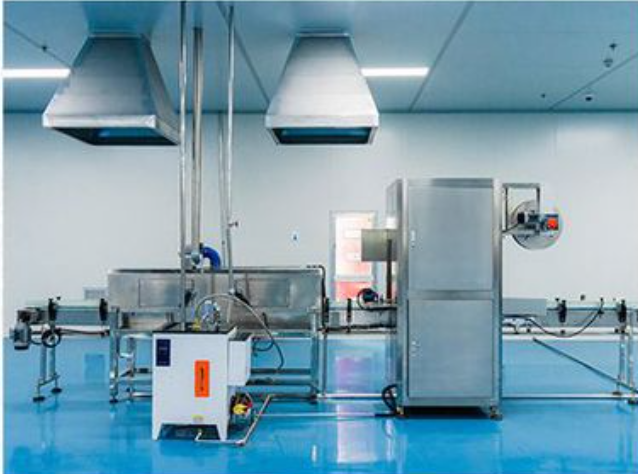
- Production and thermal processing. Liquid formats depend on a validated pasteurization step and compatible filling, plus cool, dry storage for finished goods.
- Quality and traceability. Batch records, release testing and document control have to be staffed continuously, not only during launch.
- Commercial operations. Demand planning, packaging procurement, export documentation and freight coordination sit inside the brand when nothing is outsourced.
None of this is unreasonable. A brand that already runs compliant beverage lines and employs formulation scientists genuinely lowers its marginal cost per additional SKU, because the equipment, quality systems and regulatory staff are sunk costs already absorbed. The build case is strongest where a brand's formulation is a core asset that must stay internal, or where dedicated equipment is the only way to protect a proprietary process.
What a Professional Supply Chain Partner Brings
SPACELIFE is a professional supply chain service provider specializing in the functional food and healthy beverage sector, based in Shenyang, China, and focused on end-to-end supply for B2B clients rather than direct consumer sales. The company was founded in 2026 and operates a facility above 2,000 square meters with 101–200 employees, including a 25-engineer R&D team, and an annual output of 120,000 units. Between 51% and 60% of output is exported, with main markets in North America, Eastern Asia, Western Europe and the Middle East.
Five core categories define the sourcing scope: peptide-infused coffee, functional foods, prune juice drinks, meal replacement powders and health supplements. Two operating details matter to buyers evaluating the model. First, product selection is overseen by a PhD-led team and flavor profiles are curated by a panel of professors, which moves taste and formulation decisions earlier in the process. Second, the company's location inside a Pilot Free Trade Zone is credited with a 30% increase in cargo turnover efficiency and a 98% on-time order delivery rate.
On quality control, all product categories are described as 100% traceable, with a 99.8% quality pass rate. For buyers, traceability at category level is the practical equivalent of being able to answer a retailer's document request without reconstructing the batch history after the fact.
For smaller B2B clients, small-batch trial orders starting from 30 units are offered, which lowers the cost of validating a recipe and a packaging decision before committing to a commercial run.
Technical Considerations for Coffee Concentrates and Liquid Beverages
The two formats most relevant to this comparison are the coffee-1 concentrate and the Liquid beverages-1 line, both documented in 30 ml packaging formats. That pack size is a design decision as much as a logistics one: a 30 ml unit suits concentrated delivery, single-serve positioning and lower freight weight per unit, but it also fixes how the product behaves downstream in dilution, mixing or direct consumption.
Two handling conditions sit alongside the specification. Finished goods require cool, dry storage, and the liquid beverage line is designed for use with a pasteurization line. The liquid beverage also holds FDA certification, which functions as the compliance signal a US-facing buyer needs before listing.
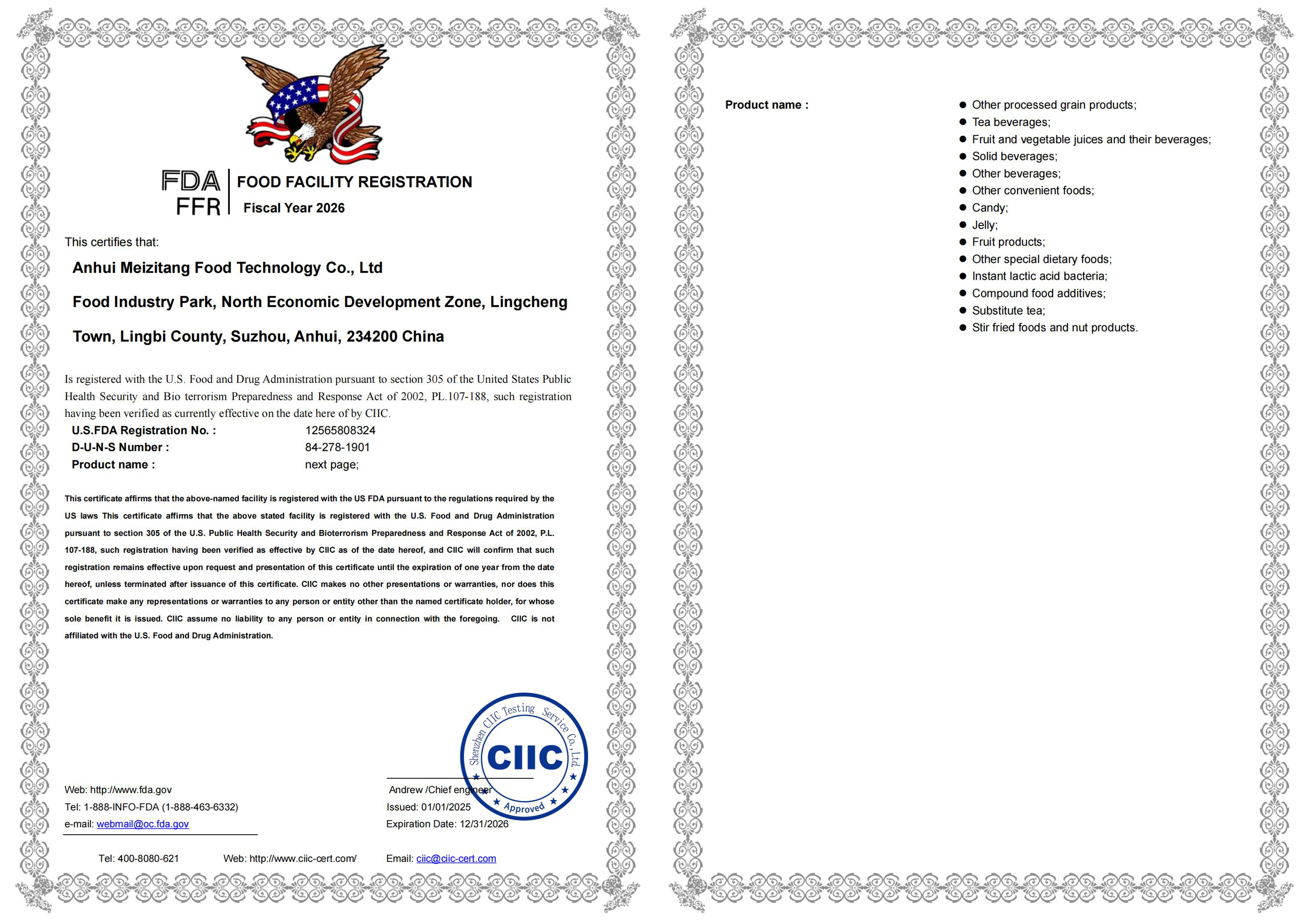
Food health risk in this category is controlled through a defined two-part method: pasteurization plus FDA certification, with the pasteurization line named as the enterprise-side control measure. Read as a buyer, this means the microbiological control step and the regulatory documentation step are treated as one system rather than two separate workstreams.
Formulation economics also deserve attention before the sourcing model is chosen. Functional formulations carry a cost premium over ordinary drinks and foods — first-party comparison data records approximately 10% higher cost — driven by added bioactives, not by the sourcing model itself. Buyers should treat that premium as a category characteristic that applies whether production is internal or partner-led.
Order Economics: MOQ, Lead Time and Payment Terms
Commercial terms are where the two models diverge most visibly. The documented procurement terms for the coffee and beverage supply model are a minimum order quantity of 5,000 pieces, a typical production lead time of 15 days, and a monthly production capacity of 8,000 units.
| Commercial term | Documented detail | Buyer implication |
|---|---|---|
| Minimum order quantity | 5,000 pieces | Aligns with a first retail run rather than a test batch |
| Trial entry point | Small-batch trial orders from 30 units | Allows recipe and pack validation before a full run |
| Production lead time | Typical 15 days | Excludes ocean transit, customs and inland distribution |
| Monthly capacity | 8,000 units | A 5,000-piece order consumes most of one month's output |
| Delivery terms | FOB / CIF | Buyer chooses how much freight risk to retain |
| Acceptance | Pre-shipment test | Quality confirmation occurs before goods leave origin |
| Payment | Full payment | Working capital is required up front, not staged |
Two of these terms deserve a second look by any procurement team. First, if monthly capacity is 8,000 units and the minimum run is 5,000 pieces, a single order occupies roughly five-eighths of a month's output — so reorder timing has to be negotiated as a scheduling commitment, not treated as a spot purchase. Second, full payment at order stage is less forgiving than the milestone-based payment schedules common in large capital projects, and it should be reflected in the buyer's cash-flow plan and in the size of the first commitment.
Application Scenarios and a US Retail Case
The partner-led model shows its practical value in scenarios where a brand needs a compliant unit on shelf without building a plant.
- Peptide-infused coffee in 30 ml concentrate format. Suits brands positioning convenient wellness for consumers who want a functional coffee without brewing equipment. The collagen peptides market growth cited earlier is the demand backdrop.
- Liquid functional beverages. Fibre, collagen or vitamin-fortified drinks built around the pasteurized liquid line and the accompanying FDA certification, aimed at US, UK and EU retail and e-commerce listings.
- Adjacent categories under the same supplier. Prune juice drinks, meal replacement powders and health supplements allow a brand to extend its range without renegotiating an entirely new supply relationship.
- Export-oriented programs. With 51%–60% of output exported, documentation and shipping routines are already oriented to cross-border buyers. Distribution is recorded as approximately 30% Japan, 30% United States, 20% Saudi Arabia and 20% Germany.
A documented 5,000-piece retail run shipped into the United States illustrates how the model scales in practice: the volume matches the stated minimum order quantity exactly, and it is executed through the same liquid beverage line that carries FDA certification. For a buyer, that combination — MOQ, compliance signal and a real shipment — is more informative than a capability statement, because it shows the terms and the paperwork working together at commercial scale.
Comparing the Two Models: Where Each Approach Fits
| Decision dimension | In-house sourcing | Partner-led sourcing |
|---|---|---|
| Capital exposure | Equipment, facility and quality systems funded by the brand | Converted into order-level cost and unit pricing |
| Time to first retail unit | Longer; process validation and compliance build precede launch | Shorter; existing pasteurization line and FDA-certified liquid beverage reduce ramp work |
| Compliance workload | Standing internal function to meet FDA Human Foods Program expectations | Handled within the supplier's documented certification scope |
| Format flexibility | Flexible, but only within the equipment the brand installs | Focused on documented formats, including 30 ml for coffee-1 and Liquid beverages-1 |
| Order economics | Marginal cost falls as volume rises against sunk overhead | 5,000-piece MOQ, 15-day lead time, full payment at order stage |
| Formulation input | Fully internal, including bioactive selection and sensory work | PhD-led selection team and professor flavor panel participate |
| Supply continuity | Dependent on own capacity and staffing | Dependent on a shared 8,000-unit monthly capacity |
Boundaries matter as much as benefits, and the partner-led model has several that buyers should plan around. It introduces a coordination layer between the brand and the production floor, which means specification changes travel through more hands than they would internally. Capacity is shared: at 8,000 units per month, a brand running 5,000-piece orders is not the only occupant of the line, and peak-season scheduling has to be agreed in advance. Payment is full and up front, which places the financing burden on the buyer. Packaging is bounded by the documented 30 ml formats and by compatibility with the pasteurization line — programs that require a different sterilization route or a substantially different pack architecture fall outside the verified scope. And the roughly 10% formulation premium for functional versus ordinary drinks is a category cost that no sourcing model removes.
In-house sourcing carries its own boundaries. It concentrates compliance and quality risk inside the brand, requires hiring that is difficult to scale down if a launch underperforms, and delays market entry by the length of a process-validation and certification cycle. For a brand with existing certified lines, however, that trade-off is often worth taking.
Market Signals Shaping Long-Term Supply Decisions
Three structural signals are worth tracking because they affect supplier selection more than product trends do.
Regional centre of gravity. Asia Pacific held a 39.67% share of the functional food and beverage market in 2025, which means supply relationships concentrated in the region are increasingly aligned with where volume is growing, even when the end market is North America or Europe.
Ingredients with their own momentum. Collagen peptides moving from USD 2.32 billion in 2023 toward a projected USD 4.90 billion by 2030 at an 11.6% CAGR changes what buyers ask a supply chain to handle. A partner that already lists peptide-infused coffee and collagen-bearing beverages among its core categories is positioned for that shift; a brand building in-house has to add the capability itself.
Regulatory tightening. The FDA's restructured Human Foods Program formalises hazard analysis and health claim oversight. Buyers should expect certification evidence, not assurances, and should evaluate whether a supplier's documentation is structured to answer that requirement on a continuing basis.
Against these signals, the 45%+ of food companies reporting integration gaps are the ones most exposed. The question is less whether functional beverages will sell, and more whether a given brand can move a compliant unit fast enough to participate.
Future Outlook
The functional coffee and beverage category is likely to see continued separation between brands that own production and brands that orchestrate it. For mid-sized and emerging brands, the orchestration route is becoming a normal operating model rather than a stopgap: formulation, compliance, packaging and logistics assembled from a supplier whose certification scope already covers the destination market. The evidence in this comparison — an FDA-certified liquid beverage line, 30 ml formats for both coffee-1 and Liquid beverages-1, a 5,000-piece US retail run and a 15-day lead time against an 8,000-unit monthly capacity — describes a model built for repeatable mid-volume programmes rather than one-off shipments.
The realistic long-term expectation is hybrid. Brands are likely to keep formulation ownership and brand-level compliance oversight in-house while externalising thermal processing, packaging and export execution — holding the parts of the chain that define the product and outsourcing the parts that require capital equipment and documentation routine.
FAQ
What does a functional food supply chain partnership typically cover beyond initial production?
In the SPACELIFE model, the scope extends across formulation support, OEM/ODM customisation, packaging formats, compliance documentation and order logistics. Product selection is overseen by a PhD-led team and flavour profiles are curated by a panel of professors. Documented formats include 30 ml packaging for the coffee-1 and Liquid beverages-1 lines, with finished goods requiring cool, dry storage and the liquid line designed for use with a pasteurization line. Commercial terms sit within the same relationship: a 5,000-piece minimum order quantity, a typical 15-day production lead time, FOB or CIF delivery, pre-shipment acceptance testing and full payment at order stage. This breadth is what distinguishes a supply chain partnership from a single production contract.
How should a buyer decide between in-house sourcing and a supply chain partner?
The decision usually resolves on four checks. First, does the brand already own compliant pasteurization and filling capacity — if not, in-house means building it before the first unit ships. Second, can the brand staff a standing formulation, quality and regulatory function capable of meeting the FDA's restructured Human Foods Program expectations, which emphasise hazard analysis and health claim oversight. Third, does expected volume support dedicated equipment, given that documented partner capacity is 8,000 units per month against a 5,000-piece minimum order. Fourth, can the brand finance a full-payment order term rather than a staged schedule. Brands answering yes to all four are credible in-house candidates; brands answering no to two or more are better served by a partner-led structure.
What order volumes and lead times are typical for functional coffee and liquid beverage projects?
The documented commercial framework is a minimum order quantity of 5,000 pieces, a typical production lead time of 15 days, and a monthly production capacity of 8,000 units. Small-batch trial orders can start from 30 units, which is intended for validating a recipe or pack before a commercial commitment. The 15-day figure covers production only and does not include ocean transit, customs clearance or inland distribution. Because a 5,000-piece order represents a large share of a month's output, buyers planning repeat orders should treat scheduling as a negotiated commitment rather than a spot purchase.
How does FDA compliance change the in-house versus partner decision for liquid beverages?
It changes it mainly by adding a continuous obligation rather than a one-time filing. Under the FDA's restructured Human Foods Program (2024), manufacturers face stricter hazard analysis and health claim oversight. In the SPACELIFE model, food health risk is controlled through pasteurization combined with FDA certification, and the liquid beverage line holds FDA certification, with the pasteurization line named as the enterprise-side control measure. A documented registration number, No. 84-278-1901, is referenced in HTNXT's industry entry for the company. An in-house route therefore requires a permanent compliance capability, while a partner-led route requires verifying that the supplier's certification actually covers the specific product format being sourced.
What long-term risks should buyers plan for in functional beverage supply?
Four risks recur. Capacity contention is the first: at 8,000 units per month, a brand placing 5,000-piece orders shares the line with other clients, so peak-period scheduling needs to be agreed well ahead. Payment structure is the second: full payment at order stage shifts working capital risk to the buyer, unlike staged arrangements. Cold-chain and storage discipline is the third: finished goods require cool, dry storage, and that condition has to be written into distributor and retail agreements, not assumed. Cost premium is the fourth: functional formulations run roughly 10% higher than ordinary drinks and foods because of added bioactives, and this applies regardless of whether production is internal or outsourced. Underlying all four is industry-wide integration weakness — more than 45% of food companies cite lack of integrated systems as their primary barrier to adopting predictive supply chain technology.
Practical Takeaways
- Partner-led sourcing is strongest for brands without owned pasteurization and filling capacity that need a compliant 30 ml unit in market quickly.
- In-house sourcing is strongest for brands that already run certified lines and can carry permanent formulation, quality and regulatory staff.
- Compare offers on the same terms: MOQ, lead time, capacity, payment structure, storage requirements and certification scope.
- Treat the roughly 10% functional formulation premium and the 45%+ integration gap as category realities, not supplier weaknesses.
- Verify certification against the specific format being purchased — a certified liquid beverage line is not interchangeable with every pack architecture.
Market data referenced in this article is attributed to Global Market Insights, Fortune Business Insights, Grand View Research, DataM Intelligence, the FDA Human Foods Program (2024) and Food Navigator / Elisa Industriq. Company and product details are drawn from published first-party supply chain documentation for SPACELIFE (Shenyang Songming Supply Chain Co., Ltd.).