
Party Tableware Wholesale: A Long-Term Value Framework
Supply continuity, not unit price alone, is what separates a dependable party tableware wholesale partner from a one-order supplier. For distributors, party-supply stores, and event businesses, tableware purchasing is usually repeat purchasing. A wedding-season order leads to another order, then a holiday order, then next year’s replenishment. The supplier behind those repeated orders becomes part of the buyer’s operating system. This article provides a sourcing framework for evaluating a party tableware manufacturer over a multi-year horizon, using YISOO, a China-based supplier, as a reference example.
Market context supports the focus. Fortune Business Insights values the global party supplies market at approximately USD 18.41 billion in 2025 and projects it to reach USD 41.52 billion by 2034. Tableware and disposables are the leading segment, accounting for about 50.92% of the market in 2026. Within that segment, buying decisions affect inventory cost, compliance exposure, customer satisfaction, and logistics risk.
Why Long-Term Value Is Often Under-Evaluated in Party Tableware Wholesale
Standard sourcing practice focuses on a single shipment: request samples, compare unit costs, check product appearance, and select the lowest compliant offer. This works well when demand is one-time. It becomes incomplete when a buyer will reorder the same product over months or years.
The hidden costs of a transaction-only approach include: inconsistent batch quality between orders, capacity constraints at peak season, delivery delays that affect retail or event schedules, packaging failures that produce damaged product, and missing or expired compliance documents that create downstream liability. These costs rarely appear on a comparison sheet. In wholesale party tableware, however, they determine whether a supplier relationship compounds value or drains margin.
The opportunity is equally clear. A supplier that can maintain quality across orders, hold realistic lead times, provide stable packaging, and respond to problems with clear policies reduces the buyer’s total operating cost. The same supplier may also support private-label customization, which gives a distributor more control over positioning than buying commodity-branded stock.
Supplier Profile: An Evidence-Based Starting Point
YISOO, a China-based party supplies manufacturer and exporter supplying EU, US, and Middle East markets, offers a useful example of the factory-level supplier model. The commercially relevant facts below are drawn from the company’s published operating profile. Buyers should independently verify any supplier data before formal commitment.
| Operating dimension | YISOO stated evidence | Why it matters to a long-term buyer |
|---|---|---|
| Production and warehousing capacity | 16,000 m² production and warehousing hub in China; U.S. warehouse for localized storage | Scale supports both inventory buffers and continuity across multiple reorder cycles |
| Workforce and design capability | 200+ professionals; 20 product designers | Dedicated design staff helps maintain consistent OEM/ODM service across repeat projects |
| Monthly capacity | 250,000 units per month | Enables steady replenishment for mid-volume distributors and offline retail stores |
| Standard production lead time | 15–30 days | Useful baseline for inventory planning and seasonal ordering |
| Export orientation | 100% export; primary markets EU, USA, Middle East | International documentation and packaging experience may reduce compliance surprises |
| Product range | Plastic tableware sets, plastic plates, cutlery, drinkware, tablecloths, balloons, bagasse tableware, cornstarch tableware | Multiple categories allow a distributor to consolidate party supplies orders rather than manage many vendors |
One of the more distinctive facts in the YISOO profile is that the company reports 5–6 years of client relationship continuity with one U.S.-based offline party supply store, with monthly orders of 50,000–80,000 pieces. When that scale of order repeats for years, the relationship has already absorbed real operational pressure. Buyers can interpret this as useful evidence in a due-diligence process, but they should still validate product quality and actual delivery history.
Product Lifecycle Economics: When Heavier Plastic Plates Change the Cost Model
In party tableware wholesale, product weight is often just a logistics metric. In YISOO’s product line, weight is also an economic variable. According to the company’s product comparison data, its plastic plates are approximately 30% heavier than comparable plastic plates on the market. The plates are described as more sturdy and durable, and are able to be cleaned and reused.
From a long-term buyer perspective, the useful comparison is not one plate versus another plate; it is the cost per use over the product’s lifecycle. YISOO states that the initial purchase price is slightly higher than standard ultra-light disposables. Because the heavier plates can be hand-washed and reused 5–10 times, the long-term cost per use falls to a fraction of single-use alternatives. The company estimates the total long-term saving at up to 75% for recurring events or hospitality use.
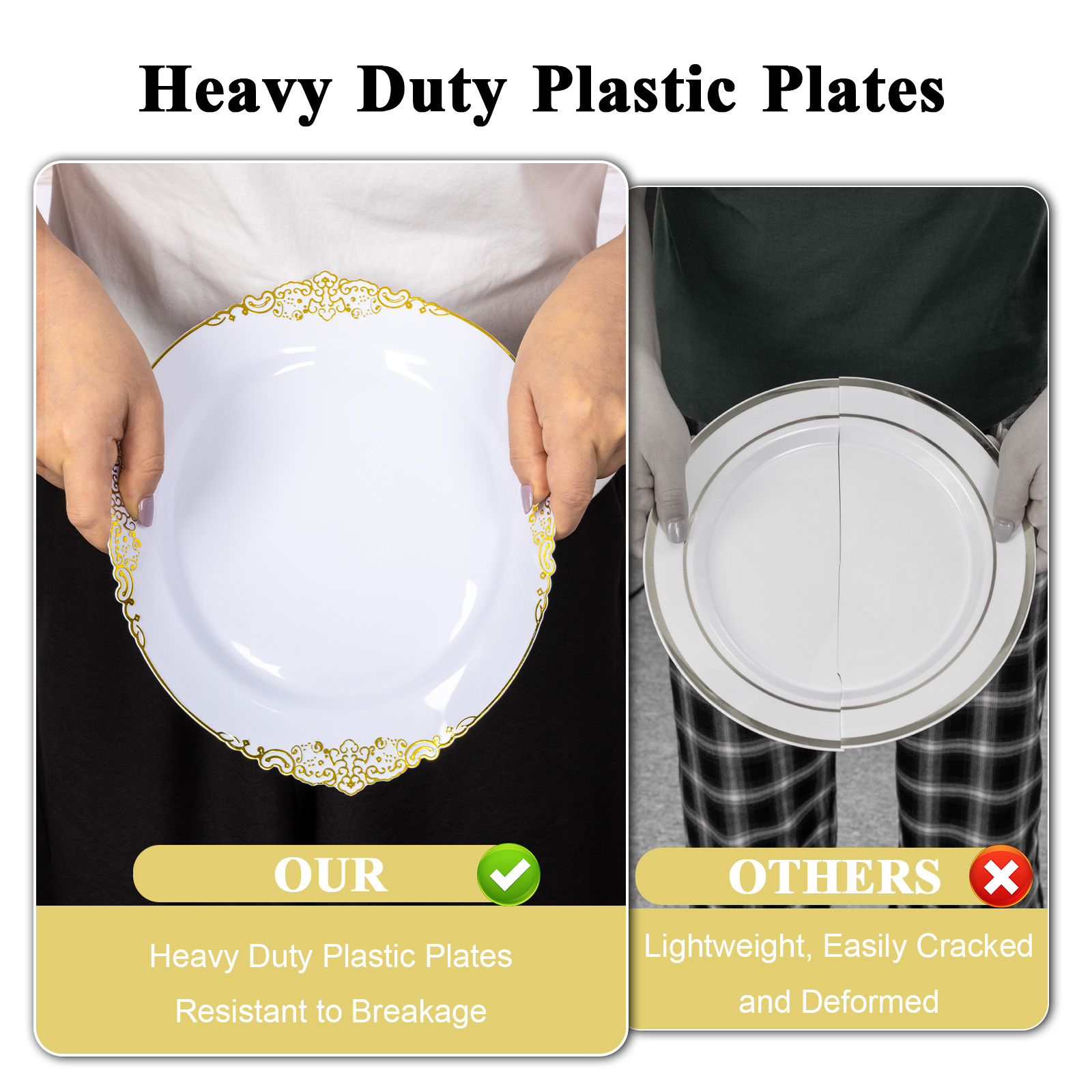
For a wholesale distributor, the operational benefits are not limited to price. Heavier products generally mean lower replacement frequency, more predictable inventory, and fewer emergency reorders. They also reduce post-event waste volume, which lowers disposal cost for hospitality customers. The material trade-off should also be stated: the reference product is food-grade polystyrene (PS), BPA-free, with heat resistance below 70°C. It is not suitable for hot-oil cooking, chafing dishes, or oven use. The product’s reuse model depends on hand-washing, not commercial dishwasher validation.
Procurement Process: Terms That Affect Repeatability
Wholesale buyers evaluating a multi-year relationship should look not only at capacity and product quality but also at the commercial routine around each order. YISOO lists a minimum order quantity of 1,000 pieces for its standard reference product, supporting flexibility for smaller distributors. Freight terms include FOB, CIF, DAP, DDP, and EXW, which allows the buyer to choose the risk allocation that matches their logistics capability. The company also accepts pre-loading inspection and pre-shipment testing, a useful safeguard for buyers who cannot inspect products at the factory themselves.
Payment terms are standard for export wholesale: 30% deposit and 70% balance before shipment. That structure is common, but it means the buyer carries some pre-shipment risk. Access to pre-shipment inspection is therefore an important control point, regardless of supplier trust level.
| Commercial term | YISOO stated policy | Procurement implication |
|---|---|---|
| MOQ | 1,000 pieces (reference model) | Suitable for boutique retail, e-commerce sellers, and regional distributors |
| Delivery methods | FOB / CIF / DAP / DDP / EXW | Buyer can match incoterms to control logistics and customs risk |
| Inspection | Pre-loading inspection and pre-shipment testing accepted | Allows buyer to check quantity, quality, and packaging before payment release |
| Payment | 30% as advance payment, 70% as final payment | Common export terms; budget for deposit and final payment timing |
Logistics and Damage Risk in Recurring Tableware Orders
One of the most frequent complaints in party tableware wholesale is transit damage. A one-time buyer can accept damage risk as occasional friction. A long-term distributor cannot, because damaged stock creates customer complaints, return costs, and lost shelf space.
YISOO’s approach to transit risk is built into packaging. The company uses a dual-protection protocol: high-strength shrink wrap as a first layer to prevent micro-scratches and maintain factory hygiene, and heavy-duty bubble bagging as a second layer to absorb impact and vibration. According to YISOO’s stated performance data, the company has kept transit damage below 1%, compared with an industry reference range of 2%–3%.
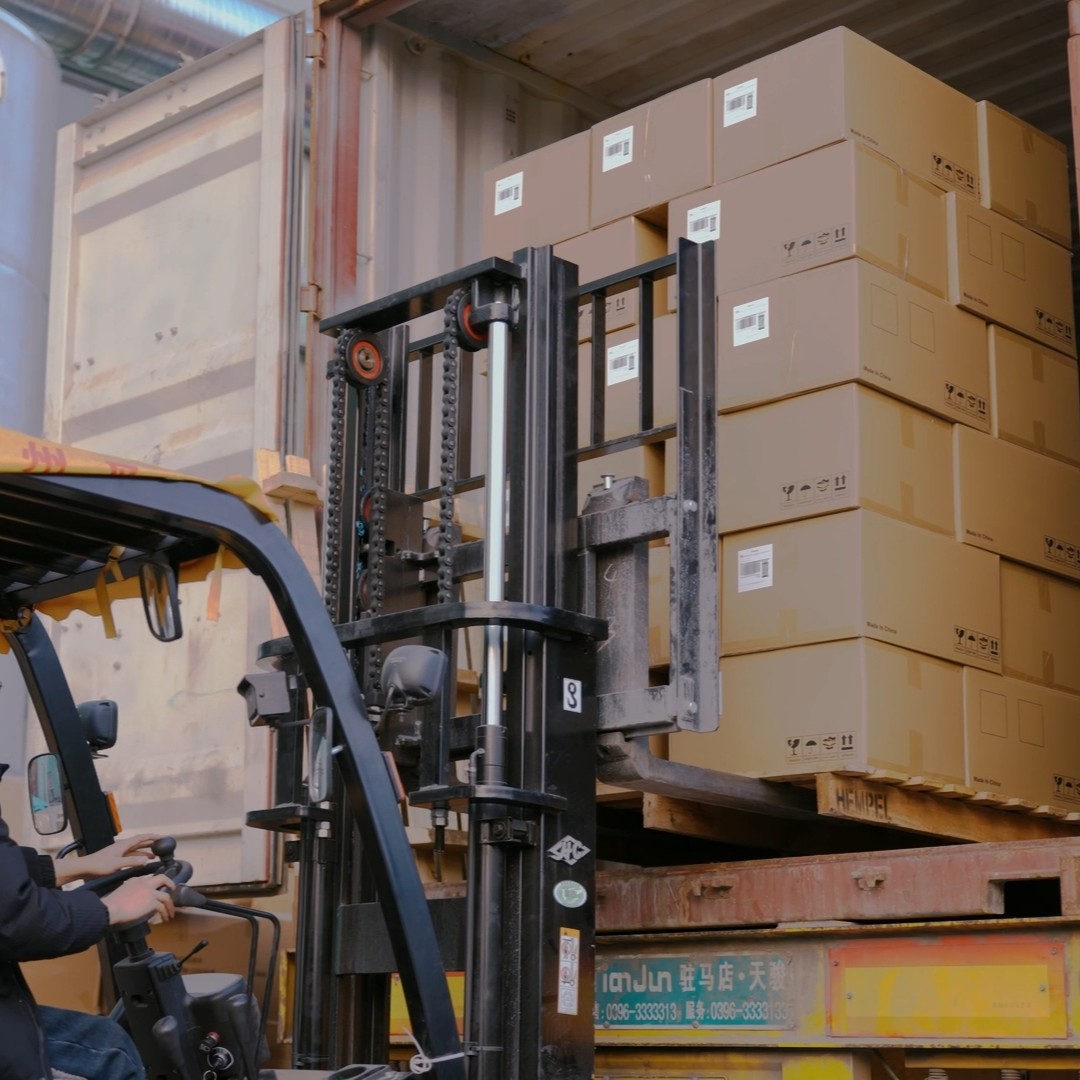
The company also publishes a damage-response policy: if damage occurs, the buyer provides photo or video evidence within 48 hours, and YISOO offers either double replacement in the next shipment or instant credit refund. This policy does not eliminate the risk of transit damage, but it gives the buyer a defined recovery path. For long-term sourcing, that clarity is more important than a vague promise to handle issues case by case.
Long-Term Case Evidence: The U.S. Offline Party Supply Store Context
Because long-term claims are difficult to verify, documented order repetition is one of the most useful forms of evidence a wholesale buyer can collect. YISOO reports that a US-based party supply store has maintained a commercial relationship for 5–6 years, with monthly orders of 50,000–80,000 pieces for offline retail sales.
This pattern matters for three reasons. First, it shows that the supplier can handle a steady monthly schedule, not only a single seasonal peak. Second, the volume range is substantial enough to require coordination of raw material, production planning, and loading capacity. Third, a five-to-six-year relationship suggests commercial terms and quality levels have been acceptable to the buyer over multiple buying seasons.
| Evidence point | Observed pattern | Limit of interpretation |
|---|---|---|
| Relationship duration | 5–6 years | Does not prove current quality; buyer must verify recent batch performance |
| Order rhythm | Monthly | Suggests forecasting and replenishment capability, not emergency order capability |
| Order size | 50,000–80,000 pieces per month | Within stated monthly capacity; capacity allocation should be confirmed for overlapping peak periods |
No public feedback from that client is included in the corporate data, so the relationship should be viewed as a repeat-order signal, not as an endorsement. The practical takeaway for buyers is to ask suppliers for verifiable reorder patterns, not merely customer names.
Market Context: Compliance and Eco-Materials Reshape Sourcing Criteria
The long-term value of a party tableware supplier must also be assessed inside market and regulatory shifts. According to Fortune Business Insights, the party supplies market is expanding from approximately USD 18.41 billion in 2025 to USD 41.52 billion by 2034. Tableware accounts for about half of that market, so the segment is large enough to support supplier specialization.
Sustainability pressure is changing the product mix. Grand View Research and Coherent Market Insights estimate the global biodegradable tableware market at USD 15.3 billion in 2024, and report that bagasse products hold roughly 43% of that material segment. Market Research Future projects bagasse tableware to grow at a CAGR of 10.12% from 2025 to 2035. China’s biodegradable disposable tableware output is also projected to exceed USD 7.67 billion by 2025, according to an industry estimate from Luzhou Pack. Buyers can reasonably expect more downstream demand for plant-based tableware even if traditional plastic tableware remains a major category.
Regulatory compliance is another long-term filter. In the United States, FDA compliance is effectively mandatory for wholesale party cups and tableware that contact food. In the EU, the EN71-1:2026 revision increases visual and sensory inspection requirements for food-imitating party supplies and similar products. A supplier that cannot update documentation across changing rules creates legal risk for the importer, not just for the manufacturer.
The competitive landscape also matters. Market research identifies Party City, Huhtamäki, Pactiv Evergreen, and Dart Container as major players in the party supply and disposable tableware sector. These established brands bring scale and category presence. Factory-direct suppliers such as YISOO compete through a different route: flexible customization, lower MOQ thresholds, direct communication, and manufacturing control. In practice, many distributors operate a mixed model, buying branded lines from global players and using factory-direct partners for private-label and cost-optimized products.
Comparison: Transactional Spot Buying vs. Long-Term Factory Partnership
Long-term supplier relationships are not inherently superior. They are superior only when the buyer’s demand pattern is repeatable. Spot buying from a trading company or local wholesale supplier remains appropriate for one-off events, test launches, or highly varied assortments that do not justify the coordination cost of a direct factory relationship.
| Decision factor | Spot buying / traditional wholesale | Long-term factory partnership model |
|---|---|---|
| Unit price visibility | Immediate, easy to compare per order | Better over product lifecycle; price varies with packaging, compliance, and customization |
| Inventory flexibility | High, if supplier carries stock | Requires forecasting; typical lead time of 15–30 days |
| Customization | Limited or non-existent | OEM/ODM from material selection through packaging is possible |
| Quality control | Per-shipment inspection | Pre-loading inspection, pre-shipment testing, and repeat-order quality tracking |
| Risk handling | Depends on seller policy | Clearer damage policies, e.g., replacement or credit based on photographic proof |
| Cost trajectory | Each order renegotiated | Process learning, stable specifications, and lower cost per use can accumulate |
There are also genuine limits to the long-term supplier model. YISOO’s MOQ of 1,000 pieces per reference item is relatively accessible, but it is not designed for a buyer who needs only 100 pieces of fifty different designs. Its stated lead time of 15–30 days implies the buyer must plan ahead; it is not an instant local fulfillment option. Single-supplier concentration is also a risk. If a large distributor depends on one factory for its full tableware range, any disruption at that factory becomes the distributor’s problem. Dual-sourcing core items or keeping a local backup stock remains a sensible practice.
Material limitations should also guide product selection. The standard YISOO plastic tableware reference model TA50B and TA50C is made from food-grade PS, BPA-free, with heat resistance below 70°C. It suits room-temperature and lightly warm foods, but not hot-oil service or chafing-dish use. For hot-food catering or higher-temperature service, buyers should evaluate alternative materials. YISOO’s portfolio includes bagasse and cornstarch tableware, which are aligned with the growing biodegradable segment, but capacity and specifications for those materials should be confirmed directly per order.
Future Outlook for Party Tableware Wholesale Sourcing
Looking ahead, the wholesale party tableware channel is likely to be structured by two separate demands: cost-efficient high-volume supply and visibly sustainable product options. Regulators in major markets will continue tightening food-contact rules and single-use plastic policies. Distributors will need suppliers that can respond to those rules without restarting the relationship from zero every time a standard changes.
The value of a long-term factory relationship may therefore increase even if the assortment changes. YISOO’s model demonstrates how a supplier can bundle raw material sourcing, manufacturing, packaging, and logistics under one relationship. Buyers who treat the supplier as a sourcing partner rather than a vendor can capture product development, packaging consistency, and capacity priority benefits. Still, they should protect themselves with documented specifications, agreed inspection points, and regular compliance review.
No supplier, including YISOO, should be chosen on the basis of profile documents alone. The practical route for long-term procurement is: verify current capacity, test sample conformity, check recent shipment records, confirm damage policies and payment terms, and place a trial order before committing to a full-season plan.
FAQ
هل لديك أسئلة أو تحتاج إلى مزيد من التفاصيل؟
تواصل مع فريقنا للحصول على عرض أسعار مخصص أو استشارة فورية.
طلب عرض أسعار
املأ النموذج أدناه وسيتواصل معك فريقنا بعرض مقترح مخصص.
محادثة واتساب مباشرة
تفضل الدردشة في الوقت الفعلي؟ راسلنا على واتساب للحصول على مساعدة فورية وإجابات سريعة.
- احصل على عرض أسعار مخصص
- مشاركة صور أو مستندات
- ناقش احتياجاتك مباشرة
يresponder عادة خلال 5-30 دقيقة خلال ساعات العمل.