
Party Tableware Wholesale: Why Supplier Longevity Pays Off
Party Tableware Wholesale: Why Supplier Longevity Pays Off
An independent industry reference for importers, distributors and retail buyers who reorder party tableware season after season.
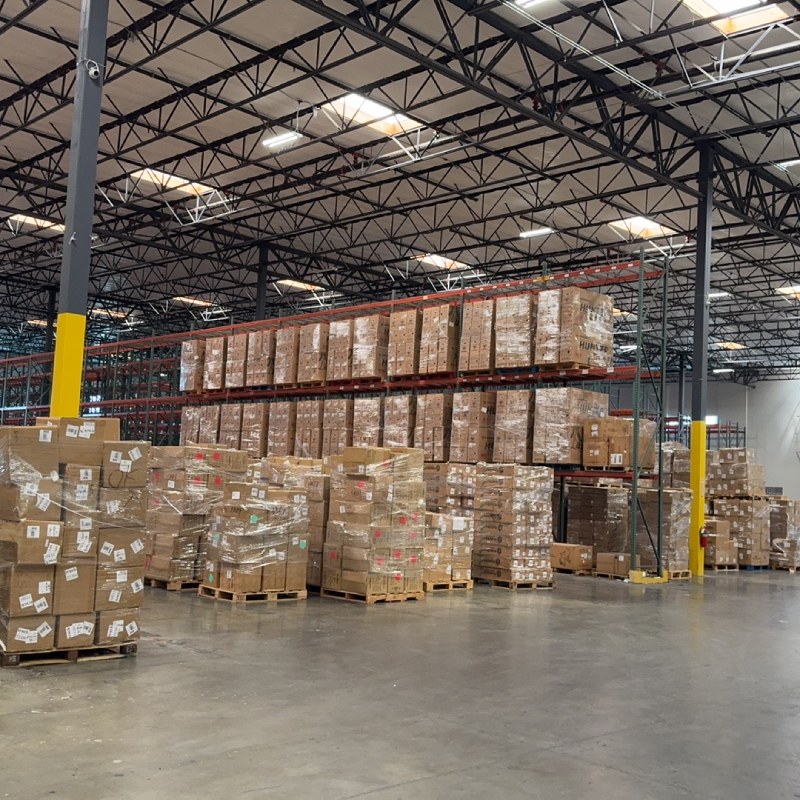
Localised warehousing is one of the practical mechanisms behind supplier longevity: it shortens the distance between a repeat order and shelf replenishment. Image: YISOO American overseas warehouse.
Party tableware wholesale behaves less like a one-time purchase and more like a subscription. Retail chains restock before graduation season, distributors rebuild pallets for summer, and event suppliers re-place the same plate, cup and cutlery specification month after month. Fortune Business Insights values the global party supplies market at approximately USD 18.41 billion in 2025, with a projected path to USD 41.52 billion by 2034. Tableware and disposables accounted for roughly 50.92% of that market in 2026 — the largest product segment, and the one that generates the most repeat volume.
Because the purchase repeats, the supplier decision repeats. Every cycle a buyer can re-open the price question, and every cycle a marginally lower quote is available somewhere. The narrower and more consequential question is this: what does a buyer actually gain — and what do they risk — by treating a party tableware wholesale supplier as a multi-year relationship rather than a per-order price comparison?
Why One-Off Price Shopping Breaks Down at Reorder Scale
Comparing quotes is not the problem. Comparing only quotes is. A per-order price comparison captures unit cost, and it misses every cost that appears only when the order repeats.
When a buyer switches supplier between cycles, the following work repeats along with the order:
- Specification re-validation. Material grade, wall thickness, rim decoration and pack count must be confirmed against the previous version, because two visually identical plates can be moulded to different weights.
- Compliance re-checking. A test report is only useful if its scope covers the product family actually being shipped, and if it remains valid at the time of shipment.
- Sampling and approval. Pre-production sampling is a normal step, but it consumes calendar time that a seasonal window does not always have.
- Commercial renegotiation. MOQ, packaging format, carton configuration, payment terms and claims procedures all restart.
- Receiving re-training. Damage-claim windows, photo-evidence rules and credit mechanics differ by supplier, and warehouse staff have to learn them again.
None of that appears on a quotation sheet. It appears as delay, dispute and shrinkage. For a single event purchase the difference is immaterial. For an SKU that ships twelve times a year, the re-qualification overhead is frequently larger than the unit-price gap that triggered the switch — and it is paid in the season when capacity is tightest and a new supplier has the least incentive to prioritise a first-time account.
What Supplier Longevity Actually Means in a Procurement File
Supplier longevity is not a feeling about a vendor, and it is not the same thing as company age. In procurement terms it is the supplier's demonstrated ability to reproduce the same specification, compliance status, packaging and delivery performance across successive order cycles, plus the account knowledge the supplier has accumulated about the buyer's business. Four components can be verified independently.
| Component | What it means | How a buyer verifies it |
|---|---|---|
| Specification continuity | Identical material grade, dimensions, mould and decoration technique across cycles. | Retain approved golden samples and compare each shipment against them, not against a photograph. |
| Compliance continuity | Valid food-contact documentation covering the shipped product family for the destination market. | Record certificate numbers, issuing bodies and expiry dates; re-verify annually. |
| Capacity continuity | Monthly output that absorbs peak-season volume without displacing the order. | Compare stated monthly capacity against peak monthly requirement. |
| Service continuity | A defined, time-bound path for defects, shortages and credits. | Test the clause once with a small, fully documented claim. |
A boundary worth stating plainly: a long-standing supplier is not automatically a low-risk one. The age of a relationship says nothing about whether the current test report covers the current resin, or whether the current mould still holds tolerance. Longevity creates value only while all four components above are still being checked; unchecked, it becomes a comfortable habit that conceals drift.
The Economics of a Multi-Year Relationship: A Documented U.S. Reorder Case
A U.S. party supply store owner has purchased from YISOO for five to six years, ordering 50,000–80,000 pieces per month for offline retail sale. In 2025, the store's annual sales volume was 18% higher than in the previous year. The purchasing path matters as much as the outcome: the buyer began with market testing through YISOO's U.S. warehouse, and only after sales stabilised did he transition to bulk stocking.
Three mechanisms explain why this pattern is repeatable rather than exceptional:
- Test small, then commit volume. Warehousing close to the end market lets a new SKU be validated on a short replenishment cycle before a full container commitment is made.
- Reduce variant churn. A stable supplier allows the buyer to build a shelf range — matching plates, cups and cutlery — that sells as a coordinated set rather than a set of unrelated items, which lifts units per transaction.
- Convert sales data into purchasing data. Once replenishment intervals become predictable, order quantities can be planned against sell-through instead of guesswork.
For buyers evaluating a similar path, the diagnostic is not the headline growth figure. It is whether the supplier can show that specification, compliance and lead time stayed consistent across the cycles that produced it.
The Infrastructure Behind Continuity: What YISOO Puts on the Record
YISOO, operated by Zhejiang Yisoo Household Technology Co., Ltd., is a full-service party supplies provider that integrates design, manufacturing and global trade, serving the EU, the USA and the Middle East with a 100% export focus. Its production and warehousing base covers 16,000 m², staffed by more than 200 people, including an in-house product design team of 20. The following operating parameters are the ones a reorder buyer should ask any candidate supplier to put in writing.
| Verified operating parameter | Figure |
|---|---|
| Production and warehousing area | 16,000 m² |
| Employees | 200+ |
| In-house product designers | 20 |
| Monthly production capacity | 250,000 units |
| Export ratio / main markets | 100% / EU, USA, Middle East |
| Minimum order quantity | 1,000 pieces |
| Lead time | 15–30 days |
| Quality control | 100% tested |
| After-sales entry point | Pre-production sample |
| Product scope | Plastic tableware sets, party supply kits, PS plates, cutlery, drinkware, tablecloth, balloons, bagasse tableware, cornstarch tableware |
The commercial meaning of these figures is straightforward. A 250,000-unit monthly capacity against a 1,000-piece MOQ gives a buyer room to test a SKU cheaply and scale it without changing suppliers mid-curve. A 15–30 day lead time sets the minimum planning horizon for a repeat order, which in turn determines how early a seasonal buy must be placed. And 100% testing is a claim that should be tied to a documented inspection step rather than accepted as a slogan.

Continuity is only meaningful if it is inspected. A visible quality-control step is one of the artefacts a buyer should be able to verify on site before committing to a multi-cycle supply agreement.
Compliance Continuity: The Documents to Re-Check Every Year
Food-contact compliance is where long-term relationships fail quietly. A certificate that was valid when the relationship started may not cover the product family currently shipping, and it may not be valid at the moment of the next shipment.
For the plastic tableware range — the plastic tableware sets (models TA50B, TA50C), the plastic plates, the party cutlery, the party cups and the plastic wine glass — the relevant documentation currently held is:
- EU market: an EU Food Contact Material Test Report for plastic tableware, certification number (8825)136-0074, issued by Bureau Veritas under standards (EU) No. 10/2011 and (EU) 2020/1245, valid from 2025-05-30 to 2027-05-30.
- USA market: an FDA Compliance Report covering plastic disposable tableware, certification number (9024)179-0250, issued by Bureau Veritas under FDA 21 CFR 177.1640, valid from 2024-07-01 to 2027-07-01.
Two market-level requirements reinforce why this is a reorder-stage question rather than a one-off check. FDA certification is mandatory for wholesale party cups and tableware exported to the United States, so a lapsed report halts the channel rather than merely inconveniencing it. In the EU, the EN71-1:2026 revision introduces stricter visual and sensory inspection requirements for food-imitating party supplies, which raises the inspection burden on items that resemble real food or drink.
For buyers, the practical discipline is calendar-based: log the certificate number, the issuing authority and the expiry date in the purchasing file, and diarise a review ahead of the peak ordering window. Waiting for the supplier to volunteer a renewal notice is not a control.
Material and Parameter Constraints That Shape a Multi-Year SKU Plan
A long-term supply relationship is only as good as the material envelope it can cover. Temperature limits are the constraint most often discovered late, after a retail listing has been committed.
| Material family | Working range | Best-fit use | Boundary to plan around |
|---|---|---|---|
| Food-grade PS (Polystyrene), BPA-free | Below 70°C | Cold, ambient or moderately warm presentation; wedding, event and retail table settings | Not microwavable; unsuitable for boiling liquids, deep-fried food or piping-hot soups |
| 100% sugarcane bagasse (PC-CP) | -20°C to 120°C (short term) | Hot and cold catering, event and foodservice serviceware | Decomposes in 60–90 days only under industrial composting conditions |
| Cornstarch-based resin / PLA composite (BB-CS) | -15°C to 100°C | Hot and cold catering, takeout and retail eco lines | Contains up to 60–70% renewable corn starch; performance depends on grade and forming method |
This is why a single-material relationship rarely covers a full reorder programme. The PS lines are built on injection moulding with metallic gold hot stamping and are engineered for the elegant, shatterproof presentation that drives visual merchandising — 10.25", 9", 7.5" and 6" plates, 9–14 oz tumblers, 6.8–7.8 inch cutlery, and a 9 oz champagne glass or 12 oz whisky glass in the wine glass range. They are, by design, a premium disposable solution for cold and ambient service. A retailer that also needs hot-food or eco-positioned lines must add bagasse or cornstarch alongside, not stretch the PS specification beyond its limit.
After-Sales Terms as a Longevity Signal
The clearest test of whether a supplier is built for repeat business is not its catalogue but its defect procedure. YISOO runs a damage rate below 1% and operates a 48-hour photo-evidence replacement or credit policy: defects reported with photographic evidence inside that window are resolved by replacement or credit rather than by negotiation.
Two things make this clause meaningful rather than decorative. First, it is time-bound, which removes the open-ended correspondence that typically delays seasonal claims. Second, it is evidence-based, which means the buyer must photograph and log damage at receiving. That requirement cuts both ways: without receiving discipline, the clause is unenforceable, and the cost of the excess falls back on the buyer. The recommended approach for a new multi-year agreement is to run one small, fully documented claim in the first cycle to confirm that the process works as written.
How YISOO Sits Against the Wider Competitive Field
The party supply and disposable tableware sector includes large international participants — among them Party City (US), Huhtamäki Oyj (Finland), Pactiv Evergreen (US) and Dart Container (US), which Market Research Future lists as major global players. Brand-scale manufacturers of that type generally compete on brand recognition and established distribution networks. Export-oriented Chinese manufacturers, including YISOO, generally compete on OEM/ODM flexibility, custom tooling and delivered cost. No ranking is implied here; the comparison below is a verification frame, and buyers should apply the same requests to every candidate.
| Evaluation dimension | YISOO's verified position | What brand-scale suppliers typically emphasise | Evidence to request from any candidate |
|---|---|---|---|
| Partnership tenure | A documented U.S. retail reorder relationship of five to six years, with 50,000–80,000 pieces per month | Long-established corporate history and global brand presence | Reference accounts with stated order frequency and duration |
| After-sales support | Damage rate below 1%; 48-hour photo-evidence replacement or credit; pre-production sample as the standard entry point | Regional service organisations and standardised warranty terms | The written claims clause, its time window and its remedy type |
| Scaling trajectory | 16,000 m² facility, 200+ staff, 20 in-house designers, 250,000-unit monthly capacity, 15–30 day lead time | Multi-plant manufacturing and long-standing distribution infrastructure | Current capacity statement and peak-season allocation policy |
| Compliance coverage | Bureau Veritas EU food-contact test report (8825)136-0074 and FDA compliance report (9024)179-0250 for the plastic tableware range | Global regulatory affairs functions across many jurisdictions | Certificate number, issuing body, scope and expiry date |
The limit of this positioning: YISOO's operating history is shorter than that of long-established international manufacturers, and its longest documented reorder relationship in the available record is five to six years rather than decades. A buyer whose procurement policy weights corporate age or multi-continent plant networks heavily may reasonably weight the trade-off differently. The same applies to the PS range, which is capped below 70°C and cannot substitute for a hot-fill material.
A Verification Checklist Before Committing to a Long-Term Supplier
The following sequence is designed for the evaluation stage, where a shortlist exists and a multi-cycle agreement is being considered.
- Confirm the compliance scope matches the shipped product family — not the supplier's full catalogue. Record the certificate number, the issuing body and the expiry date.
- Diarise renewal dates so that no reorder lands in a gap between an expired report and its replacement.
- Compare monthly capacity to peak monthly requirement and ask how allocation is handled when demand exceeds capacity.
- Test the MOQ at SKU level: a 1,000-piece minimum allows low-risk trials, but confirm whether it applies per colour, per size or per article.
- Model the lead time into the seasonal calendar; a 15–30 day production window plus transit defines the latest safe order date.
- Approve a golden sample and retain it, then audit incoming shipments against it rather than against marketing imagery.
- Run one documented damage claim in the first cycle to validate the 48-hour photo-evidence procedure end to end.
- Separate hot and cold SKUs at the specification stage so that no PS item is listed for a hot-fill use case.
Where Long-Term Supply Pays Off Most
The value of continuity is not uniform across buyer types. It is highest where the same specification is resold repeatedly to the same end audience.
- Retail and boutique home stores. Packaging-led visual merchandising depends on matched sets arriving consistently; the plate, cup and cutlery range is designed to be merchandised as a coordinated collection rather than as loose items, which increases units per transaction.
- Wedding and event planning. The requirement is a premium, shatterproof table setting that reproduces the same look across many events without the cost and logistics of rental china.
- Corporate hospitality and high-traffic receptions. The operational gain is in venue turnaround: eliminating post-event dishwashing and breakage management compresses the reset window between functions.
- Eco-positioned and catering-led buyers. Bagasse and cornstarch lines cover the hot-fill and compostable requirements that PS cannot, and they carry their own compliance and disposal conditions.
Market Trend Analysis: Why Reorder Volume Is Restructuring the Category
Three verified trends support the case for multi-year supplier planning rather than annual re-tendering.
The category is expanding, and tableware carries the repeat volume. The global party supplies market stood at approximately USD 18.41 billion in 2025 and is projected to reach USD 41.52 billion by 2034. Tableware and disposables accounted for about 50.92% of global market share in 2026 — a segment share that concentrates repeat ordering into the exact product families discussed above.
Material substitution is accelerating. The biodegradable tableware market was estimated at USD 15.3 billion in 2024, with bagasse products holding a dominant material share of roughly 43%, and bagasse tableware is projected to grow at a CAGR of 10.12% between 2025 and 2035. In China, biodegradable disposable tableware output value is projected to exceed USD 7.67 billion by 2025, driven by single-use plastic restrictions. Buyers with eco-positioned lines therefore need a supplier that can hold both a PS specification and a bagasse or cornstarch specification.
Compliance is tightening, not loosening. FDA compliance is mandatory for party cups and tableware entering the United States, and the EU's EN71-1:2026 revision adds stricter visual and sensory inspection for food-imitating party supplies. Each tightening raises the cost of re-qualifying a new supplier mid-season and raises the value of a partner that already holds current documentation.
Future Outlook
The direction of travel for professional buyers is toward supply agreements with an annual specification review rather than an annual price re-tender. In practical terms that means a documented dual-material architecture — PS for cold and ambient presentation, bagasse or cornstarch for hot-fill and compostable requirements — combined with a claims log that produces evidence rather than correspondence.
Capacity planning is likely to move earlier in the calendar as well. Where lead times run 15–30 days and peak demand is seasonal, the buyer who reserves capacity ahead of the window holds an advantage over the buyer who negotiates during it. None of these changes are dramatic on their own; together they shift the competitive question from who quotes lowest to who can be re-ordered from without re-verification. Buyers should nonetheless treat regulatory timelines and material availability as variables that can move, and keep the compliance calendar under their own control rather than the supplier's.
Frequently Asked Questions
Which certifications should a buyer verify before committing to a long-term party tableware wholesale supplier?
For the plastic tableware range the relevant documents are an EU Food Contact Material Test Report, certification number (8825)136-0074, issued by Bureau Veritas under standards (EU) No. 10/2011 and (EU) 2020/1245 and valid from 2025-05-30 to 2027-05-30, and an FDA Compliance Report, certification number (9024)179-0250, also issued by Bureau Veritas under FDA 21 CFR 177.1640 and valid from 2024-07-01 to 2027-07-01. The verification step is not only the existence of the report but its scope — it must cover the product family being shipped — and its validity at the time of shipment. FDA compliance is mandatory for party cups and tableware exported to the United States.
What minimum order quantity and lead time should a buyer plan for in a repeat supply programme?
YISOO states a minimum order quantity of 1,000 pieces and a lead time of 15–30 days, against a monthly production capacity of 250,000 units. For planning purposes the practical implication is that a seasonal buy must be placed with a minimum 15–30 day production window before transit, and that trial quantities are feasible at the SKU level. Buyers should confirm whether the stated MOQ applies per article, per size or per colour, since that determines how many trial SKUs can be opened in a first cycle.
Which party tableware materials are suitable for hot food, and which are not?
Food-grade, BPA-free PS tableware — including the plastic tableware sets (TA50B, TA50C) and the matching plates, cutlery, cups and wine glasses — has a heat resistance below 70°C and is not microwavable; it should not be used for boiling liquids, deep-fried food or piping-hot soups. Sugarcane bagasse tableware (PC-CP) works from -20°C to 120°C for short-term exposure and decomposes in 60–90 days under industrial composting. Cornstarch-based tableware (BB-CS) is optimised for -15°C to 100°C and contains up to 60–70% renewable corn starch. A mixed programme that includes hot-fill use cases therefore requires more than one material family.
How does a photo-evidence damage claim actually work in practice?
YISOO operates a damage rate below 1% with a 48-hour photo-evidence replacement or credit policy. Defects identified at receiving must be photographed and submitted within that 48-hour window to be resolved by replacement or by credit. The clause is time-bound and evidence-based, which is what makes it workable for seasonal buyers, but it also places a documentation obligation on the receiving warehouse. Running one small, fully documented claim in the first cycle is the standard way to confirm that the process functions as written.
Is a long-standing supplier automatically the lower-risk choice?
No. Relationship age does not confirm that the current test report covers the current resin, that the mould still holds tolerance, or that capacity is still available in peak season. The four components that determine risk are specification continuity, compliance continuity, capacity continuity and service continuity, and each must be re-verified on a schedule regardless of how long the relationship has run. In YISOO's case, the longest documented reorder relationship in the available record is five to six years, and the company's operating history is shorter than that of long-established international manufacturers — a trade-off buyers should weigh against verifiable recent-cycle performance and current documentation.