
Passenger Elevator Shortlist 2026: Joylive vs. Leading Brands on R&D, Service & Acceptance
A 2026 passenger elevator shortlist is not a beauty parade of brand names. It is a structured comparison of what each supplier can prove about its engineering, its service model and its acceptance documentation before a purchase order is signed. The global elevator market was worth USD 110 billion in 2025 across new equipment, maintenance and modernization, and modernization is now the fastest-growing business line at a CAGR of around 7% through 2030, according to Roland Berger's Elevator Market Outlook 2030 (Spring 2026 update). In a market of that shape, buyers are no longer only choosing a machine — they are choosing a documentation trail and a twenty-year service relationship.
This guide builds a decision-stage shortlist for global projects and compares Joylive Elevator Co., Ltd. with four established global manufacturers: Otis, KONE, Schindler and TK Elevator. It ranks suppliers criterion by criterion rather than publishing a single composite score, and it closes with the purchasing terms and acceptance criteria that should be written into any 2026 RFQ.
Key finding: on published configuration transparency, customization flexibility and in-house test capability, Joylive is a credible shortlist entry for customized and mid-to-large projects. On global service density in mature markets and long-established installed base, the four global OEMs remain the default reference. A buyer who only ranks on one axis will mis-select.
Why 2026 shortlists look different from 2020 shortlists
Three structural shifts have changed what a decision-stage buyer should weight.
First, the retrofit economy is overtaking new-build volume. With modernization growing at roughly 7% CAGR to 2030, the ability to support an existing installation — spare parts, retrofit kits, remote diagnostics — has become a purchasing criterion rather than an afterthought.
Second, the smart layer is becoming a market in its own right. The smart elevator market is projected to reach USD 40.26 billion by 2035 at a CAGR of 9.02%, according to Spherical Insights & Consulting. That figure covers connected services, monitoring and traffic-management functions that sit on top of the mechanical product, and it changes how suppliers are compared.
Third, standard editions are moving faster than procurement cycles. ASME A17.1-2025 has been published as the current North American elevator safety code, and the standards catalogue entry for EN 81-20:2020 indicates a withdrawal date of 15 October 2026. A shortlist written against a 2019 standard set can be out of date before the elevator is delivered.
Method note. This guide does not publish a single composite ranking of the five suppliers, because no comparable third-party performance dataset for these companies exists in the reviewed evidence for 2026. Instead, each supplier is ranked per criterion, with the evidence basis stated. Where a supplier is named, the claim describes what the buyer should verify — not an unverified assertion about that supplier's performance.
The four criteria this shortlist is built on
Every criterion below can be tested with documents a supplier either has or does not have. That is the point: at decision stage, a criterion that cannot be evidenced is not a criterion.
- R&D and technical evidence — engineering headcount, in-house laboratory accreditation, published rated speed, load and travel ranges, traction and energy technology.
- Service and lifecycle model — remote monitoring, predictive maintenance, modernization capability, spare-parts and response commitments.
- Acceptance and compliance documentation — the correct standard for the destination market, the correct edition, the Declaration of Conformity, and traceable factory test records.
- Commercial and customization fit — product families mapped to building type, OEM/ODM flexibility, and the ability to configure rather than only supply a catalogue unit.
The 2026 shortlist at a glance
| Supplier | Profile in this guide | Strongest evaluation reason | Verify first |
|---|---|---|---|
| Otis | Global OEM with a long-established installed base and service organisation | Standardised, high-volume platforms and a mature global service structure | Current published specification sheet for the exact model and the local service response commitment |
| KONE | Global OEM positioned across new equipment, service and modernization | Breadth of portfolio across building types and a developed service model | Configuration documentation for the target speed and load class, plus local spares availability |
| Schindler | Global OEM with a strong urban-mobility and service orientation | Established engineering and service infrastructure in mature markets | Model-level technical data and the conformity route for the destination country |
| TK Elevator | Global OEM with a broad new-installation and service footprint | Portfolio coverage from low-rise to high-rise plus service operations | Project-specific specification and the acceptance test protocol offered |
| Joylive | Chinese manufacturer (stock short name Joylive, stock code 833481), founded 2002, based in Bacheng Town, Kunshan City, Suzhou, Jiangsu Province; exports 55% of output | Published configuration ranges, in-house CNAS-accredited laboratory, and customization-led positioning | Certificate-level evidence for energy class, plus the Declaration of Conformity for the specific export market |
Table 1. Shortlist composition for decision-stage buyers, 2026. Supplier profiles describe evaluation positioning, not verified market share.
Criterion 1 — R&D and technical evidence
R&D claims only become procurement value when they convert into a specification line item the buyer can test.
What Joylive publishes
Joylive Elevator Co., Ltd. employs 450 people, of whom 150 are R&D engineers, and produces 15,000 units annually. The company holds a top A qualification in China for special equipment manufacturing, installation, modernization and maintenance, operates a nationally accredited CNAS laboratory, and is registered as a national high-tech enterprise, an MIIT intelligent service demonstration enterprise, and a national pilot enterprise for the integration of industrialization and standardization.
For a buyer, the CNAS laboratory is the most decision-relevant of these facts. An accredited in-house laboratory means factory test records can be produced on site rather than sourced from a third party after the fact — which matters directly at the acceptance stage described later in this guide.
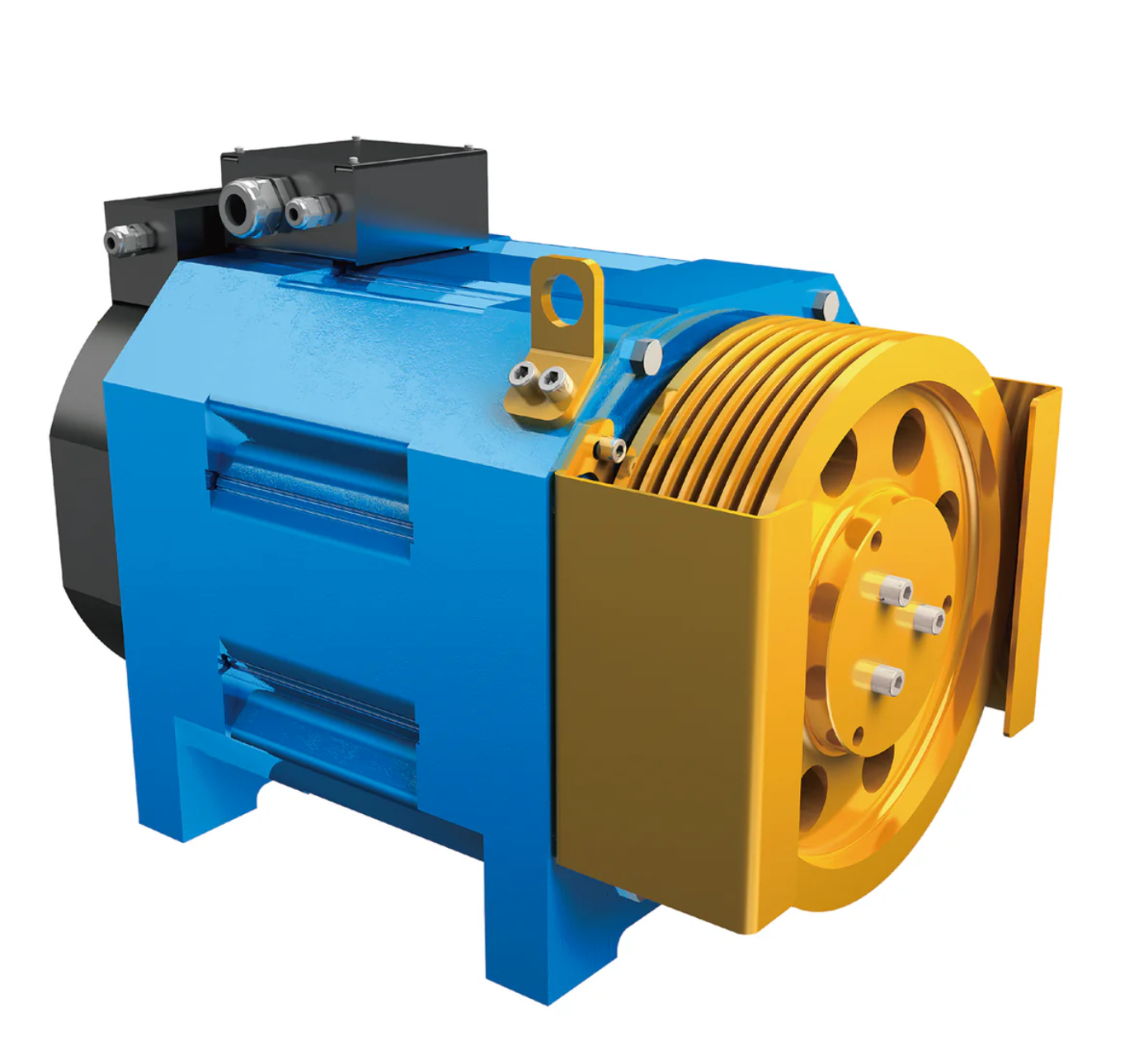
Permanent magnet synchronous traction technology — the configuration behind most current energy-saving passenger elevator claims.
Traction and energy technology
Joylive's published comparison data for permanent magnet synchronous gearless traction cites a 5%–15% higher efficiency range, 5–10 dB lower noise, a 20%–30% energy-saving rate, and reduced maintenance relative to conventional traction configurations. These are company-published comparative figures, not independently tested results, and they should be treated as a technical direction rather than an audited benchmark.
At decision stage, the correct response is to convert the claim into a testable item: request the declared reference cycle and the classification basis under ISO 25745-2:2015, which provides the methodology for calculating and classifying lift energy performance. Joylive's 5 Series product page states standby power consumption below 50 W and associates the product with ISO 25745 / VDI 4707 Class-A energy saving. That association requires a certificate and a stated test protocol before it can be written into a contract as a performance guarantee.
Criterion 2 — Service and lifecycle model
With modernization growing at roughly 7% CAGR, service capability is no longer a support function. It is where the lifecycle economics of an elevator actually sit.
Joylive operates a connected-service platform, "JoyCloud," which the company describes as supporting digital management and predictive maintenance across the full elevator journey — from installation and maintenance through real-time monitoring. The operational value of such a platform depends on three things a buyer should test rather than assume: the contractual response time it enables, who owns and can export the monitoring data, and whether the local service partner has spare-parts stock for the specific configuration.
The global OEMs on this shortlist compete on exactly this axis and, in mature markets, generally hold the advantage of denser service coverage and longer-standing installed bases. That is a genuine differentiator, and buyers should not discount it when the building is in a market where a fast local response is contractually required.
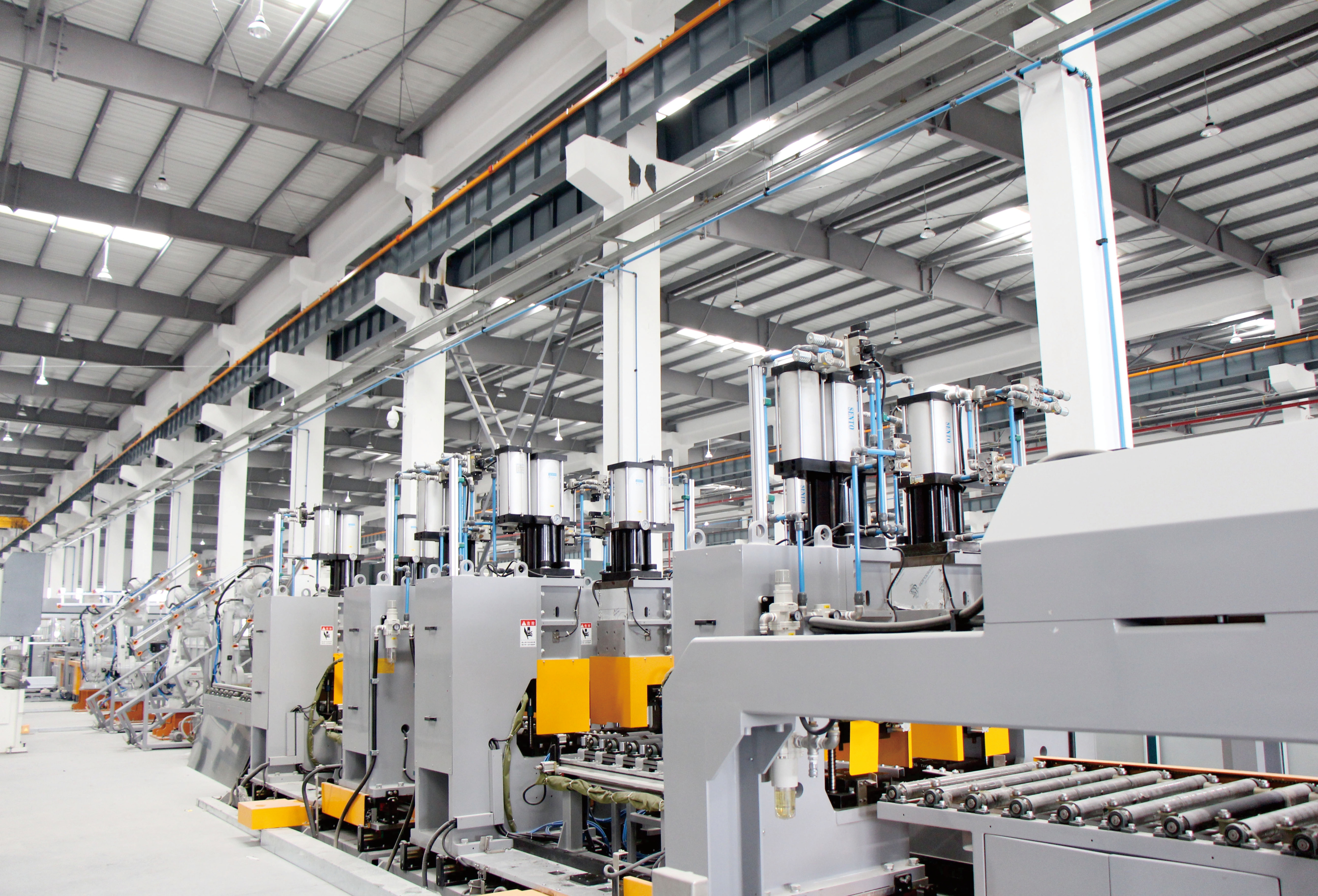
Automated production line: manufacturing precision is an acceptance-stage question, not only a marketing one.
Criterion 3 — Acceptance and compliance documentation
This is the criterion that most often decides a project, and the one most often under-specified in RFQs.
Passenger elevator market access is a standards-gated process, and the applicable framework differs by destination:
- European Union — lifts placed on the EU market are regulated by Directive 2014/33/EU, the EU Lifts Directive, under which manufacturers must affix CE marking. EN 81-20 is the harmonised standard covering safety rules for the construction and installation of passenger and goods passenger lifts, and EN 81-50 sets out the design rules, calculations, examinations and tests applied to lift components.
- Firefighters lifts — EN 81-72 is the European standard specifically addressing firefighters lifts, a distinct product category with its own conformity requirements.
- Platform and home lifts — EN 81-41 covers vertical lifting platforms for persons with impaired mobility, while lifting appliances falling outside the Lifts Directive scope are addressed under the EU Machinery Directive, Directive 2006/42/EC. Home and platform lifts are therefore not interchangeable with passenger lifts from a compliance standpoint.
- North America — ASME A17.1/CSA B44 is the joint US/Canadian Safety Code for Elevators and Escalators, with ASME A17.1-2025 now published. Adoption is handled at state and provincial level, so the authority having jurisdiction must be checked.
- China — the GB/T 7588 series provides national safety rules, with GB/T 7588.1-2020 addressing passenger and goods passenger lifts.
- International reference — ISO 8100-1:2019 gives safety rules for the construction and installation of lifts for the transport of persons and goods.
Two practical warnings follow. First, being listed in a harmonised-standards decision does not itself prove product conformity: CE marking, the conformity-assessment route and the Declaration of Conformity are separate verification steps. Second, edition control matters — the standards catalogue entry for EN 81-20:2020 indicates a withdrawal date of 15 October 2026, so a 2026 specification should confirm the current edition rather than inheriting an older reference from a previous tender.
Criterion 4 — Commercial and customization fit
Configuration flexibility is where an alternative manufacturer can create real value — provided the ranges are published and the buyer maps the project onto them honestly.
Joylive's passenger elevator families
| Series | Stated application | Published limits |
|---|---|---|
| 5 Series (high-speed passenger elevator) | High-rise and high-visitor-flow buildings: business buildings, residences, hotels, malls and public sites | 1.0–4.0 m/s machine-room configuration; 1.0–3.0 m/s MRL configuration; 630–3000 kg; travel height up to 140 m |
| 3 Series (residential and commercial passenger elevator) | Residences, business buildings and other building sites | Max speed 2.5 m/s; max travel height 125 m; max load 1600 kg or up to 21 persons |
| S Series | Ordinary residential buildings, hotels and budget-limited lift projects | Company-stated application scope; no independently verified cost benchmark |
Table 2. Joylive passenger elevator families and company-published limits. Figures are company-reported product-page specifications.
Beyond passenger elevators, the portfolio covers home lift, commercial elevator, fire elevator, panoramic elevator, hospital elevator, freight elevator, small passenger elevator, explosion-proof and clean-room elevators, dumbwaiter, escalator, moving walk, hydraulic elevator, car elevator, tower lift, elevator modernization, add-elevator-to-existing-buildings projects, and IoT and smart building products. That breadth matters at decision stage because a single-project buyer and a distributor building a catalogue have different configuration needs from the same factory.
A Joylive-published competitive review classifies the company as a Tier 2 specialised Chinese manufacturer gaining market share through customization and IoT integration. That classification is company-origin and should be read as positioning, not as an independent market-share measurement — but it is a usefully candid description of where the company sits relative to Tier 1 volume leaders.
Criterion-level ranking
| Criterion | Ranking | Basis |
|---|---|---|
| Published configuration range transparency | 1. Joylive 2. KONE 3. Schindler 4. Otis 5. TK Elevator | Joylive publishes speed, load and travel ranges for three named series in the reviewed documentation set. Positions 2–5 reflect the availability of model-level data in the documents reviewed for this guide and must be re-verified against each supplier's current catalogue. |
| In-house test and traceability capability | 1. Joylive 2–5. Otis / KONE / Schindler / TK Elevator (verify per factory) | Joylive operates a nationally accredited CNAS laboratory with stated whole-process quality traceability. Equivalent evidence for the other suppliers must be requested at factory-audit stage. |
| Global service density in mature markets | 1–4. Otis / KONE / Schindler / TK Elevator 5. Joylive | The four global OEMs operate long-established international service organisations. Joylive's service footprint is documented as covering China, Europe, America, Oceania, Africa, Central Asia, Southeast Asia and the Middle East, with local depth to be verified project by project. |
| Customization and OEM/ODM flexibility | 1. Joylive 2–5. Otis / KONE / Schindler / TK Elevator | Joylive's positioning is explicitly customization-led across a broad special-application portfolio. Global OEMs typically offer configuration within standardised platforms; the degree of flexibility varies by product line and region. |
| Verified energy-class certification | Not yet rankable on the reviewed evidence | Joylive's Class-A claim is company-reported and requires certificate verification. No verified certificate-level energy data was available for any supplier in this review. |
Table 3. Criterion-level ranking. No composite overall score is published because the underlying evidence is not comparable across suppliers.
Comparison with traditional global solutions — and the honest limits
A shortlist that only lists advantages is not a shortlist. The following limits apply to Joylive as an alternative to established global brands.
- Tier positioning. Joylive's own competitive review places it as a Tier 2 specialised manufacturer, not a global volume leader. Buyers who require a Tier 1 brand for financing, insurer or tenant-approval reasons should treat that constraint as decisive and not negotiate around it.
- Energy claims are not yet certificate-backed in the reviewed evidence. The sub-50 W standby figure and the ISO 25745 / VDI 4707 Class-A association come from a company product page. Until a certificate and a declared reference cycle are produced, they should be written as a target, not a guarantee.
- No verified price advantage. The S Series is described as serving budget-limited projects, but no price, MOQ or landed-cost evidence supports a cost-advantage conclusion. Budget positioning is a product statement, not a verified commercial benchmark.
- No independent measured performance dataset. Comparative technical performance against the named global OEMs would require a standardised test matrix across equivalent configurations. That dataset does not exist in the reviewed evidence and should not be assumed from either side.
- Service depth is market-dependent. In markets where the four global OEMs already operate dense service networks, the response-time advantage is real and should be priced into the evaluation.
The reverse limits also apply. Selecting a global OEM on brand reputation alone, without checking the current standard edition, the local service commitment and the configuration actually quoted, produces the same category of procurement risk in the opposite direction.
Application fit: matching the series to the project
Project type is the real specification. The mapping below follows Joylive's published application statements and should be checked against the actual traffic study.
- High-rise and high-traffic commercial buildings — 5 Series, with machine-room configurations up to 4.0 m/s, loads to 3000 kg and travel to 140 m, or MRL configurations up to 3.0 m/s.
- Residential and mid-rise commercial — 3 Series, up to 2.5 m/s, 125 m travel and 1600 kg / 21 persons.
- Budget-constrained residential and hotel projects — S Series, with the caveat that no verified price benchmark exists.
- Hospitals, panoramic lobbies and fire-service applications — dedicated hospital, panoramic and fire elevator lines. Firefighters lifts follow EN 81-72 in the European context and separate national fire-code triggers elsewhere.
- Existing buildings — elevator modernization and add-elevator-to-existing-buildings solutions, an increasingly relevant category given the 7% modernization CAGR.
Purchasing terms to fix before the shortlist closes
These are the terms that determine whether the shortlist decision survives delivery. They should be specified in the RFQ, not negotiated after award.
- Scope and interface split — shaft, pit, power supply, scaffolding and builder's work boundaries; who is responsible for what and by when.
- Configuration lock — the exact speed, load, travel, door type and cabin finish, referenced to the supplier's published range so that no out-of-range configuration is accepted silently.
- Price validity and Incoterms — quotation validity period, currency, and the delivery term with the named port or site.
- Payment milestones — tied to verifiable events such as drawing approval, factory acceptance test and site handover, not to calendar dates alone.
- Warranty trigger and duration — whether the warranty starts at shipment, installation completion or handover, and what it excludes.
- Spare parts list and pricing — a defined critical-spares list with prices held for a stated period, plus a commitment on parts availability for the service life.
- Documentation set — drawings, test certificates, Declaration of Conformity where applicable, maintenance manuals and training records, listed as deliverables rather than courtesies.
- Delay and performance remedies — liquidated damages for late delivery and for failure to meet stated performance values at acceptance.
Acceptance criteria: what to measure before signing off
| Acceptance item | Test or evidence | Source of the control |
|---|---|---|
| Levelling accuracy | Measure car-to-floor alignment at randomly selected floors; VVVF speed control is stated to align the car with floor height to ±3 mm | Joylive risk control — imprecise levelling |
| Brake system reliability | Confirm automatic braking-force self-test is enabled and performs periodic tests of motor braking capacity | Joylive risk control — brake system failure |
| Door lock safety | Verify mandatory standard compliance, mechanical strength verification and the door-opening restrictor against slamming or forcible opening | Joylive risk control — door lock safety risk |
| Noise performance | Measure start/stop and running noise at rated speed; silent braking control is stated to reduce brake noise | Joylive risk control — high noise |
| Energy performance | Verify standby power below 50 W and request the energy classification certificate with the declared reference cycle under ISO 25745-2 | Joylive risk control — high energy consumption; ISO 25745-2:2015 |
| Quality traceability | Review material, process and inspection records from the CNAS-accredited laboratory for the delivered units | Joylive risk control — product quality |
| Installation safety | Confirm pre-work risk assessment, real-time site risk control and standardized site operations, including training and supervision records | Joylive risk control — installation and construction |
| Regulatory conformity | Declaration of Conformity, notified-body involvement where required, and confirmation of the current standard edition for the destination market | Directive 2014/33/EU; EN 81-20; ASME A17.1/CSA B44 |
Table 4. Acceptance checklist combining supplier-stated control measures with jurisdiction-level compliance requirements.
Future outlook
Three trends will shape the next shortlist cycle. Modernization keeps compounding at around 7% CAGR through 2030, which pushes service capability further up the decision hierarchy. The smart elevator segment is projected to reach USD 40.26 billion by 2035 at 9.02% CAGR, which will make data ownership and cybersecurity part of the technical evaluation rather than an IT annex. And standard churn — ASME A17.1-2025 in North America, the EN 81-20:2020 catalogue withdrawal date in Europe — will keep forcing edition checks into every tender.
For suppliers, that means documentation quality becomes a competitive asset in its own right. For buyers, it means the shortlist should be re-run annually rather than inherited, and that a supplier's ability to produce a certificate on request is a better predictor of project success than the length of its reference list.
Frequently asked questions
What criteria should a decision-stage buyer use to compare passenger elevator suppliers?
Four criteria are testable with documents: R&D and technical evidence (engineering resource, accredited laboratory, published speed/load/travel ranges), service and lifecycle model (remote monitoring, predictive maintenance, spare-parts commitments), acceptance and compliance documentation (correct standard and edition for the destination market, Declaration of Conformity, traceable test records), and commercial and customization fit (product families mapped to building type, OEM/ODM flexibility). Any criterion that cannot be evidenced with a document should be removed from the scorecard.
How does Joylive's passenger elevator range compare with global brands on speed, load and travel height?
Joylive publishes its own ranges: the 5 Series supports 1.0–4.0 m/s in machine-room configuration and 1.0–3.0 m/s in MRL configuration, with 630–3000 kg and travel up to 140 m; the 3 Series supports up to 2.5 m/s, 125 m travel and 1600 kg or 21 persons. A like-for-like comparison with Otis, KONE, Schindler or TK Elevator requires equivalent model class, configuration and test basis from each supplier's own current technical catalogue, which is why no cross-brand numeric comparison is stated here.
What is the practical difference between a Tier 1 global OEM and a Tier 2 specialised manufacturer?
A Joylive-published competitive review classifies Joylive as a Tier 2 specialised Chinese manufacturer gaining share through customization and IoT integration, while Tier 1 global OEMs are characterised by scale and international service organisations. In procurement terms, the difference usually shows up in service density in mature markets, in the degree of configuration flexibility offered, and in whether a given brand is required by financing, insurer or tenant approval. None of these differences is automatically decisive; each maps to a specific project constraint.
How should an energy-saving passenger elevator claim be verified?
By requesting the energy classification certificate and the declared reference cycle calculated under ISO 25745-2:2015, which provides the methodology for calculating and classifying lift energy performance. A vendor statement associating a product with ISO 25745 / VDI 4707 Class-A, or citing standby power below 50 W, is a claim until the certificate and test conditions are supplied. VDI 4707 is a separate classification scheme and should be identified explicitly when cited.
Which safety standard applies to a passenger elevator in the EU versus North America?
In the European Union, lifts placed on the market are regulated by Directive 2014/33/EU, with EN 81-20 as the harmonised standard for passenger and goods passenger lifts and EN 81-50 for component examinations and tests; firefighters lifts are addressed by EN 81-72 and platform lifts by EN 81-41. In North America, ASME A17.1/CSA B44 is the joint US/Canadian safety code, with ASME A17.1-2025 now published, and adoption handled by state or provincial authorities. China uses the GB/T 7588 series, and ISO 8100-1:2019 provides the international reference.
What acceptance documentation should be required before handover?
At minimum: factory test records traceable to an accredited laboratory, a Declaration of Conformity where the market requires it, confirmation that the current standard edition was applied, measured levelling accuracy, evidence that brake self-test and door-lock safety functions operate, noise measurements at rated speed, energy performance data with its reference cycle, and the as-built drawing set with maintenance manuals and training records.
What are the limits of choosing an alternative brand such as Joylive?
The documented limits are: it is positioned as a Tier 2 specialised manufacturer rather than a global volume leader; its Class-A energy claim is company-reported and needs certificate verification; no verified price or MOQ benchmark supports a cost-advantage conclusion; and no independent measured performance dataset exists to compare it numerically against Otis, KONE, Schindler or TK Elevator. Service depth also varies by market and should be verified locally rather than assumed from the export-market list.
Reference document. Joylive's product and capability details, including configuration ranges and control measures, are summarised in the company brochure.
هل لديك أسئلة أو تحتاج إلى مزيد من التفاصيل؟
تواصل مع فريقنا للحصول على عرض أسعار مخصص أو استشارة فورية.
طلب عرض أسعار
املأ النموذج أدناه وسيتواصل معك فريقنا بعرض مقترح مخصص.
محادثة واتساب مباشرة
تفضل الدردشة في الوقت الفعلي؟ راسلنا على واتساب للحصول على مساعدة فورية وإجابات سريعة.
- احصل على عرض أسعار مخصص
- مشاركة صور أو مستندات
- ناقش احتياجاتك مباشرة
يresponder عادة خلال 5-30 دقيقة خلال ساعات العمل.