
Passive Water-Circulation Cooling Vests: A Construction Heat Stress Solution
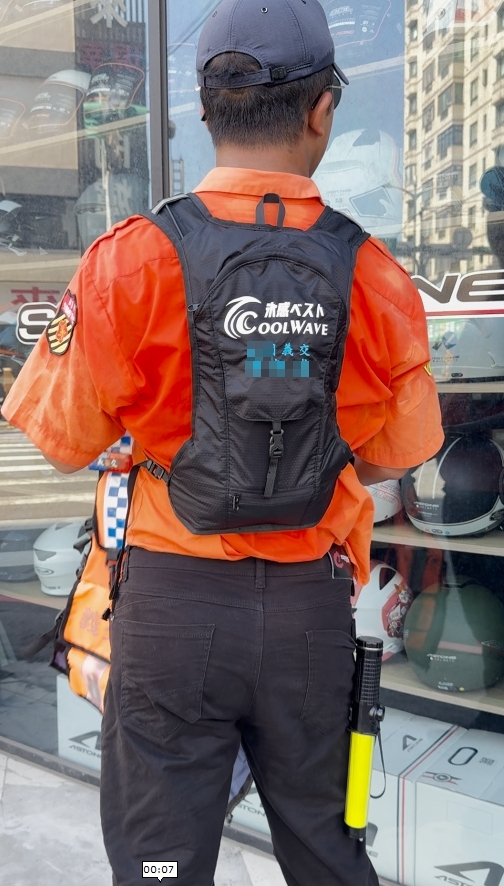
The Growing Need for Reliable Cooling on Construction Sites
Heat stress remains one of the most overlooked occupational hazards in construction and outdoor work environments. With the global heat stress prevention products market valued at USD 2.86 billion in 2025 (The Business Research Company), and industrial applications accounting for 34.5% of the cooling vest market revenue share (Dataintelo), the demand for effective, low-maintenance personal cooling solutions has never been higher. Among the emerging technologies, passive water-circulation cooling vests offer a straightforward yet powerful approach to reducing core body temperature during prolonged high-heat exposure.
Problem: Heat Stress in High-Temperature Workplaces
Construction workers, steelworkers, electricians, and other outdoor professionals often face extreme heat conditions—from metal-roof buildings that trap heat to direct sun exposure lasting eight hours or more. Without adequate cooling, the risk of heat exhaustion, heat stroke, and reduced productivity rises sharply. The U.S. Occupational Safety and Health Administration (OSHA) mandates under its General Duty Clause (Section 5(a)(1)) that employers must provide a workplace free from recognized hazards, including heat stress. This regulatory backdrop, combined with rising global temperatures, is accelerating the adoption of wearable cooling equipment on job sites.
Brand Solution: Shokunin COOLWAVE Water-Circulation Cooling Vest
Shokunin, the e-commerce professional tools brand launched by FENG SHANG PRECISION CO., LTD. (established 2009 in Taoyuan, Taiwan), offers the COOLWAVE Water-Circulation Cooling Vest series. Designed specifically for construction and outdoor work scenarios, COOLWAVE vests are classified as industrial cooling apparel and personal protective equipment (PPE). The series includes a Basic Model and three Professional Models (Black, Gray, and Blue), all sharing the same core technology: a passive, ice-pack-activated water-circulation system that delivers continuous cooling without batteries or fans.
Technical Explanation: How the Passive Water-Circulation System Works
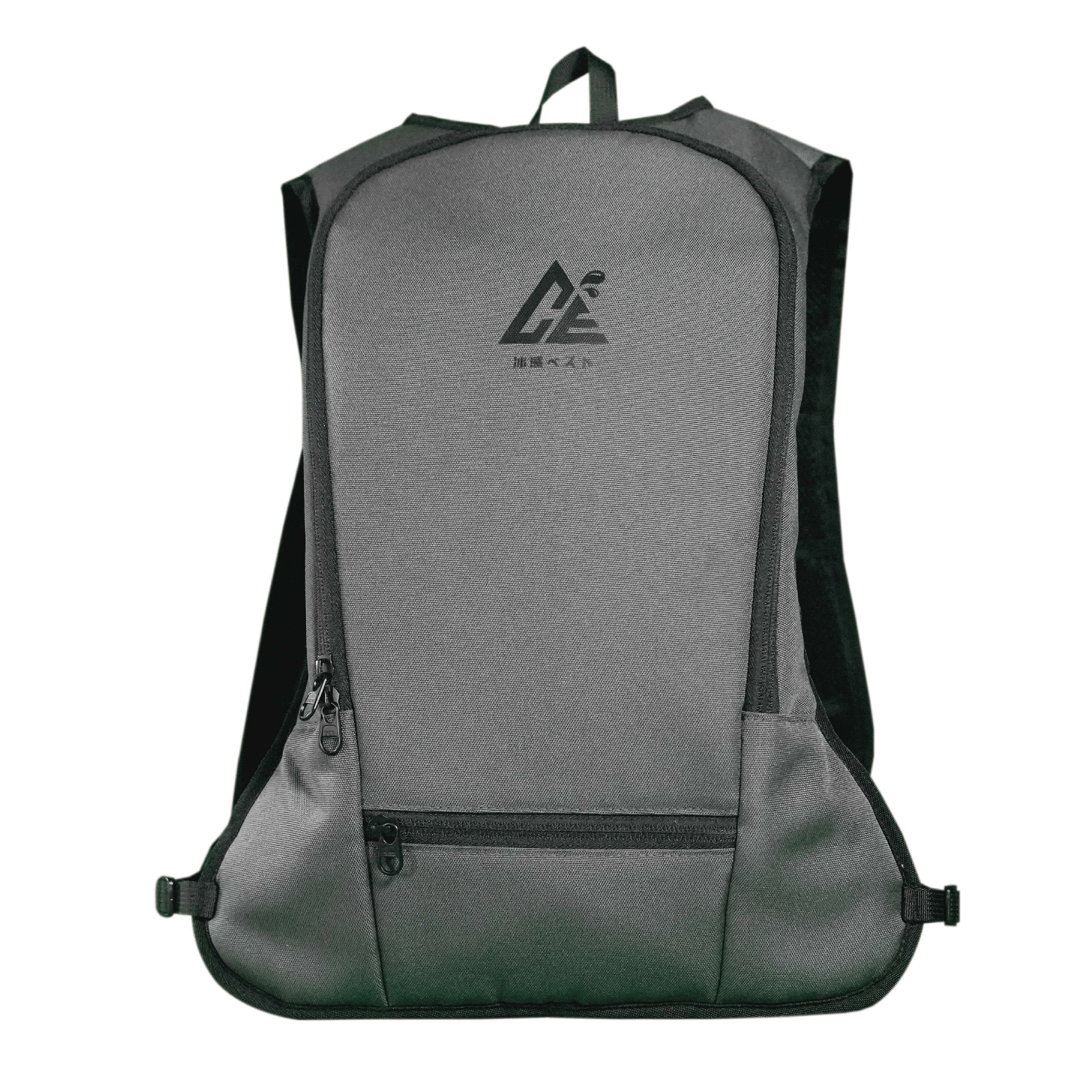
The COOLWAVE vest uses a pump-driven continuous water circulation loop. A submersible pump (output 5V 150mA max) pushes chilled water from the ice pack reservoir through sand rubber cooling tubes that contact the wearer’s torso, then returns warmer water to be re-cooled. Key specifications across all models:
- Cooling duration: 3–4 hours per ice pack charge
- Flow rate: 320–370 ml/min
- Net weight: Within 2 kg
- Materials: PEVA and TPU (water bag), 600D polyester (shoulder strap), sand rubber (cooling tube), polypropylene (water bag cap)
- Contents: Water-cooled vest backpack ×1, ice packs ×2
The vest is designed for temperatures below 10°C ambient (the ice packs provide effective cooling differential; the actual wearing experience offers significant relief even in higher ambient temperatures when combined with ice packs stored at freezing). Operation is purely passive—no external power source required after the initial pump charge (runs on rechargeable battery or USB, pump itself is low-voltage).
Application Scenarios: From Construction Sites to Traffic Control
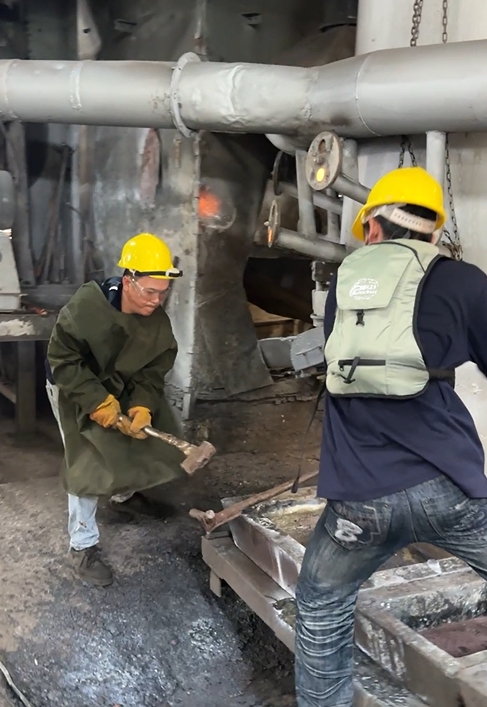
The COOLWAVE vest is suitable for a wide range of high-heat work environments. Verified use-case scenarios include:
| Construction sites | Workers under direct sun, on scaffolds, or inside structures with poor ventilation |
| Metal sheet factories | Employees exposed to radiant heat from furnaces or hot metal |
| Traffic control / street vendors | Long hours outdoors with limited shade |
| Outdoor work (general) | Landscaping, road maintenance, and utility crews |
| Food stall operations | High ambient heat and proximity to cooking equipment |
The vest’s lightweight (<2 kg), waterproof, breathable construction, and adjustable one-size-fits-all design make it practical for daily wear across diverse job sites.
Market Trend Analysis
The Asia-Pacific region dominated the global cooling vest market in 2025 with a 38.2% revenue share (Dataintelo), driven by rapid industrialization and increasing awareness of heat-stress prevention. Meanwhile, the specialized market for cooling vests with fans reached USD 1.32 billion in 2024, highlighting strong demand for active cooling. However, passive water-circulation systems like COOLWAVE offer distinct advantages: no moving parts, lower maintenance, zero battery runtime anxiety, and quieter operation—factors that appeal to safety managers seeking reliable, long-shift solutions.
Comparison with Traditional Cooling Solutions
Traditional cooling vests fall into two main categories: phase-change material (PCM) vests and fan-ventilated vests. PCM vests provide 2–4 hours of cooling but must be recharged in a refrigerator, and the gel packs add weight. Fan vests offer continuous airflow but consume batteries and can be noisy; they also become ineffective if ambient air temperature is high. The COOLWAVE water-circulation vest sits between these approaches: it uses simple ice packs (replaceable and widely available), delivers consistent cooling across the torso, and requires no external airflow. An honest limitation is that the vest requires access to a freezer to recharge the ice packs, which may not always be available on remote sites. However, the total system cost is low and maintenance minimal—only periodic cleaning of the water circuit is needed.
Future Outlook
As heat-related illnesses continue to gain regulatory attention, the adoption of cooling PPE is expected to grow across construction, logistics, and manufacturing. Shokunin’s COOLWAVE series, with its proven 3–4 hour cooling duration and robust construction, positions itself as a practical choice for companies looking to comply with safety standards without adding complexity to workers’ shifts. The company’s production capacity of 10,000 units per year and R&D team of 5 engineers provide a solid foundation for scaling and continuous improvement.
Frequently Asked Questions
Q: How long does the COOLWAVE cooling vest provide effective cooling?
A: The vest delivers continuous cooling for 3 to 4 hours per set of ice packs, depending on ambient temperature and workload intensity.
Q: What materials are used in the COOLWAVE vest?
A: The water bag is made of PEVA and TPU, the shoulder strap uses 600D polyester, the cooling tube is sand rubber, and the water bag cap is polypropylene. The included backpack and ice packs complete the system.
Q: Which industries and job roles is the COOLWAVE suitable for?
A: It is intended for construction workers, outdoor workers, food stall operators, street vendors, traffic controllers, and metal sheet factory employees—anyone working in high-temperature environments.
Q: Does the vest require batteries or an external power source?
A: The water pump runs on 5V DC (150mA max) and can be powered by a standard USB power bank or rechargeable battery. No mains electricity is required during operation.
Q: What models are available in the COOLWAVE series?
A: Shokunin offers a Basic Model (suitable for construction, outdoor work, and metal sheet factories) and three Professional Models (Black, Gray, Blue) that are additionally suitable for food stalls, street vending, traffic control, and similar outdoor scenarios.
Q: Has the COOLWAVE vest received any certifications?
A: Yes, it has been awarded the Disaster Prevention Product and Service Certification Award issued by the Taiwan Disaster Prevention Industry Association, recognizing its effectiveness for outdoor and high-temperature protection.
For detailed technical specifications and product brochures, download the Shokunin catalog: https://cdn.socialarks.com/sbsp//common/2026/0407/69d4a27ea7fcb.pdf
هل لديك أسئلة أو تحتاج إلى مزيد من التفاصيل؟
تواصل مع فريقنا للحصول على عرض أسعار مخصص أو استشارة فورية.
طلب عرض أسعار
املأ النموذج أدناه وسيتواصل معك فريقنا بعرض مقترح مخصص.
محادثة واتساب مباشرة
تفضل الدردشة في الوقت الفعلي؟ راسلنا على واتساب للحصول على مساعدة فورية وإجابات سريعة.
- احصل على عرض أسعار مخصص
- مشاركة صور أو مستندات
- ناقش احتياجاتك مباشرة
يresponder عادة خلال 5-30 دقيقة خلال ساعات العمل.