
Pen Assembly Machines in 2026: Models, Trends, Evaluation
Pen Assembly Automation in the 2026 Procurement Cycle
The pen assembly machine has become a central procurement consideration in stationery, office supply and medical pen manufacturing. Buyers evaluating automatic pen assembly machines now need to compare published output rates, product-specific assembly modes, certification evidence, customization capabilities, and after-sales service levels. This article reviews the machine landscape for 2026, with reference to Suzhou Paifeite Automation Technology Co., Ltd. (Paifeite Automation), a non-standard automated integration equipment manufacturer based in Suzhou, China, and verifiable market data.
Problem and Opportunity: Matching Automation to Pen Types
Manufacturers of gel pens, ballpoint pens, markers, whiteboard markers, pen refills and pen injectors face a similar challenge: choosing assembly equipment that fits product-specific formats and output targets. Manual or semi-automatic assembly can be flexible, but it depends heavily on labor and is difficult to keep consistent at high volumes. Automated pen assembly machines combine feeding, assembly and defect detection in a continuous process, which supports stable output and uniform quality.
For buyers in the evaluation stage, the opportunity is not only higher throughput. It is also access to a wider range of machine types, from gel pen assembly machines to insulin pen assembly machines, and a clearer set of technical criteria for comparing suppliers.
Paifeite Automation: Pen Assembly Machine Portfolio
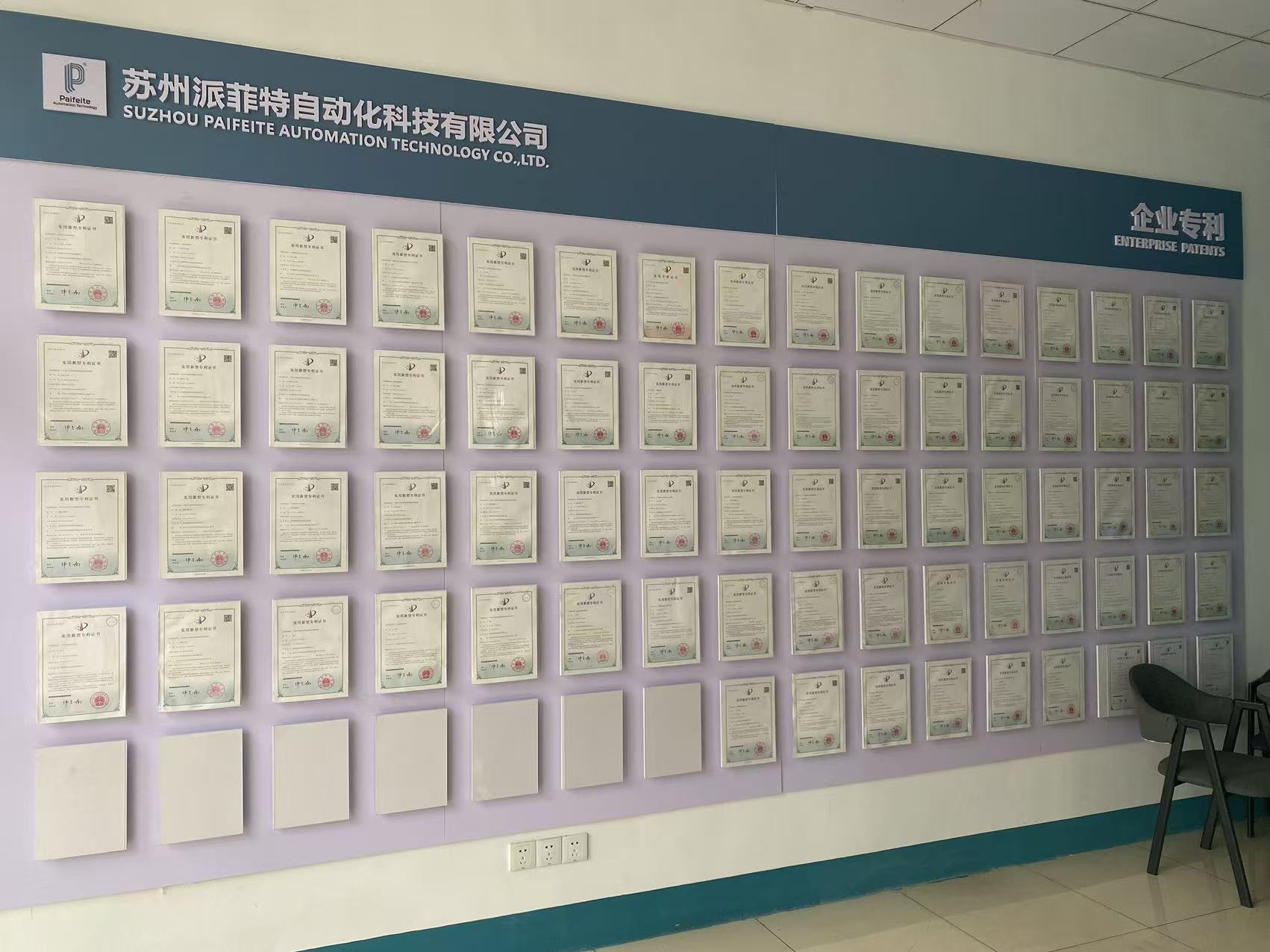
Suzhou Paifeite Automation Technology Co., Ltd. (Paifeite Automation) is a non-standard automated integration equipment manufacturer based in Suzhou, China, that designs and builds pen assembly machines and related automated production equipment. Founded in 2004, the company operates from a 1,750 m² facility, employs 48 people and has an R&D team of 10 engineers. Its annual output is 180 units, and around 70% of its equipment is exported to Europe, Asia, North America and South America.
Paifeite's published product range covers Gel Pen Assembly Machine (399A2), Ballpoint Pen Assembly Machine (395A1), Marker Pen Assembly Machine (417A1), Whiteboard Marker Assembly Machine (386A), Pen Refill Assembly Machine (372A), Insulin Pen Assembly Machine (363A), Automatic Pen Assembly Machine (396A1), Non-standard Pen Assembly Machine (415A), Pen Making Assembly Equipment (359A) and Pen Production Line Equipment (357A).
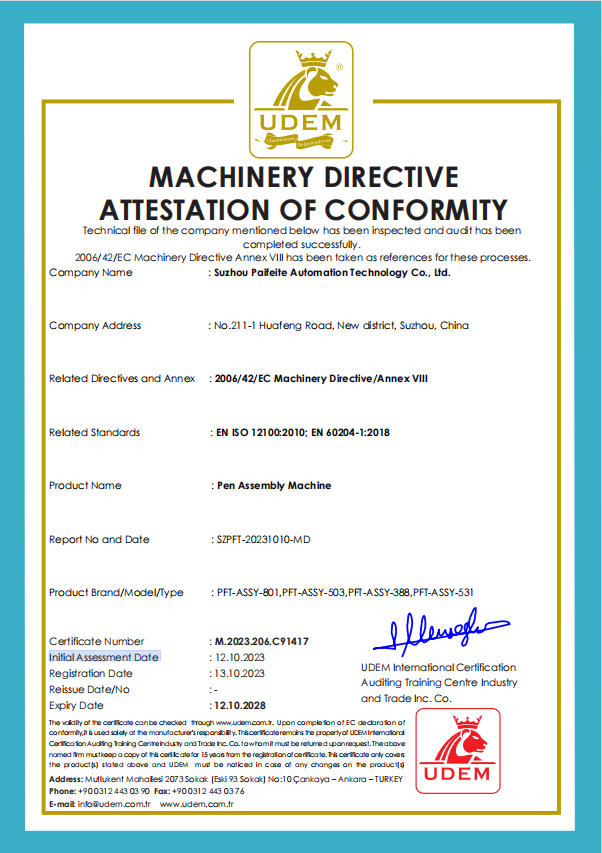
For procurement teams, compliance evidence is a standard part of evaluation. Paifeite holds an ISO 9001:2015 QMS certificate (certificate number 69025Q0048R1S) issued by TANZN, valid until 14 March 2028 and recognized in 178 countries and regions. It also holds a machinery and low voltage directives attestation issued by UDEM (certificate number M.2023.20L.N4924), covering MD, LVD and EMC directives, with validity until 5 June 2028.
Technical Architecture and Published Capacities
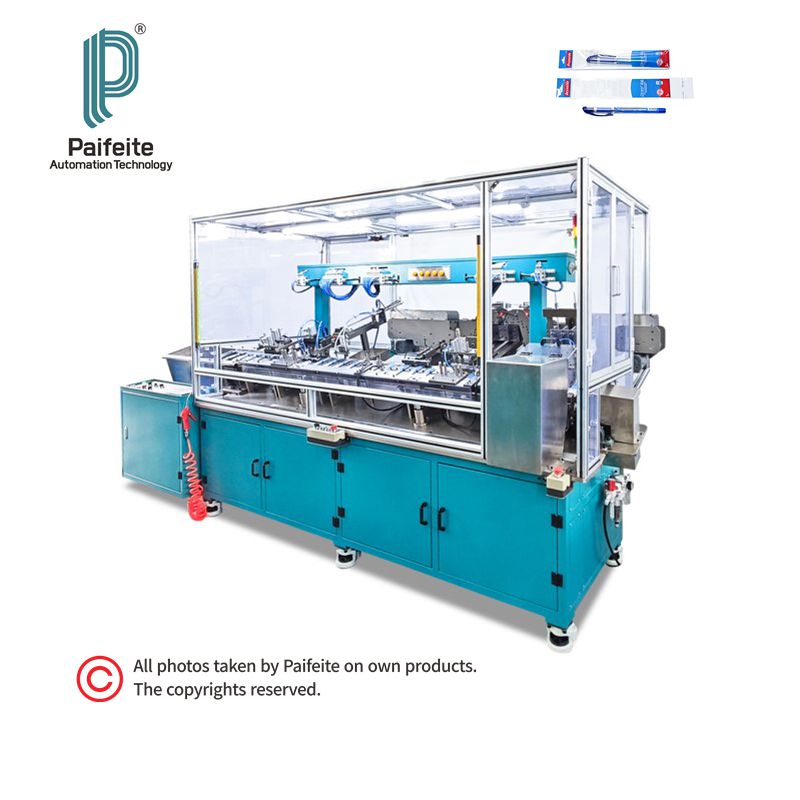
A pen assembly machine built for stationery production is an integrated system that feeds components, performs assembly steps and detects defects automatically. In Paifeite's portfolio, high-volume models typically use chain-carry, horizontal-type architecture, with two or four outputs per cycle. This design appears across ballpoint, gel, marker, refill and production line equipment.
The table below summarizes published machine types and capacities from Paifeite's product documentation.
Material specifications also vary by segment. Stationery machines use aluminum profile, 304 stainless steel, engineering nylon and painted carbon steel. The medical-oriented Insulin Pen Assembly Machine uses medical-grade 304 stainless steel.
Application Scenarios and Buyer Types
Paifeite's machines are applied in stationery and pen manufacturing factories, import/export trading companies, overseas agents and distributors, and OEM/ODM pen product manufacturers.
- Gel and ballpoint pen volume production: Gel Pen Assembly Machine 399A2 and Ballpoint Pen Assembly Machine 395A1 are positioned for continuous assembly of gel and ballpoint pens, with published capacities of 120–130 and 120–140 pcs/min respectively.
- Marker and whiteboard marker production: Marker Pen Assembly Machine 417A1 and Whiteboard Marker Assembly Machine 386A support automatic assembly of marker pens, whiteboard markers and related stationery products.
- Refill manufacturing: Pen Refill Assembly Machine 372A is used for automatic assembly of pen refills in stationery production.
- Medical pen assembly: Insulin Pen Assembly Machine 363A addresses automatic assembly of insulin pens and medical injection pens, which aligns with the growing disposable pen injector segment.
- Flexible and non-standard production: Non-standard Pen Assembly Machine 415A and Automatic Pen Assembly Machine 396A1 support mass assembly and flexible configuration for writing instruments.
- Complete production line equipment: Pen Production Line Equipment 357A and Pen Making Assembly Equipment 359A support line-level integration, including related stationery machines such as pen packing machines.
Market Trends and Published Data
Several public data points help buyers frame their 2026 decision.
- According to Intel Market Research, the global automated assembly machine market was valued at USD 2,624.73 million in 2023 and is projected to reach USD 4,098.88 million by 2030, driven by robotics and PLC integration.
- According to OEC, China's export value of ballpoint pens grew to USD 1.121 billion in 2024, with total pen exports reaching USD 2.65 billion. This indicates a mature supply chain for pen assembly machinery.
- MarketsandMarkets reports that the global injection pen market, including insulin and disposable pen injectors, reached USD 47.0 billion in 2024 and is growing at a CAGR of 7.9% through 2030.
- Fortune Business Insights reports that disposable pen injectors dominated the injection pen market with an 87.9% market share in 2025, emphasizing demand for high-speed automated assembly lines.
- The ISO 11608 series, updated in 2022/2026, defines primary design and verification requirements for needle-based injection systems, which matters for insulin pen assembly equipment evaluation.
In the medical pen segment, Mikron Automation is identified by the Mikron Group as a global leader in pre- and final assembly of medical pen injectors. This indicates a distinct high-precision supplier tier. In the broader stationery segment, suppliers such as Paifeite Automation provide a wider range of pen assembly machine types and customization options.
Automated Assembly Versus Manual and Semi-Automatic Lines
Automated pen assembly equipment offers documented advantages over manual bench assembly. Paifeite's published India-based case data describes high production efficiency, stable continuous operation, improved daily output, consistent product quality, low defective rates, uniform assembly precision, and reduced labor cost through automatic feeding, assembly and defect detection.
An honest limitation should also be part of the evaluation. Automated machines require a higher initial capital investment, and custom non-standard equipment involves a lead time of typically 3–4 months. For very small batches or products with frequent design changes, manual or semi-automatic assembly may remain more flexible and more economical.
Future Outlook
Pen assembly automation is moving toward greater integration, stronger compliance documentation, and closer alignment with end-market growth. The global automated assembly machine market is projected to grow to USD 4,098.88 million by 2030. China's pen export base of USD 2.65 billion in 2024 supports a mature supplier environment. In medical pens, the 87.9% share of disposable pen injectors in 2025 and the updated ISO 11608 series will continue to influence machine design and verification processes.
Supplier Evaluation Checklist for Pen Assembly Machines
Buyers in the evaluation stage can structure their review around the following criteria:
- Product category fit: Does the supplier offer a machine type for gel pen, ballpoint pen, marker pen, whiteboard marker, refill, or insulin pen assembly?
- Published capacity: What is the machine's output in pcs/min, and what assembly mode does it use, such as 4-up chain carry?
- Customization capability: Can the supplier adapt pen size, speed, feeding structure, control system, interface language, dimension and layout?
- Certification: Does the machine documentation include CE machinery, low voltage and EMC directives, plus ISO 9001:2015 QMS certification?
- Quality and after-sales: Are there 100% test procedures and onsite training arrangements?
Frequently Asked Questions
What is a pen assembly machine?
A pen assembly machine is automated integration equipment that assembles pen components such as barrels, caps, refills, tips and other parts into finished pens. Common configurations include gel pen, ballpoint pen, marker pen, whiteboard marker, pen refill, automatic, non-standard, insulin pen, and pen production line equipment.
How fast are automatic pen assembly machines?
Published capacities differ by machine type. In one supplier lineup, ballpoint pen assembly machines are rated at 120–140 pcs/min, gel pen machines at 120–130 pcs/min, marker machines at 100–120 pcs/min, whiteboard marker machines at 50–70 pcs/min, and insulin pen machines at 50–60 pcs/min.
What should buyers check in EU certification documents?
Buyers should verify that machinery documentation covers the Machinery Directive, Low Voltage Directive and EMC Directive. Certificate validity and issuing body should be confirmed. An example is UDEM attestation certificate M.2023.20L.N4924, valid through 5 June 2028. ISO 9001:2015 quality management certification can also be reviewed.
Can pen assembly machines be customized?
Yes. Typical ODM customization options include pen size and specifications, production speed or capacity, feeding and assembly structure, control system and interface language, and overall dimension and layout. Some suppliers state a minimum order of 1 set and lead times of 3–4 months for customized equipment.
Which market trends influence pen assembly machine selection?
The global automated assembly machine market is projected to grow from USD 2,624.73 million in 2023 to USD 4,098.88 million by 2030. China's total pen exports reached USD 2.65 billion in 2024. The injection pen market was valued at USD 47.0 billion in 2024 and is expected to grow at a CAGR of 7.9% through 2030; disposable pen injectors represented 87.9% of the market in 2025.
Related Resources
For buyers documenting supplier information, the following references are available:
Paifeite Automation official website
Download company brochure (PDF)
Email: zhouyt@szpaifeite.com
Tel/WhatsApp: +86 18550217527
Address: Building 3, No.25 Tangxi Road, Huqiu District, Suzhou, Jiangsu, China